Physical Discomfort
Nagging neck, back, or shoulder pain and strap grooves, all from the weight.
Relief from neck, back, and shoulder strain with a lighter, better-balanced chest.
Take the strain off your body and reshape your figure with breast reduction surgery, which takes away excess breast tissue, fat, and skin to leave you lighter and lifted.
From $10,000

Overview
Breast reduction surgery takes out the extra glandular tissue, fat, and skin, then reshapes and lifts whatever's left. It eases the physical strain and leaves your chest better matched to your frame.
How it works
Extra tissue, fat, and skin come out to bring down the size and the weight.
What's left gets reshaped, and the nipple moves to sit naturally.
As the incisions close, the breast settles higher and firmer.
Results
Browse before-and-after photos.
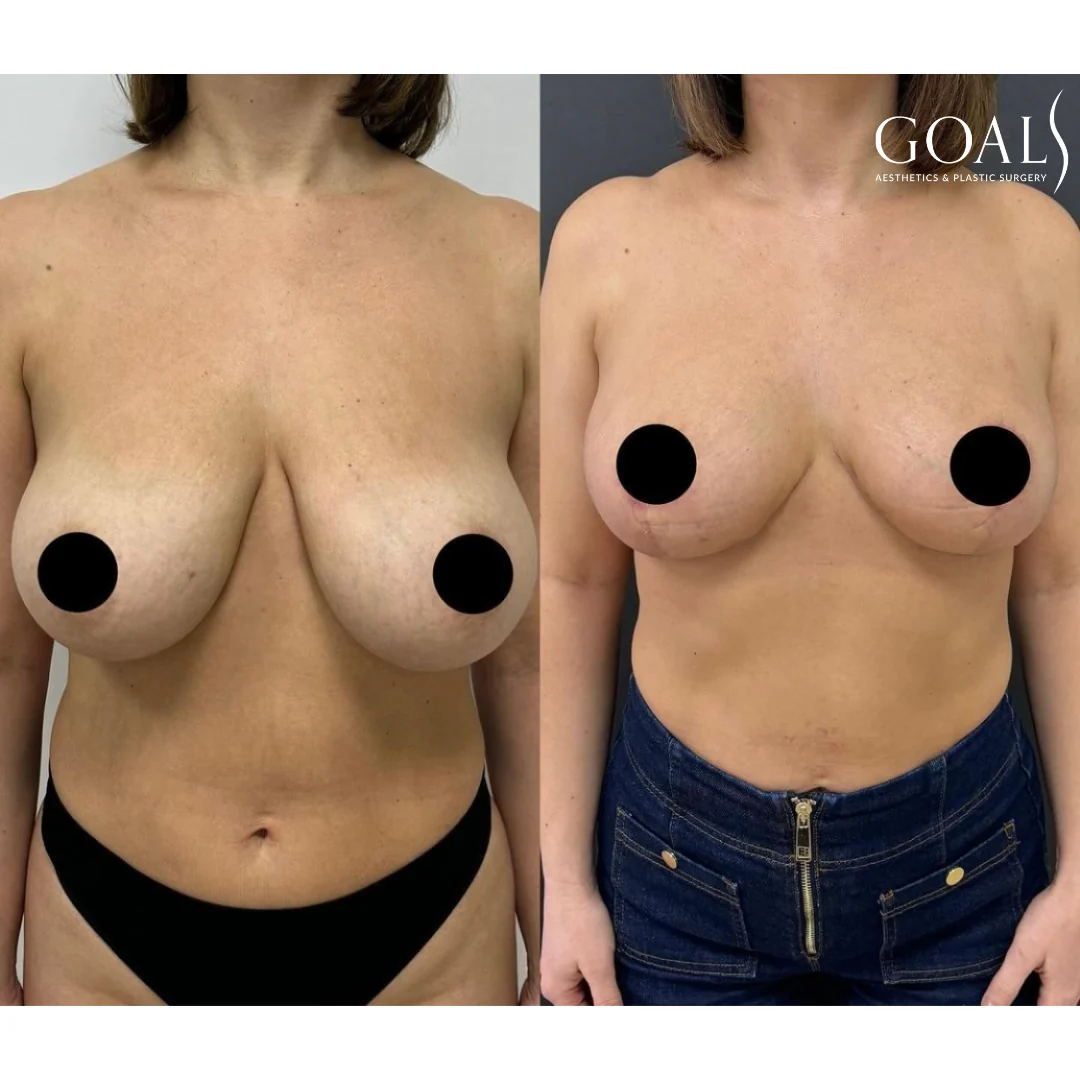
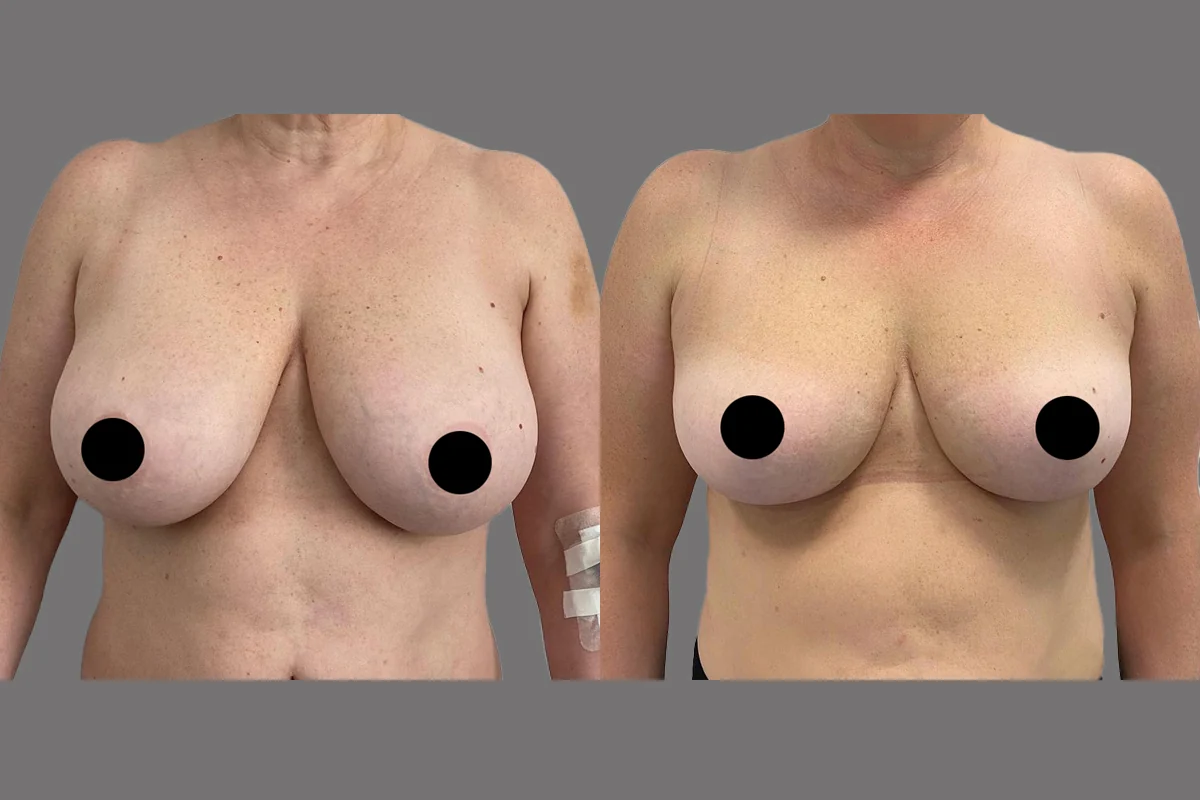
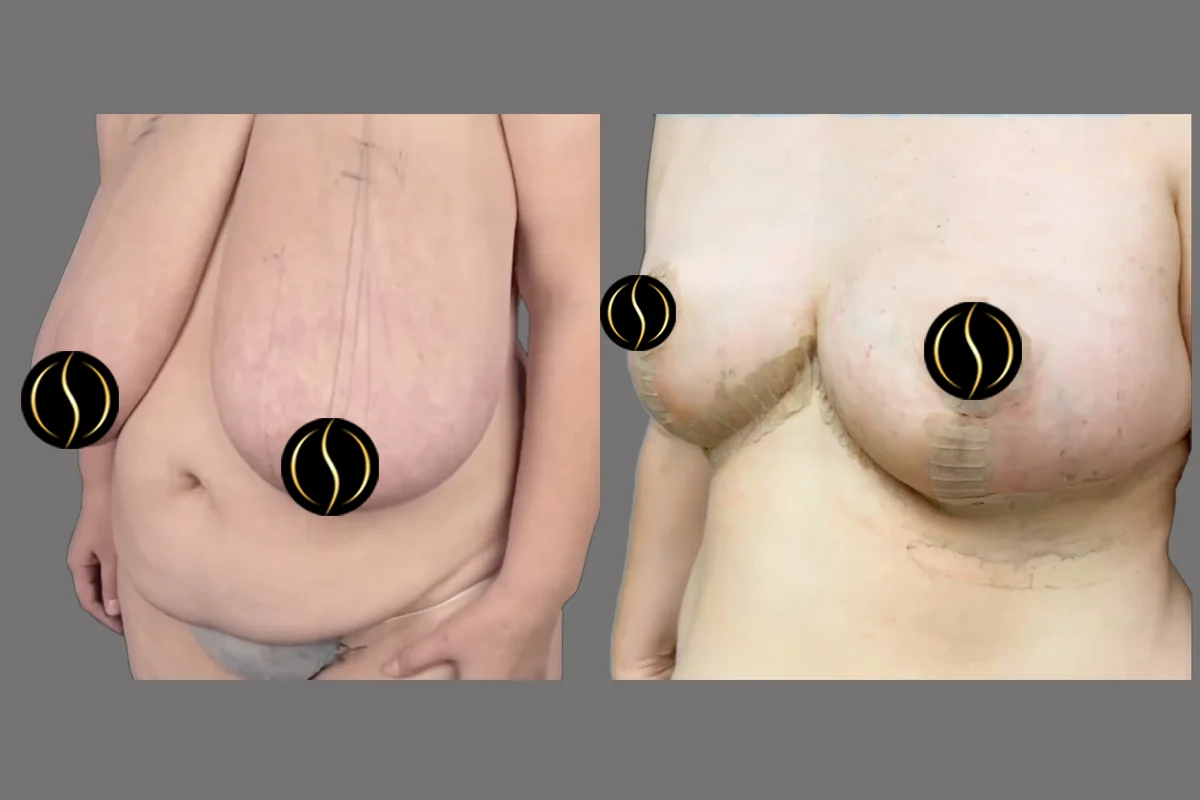
Real patients, published with written consent. Photographs are not retouched or AI-generated. Individual results vary — these images show outcomes for these patients and are not a guarantee of your own.
Try it
Type your height and weight. Your numbers stay on your device. We do not see or save them.
BMI is just one number. Your surgeon also looks at your health and your goals. BMI alone does not decide if you can have surgery.
Candidacy
It helps some women more than others. Here's what counts.
Nagging neck, back, or shoulder pain and strap grooves, all from the weight.
You're at or close to your goal weight, since big shifts can change the result.
Working out, sleeping, or just moving around is held back by your chest.
Best once you're done having kids, since a later pregnancy can undo it.
Why a reduction breast lift combination works out better for a lot of women.
| Main goal | Removes weight and excess size | Removes weight and lifts position |
|---|---|---|
| Sagging | Some natural lift from less weight | Fully corrects significant sagging |
| Nipple position | Adjusted modestly during reduction | Repositioned higher for a youthful look |
| Best for | Mainly size and weight concerns | Size plus noticeable droop |
| Scars | Standard reduction incision pattern | Same pattern—no extra scarring |
Your journey
From your first call through final results—what to expect.
Sit down with your surgeon, talk through symptoms and goals, and see whether insurance might cover it.
Your surgeon measures, marks the incision pattern, and estimates how much tissue comes out.
Bloodwork, clearance, a mammogram if you need one, and instructions for the night before.
Tissue out, breasts reshaped and lifted, nipple moved. Two to three hours under anesthesia.
Surgical bra on day and night. Most desk workers are back in one to two weeks.
Swelling eases over weeks. The final shape and scar fading carry on through the first year.
What a breast reduction actually gives you.
Neck, back, and shoulder strain lets up, often inside the first few weeks.
A breast size reduction leaves you lighter, firmer, and sitting higher.
Your breasts sit in proportion to the rest of you, so clothes fit better and moving feels easier.
Working out, sleeping, and day-to-day life all get easier without the extra weight.
Safety
How we keep your procedure safe the whole way through.
Every breast reduction is done by a U.S. licensed U.S. plastic surgeon, no exceptions.
Every procedure happens in an AAAHC-accredited facility with full anesthesia and emergency backup.
Tissue we remove routinely goes to a lab, standard practice to rule out anything abnormal.
Our surgeons
Licensed U.S. plastic surgeons that women searching for surgeons for breast reduction trust for steady, natural results.
Each surgeon’s training and licenses are listed on their own page.
Pricing
Wondering how much is a breast reduction? It starts at $10,000. Some women qualify for insurance once their symptoms are on record.
Financing with monthly plans.
We help get your symptoms documented for the insurance review.
Transparent pricing: no hidden fees, everything detailed in the contract.
Prices shown are starting prices and depend on the number of areas treated. Final pricing is confirmed at your consultation. Cosmetic procedures are not covered by insurance.
Try it
Pick a procedure to see an estimate. Your numbers stay on your device. We do not see or save them.
This is an estimate, not a quote. It splits the starting price over the months you pick, with no interest. Lenders set your real rate and terms. Your price is confirmed at your consultation.
Clinics
FAQ
Often, yes. Will insurance cover breast reduction really comes down to documented symptoms (back and neck pain, rashes, strap grooving) plus a minimum amount of tissue removed. Purely cosmetic cases you pay for yourself. We help pull the paperwork together for the review.
Out of pocket, how much does a breast reduction cost starts at $10,000 and moves with the technique, how much tissue comes out, and whether a lift goes with it. If insurance kicks in, you're mostly looking at deductibles and co-pays. Financing covers the rest.
Most desk workers are back in one to two weeks. You wear a surgical bra around the clock for several weeks, and skip lifting and hard activity for four to six. Swelling settles over a few months, and scars keep fading through the first year.
Yes, a reduction leaves scars, usually around the areola and down the crease. They fade a lot over the first year. Using silicone scar sheets for breast reduction the way you're told, plus keeping them out of the sun, helps them settle into thin, pale lines that bras and swimsuits hide.
There's no hard cutoff. What age can you get breast reduction really depends on physical maturity and your symptoms. Some younger patients in real pain qualify; others wait until their breasts are fully developed. We'd suggest finishing any pregnancy plans first, since pregnancy can change the result.
Learn more
Breast reduction surgery is one of the most satisfying operations in all of plastic surgery, and the patient surveys keep proving it. Relief rates run high because the surgery fixes a real physical problem, not just a cosmetic one. Women who come to us for a reduction usually aren't chasing some ideal look. They're worn out by back and neck pain, by straps digging grooves into their shoulders, by not being able to run or find a shirt that fits, by the rashes under the crease. This guide covers what they ask us most: what the surgery involves, who's a candidate, whether insurance helps, what recovery is really like, what it runs, and what to expect from scars and results. If you already know a reduction is right for you, skip ahead and book. If you're still weighing it, start here.
A breast reduction, or reduction mammaplasty if you want the technical name, takes out extra breast tissue, fat, and skin, then reshapes what's left into something smaller, lighter, and lifted. It's done under general anesthesia and usually runs two to three hours. The surgeon cuts along a planned pattern, removes the volume you've agreed on, moves the nipple and areola higher, and closes everything up so the breast sits firmer and higher. Because you're losing weight off the breast and reshaping it, a reduction nearly always builds in some lift in the same go. How much tissue comes out depends on your symptoms, your frame, and what you want, and your surgeon estimates that at the consult. Most women head home the same day, with a chest that fits their body and is far lighter to carry around.
Women researching this surgery keep bumping into the breast lift versus reduction question and figure they're two separate choices. They actually overlap. A lift repositions and reshapes sagging breasts without really changing their size. A reduction takes out volume and weight, and once that weight's gone the breast naturally rides higher, so a lift is basically baked in. The real call is one of emphasis. If your main issue is strain and size, the surgery leans toward reduction. If you've also got real sagging, the surgeon leans harder on the lift, moving the nipple up and tightening more skin, all without adding any scars beyond the usual reduction pattern. Some women have hardly any excess size but a lot of droop, and for them a breast lift by itself is the better operation. Your surgeon works out the right balance from your anatomy at the consult.
The best candidates come in with clear physical symptoms: chronic neck, back, or shoulder pain that traces to the weight, deep grooves where the straps dig in, rashes or irritation that keep coming back under the fold, and real trouble exercising or finding clothes that fit. Past the symptoms, a few practical things matter. Your weight should be steady and fairly close to your goal, because a big change afterward can shift the result. It's usually best to be done having kids first, since pregnancy and nursing can change breast size and shape and chip away at what the surgery did. You want good general health with nothing uncontrolled that would slow healing. Non-smokers heal better, and smokers get asked to quit for several weeks on either side. There's no firm age limit; it's about physical maturity and how bad the symptoms are, not a number on a birthday card.
This is the first thing women ask, and the honest answer is: often, but not automatically. Insurance coverage for breast reduction is on the table when the surgery counts as medically necessary rather than purely cosmetic. Insurers usually want paperwork: a history of the symptoms (pain, rashes, grooving) plus records showing you've already tried the conservative stuff like physical therapy, supportive bras, or anti-inflammatories. A lot of them also require a minimum amount of tissue removed, often worked out against your body surface area. You submit all of that for pre-authorization before surgery. Coverage swings a lot between insurers and plans, and some plans rule it out flat. If you're approved, you're mostly paying your deductible and co-insurance. If you're not, or if your goals are mainly cosmetic, you cover it yourself. Our team helps you put together the documentation insurers want to see.
Recovery is moderate and pretty predictable. The first few days bring soreness, swelling, and tightness, handled with a prescription you'll most likely taper off within several days. You wear a surgical support bra around the clock for the first few weeks to hold things in place and keep swelling down. Desk workers are usually back in one to two weeks; physical jobs take longer. Lifting, reaching overhead, and anything strenuous, especially involving the chest, are off the table for four to six weeks. Sleep on your back early on. Swelling drops steadily over the first several weeks, and the breasts settle into their final shape across two to three months. A lot of women feel the old pain ease almost immediately, sometimes within days, simply because the weight is gone. Scars are the slow part, still maturing and fading through the whole first year.
A reduction does leave scars; there's no way to take out this much tissue and reshape the breast without them. The usual pattern is an anchor: a scar around the areola, a line down to the crease, and one along the crease itself. Smaller reductions sometimes qualify for a shorter pattern. Fresh scars are red or pink and firm, but they fade a lot over the first year into thinner, paler lines. Placement is the saving grace, since they sit where bras and swimsuits cover them anyway. Scar care genuinely matters, and using silicone scar sheets for breast reduction as directed, keeping them out of the sun, and not stretching the incisions while they heal all help them settle better. For most women the trade is simple: scars you can see but that stay hidden, in exchange for relief from years of pain and a chest that finally fits.
Reductions tend to satisfy women more than almost any other plastic surgery, because the payoff is both physical and aesthetic. On the physical side, a breast size reduction takes the strain off your neck, back, and shoulders. Most women feel the chronic pain ease within the first weeks. The strap grooves go. The irritation under the fold clears up. Exercise becomes doable and comfortable. Sleep gets better. On the aesthetic side, the breasts sit higher, firmer, and in proportion, and clothes fit the way they maybe haven't in years. The results last, though they aren't frozen; breasts still age, and a big weight gain or a future pregnancy can change them. Women who hold a steady weight keep their results well. And almost to a person, what we hear afterward is that they wish they'd done it sooner.
Paid out of pocket, a reduction here starts at $10,000, with the final number riding on how involved your case is: how much tissue comes out, the technique, and whether there's extra reshaping. The quote covers the surgeon's fee, anesthesia, the accredited facility, your garments, and follow-ups. Insurance changes the picture a lot. When a reduction gets approved as medically necessary, much of the surgical cost can be covered, leaving you mainly on the hook for your deductible and co-insurance. Because coverage is all over the map, we push people to start the pre-authorization early. If you're paying privately, or covering whatever insurance doesn't, financing is there with monthly plans. We price it openly, with every piece spelled out in writing before you commit and nothing tacked on afterward.
A reduction is a technically demanding operation, and the surgeon's experience shows up everywhere: in scar quality, in symmetry, in where the nipple ends up and whether it keeps its sensation, in how natural the final shape reads. Women often start out searching for breast reduction doctors near me, but how close they are shouldn't outrank their credentials. Look for board certification from the American Board of Plastic Surgery. Ask how often they do reductions, and ask to see before-and-afters of women with a body type and breast size like yours. Study the scars in those photos and whether the results look natural and even. A good surgeon also levels with you on realistic outcomes, the scarring trade-off included, and any effect on nipple sensation or breastfeeding later. Goals surgeons do reductions all the time across our network of accredited surgery centers, with the same technique and protocols everywhere.
A well-prepped consultation makes for a better decision. Ask whether you're looking at a reduction, a lift, or both, and what that means for your particular anatomy. Ask the surgeon to estimate how much tissue comes out and what size you'll realistically land at. Ask which incision pattern they'd use and why. Ask flat out about insurance: do they think your case qualifies, and what will the insurer want to see. Ask about nipple sensation and future breastfeeding, which matter to plenty of women. Ask about recovery tailored to your job and your life, and about realistic scars over the first year. Ask about price too, what's included, what financing exists, and what you'd pay both with and without insurance. Take notes, because a consult covers a ton. Goals does free consultations in a no-pressure setting to talk all of this through. Book online or give us a call.
One question weighs heavily on younger patients: what a reduction does to breastfeeding down the line. The honest answer is that it can affect it, and that's worth understanding before you decide. During the surgery, the nipple and areola usually stay connected to the tissue and blood supply underneath rather than being fully cut free, which helps protect the milk ducts and nerves. Lots of women who've had a reduction can still breastfeed afterward, at least partly. But because glandular tissue and some of the duct pathways get removed or moved around, your capacity can drop, and some women find they can't exclusively breastfeed. There's no guaranteeing it ahead of time. That's why surgeons generally tell women who are set on breastfeeding future children to think about waiting until their families are complete. If breastfeeding matters to you, bring it up directly at the consult, and your surgeon can explain how their technique plays into it and help you weigh the timing against your plans.
What women describe months out is rarely about the breasts at all. It's about everything that suddenly gets easier. Sleeping through the night without hunting for a position that doesn't wreck your shoulders. Running, or any high-impact workout, becoming actually possible and comfortable. Walking into a normal store and having things fit off the rack. Standing taller, because your body isn't bracing against front-loaded weight anymore. The rashes and strap grooves that felt permanent, gone. A lot of women also mention something harder to pin down: no longer feeling like their chest is the first thing anyone notices. The physical relief lands fast, often in the first weeks, while the look keeps refining over months as swelling fades and scars settle. To protect it, the advice is simple: hold a steady weight, since a big swing changes breast size, and keep up the scar care through year one. Reductions sit consistently among the highest-satisfaction procedures in plastic surgery, and the reason isn't complicated. They lift a daily physical burden that women had carried, and quietly put up with, for years.
Get started
Take the first step toward lasting relief. Book your free consultation today and discover how breast reduction can ease discomfort and reshape your figure.
Prefer to talk now? (833) 462-5769
Free · No obligation
Tell us how to reach you. A patient coordinator calls you back — usually the same day.
Free · No obligation
Ask me anything. I usually reply straight away.
If you share your number, a Goals coordinator may call or text you about your consultation. Message and data rates may apply.
Nora is an automated chat. She cannot give medical advice or say whether a procedure suits you.