Donor Harvest
Fine hairs come off the back of the scalp, where they match best.
Your own hair, grafted lash by lash along the lid. Permanent, so no more glue, no more refills, nothing to peel off at night.
From $5,000
Overview
Fine hairs come off the back of your scalp and set one at a time along the lash line. They are your own follicles, so they root and grow for good. Nothing synthetic goes anywhere near your eye.
How it works
Fine hairs come off the back of the scalp, where they match best.
Angle, curl, and spacing mapped before a graft goes on.
Each hair goes in one by one along the lid under local anesthetic. The angle is everything here. Get it wrong and the lash grows toward the eye.
Candidacy
This suits people done with extensions, or who lost lashes to injury, illness, or years of pulling. It is real surgery on a delicate area, and it is not for everyone.
Thin, short lashes no serum ever shifted.
Years of glue and refills thinned what was there.
Burns, trauma, or surgery took them.
The pulling stopped, but the lashes never came back.
Lash loss from an autoimmune illness.
Conditions we treat
An eye lash transplant rebuilds a lash line that will not come back on its own.
Lashes that have always been thin, short, and hard to see without makeup.
Traction and glue have pulled out more than they ever added.
Scarring along the lid where the follicles are gone.
Repeated pulling has kept the follicles from coming back.
Alopecia that took the lashes along with the rest.
Gaps and patches that leave one eye looking bare next to the other.
Each eyelash transplant before and after here is a real person.
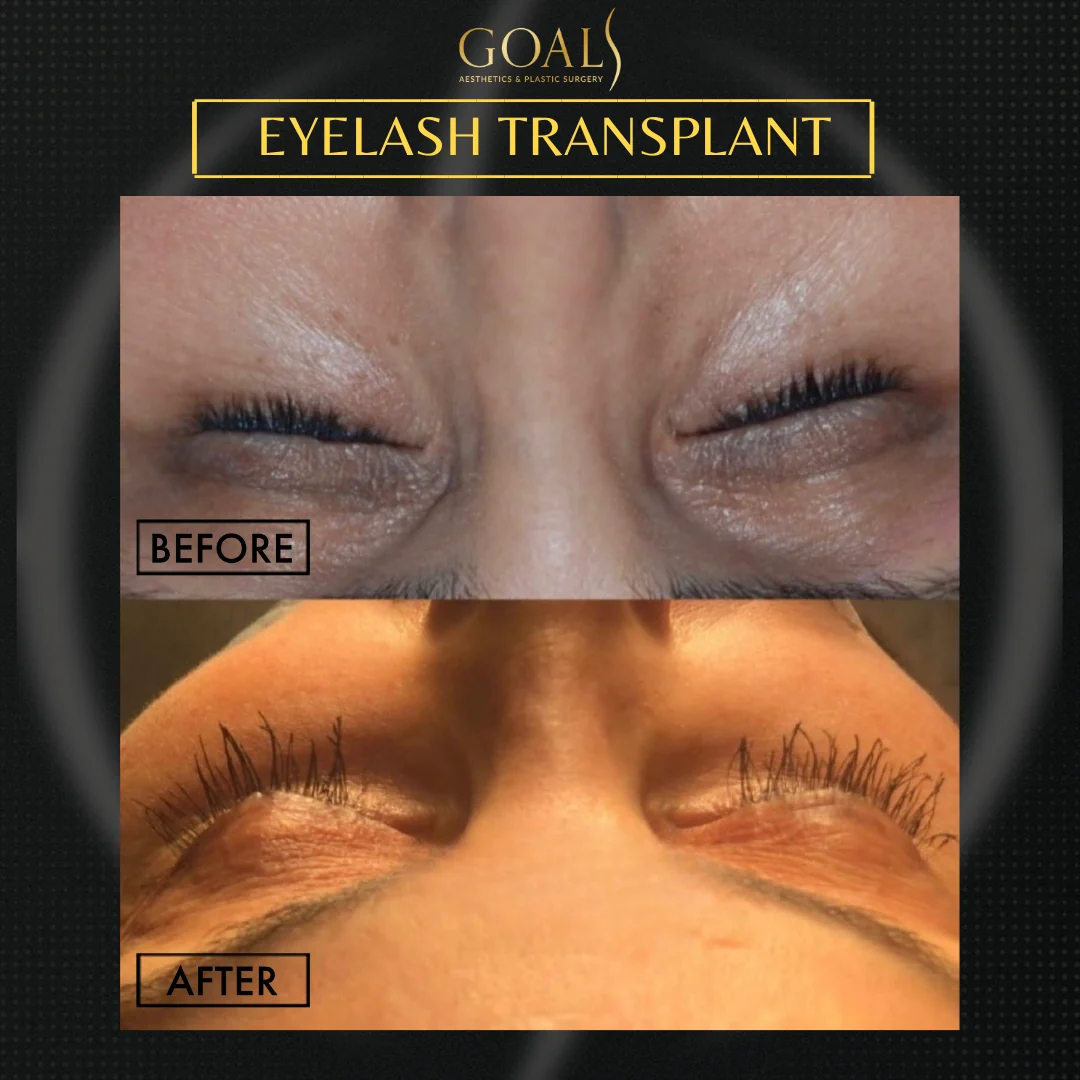
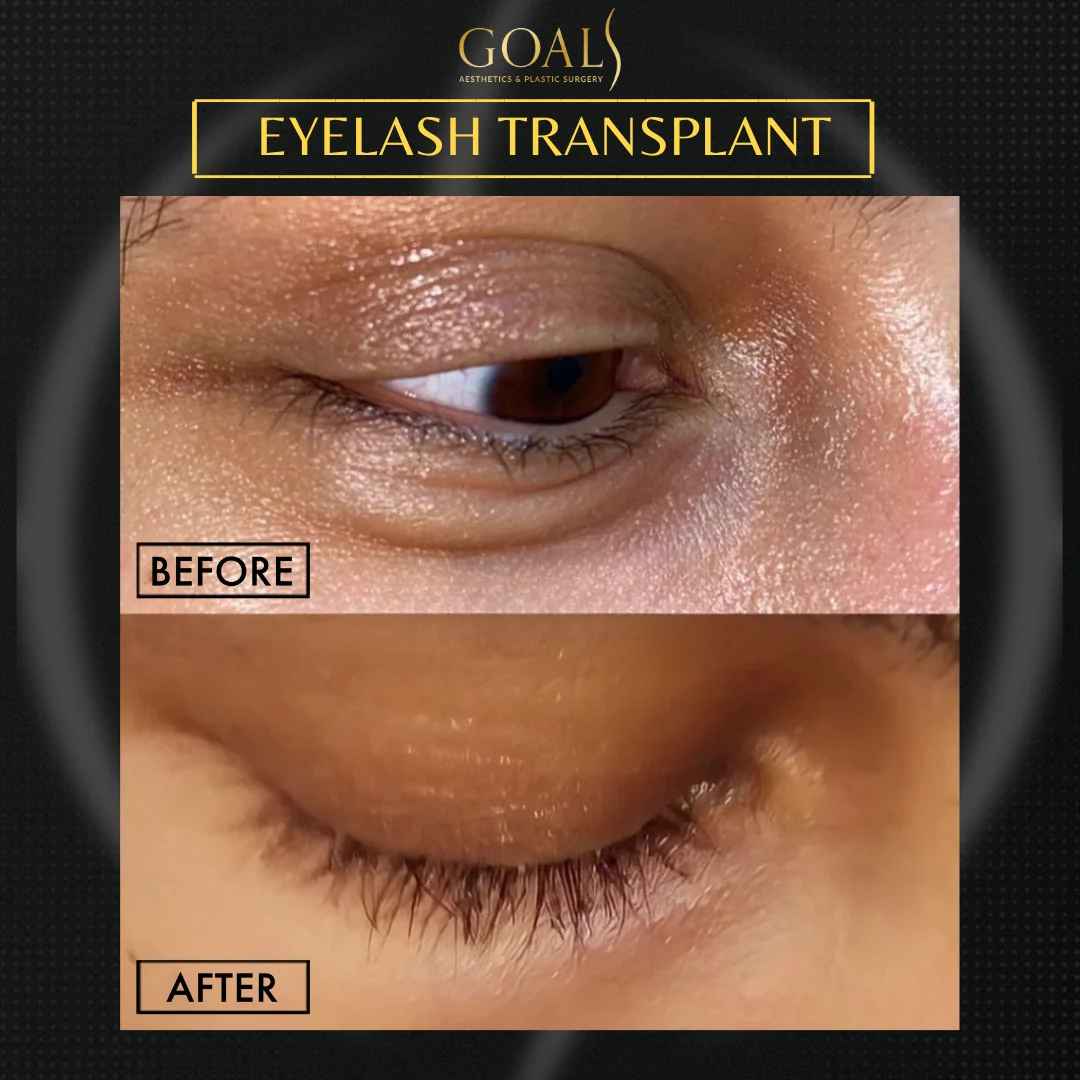
Real patients, published with written consent. Photographs are not retouched or AI-generated. Individual results vary — these images show outcomes for these patients and are not a guarantee of your own.
Try it
Type your height and weight. Your numbers stay on your device. We do not see or save them.
BMI is just one number. Your surgeon also looks at your health and your goals. BMI alone does not decide if you can have surgery.
Clinics
We have a few clinics in these cities.
The same graft technique, used everywhere hair should grow and no longer does.
Eyelash Hair Transplant near you
Non-surgical options
None of these will grow you a lash line. They are scalp treatments, worth knowing if the top is thinning too.
Clinical-strength laser light that wakes up follicles and firms the hair you still have.
Micro-injections of vitamins, minerals, and amino acids sent straight into the scalp.
High-frequency current that lifts scalp circulation and nutrient uptake.
Of every procedure sold on medical tourism sites, this is the one to be most careful with. It sits millimetres from your eye. A graft set at the wrong angle does not just look bad. It grows into the cornea.
| Booking Lashes Abroad | Lash Surgery in the United States |
|---|---|
| Booking Lashes AbroadYou choose a clinic on price, send a deposit, then book flights around the surgery date. | Lash Surgery in the United StatesA licensed surgeon reads your lids, your donor hair, and your history before agreeing to operate. |
| Booking Lashes AbroadThe surgeon has done far more scalps than lids. Lash work is a specialist skill, not a spin-off. | Lash Surgery in the United StatesAngle, curl, and direction get mapped before a single graft goes in, because that decides everything. |
| Booking Lashes AbroadAngle and curl get judged in minutes. Scalp hair grows straight, and it has to be set to curve away from the eye. | Lash Surgery in the United StatesSurgery happens in an accredited clinic under sterile conditions, with local anesthetic and no clock. |
| Booking Lashes AbroadGrafts aimed the wrong way rub the cornea with every blink. This is not cosmetic, it is medical. | Lash Surgery in the United StatesYou head home the same day and are seen again locally while the grafts settle. |
| Booking Lashes AbroadYou fly home days later. Swelling, infection, or a misaimed lash shows up once you are back. | Lash Surgery in the United StatesIf a lash grows the wrong way, we see you in person and fix it. Nobody is putting you on a plane. |
| Booking Lashes AbroadFixing a bad lash line is harder than getting it right the first time, and the surgeon who did it is unreachable. | Lash Surgery in the United StatesYou are told plainly that transplanted lashes keep growing and will need trimming for life. |
| Factor | Overseas Package | Goals U.S. Clinic |
|---|---|---|
| Total cost (real) | Cheap sticker price, then flights, hotels, and a revision. | Whole procedure quoted up front, no surprise bills later. |
| Surgeon skill | Scalp experience, rarely lid experience. Different job. | Surgeons who do fine lash and brow work often. |
| Graft angle | Rushed. A wrong angle drives the lash into the cornea. | Mapped before surgery, since the angle decides everything. |
| Eye safety | A misaimed lash is a medical problem, not a cosmetic one. | Direction checked graft by graft, millimetres from the eye itself. |
| Aftercare | You fly home. Swelling and infection show up alone. | Seen locally while the grafts take and settle in. |
| Revisions | Revision is harder than getting it right first time. | Corrected in person by the team that did it. |
| Honesty | Nobody mentions the trimming for life. | Told up front the lashes keep growing. |
| Legal protections | Little recourse once you have flown home. | Backed by United States patient safety laws. |
How it works
Six steps to fuller lashes.
A surgeon reads your lids, your donor hair, and whether surgery is the right call at all.
Angle, curl, and density get mapped out and agreed before the day.
Fine hairs come off the back of the scalp under local anesthetic.
Each hair goes in one by one along the lid. You go home the same day.
The grafts shed first. That is normal. Regrowth follows in months.
They grow like scalp hair, so you trim and curl them.
Safety
This is surgery on the eyelid. The margin for error is millimetres, and what is at stake if it goes wrong is not your lashes but your cornea.
Direction is planned before surgery, not guessed mid-procedure.
Surgeons who operate on lids, not just scalps.
Accredited clinic, local anesthetic, tight infection control.
We turn people away when surgery is the wrong call.
Seen in person while the grafts take, never by email.
Our surgeons
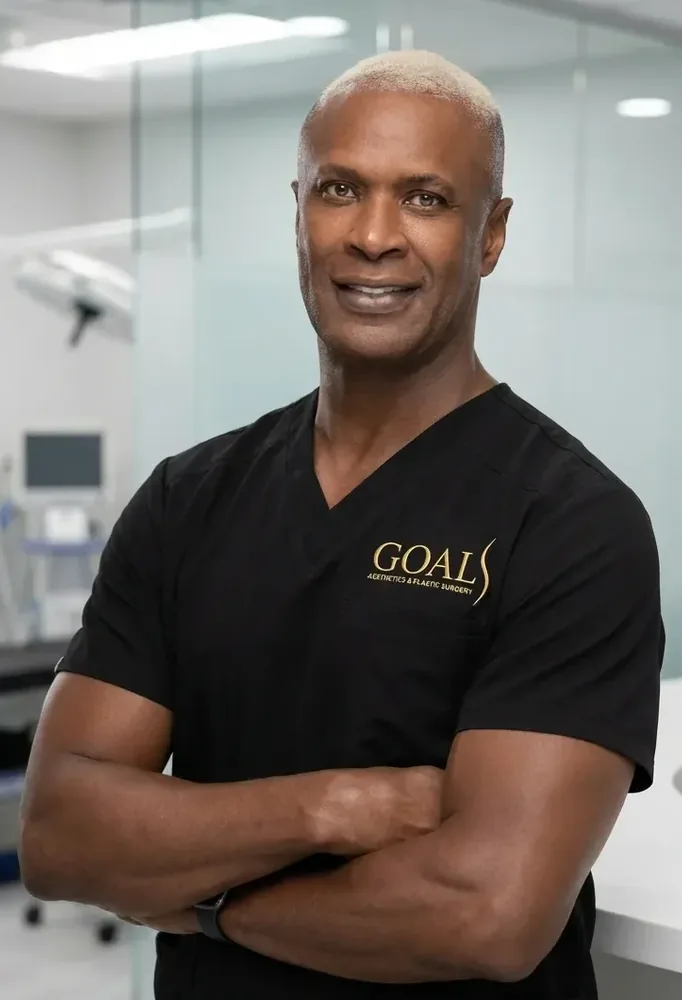
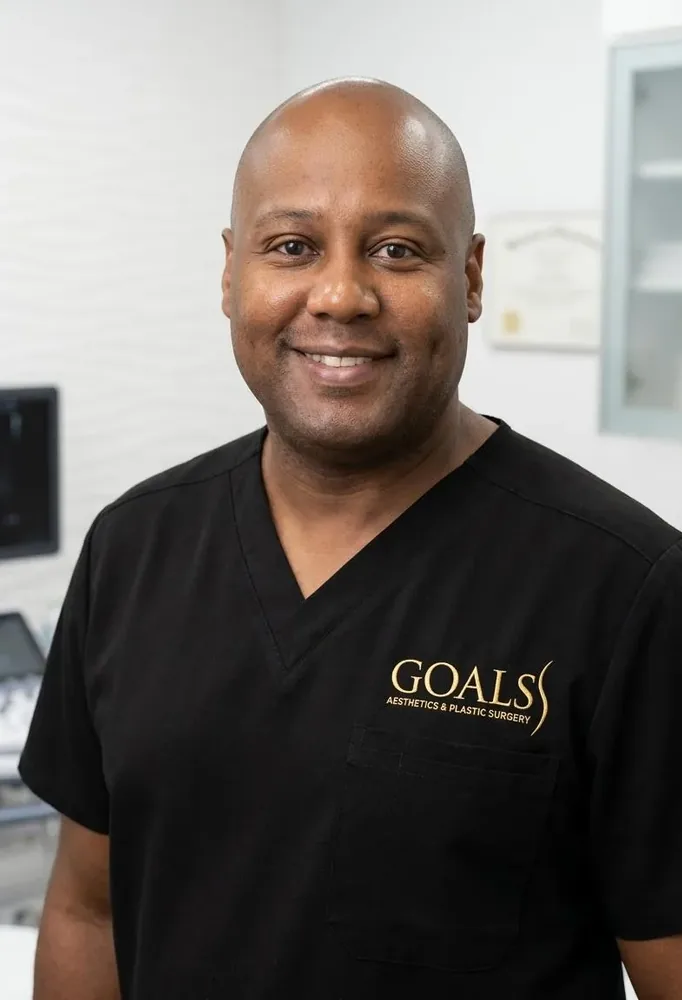
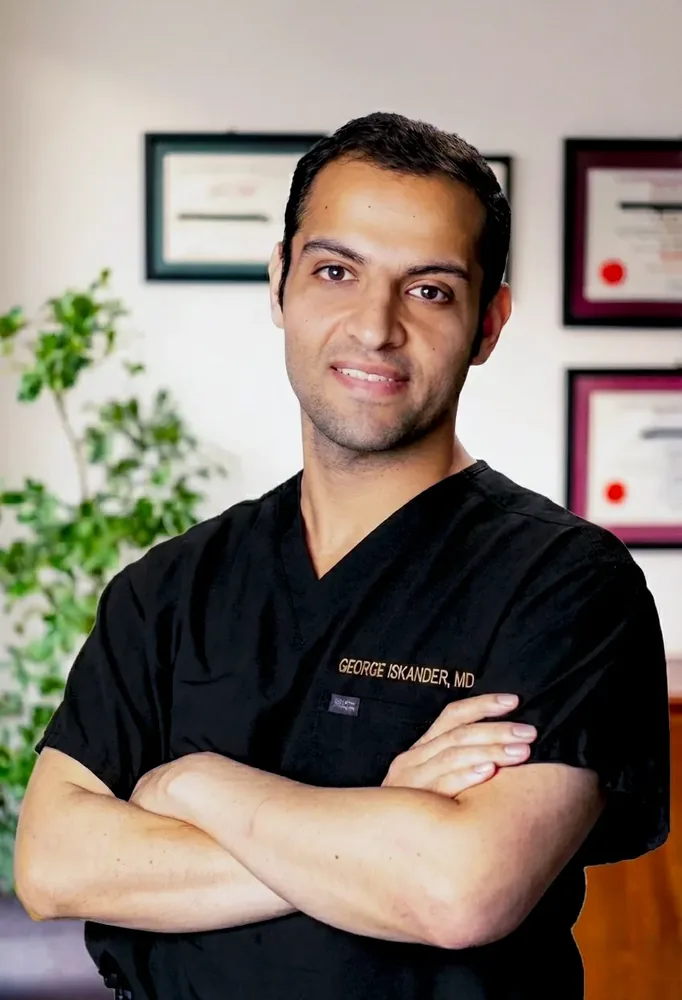
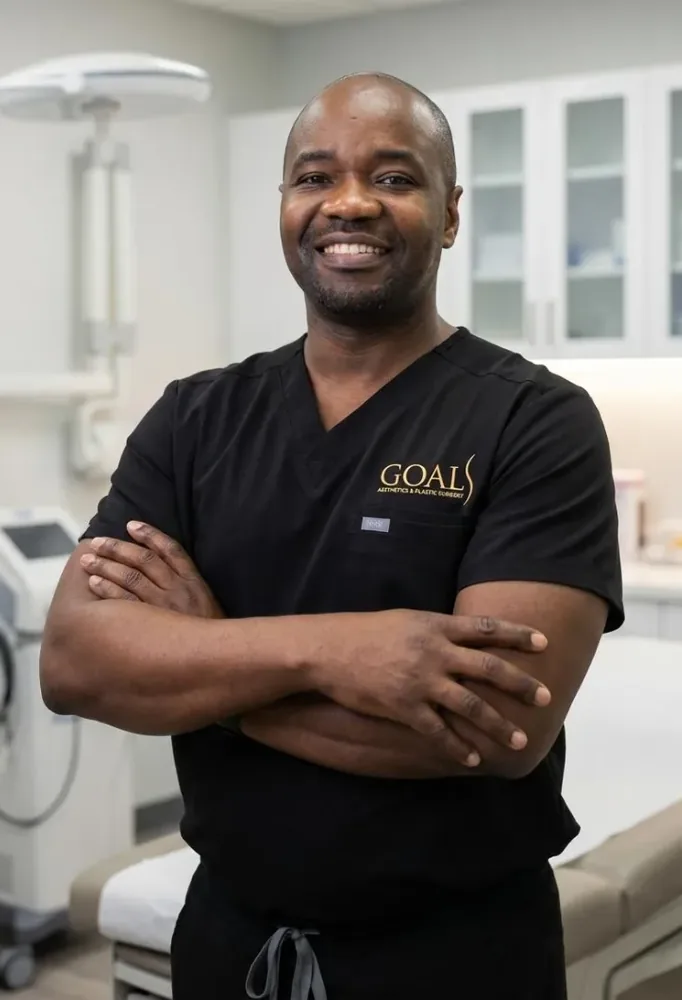
Experienced surgeons at home with lash work.
Each surgeon’s training and licenses are listed on their own page.
Pricing
Anyone weighing the eyelash implants price against a year of extensions is on the right track. This is bought once. What moves the cost of eyelash implants is how many grafts the lash line takes.
You see the full cost before the day, never after.
Bought once, against extensions billed every few weeks for good.
Monthly plans that spread the cost out.
Consultation, surgery, and aftercare all sit in the quote.
Prices shown are starting prices and depend on the number of areas treated. Final pricing is confirmed at your consultation. Cosmetic procedures are not covered by insurance.
Try it
Pick a procedure to see an estimate. Your numbers stay on your device. We do not see or save them.
This is an estimate, not a quote. It splits the starting price over the months you pick, with no interest. Lenders set your real rate and terms. Your price is confirmed at your consultation.
FAQ
Your own scalp hairs. A surgeon lifts fine follicles from the back of your head and grafts them one by one along the lash line, where they root and grow for good. It runs under local anesthetic, you go home the same day, and nothing synthetic goes near the eye.
In the right hands, yes. The real risk is a graft aimed the wrong way, so every lash angle is mapped before surgery and checked one by one. It is delicate work by a sensitive organ, and the surgeon matters more here than most.
Yes, both. These are scalp hairs, so they grow at scalp pace and past lash length. You trim them, and most curl them too, since straight hair sits better curled. It takes a couple of minutes and turns into routine.
If the angles are right, completely. The trick is the curve: scalp hair grows straight, lashes curve, and the surgeon coaxes that graft by graft. Done well, they read as your own. Done badly, they point wrong and show.
Not right away. The grafts shed within weeks, which frightens people who were not warned, but that is normal, not failure. The follicle stays and goes quiet before regrowing. New lashes come after, and the line takes months to fill.
It can, if a graft points inward, which is the whole reason angle is mapped first. A lash turned the wrong way rubs the cornea, a medical issue, not cosmetic. It can be corrected in person, which is why we would not send you abroad.
A serum thickens lashes you still have, but cannot rebuild a line where follicles are gone, and it quits when you stop buying. A transplant is your own hair, placed once. Pricier, but not a bottle you refill forever.
Eyelash Hair Transplant near you
Learn more
A lash transplant is an odd procedure to explain, because the term people type is a little off. There is no implant. Nothing synthetic goes near your eye. What really happens is that a surgeon takes fine hairs from the back of your scalp and grafts them, one at a time, along your lash line, where they root and grow for the rest of your life.
That last part is what the adverts leave out, and it is the thing to grasp before booking: these are scalp hairs, and scalp hairs do not quit at lash length. You will trim them. Forever. For most people that beats a lifetime of glue, refills, and natural lashes yanked out by the extensions meant to help them. For some it does not, and we would rather you knew now.
The technique matches the one used across all of hair restoration. Individual follicular units come off the donor area at the back of the scalp, where the hair resists loss genetically and the individual strands are finest. Those grafts then go into the eyelid margin, one by one, along the natural lash line.
What sets this apart from a scalp procedure is not the harvesting. It is the placement. Every graft has to sit at an exact angle and curve so the hair grows away from the eye, not into it. Scalp hair grows straight. Lashes curve. The surgeon is coaxing a straight hair to act like a curved one, and the only levers for that are angle, depth, and direction, chosen graft by graft, millimetres from the cornea.
That is the whole job, and it explains the rest: why it runs longer than it looks like it should, why it costs what it costs, and why the surgeon counts for more here than on almost any other part of the body.
The search numbers say people look for eyelash implants, so the term is worth meeting head on rather than dodging. But it misleads. An implant implies a synthetic object put into the body. That is not what this is.
The grafts are your own hair, off your own head. There is no foreign material, which is exactly why rejection is not a worry and why the results, once grown in, look like lashes rather than something stuck to a lid. If a clinic ever offers to implant artificial fibres along your eyelid, that is a different procedure altogether, and the honest advice is to walk.
The usual patient has worn extensions for years and watched the natural lashes thin out underneath. Pulling and adhesive do real damage over time. The catch with extensions is that the longer you lean on them, the more you need them.
Beyond that, the strong cases are lash loss from burns, trauma, or surgical scarring; loss from trichotillomania where the pulling has stopped and the follicles never bounced back; alopecia along the lash line; and simply being born with a sparse lash line that no serum has ever shifted.
The wrong candidate has active eyelid disease, unmanaged blepharitis, or an ongoing pulling habit. Operating into an inflamed or actively damaged lid is a bad idea, and a clinic willing to do it anyway is showing you what it cares about. Goals runs a full hair transplant programme precisely so the surgeon assessing you can say no when no is the right call.
This is the section to read twice, because it separates a good result from a real medical problem.
A lash that grows outward, curving away from the eye, is a lash. A lash that grows inward is a foreign body scraping your cornea with every blink. The clinical term is trichiasis, and it is not a cosmetic gripe. It brings irritation, watering, scarring, and in bad cases harm to the eye itself. The one thing standing between those two outcomes is the angle each graft was set at.
That is why the eyelash transplant procedure runs as long as it does, and why it should never be hurried or picked on price. The mapping happens before surgery. The direction gets checked graft by graft. And it is why we will not point you at a cheap flight for this. A misaimed lash can be fixed, but the fix is harder than getting it right the first time, and the surgeon who caused it will not be reachable from another continent.
The donor area and the eyelid both get numbed with local anesthetic. Fine hairs come off the back of the scalp with the same follicular unit extraction technique used in a Follicular Unit Extraction procedure, lifting individual units rather than a strip. The lash line then gets built graft by graft.
You head home the same day. Swelling and tenderness around the eye for several days is normal and expected. Most people are comfortable back at work within the week, though the eye area will look like it has been through something for a while.
Within a few weeks of surgery, the transplanted hairs drop out. Almost every patient who was not warned is sure the procedure has failed.
It has not. The hair sheds, but the follicle stays. It then passes through a dormant phase before it starts making new hair, which is why the final result takes months, not weeks, to show. We take photos at the start so that when you return, the talk is about measurable change rather than memory. Our gallery shows what the lash line really looks like at the far end of that process, which beats anything a brochure can tell you.
Here is the honest part the industry likes to bury. Transplanted lashes are scalp hairs. They grow at scalp pace, to scalp length, and they have no idea they are meant to be lashes. Left alone, they get long.
So you trim them. Most people curl them too, because scalp hair is straighter than lash hair and a curl helps it sit right. It takes a couple of minutes and becomes an unremarkable part of the day, the way trimming a beard does. Patients told this at consultation almost never mind. Patients who find out afterwards feel misled, and they have a point.
The comparison that helps is not against another surgery. It is against extensions. Extensions are a subscription: a fill every few weeks, forever, for as long as you want lashes, while quietly wrecking the natural ones underneath. A transplant is bought once.
What moves the price is how many grafts the lash line needs, which turns on how sparse it is and how full you want it. That gets settled at consultation, because quoting a figure before looking at your lids is a number made up for marketing. Financing is available and can spread the cost out, which is what most patients choose, since it replaces a recurring bill.
Everything that can go wrong here goes wrong at the eyelid, and you cannot watch it. You have no view of the angles being chosen. You cannot check the sterility of the field or tell whether the surgeon has done ten of these or a thousand.
A surgeon brilliant at scalp work is not automatically good at lids. It is a different skill, on delicate tissue, next to an organ that does not forgive mistakes. At Goals the lash line is mapped before surgery, the work happens in an accredited clinic under local anesthetic, and the surgeons doing it are licensed and reachable after. You are seen locally across our locations while the grafts settle, instead of emailing photos of a swollen eye to a clinic in another time zone.
An eye lash transplant takes your own hair and builds a permanent lash line out of it. No glue, no refills, nothing to peel off at night. The risks are real and they gather in one spot: the angle of each graft, because a lash pointing the wrong way is a medical problem, not a cosmetic one. The results take months, they shed first, and they need trimming for the rest of your life. If that sounds fair, it is one of the few beauty procedures that actually cancels the subscription. Book a consultation and get a straight answer about your lids before anyone touches them.
Get started
Done with extensions, or rebuilding a lash line after damage? We will study your lids and tell you straight whether surgery is the right answer.
Prefer to talk now? (833) 462-5769
Free · No obligation
Tell us how to reach you. A patient coordinator calls you back — usually the same day.
Free · No obligation
Ask me anything. I usually reply straight away.
If you share your number, a Goals coordinator may call or text you about your consultation. Message and data rates may apply.
Nora is an automated chat. She cannot give medical advice or say whether a procedure suits you.