Donor Check
We confirm the back of your head is stable. If it thins too, surgery will not last.
A female hair transplant moves your own hair into the part and the thinning top. Diffuse loss needs its own plan.
From $5,000
Overview
Your own follicles shift from the back of your head into the thinning top. Women still search hair plugs for women, but plugs are long dead. Nothing synthetic goes in. It is your own hair, relocated.
How it works
We confirm the back of your head is stable. If it thins too, surgery will not last.
The part and the frontal third get mapped first.
Follicles slot between the hairs you still have, no head-shaving, to thicken what is already there.
Candidacy
The gate is your donor area. Women thin diffusely, and if the back of your head is fading too, moving hair from there just shifts the problem. Not every woman is a candidate.
The part has been opening up for years.
The back and sides have kept their density.
Years of tight styles dragged the hairline back.
You want the hairline moved forward, not thickened.
Curly follicles need a surgeon used to them.
Conditions we treat
Female loss is diffuse. The pattern decides whether surgery helps or must wait.
The classic first sign: the part opens while the hairline holds.
Density fading across the whole top, with no bald patch.
Braids, weaves, and tight ponytails dragging the hairline back.
A forehead you have always wanted moved forward.
This usually recovers. We treat it, we do not operate.
Medical shedding. Diagnosed and treated before any surgery.
Each female hair transplant before and after here is a real woman.
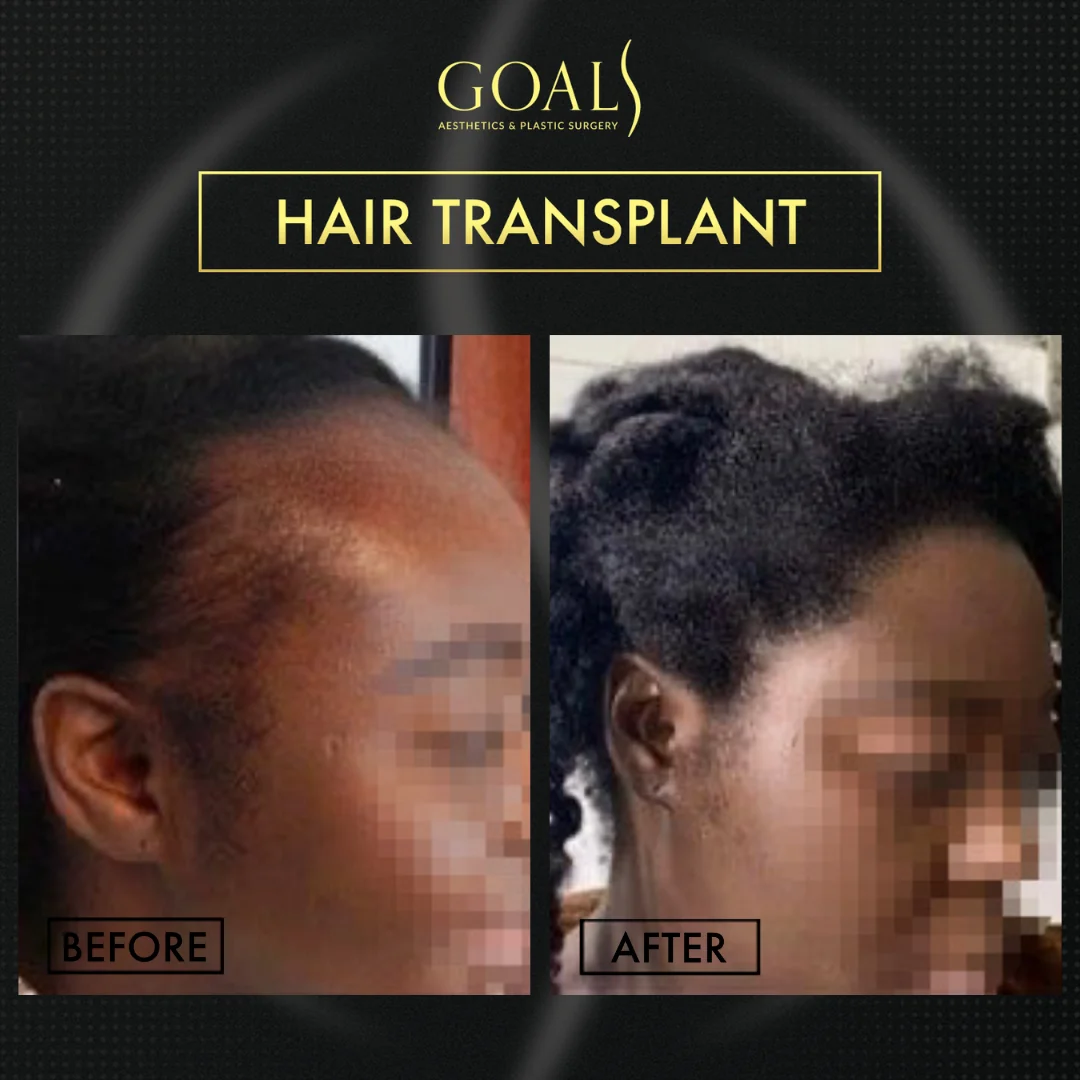
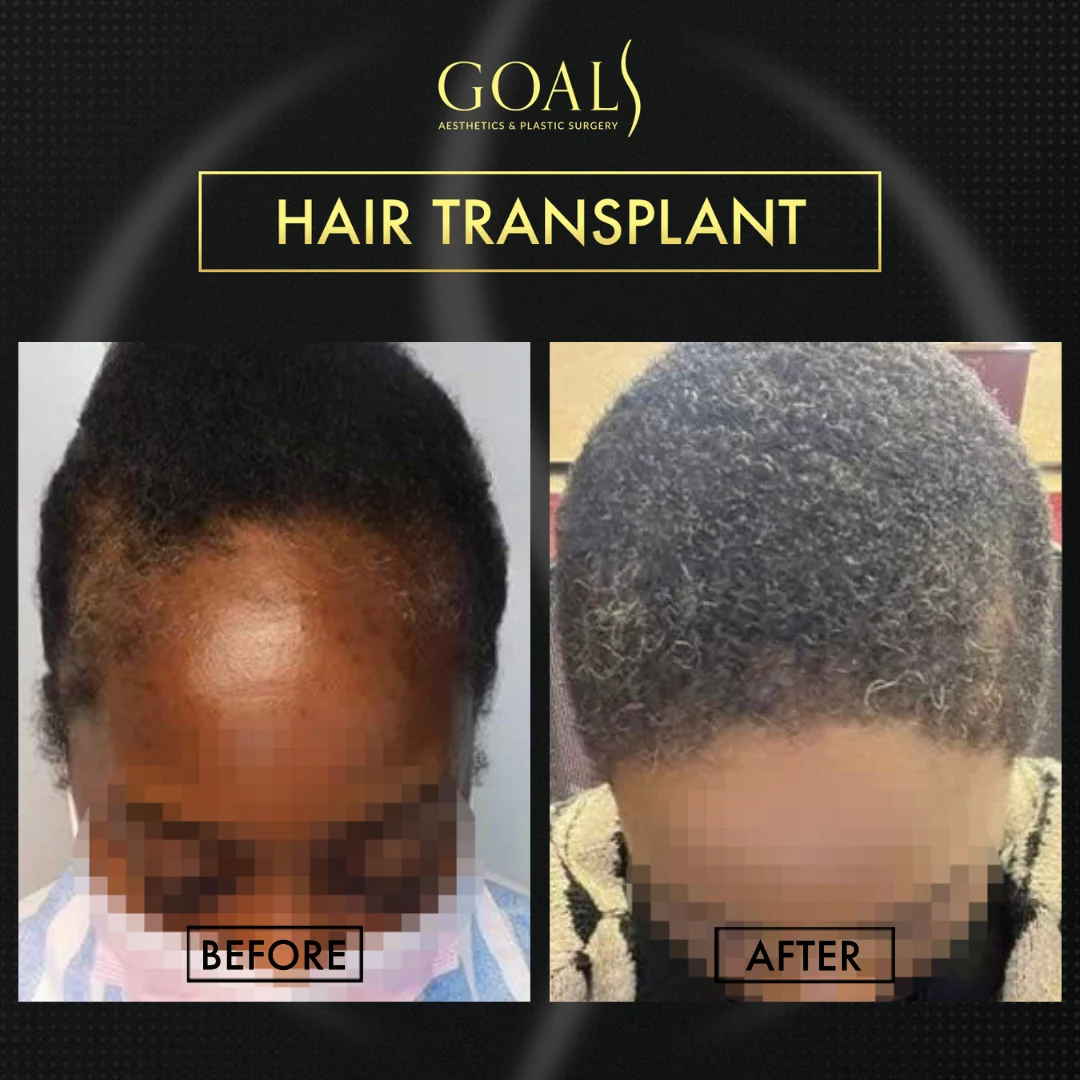
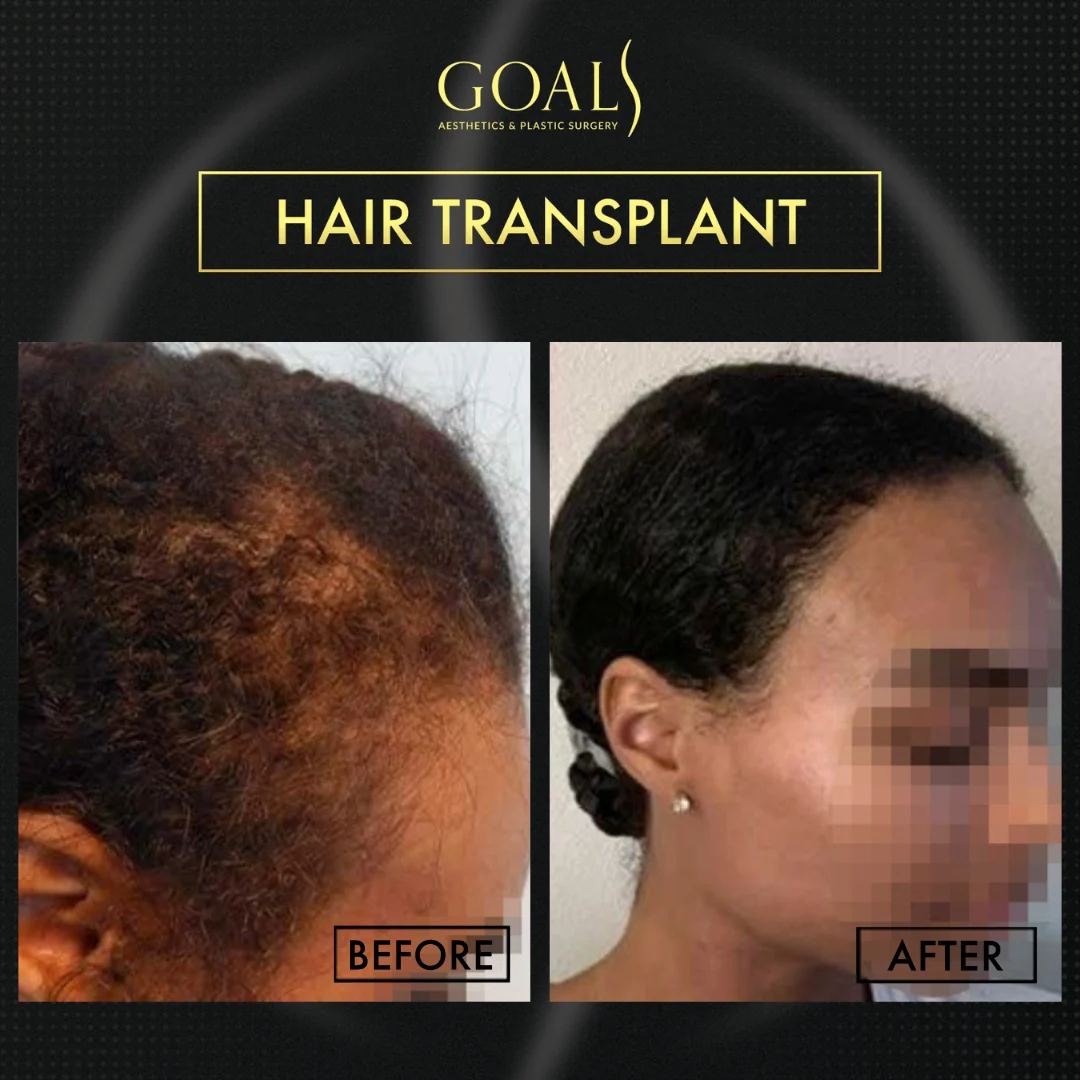
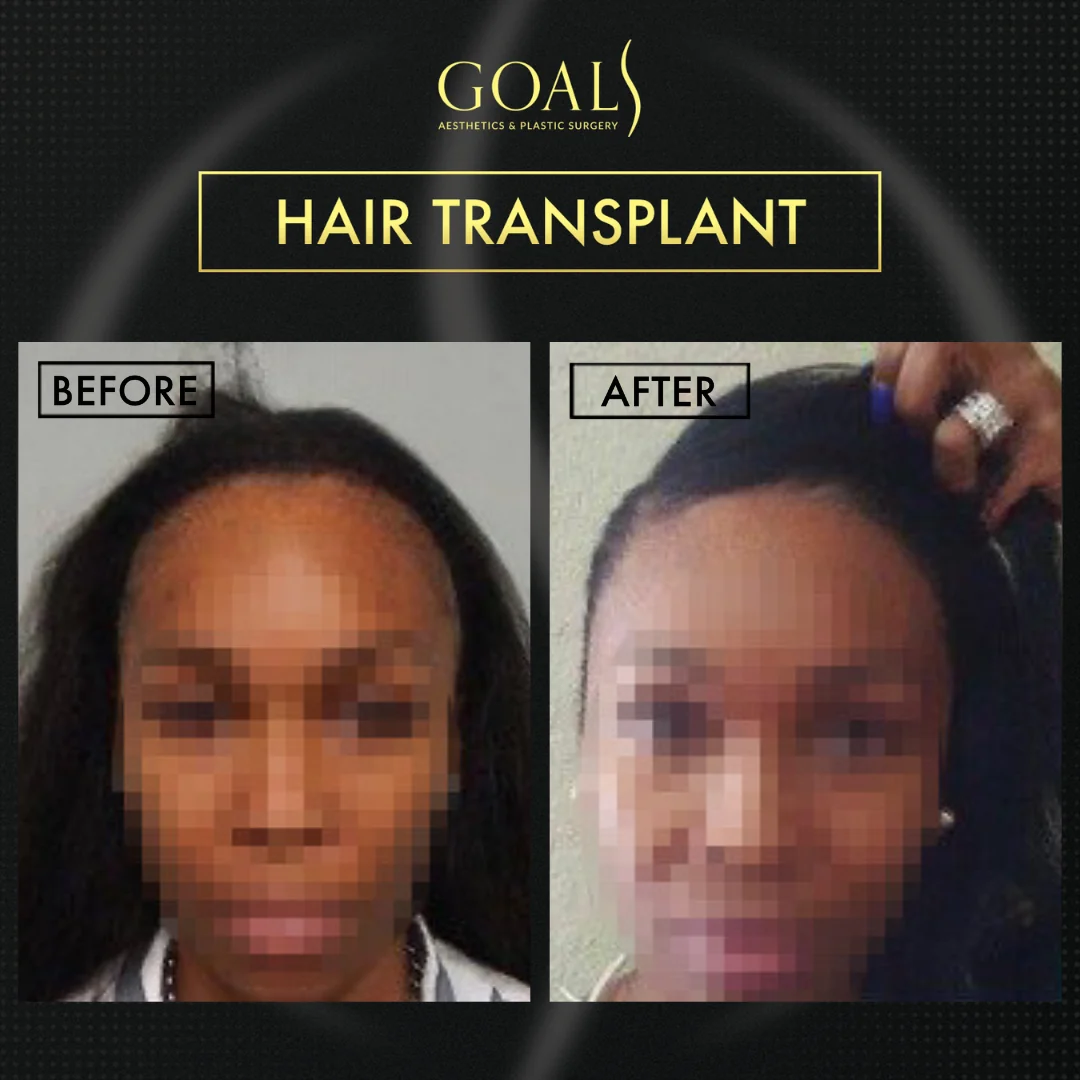
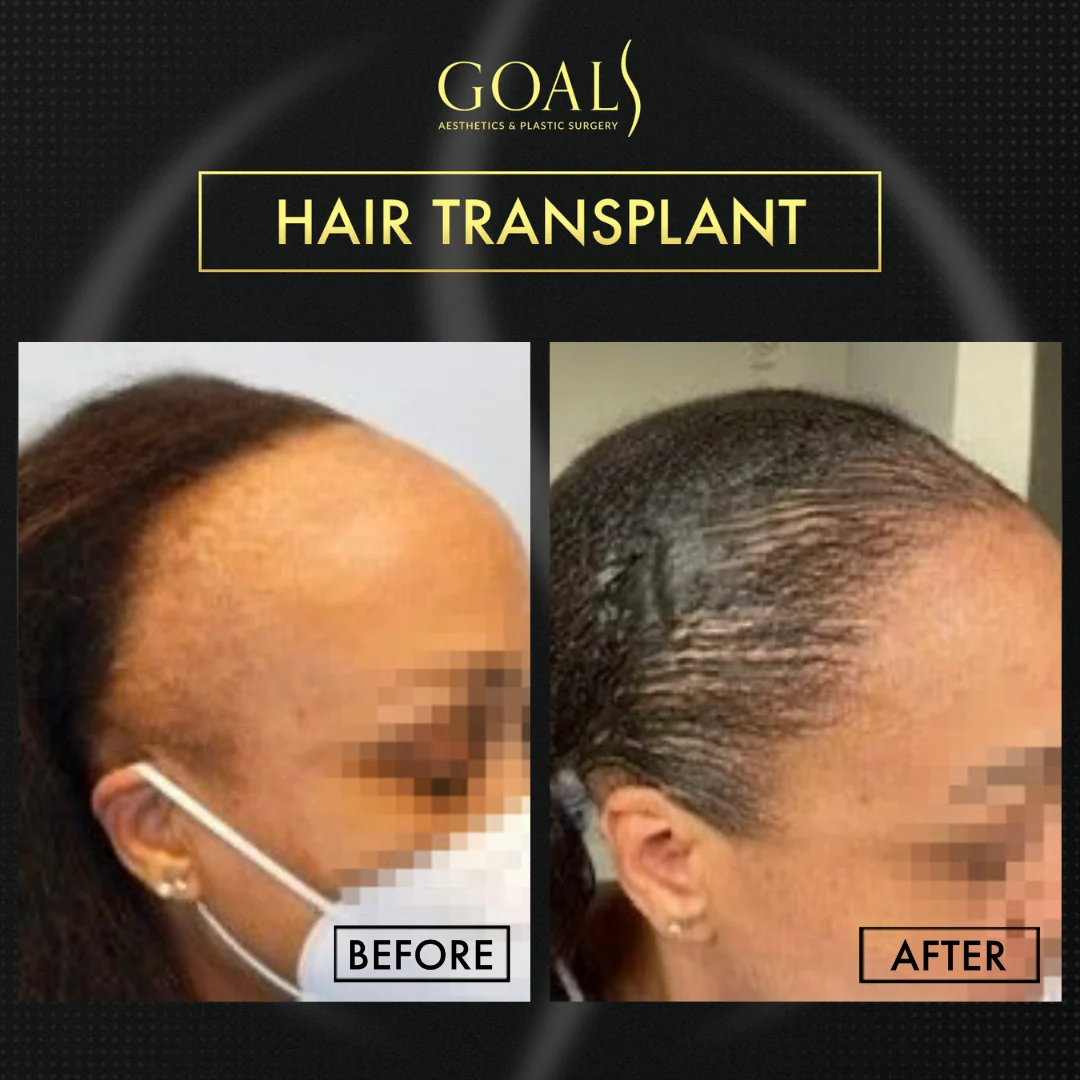
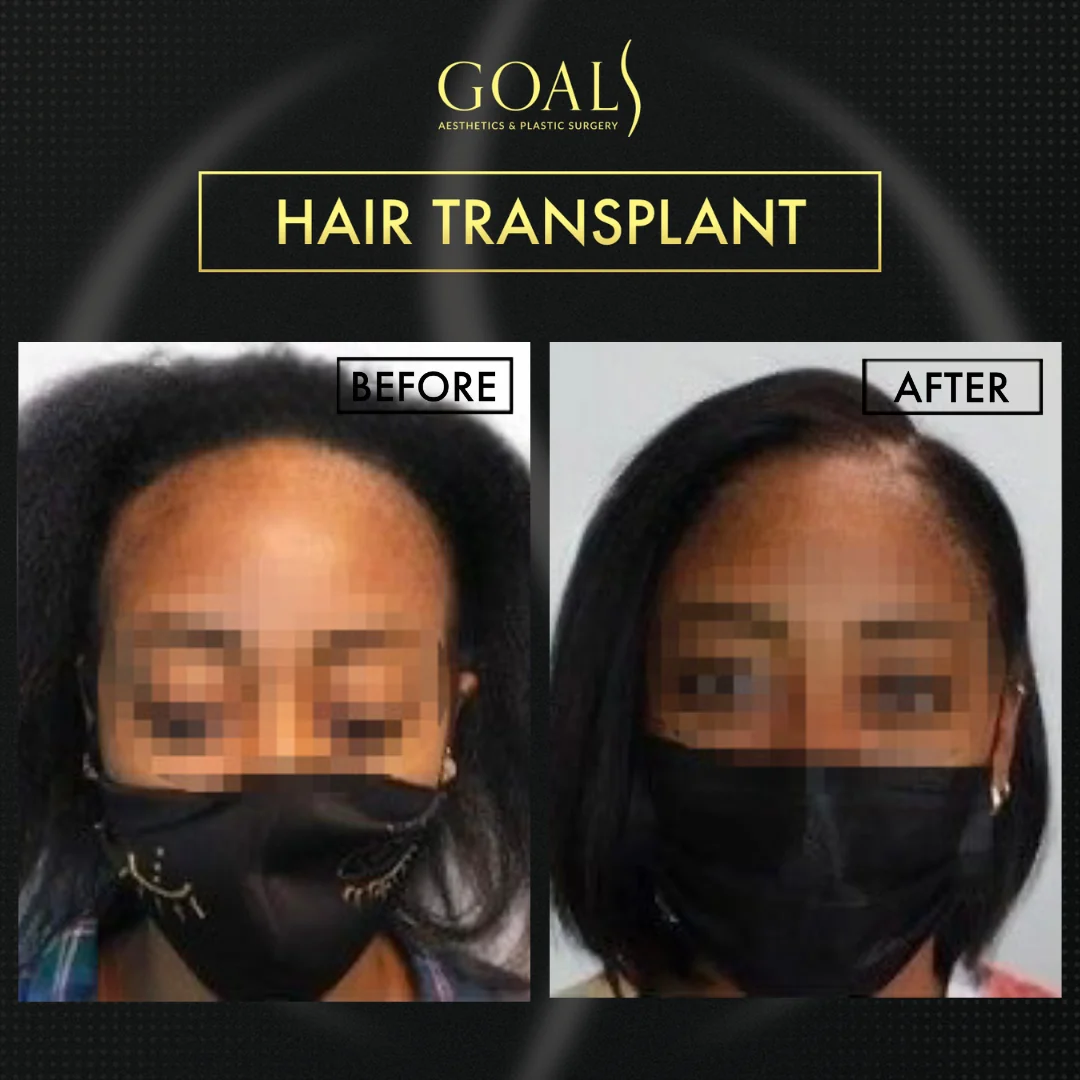
Real patients, published with written consent. Photographs are not retouched or AI-generated. Individual results vary — these images show outcomes for these patients and are not a guarantee of your own.
Try it
Type your height and weight. Your numbers stay on your device. We do not see or save them.
BMI is just one number. Your surgeon also looks at your health and your goals. BMI alone does not decide if you can have surgery.
Clinics
We have a few clinics in these cities.
The same graft technique, used wherever the hair has thinned.
Women's Hair Transplant near you
Non-surgical options
For women, non-surgical treatments carry more weight, since the options are narrower than they are for men. That makes these matter more, not less.
Clinical-strength laser light that wakes follicles and firms up the hair you still have.
Micro-injections of vitamins, minerals, and amino acids sent straight into the scalp.
High-frequency current that lifts scalp circulation and nutrient uptake.
For women, the danger is not a bad graft. It is being operated on at all. Half the women who walk into a cheap clinic should have been sent to a doctor for bloodwork instead, and abroad, nobody is ever going to say that.
| Getting It Done Abroad | Women's Surgery in the United States |
|---|---|
| Getting It Done AbroadYou are sold a graft count. Nobody asks why your hair is thinning in the first place at all. | Women's Surgery in the United StatesWe work out WHY your hair is thinning before we discuss whether surgery is even the right answer. |
| Getting It Done AbroadNo medical review. Thyroid trouble and low iron both thin hair, and both are treatable. | Women's Surgery in the United StatesThyroid, iron, and hormonal causes get ruled out first. Some women need a doctor, not a surgeon. |
| Getting It Done AbroadNobody checks whether your donor area is stable. If it is thinning too, the grafts thin as well. | Women's Surgery in the United StatesYour donor area is checked for stability. If it is not stable, we tell you no. |
| Getting It Done AbroadPostpartum shedding gets operated on instead of waited out, when it would have recovered on its own. | Women's Surgery in the United StatesActive shedding is treated and left to settle before anyone operates on it. |
| Getting It Done AbroadShock loss hits the native hair around the grafts, and nobody is there to tell you it is temporary. | Women's Surgery in the United StatesYou are warned about shock loss up front, so the shedding afterwards does not terrify you. |
| Getting It Done AbroadYou fly home having spent donor hair you could not spare, on a problem that was medical all along. | Women's Surgery in the United StatesNon-surgical treatment guards the hair you still have, which matters more for women. |
| Factor | Overseas Package | Goals U.S. Clinic |
|---|---|---|
| Total cost (real) | Cheap sticker price, then flights, hotels, and a wasted surgery. | Whole procedure quoted up front, no surprise bills later. |
| Diagnosis | None. Nobody asks why the hair is thinning at all. | We find the cause before we discuss surgery. |
| Medical causes | Skipped. Thyroid and iron are never looked at. | Reviewed first. Some women need a doctor, not surgery. |
| Donor area | Unchecked. Thinning donor hair keeps thinning after grafting. | Checked properly. If it is not stable, we say no. |
| Active shedding | Operated on, when it would have recovered by itself anyway. | Treated and settled before anyone operates on it. |
| Shock loss | Never mentioned. You panic when it hits. | Explained up front, so you are not frightened. |
| Textured hair | Curly follicles handled by someone learning on you. | Surgeons who know your hair type. |
| Legal protections | Little recourse once you have flown home. | Backed by United States patient safety laws. |
How it works
Six steps, starting with why.
A proper look at the cause and your history first. Thyroid, iron, and hormones all thin hair, and all are fixable.
We check the back of your head is stable enough to spare hair.
The part and frontal third get mapped, where density shows most.
Follicles set between your existing hairs. No head shave.
Grafts shed, and some native hair may too. Both return.
The part closes gradually over the months that follow.
Safety
The biggest risk for a woman is not a bad graft. It is having surgery when the cause was thyroid, iron, or hormones, and a proper workup would have found it.
A proper look at the cause before any talk of surgery.
If the back of your head is fading, we tell you no.
You are warned before, not consoled after.
Grafts set among the hair you already have.
Surgeons experienced with curly follicles.
Our surgeons
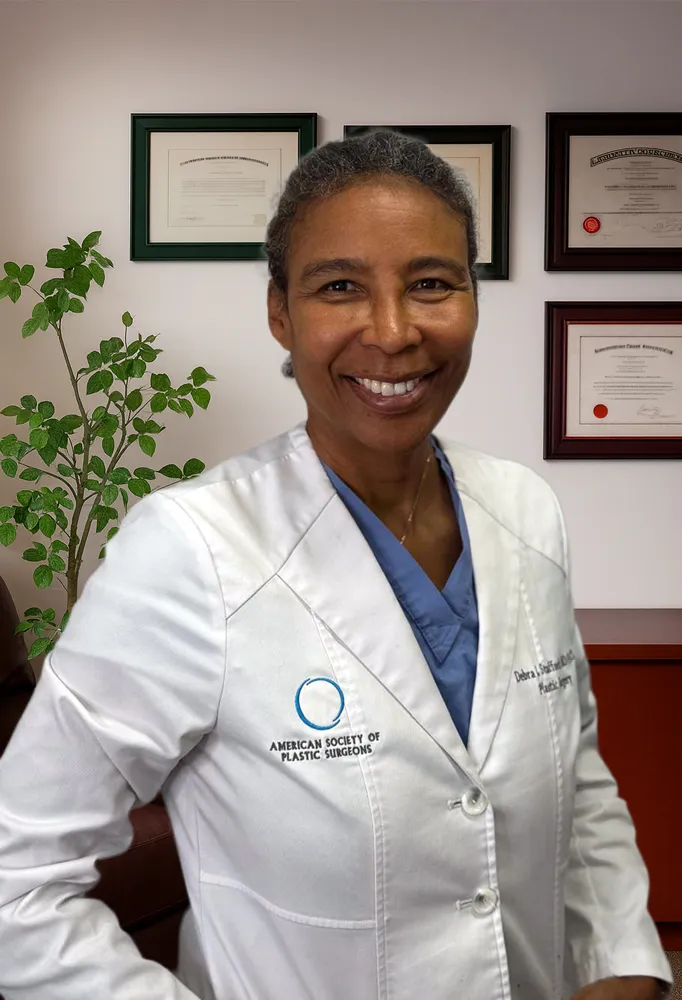
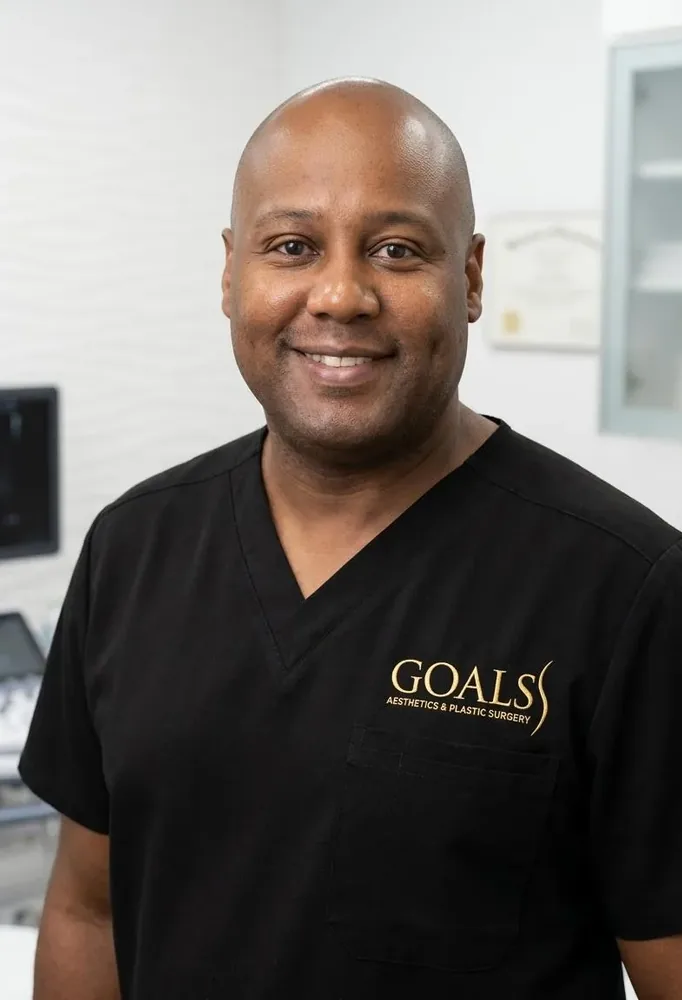
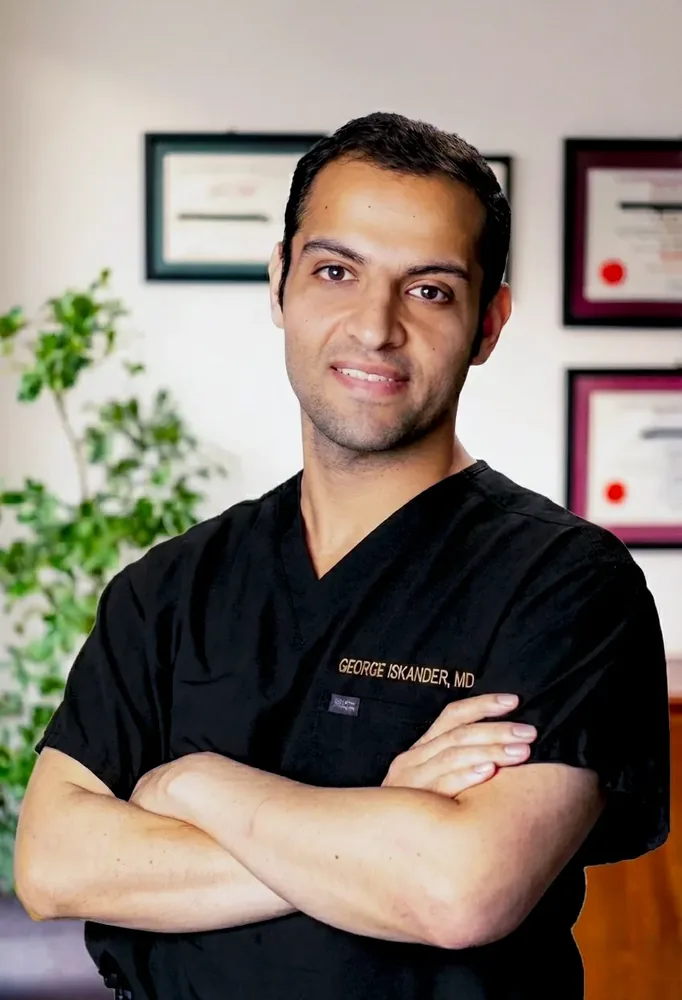
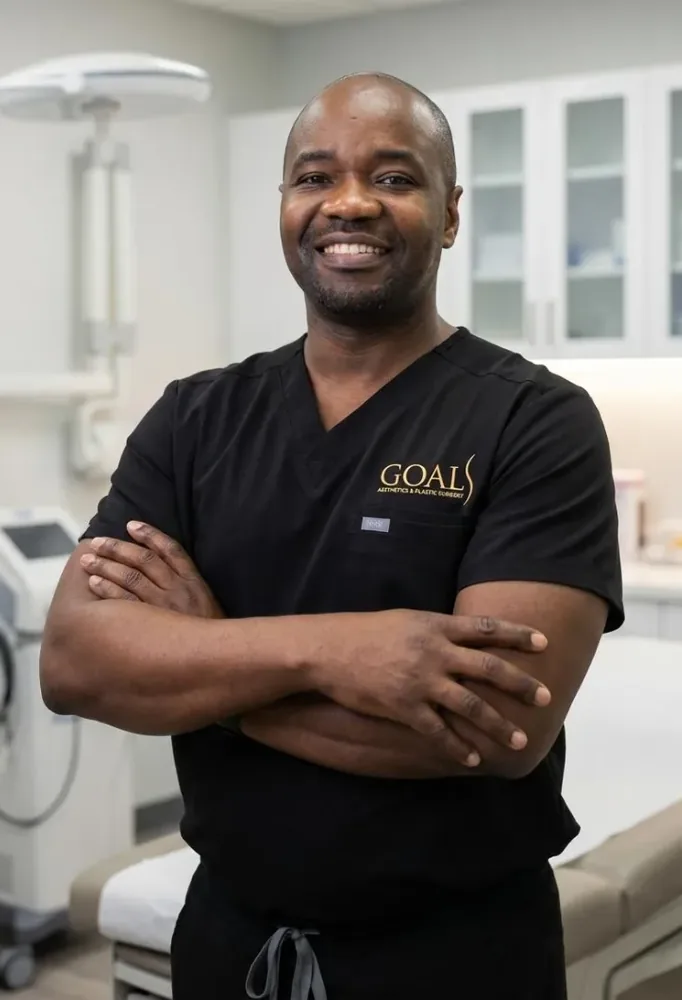
Experienced surgeons skilled in female hair loss.
Each surgeon’s training and licenses are listed on their own page.
Pricing
The female hair transplant cost turns on how much of the top needs covering, and diffuse thinning covers more ground than a patch. The hair implants for women cost is quoted in full ahead of surgery.
You see the full cost before the day, never after.
Working out the cause sits in the consultation, not an extra.
Monthly plans that spread the cost over time.
Consultation, surgery, and aftercare all sit in the quote.
Prices shown are starting prices and depend on the number of areas treated. Final pricing is confirmed at your consultation. Cosmetic procedures are not covered by insurance.
Try it
Pick a procedure to see an estimate. Your numbers stay on your device. We do not see or save them.
This is an estimate, not a quote. It splits the starting price over the months you pick, with no interest. Lenders set your real rate and terms. Your price is confirmed at your consultation.
FAQ
Women rarely recede at the front the way men do. The loss is diffuse: the part widens and the crown thins while the hairline holds. Surgeons map it on the Ludwig scale, not the male Norwood, so the plan aims density into the part and top, not a new front edge.
Because your donor area may be thinning too. Over half of women have diffuse loss reaching the back and sides, so a graft from there keeps thinning after the move. A stable donor is the whole condition of surgery, checked first.
The medical ones. Thyroid trouble, low iron, PCOS, stress, crash dieting, and postpartum shedding all thin hair, none needing surgery. Finding the cause comes before grafts, since operating on what a review would catch wastes donor hair.
It might be. Years of tight braids, weaves, and ponytails pull the hairline until the edge follicles give out: traction alopecia. It grafts well once the pulling stops, and caught early it is preventable.
Often more than you would guess, since diffuse thinning covers more ground than a bald patch. The figure depends on how much of the top needs density and your donor strength. Anyone quoting before seeing your scalp means to revise it.
Not quite, and it is an honest gap. The options for women are narrower than for men, which is exactly why non-surgical treatments and a correct diagnosis first matter more. We tell you what actually helps in your case.
Yes, a different job from treating loss. No disease to diagnose, just design: where a natural hairline sits, how soft its edge, how density tapers. Grafts build the line where you want it. One of the nicer jobs we do.
Women's Hair Transplant near you
Learn more
Women do not go bald the way men do, and that single fact changes everything about this procedure. There is usually no shiny patch, no obviously receding hairline, nothing that announces itself. What there is instead is a part line that has been quietly widening for years, a ponytail that has grown thinner in your hand, and a growing habit of tilting your head a certain way in photographs.
A female hair transplant can rebuild that density with your own hair, for good. But the honest truth is that a real share of the women who ask about it should not have surgery at all, and not because a clinic is being awkward. Female loss is usually diffuse, graded on the Ludwig scale rather than the male Norwood one, and a good part of it has a cause that a scalpel cannot touch but a blood test can find. That is where an honest consultation begins, and any clinic that skips straight to grafts is selling you something.
The principle holds across all hair restoration. Follicles at the back and sides of the scalp shrug off the hormonal process that thins the top. Move one and it keeps that immunity. They come out with Follicular Unit Extraction, lifting individual follicular units and leaving no line, or Follicular Unit Transplantation when a higher graft count is called for. The whole thing runs under local anesthetic.
What changes is the target. A man's surgery usually rebuilds a hairline that has marched backward. A woman's hairline typically holds while the thinning spreads across the top and the part, so a hair replacement surgery for women works into the part and the frontal third, threading grafts between the hairs you still have to thicken what is there rather than blanketing bare scalp. Nobody shaves your head. Most women are back at work with nobody the wiser.
Two search terms deserve a straight correction, because both mislead and both get typed constantly.
Women look up hair plugs for women. Plugs were a genuine technique once, decades back: fat round grafts punched into the scalp that gave the tufted, doll-hair look people still shudder at. They are extinct. No reputable surgeon has used them in a very long time, and today's work, single follicular units set one at a time, looks nothing like them.
Women also search hair implants for women. Nothing is implanted. There is no synthetic fibre, nothing foreign, nothing your body could reject. Your own follicles are relocated. If a clinic ever offers to implant artificial hair into your scalp, the right move is to walk out the door, because the complication rates on synthetic fibres are exactly as grim as they sound.
This is the section that counts most, and it is where an honest clinic and a greedy one part ways entirely.
Female hair loss runs on more causes than male loss, and several are medical, temporary, and fixable without any surgery. An underactive thyroid thins hair. Low iron thins hair. Polycystic ovary syndrome thins hair. So do hard stress, crash dieting, some medications, and the hormone crash after childbirth, where postpartum shedding looks alarming and usually rights itself if simply left alone.
Operating on any of those is a blunder. It burns donor hair you may want later on a problem a blood panel would have caught and a doctor could have treated. That is why the first step at Goals is a diagnosis, not a tape measure: history and a real look at what is driving the loss before anyone mentions grafts. Some women leave with a referral instead of a surgery date, and that counts as a good consultation, not a lost sale.
Here is the second hard truth, and the one that rules out more women than any other.
Because it is diffuse, female loss does not always stay politely on top. Doctors split it in two: patterned loss spares the back and sides, while unpatterned loss spreads into them, and more than half of women fall into that second group. When the donor zone itself is thinning, a graft lifted from it just keeps thinning in its new home. You would pay for surgery, wait a year, and watch the transplanted hair behave exactly like the hair it replaced.
So a stable donor zone is not a bonus. It is the thing the whole procedure stands on. Judging it properly takes time and candour, and a clinic paid by the graft has every reason not to look too closely. Goals runs a full hair transplant programme precisely so a surgeon can read the whole head and say no when no is the honest answer.
After surgery, the transplanted hairs fall out. Most people expect that part now. What fewer women hear is that some of their own native hair around the grafts can shed too. That is shock loss: temporary, and more common in women than in men.
It grows back. But a woman who was never warned, watching hair drop out in the weeks after paying for surgery, goes through something genuinely awful for no reason. Saying so in advance costs nothing and changes everything, and there is no excuse for a clinic that leaves it out.
Tightly curled hair is no harder to transplant in theory, but it is harder in practice. The follicle bends under the skin as much as above it, so lifting it cleanly needs a surgeon who can read that hidden curve and not slice the follicle on the way out. That feel comes from volume of cases, and a clinic that rarely handles textured hair will be learning on you.
Then there is traction alopecia. Years of braids, weaves, tight ponytails, and heavy extensions drag steadily on the hairline until the edge follicles quit for good. It is one of the most common reasons Black women come to us, it grafts well once the pulling has stopped, and caught early it is entirely preventable. The fair question to put to any clinic is plain: how often do you work with hair like mine?
Not every woman asking about a transplant is losing hair at all. Some have simply always had a high forehead, a hairline set further back than they would like, and want it moved forward.
This is a wholly different job from treating thinning. No disease to diagnose, no donor instability to fear; it is pure design: where the new line should sit, how soft and irregular its edge must be to read as natural, and how the density should fade back. It is one of the more satisfying things we do, because the result is exactly as good as the planning behind it. Our gallery shows both hairline-lowering and density cases, worth a close look because they are genuinely not the same thing.
Women's options for pattern loss are narrower than men's, bluntly, and that gap is part of why female loss so often gets managed worse than male loss.
That makes the non-surgical options more important for women, not less. A concentrated-platelet therapy uses your own blood components to shore up struggling follicles and holds the strongest evidence of the bunch. Low-Level Laser Therapy uses clinical-strength light with no needles, and Goals notes on its own pages that it suits both men and women. Mesotherapy Hair Restoration sends nutrients straight into the scalp, and Darsonval Hair Restoration lifts scalp circulation.
None of these rebuilds a scalp that has thinned badly. All of them help hold the ground you still have, and for a woman whose donor area rules surgery out, they are not a runner-up prize. They are the treatment.
Diffuse thinning spreads over more scalp than a defined bald spot, so a woman's graft count often runs higher than she braces for. The honest line on price is that it turns on how much of the top needs density, and any clinic naming a figure before it has examined your scalp is naming one it plans to walk back.
Goals quotes the full cost before surgery, with consultation, diagnosis, and aftercare folded in, because working out why your hair is thinning is part of the visit, not a surprise line item. Financing is available and spreads the cost out. And because the moved follicles resist the very process that thinned the hair to begin with, this is bought once rather than topped up forever.
A women's hair transplant moves your own permanent hair into a widening part and a thinning top. It is not the men's operation relabelled: the loss is diffuse, graded on the Ludwig scale, the hairline usually survives, the donor zone is the gate that decides candidacy at all, and shock loss is likelier. Most of all, a fair slice of female loss is medical, temporary, or treatable, and the first thing an honest clinic does is find out which. Book a consultation, get a diagnosis before a quote, and be wary of anyone who hands you the quote first.
Two things belong together here: the coiled follicle and the pulled hairline, because Black women meet both more than anyone.
Get started
Watching your part widen? We will find out why before we talk about surgery, because for a lot of women the answer is treatable without it.
Prefer to talk now? (833) 462-5769
Free · No obligation
Tell us how to reach you. A patient coordinator calls you back — usually the same day.
Free · No obligation
Ask me anything. I usually reply straight away.
If you share your number, a Goals coordinator may call or text you about your consultation. Message and data rates may apply.
Nora is an automated chat. She cannot give medical advice or say whether a procedure suits you.