Want a Modest Increase
Good for adding about one cup, not for jumping A to D in one go.
Natural breast enhancement using your own body fat—no implants, no foreign material.
Pick up a modest cup size and refine your shape with fat transfer breast augmentation, which moves liposuctioned fat into the breasts while slimming the spots it came from.
From $8,500
Free Consultation
Your consultation is free and carries no obligation.
Overview
Fat transfer breast augmentation pulls fat from your stomach, hips, or thighs by liposuction and injects it into the breasts for volume. You'll also hear it called autologous fat transfer breast augmentation, and no implants come into it.
How it works
We liposuction fat from wherever you'd like slimmer: belly, flanks, or thighs.
That fat is cleaned and processed down to the healthiest cells.
The purified fat goes into the breasts in fine layers to build shape.
Results
Browse before-and-after photos.
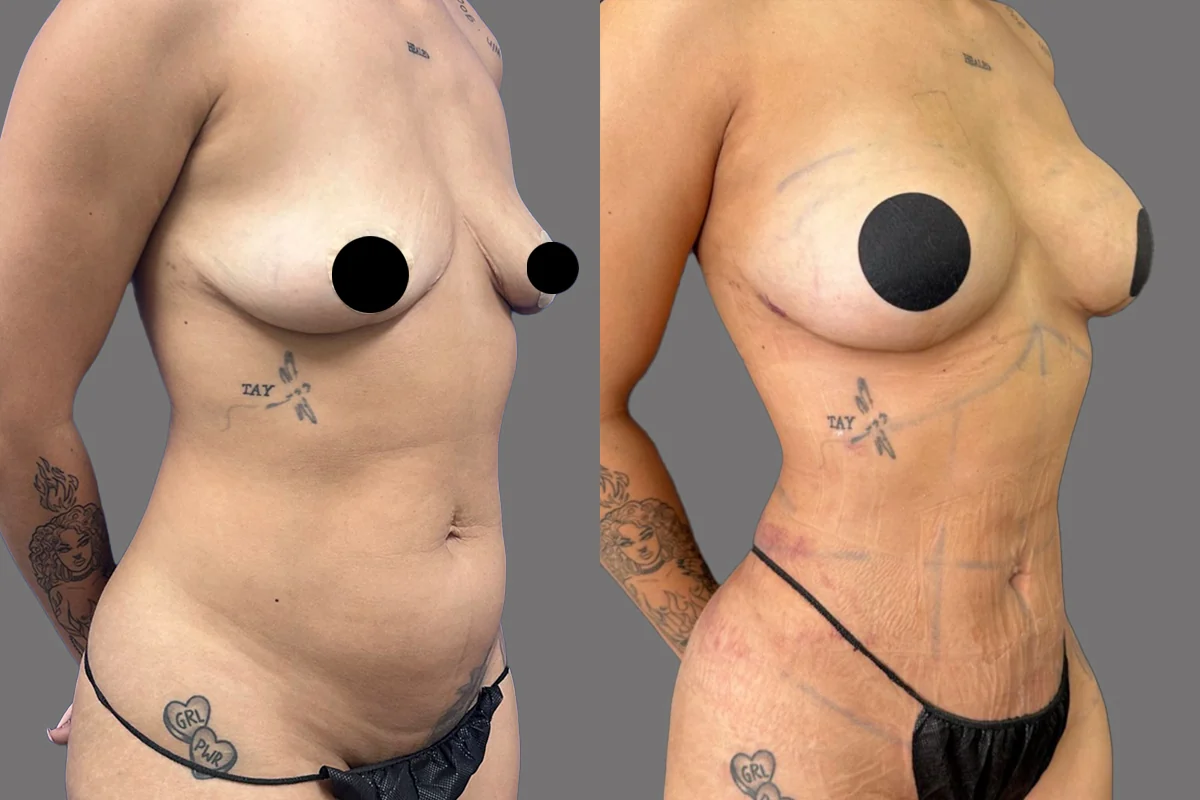
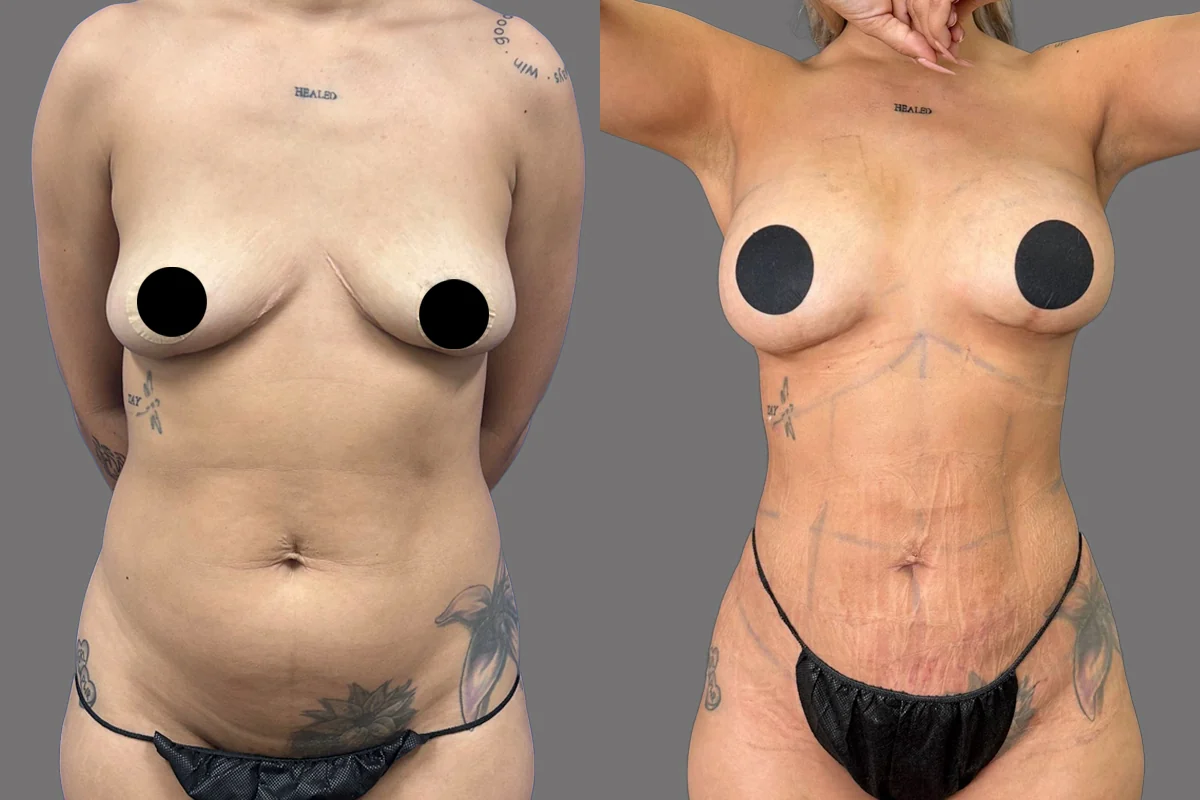
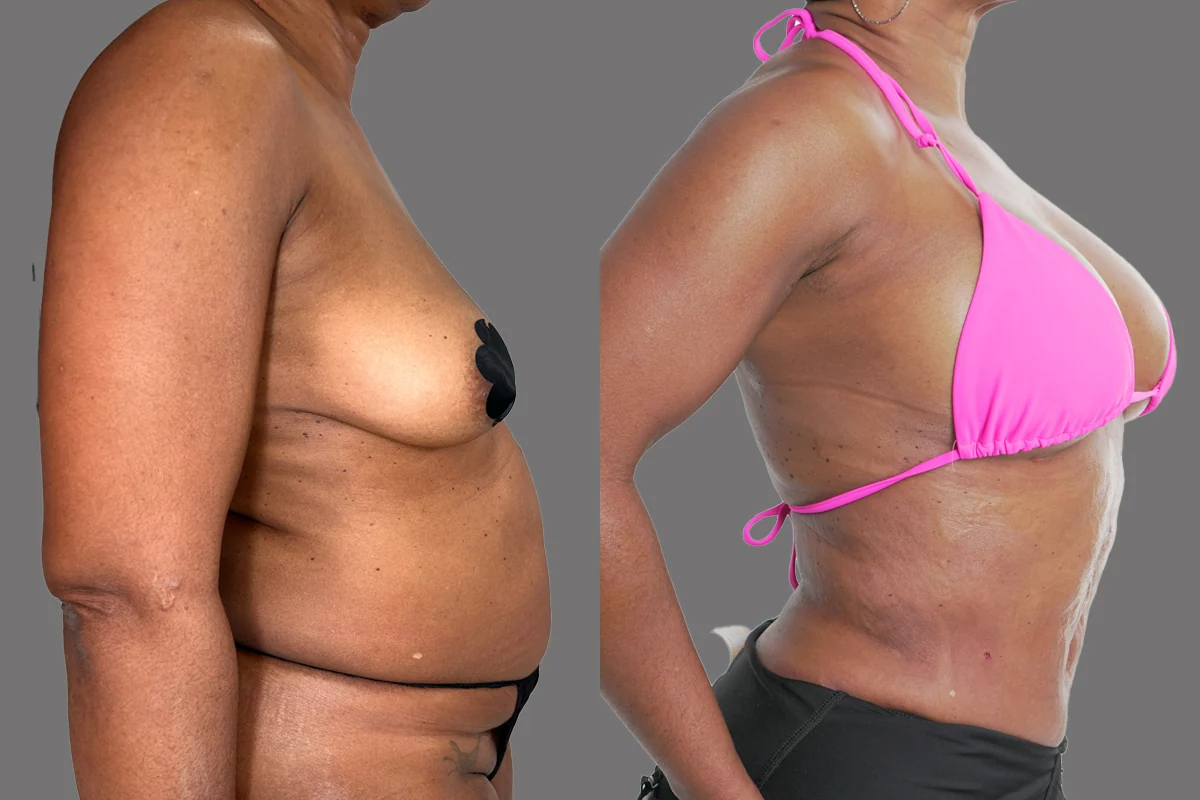
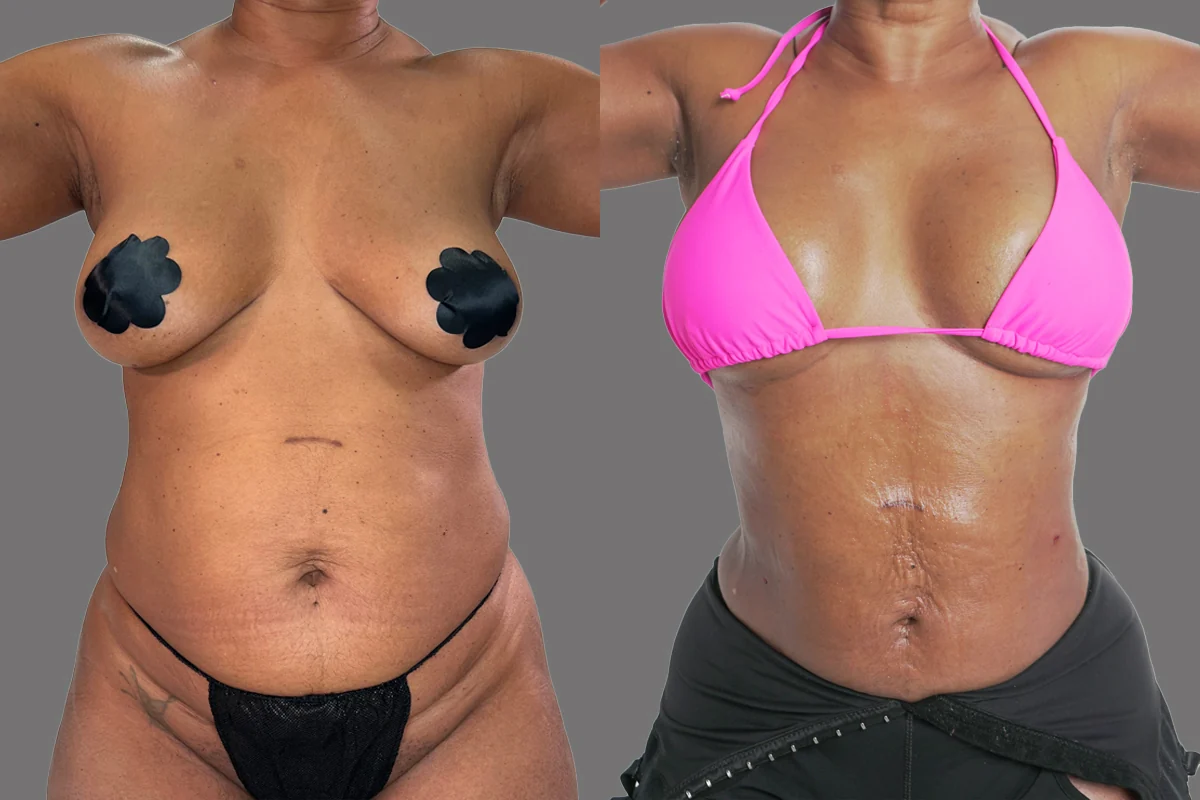
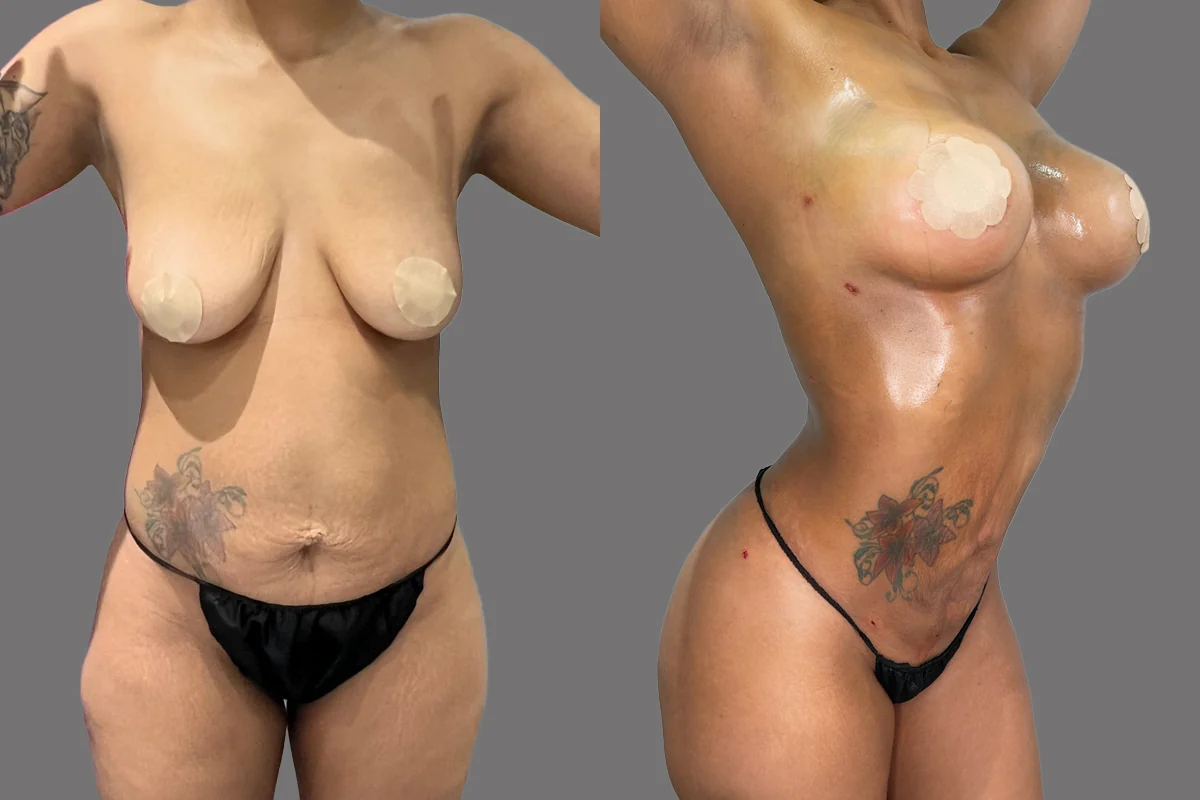
Real patients, published with written consent. Photographs are not retouched or AI-generated. Individual results vary — these images show outcomes for these patients and are not a guarantee of your own.
Try it
Type your height and weight. Your numbers stay on your device. We do not see or save them.
BMI is just one number. Your surgeon also looks at your health and your goals. BMI alone does not decide if you can have surgery.
Candidacy
Some women are better suited to it than others. Here's what counts.
Good for adding about one cup, not for jumping A to D in one go.
You need enough pinchable fat on your stomach, flanks, or thighs to harvest.
Natural breast augmentation fat transfer feels and moves like the real thing.
Ideal if you'd rather skip foreign material: no rupture risk, no swap-out surgery later.
How breast augmentation vs fat transfer really shakes out.
| Material | Your own fat tissue—no foreign material | Silicone or saline implants |
|---|---|---|
| Size increase | About one cup size per session | Up to several cup sizes possible |
| Scars | Tiny puncture sites only—no incisions | Incision lines under, around, or armpit |
| Bonus | Slimmer waist, hips, or thighs from lipo | No body contouring included |
| Longevity | Permanent once fat survives healing | 10–20 years before considering revision |
Your journey
From your first call through final results—what to expect.
Sit down with your surgeon, go over goals, and confirm you've got enough donor fat for the size you want.
We map the donor areas, work out the fat volume, and pick injection points around your shape goals.
Bloodwork, clearance, and clear instructions on what to stop and what to do the night before.
Liposuction first, then the fat is purified and layered into the breasts. Two to three hours total under anesthesia.
Compression garment on the donor areas, no underwire bras, and no pressure on the chest for several weeks.
Swelling settles by month three. Whatever's still there at six months is permanent breast tissue.
What fat transfer breast augmentation results realistically look like.
Most women gain about one cup once the fat settles, B to C, or A to a small B.
They stay soft, move naturally, and answer to gravity like untreated tissue.
Roughly 60 to 80% of the injected fat sticks around long-term. The rest reabsorbs in the first months.
The donor sites come out slimmer: flatter stomach, narrower waist, or more defined thighs.
Safety
How we keep your procedure safe the whole way through.
Every fat transfer is done by a U.S. licensed U.S. plastic surgeon, no exceptions.
Every procedure happens in an AAAHC-accredited facility with full anesthesia and emergency backup.
Closed-system purification lowers infection risk and helps more fat cells survive.
Our surgeons
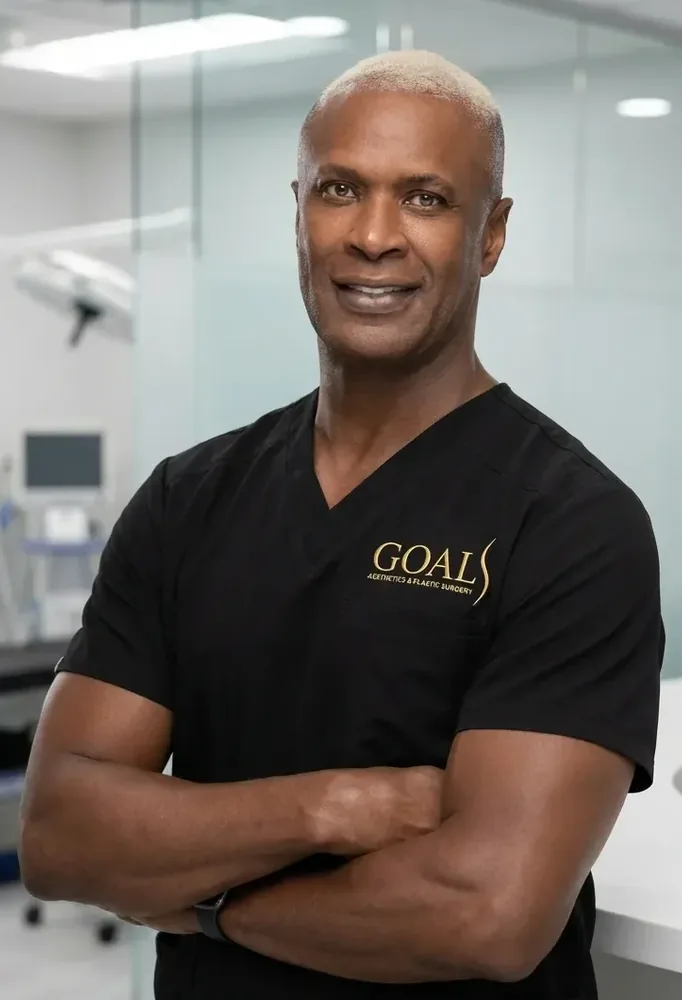
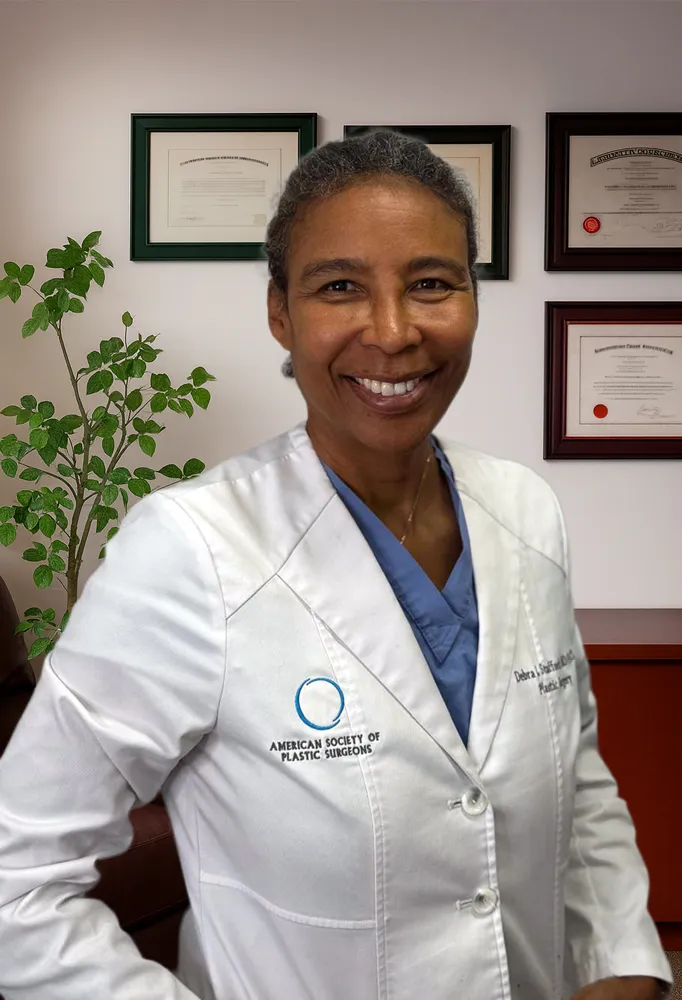
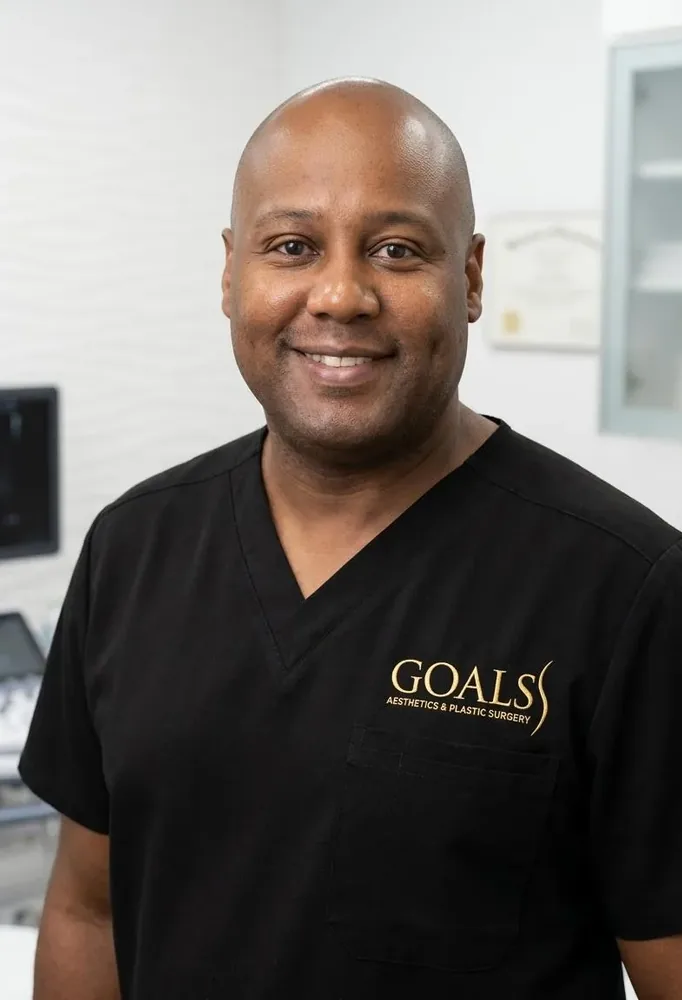
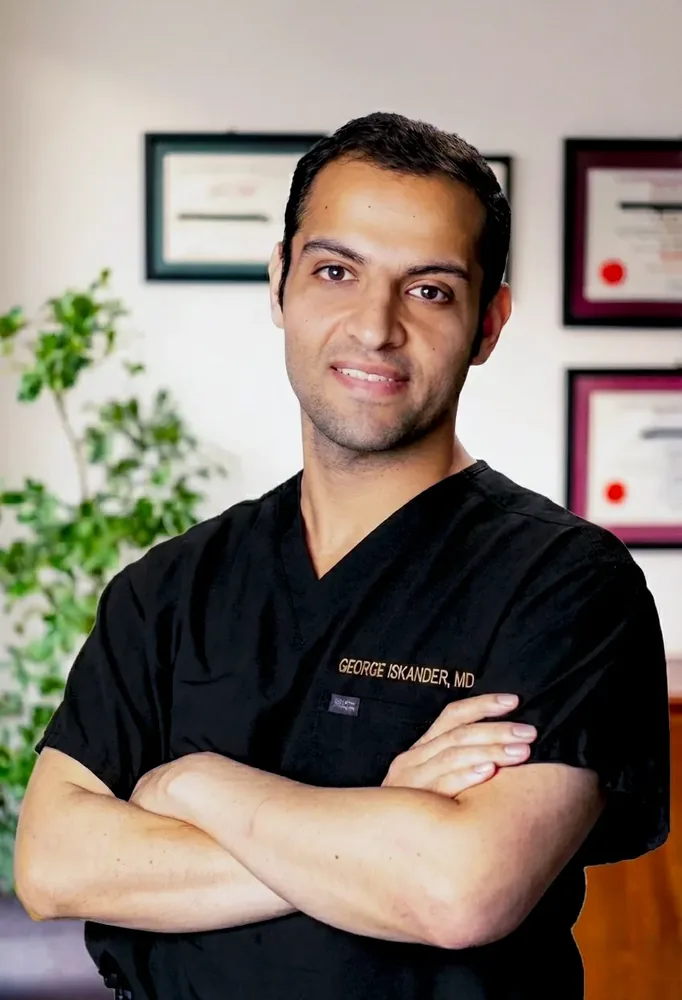
Licensed U.S. plastic surgeons who specialize in fat injections for breast augmentation and natural-looking body contouring.
Each surgeon’s training and licenses are listed on their own page.
Pricing
Fat transfer breast augmentation cost starts at $8,500. The cost of fat grafting breast augmentation comes down to how many donor areas, how much fat you need, and how involved the case is.
Financing with monthly plans.
Price locked in at booking after consultation.
Transparent pricing: no hidden fees, everything detailed in the contract.
Prices shown are starting prices and depend on the number of areas treated. Final pricing is confirmed at your consultation. Cosmetic procedures are not covered by insurance.
Try it
Pick a procedure to see an estimate. Your numbers stay on your device. We do not see or save them.
This is an estimate, not a quote. It splits the starting price over the months you pick, with no interest. Lenders set your real rate and terms. Your price is confirmed at your consultation.
Fat Transfer Breast Augmentation near you
Clinics
FAQ
Roughly 60 to 80 percent of the injected fat survives for good. Your body reabsorbs the rest over the first three to four months, which is why surgeons overfill a little to make up for it. Whatever's there at six months is permanent breast tissue.
Most women gain about one cup per session. Fat transfer breast augmentation is at its best for natural, moderate enhancement, not big size jumps. Going A to D is more of an implant or a staged-fat-transfer conversation, which we can have at the consult.
No real incisions on the breasts, just tiny puncture sites from the cannula that fade to nothing within months. The donor areas have small lipo entry points tucked into natural skin folds. There's far less scarring than with implant surgery.
The main fat transfer breast augmentation risk factors are partial reabsorption, fat necrosis (small firm lumps), unevenness, and calcifications that can turn up on a mammogram. Serious complications are uncommon when a licensed U.S. surgeon does the work in an accredited facility.
Yes. Fat that makes it past the first six months becomes permanent breast tissue. Unlike implants, there's no expiry date, no rupture risk, and no replacement surgery waiting for you. The volume can still shift with a big weight change, though, since it acts like any other fat.
Learn more
Fat transfer breast augmentation has gone from a niche thing to one of the most requested natural breast options in the country. The pull is simple: it uses your own fat instead of silicone or saline, slims a problem area while it builds the breast, and doesn't come with the lifetime upkeep implants do. It isn't for everyone, though, and the results have real ceilings. This guide covers what women ask us most: how it works, who's a good candidate, what's realistic, how recovery actually goes, and what it costs. If you already know fat transfer is the one for you, skip ahead and book. If you're still weighing it against implants, or trying to figure out whether you've got enough fat to donate, start here.
Fat grafting breast augmentation, which you'll also see called autologous fat transfer breast augmentation, runs in two parts under general anesthesia. Part one is liposuction. Your surgeon takes fat from wherever you want slimmer, usually the belly, flanks, lower back, or outer thighs, drawing it out gently through small cannulas built to keep the cells intact for transfer. Part two is purification: the fat goes through a closed system that separates the good cells from blood, fluid, and damaged tissue, so only the healthiest make the cut. Part three is injection. The purified fat is loaded into small syringes and layered into the breasts through tiny puncture sites, no real incisions. The surgeon places it across several layers and angles to build shape, not just bulk. That layering matters, because fat survives better when each cell touches a blood supply, which is why thin, even distribution beats dumping it all in one place. Start to finish it's usually two to three hours, depending on how much fat is moving.
This is the part women most often get wrong. Fat injections for breast augmentation aren't a stand-in for implants when you want a dramatic jump. Most women gain about one cup a session, B to C, or A to a small B. If you're very lean or short on donor fat, you might get a fraction of that. Why the cap? Injected fat has to touch surrounding tissue to grow a blood supply and live. Put too much in at once and the fat in the middle never gets oxygen, dies, and gets reabsorbed. Some surgeons stage it, going back for a second transfer six to twelve months later to build on the first, but every session is held to what the tissue can take. If you're after an A-to-D change, implants are the more realistic answer. Some women do both, actually: implants for the size, fat for the polish. Your surgeon can tell you whether that hybrid fits what you want.
Three things decide whether fat grafting suits you. First, donor fat. If you're very lean, under about 18 percent body fat, there may not be enough pinchable fat on your stomach, flanks, or thighs to harvest for a noticeable increase. Second, expectations that line up with reality: modest natural enhancement plus some body contouring on the upside, limited size gain and partial reabsorption on the downside. If you've been reading about implants and you genuinely want two cups, fat transfer probably isn't your procedure. Third, good general health, meaning no active infections, nothing uncontrolled, no bleeding disorders, and a steady weight. If you're still actively gaining or losing, wait until it levels off, because shifting body fat moves both the donor areas and the breasts after surgery. Smokers have to quit for several weeks on either side, since nicotine clamps down blood vessels and tanks fat survival.
Breast augmentation vs fat transfer comes up in just about every consultation. The honest version: implants give you a predictable, dramatic increase, one to several cups in a single surgery. Fat transfer gives you a modest, natural bump plus some contouring. Implants are a device that may need revising or replacing in 10 to 20 years. Fat transfer turns into permanent tissue once it clears the first six months, with no expiry date attached. Implants have a particular feel that women with very thin tissue sometimes find off. Fat transfer feels and moves exactly like your own breast tissue, because that's what it is. Implants carry device-specific risks: capsular contracture, rupture, BIA-ALCL, a rare lymphoma. Fat transfer skips those but brings its own: fat necrosis, partial reabsorption that may need a touch-up, and calcifications that can show on a mammogram. Neither wins across the board. The right call hinges on where you're starting, where you want to end up, how much fat you've got to give, and how you feel about implants for the long haul.
Recovery splits in two: the donor areas and the breasts. The donor areas are usually the more uncomfortable of the pair, since liposuction leaves a wider field of bruising and swelling than the little injection sites do. Week one is the hardest. You'll have a compression garment on the donor areas around the clock, and the breasts will feel tender but not sharply painful. Most women take prescription pain meds for three to five days, then drop to over-the-counter. Back-sleeping only here, no side or stomach for the first few weeks, so nothing presses on the grafted fat. Week two, most desk workers head back. The bruising starts to lift, the garment stays on, and light walking helps your circulation. Weeks three to four, swelling drops a lot, the breasts start looking more proportional as the puffiness clears, and the donor areas are still sore to deep pressure. Weeks five and six, full activity comes back. Exercise restarts gently and builds. No underwire or anything pressing on the chest for six weeks total. Months three to six, the final result shows up, and what's still there at six months is permanent.
Fat transfer breast augmentation cost starts at $8,500 here and climbs from there on a few things. First is how many donor areas. Taking fat from one spot (just the abdomen, say) costs less than pulling from several, abdomen plus flanks plus thighs. Each extra area adds liposuction time and more to process. Second is fat volume; women needing larger transfers to offset more expected reabsorption can pay more than those with smaller goals. Third is how involved the surgery is. Revision cases, where someone's had a previous breast procedure, often mean scar tissue and a more careful injection. The fat injection breast augmentation cost we quote folds in anesthesia, facility fees, post-op garments, and follow-ups. What it doesn't cover is a second-stage touch-up, which some women choose six to twelve months out if they want a bit more volume. Financing is there with monthly plans, and the price locks in after your consultation, with nothing sprung on you later.
The main breast augmentation with fat transfer risks are real but manageable when a licensed U.S. plastic surgeon does the work in an accredited facility. The most common one is partial reabsorption, where 20 to 40 percent of the injected fat doesn't make it. That's expected, and the slight overfill accounts for it. Fat necrosis is when small pockets don't get enough blood and die off, leaving firm lumps you can usually feel but not always see; most clear on their own, a few need a quick in-office aspiration. Unevenness can show up if the fat survives differently side to side, and a touch-up evens it out. Infection is uncommon but possible at any surgical site. Calcifications, little calcium deposits, can form where fat reabsorbs and may turn up on a future mammogram. They're not dangerous, but your radiologist needs to know you've had fat transfer so they read the images right. The donor sites have their own short list too: contour dips, lingering numbness, or a seroma. All of it is uncommon with an experienced surgeon.
Does fat transfer breast augmentation last—yes, with one catch worth knowing. The fat that survives the first six months becomes permanent breast tissue. It grows its own blood supply, knits into the surrounding tissue, and from then on acts like the rest of your breast. No expiry date, nothing to replace, no follow-up surgery on the calendar. The catch is that fat acts like fat. Gain a lot of weight afterward and your breasts may grow with the rest of you. Lose a lot and they may shrink. Most women sit in a healthy range and don't see big swings, but extreme changes will move breast volume. Pregnancy and nursing can shift the shape and tissue too, the same as with breasts that were never touched. None of that is the procedure failing; it's just how fat behaves.
Looking at breast fat grafting before and after photos from real patients tells you more than any diagram in a consult room. You start seeing patterns across our patients. Lean women in their late twenties tend to get a more visible cup jump, because their starting tissue holds the grafted fat well. Postpartum women in their thirties, our biggest group, report the biggest emotional lift, since it puts back the volume pregnancy and nursing took without signing them up for lifetime implants. Women in their forties and fifties who add a breast lift see the most dramatic shape change, because the lift handles position while the fat handles volume. Across all of them, the six-month photos show what it really delivers: a softer, more proportional silhouette, not a big size jump. The women who picked this specifically to avoid implants almost always say they're glad they did, even when the result was modest. The trade between dramatic size and natural feel gets laid out at the consult, so the ones who go ahead know exactly what they're trading.
Picking a surgeon matters more for fat transfer than for a lot of cosmetic procedures, because the technique varies so much surgeon to surgeon and the result leans hard on skill at both the liposuction and the injection. Women often start out searching for fat transfer breast augmentation near me, but how close they are shouldn't decide it; experience should. Look for board certification from the American Board of Plastic Surgery. Ask how many fat transfer augmentations they do a month, because this should be routine for them, not occasional. Ask about their approach to fat survival: what processing method, how they keep reabsorption down, what retention they usually see. Look through their before-and-afters, and make sure the women in them resemble you in body type and starting size. Read the reviews with an eye for consistency. Goals surgeons do thousands of fat transfer procedures a year, with the same protocols across our network of accredited surgery centers.
Plenty of women combine fat transfer with other procedures in one session. The most common pairing is with a breast lift, for women whose breasts have dropped from weight loss, pregnancy, or age. The lift handles position and shape; the fat adds modest volume. Another common combo is fat transfer with regular implants, where the implant brings the size and the fat refines the upper pole, hides implant edges in thin patients, or builds cleavage. Some women pair it with a tummy tuck when the donor area is the stomach, so the surgeon harvests fat for the breasts and removes excess belly skin in the same session. Combining things means one round of anesthesia, one recovery, and often a better overall result than spacing them out. Your surgeon can tell you at the consult whether combining makes sense for your anatomy and goals.
Walking in prepared gets you better answers. Ask about your own candidacy: do you have enough donor fat, what cup increase is realistic for you, would staging help you reach your goal. Ask about technique: what processing method, what fat survival they usually see in women built like you. Ask about touch-ups: how often a second stage is needed, and what it costs if you want one. Ask to see fat transfer breast augmentation before and after photos of women similar to you in size and body type, not only the best-case ones. Ask about recovery tied to your job and your life. Ask about price: what's included, what isn't, what financing exists. And take notes, because a fat transfer consult covers a lot, and trying to hold it all in your head afterward just breeds second-guessing. Goals does free consultations in a no-pressure setting to talk it through. Book online or give us a call.
Get started
Take the first step toward your dream look. Book your free consultation today and discover how fat transfer breast augmentation can enhance your shape naturally.
Prefer to talk now? (833) 462-5769
Free · No obligation
Tell us how to reach you. A patient coordinator calls you back — usually the same day.
Free · No obligation
Ask me anything. I usually reply straight away.
If you share your number, a Goals coordinator may call or text you about your consultation. Message and data rates may apply.
Nora is an automated chat. She cannot give medical advice or say whether a procedure suits you.