Follicle Harvesting
Curly follicles are taken one at a time from the back and sides of your scalp.
Rebuild density in curly and coily hair. One office visit, grafts placed under local anesthesia.
From $5,000
Overview
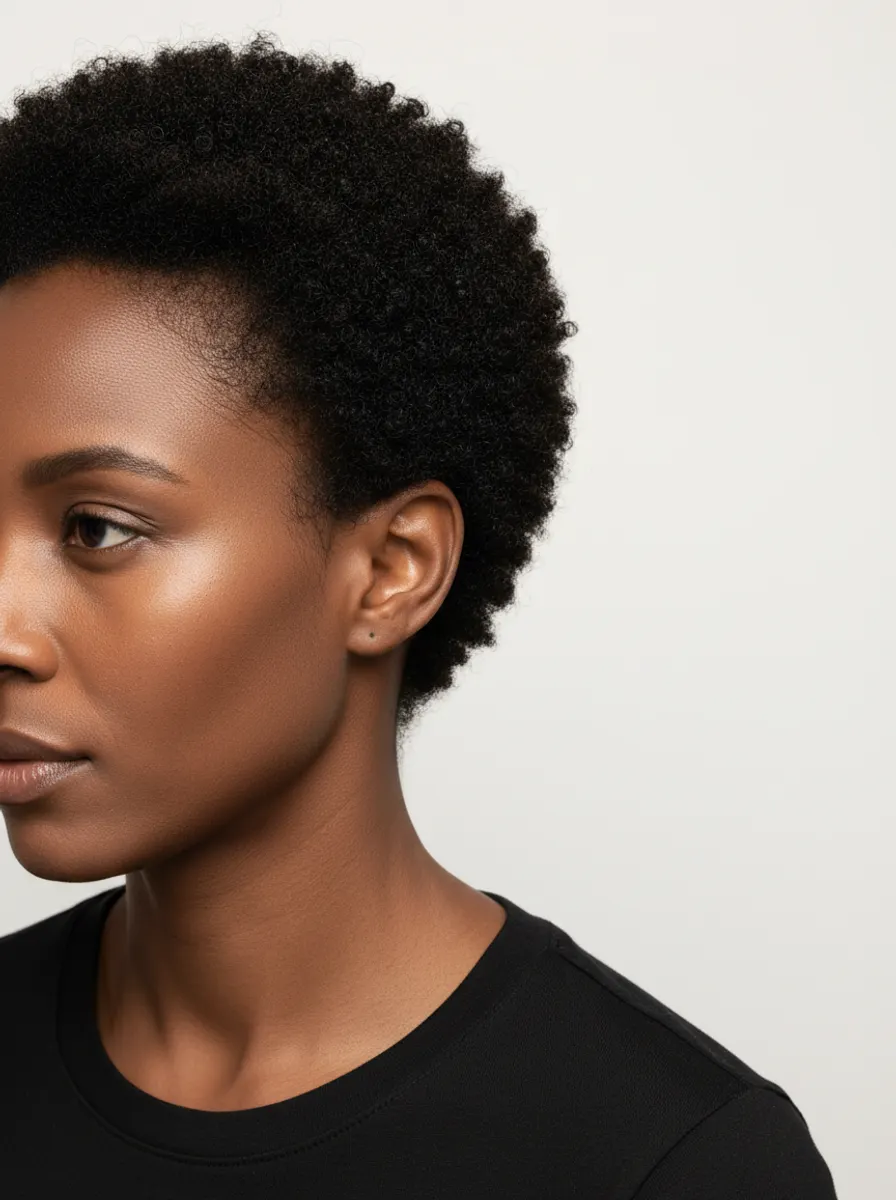
A hair transplant moves your own curly follicles from the back and sides of your scalp to the thin or bare spots. Match the angle and the curl right and it fills in full, natural, no plugs, no patchy rows.
How it works
Curly follicles are taken one at a time from the back and sides of your scalp.
Each graft is checked, sorted by curl, kept ready to place.
Every graft goes in following its natural curl angle to rebuild the hairline and crown, all under local anesthesia so recovery is easier.
Candidacy
Receding edges, a thinning crown, bare patches in textured hair, these usually respond well. Thousands of people have brought their density, and their confidence, back with us.
You can spot the loss in photos or the mirror.
Your loss has slowed or held steady a year or two.
You'd rather fix it once than cover it up daily.
Enough healthy curls at the back and sides to move.
You'll follow the pre- and post-care steps.
Conditions we treat
We handle the loss patterns that show up most in Afro-textured, curly, and coily hair.
Thinning temples and a retreating front line, traction loss included.
Loss at the crown that opens outward into a widening bare patch.
Lower density across the whole top, with no one clear bald spot.
Loss from years of tight braids, locs, or weaves tugging the roots.
Permanent loss where scar tissue formed after injury, burns, or surgery.
Thin edges or a patchy beard filled back in with grafts.
See how our textured-hair patients changed, side by side.
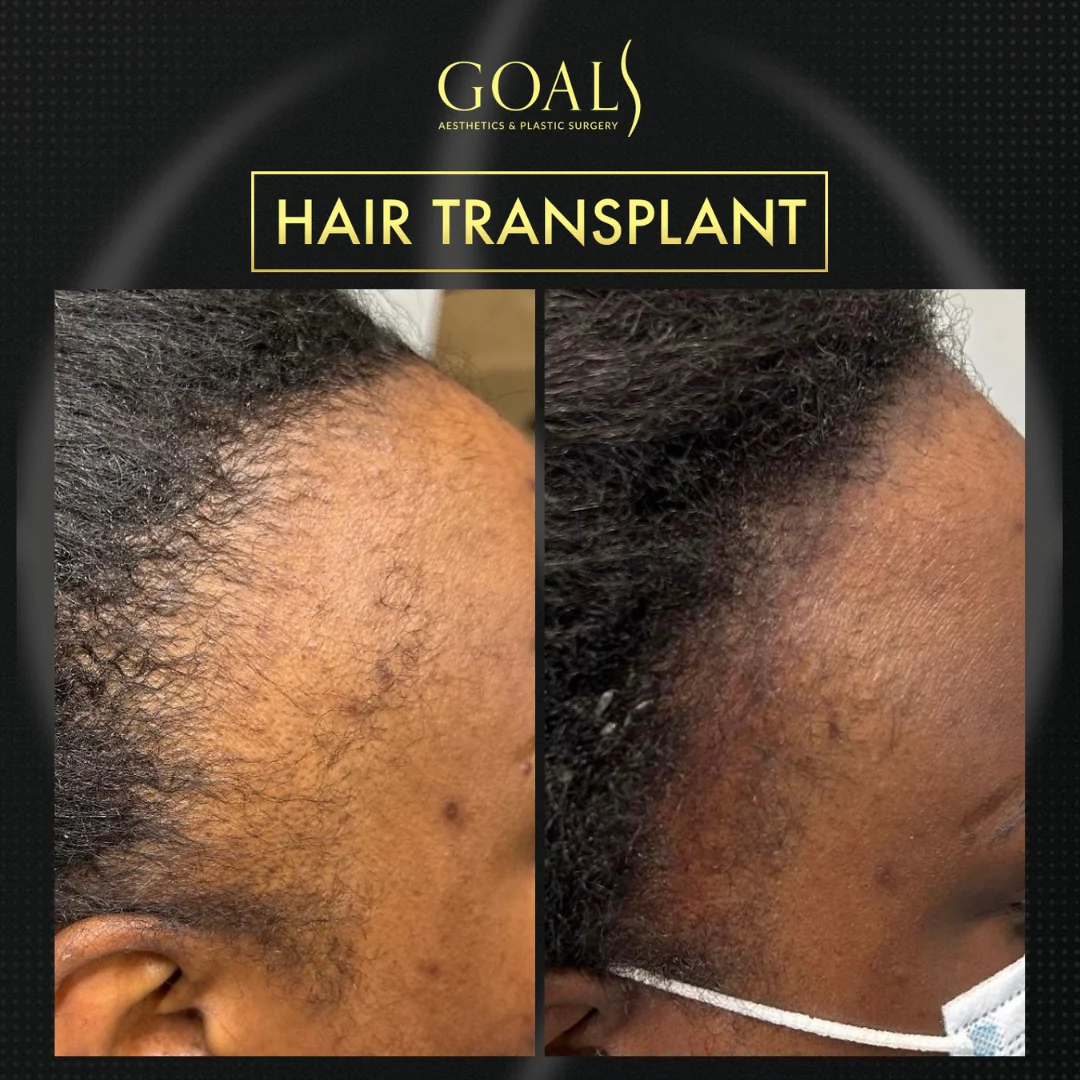
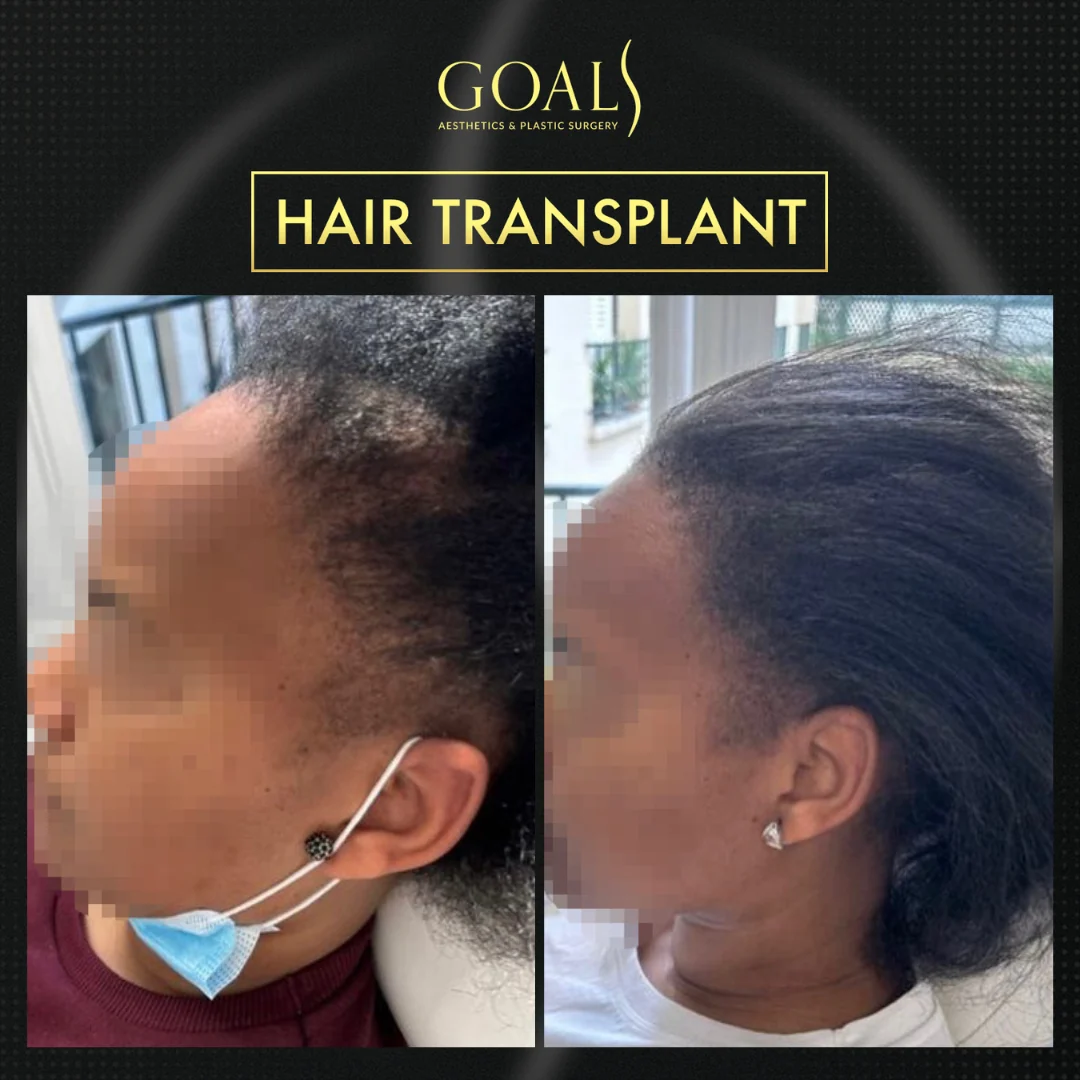
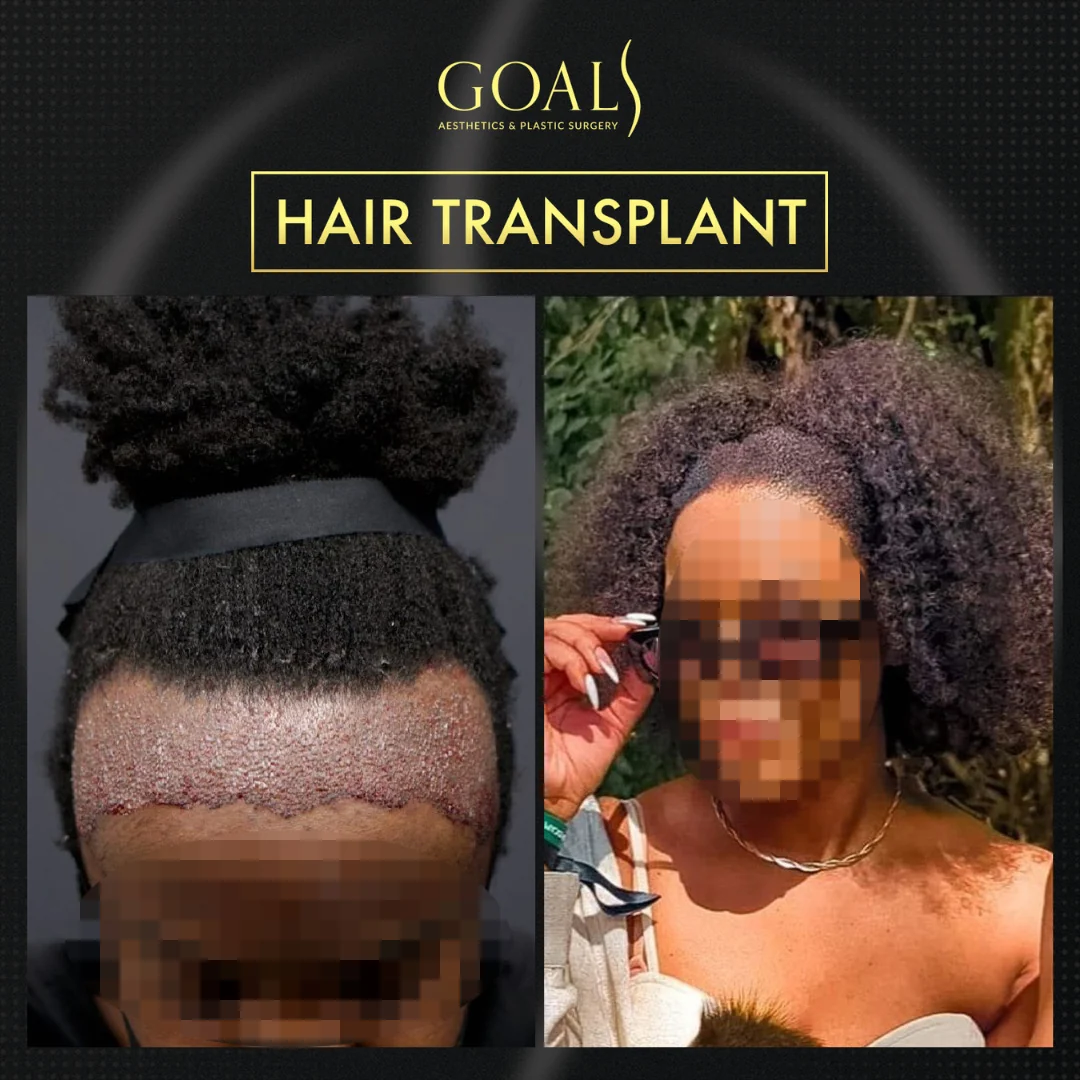
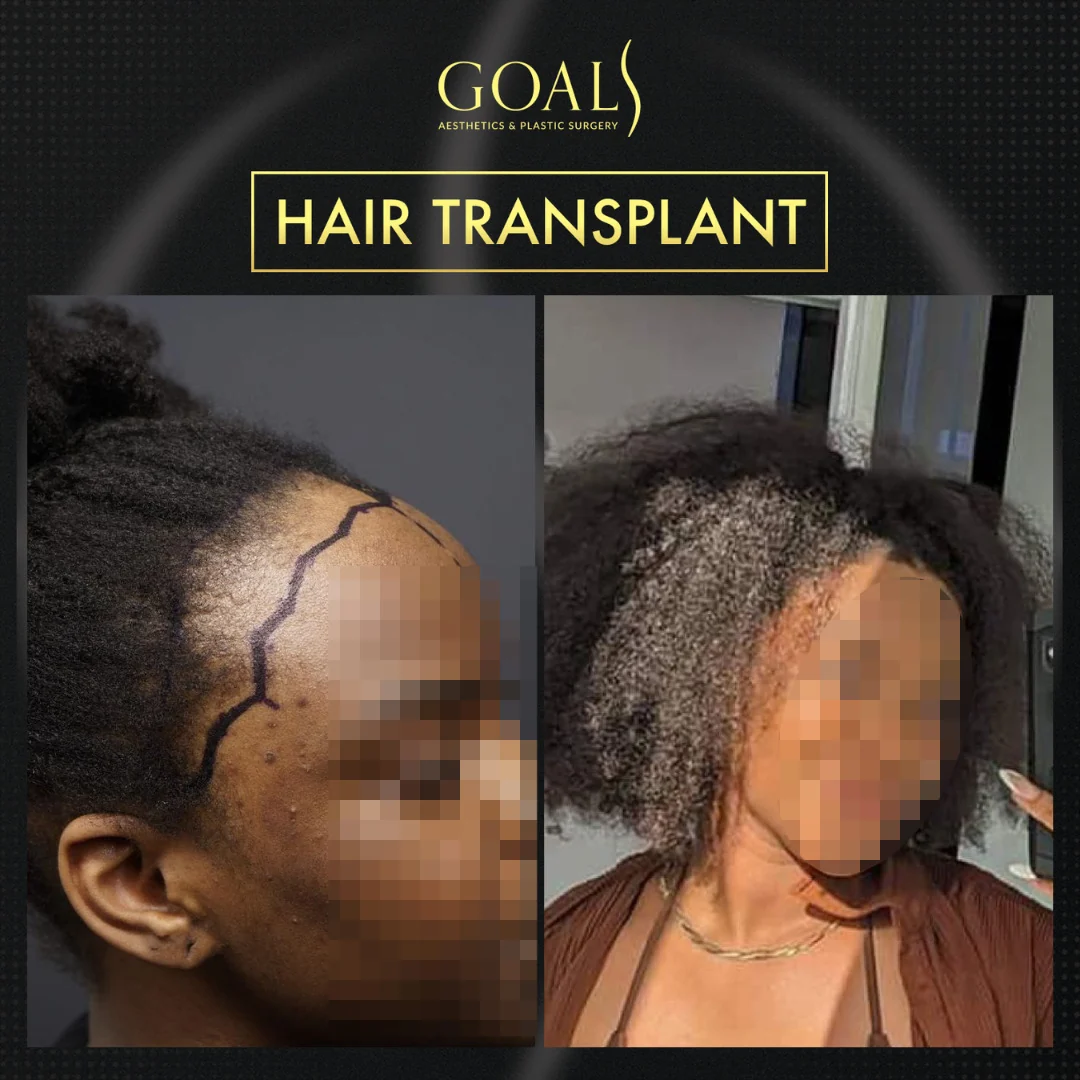
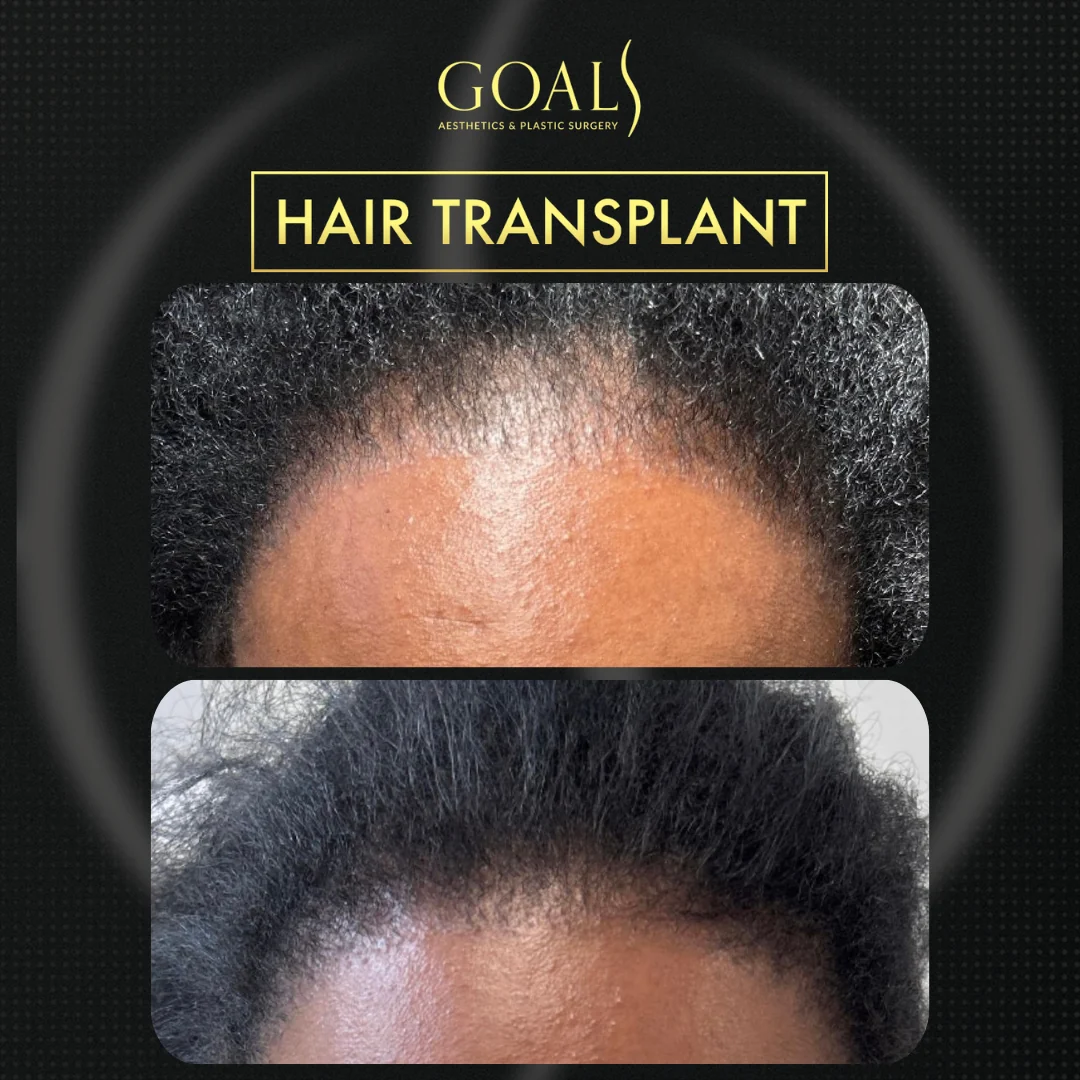
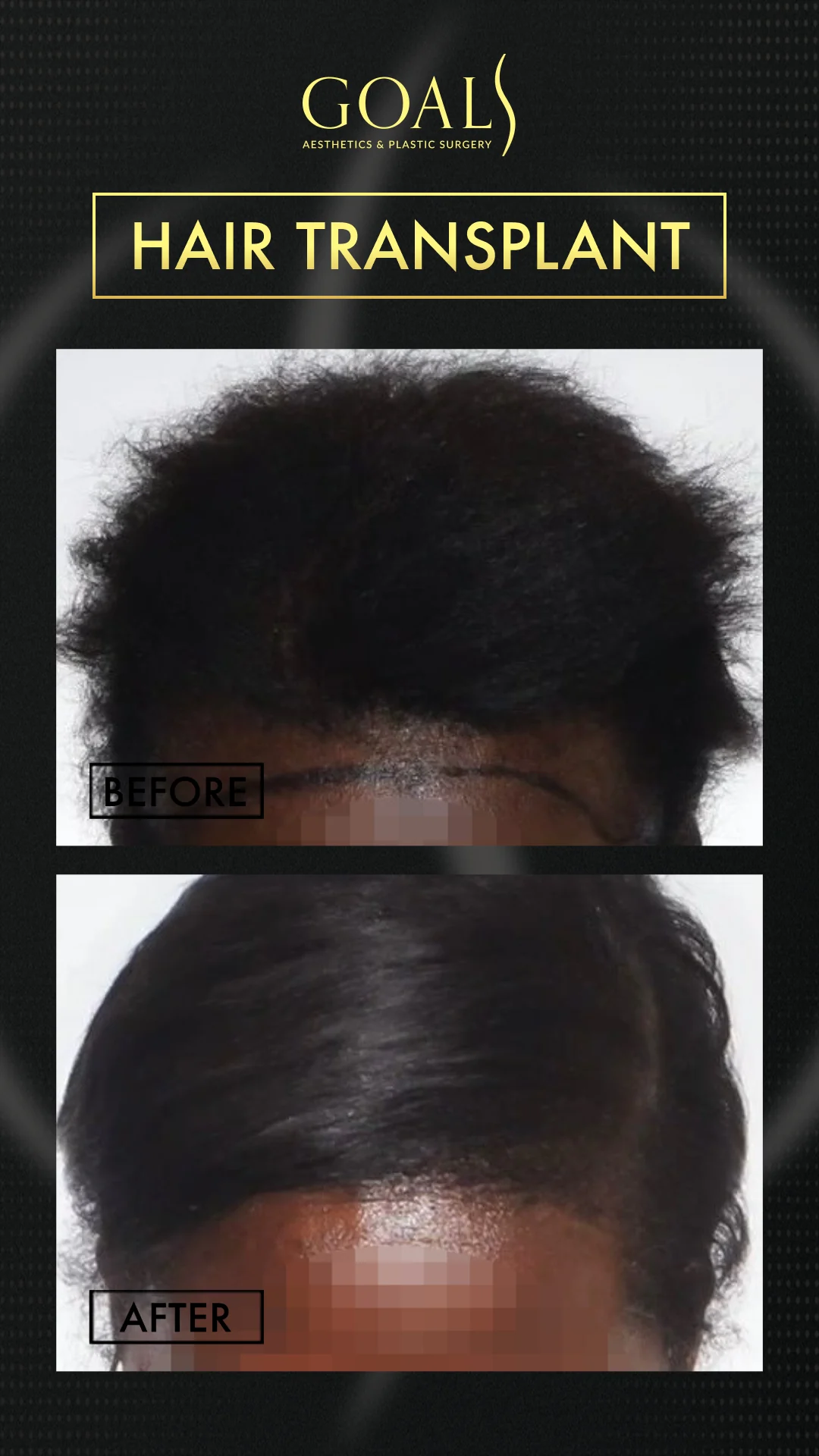
Real patients, published with written consent. Photographs are not retouched or AI-generated. Individual results vary — these images show outcomes for these patients and are not a guarantee of your own.
Try it
Type your height and weight. Your numbers stay on your device. We do not see or save them.
BMI is just one number. Your surgeon also looks at your health and your goals. BMI alone does not decide if you can have surgery.
Clinics
Our clinics sit in these cities.
Thinking of pairing your transplant with something else? We do the whole range of restoration.
Afro Hair Transplant near you
Non-surgical options
Not ready for a transplant, or want to protect your result? These work with surgery or on their own.
Clinical light therapy that wakes up resting follicles and helps hold the density you still have.
Micro-injections of vitamins and growth factors placed straight into the scalp to feed the roots.
Gentle micro-current work that boosts scalp blood flow and keeps follicles healthier.
We get it, the cheap overseas package looks tempting. But a rushed surgery, a language gap, no local follow-up, and trouble the week you land home can flip that bargain into a headache fast.
| Flying Abroad for a Hair Transplant | Getting Your Hair Transplant in the U.S. With Goals Clinic |
|---|---|
| Flying Abroad for a Hair TransplantYou spend weeks comparing clinics online, wiring money abroad, then booking flights and a hotel. | Getting Your Hair Transplant in the U.S. With Goals ClinicYou come in, or hop on a call, for a full consult with a U.S.-licensed hair restoration surgeon who reads your scalp and history. |
| Flying Abroad for a Hair TransplantYou land somewhere you barely speak the language, and the consult gets squeezed into surgery day itself. | Getting Your Hair Transplant in the U.S. With Goals ClinicTesting, consent, and planning all get done ahead of time, in your language, under U.S. medical standards. |
| Flying Abroad for a Hair TransplantThe work happens in a place you've never set foot in, usually high-volume, with barely any time for post-op checks. | Getting Your Hair Transplant in the U.S. With Goals ClinicOn procedure day you're at an accredited clinic, everything is handled in a sterile operating room under local anesthesia. |
| Flying Abroad for a Hair TransplantYou fly home swollen and wiped out. A week later your scalp goes red and starts weeping, and you can't tell if that's normal. | Getting Your Hair Transplant in the U.S. With Goals ClinicThe transplant takes most of the day, but you rest, break when you want, and sleep in your own bed that night. |
| Flying Abroad for a Hair TransplantYour only backup is a local ER or urgent care, where nobody did your surgery or knows what went in. | Getting Your Hair Transplant in the U.S. With Goals ClinicIf something feels off while you heal, you reach the same local team that treated you, and we see you and fix it. |
| Flying Abroad for a Hair TransplantMore time and money burns on emergency visits and prescriptions, while the overseas clinic can only text you back. | Getting Your Hair Transplant in the U.S. With Goals ClinicCheck-ups and progress reviews stay in one clinic, same team, right through to your final grown-in result. |
| Factor | Overseas Package | Goals U.S. Clinic |
|---|---|---|
| Total cost (real) | Base rate, then flights, hotels, extra days off, maybe an ER bill at home. | About the same once all care counts, clear quote, no surprises. |
| Travel & time off work | Long flights, jet lag, and stretches away from work and family. | A same-day local visit, little travel, a faster return to normal. |
| Safety & sterility | Swings a lot; you trust foreign rules and a short window on site. | Accredited U.S. clinic, strict infection control, set standards. |
| Surgeon & team | Credentials are hard to verify, and you may never see them again. | U.S.-licensed hair restoration surgeons you meet before and after. |
| Emergency backup | No local clinic, so ER doctors guess what was done abroad. | In-person follow-up and local urgent help the moment anything acts up. |
| Follow-up care | Remote messages only; hands-on help is hard. | Scheduled in-person check-ups, progress photos, med tweaks. |
| Communication | Language gaps, time zones, replies that come and go. | A native-language team, written steps, and a 24/7 phone line. |
| Legal protections | Little recourse if something goes wrong once you're home. | Covered by U.S. patient safety laws and standards. |
Your journey
6 steps to your new hairline.
Sit with a hair transplant specialist, talk goals, look at your scalp, see if you're a fit.
A hairline and graft-count plan built around your goals and the donor curls you've got.
Medical tests, photos, and prep so the day goes safely and the result lasts.
One in-office session under local anesthesia, breaks when you need them, home that evening.
Mild swelling and scabbing fade as you keep to the wash and aftercare routine.
Your curls fill back in over the months, reaching full density by month twelve.
Safety
Safety leads everything. We follow strict steps and current tools so results come out clean with as little risk as we can manage.
Sterile, fully equipped procedure rooms in U.S. accredited sites.
A set way of handling grafts that protects survival and growth.
Local anesthesia, which skips the risk of going fully under.
Your surgeon and care team stay in reach when questions come up.
Clear steps, medication, and a follow-up plan that keeps infection off.
Our surgeons
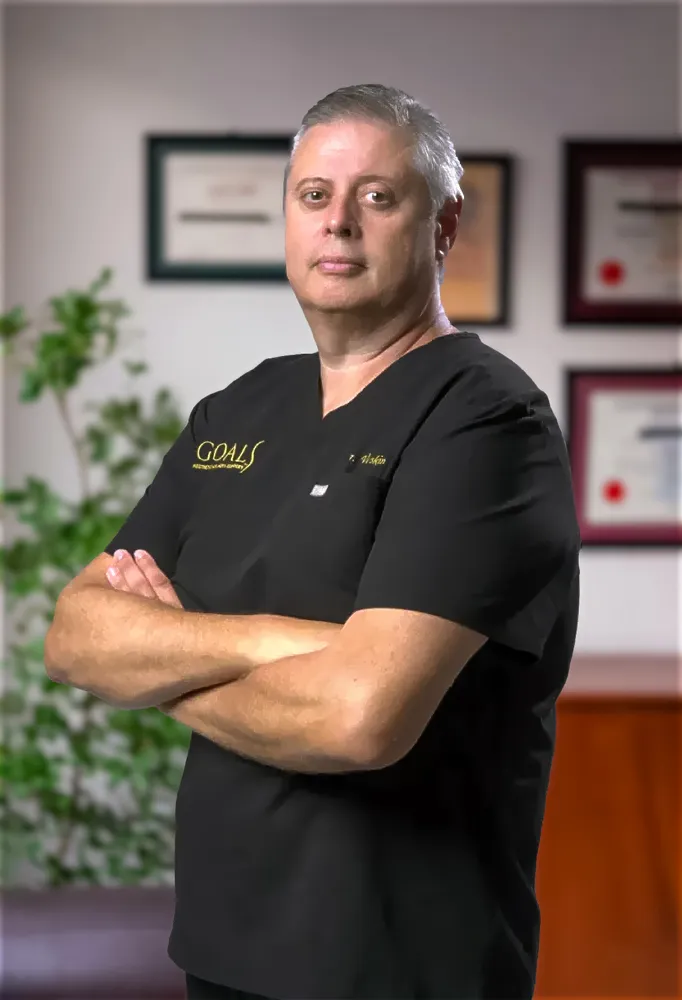
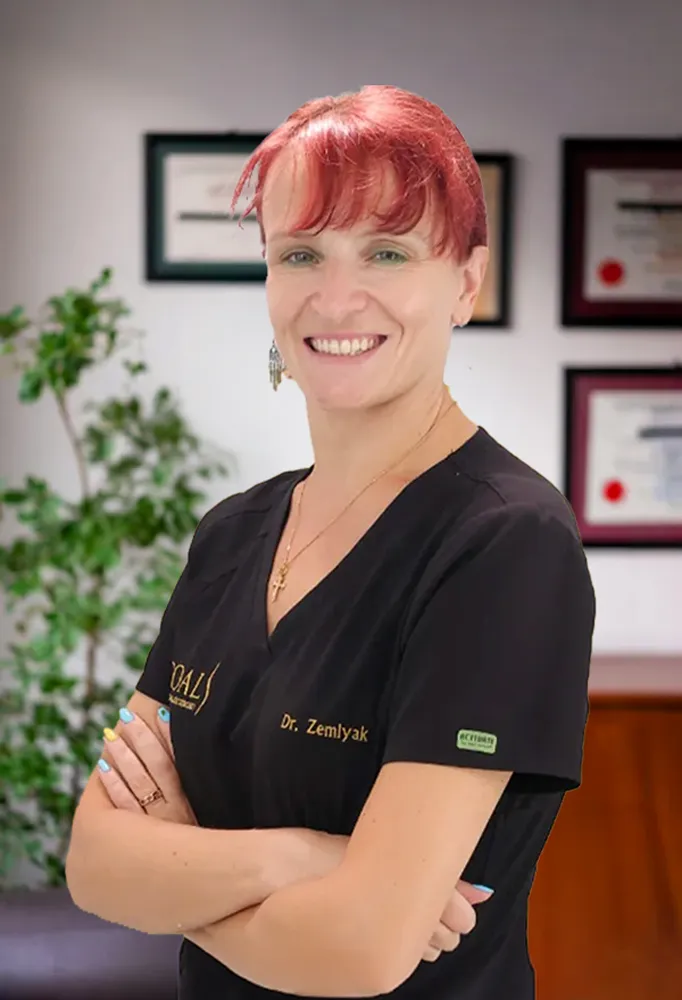
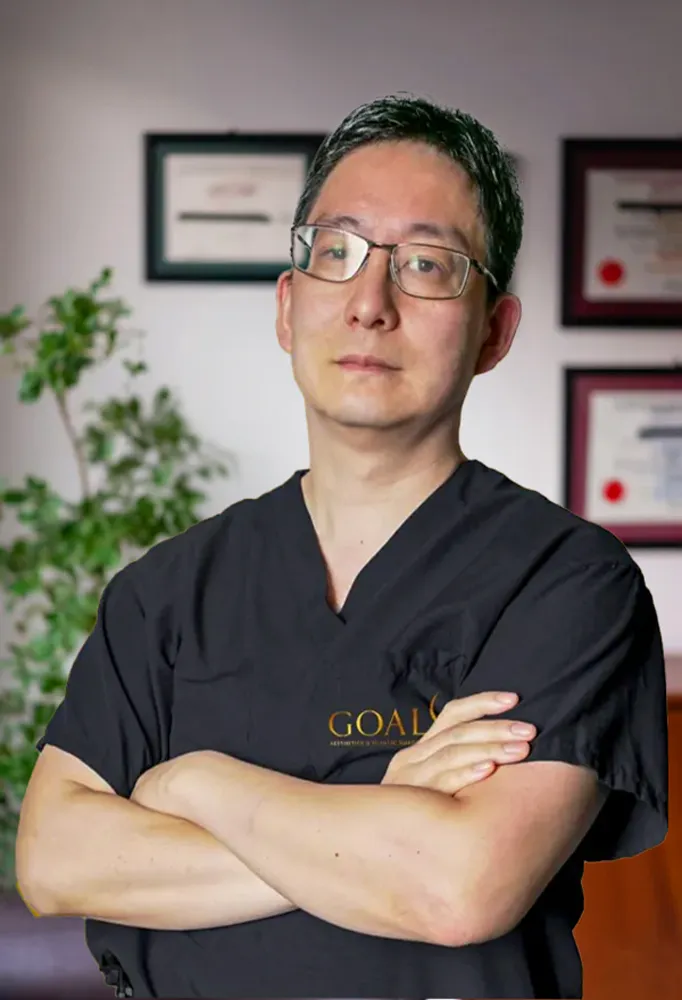
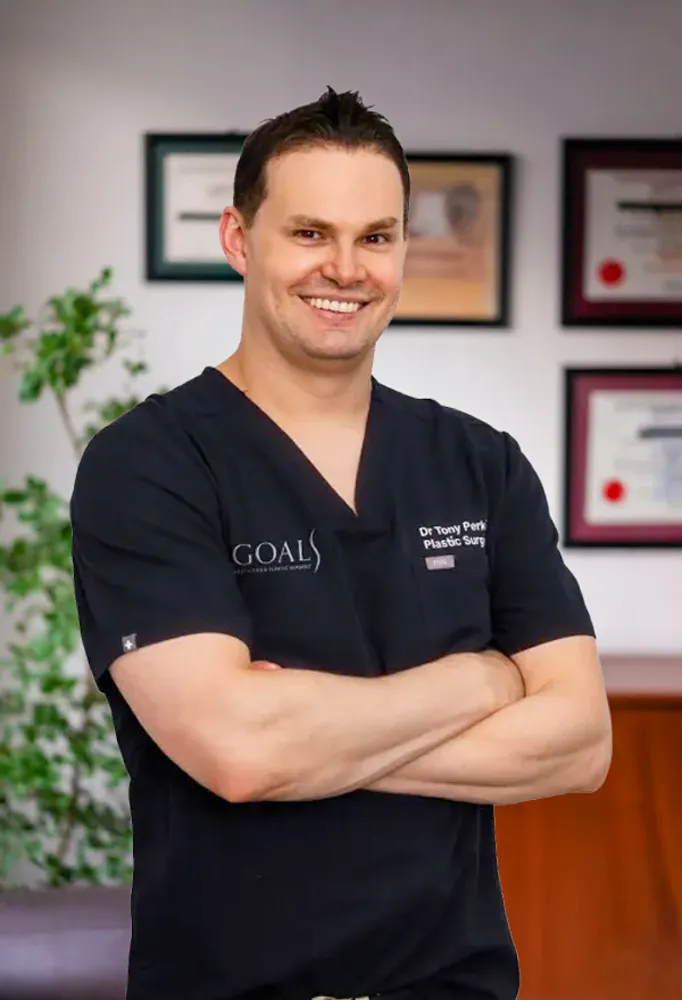
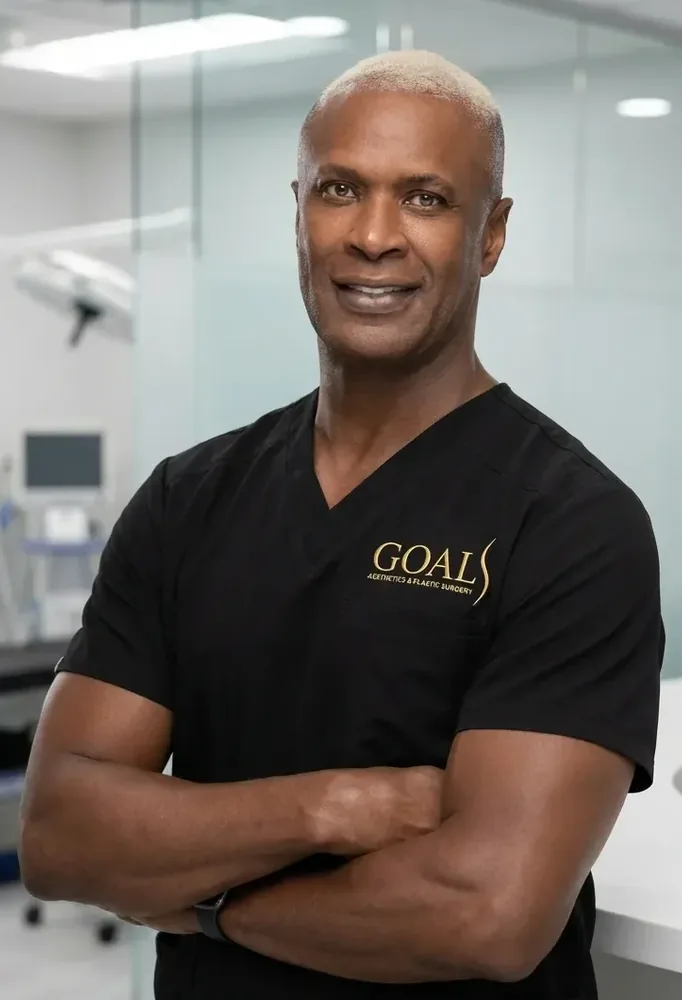
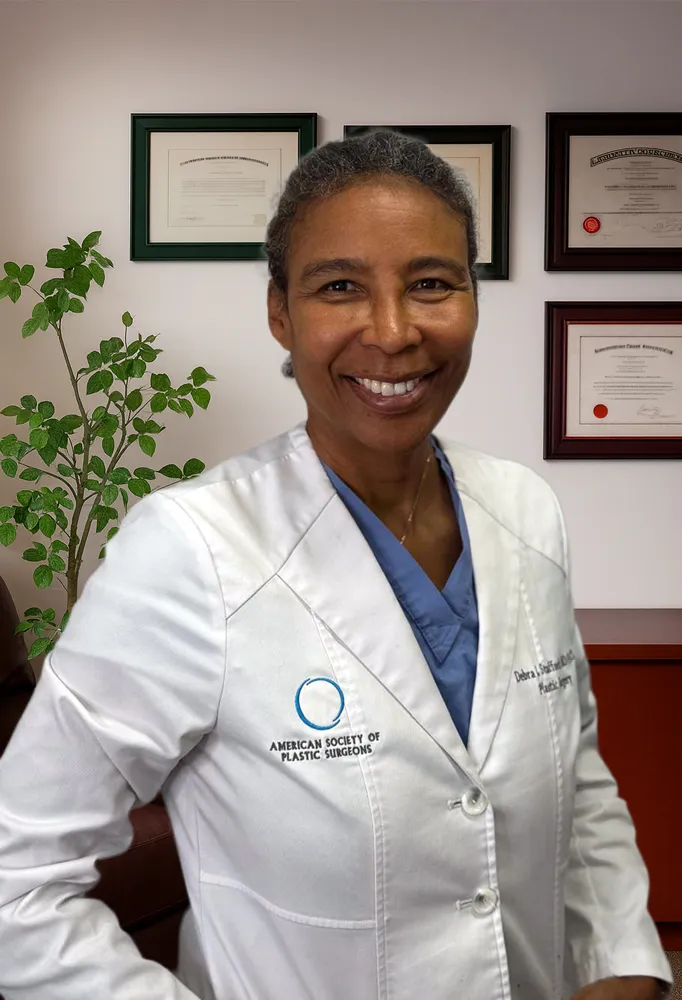
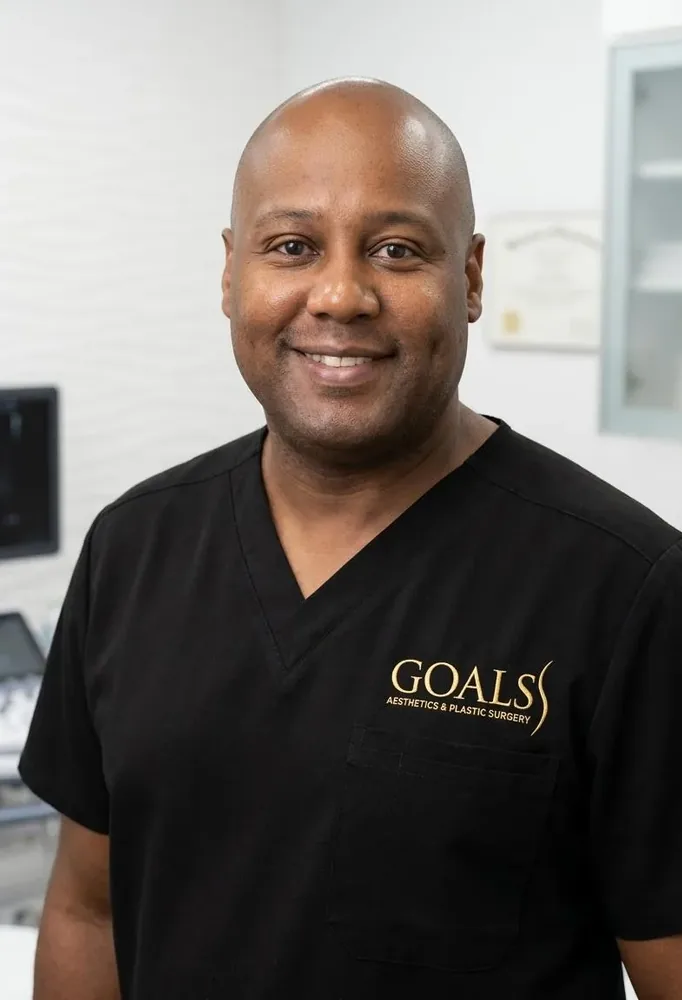
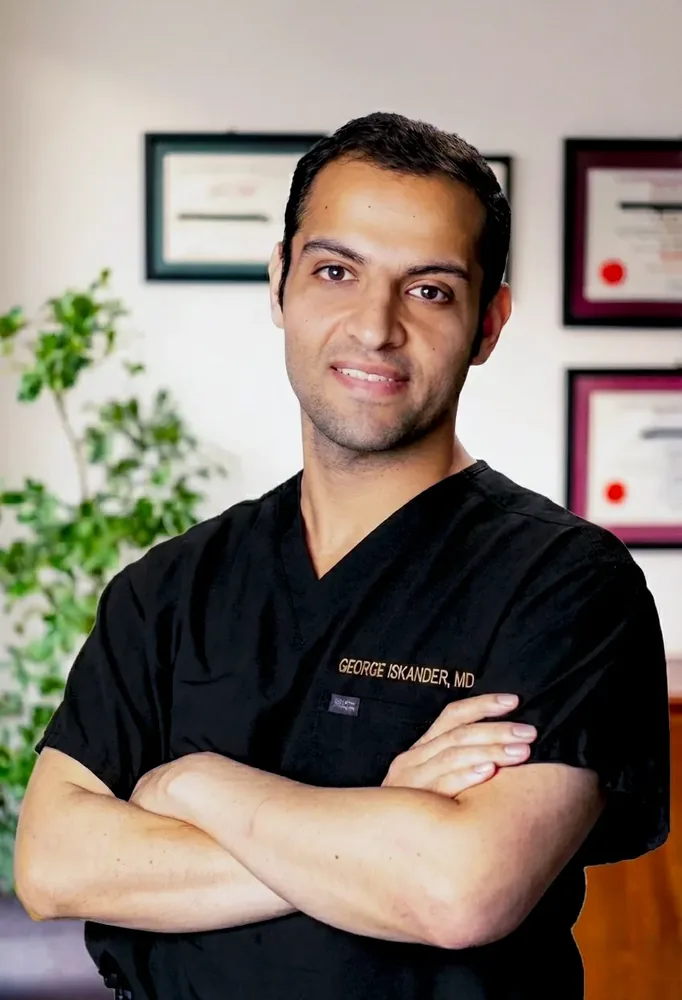
Skilled surgeons in hair restoration.
Each surgeon’s training and licenses are listed on their own page.
Pricing
It depends on your graft count, how the loss is spread, and how tricky the case is. Add up travel, days off, and any complication, and overseas deals often land right in the same range, minus local U.S. care.
You'll know what you need before booking, no hidden fees waiting later.
Stage the work over time or pair it with non-surgical care for a better result.
Payment plans that fit your budget and keep your results within reach.
It's folded into your quote, so nothing extra shows up after the procedure.
Prices shown are starting prices and depend on the number of areas treated. Final pricing is confirmed at your consultation. Cosmetic procedures are not covered by insurance.
Try it
Pick a procedure to see an estimate. Your numbers stay on your device. We do not see or save them.
This is an estimate, not a quote. It splits the starting price over the months you pick, with no interest. Lenders set your real rate and terms. Your price is confirmed at your consultation.
FAQ
Give the grafts time to anchor first, usually a few months, then yes. Once the transplant has settled you can braid, loc, or twist as before. The one caution is easing off the very tight, high-tension styles that wore your edges down to begin with.
Your donor hair is your own, so it already has your curl, color, and texture. The skill is reading how each coily follicle bends under the skin and setting it at that same angle, so new growth blends in rather than standing out.
Usually not. The donor strip at the back may be trimmed, but textured hair hides it well and many patients keep their length on top. Your surgeon decides at the consult based on graft count and how you wear it.
The grafts stay, since they come from loss-resistant zones. Your original hair around them can still recede, though, which is why we often pair the transplant with non-surgical care to hold it and keep the result even.
For many people, yes. One well-planned session can cover the hairline and crown, and coily hair reads fuller since each curl shades more scalp. Larger areas or a low donor supply may call for a second pass, which we'd flag early.
Light movement is fine within days. Hold off on heavy lifting, sweating, and anything that raises scalp pressure for about two weeks, until the grafts are secure. We give you a clear timeline for when it's safe to push.
A surgeon checks your scalp, measures your donor density, and talks through what's realistic. You'll leave knowing whether FUE or FUT suits you, a rough graft count, and a timeline, no pressure to book on the spot.
Afro Hair Transplant near you
Learn more
Most of what goes wrong with curly-hair restoration happens before the first graft is even placed. A surgeon trained on straight hair looks at a coily scalp and reaches for the same tools, the same angles, the same graft counts, and the result grows in thin, patchy, or pointed in the wrong direction. Textured hair punishes that assumption. At Goals we treat the curl as the whole design problem rather than an afterthought, working under local anesthesia and handling each follicle around the bend that makes it yours. What follows is the honest version of how this works, what it can and can't do, and how to tell a clinic that gets textured hair from one that's winging it.
Before the definitions, the anatomy, because it drives everything. An afro hair transplant relies on moving follicles from the back and sides of your head to the areas that have gone thin or bare. Simple enough on paper. The catch is that in coily hair the follicle doesn't sit straight in the skin. It curves, and sometimes curls, below the surface, which means the graft you can see is only half the story.
Extract that follicle along the wrong line and you shear the root clean off. It won't grow. Do it across a few hundred grafts and you get the thin, spotty regrowth that gives the procedure its bad reputation. This is why a hair transplant afro hair approach isn't a marketing phrase, it's a technical requirement: the surgeon has to read the curve on each graft and work with it, not against it. Transplants aren't yours either way, but on textured hair the margin for a lazy angle is close to zero.
You'll see this searched a dozen ways, whether people type hair transplant for black hair, restoration for Caribbean or mixed-texture hair, or just "why won't my edges grow back." The vocabulary shifts; the underlying job is identical. And because your donor hair is your own, once it settles it keeps the exact curl, color, and growth direction of everything around it. Nothing gets added to your head that wasn't already yours.
There's a reason so many people asking about an african american hair transplant point to their edges first. Years of tight braids, locs, weaves, and ponytails put steady tension on the hairline, and that tension has a long fuse. It doesn't announce itself. One day the temples are just further back than they used to be, and no amount of oil brings them forward.
That pattern is traction alopecia, and it's the single most common reason textured-hair patients book a consult. Caught early, it's not automatically surgical. Loosening your styling and adding some scalp support can hold the line while there's still a line to hold. But tension damage has a point of no return. Once the follicle is scarred over, it's gone, and grafting is how you rebuild that edge, this time with hair from a zone that resists loss.
So the best candidate isn't defined by a look, it's defined by timing. Your loss has slowed or steadied for a year or two. You have enough donor hair at the back to move. And you'd rather solve it once than keep buying fibers and powders. If your loss is still galloping, a good surgeon will tell you to wait, because chasing an active pattern with grafts leaves gaps behind an advancing line.
Age gets more weight than it deserves in this conversation. There's no cutoff at either end. A steady loss pattern and a healthy donor zone matter far more than the number on your license, because the procedure redistributes hair you already have rather than growing new hair from nothing. Plenty of first-timers are in their fifties and sixties; plenty of people in their late twenties are told, correctly, to come back later.
The choice usually comes down to two techniques. FUE (Follicular Unit Extraction) lifts grafts individually and leaves no line scar, which is the move if you like to fade the sides or wear it low. FUT (Follicular Unit Transplantation) takes a thin donor strip and tends to win when you need a very high graft count in one go. One isn't the upgrade; they answer different questions about scarring, volume, and how you wear your hair.
For textured hair specifically, the method is honestly the smaller decision. Whoever holds the punch matters more than which punch it is. Both FUE and FUT produce a hairline nobody can pick out, provided the surgeon respects the curl and seats each graft at the right angle. If a clinic quotes you a technique before they've looked at your scalp and your donor density, that's a flag, not a plan.
There's a payoff to coily hair worth naming here. Every curl shades more scalp than a straight strand does, so the same graft count reads as noticeably fuller coverage on you than it would on fine, straight hair. A surgeon who plans around that spends your grafts where they earn the most, framing the face, weighting the front, letting the crown fill in a way that ages with the hair you keep. You get more visible density per graft than most patients ever do.
Set expectations for the day itself. It's long, six to eight hours depending on your graft count, and it's mostly uneventful in the best way. Local anesthesia numbs the scalp, so you're awake, comfortable, and free to break when you want. No general anesthesia, no hospital admission, no overnight bag. Most people underestimate how ordinary it feels: you're sitting, watching something, occasionally chatting with the team.
The order rarely changes. The donor area is prepped and follicles are harvested, then sorted and kept ready while the surgeon maps your hairline. After that, each graft is placed at its natural growth angle to rebuild the front and crown. For anyone weighing a hair transplant for black hair close to home against a cut-rate package overseas, that single unhurried team working one scalp all day is a large part of why local care ages better.
If there's one step where results are quietly made or lost, it's the hairline design. Set it too low, too straight, or packed too dense at the very front and it reads as transplanted forever, no matter how well the grafts took. The trick is a little irregularity, the soft, uneven edge a natural hairline actually has, drawn to suit your face and your age so it still looks unforced a decade out.
The first week is the easy part physically. Some swelling, some scabbing, both settling as you follow the wash routine you leave with. Most people are back at work inside seven days, and the donor strip at the back stays hidden under the surrounding hair, so your commute doesn't come with a bandage or a story to explain.
Then the transplanted hairs fall out, and this is where people quietly lose their minds. It's supposed to happen. The shed hits within the first few weeks, the follicle stays put beneath the surface, and new growth pushes through around month three. It thickens through months six to nine and reaches full density near month twelve. Textured hair often needs the whole year to show its real volume, so mark the calendar for month twelve and try not to judge anything before it.
How the final result looks traces straight back to the first few days. You'll get a wash routine, medication for soreness, and a short list of things to avoid while the grafts anchor. Pick at a scab or skip a step and you can cost yourself grafts you paid for. It's not much effort, and it's front-loaded, so the fussy stretch is over quickly and it pays you back for a year.
Here's the thing clinics don't always say out loud. afro hair implants are permanent, but they only move the follicles you place, they don't freeze the hair around them in time. If you're early in the process, treatments that protect what you've still got can matter as much as surgery. Non-surgical hair restoration like low-level laser, mesotherapy, and Darsonval all work on that front, feeding follicles and slowing the shed.
Which is why the smartest version of this is usually staged, not one big swing. Protect the existing hair with non-surgical care, then graft when the timing is right, and keep supporting the untouched areas afterward. Treated that way, african american hair implants become one move in a longer game instead of a single dramatic event that ages out of step with the rest of your head.
Skip that logic and you can engineer a strange result: a crisp new hairline sitting in front of native hair that's still quietly thinning behind it. Six months later there's a gap that wasn't in the plan. A surgeon who's paying attention will pair your procedure with ongoing support precisely so the areas you didn't transplant keep pace with the ones you did. The goal is a scalp that ages as one piece.
The overseas quote is real, and it's also incomplete. Add flights, a hotel, extra days off work, and the occasional emergency-room bill back home when something turns, and the bargain narrows fast. Choosing a hair transplant clinic in the United States buys you something the headline number can't: the team that plans your procedure is the team that follows it through. That continuity is the part you actually pay for.
Your surgeon plans your case before anything happens, and you see the same face afterward. Testing and consent are done in your language under U.S. standards, the work happens in a sterile operating room, and if something feels off mid-healing, help is a drive away rather than a chat window in another time zone. None of that feels important until the week you need it, and then it's the only thing that matters.
There's a legal floor under all of it, too. Care in the U.S. carries patient-safety laws that give you genuine recourse if a procedure goes wrong, which isn't a given abroad. Stack that against in-person follow-ups, progress photos, and a team you can actually get on the phone, and the gap between a discount package and local care turns out to be a lot wider than the price tag let on.
The honest answer to "what will this cost" is a shrug until someone examines your scalp, and any clinic that fires a figure at you before then is guessing. The real driver is graft count, which follows from your pattern of loss and how complex the case is. What Goals commits to is a transparent, all-inclusive quote once that's known, with facility and anesthesia fees already inside it, so nothing new lands on the bill after the fact.
If paying in one lump doesn't suit you, monthly plans are on the table. Our financing options lay out how the cost can spread over time, and they slot neatly into a staged approach, letting you start protecting and rebuilding sooner instead of waiting until you've saved the whole amount.
Don't take anyone's word, including ours, look at the work. Our before & after gallery is the place to see how textured-hair patients actually healed and grew in, not stock photos of straight hairlines. Then meet our surgeons and get a read on the people who'd be running your case, because the hands matter more than the marketing.
After that, the consultation is where the vague becomes specific. A surgeon assesses your scalp and donor supply, tells you whether FUE or FUT fits, and gives you a timeline you can actually plan around. You should walk out with a plan built for your hair, and a straight answer about whether now is even the right time, rather than a hard push to book.
None of this is fast, and the clinics worth trusting won't pretend it is. The good version of textured-hair restoration is patient, curl-aware work, one team from the first consult to the last month of growth, with the flexibility to stage treatment or lean on non-surgical support along the way. Done right, you eventually stop thinking about your hair at all, because it just looks like yours. When you want to start that conversation, we're here for it.
Worth being blunt on one point: the number you agree to is the number you pay. No surprise facility charge, no anesthesia fee bolted on at checkout, no "we found more work once we started." That predictability is deliberate, because the fastest way to sour a good result is a bill that grew after the patient said yes. Know the plan, know the cost, then decide.
Get started
Whether you're weighing a full transplant, edge and beard work, or non-surgical therapy, our team can map a safe, realistic plan for you.
Prefer to talk now? (833) 462-5769
Free · No obligation
Tell us how to reach you. A patient coordinator calls you back — usually the same day.
Free · No obligation
Ask me anything. I usually reply straight away.
If you share your number, a Goals coordinator may call or text you about your consultation. Message and data rates may apply.
Nora is an automated chat. She cannot give medical advice or say whether a procedure suits you.