Loose Skin After Weight
Hanging or sagging skin after major weight loss or pregnancy.
Flatter abdomen and tighter contour through abdominoplasty surgery.
A tummy tuck removes loose skin and excess fat, tightens separated abdominal muscles, and reshapes the midsection. Licensed U.S. surgeons, safety-first protocols, and clear pricing locked in at booking.
From $10,000
Overview
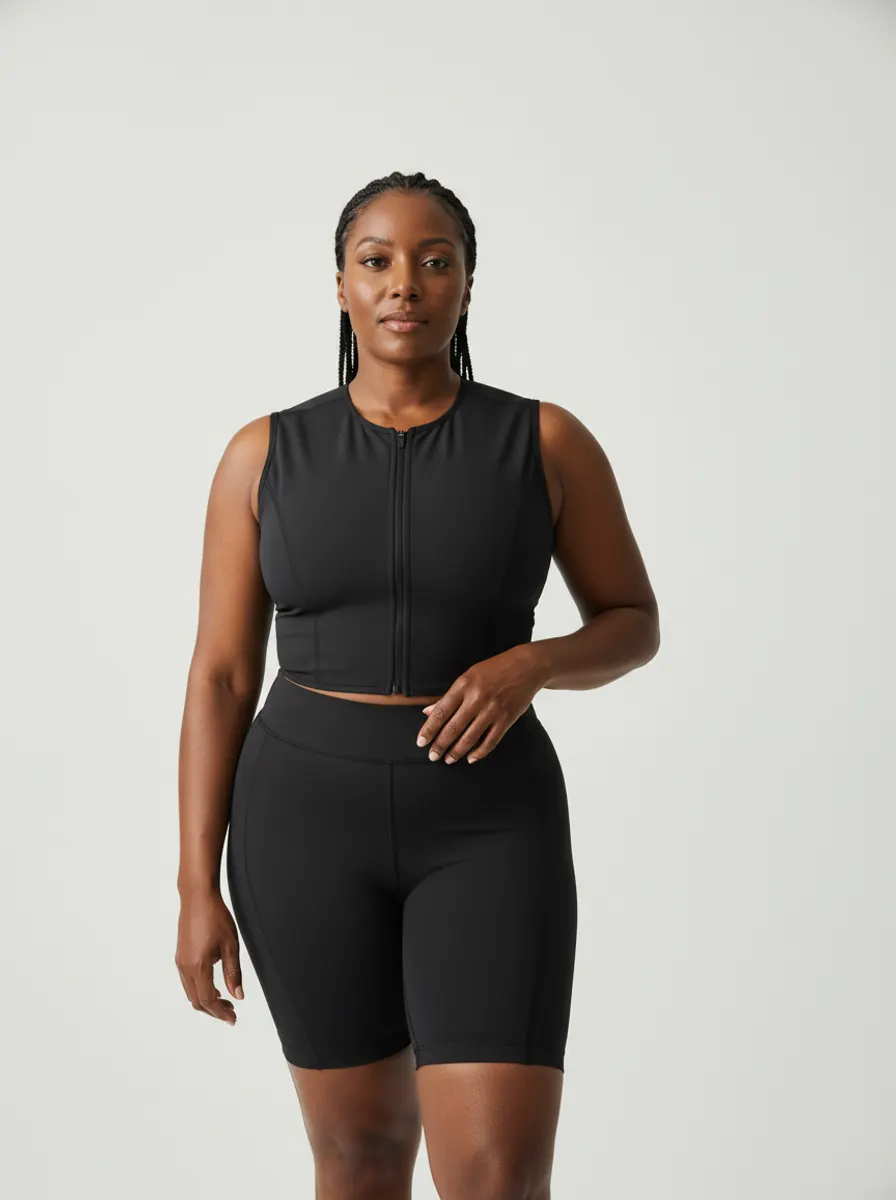
A tummy tuck, or abdominoplasty, removes loose skin and stubborn fat from the lower abdomen and repairs separated muscles. You get a flatter, firmer midsection that diet and exercise alone can't reach, especially after pregnancy or major weight loss.
Small label top center → image/illustration → large centered paragraph
How it works
Your surgeon reviews your goals, history, and which abdominoplasty fits.
Loose skin removed and abdominal muscles tightened.
You go home the same day with detailed care instructions. Our team checks in through scheduled follow-ups until your healing is on track.
Results
See real patient results, before and after.
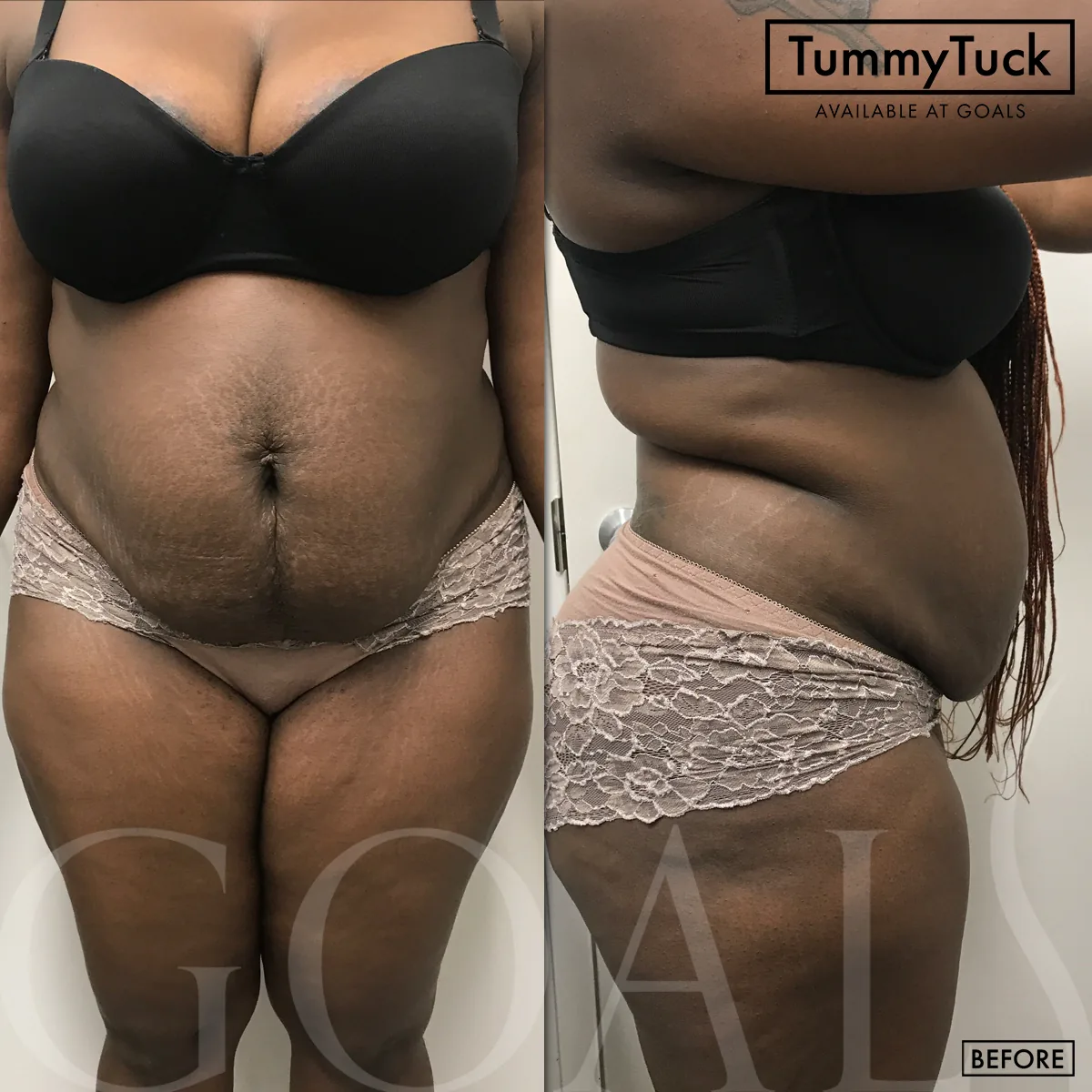
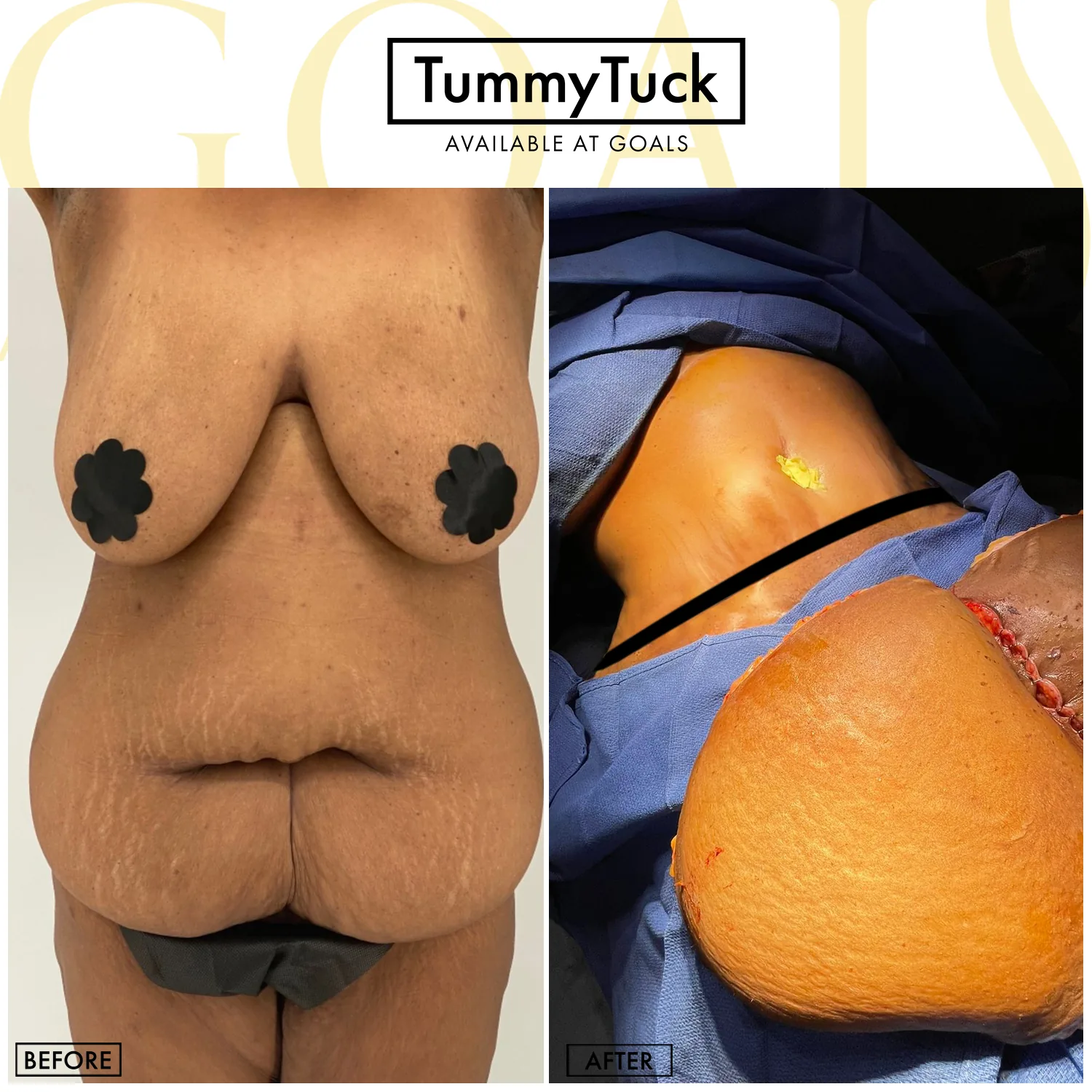
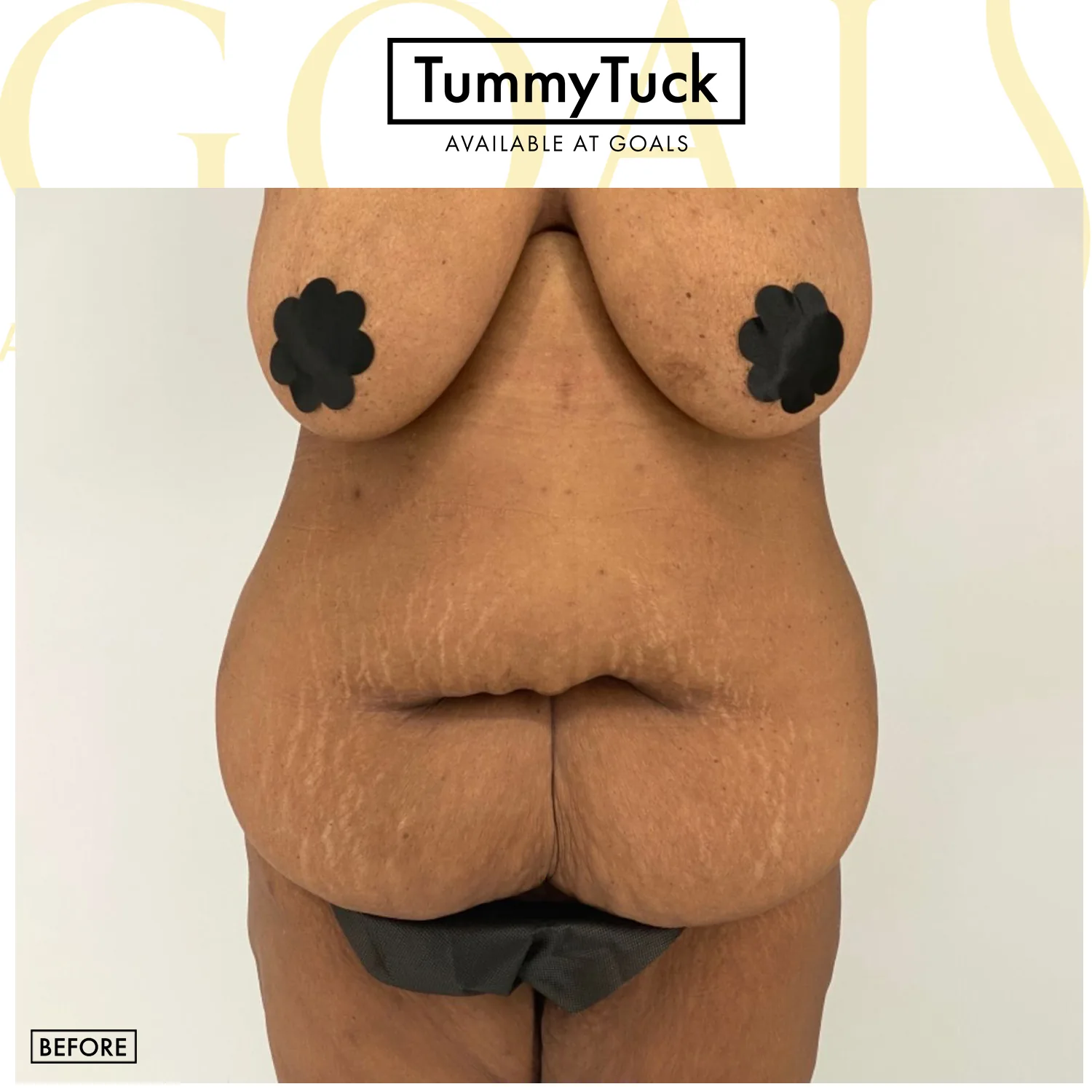
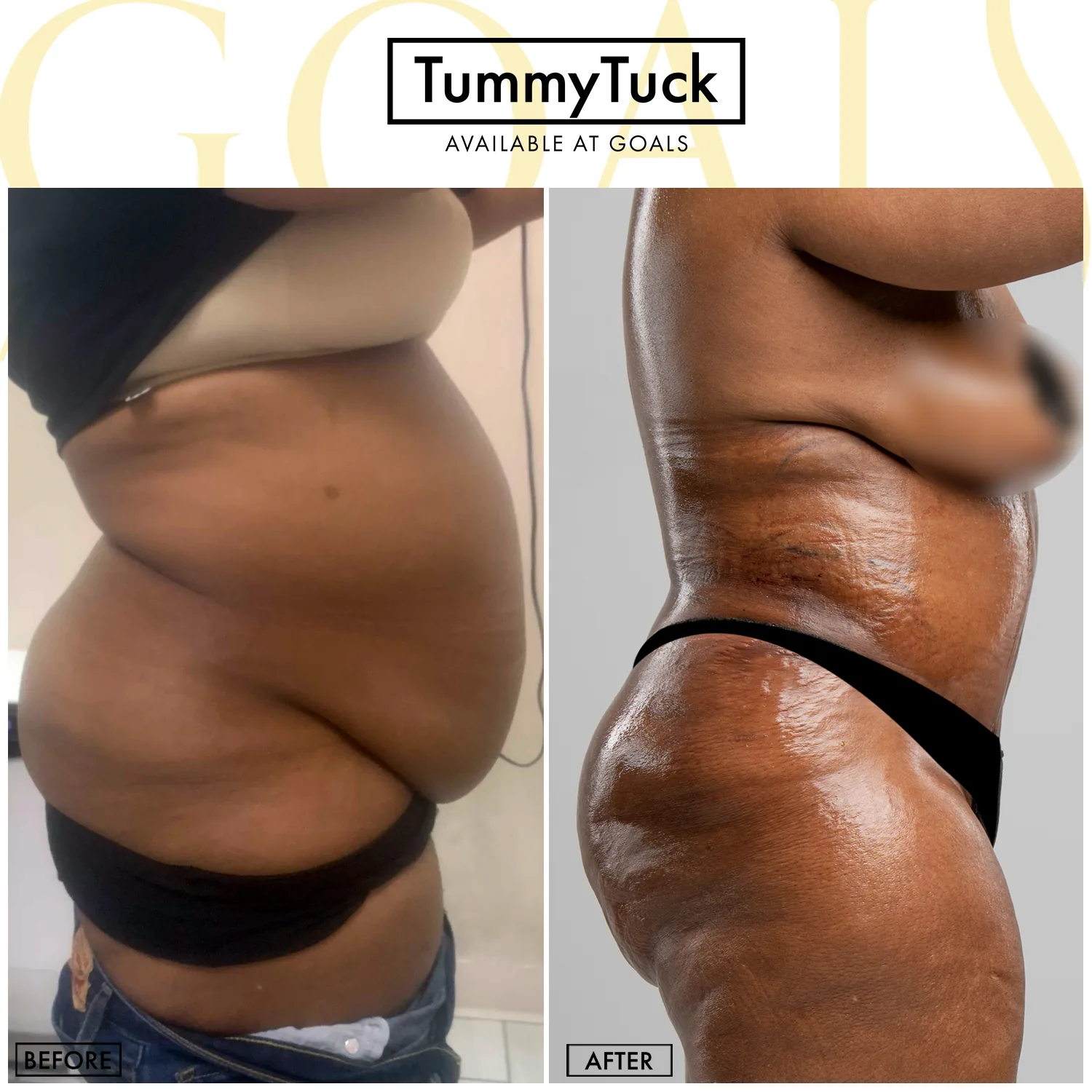
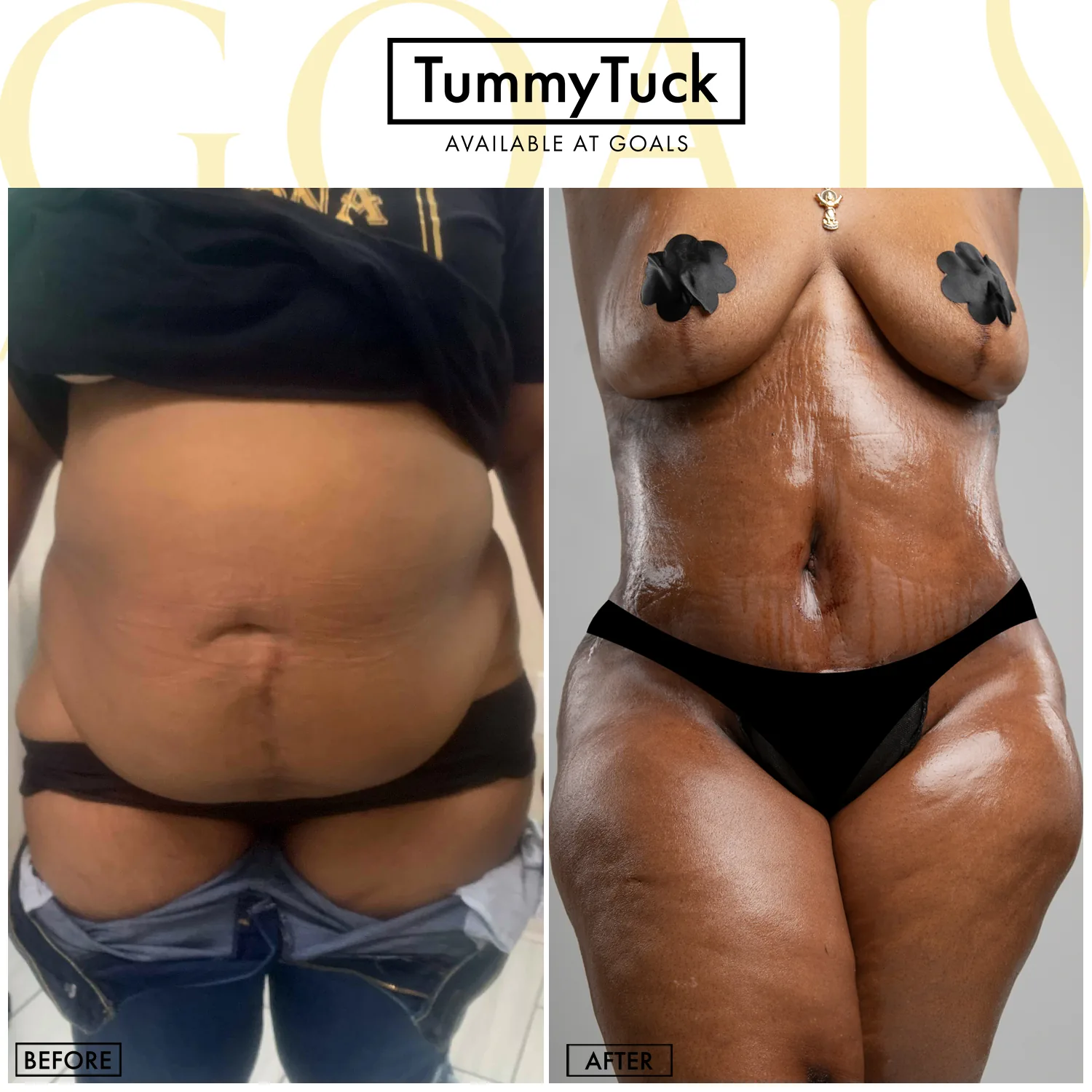
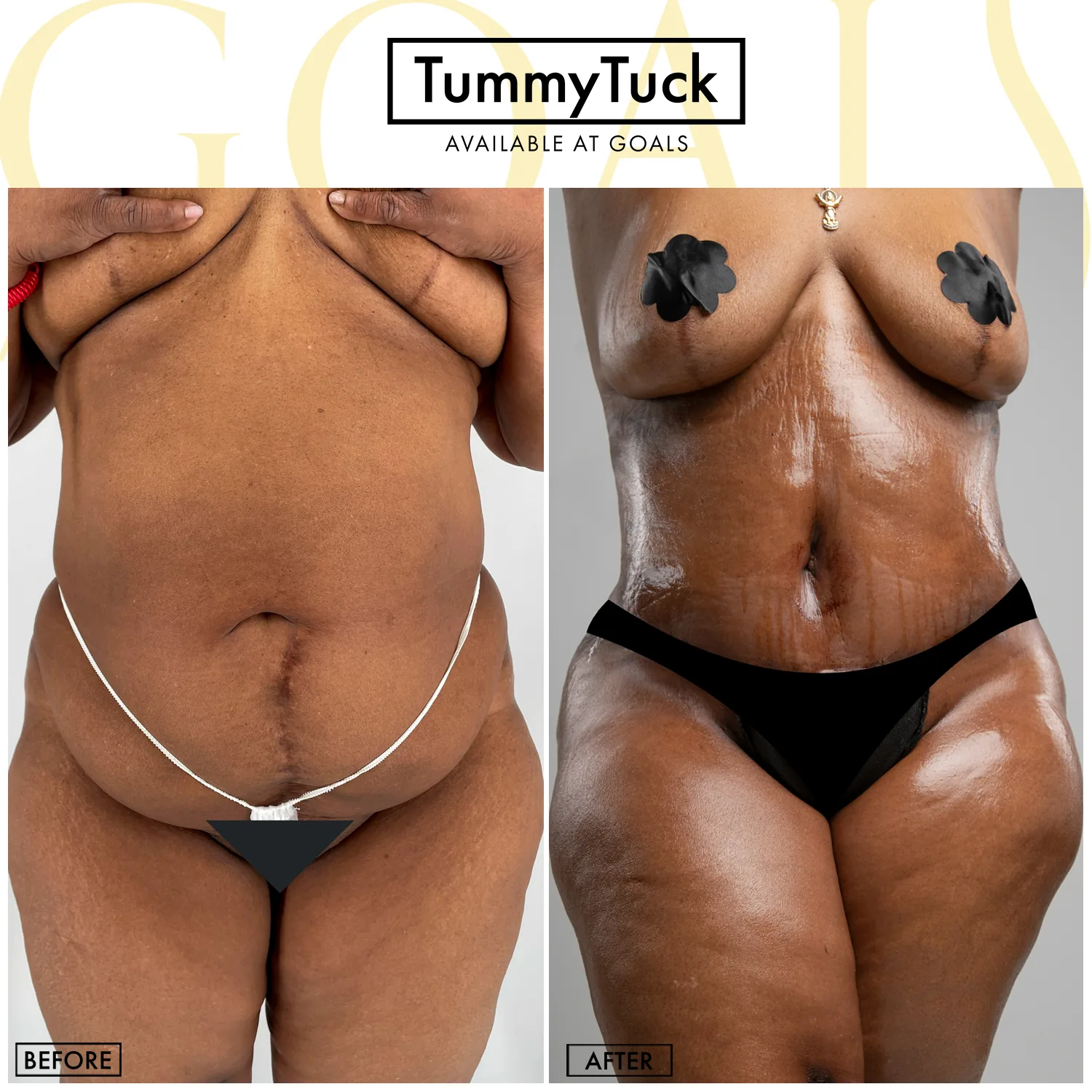
Real patients, published with written consent. Photographs are not retouched or AI-generated. Individual results vary — these images show outcomes for these patients and are not a guarantee of your own.
Try it
Type your height and weight. Your numbers stay on your device. We do not see or save them.
BMI is just one number. Your surgeon also looks at your health and your goals. BMI alone does not decide if you can have surgery.
Candidacy
Abdominoplasty is for patients with loose abdominal skin, separated muscles, or stubborn lower-belly fat after pregnancy or weight loss who want a flatter midline.
Hanging or sagging skin after major weight loss or pregnancy.
Lower-abdomen fat and a soft pooch that won't budge with diet and exercise, often with loose skin.
Diastasis recti from pregnancy that leaves the midsection weak and rounded out.
At a stable weight, finished with pregnancy, and ready for a real recovery window.
Lipo removes fat. A tummy tuck removes skin and rebuilds the abdominal wall. Knowing what each can and can't fix helps you pick the right one for your body.
| What It Targets | Loose skin, separated muscles, and excess fat. | Localized fat pockets only, no skin. |
|---|---|---|
| Skin Tightens | Yes, excess skin is fully removed. | No, can leave skin laxity. |
| Muscle Repair | Diastasis recti repaired during op. | Not addressed. |
| Scar Profile | Low horizontal scar hidden by underwear or swimwear. | Tiny puncture marks only. |
| Best Candidate | Loose skin or post-pregnancy abdomen. | Stubborn fat, good skin tone. |
Tummy Tuck at Goals rebuilds the abdominal wall and removes loose skin in one procedure, going further than lipo alone. For apron skin or diastasis recti, this is what gives you a flat, firm midsection that holds long term.
Your journey
6 steps to a flat stomach.
Go over your medical history, and your surgeon determines which type of tummy tuck fits you.
Lock in your surgery date and your price. You get a full pre-op checklist, so nothing is left to guesswork on the day.
Bloodwork, clearance, and a final check on weight stability. Our team walks you through medication, eating, and prep timing.
Loose skin comes off through a low horizontal incision, abdominal muscles are tightened, and the belly button is reshaped.
Drains stay in for several days. A binder supports the abdomen. Walking starts gently within 24 hours.
Scheduled follow-ups for the first 12 weeks. Most patients return to desk work in 2 to 3 weeks.
A tummy tuck makes a visible change in the abdomen: tighter skin, a defined waist, and a flatter profile from rib cage to pubic bone, refined over the first six months.
Loose skin removed and abdominal wall tightened.
A more sculpted waist and smoother contour in clothes and out.
Separated abdominal muscles stitched back together for real core support.
Results hold with stable weight and no new pregnancy.
Safety
Surgery happens in accredited facilities with licensed U.S. surgeons. Screening, anesthesia, and recovery protocols are standardized for every patient.
Every operating surgeon is licensed U.S., credentialed, and reviewed against outcome data regularly.
Fixed pre-op screening, intraoperative checklists, recovery pathways.
Care before and after surgery: written instructions, follow-ups, direct team access.
Our surgeons
Licensed U.S. surgeons. See the full team.
Each surgeon’s training and licenses are listed on their own page.
Pricing
Tummy tuck pricing starts at $10,000. Final cost depends on abdominoplasty type, muscle repair, and any combined work, confirmed at consultation and locked at booking.
Your price is locked in at booking, after consultation.
Clear pricing, no hidden fees. Everything is spelled out in the contract.
Prices shown are starting prices and depend on the number of areas treated. Final pricing is confirmed at your consultation. Cosmetic procedures are not covered by insurance.
Try it
Pick a procedure to see an estimate. Your numbers stay on your device. We do not see or save them.
This is an estimate, not a quote. It splits the starting price over the months you pick, with no interest. Lenders set your real rate and terms. Your price is confirmed at your consultation.
Clinics
FAQ
A mini tummy tuck handles loose skin and fat below the belly button only, with a shorter scar and faster recovery. A full tummy tuck treats the whole abdomen above and below the navel, repairs diastasis recti, and repositions the belly button. The right choice depends on how much skin you have and where it sits.
Most patients take 2 to 3 weeks off desk work and 6 weeks off lifting or core exercise. Drains usually come out within 7 to 10 days. Swelling fades gradually over the first three months, with final contour visible around six months. Walking begins within 24 hours of surgery to support circulation and lower clot risk.
Risks include seroma, hematoma, infection, poor scarring, and rare blood clots. They're reduced by licensed U.S. surgeons, strict screening, intraoperative protocols, compression garments, early walking, and structured follow-up. Your surgeon walks you through your personal risk profile at consultation.
Surgical eligibility depends more on weight stability than on BMI alone. A higher BMI raises risk, so most surgeons want a stable weight for at least three to six months before surgery. For patients with significant excess skin after major weight loss, an extended tummy tuck or panniculectomy may be the right option.
Tummy tuck results are meant to last. The removed skin and tightened muscles don't grow back. Keeping a stable weight and avoiding future pregnancies preserves the outcome best. Most patients enjoy their results for years, though significant weight gain or another pregnancy can stretch the skin again over time.
Learn more
A tummy tuck, also called abdominoplasty, is one of the most requested body-contouring procedures in the country. It removes loose skin and stubborn fat from the abdomen, repairs separated muscles, and rebuilds the abdominal wall into a flatter, firmer profile. Patients usually come to the consultation after years of trying to fix the same problem with diet and gym work, only to find that skin and muscle damage from pregnancy or major weight loss simply doesn't respond to either. This page walks through what the procedure actually does, the main types, recovery, scarring, cost, and how a tummy tuck fits with related procedures. For visual examples, browse the before-and-after gallery; to read about the surgeons who handle these cases, see the surgeons team page..
What a Tummy Tuck Actually Does
The most common misconception is that a tummy tuck is a weight-loss procedure. It isn't. It's a contouring procedure. The surgeon makes a low horizontal incision, lifts the skin and fat away from the abdominal wall, repairs any separation between the rectus muscles, removes the excess skin, repositions the belly button, and closes everything down to a tighter contour. You get a flatter abdomen, a defined waist, and a profile that holds with stable weight. What it doesn't do is target fat outside the lower-belly apron, move the scale much, or replace the work of getting close to your goal weight first. Here's a clean answer to the common question "what is the difference between lipo and tummy tuck": liposuction removes fat through small puncture sites and leaves the skin to retract on its own; a tummy tuck removes the skin itself and rebuilds the wall underneath it. Different problems, different tools.
Mini vs Full vs Extended: Choosing the Right Type
There's no single tummy tuck. The mini tummy tuck handles loose skin and a small pooch below the belly button only, with a shorter scar that sits low and a faster recovery, often without belly button repositioning. It's the right call for patients with limited skin laxity and a small pooch, and the wrong call for patients with significant diastasis or upper-abdomen looseness, since it simply doesn't reach far enough to fix those problems. The full tummy tuck treats the entire abdomen above and below the navel, includes muscle repair, and produces the most dramatic change for patients with diastasis recti and a moderate amount of excess skin. It's the most commonly performed version. The extended tummy tuck reaches further around the flanks, which is what patients who've lost significant weight usually need. To answer "what is an extended tummy tuck" simply: it's a full tummy tuck that wraps around to the sides to address loose skin on the hips and lower back. Patients comparing extended tummy tuck before and after photos can see the difference clearly. There's also the fleur de lis tummy tuck, which adds a vertical incision down the center of the abdomen for cases of severe horizontal skin laxity, often after massive weight loss. The trade is a more dramatic correction for a more visible scar pattern. The 360 tummy tuck wraps fully around the trunk and is usually done in combination with lipo of the back. The so-called reverse tummy tuck addresses upper-abdomen laxity through an incision under the breast crease and is uncommon. Your surgeon's job at consultation is to match the technique to your body, not the other way around, which is why no honest surgeon will quote a procedure type before seeing you in person.
The Tummy Tuck After Pregnancy or Major Weight Loss
Two patient profiles dominate this procedure. The first is post-pregnancy. Even patients who return to their pre-baby weight often find the abdominal wall doesn't bounce back the same way. The rectus muscles can stay separated, the skin can hang, and stretch marks below the navel persist no matter how hard the gym routine is. The second is post-weight-loss. After bariatric surgery or significant lifestyle weight loss, patients are often left with an apron of loose skin that no amount of extra dieting will remove. For both groups, the abdominoplasty is the procedure that actually addresses the underlying anatomy. For post-pregnancy patients planning more children, surgeons generally recommend waiting until childbearing is complete, since a future pregnancy will stretch the abdominal wall again. For post-weight-loss patients, surgeons want to see weight stable for at least three to six months before operating. Many of these patients combine the tummy tuck with breast surgery as part of a mommy makeover at /mommy-makeover/ to address related changes at the same time.
Diastasis Recti Repair: Why Muscle Tightening Matters
Diastasis recti is the medical term for separation of the two rectus abdominis muscles down the midline. It's extremely common after pregnancy, particularly after large babies or multiple pregnancies, and it doesn't always close on its own. Patients with diastasis recti often describe a rounded belly that persists even when they're thin, a weak core, lower-back discomfort, and a soft gap they can feel when they sit up. Standard sit-ups and core workouts won't close significant diastasis, and in some cases they make it worse. A tummy tuck for diastasis recti repair stitches the separated muscles back together along the midline, which restores the integrity of the abdominal wall. The cosmetic effect is a noticeably flatter midsection. The functional effect, which patients sometimes care about more, is better core support and less strain on the lower back. This muscle repair is the reason a tummy tuck can't be replaced by liposuction alone. Lipo will remove fat from above the muscle layer but leaves the underlying separation untouched, and the round-belly silhouette will persist.
Tummy Tuck Cost and Payment
The most-searched question in this category is some version of "how much does tummy tuck cost", and the honest answer is that the price varies more than for many other procedures, because the surgery itself varies. A mini tummy tuck involves less time, less anesthesia, and a shorter recovery, so it costs less. A full tummy tuck with muscle repair takes longer and costs more. An extended or fleur de lis tummy tuck involves more incision length, more time on the table, and a higher fee. Combining the tummy tuck with liposuction of the flanks or with breast surgery changes the total. At Goals, tummy tuck pricing starts at $10,000, and the final number is confirmed during the consultation and locked at booking, so what you pay is what you were quoted. No surprise charges appear between the consultation and the surgery date. Most patients ask whether insurance helps, and the realistic answer to "does insurance cover a tummy tuck" is almost always no. Cosmetic abdominoplasty isn't covered by any major insurer. A panniculectomy, the removal of the abdominal apron without muscle repair or cosmetic shaping, can sometimes be covered when it's medically necessary, usually for patients dealing with chronic skin rashes or infections under the apron, but that's a different procedure with different goals. For patients who want to spread the cost over time, financing options at /financing/ are available, and the team walks through the math at the consultation so the monthly number is clear before you commit.
What the First Six Weeks of Recovery Look Like
The recovery time of a tummy tuck is the part patients underestimate most. The first 48 hours are the hardest. You'll go home the same day with drains in place to prevent fluid buildup, wearing a compression binder. You'll sleep in a slightly bent position to keep tension off the incision, usually in a recliner or propped up with pillows. Walking begins within 24 hours, gently and with help, because early movement reduces the risk of blood clots and helps swelling resolve. Drains typically come out at the one-week mark, once output has dropped enough. Showering is allowed once drains are out. Pain peaks in the first 72 hours and tapers quickly after that, and most patients are off prescription pain medication within a week. Most desk workers return to work between two and three weeks. Jobs that involve lifting, prolonged standing, or physical exertion need six weeks off. Exercise comes back gradually: light walking first, then low-impact cardio around six weeks, and core work delayed until eight to twelve weeks at the earliest, since returning to abdominal exercise too early can stress the muscle repair. Lymphatic drainage massage after tummy tuck is a common adjunct that helps with swelling and is offered through aftercare. Final contour isn't visible at one month or even three months. The abdomen keeps refining for about six months, with the most noticeable change between weeks six and twelve. Patients who know this going in handle the early weeks better than those who expect day-30 photos to look final. The single most useful piece of advice from patients who've been through it: take more time off than you think you need, not less.
The Tummy Tuck Scar: What to Expect Long Term
Every tummy tuck leaves a scar. The cosmetic question isn't whether there will be one, but where it sits, how it heals, and how visible it is in clothing. A standard full tummy tuck scar runs horizontally across the lower abdomen between the hip bones, sitting low enough to hide under underwear and most swimwear. A second small scar around the new belly button is part of the trade for repositioning it. An extended tummy tuck scar wraps further around the flanks. A fleur de lis tummy tuck adds a vertical scar down the midline. Healing varies. The scar usually looks its worst between six weeks and three months, when it's pink and raised, then fades and flattens over the following year. Most patients see a meaningful difference by month six and continued softening through eighteen months. Silicone sheets and scar massage are the standard at-home tools surgeons recommend. Sun protection during the first year matters, because UV exposure on a fresh scar can darken it permanently. The scar doesn't disappear, but in good lighting on a healed patient a year out, it reads as a thin line, not a feature of the abdomen.
Combining Tummy Tuck with Other Procedures
Many patients don't arrive wanting only a tummy tuck. They arrive with a list. Loose skin on the abdomen is rarely the only change from pregnancy or weight loss; the chest, arms, and flanks are often involved too. Combining procedures in one surgical session can make sense for the right patient, both for total cost and total recovery time, but it depends on case length, surgical risk, and the surgeon's judgment. Common pairings with abdominoplasty include liposuction of the flanks and back to refine the waist, breast lift or augmentation as part of a mommy makeover, and FlexSculpt tumescent liposuction in adjacent zones. Some patients also consider labiaplasty at the same time. What surgeons don't generally combine in one session is multiple major body lifts with another long procedure, because cumulative anesthesia time and fluid shifts raise risk faster than the cosmetic benefit warrants. There's a real ceiling on how much surgery is safe in a single day, and a careful surgeon will tell you when your wish list crosses it. For patients who want the contouring effect of body work but aren't ready for an open tummy tuck, FlexTuck is a less-invasive alternative offered at Goals. The best plan comes out of a consultation that looks at the whole picture, not a procedure-by-procedure menu. Pacing matters: doing the right thing at the right time beats trying to do everything at once.
Get started
Take the first step toward your dream look. Book your free consultation today and discover how breast augmentation can shape your confidence and silhouette.
Prefer to talk now? (833) 462-5769
Free · No obligation
Tell us how to reach you. A patient coordinator calls you back — usually the same day.
Free · No obligation
Ask me anything. I usually reply straight away.
If you share your number, a Goals coordinator may call or text you about your consultation. Message and data rates may apply.
Nora is an automated chat. She cannot give medical advice or say whether a procedure suits you.