Hooded Upper Lids
Skin rests on the lash line, or on your glasses, or catches when you apply makeup.
Removes the loose skin and fat that make the eyes look tired regardless of how much sleep you get.
From $3,000
Overview
Blepharoplasty is a surgical procedure that reshapes the upper or lower eyelids by removing excess skin and fat, addressing the drooping or puffiness that makes the eyes appear tired or aged.
Upper lids: a fine incision hidden in the natural crease, excess skin and a little fat removed. Lower lids: usually from inside the lid, so there is no visible scar at all. Either can be done alone; many patients have both in one visit.
How it works
Sitting upright, your surgeon marks exactly how much skin can come out and still let your eye close.
Excess skin is removed; the fat that causes bags is repositioned rather than simply taken.
Sutures sit in the natural crease above, or inside the lid below, where there is no visible scar at all.
Candidacy
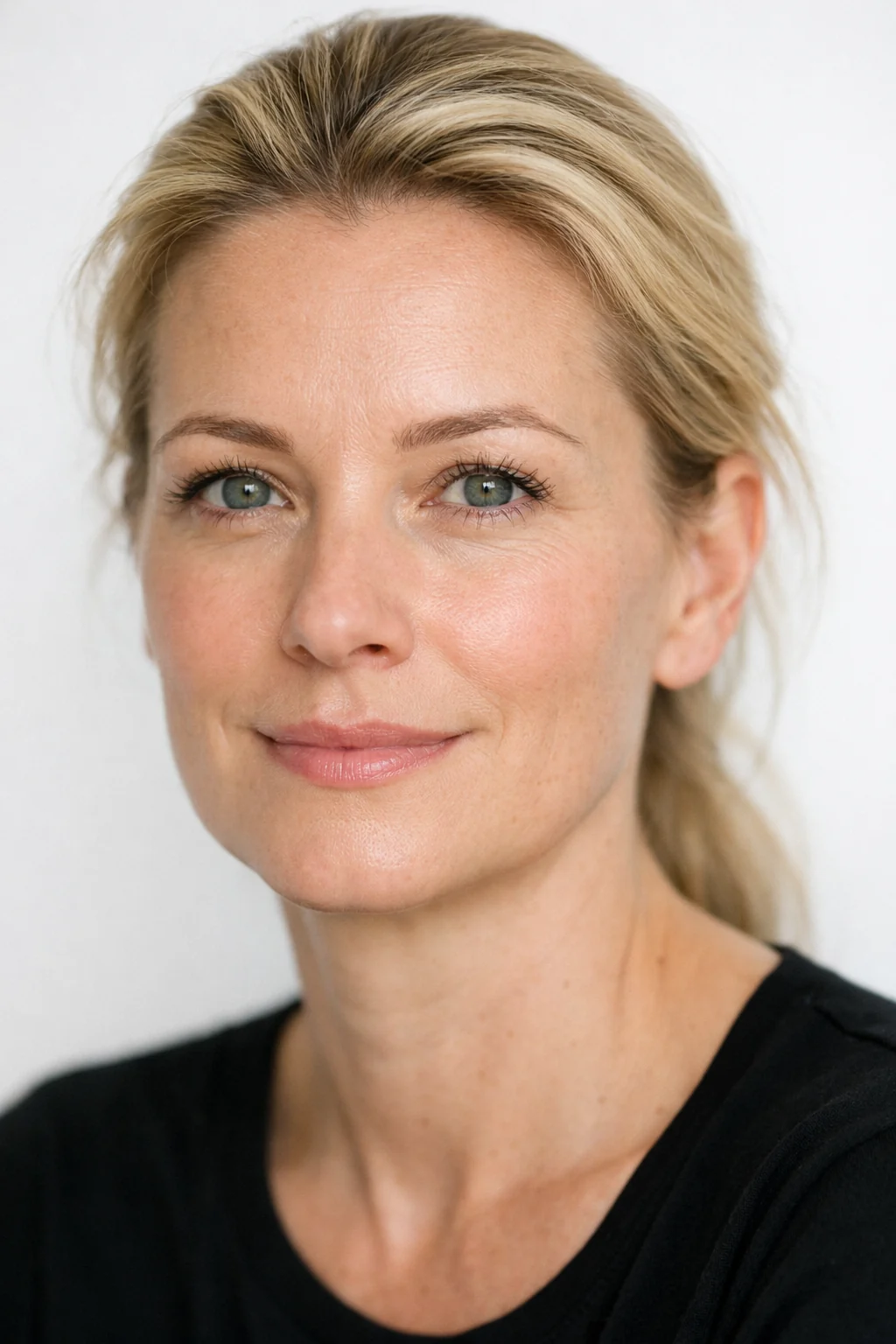
Hooded upper lids, bags under the eyes, and skin that rests on the lashes.
Skin rests on the lash line, or on your glasses, or catches when you apply makeup.
Puffiness below the eye that is there every morning regardless of sleep or salt.
People tell you that you look exhausted when you feel fine.
Dry eye, thyroid eye disease and previous eye surgery all change the plan and need to be discussed.
How eyelid surgery (blepharoplasty) compares with dermal fillers.
| What it does | Removes excess skin and repositions fat | Adds volume to hollows |
|---|---|---|
| Hooded upper lids | Corrected directly | Not treatable with filler |
| Under-eye bags | Fat repositioned or removed | Camouflaged by filling the hollow below |
| How long it lasts | Upper lids often a decade or more | Nine to eighteen months |
| Downtime | One to two weeks | A day or two of swelling |
Your journey
Here is how it goes, step by step.
Sit down with your surgeon, go over your goals and your medical history, and confirm eyelid surgery (blepharoplasty) is the right operation.
What is being done, where the incisions go, what it will cost, and what result is realistic for your anatomy.
Bloodwork and medical clearance, what to stop taking, and how to set your home up for the first week.
You arrive, you are marked and prepped, and the operation is performed by a licensed U.S. surgeon in an accredited facility.
Follow-ups, drains or sutures out where relevant, and clear instructions you can actually follow.
Swelling resolves over months, not days. The final result is judged at the end of that, not the week after surgery.
Recovery
Recovery is a sequence, not a date. This is the shape of it.
Cold compresses, head elevated. Swelling and bruising at their worst.
Sutures out around day 5–7. Bruising still visible.
Back to work, most of the bruising covered with makeup.
Scars fade into the crease and become difficult to find.
Results
Eyelid surgery removes what makes the eye look tired. The first week is swollen and bruised, but this is one of the fastest facial procedures to look presentable, and the result is visible early.
The lid stops crowding the lash line and the eye reads as open.
Repositioning the fat fills the hollow it used to bulge above, rather than leaving a dent.
Nobody should be able to tell what changed — only that you look less tired.
The upper scar hides in the crease; the lower one is usually inside the lid.
Safety
Every procedure is performed by a licensed U.S. surgeon in an accredited facility. Goals is a management company; the medical practice and the surgeon responsible in your state are named in our terms.
Our surgeons
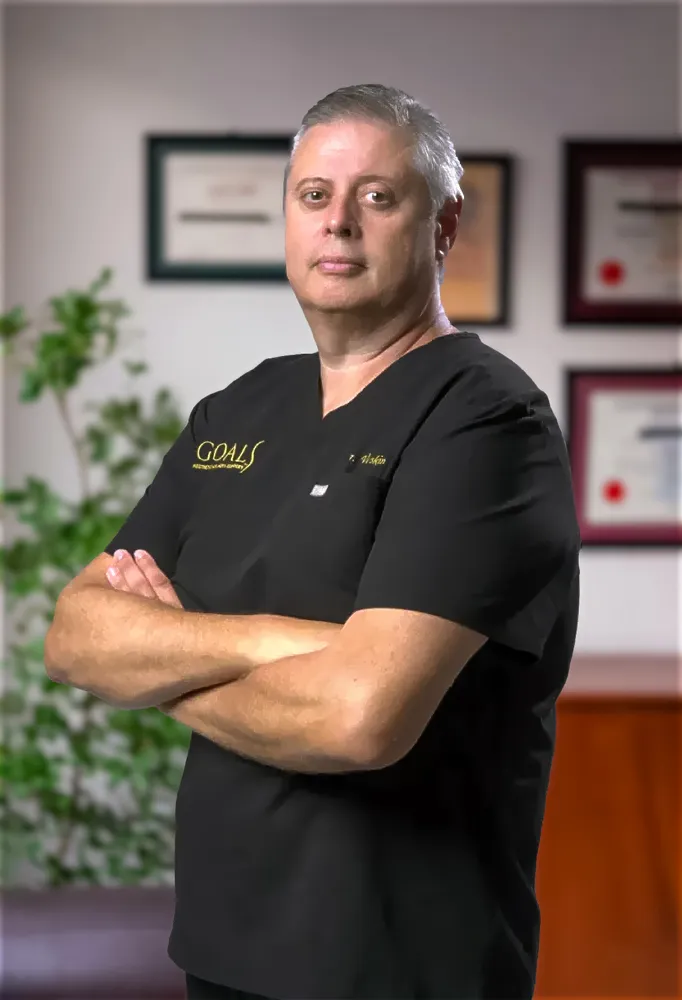
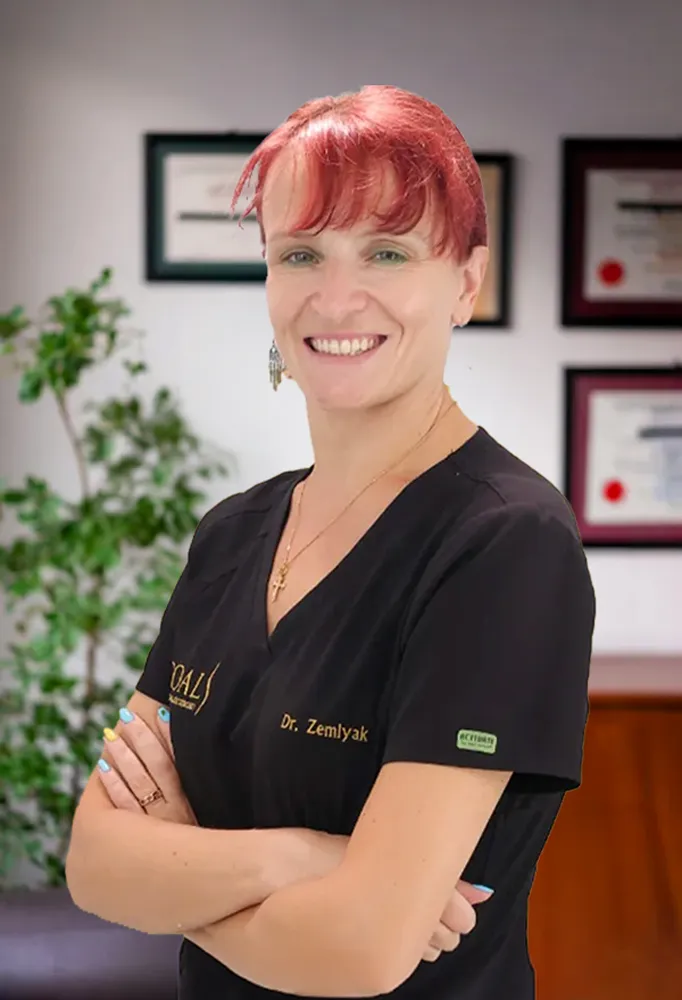
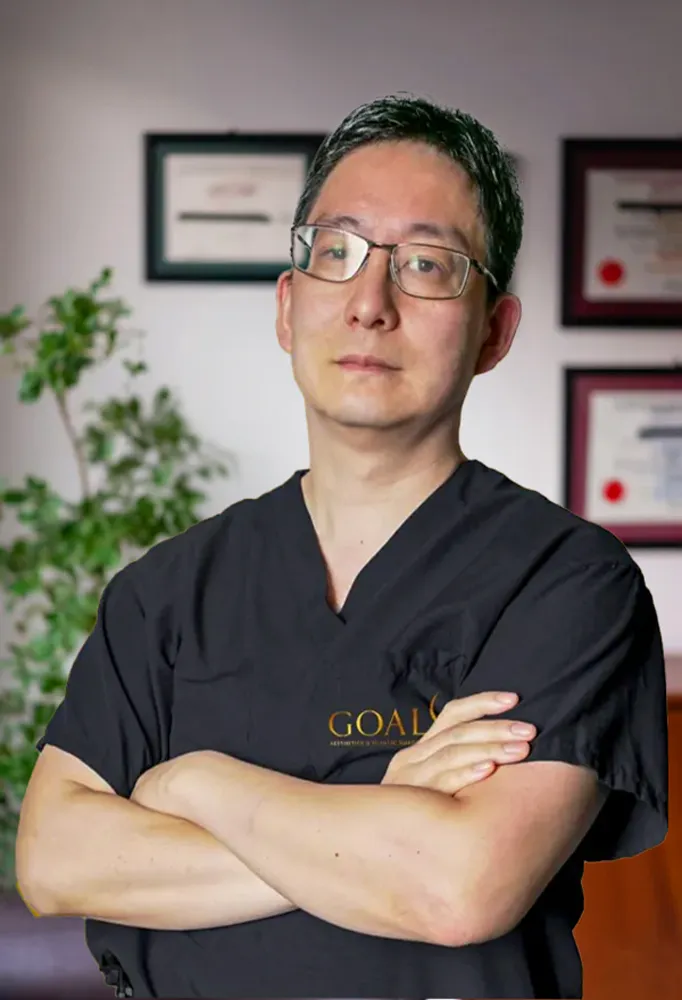
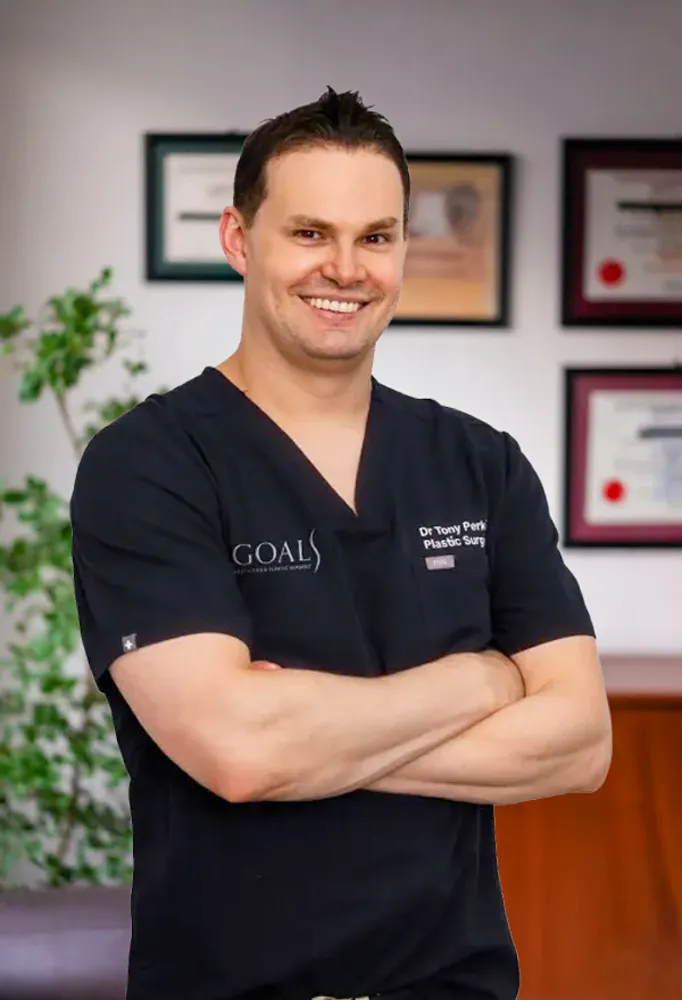
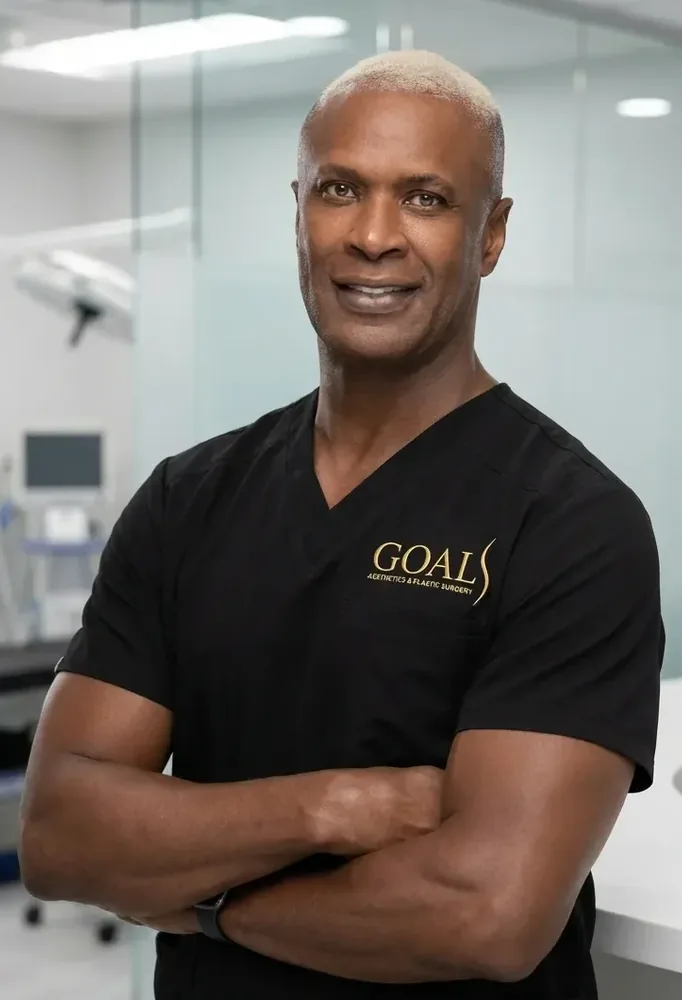
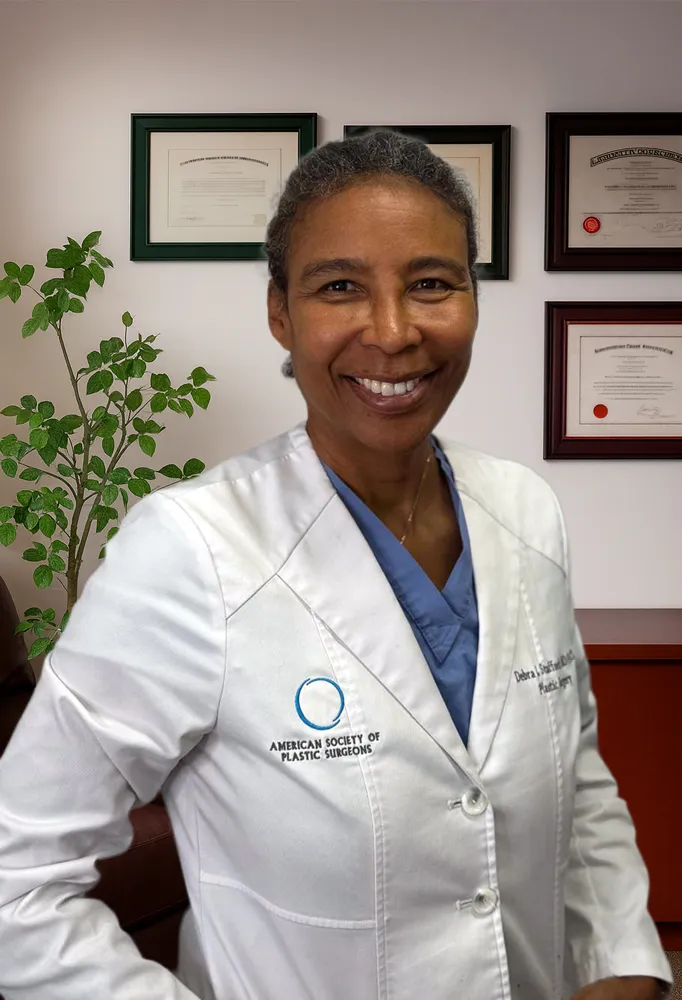
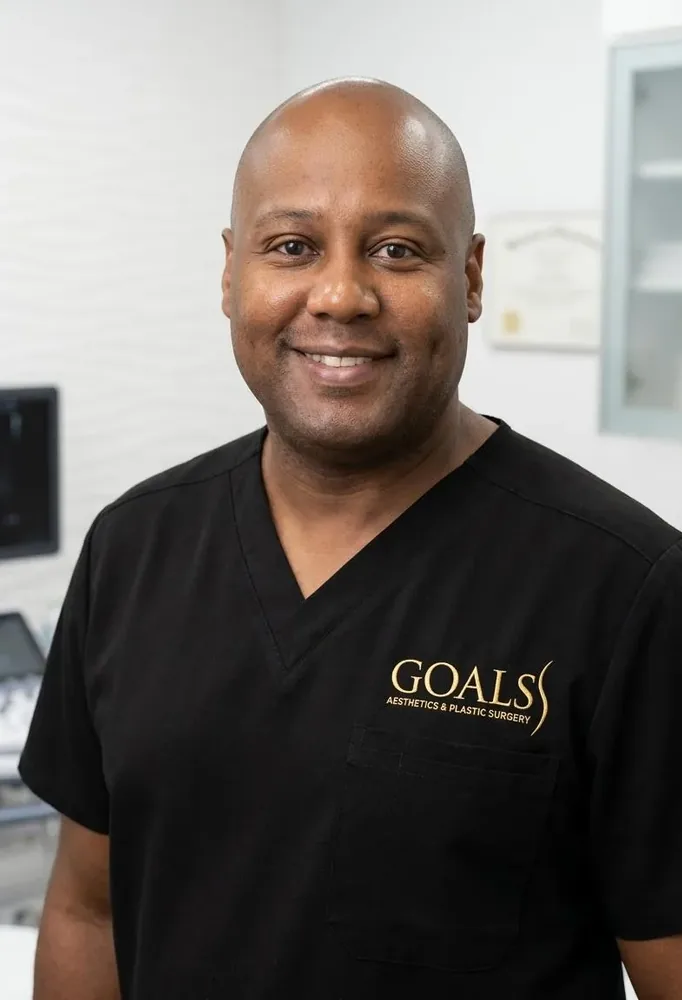
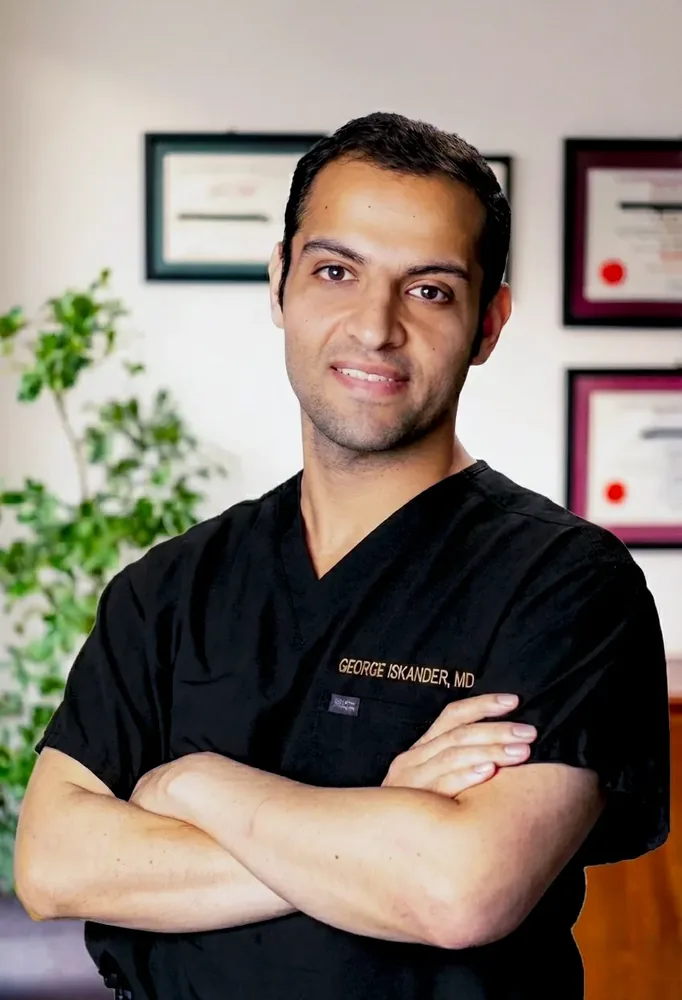
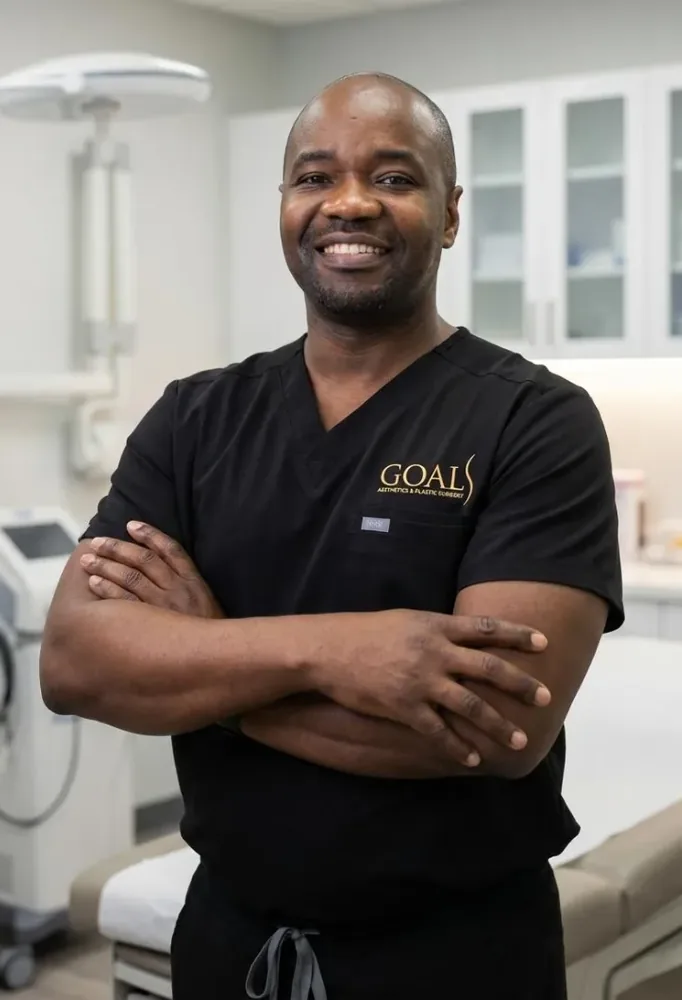
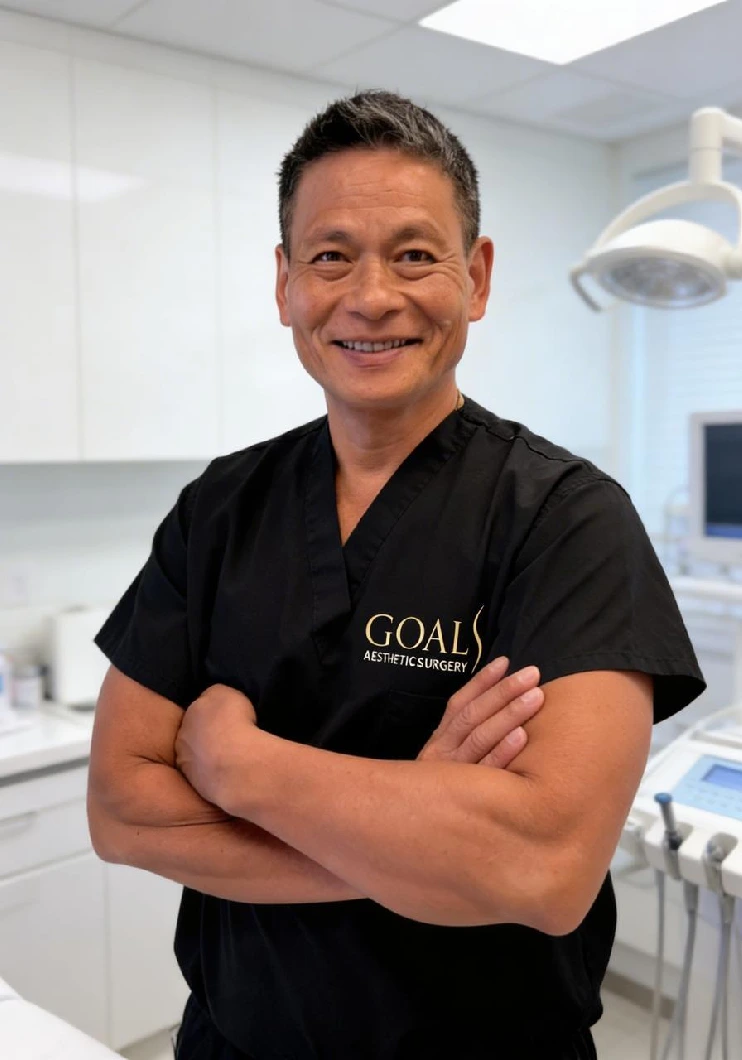
Each surgeon’s training and licenses are listed on their own page.
Pricing
Eyelid Surgery (Blepharoplasty) starts at $3,000. Your price is confirmed at consultation and depends on what your case actually needs. A $500 deposit reserves your surgery date.
Financing available, with monthly plans.
Reserves your date and comes off your balance.
No hidden fees. Everything is detailed up front.
Prices shown are starting prices and depend on the number of areas treated. Final pricing is confirmed at your consultation. Cosmetic procedures are not covered by insurance.
Try it
Pick a procedure to see an estimate. Your numbers stay on your device. We do not see or save them.
This is an estimate, not a quote. It splits the starting price over the months you pick, with no interest. Lenders set your real rate and terms. Your price is confirmed at your consultation.
Clinics
FAQ
Upper lids do the most for a tired look. Lower lids address bags. Which you need is a two-minute conversation in front of a mirror.
Often, yes — under local anesthesia with sedation. It is one of the shorter procedures Goals performs.
Only the part caused by shadow from a bulge or a hollow. Pigmentation in the skin itself needs a different treatment, and your surgeon should tell you which of the two you have.
Upper lid surgery frequently is, with sedation. Lower lid work is usually more comfortable with deeper sedation.
Around ten to fourteen days, once the sutures are out and the incisions have sealed.
Learn more
Blepharoplasty is the most requested facial operation in the world, and the reason is simple: nothing else on the face changes how tired you look as directly as the eyelid. It is also one of the easiest procedures to do badly, because a millimetre of over-resection is the difference between rested and unable to close your eye. This page covers what upper and lower eyelid surgery each do, who needs which, and what an honest recovery looks like.
Blepharoplasty is the removal or repositioning of skin, muscle and fat around the eye. It comes in two halves that are frequently done together but solve different problems. Upper blepharoplasty removes excess skin — and sometimes a strip of muscle and a little fat — from the upper lid, where it has come to rest on or over the lash line. Lower blepharoplasty addresses the bags under the eye, which are not swelling but orbital fat pushing forward through a weakened barrier. The modern approach repositions that fat into the hollow beneath it rather than simply removing it, because taking it all out leaves a hollow, skeletal look that ages badly.
Upper lid surgery is for hooding: skin resting on the lashes, makeup that transfers onto the fold, glasses that sit on skin. Lower lid surgery is for bags and the tear-trough hollow beneath them. They are separate operations and many patients only need one. Before either, your surgeon should check the position of your brow, because a descended brow can create hooding that eyelid surgery will not fix and can worsen. They should also check how well your lower lid springs back when pulled down, since a lax lower lid needs support during the operation to avoid the lid pulling away from the eye afterwards.
Good candidates have excess upper lid skin, under-eye bags, or both, and healthy eyes. Conditions that change the plan rather than rule it out include dry eye, previous LASIK, thyroid eye disease and any history of a droopy lid, which is a different problem — ptosis is the muscle that lifts the lid failing, and it needs a different repair. Bring your eye history to the consultation. Patients whose only concern is dark circles from pigmentation rather than shadow will not get what they want from surgery, and should be told so plainly.
Usually under local anesthesia with sedation, sometimes general, in an accredited facility, and typically in one to two hours. For the upper lid, the marks are made with you sitting upright, because lid position changes when you lie down. The incision follows your natural crease, the planned skin is removed, fat is conservatively reduced where it bulges, and the incision is closed with fine sutures that sit invisibly in the fold. For the lower lid, the preferred route is transconjunctival — through the inside of the lid, leaving no external scar at all — through which the fat is released and repositioned over the orbital rim. If there is genuine excess lower lid skin, a fine incision just under the lashes is added, and the lid is usually supported with a small tightening stitch at the outer corner.
Bruising and swelling peak at forty-eight to seventy-two hours and look worse than they feel. Cold compresses for the first two days make a real difference. Sutures come out at five to seven days. Most people are presentable, with a little makeup, at ten to fourteen days, and bruising can persist faintly for three weeks. Expect blurred vision from ointment, watering, and a gritty sensation for the first week. Reading and screens are tiring at first. Contact lenses wait about two weeks, strenuous exercise about three. Fine swelling in the lower lid can take a few months to fully settle.
Upper eyelid surgery is one of the longest-lasting facial procedures — many patients never need it again, and those who do are usually looking at ten to fifteen years. Lower eyelid results also hold well, since repositioned fat does not tend to return. What continues is ageing everywhere else: the brow keeps descending and the skin keeps losing elasticity, so the area softens over time even though the fat is gone. Sun protection and not smoking are the two things within your control that make the most difference.
Eyelid surgery at Goals starts at $3,000 for a single area, confirmed at consultation, with a $500 deposit to hold your date. Doing upper and lower together costs less than doing them separately. The specific risks worth understanding are dry eye, which is usually temporary but is worse if you already have it; lower lid retraction, where the lid pulls away from the eye after over-aggressive skin removal; asymmetry; and, very rarely, bleeding behind the eye, which is the reason you are given clear instructions about what to report immediately. Ask your surgeon how they will support your lower lid, and ask to see results at a year rather than a month.
Eyelid Surgery (Blepharoplasty) near you
Get started
A consultation for eyelid surgery (blepharoplasty) is free and carries no obligation. A surgeon will tell you what is realistic for you.
Prefer to talk now? (833) 462-5769
Free · No obligation
Tell us how to reach you. A patient coordinator calls you back — usually the same day.
Free · No obligation
Ask me anything. I usually reply straight away.
If you share your number, a Goals coordinator may call or text you about your consultation. Message and data rates may apply.
Nora is an automated chat. She cannot give medical advice or say whether a procedure suits you.