
NPI Registry
The federal directory of active U.S. provider numbers, with name, specialty and practice address. It does not confirm a license on its own, so check the state board too.
Three things decide how safe surgery is: who operates, where, and how. This page shows how Goals handles each one, and how to check it yourself.
AAAHC-accredited · Vetted surgeons · Tumescent anesthesia
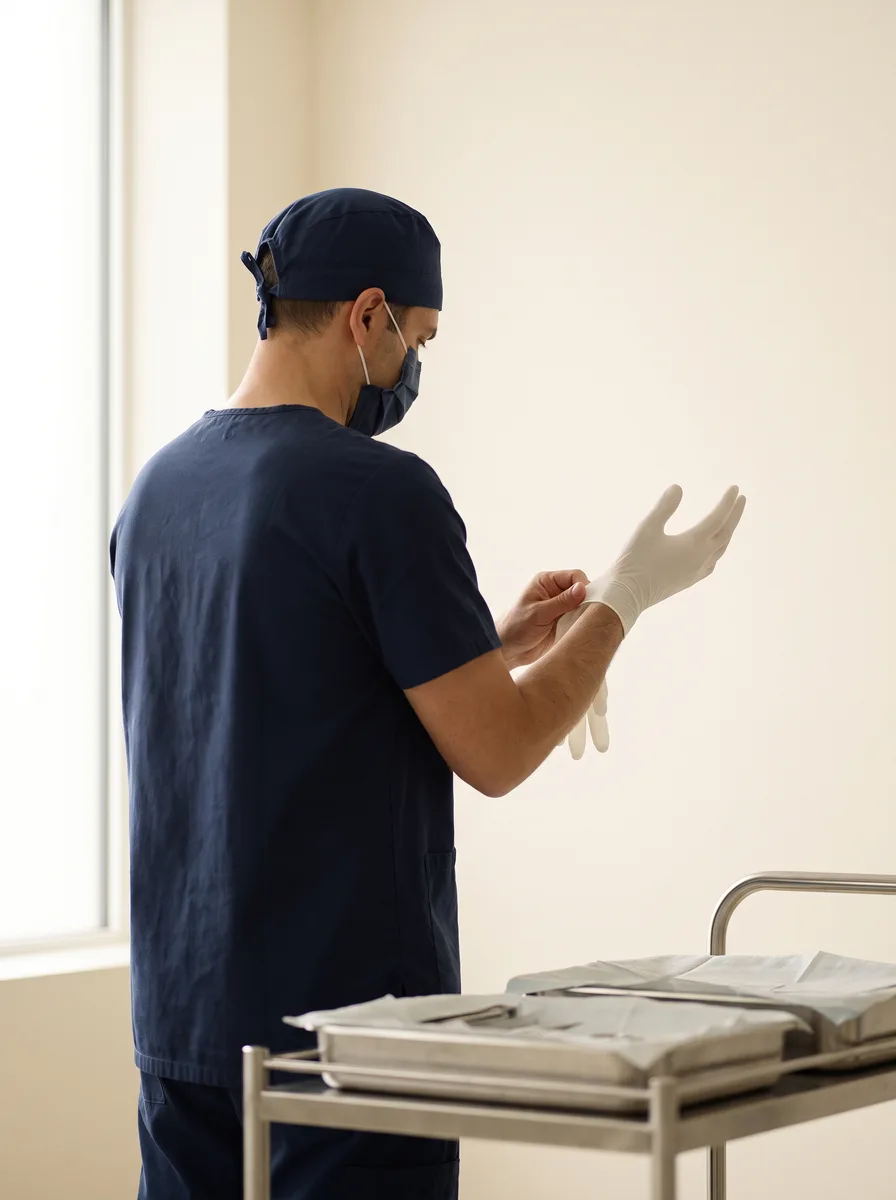
Overview
Cosmetic surgery is only as safe as three things: the surgeon, the facility and the anesthesia. This page sets out how Goals handles each one: how surgeons are vetted before they operate, where procedures are performed, how tumescent local anesthesia is dosed, and the limits we keep to. It also shows how you can check any of it yourself, here or at any practice you are considering.
Last reviewed October 13, 2026, against the sources listed on this page.
Physician vetting
Before a surgeon's first case with Goals, and again on a schedule after that.
Every surgeon's state medical license is verified with the state medical board, and board certification is confirmed with the American Board of Medical Specialties (ABMS) wherever a surgeon holds one.
Malpractice coverage is verified, and disciplinary and malpractice-claims history is reviewed.
Each surgeon holds privileges at a nearby hospital, which matters if a patient ever needs hospital care.
A new surgeon's first FlexSculpt cases are supervised by a senior Goals surgeon, and credentials are re-checked on a schedule after that.
Verify
You do not have to take our word for it. These free public tools show a doctor's license, board certification and specialty.
The federal directory of active U.S. provider numbers, with name, specialty and practice address. It does not confirm a license on its own, so check the state board too.
Every state medical board offers a free license lookup. New York's, from the Office of the Professions, is updated daily.
A free check of whether a doctor is certified by one of the 24 ABMS member boards, such as the American Board of Plastic Surgery or the American Board of Surgery.
Our surgeon profiles list the state license numbers and board certifications we have verified.
Accredited facilities
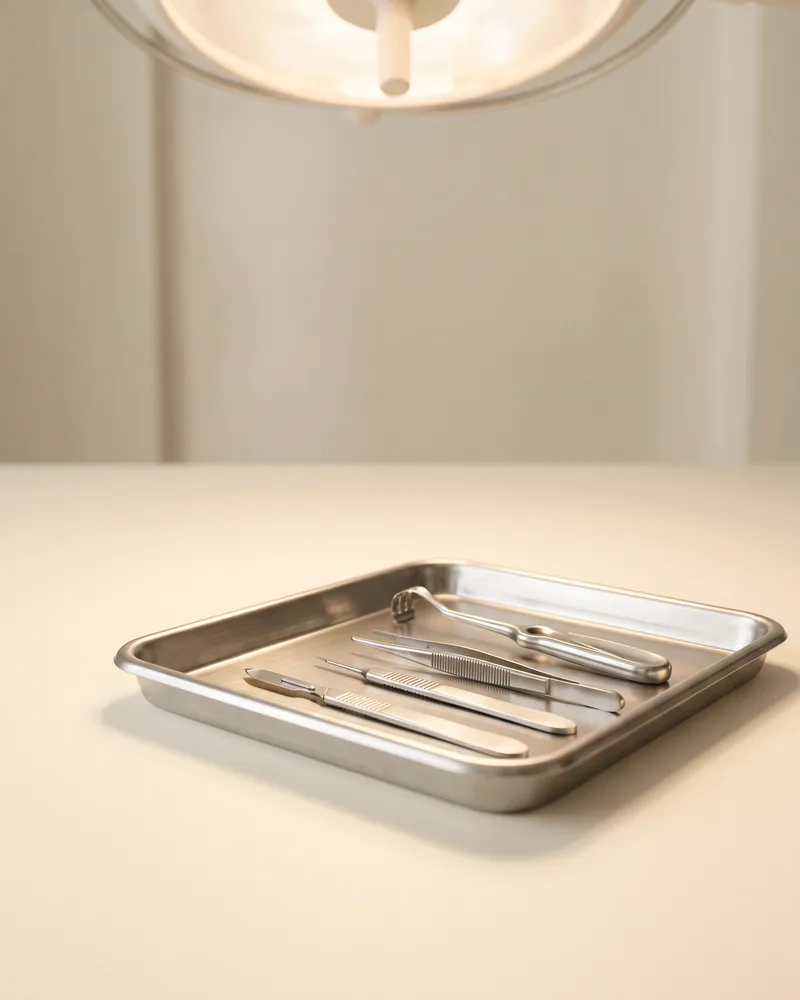
Accreditation means an independent organization has checked a facility against national standards, on site, and keeps checking. Every Goals facility is accredited by AAAHC, the Accreditation Association for Ambulatory Health Care, and by no one else: one standard, every clinic.
AAAHC was founded in 1979 and is an independent nonprofit. It accredits more than 6,800 organizations.¹ ²
Health care professionals survey each facility in person against AAAHC's national standards, in a peer-based review.¹ ⁴
Accreditation runs on a three-year cycle, with an on-site survey at least every three years.³ ⁴
AAAHC accredits office-based surgery facilities, with a peer-based, educational approach to on-site review.⁵
Regulation
Rules for office-based surgery differ by state. Some examples from states where Goals operates:
Any liposuction, apart from removing less than 500 cc of fat under local anesthesia alone, is office-based surgery and must be done in an accredited practice, with adverse events reported within three business days.⁶ AAAHC is one of four accreditors the state designates.⁷
Performing a cosmetic surgical procedure in an office that is not accredited, by AAAHC, QUAD A or the Joint Commission, or Medicare-certified, is grounds for discipline.⁸ Procedures under local anesthesia or mild sedation, and liposuction under 1,000 cc, fall outside that definition.⁹
Texas classes tumescent anesthesia as Level II office anesthesia, which needs physician registration with the Texas Medical Board in settings that are not accredited by AAAHC, QUAD A or the Joint Commission.¹⁰
The Georgia Composite Medical Board's office-surgery guidelines apply to tumescent anesthesia and cite a published standard of 55 mg/kg for tumescent lidocaine.¹¹
Anesthesia
Most body contouring at Goals is done awake. This is how the anesthesia that makes that possible works.
A large volume of very dilute local anesthetic (lidocaine) with epinephrine, in saline, is infiltrated into the fat before any is removed. It numbs the area and narrows the blood vessels running through it.¹²
Lidocaine is dosed in milligrams per kilogram of body weight. Klein's 1990 study put the safe upper limit at 35 mg/kg; later studies support up to 45 mg/kg with liposuction, and Georgia's guidelines cite 55 mg/kg.¹² ¹³ ¹⁴ ¹¹
Blood levels of lidocaine peak hours after infiltration, about 12 to 14 hours in Klein's study and sooner for small areas, which is why the instructions for the first night matter.¹² ¹⁵
No general anesthesia and no breathing tube. You can talk, move and stand, so the contour is judged upright. Light sedation is available if you would rather be drowsy.
Limits
Some of the most important safety decisions are about what not to do in one session.
The American Society of Plastic Surgeons defines large-volume liposuction as more than 5,000 cc of total aspirate, and advises overnight monitoring above it.¹⁶ Larger goals are staged across sessions instead.
Awake FlexSculpt is offered up to a BMI of 65, fat transfer up to 38, and Lipo360 of the whole midsection at 31 and under. A ceiling is not a promise: health and assessment decide.
Tummy tucks, face lifts and implant surgery are done under general anesthesia, as they should be. Awake surgery is offered only where it fits.
Some health histories and some goals are better served by waiting, by a different procedure, or by not operating. Screening is there to find them.
Equipment
Goals buys from established medical manufacturers and uses each product the way its maker and the FDA intend. Brand names belong to their owners.
Power-assisted liposuction (PAL) cannulas, used for tumescent liposuction and fat harvest.
Medical-grade suction systems used during liposuction.
FDA-approved breast implants used in breast augmentation.
FDA-approved breast implants used in breast augmentation.
Maker of Radiesse, the FDA-approved calcium hydroxylapatite injectable we use.
Maker of Sculptra, the FDA-approved poly-L-lactic acid injectable we use.
Maker of Botox Cosmetic, the FDA-approved neurotoxin we use.
Maker of J-Plasma, the helium plasma device behind our skin tightening.
Fat transfer
In 2017 a task force of plastic surgery societies estimated that about 1 in 3,000 Brazilian butt lifts ended in death, most often from fat placed in or under the gluteal muscle.¹⁷ ¹⁸ Its rules became the standard, and deaths reported in surgeon surveys fell to about 1 in 14,952 by 2019.²⁰ These are the rules we train to, and teach.
Fat goes into the fat layer under the skin, never into the muscle: the task force's central rule.¹⁹ Florida now writes it into its rules.²¹
Larger cannulas, 4.1 mm or more, and avoiding a downward angle were associated with lower risk.¹⁷
Fat is injected only while the cannula is moving, never held in one spot.¹⁸
Wherever you book, ask which layer the surgeon places fat in and how they confirm it. A clear answer is part of a safe BBL.
Internal training
A technique is only as consistent as the training behind it.
A new surgeon's first FlexSculpt cases are supervised by a senior Goals surgeon before they operate on their own.
Every clinic works to the same technique, dosing and screening standards, so your plan does not change with the location.
Licenses, malpractice coverage and hospital privileges are re-checked on a schedule, not only at hiring.
Goals trains U.S.-licensed physicians in tumescent lipoplasty under local anesthesia and gluteal fat grafting, to the standards on this page.
Checklist
Six questions worth asking any practice, including ours.
Get the surgeon's name, then look up the license and any board certification yourself.
Ask which facility you will be treated in and who accredits it. At Goals, the answer is AAAHC, at every clinic.
Local, sedation or general, and who is responsible for it during and after the procedure.
Ask the planned volume, and what happens if your goal needs more than one session can safely do.
For a BBL the answer should be: into the fat under the skin, never the muscle.
Never accept silicone or so-called permanent filler injections for body shaping. The FDA warns they can cause serious injury and death.²²
Accountability
A safety standard only means something if patients can hold us to it. If you have a concern about any part of your care at Goals, bring it to us directly, and know that you always have the right to take it to the independent bodies that oversee our surgeons and facilities. Raising a concern with us never limits that right.
Email with “Patient Concern” in the subject, or call (833) 462-5769 and ask for the clinic manager. Your surgeon and the clinic manager are the fastest route to a resolution.
Every state medical board accepts complaints about a physician directly from patients, investigates independently of Goals, and can act against a license. The board for each state where Goals operates is listed below.
AAAHC accepts complaints about the organizations it accredits, including grievances about patient care, at complaints@aaahc.org or (847) 853-6060.²³
Report a suspected problem with a device, implant, injectable or medication to the FDA’s safety reporting program, whichever clinic treated you.
File a complaint
The official complaint page of each state medical board. Each board explains what it investigates and how to file.
Complaints about physicians go to the Department of Health’s OPMC, online or by mail.
Filed through the Division of Consumer Affairs’ complaint form.
File a complaint against a PA-licensed professional through the PALS portal or the complaint hotline.
Submitting a complaint: online form, checklist and brochure.
Online or paper complaint; the Board accepts complaints from anyone.
Complaint about a licensee: the online form and what the Board can investigate.
File online, by mail, or through the Central Complaint Unit.
The Federation of State Medical Boards lists every board with a direct link to its complaint page.
FAQ
Every procedure carries risk, and no practice can promise otherwise. What Goals controls is who operates, where and how: surgeons vetted before a first case, AAAHC-accredited facilities, and tumescent local anesthesia dosed within published limits for most body contouring. Each of those can be checked, and this page shows how.
Yes. Every Goals facility is accredited by AAAHC, the Accreditation Association for Ambulatory Health Care, which surveys facilities on site at least every three years.
Every Goals surgeon holds an active U.S. state medical license, verified with the state medical board. Board certification varies by surgeon: where a surgeon holds one, we confirm it with the American Board of Medical Specialties and list it on their profile.
Before a first case: the state license is verified with the medical board, board certification is confirmed where held, malpractice coverage is verified, disciplinary and claims history is reviewed, and the surgeon must hold privileges at a nearby hospital. A new surgeon's first FlexSculpt cases are supervised by a senior Goals surgeon, and credentials are re-checked on a schedule.
A large volume of very dilute local anesthetic (lidocaine) with epinephrine in saline, infiltrated into the fat before liposuction. It numbs the area and reduces bleeding, which is what lets most body contouring be done with the patient awake.
It is dosed by body weight. Klein's 1990 study put the safe upper limit at 35 mg/kg; later studies support up to 45 mg/kg with liposuction, and Georgia's medical board guidelines cite 55 mg/kg. Blood levels peak hours after the procedure, not during it.
It avoids the risks of general anesthesia itself, but not the risks of surgery: bleeding, infection, contour irregularities and, rarely, blood clots or local anesthetic toxicity still apply. Whether awake suits you depends on the procedure and your health.
Most surgeons work to 5,000 cc (5 liters) of total aspirate in one session unless the patient is monitored overnight, following the American Society of Plastic Surgeons' advisory. A higher BMI does not raise that limit; larger goals are staged across sessions.
It carries real risk. The most serious, fat entering the large veins of the buttock, is tied to fat placed in or under the muscle. Since the 2017 task force rules put fat above the muscle only, reported deaths fell from about 1 in 3,448 to 1 in 14,952 in surgeon surveys. Ask any surgeon where they place fat and how they confirm it.
Every Goals surgeon holds privileges at a nearby hospital, which matters if a patient ever needs hospital care. Your surgeon reviews your case before surgery and follows up with you after it.
Look the surgeon up with the state medical board that issued the license, in the NPI Registry for specialty and practice address, and in ABMS Certification Matters for board certification. Goals surgeon profiles list the license numbers and certifications we have verified.
Contact us first: email info@goalsplasticsurgery.com with “Patient Concern” in the subject, or call (833) 462-5769 and ask for the clinic manager. You also have the right, at any time, to file a complaint with the medical board of the state where you were treated, with AAAHC as our accrediting body, or with the FDA for a device or medication problem. The links are in the section above.
Guides
What tumescent local anesthesia changes, and when it is the wrong answer.
The 5-liter guideline, explained with its sources.
What one session can do at your BMI, and the ceilings that apply.
Goals’ program for surgeons in tumescent lipoplasty and gluteal fat grafting.
Get started
Free consultation, no obligation. Ask who your surgeon will be, which facility you will be treated in, and how your anesthesia will be dosed.
Prefer to talk now? (833) 462-5769
References
The numbered references for the figures and rules cited on this page, checked October 13, 2026.
Free · No obligation
Tell us how to reach you. A patient coordinator calls you back — usually the same day.
Free · No obligation
Ask me anything. I usually reply straight away.
If you share your number, a Goals coordinator may call or text you about your consultation. Message and data rates may apply.
Nora is an automated chat. She cannot give medical advice or say whether a procedure suits you.