Receding Hairline
A hairline that has crept back at the temples, rebuilt to suit your face.
Permanent coverage planned around the C-curve of coily follicles. One day, in-office, local anesthesia, by credentialed surgeons at our accredited Atlanta clinic.
From $5,000

Natural hairlines and fuller coverage, grown in and settled.
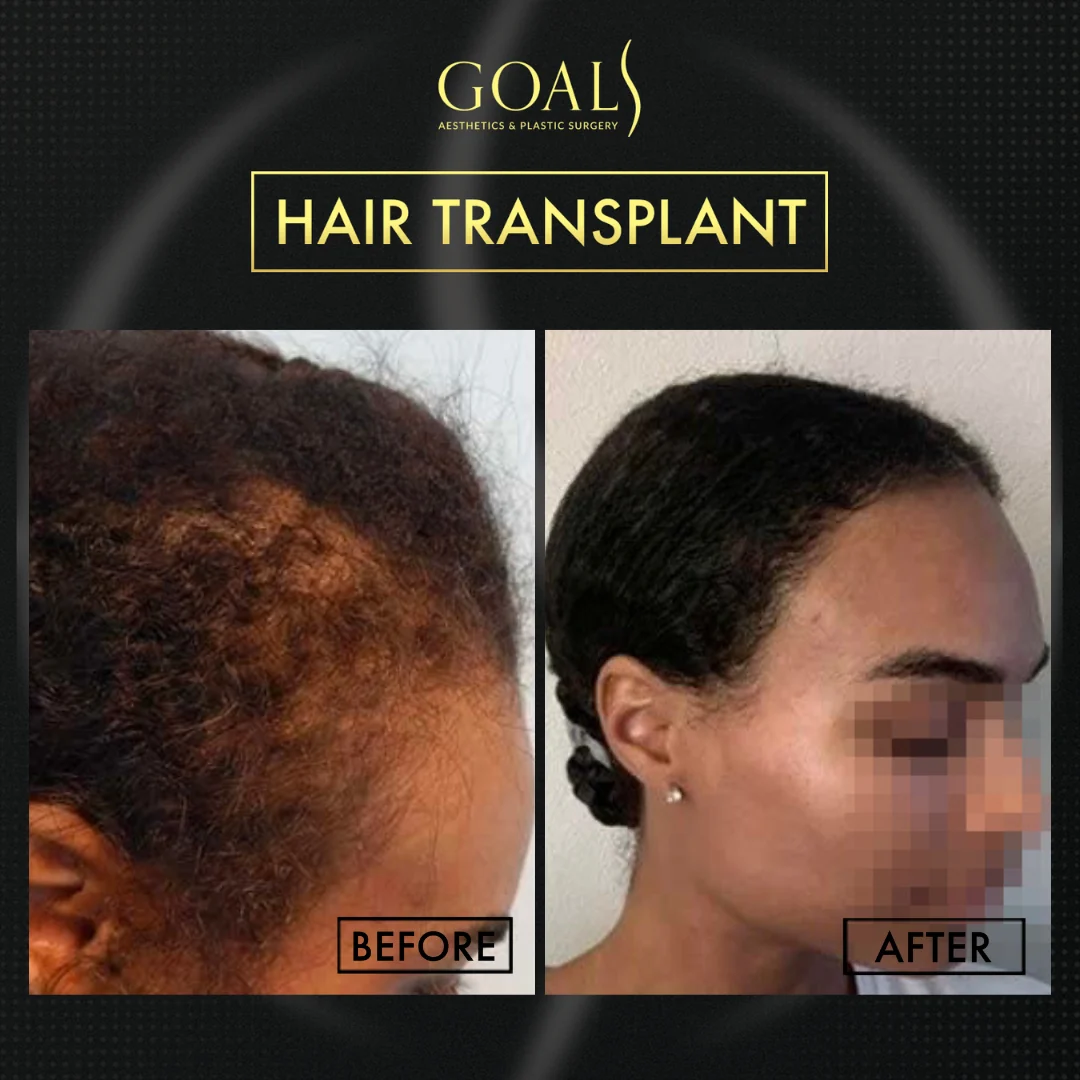
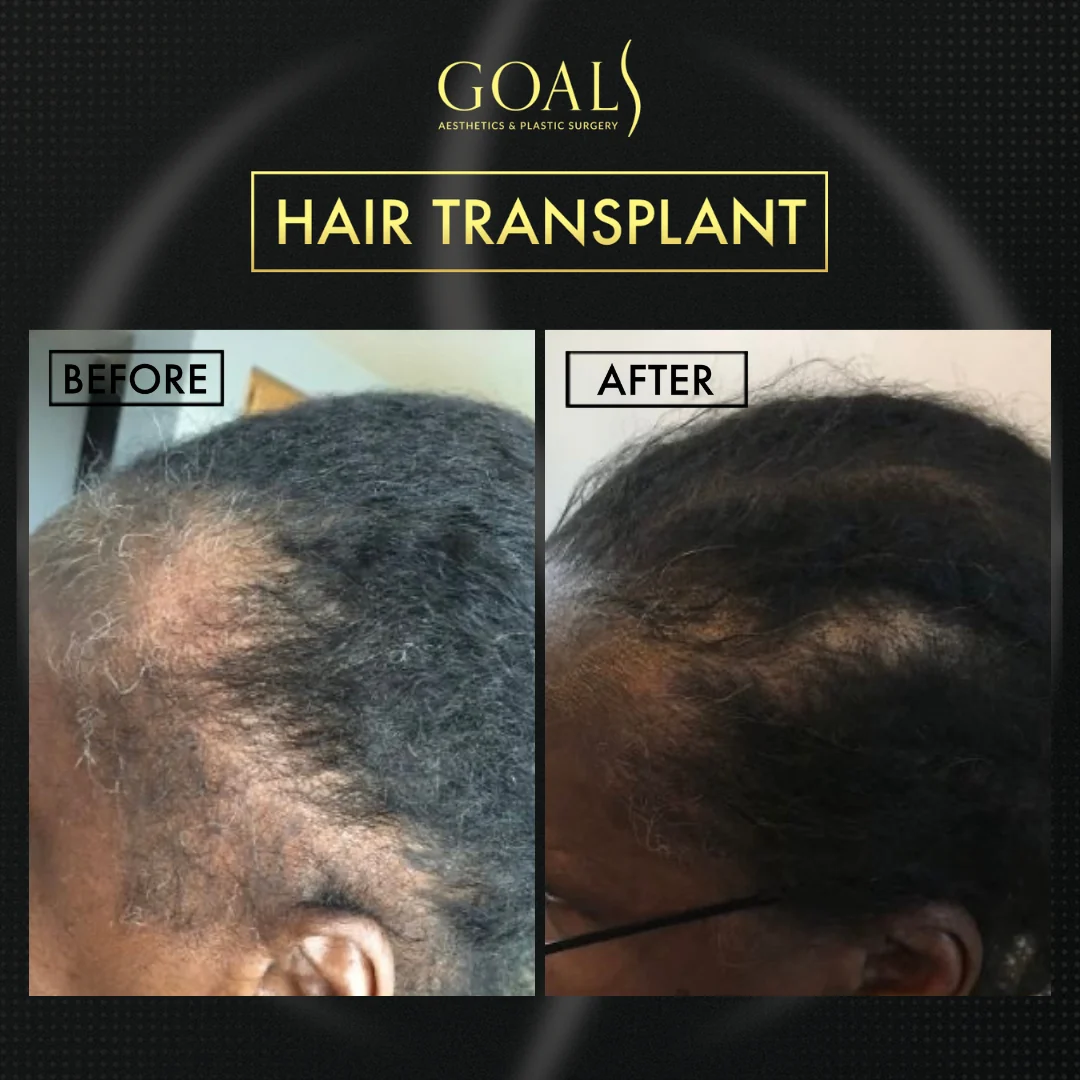
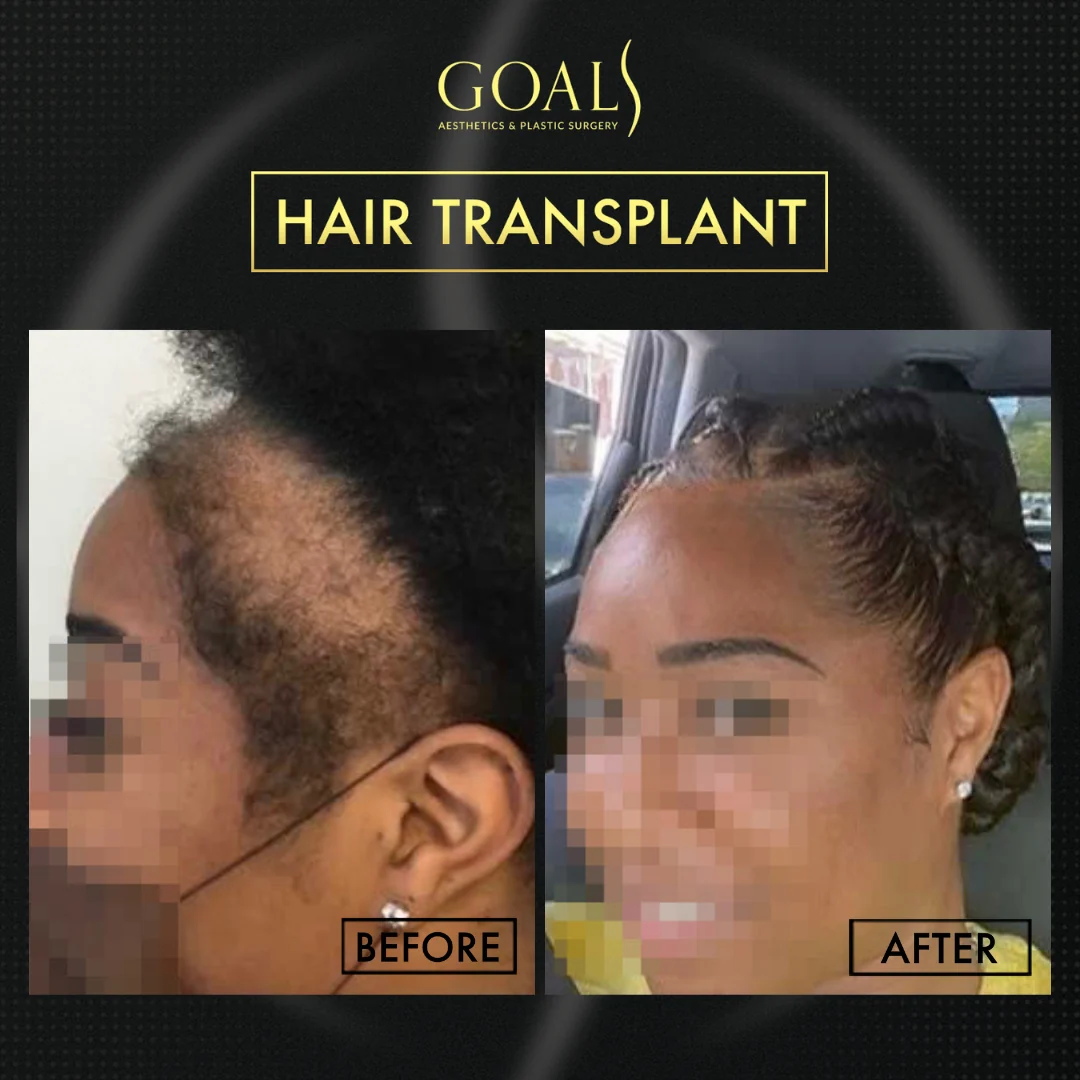
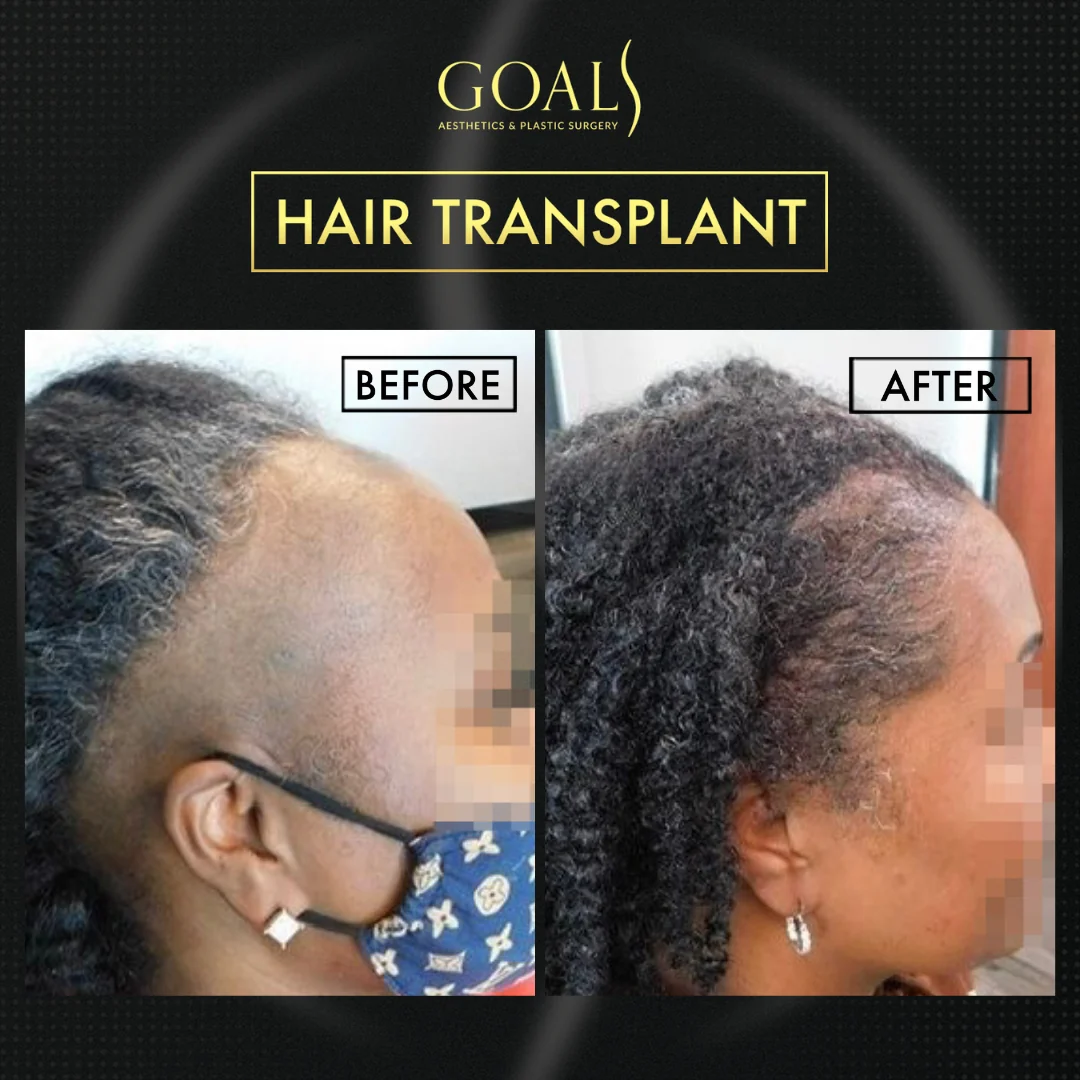
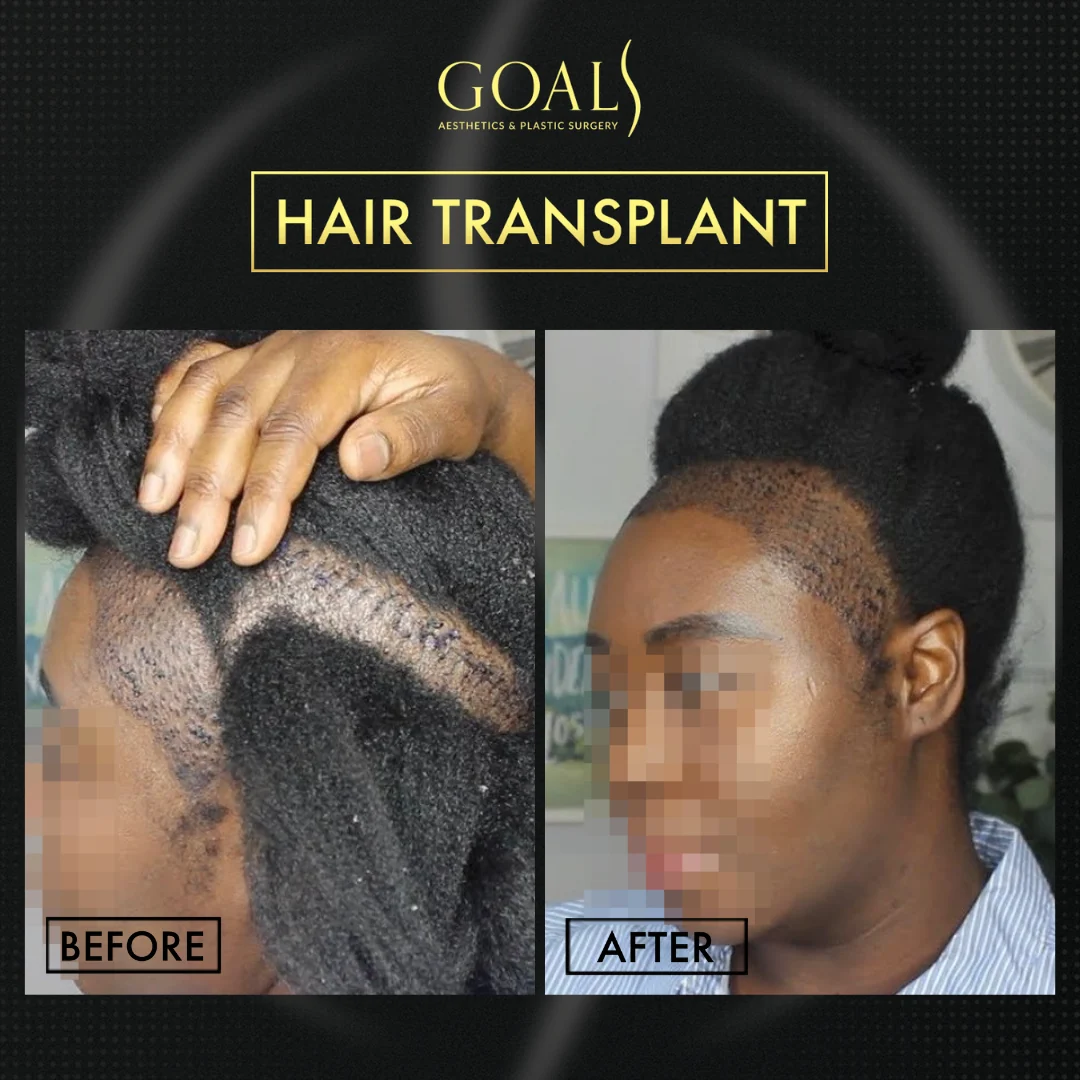
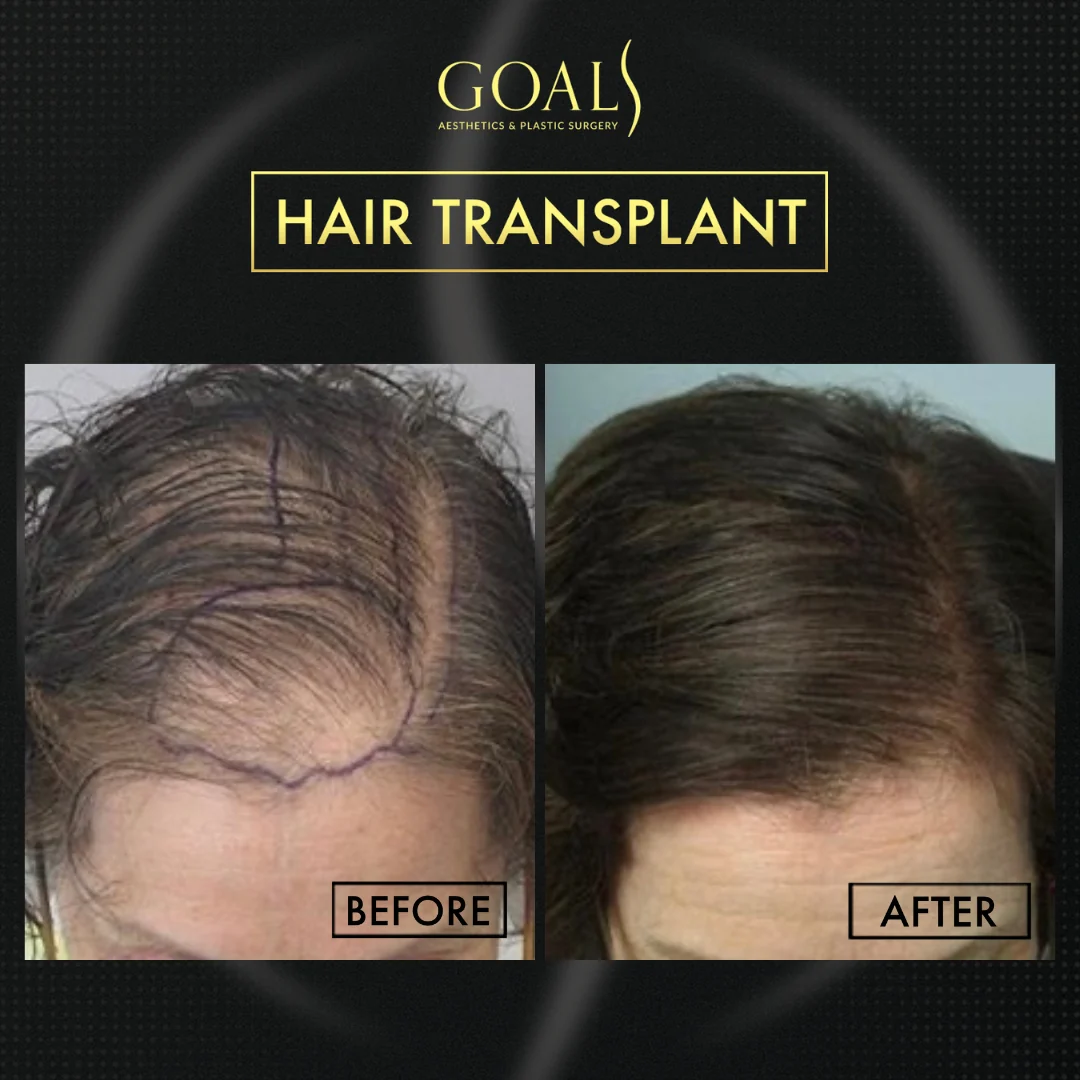
Real patients, published with written consent. Photographs are not retouched or AI-generated. Individual results vary — these images show outcomes for these patients and are not a guarantee of your own.
Hair transplants are done at our Atlanta clinic at 3576 Chamblee Tucker Rd. Call us and we will help you find the nearest Goals clinic that offers them.
Conditions we treat
We restore coily and curly hair across the patterns we see most in Black patients.
A hairline that has crept back at the temples, rebuilt to suit your face.
Loss from years of braids, locs, or weaves pulling at the roots.
A thin or bare patch at the vertex, rebuilt graft by graft.
Worn edges and temple points brought back so the hairline frames your face.
Patchy beard areas or scarred spots filled with your own curly donor hair.
Cover over CCCA or old scars, planned around the keloid tendency.
Candidacy
Coily or curly hair with a receding hairline, a thinning crown, or traction loss puts you in a strong position. Curl gives volume, so fewer grafts often cover more ground than you expect.
Coily or kinky hair a curl-aware method suits.
Loss that has held steady for a year or two.
You want something permanent, not a daily routine you top up.
Enough curly donor hair at the back and sides.
Ready to follow the pre- and post-op rules.
Low-cost transplant packages abroad sound tempting. But coily follicles need a surgeon who works with the curl, and a rushed surgery far from home puts both your result and your recovery at risk.
| Left Step | Right Step |
|---|---|
| Left StepWeeks comparing clinics online, money wired overseas, then flights and a hotel booked. | Right StepYou come in, or connect online, for a full consult where a credentialed surgeon checks your scalp, curl pattern, and donor supply. |
| Left StepYou land where you don't speak the language, and the consult happens the same day as surgery. | Right StepPre-op testing, consent, and the graft plan are sorted beforehand, in your language, under U.S. standards. |
| Left StepSurgery runs in a building you've never seen, sometimes by staff who rarely handle coiled follicles. | Right StepOn the day you arrive at an accredited clinic and curl-aware extraction happens in a sterile room under local anesthesia. |
| Left StepYou fly home swollen and tired. A week on the scalp is red and weeping and nobody can say if that is OK. | Right StepIt takes most of the day, but you rest, take breaks, and go home the same evening. |
| Left StepYour only option is a local ER, where nobody performed your surgery and no notes exist on what was done. | Right StepIf something feels wrong in recovery, you reach the same local team. We see you in person, adjust medication, and sort it. |
| Left StepEmergency visits cost more time and money, while the clinic abroad can only reply on WhatsApp. | Right StepFollow-ups and progress checks happen at the same clinic, with the same team, until the result grows in. |
A general comparison. Which approach suits you is decided at a consultation with a licensed surgeon.
Compare
| Overseas Package | Goals U.S. Clinic | |
|---|---|---|
| Total cost (real) | The base price, plus flights, a hotel, days off, maybe ER bills at home. | All care in one place. Costs spelled out, no bill arriving later. |
| Curl-aware technique | Standard punches that cut through coiled follicles. | Extraction shaped to the C-curve so more grafts survive. |
| Safety & sterility | Variable. You're trusting foreign rules and a short stay. | Accredited U.S. clinic, strict infection control you know. |
| Surgeon & team | Credentials hard to verify, and you may never meet the surgeon. | Qualified surgeons who know textured hair, there throughout. |
| Emergency backup | No local clinic. ER staff are left guessing what was done. | In-person follow-up and local help if a problem shows up. |
| Follow-up care | Messages only. Nobody can look at your scalp. | Booked in-person checkups, progress photos, medication tweaks. |
| Communication | Language gaps, time zones, slow replies. | A local team, written aftercare, and a number to call. |
| Legal protections | Little recourse once something goes wrong back home. | U.S. patient-safety law and standards apply. |
A general comparison. Which approach suits you is decided at a consultation with a licensed surgeon.
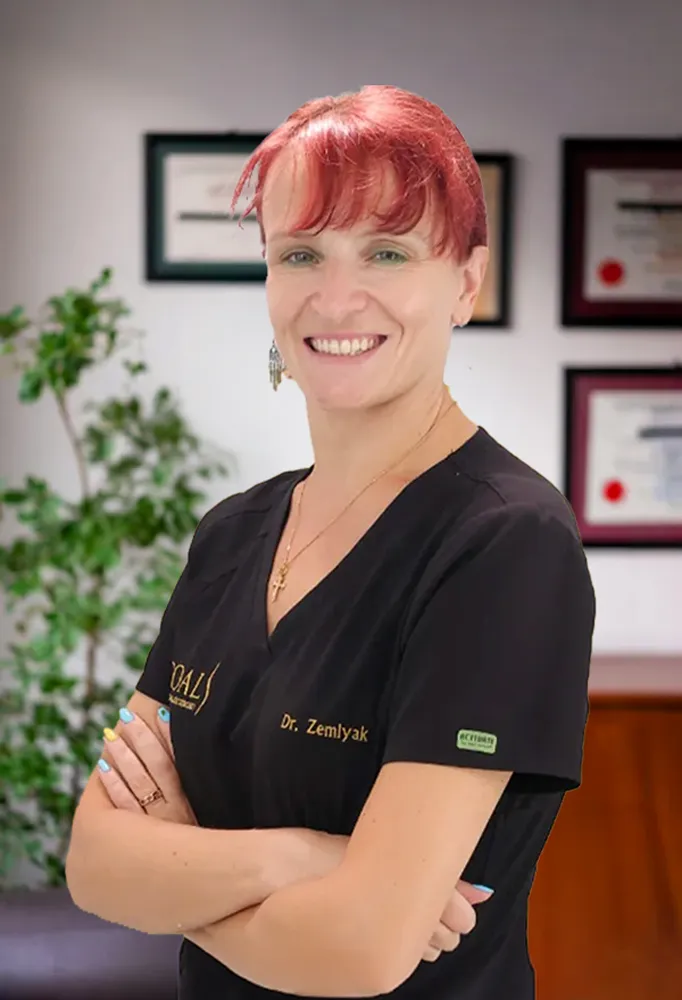
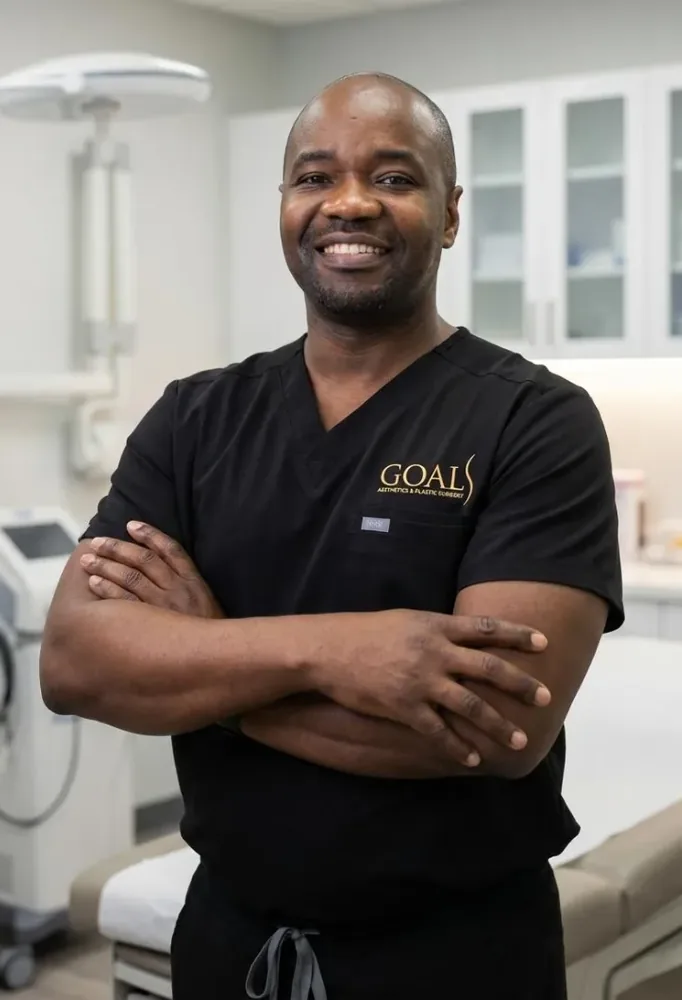
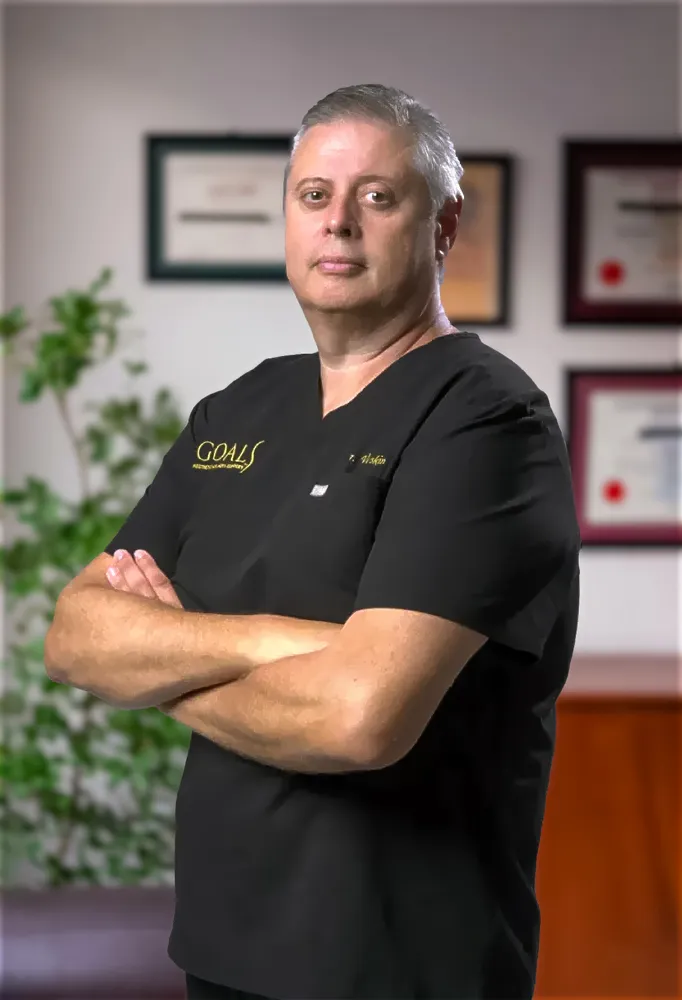
Our surgeons
Your transplant is performed by a credentialed hair restoration surgeon who works with textured hair, not by a technician. Meet the team first.
Licensed in NY · TX · CA
Safety
Safety first. We hold to strict clinical protocol and pick tools built for curl, so grafts survive extraction and grow in looking like your own.
Sterile, fully equipped rooms in a U.S. accredited clinic.
Local anesthesia, which can help lower some of the risks that come with general.
Angled punches that track the coil and keep each graft whole.
Done by hand, since robotic systems misread textured hair.
Consistent graft handling, so they stay healthy out of the scalp.
Why Goals
One local team covers consult, surgery, and every follow-up.
One day in the chair. Home that evening, back at work within days.
An accredited clinic. No flights, no language gap, no missing follow-up.
Surgeons who work with the curl, so the result sits naturally.
U.S. patient-safety law behind you, with real recourse.
One all-in quote from your assessment. No facility or anesthesia extras.
FAQ
Often yes. Afro-textured scalps average fewer follicles per square centimetre, but each curl covers more ground, so the maths works out differently.
Yes. The follicle carries the curl, not the scalp, so grafts grow in with your own texture and pattern once they settle.
Only once it's quiet. Active scarring alopecia destroys grafts, so we get it medically controlled and stable first, then plan the surgery.
Eventually, but not tight ones for several months, and go easy after that. Tension is what took the edges in the first place.
Cutting a follicle during extraction, so it never grows. Coiled roots curve under the skin, so curl-aware punches matter.
It is more common in textured skin. We check your scar history, favour FUE dot scars, and plan the donor area for it.
An Afro transplant is one of several ways we restore hair. Here's what else the Atlanta surgeons offer.
About Afro Hair Transplant
Afro Hair Transplant near you
Non-surgical options
A transplant isn't the only route, and it isn't always the first step. These in-office treatments look after the scalp and the hair you still have. Useful alone, and useful for protecting a graft once it's in.
Patient Guides
Written by the team that performs the procedure, to read before your consultation.
 How to Verify a Plastic SurgeonFour free checks that take ten minutes: the NPI registry, the state medical board, ABMS board certification and the facility’s accreditation. Step by step, with every link.Read the guide
 Questions to Ask Before Any SurgeryTen questions to ask any plastic surgeon before you book, what a good answer sounds like, the warning signs, and a version you can print and bring to your consultation.Read the guide
General information, not medical advice. What applies to you is decided at a consultation with a licensed surgeon.
Get started
Set on an Afro transplant or still weighing it up, either way the Atlanta surgeons will build a safe, realistic plan around your hair.
Prefer to talk now? (833) 462-5769
Learn more
An afro hair transplant moves healthy follicles from the back and sides of the scalp into areas that have thinned or receded. The principle is the same for everyone. The execution is not. Coily follicles do not run straight down into the scalp; they curve, usually in a C or S shape, and they leave the skin at a shallow angle. A punch designed for straight hair follows a straight line and clips the root somewhere under the surface. That is called transection, and with conventional instruments on textured hair the rate can climb catastrophically high. A cut follicle does not grow. This single fact is why the surgeon matters more here than almost anywhere else in hair restoration.
At Goals, every hair transplant for black hair runs as a one-day, in-office procedure under local anesthesia. That is a deliberate choice. Local keeps you awake, comfortable, and away from the risks general anesthesia carries, and it lets you go home the same evening. The other deliberate choice is that extraction is done by hand. Robotic systems read a straight shaft and guess at the angle beneath it, which is exactly the wrong assumption for a coil. This page covers why textured hair needs its own method, how the technique is adapted, what patterns we treat, how graft numbers really work, the day itself, recovery, and cost, so you know what to expect before you walk into our Atlanta hair transplant clinic.
Picture the follicle as it actually sits. In straight hair it runs down into the scalp on a fairly predictable line, so a small round punch can slide around it without touching the root. Afro-textured hair spirals above the skin and curves below it, and the shaft itself is elliptical rather than round. The ISHRS publishes a seven-type classification of follicle curvature precisely because there is no single correct instrument. Punch diameter, punch shape, insertion angle, and depth all have to be chosen for your curl, sometimes varying across different zones of the same scalp. Get it right and grafts come out whole. Get it wrong and you harvest damaged tissue that will never produce hair, which is why a low transection rate is the number worth asking any surgeon about. It is also why experience with textured hair specifically is not a marketing line here. A surgeon who has done a thousand straight-hair cases has not necessarily done one of yours.
Most african american hair transplant work is done with FUE, where follicles come out individually and leave only pinpoint scars that curl covers with ease. For textured hair the method is tuned rather than reinvented. Punches run slightly wider and are often curved to follow the coil. The angle is set shallower to match how the hair leaves the scalp. Extraction goes slower, because speed is what produces transection. Recipient sites are cut to respect the direction the curl wants to travel, so the grafts lie the way your own hair does instead of standing away from the head. FUT, the strip method, still has a place when one session needs a very high graft count, and its single fine line hides inside surrounding hair. That said, textured skin scars more readily, so FUE is usually the safer default. Your surgeon picks between them at consult rather than before seeing you.
Three patterns dominate. A receding hairline and a thinning crown are the familiar genetic ones. The third, traction alopecia, is different: it comes from years of tension rather than hormones, from braids, cornrows, weaves, and locs pulling steadily at the same points until the follicles at the edges and temples give up. It is the reason so many of our patients are women, and our women's hair transplant options are built around those patterns. When the loss sits at the swirl, the crown is its own particular problem and gets planned as such. Scarring alopecias such as CCCA also come through the door, and those need to be medically quiet before anyone operates, because active inflammation will consume new grafts as readily as it consumed the original ones. Beard and scar work also come up regularly, using the same curly donor hair.
There is no menu price by graft count, because the number falls out of your anatomy: the size of the area, the density you still have, and what the donor region can spare without looking thinned itself. Here is the part that surprises people. Donor density on Afro-textured scalps averages lower than on straight-haired ones, roughly sixty follicles per square centimetre against about eighty. On paper that sounds like a disadvantage. In practice the curl more than compensates, because a coiled hair occupies far more visual space than a straight one and casts shadow across the scalp beneath it. The result is that a graft count which would look sparse on straight hair reads as full coverage on yours. Fewer grafts, more apparent density. The flip side is donor management. Because there is less to spare per square centimetre, a good surgeon plans the harvest so the back of your head still looks untouched afterwards, and keeps something in reserve for a second pass years down the line if you need it.
You arrive at our accredited Atlanta clinic and it all happens in one visit. The donor area is prepared, local anesthesia goes in so the scalp is numb throughout, and the surgeon works through extraction and placement across the session. Most run six to eight hours depending on graft count. You are awake the whole time, which people worry about beforehand and stop noticing an hour in. There are breaks, you can eat, and you go home the same evening rather than to a hotel room in an unfamiliar city. Because extraction on coiled follicles cannot be rushed, expect the slower end of that range rather than the faster one; the pace is the point, not a sign anything is wrong.
The first days bring tenderness and some swelling, and small scabs form around each graft before flaking away within about a week or ten days. Then comes the part nobody warns you about properly: the transplanted hairs shed, usually between weeks two and six. This is normal and it is not the graft failing. The follicle stays put and resets into a resting phase before it starts producing again. New growth appears around month three or four, thickens through months six to nine, and the final result reads at roughly twelve months. Sleep elevated at first, keep tension off the scalp, and hold off on tight styles far longer than feels necessary. Real timelines sit in our before & after gallery.
There is one question that separates surgeons who work regularly with textured hair from those who merely accept it, and it is worth asking outright: what transection rate do you see on coiled follicles, and how do you measure it. A surgeon who tracks that number will answer plainly. One who has never considered it in those terms has told you something useful. Follow it up by asking to see healed results on hair like yours, photographed at twelve months rather than on the day of surgery, and ideally from more than one patient. Experience with straight hair does not transfer automatically, and the honest practitioners in this field say so themselves without being pushed.
Textured hair carries aftercare considerations that a generic post-op sheet will not cover. Protective styles are off the table for considerably longer than most patients expect, and going back to them early risks the exact tension that caused the loss in a good number of our cases. Chemical relaxers and heat wait until your surgeon clears them, which will be months rather than weeks. Sleeping on satin or silk reduces friction on healing grafts. Moisturising routines can generally resume once the scabbing has finished, though anything applied with vigorous rubbing should wait longer. The principle is that grafts need leaving alone through precisely the period when the temptation to style is strongest.
Central centrifugal cicatricial alopecia deserves its own explanation, because it affects a meaningful number of Black women and it changes everything about surgical planning. Unlike pattern loss, CCCA is inflammatory, and it destroys follicles permanently as it advances, replacing them with scar tissue. Transplanting into an area where that process is still active wastes grafts, because the same inflammation consumes new follicles as readily as it consumed the originals. The sequence has to be medical control first, a documented period of stability afterward, and only then a discussion about surgery. Skipping that order is how patients spend a donor supply they cannot replace on a result that disappears.
Because coiled hair covers ground efficiently, patients sometimes assume donor supply is less of a constraint here. The opposite is closer to true. Afro-textured scalps carry fewer follicles per square centimetre in the donor zone than straight-haired ones, so while each graft delivers more visible coverage, there are fewer of them to draw on. That combination rewards restraint. A surgeon planning your first procedure should be thinking about the second one you may want in ten years, harvesting evenly rather than clearing a patch, and leaving reserve for loss that has not happened yet. Ask how much of your donor a proposed plan uses. If nobody can answer in those terms, the plan is about today only.
When the scalp donor will not stretch to cover what needs covering, beard and body hair sometimes enter the conversation. Beard hair in particular is coarse, plentiful in many men, and useful for building bulk behind a hairline where its texture will not give the game away. It is not interchangeable with scalp hair: the calibre differs, the growth cycle is shorter, and it behaves differently once moved, so it belongs in the middle and back of a plan rather than at the front edge. Body hair is a further step down again in reliability. Neither is a first resort, and a surgeon reaching for them at an initial consultation is telling you something about your scalp donor that deserves a direct question.
The figure comes from graft count, the method chosen, and how complex your case is, so it is confirmed at consultation after your scalp is examined rather than quoted from a photo. If you have been searching **african american hair transplant near me**, the case for staying local is straightforward. No airfare, no hotel, and follow-up with the surgeon who actually operated rather than a message thread eight hours behind. Financing options are there for anyone who would rather spread the cost, and the team goes through the terms with you properly. You can read about the surgeons who will handle your case on our surgeon profiles page, and follow-up care through to your final result is part of the plan, not an extra.
Free · No obligation
Tell us how to reach you. A patient coordinator calls you back — usually the same day.
Free · No obligation
Ask me anything. I usually reply straight away.
If you share your number, a Goals coordinator may call or text you about your consultation. Message and data rates may apply.
Nora is an automated chat. She cannot give medical advice or say whether a procedure suits you.