Over-Plucking
Years of plucking that thinned the line and stopped regrowth.
Lashes that grow back for good. Fine scalp follicles set one at a time along the lid margin, in-office under local anesthesia by credentialed surgeons in Atlanta.
From $5,000

Fuller lash lines, grown in and settled, side by side.
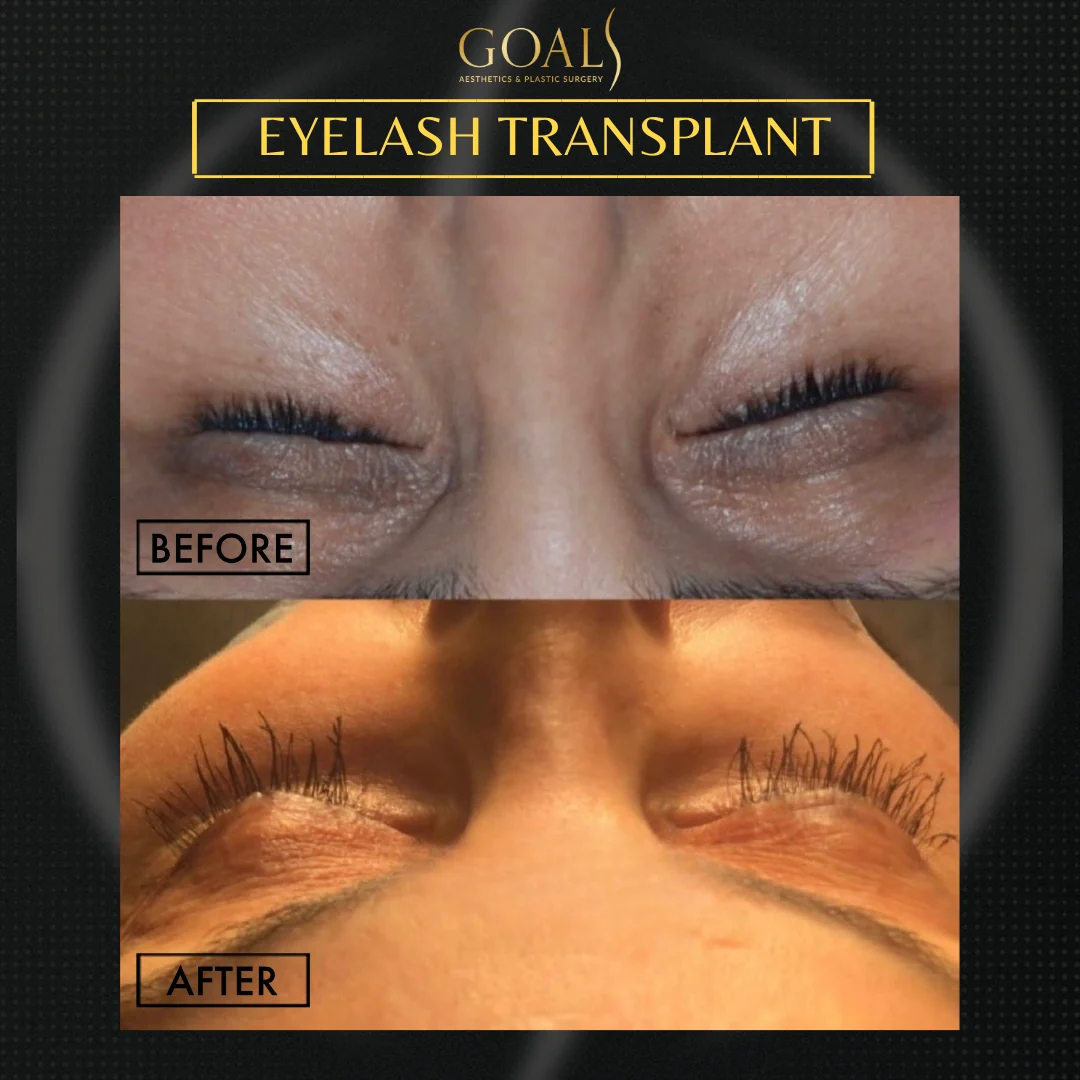
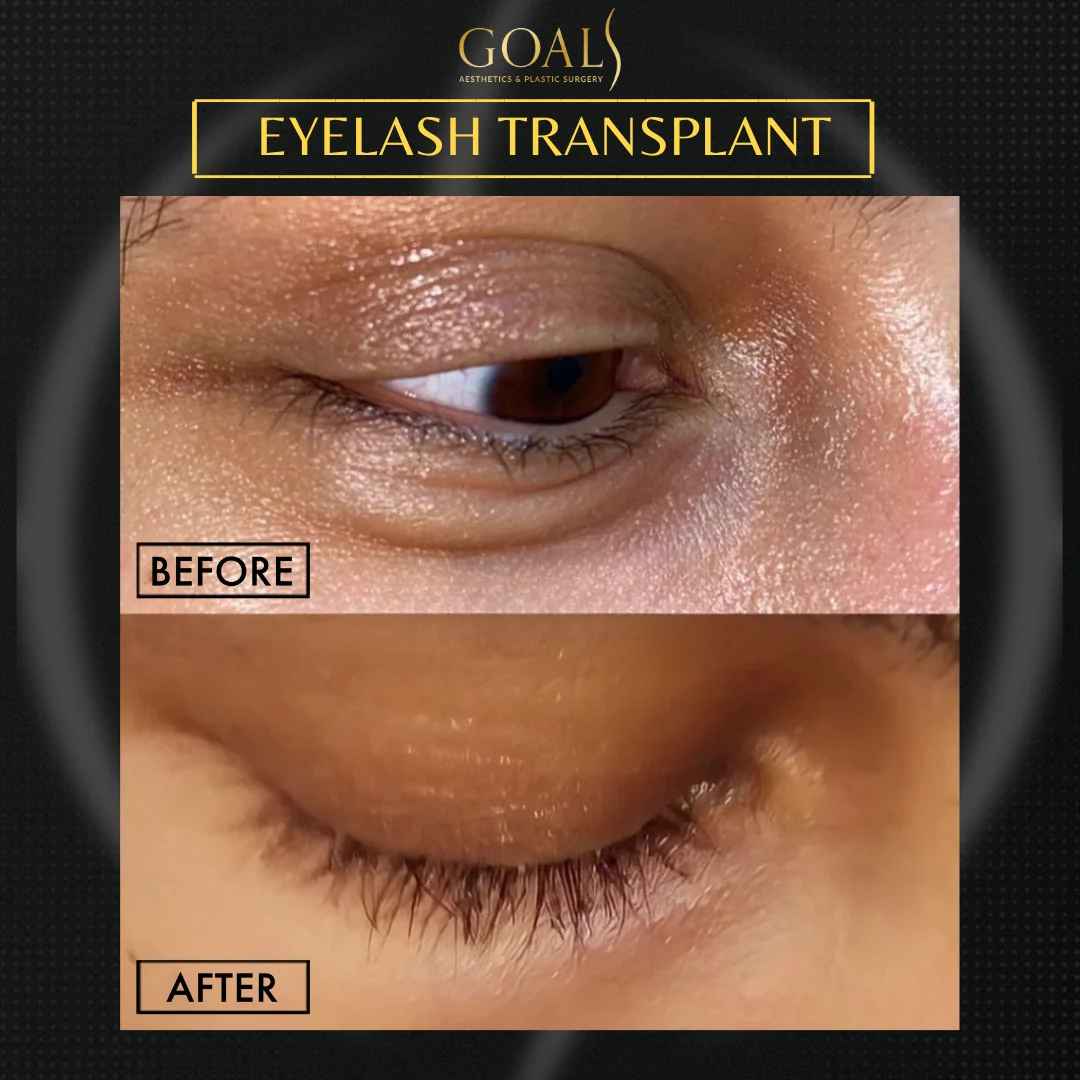
Real patients, published with written consent. Photographs are not retouched or AI-generated. Individual results vary — these images show outcomes for these patients and are not a guarantee of your own.
Hair transplants are done at our Atlanta clinic at 3576 Chamblee Tucker Rd. Call us and we will help you find the nearest Goals clinic that offers them.
Procedures
A transplant restores lashes thinned by many causes, in women and men.
Years of plucking that thinned the line and stopped regrowth.
Weight from extensions and glue that wore your own lashes down.
A lash line lost to burns, trauma, or scarring, rebuilt with your own.
Loss from alopecia areata, once the condition has settled and held.
Lashes that never came back properly after chemo or radiation.
Fine or scanty lashes you were born with, filled along the line.
Candidacy
Sparse or short lashes, whether from plucking, extensions, or a medical cause, and you'd rather have something lasting than a serum you reapply. That combination makes a strong candidate.
Naturally fine lashes you'd like fuller.
Lashes worn down by extensions, glue, or plucking.
You want lashes that grow, not falsies you reapply daily.
Fine donor hair at the back of the scalp.
Any medical cause has settled and held.
Low-cost transplant packages abroad sound tempting. But lash work happens millimetres from the eye, and a rushed surgery far from home puts both the result and your recovery at risk.
| Left Step | Right Step |
|---|---|
| Left StepWeeks comparing clinics online, money wired overseas, then flights and a hotel booked. | Right StepYou come in, or connect online, for a full consult where a credentialed surgeon checks your lashes, donor hair, and goals. |
| Left StepYou land where you don't speak the language, and the consult happens the same day as surgery. | Right StepPre-op testing, consent, and the graft plan are sorted beforehand, in your language, under U.S. standards. |
| Left StepDelicate lid-margin work runs in a building you've never seen, sometimes by techs rather than your surgeon. | Right StepOn the day a credentialed surgeon sets every lash graft by hand, in a sterile accredited room under local anesthesia. |
| Left StepYou fly home with tender, swollen eyes. Days later something feels wrong and nobody can say what's normal. | Right StepSame-day and in-office. You rest, then head home that evening with clear aftercare. |
| Left StepYour only option is a local ER, where nobody performed your surgery and no notes exist on what was done. | Right StepIf something feels wrong in recovery, you reach the same local team that treated you. We see you in person and sort whatever comes up. |
| Left StepEmergency visits cost more time and money, while the clinic abroad can only reply on WhatsApp. | Right StepFollow-ups and progress checks happen at the same clinic, with the same team, until the lashes grow in. |
A general comparison. Which approach suits you is decided at a consultation with a licensed surgeon.
Compare
| Overseas Package | Goals U.S. Clinic | |
|---|---|---|
| Total cost (real) | The base price, plus flights, a hotel, days off, maybe ER bills at home. | No surprises. All care in one place, spelled out before you book. |
| Who does the work | Techs often doing delicate work beside the eye. | A credentialed surgeon placing every lash graft by hand. |
| Safety & sterility | Variable. You're trusting foreign rules and a short stay. | Accredited U.S. clinic, strict infection control you know. |
| Lash design | Rushed placement that leaves lashes pointing oddly. | Each graft set to the natural angle, planned with you. |
| Emergency backup | No local clinic. ER staff are left guessing what was done. | In-person follow-up and local help if a problem shows up. |
| Follow-up care | Messages only. Nobody can look at your eyes. | Booked in-person checkups, progress photos, medication tweaks. |
| Communication | Language gaps, time zones, slow replies. | A local team, written aftercare, and a number to call. |
| Legal protections | Little recourse once something goes wrong back home. | U.S. patient-safety law and standards apply. |
A general comparison. Which approach suits you is decided at a consultation with a licensed surgeon.
Our surgeons
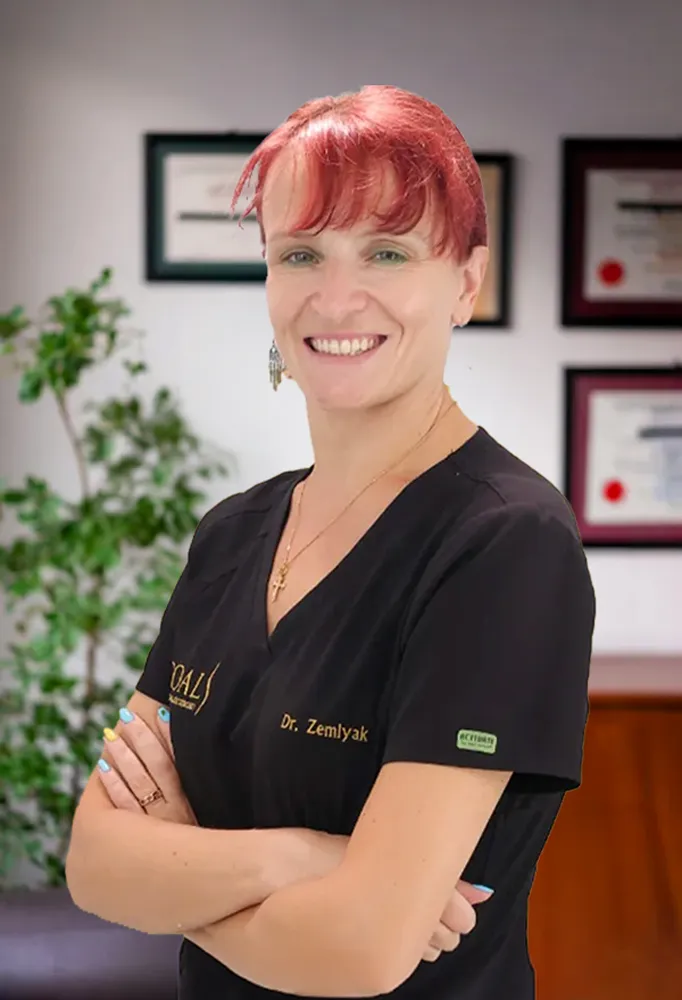
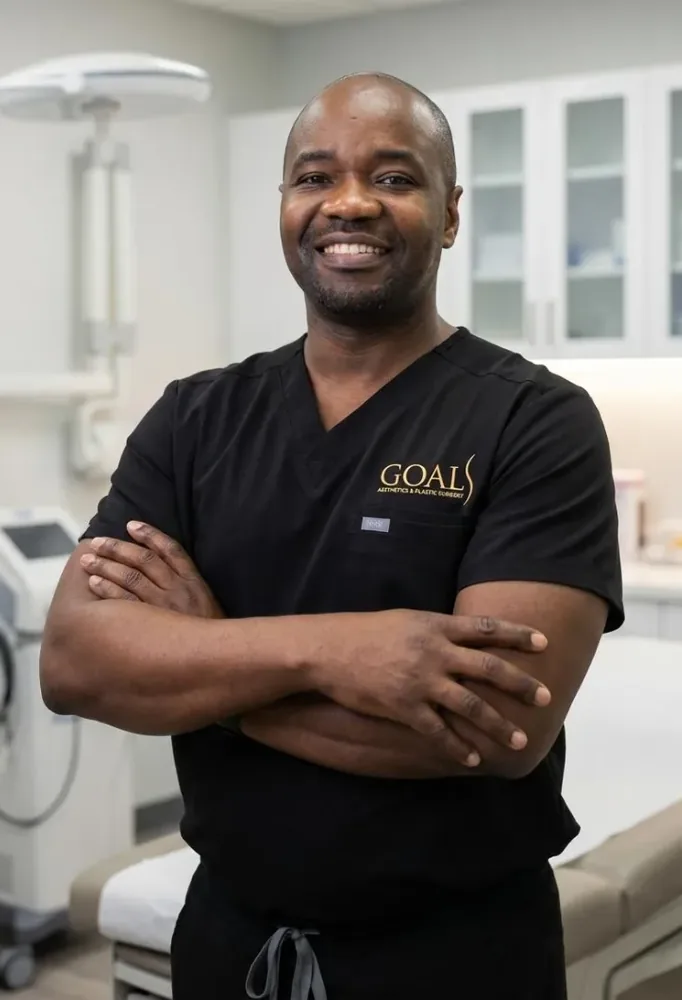
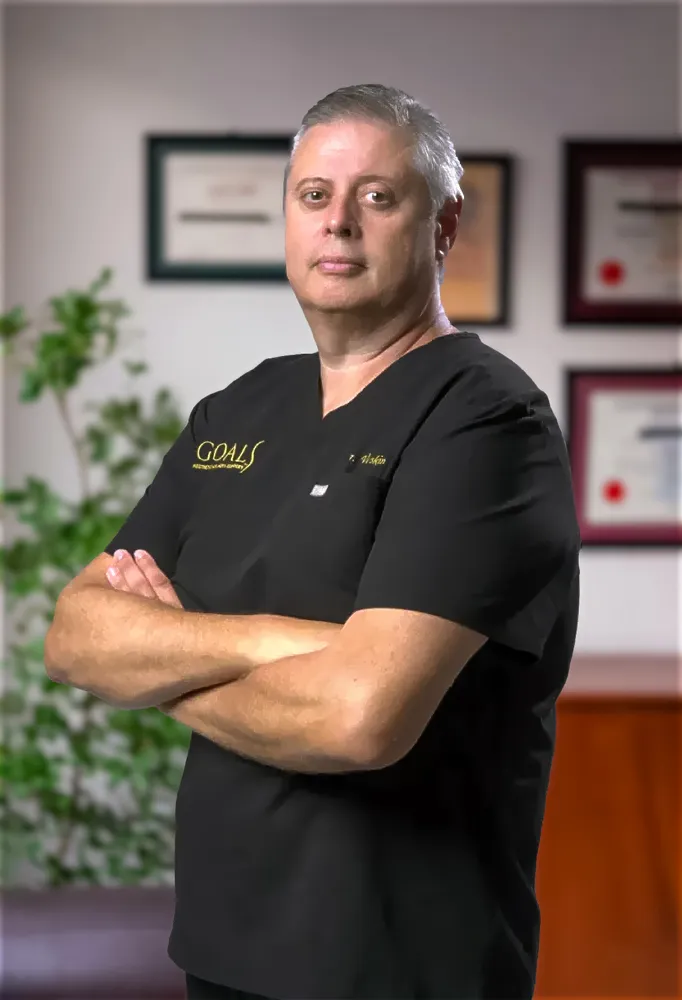
Your lash transplant is performed by a credentialed hair restoration surgeon, not by a technician. Meet the team before your consultation.
Licensed in NY · TX · CA
Safety
Lash work sits millimetres from the eye, so precision comes first. Strict clinical protocol, and every graft placed by hand for a natural result.
Sterile, fully equipped rooms in a U.S. accredited clinic.
Local anesthesia keeps you awake and comfortable, no general.
Soft, fine scalp follicles picked to pass for real lashes.
Each lash set to its natural curl and direction so it blends in.
A credentialed surgeon sets every graft. No automated tools near the eye.
Why Goals
One local team covers consult, surgery, and every follow-up.
One day in the chair. Home that evening, back to normal in a day or two.
An accredited clinic. No flights, no language gap, no missing follow-up.
Surgeons who set each fine graft for natural curl, angle, and fullness.
U.S. patient-safety law behind you, with real recourse.
One all-in quote from your assessment. No facility or anesthesia extras.
FAQ
That's trichiasis, the risk that matters most. Careful spacing and angle at placement is how it's avoided, which is why a surgeon does it.
A natural upper lid carries around a hundred lashes. We rarely aim for that. A modest number of single-hair grafts, well placed, reads as full.
Awake and comfortable under local anesthesia. Most sessions run one to three hours depending on how many grafts your lash line needs.
Upper lids are the usual work. Lower lids carry more risk of lashes turning inward, so your surgeon talks that through first.
Both, in practice. Scalp hair grows straighter, so a curl trains direction while trimming keeps length in check.
You won't need to, and we'd steer you away. Glue and weight on a newly grafted lash line is how a lot of our patients ended up here.
A lash transplant is one of several ways we restore hair. Here's what else the Atlanta surgeons offer.
About Eyelash Hair Transplant
Eyelash Hair Transplant near you
Non-surgical options
A transplant isn't the only route for thinning hair, and it isn't always the first step. These in-office treatments look after the scalp and the hair you still have. Useful alone, and useful for protecting a graft once it's in.
Patient Guides
Written by the team that performs the procedure, to read before your consultation.
 How to Verify a Plastic SurgeonFour free checks that take ten minutes: the NPI registry, the state medical board, ABMS board certification and the facility’s accreditation. Step by step, with every link.Read the guide
 Questions to Ask Before Any SurgeryTen questions to ask any plastic surgeon before you book, what a good answer sounds like, the warning signs, and a version you can print and bring to your consultation.Read the guide
General information, not medical advice. What applies to you is decided at a consultation with a licensed surgeon.
Get started
Set on a lash transplant or still weighing it up, either way the Atlanta surgeons will build a safe, realistic plan around your lashes.
Prefer to talk now? (833) 462-5769
Learn more
A lash transplant does something no serum or set of extensions can: it puts living follicles back into the lid margin, where they grow permanently. Fine hairs are taken from the back of your scalp and placed one at a time along the lash line, each set at a specific angle and direction. Two things make this unlike any other transplant we do. The work happens a couple of millimetres from the eye itself, which is why it belongs in the hands of a surgeon rather than a technician. And the hair you receive keeps the habits of the place it came from, which has consequences you should understand before booking.
At Goals it runs as a one-day, in-office procedure under local anesthesia with credentialed surgeons in an accredited Atlanta clinic. You stay awake, comfortable, and go home the same evening. Sessions typically take between one and three hours depending on how many grafts the lash line needs. What follows covers the procedure itself, why the donor site is chosen the way it is, how a natural lash line is designed, the recovery, the maintenance nobody warns you about, the risks worth taking seriously, and cost, so you know what to expect before you walk into our Atlanta hair transplant clinic. Lash surgery is detailed, precise work, and the more you understand going in, the better the conversation at your consult will be.
Your lashes are hair, growing from follicles set in the eyelid margin. When those follicles are gone or damaged, nothing applied to the surface brings them back. Serums can coax more out of follicles that still function; they do nothing where the follicle has been destroyed by scarring or years of tension. Extensions attach to the lash you still have, which is why they eventually cost you the ones you were trying to enhance. A transplant is the only approach that replaces the missing structure rather than decorating what remains, and once those follicles take, they behave like any other hair on your body. That is the strength of the procedure and, as you will see below, also the source of its one real inconvenience.
Donor selection matters more than people expect. The hair has to be fine enough to pass for a lash, which rules out most of the scalp. Surgeons draw from the nape of the neck or the area above and behind the ears, where the hair runs finer and softer than at the crown. Those follicles are also genetically resistant to pattern thinning, so they keep producing for the long term once relocated. Here is the honest catch, and it is worth reading twice: colour, curl, and thickness travel with the follicle. The lash you get is the hair you gave, not the lash you had before.
Lash transplants use FUE, follicular unit extraction, is how the donor hair is gathered. Each follicle comes out individually through a punch under a millimetre across, leaving pinpoint marks that close within days and vanish under surrounding hair. There is no strip taken and no line to hide. For lash work the volumes are tiny compared with a scalp case, so the donor area is barely touched, and grafts are almost always single hairs since a doubled graft would sit wrong on a lid margin. Each one is then dissected and inspected before it goes anywhere near the eye. Because so few grafts are involved the harvest takes a fraction of the time a scalp case would, and nobody looking at the back of your head afterwards would know anything had been taken.
Everything happens in one visit. The donor area at the back is trimmed and numbed, and the fine follicles are harvested one by one while you sit. Those grafts are prepared under magnification while the lid margin is numbed in turn. Then comes the slow part. Working with a fine curved needle, the surgeon creates each recipient site in the lid margin and threads a single hair into it, judging the angle and direction for every one individually. There is no way to rush this and no instrument that automates it. You are awake throughout, and you go home the same evening.
Good candidates have sparse, short, or damaged lashes and enough fine donor hair to draw on. The causes we see most are years of plucking, damage from extensions and the adhesives that come with them, burns or trauma that scarred the margin, alopecia areata that has since gone quiet, and lashes that never recovered fully after chemotherapy. The condition behind the loss has to be settled and stable before surgery, since an active process will consume new grafts the same way it consumed the originals. Many people pair it with an eyebrow transplant at the same time.
A real lash line is not a row of identical hairs. Length varies across the lid, density gathers toward the outer corner, and every lash leaves the margin at its own angle and curve. Copying that is the whole craft of the procedure, and it is decided graft by graft rather than by any template. Set a hair a few degrees off and it reads wrong even to someone who could not say why. Set it badly enough and it points toward the eye. This is the reason lash work is judged on placement rather than graft count, and why the surgeon's eye matters more than any equipment. A modest number of well-placed single hairs reads better than a larger number set carelessly, worth remembering if a clinic quotes you on volume alone.
Recovery is quick for work this fine. Most people are back to normal within a day or two. Expect the lid margin and the donor area to look pink and feel tender at first, and some swelling or slight bruising around the eyes for a few days, which is ordinary and settles on its own. Sleep with your head raised for the first nights. Leave mascara alone for about two weeks and do not touch a curler until everything has fully healed. Rubbing your eyes is the single easiest way to dislodge a graft in the early days, so be deliberate about it.
Then the transplanted lashes fall out, usually within the first few weeks, and this catches people badly if nobody has warned them. It is not failure. The follicle stays where it was placed and resets into a resting phase before producing again. New growth generally appears around three to four months, and the finished result reads at roughly nine to twelve months. Photographs across that stretch are far more useful than daily inspection in a mirror, and you can see how real timelines look in our before & after gallery.
Here is the part that decides whether people are happy a year later. Transplanted lashes keep the growth habit of scalp hair, which means they do not stop at lash length. They keep going. You will be trimming them roughly monthly for the rest of your life, and most people also curl them regularly to train the direction, since scalp hair grows straighter than a natural lash. Some choose to tint them to match. None of this is difficult and it takes a couple of minutes, but it is permanent, and anyone who tells you otherwise is selling rather than explaining.
They do. The follicles come from an area genetically resistant to thinning, and they carry that resistance with them to the lid margin, so they continue growing rather than fading out the way the original lashes may have. Not every graft survives the move; a small proportion is normally lost, which is factored into the plan from the start. What you should not expect is a result that stays static forever without input from you, because the trimming and curling described above are what keep a permanent lash line looking like a lash line. Think of it as swapping a recurring appointment at a lash bar for a couple of minutes at your own mirror.
Worth comparing these honestly. Extensions look full the day you get them, need refilling every few weeks, and the weight and adhesive damage the natural lashes underneath over time; a fair number of our patients arrive precisely because of that. Serums can improve what you have if the follicles are alive, but stop using them and the effect reverses within weeks, and they do nothing where follicles are gone. A transplant costs more at the outset and demands surgery. In exchange it is the only one of the three that is still working in ten years.
A lash transplant sits comfortably alongside other procedures. Many patients add an eyebrow transplant for a complete refresh of the eye area, or a scalp hair transplant if thinning is being dealt with anyway. Combining related work usually means one recovery instead of several, and your surgeon can advise what sensibly goes together and what is better staged apart. Brows and lashes in one sitting is the most common pairing we see, and it makes practical sense.
Any surgery this close to the eye asks for an experienced hand, and who holds the instrument matters more than anything else about the booking. The complication that deserves real attention is trichiasis, where a lash grows inward and rubs against the surface of the eye. It causes persistent irritation and, left alone, can damage the cornea. It is avoided at the placement stage through careful spacing and angling, which is exactly why we do not put automated tools or unsupervised technicians near a lid margin. Beyond that, expect the ordinary short-term things: bruising, swelling, tenderness, all of which resolve.
The figure comes from how many grafts your lash line needs and the specifics of your case, so it is confirmed at consultation after your lashes and donor hair have been examined rather than quoted from a photo. Compared with other **eyelash transplant atlanta** options, staying local is worth something concrete: no airfare, no hotel, and follow-up with the surgeon who operated. Financing options through outside partners are there so the procedure can be spread over time, and the team will go through what you need. You can read about the surgeons who will treat you on our surgeon profiles page.
The only way to know whether this suits you is to have someone look properly: at your lash line, at your donor hair, and at what caused the loss in the first place. That last part matters more than people assume, because a cause that is still active needs treating before any surgery is sensible. A consult also settles the practical questions that are hard to judge from a website, such as how many grafts your line actually needs and whether the donor hair you have will pass convincingly as a lash. You will get a straight answer, including if the answer is that surgery is not the right call for you right now.
Free · No obligation
Tell us how to reach you. A patient coordinator calls you back — usually the same day.
Free · No obligation
Ask me anything. I usually reply straight away.
If you share your number, a Goals coordinator may call or text you about your consultation. Message and data rates may apply.
Nora is an automated chat. She cannot give medical advice or say whether a procedure suits you.