Neck & Back Pain
Ongoing neck, back, or shoulder pain that your size makes worse.
Breast reduction at our Brooklyn clinic takes off excess tissue, fat, and skin to ease neck, back, and shoulder strain and leave a lighter, firmer, better-proportioned shape.
From $10,000

Free Consultation
Your consultation is free and carries no obligation.
Goals Aesthetics & Plastic Surgery – Brooklyn
319 Schermerhorn StMon–Sat, 10:00–19:00 local time
Surgeons: Dr. Sergey Voskin, Dr. Anthony Perkins
Breast Surgery with a Steady Hand and an Eye for Proportion
Breast reduction, or reduction mammoplasty, takes off excess breast tissue, fat, and stretched skin to leave breasts that are lighter, firmer, and in better proportion. It also lifts and reshapes, and moves the nipple. Many people choose it to ease neck, back, and shoulder pain, not only for looks, at our Brooklyn clinic.
Your surgeon reviews size, tissue, and symptoms, talks through how much to take off, and plans the reduction and new nipple position with you.
Excess tissue, fat, and skin come away, and the remaining breast is reshaped into a lighter, firmer, higher contour on the chest.
The nipple is set at a higher, natural spot and the incisions closed with care, then the surgeon guides recovery. Most people wear a support bra and ease back over a few weeks.
Candidacy
Breast reduction suits people whose breast size brings on pain or gets in the way of daily life, and who want a lighter, firmer, more balanced shape that fits their frame.
Ongoing neck, back, or shoulder pain that your size makes worse.
Trouble exercising, finding bras or clothes that fit, or grooves left in the shoulders by bra straps.
Rashes or irritation under the breasts, plus real discomfort during the heat.
A wish for a lighter, firmer shape that suits your frame and feels balanced.
Wondering if reduction fits?
Our surgeons
Experienced surgeons
Each surgeon’s training and licenses are listed on their own page.
Results
See real breast-reduction results from patients.
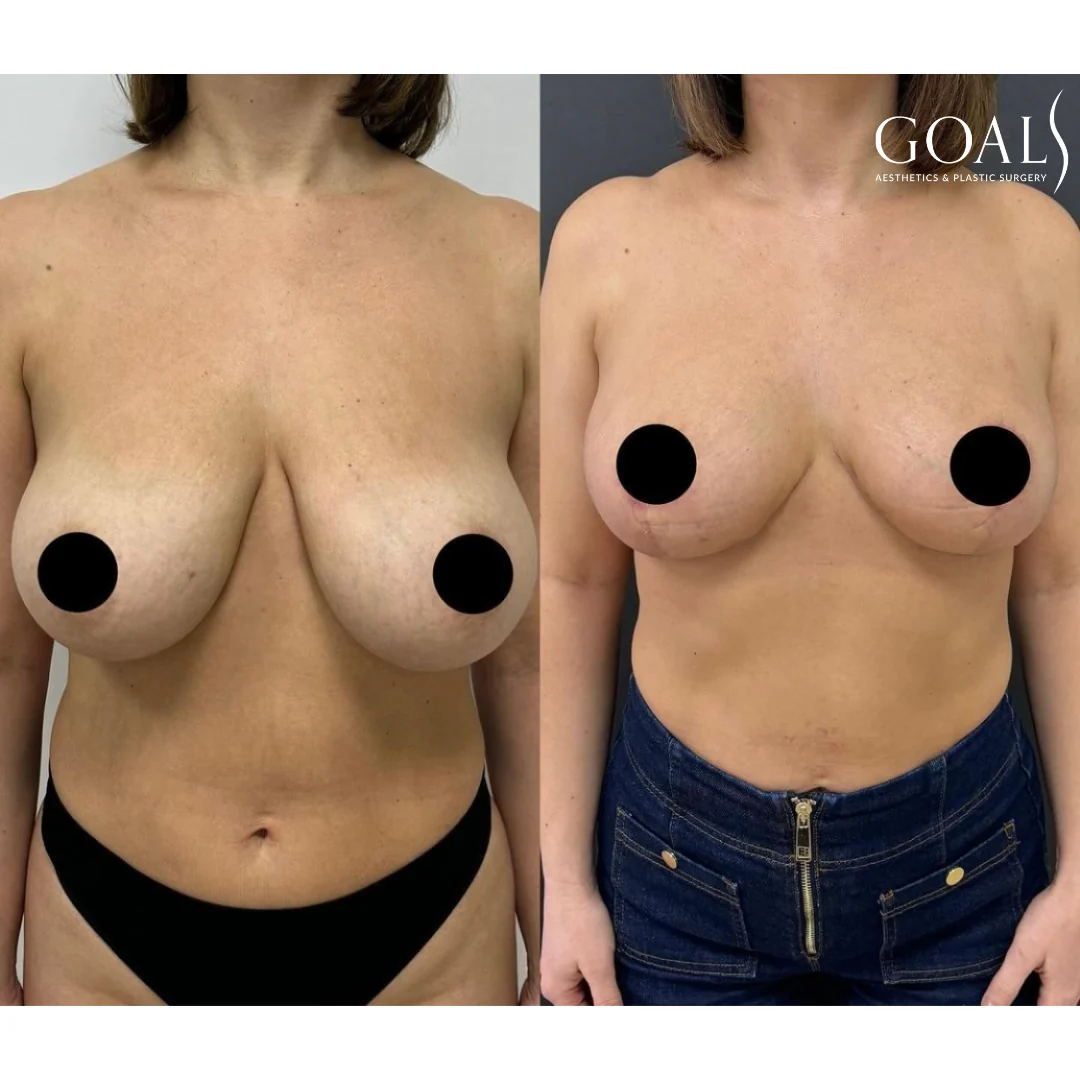
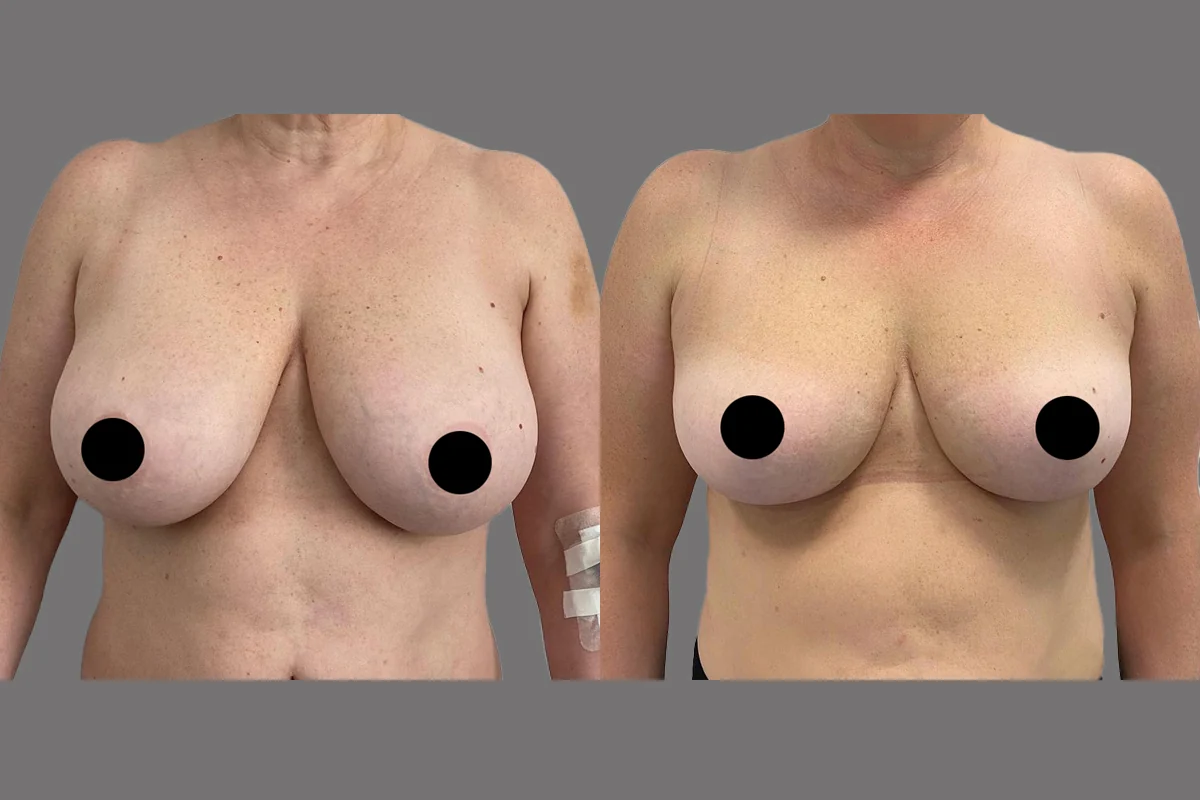
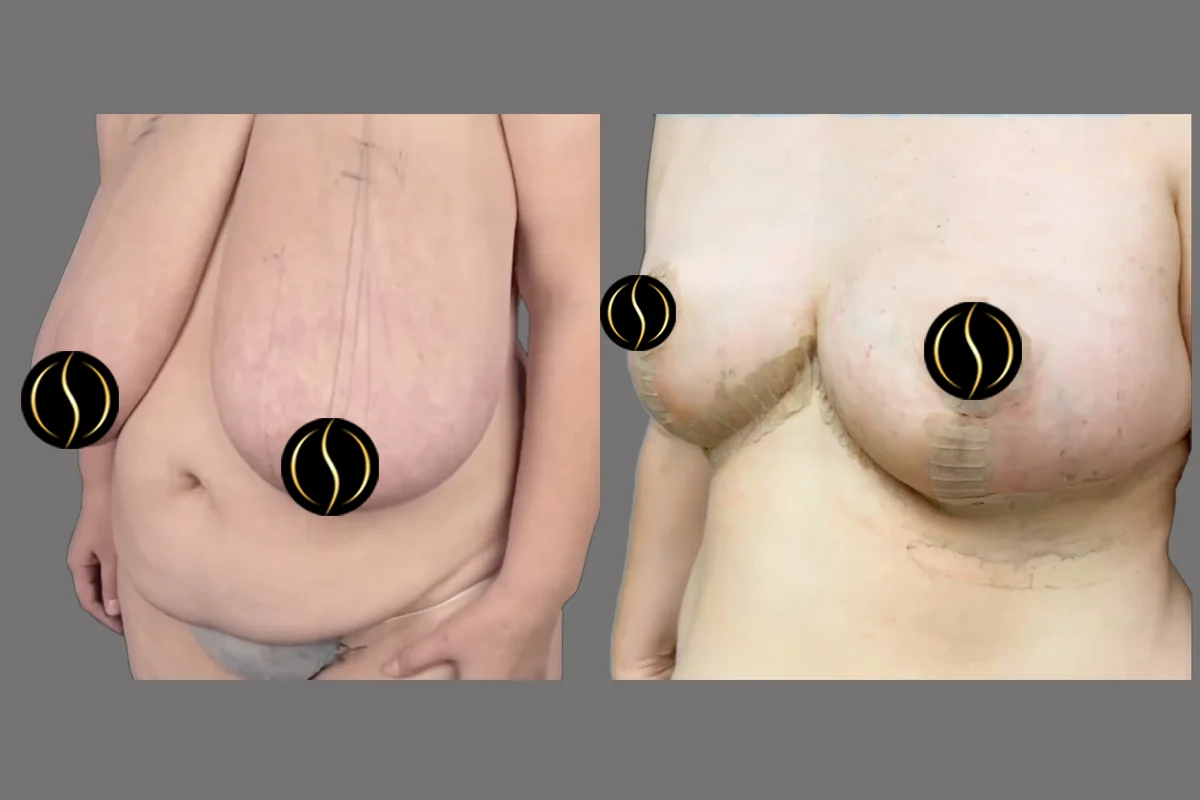
Real patients, published with written consent. Photographs are not retouched or AI-generated. Individual results vary — these images show outcomes for these patients and are not a guarantee of your own.
Try it
Type your height and weight. Your numbers stay on your device. We do not see or save them.
BMI is just one number. Your surgeon also looks at your health and your goals. BMI alone does not decide if you can have surgery.
Weighing what each one does for size, weight, and symptoms helps you and your surgeon decide whether a full breast reduction or a lift alone is the better fit.
| Criterion | Reduction | Lift Only |
|---|---|---|
| Removes | Tissue, fat, and skin. | Mostly skin. |
| Size | Noticeably smaller. | About the same. |
| Pain Relief | Eases the strain. | Little change. |
| For | Large, heavy breasts with symptoms. | Sagging at a good size. |
| Insured | Sometimes covered. | Usually not. |
Your journey
6 Steps to Lasting Relief.
Sit with our team to talk goals and symptoms, look over your shape, and see whether reduction is right.
Go over how much tissue to take off and the new shape and nipple position, so you can picture the result that fits you.
Run the medical checks so the team can sign off that you are ready, then walk you through each step of getting prepared.
The surgeon takes off excess tissue, fat, and skin, reshapes the breast, and moves the nipple for a natural look.
You wear a support bra and take it easy at first, with simple aftercare to help it all settle well.
Follow the aftercare plan with check-ins along the way to track healing and support your best result.
Benefits
Breast reduction leaves breasts that are lighter, firmer, and in better proportion, and for many people it eases the strain that heavy breasts put on the body.
Relief from neck, back, and shoulder strain.
Lighter, firmer breasts that sit higher and feel more at ease all day.
In workouts or fitted tops, a lighter shape can help you move and feel easier in everyday Brooklyn life.
Moving, running, and training feel easier and more comfortable.
Bras and tops finally fit the way you want them to.
Safety
We screen every patient up front, work with careful surgical technique to limit scarring, and give clear pre- and post-op support, so your procedure stays safe.
We review your health, symptoms, and goals before surgery, so the plan suits you and you are cleared.
Skilled reduction technique set to keep scarring discreet.
Clear pre- and post-op support, with easy access to the team.
Pricing
Final cost tracks how much is removed and the details of your case; some reductions may qualify for insurance, set at consult.
Financing / payment plans
Your price is locked at booking, once consult is done.
Open pricing: no hidden fees, all of it spelled out plainly in the contract.
Prices shown are starting prices and depend on the number of areas treated. Final pricing is confirmed at your consultation. Cosmetic procedures are not covered by insurance.
Try it
Pick a procedure to see an estimate. Your numbers stay on your device. We do not see or save them.
This is an estimate, not a quote. It splits the starting price over the months you pick, with no interest. Lenders set your real rate and terms. Your price is confirmed at your consultation.
Why Goals
A Schermerhorn St spot in Downtown Brooklyn, easy to reach by subway.
Comprehensive aftercare and easy in-person follow-ups at the clinic.
Surgeons who do breast work regularly.
Reduction technique set to keep scars as discreet as possible.
Thousands of procedures done well across our network.
FAQ
In the early weeks the breasts often feel firm and a little tight as swelling settles, which is normal and eases with time. As you heal, they soften and feel more natural over a few months. Because a reduction removes and reshapes your own tissue, the feel stays your natural breast tissue, just lighter and higher. Shifts in skin and nipple sensation are common at first and usually settle as the nerves recover.
A reduction is lasting, since the tissue that is removed does not come back. What can change the result over time is your body: significant weight gain, pregnancy, or hormonal shifts can add volume to the breasts again. Keeping a steady, healthy weight is the best way to protect both the lighter size and the relief you gained. Most people enjoy the comfort and shape for many years.
It often helps to be at a weight you can hold steady, but you do not need to reach a perfect number first. Because a reduction works with the tissue you have, a large weight change afterward can shift your result, so most surgeons prefer you stable rather than mid-diet. If you are planning major weight loss, doing that first can be worthwhile, since losing weight sometimes reduces breast size on its own.
For the first few weeks it is best to sleep on your back, ideally propped up a little, so there is no direct pressure on the healing breasts. A few extra pillows help you stay in position, which can take getting used to if you usually sleep on your side or front. Side and stomach sleeping generally wait until your surgeon clears it, often around the four to six week mark, once swelling has eased.
You can, but you will be asked to stop well before and after surgery, and it matters more than many people realize. Smoking and nicotine narrow the blood vessels and slow healing, which raises the risk of wound problems and poorer scarring, where skin needs to heal well. Most surgeons ask you to quit for a set window before and after, including vaping and nicotine gum. Your surgeon gives a clear timeline.
Learn more
A lot of what people believe about breast reduction is outdated or simply wrong, and those misconceptions keep many from a procedure that could genuinely help them. This page takes the common myths one by one and sets them against reality, as we explain it to patients at our Brooklyn clinic. For an honest read on your own situation, our experienced surgeons are glad to help at a consultation.
Many people do not realize that men are candidates for reduction too, through a procedure tailored to them. Enlarged male breast tissue, a common and often distressing condition, is addressed with male breast reduction, available as gynecomastia surgery. Using techniques suited to the male chest, it removes excess glandular tissue and fat to create a flatter, firmer contour. The goal mirrors that of female reduction, restoring proportion and relieving the discomfort and self-consciousness of excess tissue, but the method is specific. The belief that reduction is a women-only procedure leaves many men unaware that a well-established solution exists for a concern they may have quietly lived with for years, which is exactly why this myth is worth dispelling clearly.
Fear of scarring holds many people back, often based on an exaggerated picture. It is true that reduction mammoplasty requires incisions and therefore leaves some permanent scarring; that is an honest part of the trade. But surgeons place those incisions deliberately so the resulting scars are concealed by the natural breast contour or hidden beneath a bra, and scars fade considerably over the months and years following surgery.
Most patients find the scars far less noticeable than they had feared, and overwhelmingly consider them a worthwhile exchange for relief from chronic pain and a body that finally feels proportionate. The realistic picture is not flawless skin, but discreet, fading scars that the vast majority of people are entirely at peace with.
Some people believe a reduction must be a standalone operation, when in fact it is often thoughtfully combined. Depending on your goals and what is safe in a single session, a reduction can be paired with a breast lift emphasis, considered alongside breast augmentation approaches for those wanting different changes, or folded into a broader mommy makeover so several concerns are addressed in one recovery.
Whether combining is appropriate depends on your health and how much is being done, which a surgeon assesses honestly. The fixed idea that a reduction can only ever be done in isolation overlooks the flexibility that makes it possible to address multiple goals efficiently when it is safe to do so.
This is perhaps the most damaging misconception, because it stops people who are genuinely suffering from seeking help. In reality, breast reduction surgery is frequently a functional procedure addressing real physical symptoms: chronic neck, shoulder, and back pain, painful bra-strap grooving, skin irritation, and limited ability to exercise.
Many patients have lived with these problems for years. While the operation does improve appearance and proportion as part of the process, framing it as mere vanity badly misrepresents what it does for the people who need it. For someone carrying the daily physical burden of overly large breasts, a reduction is closer to relief from a chronic condition than to a cosmetic indulgence, and understanding that distinction is often the first step toward considering it seriously.
People often imagine a reduction means disappearing from life for months, but the reality is more manageable. Most patients take roughly one to two weeks off work, depending on how physical their job is, and are back to a gentle daily routine well before they expected. Strenuous activity and heavy lifting are restricted for several weeks while healing progresses, but that is different from being bedridden.
Strikingly, many people find the pain they had carried from the weight of their breasts eases almost immediately, so in some respects they feel better very quickly even as the surgical recovery runs its course. With a clear aftercare plan and a sensible return to activity, the downtime is far less disruptive than the myth suggests.
People often assume a reduction is automatically an out-of-pocket cosmetic expense with no possibility of coverage, but the picture is more nuanced. Because the procedure frequently addresses documented medical symptoms, individual circumstances can sometimes bear on coverage, and it is genuinely worth discussing your situation rather than assuming.
What is true is that breast reduction cost in Brooklyn depends on the specifics of your procedure and is explained transparently at the consultation, with financing and payment plans available to spread it. The point is simply not to rule the procedure out on a cost assumption before having an informed conversation, since the realities of your own case may differ from the blanket belief that none of it is ever covered.
Set against these myths, the reality is encouraging: a breast reduction is often a functional procedure with manageable recovery, discreet and fading scars, options for men as well as women, and real flexibility in planning, performed properly in an accredited setting. Our Brooklyn clinic offers breast reduction as part of a full range of procedures, with clear pricing at the consultation. You can see real results in the before & after gallery or read more on the blog. When you are ready to replace assumptions with honest answers about your own case, booking a consultation is the natural first step, keeping in mind that suitability and results are determined individually by your surgeon.
About Breast Reduction
Breast Reduction at other Goals clinics
Get started
Whether it is a breast reduction, a lift, or a different procedure, our Brooklyn team will talk it through and build a safe, realistic plan with you.
Prefer to talk now? (833) 462-5769
Free · No obligation
Tell us how to reach you. A patient coordinator calls you back — usually the same day.
Free · No obligation
Ask me anything. I usually reply straight away.
If you share your number, a Goals coordinator may call or text you about your consultation. Message and data rates may apply.
Nora is an automated chat. She cannot give medical advice or say whether a procedure suits you.