Neck and Back Pain
Daily aching in your neck, shoulders, and upper back.
Breast Reduction in Maryland by experienced surgeons at our Gaithersburg clinic: a lighter, proportionate shape and real relief for your neck, shoulders, and back.
From $10,000

Start with Savings
Book a consultation for a discount on your first procedure.
Thousands
Of Cosmetic Surgery Transformations
100,000+
Procedures Nationwide
10+
Years in Aesthetic & Plastic Surgery
Our Gaithersburg clinic sees patients from across Maryland and the wider Washington area. Consultation, pre-operative clearance, and every follow-up happen in one place, with appointment-only scheduling that keeps things private.
Breast reduction surgery, or reduction mammoplasty, removes excess breast tissue, fat, and skin, reshapes what remains and lifts the nipple. Done under general anesthesia, it takes a few hours and lifts the weight your neck and back carry.
You are asleep for the whole procedure. A licensed anesthesiologist puts you under general anesthesia and monitors you start to finish.
The surgeon removes excess breast tissue, fat, and skin, reshapes what remains, and moves the nipple to sit naturally higher.
Incisions are closed in fine layers, you wake up in recovery, and you go home the same day with a surgical bra, aftercare instructions, and a follow-up date at the Gaithersburg clinic.
Breast reduction suits women whose breast size causes daily strain, whether that means pain, activity limits, ill-fitting clothes, or the posture the weight forces on you.
Daily aching in your neck, shoulders, and upper back.
Straps dig in and leave marks, and no bra ever seems to fit right no matter how much you spend on it.
Recurring rashes or chafing in the fold beneath the breasts, worse every summer.
You are in good health, done with major weight change, and clear on the size you want.
See natural-looking results from real patients.
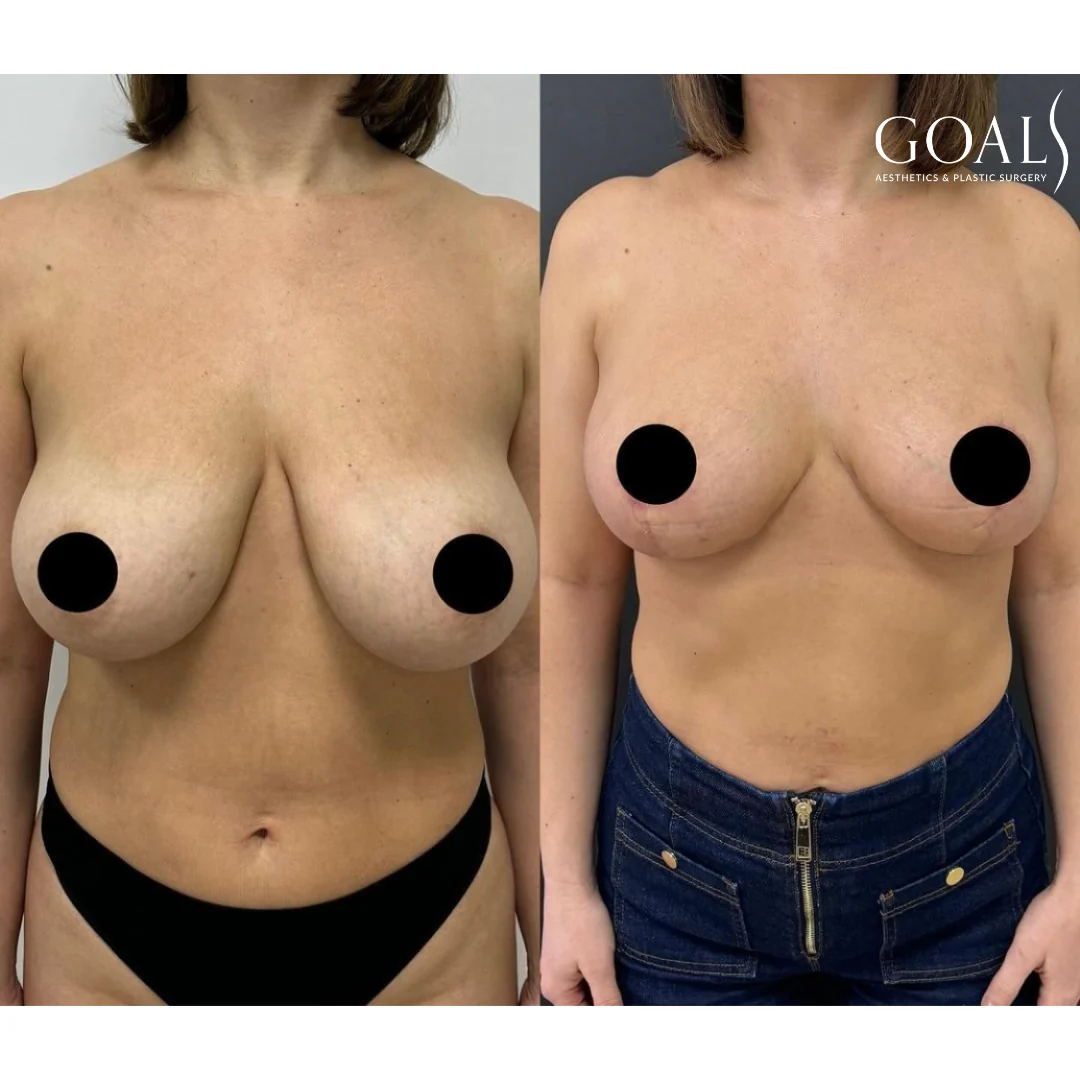
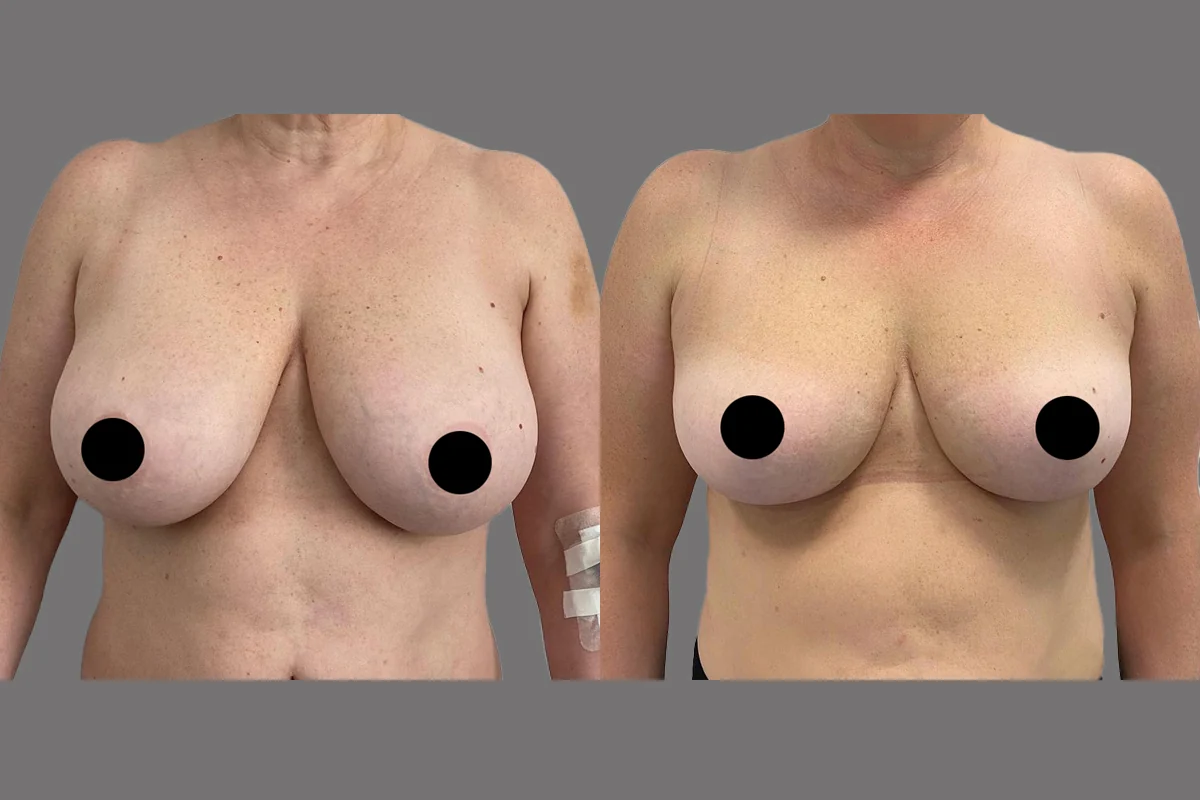
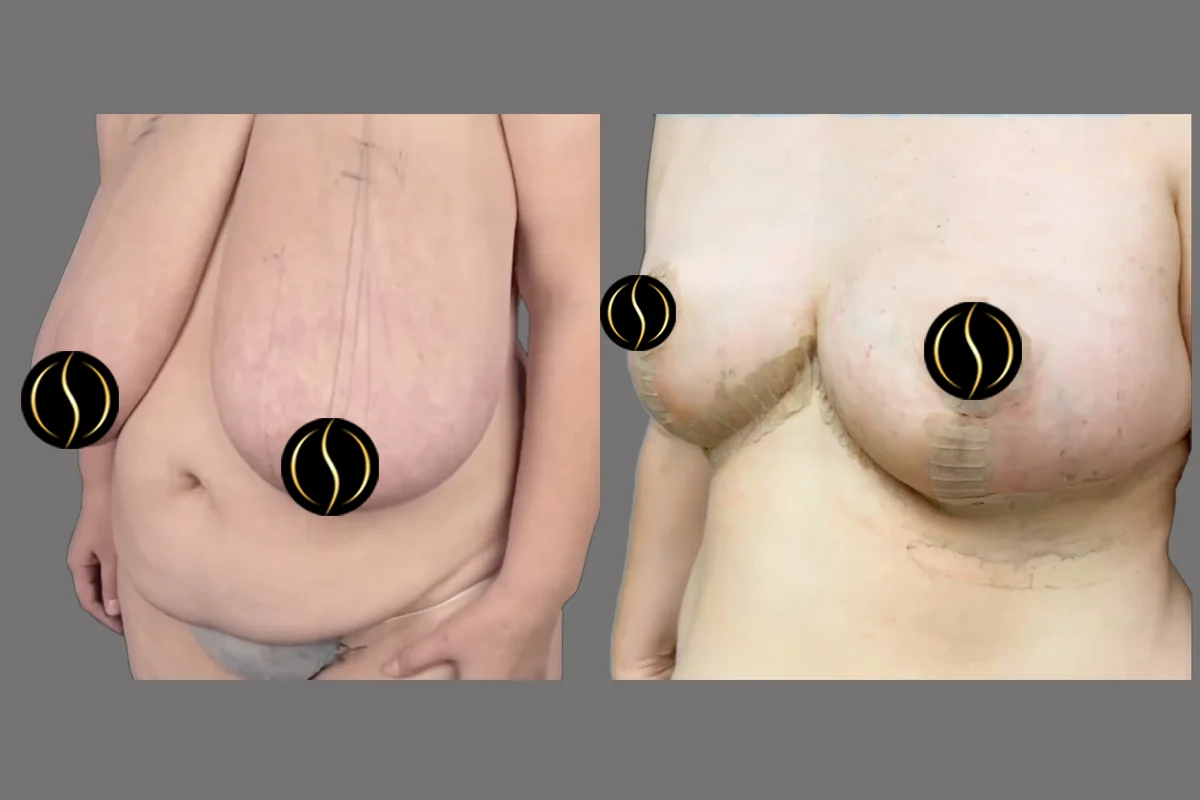
Real patients of Goals, published with written consent. Photographs are not retouched or AI-generated. Individual results vary — these images show outcomes for these patients and are not a guarantee of your own.
Work it out
Runs in your browser. Nothing is sent to us and nothing is saved — a height and a weight are your business.
BMI is one measure among several and it says nothing about how you are built. Surgeons weigh it alongside your health and your goals; it does not decide anything on its own.
Experienced breast reduction surgeons.
Credentials differ by surgeon and are listed in full on each surgeon's page.
Both reshape the breast, but they solve different problems. A reduction removes weight and volume; a lift repositions what you have. Here is how they compare.
| Breast Reduction | Breast Lift | |
|---|---|---|
| Technique | Breast ReductionRemoves tissue, fat, and skin, then lifts. | Breast LiftReshapes and raises existing tissue. |
| Anesthesia | Breast ReductionGeneral anesthesia, fully asleep. | Breast LiftGeneral anesthesia. |
| Best For | Breast ReductionHeavy breasts causing daily pain. | Breast LiftSagging. |
| Effect | Breast ReductionSmaller, lighter breasts with a built-in lift. | Breast LiftHigher position, same size. |
| Recovery | Breast ReductionDesk work in about one to two weeks. | Breast LiftAbout one to two weeks. |
6 Steps to Real Relief.
Talk through your symptoms and goals privately and get a clear plan for what surgery can and cannot do.
Pick a surgery date and receive short written instructions covering medication, fasting, and what to bring on the day.
Health checks and pre-operative clearance at our Gaithersburg clinic.
You are asleep under general anesthesia while the surgeon removes excess tissue and skin and reshapes both breasts.
You go home the same day with a surgical bra, pain relief guidance, and a direct line to the clinic.
Check-ins at the Gaithersburg clinic track healing until you are cleared for exercise and underwire bras.
Breast reduction suits women whose breast size causes daily strain, whether that means pain, activity limits, ill-fitting clothes, or the posture the weight forces on you.
Neck and shoulder strain eases within days.
Button-up shirts, sports bras, and dresses that finally fit.
A lifted shape in proportion with your frame, nipples sitting naturally.
Running and gym sessions without the weight and without doubling up on bras.
The removed tissue does not come back.
Breast reduction is real surgery under general anesthesia, and we treat it that way. Every Maryland patient goes through screening and honest pre-operative counseling, and the Gaithersburg team follows the same protocols used at every Goals clinic nationwide.
A licensed anesthesiologist monitors you from the pre-op checks through the recovery room.
The same tested surgical protocols at every clinic in our network.
Direct pre- and post-operative contact with the Gaithersburg team.
Final cost depends on breast size, the technique, and your health profile. It is confirmed at consultation and fixed at booking.
Price locked in at the booking stage after consultation.
Transparent pricing: no hidden fees, everything clearly detailed in the contract.
Prices shown are starting prices and depend on the number of areas treated. Final pricing is confirmed at your consultation. Cosmetic procedures are not covered by insurance.
Work it out
Runs in your browser. Nothing is sent to us and nothing is saved.
An estimate, not a quote. It divides the starting price over the months you choose and assumes no interest. Goals works with several lenders and your rate, term and approval are settled with them — the financing page has the detail, and your price is confirmed at consultation.
A dedicated Gaithersburg clinic on Frederick Avenue, easy to reach from across Maryland and the DC area.
General anesthesia handled by licensed anesthesiologists who stay through recovery.
Appointment-only visits, private consultation rooms, and staff who understand this is a personal call.
Our breast reduction surgeons do breast work weekly, not occasionally.
Saturday appointments and evening slots at the Gaithersburg clinic help surgery fit around real life.
Thousands of successful procedures across the Goals network.
Two herniated discs and years of PT before anyone said the word reduction. I went from an H to a full C and my physical therapist noticed my posture before I told her.
Bra shopping used to end in tears. Now I grab a sports bra off the rack. The scars are fading faster than I expected.
I worried about the scars for months. Six months out they're thin lines, and honestly I'd trade them again tomorrow to run without pain.
Testimonials reflect individual experiences. Results vary by patient.
The aim is proportion with your frame, not a preset size, so a good result reads as a naturally smaller, lifted breast rather than anything obvious. Because a reduction reshapes and lifts as it removes tissue, you come out firmer and higher, with the nipple moved to sit naturally and a stretched areola trimmed to match. Going extremely small is what tends to look unnatural and strains the tissue, which is why the surgeon aims for a size that suits your shoulders and build rather than the smallest possible number.
Not always, but a stable weight matters more than a number. If you are mid-way through weight loss, waiting until you level off protects your result, since dropping pounds later can change breast size. Some insurers also ask for a weight range first. Otherwise your current weight is fine, and the surgeon reviews it at the consultation.
Most reductions at Goals need no drains; when one is used it comes out within days. As for pain, patients are surprised it is soreness and tightness rather than anything sharp, more like an intense workout than a wound. The medication plan covers the first days, and many women are off prescription pills within a week.
For a few patients, yes. Liposuction-only reduction leaves tiny scars and suits women whose breasts are mostly fatty, with good skin tone and little sag. It cannot lift, and removes less volume, so most who want real reshaping still need the standard technique. The surgeon tells which camp you fall in at the exam.
Age alone rarely rules it out. Younger patients whose breasts have stopped growing and who have carried symptoms for years are common, though surgeons often talk through future pregnancy first, since it can change the result. Older patients in good health do very well; what matters is your fitness for anesthesia, not the birthday on your chart.
Sometimes, because reduction is one of the few cosmetic procedures with a medical side. When large breasts cause documented problems, chronic neck, back, or shoulder pain, persistent rashes, strap grooving, and the planned tissue removal meets your insurer's threshold, some plans cover part of it. It varies by insurer and by your body size, and approval is their call, not the clinic's, so building a paper trail with your doctor helps. Many Maryland patients weigh the paperwork against self-pay and choose the fixed self-pay quote; bring your insurance card to the consultation and the coordinator will tell you which path fits.
Breast reduction sits in unusual territory among cosmetic operations, because for many women it isn't cosmetic at all, it's medical, and that single distinction shapes everything from how you pay for it to how you build the case. So before the talk of techniques and scars, the useful first question is which one you are: someone whose large breasts cause documented daily problems, in which case insurance may help, or someone who simply wants a lighter, proportionate shape and will self-pay.
Most women are somewhere on that line, and knowing where you fall changes your next steps entirely. This guide is built around that practical reality. It covers what the operation does, how to build an insurance case if that route fits you, how to judge a good result, what recovery honestly asks, and what self-pay costs, grounded in how the Gaithersburg clinic works, so you reach the consultation knowing which path is yours rather than guessing.
Breast reduction is one of the few procedures health insurance sometimes covers, because the symptoms are genuinely medical, and it's worth understanding the playbook before you decide. A carrier may pay when the need is documented, chronic neck, back, or shoulder pain, persistent rashes, strap grooving, and when the planned amount of tissue removed clears their threshold, which varies by insurer and by your body size. If that route appeals to you, the move is to start building a record now rather than later: appointments with your primary doctor about the pain, physical-therapy notes, dated photos of skin irritation, a chiropractor's records.
That paper trail is what separates an approval from a denial, since thinly documented requests are routinely turned down, and approval is always the insurer's call rather than the clinic's. Plenty of Maryland patients weigh the months of paperwork against the certainty of self-pay and choose self-pay instead, which brings a fixed written quote at consultation, locked at booking, with monthly plans available. Either way, bring your insurance card to the consultation, and the coordinator can tell you in one conversation which path realistically fits your situation.
Understanding what the operation actually does makes both the insurance case and the result easier to judge. A reduction mammoplasty quietly does three separate things in a single operation, which is why it changes so much at once. It removes glandular tissue and fat, the actual weight, usually a third to half of the volume and sometimes more. It takes away excess skin so the smaller breast stays firm instead of sagging into the space left behind.
And it lifts, moving the nipple and areola up to a natural position and often trimming a stretched areola back into proportion. That third job is the reason a separate lift is almost never needed alongside a reduction; the lift is baked in. The finished breast still looks and behaves like a breast, because the aim is proportion with your body rather than a preset size, and what surprises many patients is how much of the operation is about shape and skin, not just removal, which is exactly why an experienced hand matters and why insurers measure it in grams removed.
Here's the part that explains the speed of the change, and it's also what documents the medical case. The strain on your neck, upper back, and shoulders is a physics problem, unsupported weight hanging off the front of your chest, levered against your spine all day. Take a meaningful fraction of that weight away and the leverage changes immediately, which is why so many patients describe relief in the recovery room, before any healing has happened.
The bra-strap grooves in your shoulders begin to soften within weeks once the load pressing them is gone, and posture tends to correct itself, sometimes so noticeably that a physical therapist or a friend spots it before the patient mentions the surgery. This is also why the operation is measured in grams of tissue removed, not just cup letters: it's the weight, more than the number on a bra tag, that has been shaping your days, and it's the weight an insurer's threshold is written around.
Two incision patterns handle the large majority of reductions, and the difference is worth understanding before your consultation. The anchor, or inverted-T, traces around the areola, drops straight down to the crease, and runs along the crease itself; it gives the surgeon the fullest control and suits larger reductions or skin that has lost its spring. The vertical, nicknamed the lollipop, skips the incision along the crease and leaves a shorter scar, which works when less tissue needs removing and the skin still recoils well.
Neither is a default. Your surgeon settles it during the exam by weighing how much comes out, how far the nipple must travel, and the quality of your skin, then explains the reasoning rather than just announcing a plan. Occasionally, for the right candidate whose breasts are mostly fatty with good skin tone, a liposuction-only approach with tiny scars is possible, though it can't lift and removes less. The point is that the incision follows your anatomy, never the other way around.
Scars are the trade every reduction patient makes, and a clinic that glosses over them is doing you no favors. You will have them; the question is only how they mature. In the first weeks they look pink and firm, which alarms people who weren't warned. Over the following months they flatten and pale, and by roughly a year most settle into thin, quiet lines that a bra or bikini top covers completely.
Silicone sheets or gel, diligent sun protection, and simply being patient all help them along, and the team walks you through scar care at each follow-up. Skin that tends toward raised or darkened scarring behaves differently, so if that's your history, say so at the consultation, because it changes the aftercare plan and occasionally the technique. Almost universally, once the relief settles in, patients tell us the scars became a detail they stopped noticing, a fair price for getting their body back.
Breast reduction at Goals is done under general anesthesia, so you're fully asleep for the whole thing. A licensed anesthesiologist reviews your history beforehand, builds the plan around it, and watches over you continuously from the first medication until you wake in recovery, and the surgery generally runs a few hours depending on how much tissue is being removed and reshaped.
You arrive in the morning after simple fasting instructions, the surgeon marks you while you stand so gravity shows the true starting point, and the next thing you're aware of is a nurse at your side afterward. Most patients head home the same day in a surgical bra with a driver at the wheel. What you feel early on is tightness and soreness rather than anything sharp, and the take-home medication plan is built for it. The smartest move that first evening is to do nothing and let someone else handle the household.
Recovery has a reputation more fearsome than the reality most patients report. The first two or three days are the slowest, with swelling at its peak and a tight, heavy feeling across the chest, but the pain tends to read as deep soreness rather than a wound, and walking around the house starts on day one. By the end of the first week many are off prescription medication; by the end of the second, most are back at a desk job in the surgical bra.
Weeks three and four allow longer walks and gentle lower-body movement while anything involving the chest waits. Around week six, once a follow-up confirms healing, upper-body exercise, running, and underwire bras return. Swelling keeps quietly resolving for two to three months, which is when the true final size shows, so hold off on restocking the bra drawer until then. A couple of small things help more than they should: front-closing bras spare you a week of sore reaching, and a soft pillow between the seatbelt and your chest makes early car rides genuinely comfortable.
Two questions come up in nearly every consultation, and both deserve a straight answer rather than a reassuring dodge. Nipple sensation usually changes for a while after surgery, blunted for some women and heightened for others, and it typically drifts back over weeks to months. A lasting change is possible; modern techniques keep the nipple attached to its own nerve and blood supply precisely to guard against it, but no honest surgeon guarantees the outcome. Breastfeeding is the other one.
Many women nurse successfully after a reduction, yet none can be promised she will, because it depends on how much functioning gland stays connected. If future children matter to you, say so at the consultation, because it genuinely shapes the surgical plan and sometimes the timing; and if you're nursing now, plan the surgery for at least six months after you stop, so your breasts stabilize before anyone measures them. Mammograms, for the record, stay part of your routine afterward, with the imaging center simply noting your surgical history.
Because a reduction already contains a lift, the procedures most often paired with it solve neighboring concerns rather than the same one. Mothers frequently combine it with abdominal work in a Mommy Makeover in Maryland, folding breast and belly recovery into one window.
Women unsure whether they want volume removed or only their existing tissue raised should read up on the Breast Lift in Maryland and bring the question to the exam, where the answer usually becomes obvious once the surgeon measures. And it's worth saying plainly that reduction isn't only a women's operation: men carrying excess breast tissue have their own version, covered on the Gynecomastia Surgery in Maryland page, done through much smaller incisions. Whether any two procedures should be combined is a case-by-case judgment resting on your health and the total time under anesthesia, and a straight-talking surgeon will tell you when staging them apart is the safer plan.
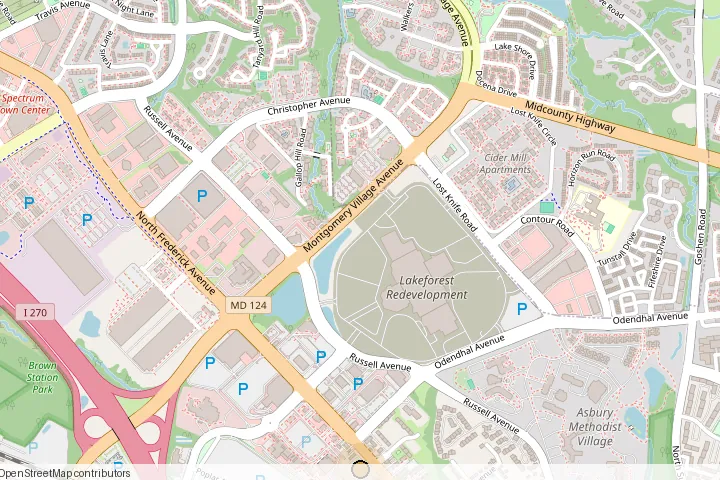
A single location serves the whole state without strain. Gaithersburg sits just off Interstate 270 in Montgomery County, roughly forty minutes from Baltimore in ordinary traffic, under an hour from Annapolis, and closer still for Rockville, Silver Spring, Bethesda, Frederick, and Columbia; Hagerstown is a clean run down the interstate. Patients from the Washington side often find the drive outward against the commute easier than crossing the city, there's parking at the building, and the Shady Grove Metro station is a short ride away for anyone traveling by train.
Because the operation uses general anesthesia, you'll need a driver on surgery day itself, though not for the consultation or the follow-up visits, and many patients simply attach those to other errands in the area. Coming from the Eastern Shore or the western counties, ask the coordinator about pairing your consultation and pre-operative clearance into a single trip. Every service the clinic offers is listed on the Gaithersburg location page.
Two quotes differ because two operations differ. The main drivers of your breast reduction cost in Maryland are your breast size and the amount of tissue involved, the incision pattern, the anesthesia and facility time, and anything combined with it. At Goals the number you're given at consultation is the number you pay, fixed at booking and written into the contract, with no facility fees appearing afterward and financing available if monthly payments suit you better than one sum.
On choosing a surgeon, keep the priorities in order, credentials first, comfort second, price third; ask specifically how much reduction work they do, and study before-and-after galleries for symmetry and natural nipple position rather than a single flattering shot. The complete procedure overview, pattern by pattern, lives on our main Breast Reduction page. When you're ready, the online assessment takes only a few minutes, and a coordinator calls you back, usually the same day, to book your visit to Gaithersburg and turn a long-postponed decision into a date on the calendar.
About Breast Reduction
First Name: First Name *
Whether you are planning breast reduction, a breast lift, or a full mommy makeover, our Maryland team is ready to build a safe, realistic treatment plan around you.
Prefer to talk now? (833) 462-5769
Free · No obligation
Tell us how to reach you. A patient coordinator calls you back — usually the same day.