Smaller, Lighter Breasts
Breasts brought down to a size that fits your body.
Breast reduction removes excess breast tissue, fat, and skin to ease back, neck, and shoulder pain and give you a smaller, lighter, more proportionate shape at our Atlanta clinic.
From $10,000

Free Consultation
Your consultation is free and carries no obligation.
Results
See real results from our patients.
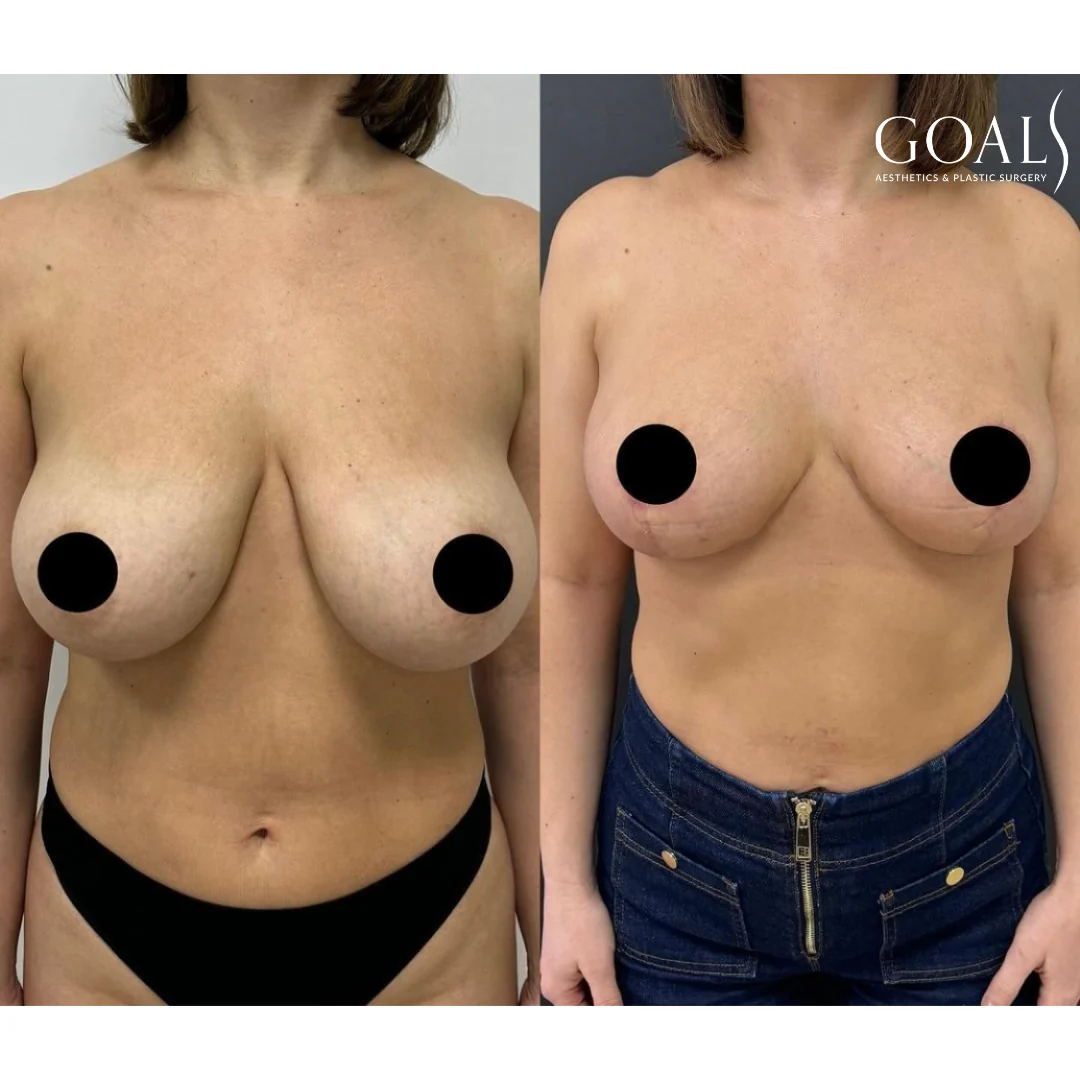
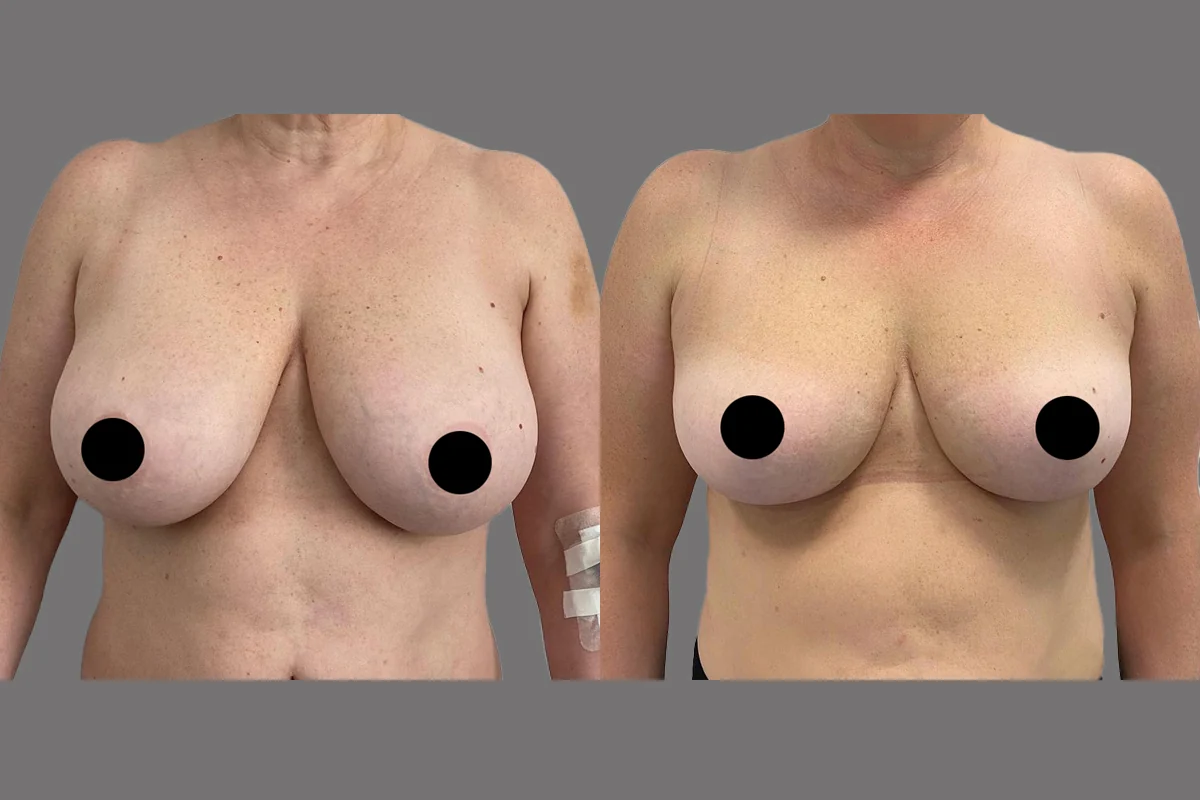
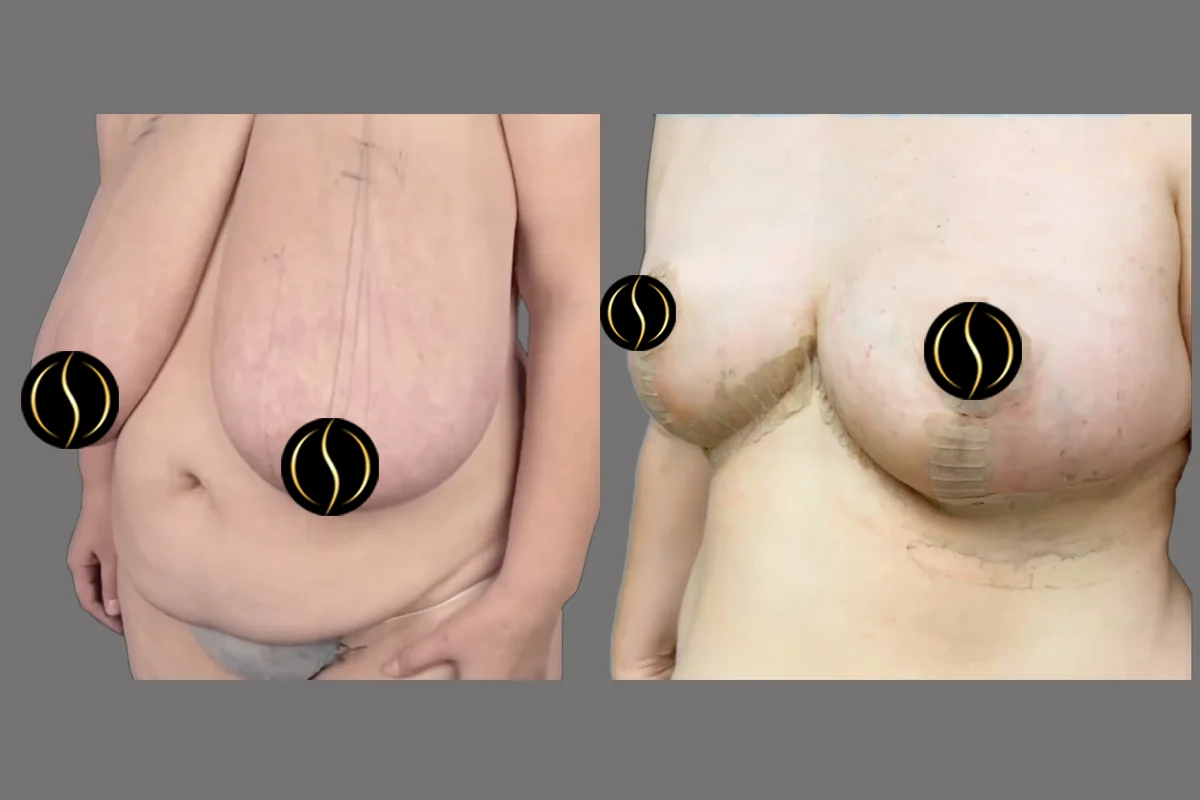
Real patients, published with written consent. Photographs are not retouched or AI-generated. Individual results vary — these images show outcomes for these patients and are not a guarantee of your own.
Clinics
Visit our Atlanta clinic on Chamblee Tucker Rd. Book consultations, surgery, and follow-up visits there, with free parking on site.
Overview
Breast reduction, or reduction mammoplasty, brings overly large breasts down to a smaller, lighter size. The surgeon removes excess tissue, fat, and skin, lifts the breast, and moves the nipple higher, easing pain and giving a shape that fits your body.
Benefits
Reducing breast size and weight can ease physical discomfort, create a firmer and more lifted shape, and make everyday clothes fit the way they're meant to, leaving many Atlanta patients more comfortable in their daily lives.
Breasts brought down to a size that fits your body.
Relief from back, neck, and shoulder pain from the weight.
A firmer, higher breast shape with the nipple in a natural spot.
Clothes and bras that finally fit, instead of being chosen around the size.
Tops and bras fit better on a smaller shape.
Candidacy
Breast reduction suits people with large, heavy breasts that cause back, neck, or shoulder pain, bra-strap grooves, or rashes, and who want a lighter shape.
Ongoing back, neck, or shoulder pain from heavy breasts.
Deep grooves in your shoulders from bra straps, or rashes and irritation under the breasts.
Trouble exercising or finding clothes that fit because of your breast size.
Ready to follow post-op instructions and go through all the preparation stages.
Try it
Type your height and weight. Your numbers stay on your device. We do not see or save them.
BMI is just one number. Your surgeon also looks at your health and your goals. BMI alone does not decide if you can have surgery.
How it works
The surgeon takes out excess breast tissue, fat, and skin to bring the breasts down to a size that fits your body and eases the weight on your frame.
The remaining tissue is reshaped and lifted into a firmer, higher position, and the nipple and areola are moved up, resized as needed.
The incisions are closed with care for a smaller, lifted contour and discreet scars, under general anesthesia at our Atlanta facility, and you head home to recover.
Seeing how a reduction compares with a lift helps you pick the breast surgery that fits your goals, and whether you mainly want less weight or a firmer shape.
| Breast Reduction | Breast Lift: The Difference | |
|---|---|---|
| Does | Breast ReductionMakes heavy breasts smaller and lighter. | Breast Lift: The DifferenceRaises and reshapes sagging breasts. |
| Size | Breast ReductionSmaller size. | Breast Lift: The DifferenceAbout the same size. |
| Best for | Breast ReductionHeavy breasts causing pain. | Breast Lift: The DifferenceSagging. |
| Takes | Breast ReductionSkin and breast tissue. | Breast Lift: The DifferenceExcess skin only. |
| Relief | Breast ReductionEases back, neck, and shoulder pain. | Breast Lift: The DifferenceMainly a shape change. |
A general comparison. Which approach suits you is decided at a consultation with a licensed surgeon.
Our surgeons
Atlanta surgeons who perform reductions routinely.
Licensed in NY · TX · CA
Safety
Our Atlanta clinic leads with safety, pairing careful patient screening with thorough pre-op prep. The same protocols run across the network, so care stays consistent and high-quality, with controlled, predictable outcomes at every stage.
Surgery happens in accredited facilities, watched closely at every stage of your procedure.
The same surgical protocols and checks, for consistent outcomes.
Clear pre- and post-op support, with the Atlanta team easy to reach.
Pricing
Your cost comes down to the technique and how much is removed, and whether insurance covers part of it, confirmed and fixed at booking.
Flexible financing plans
Confirmed at consultation and locked in at booking.
No hidden fees, and everything is laid out clearly in your contract.
Prices shown are starting prices and depend on the number of areas treated. Final pricing is confirmed at your consultation. Cosmetic procedures are not covered by insurance.
Try it
Pick a procedure to see an estimate. Your numbers stay on your device. We do not see or save them.
This is an estimate, not a quote. It splits the starting price over the months you pick, with no interest. Lenders set your real rate and terms. Your price is confirmed at your consultation.
Why Goals
One easy-to-reach clinic in the northeast Atlanta metro, with free on-site parking.
A smaller, lighter shape that takes the strain off your back, neck, and shoulders.
Pair your reduction with a lift for a higher shape, or liposuction, in one surgery and one recovery.
Every procedure is done by trained, licensed surgeons skilled in breast surgery.
Flexible scheduling, sometimes with evening or weekend slots at select clinics.
A network-wide track record built on thousands of contouring cases.
Your journey
Steps to a Lighter Shape.
Meet our team, talk through your goals and symptoms, and get a clear, realistic plan for your breasts.
Book your procedure and get clear pre-op instructions, so you are fully prepared for the day of surgery.
Careful pre-operative health checks and surgical prep, all in the U.S.
Excess tissue, fat, and skin come off, the breast is reshaped and lifted, and the nipple is repositioned under anesthesia.
The areola is resized if needed, and the incisions are closed carefully for a lifted contour and neat scars.
Lean on our aftercare program, with scheduled follow-ups that track your healing and protect the result.
Timelines are typical. Your surgeon sets yours at your consultation, and recovery differs from person to person.
FAQ
Your breast reduction happens at our Atlanta clinic on Chamblee Tucker Rd, booked around your schedule. It is performed under general anesthesia, with the same standards and careful approach for every patient, so your experience stays consistent.
Sometimes. When large breasts cause documented problems like back and neck pain or rashes, some insurers treat a reduction as medically necessary and cover part of it, often based on your measurements and how much tissue is removed. Every plan differs, so it is worth checking with your insurer. Our Atlanta team can walk you through what is needed.
Most people take it easier for a week or two and get back to desk work around then, though it varies. You will have some swelling and soreness, wear a surgical or compression bra, and skip strenuous activity for about four to six weeks while things settle. Many feel lighter and freer from pain almost right away. Follow-ups track your healing.
Yes, and many Atlanta patients do. A reduction already lifts and reshapes as it removes tissue, and a dedicated lift can refine the height further. Liposuction can smooth the sides and underarm area for a cleaner line. Doing it together means one recovery. Your surgeon reviews your shape and goals and plans the right mix for you.
Often yes, but it is not guaranteed, and it depends on the technique used, since some methods affect the milk ducts and nerves more than others. If future breastfeeding matters to you, tell your surgeon at your consultation so they can plan the approach with that in mind. It is one of the most important things to raise early on.
A reduction does leave scars, since skin and tissue are removed, but they sit where a bra or swimsuit covers them, usually around the areola and down the front. They look reddest early on, then fade over months to thin, pale lines for most people. Your surgeon plans the incisions to keep them as discreet as the reduction allows.
About Breast Reduction
Patient Guides
Written by the team that performs the procedure, to read before your consultation.
General information, not medical advice. What applies to you is decided at a consultation with a licensed surgeon.
Get started
Whether you are considering a breast reduction, a reduction with a lift, or another breast procedure, our team is ready to build a safe, realistic plan for you.
Prefer to talk now? (833) 462-5769
Learn more
For people carrying very large breasts, the issue is rarely about appearance first, it is about the body paying a daily tax. Shoulders ache, bra straps carve grooves, the upper back stays tight, skin under the breasts chafes in the Atlanta heat, and exercise ranges from awkward to genuinely painful. Reduction is one of the few cosmetic procedures that is also, for many people, a functional one: it takes weight off the frame. This guide covers what the surgery does, who it helps, how scars and recovery really go, the questions about breastfeeding and insurance that come up most, and how to think about cost, in plain terms and without the sell.
A breast reduction, known medically as reduction mammoplasty, removes excess breast tissue, fat, and skin to bring overly large breasts down to a size that fits your frame. But it is not only a shrinking operation: as the surgeon removes volume, the breast is also reshaped and lifted, and the nipple and areola are moved up to sit naturally on the smaller, higher shape. Areola size can be reduced at the same time if it has stretched. So the result is not just smaller but firmer and higher, more in proportion with the rest of you. It is done under general anesthesia and, unlike many aesthetic procedures, is often driven by physical symptoms rather than looks alone.
The reason most people pursue a reduction is not vanity, it is relief. Heavy breasts pull constantly on the neck, shoulders, and upper back, and the body compensates with posture changes that create their own aches. Bra straps dig grooves into the shoulders because they are carrying real load. There is skin irritation and rashes underneath, especially in a humid climate, and there is the simple exhaustion of hauling that weight through every workout and every long day. What surprises many patients afterward is how immediate the relief feels: the moment the weight is gone, the strain it was causing starts to lift too. For a lot of people that functional change matters more than the cosmetic one.
A reduction suits people whose breasts are large enough to cause genuine physical symptoms: chronic back, neck, or shoulder pain, deep bra-strap grooves, recurring rashes or irritation underneath, or difficulty exercising and finding clothes that fit. Good candidates are in reasonable general health, non-smokers or willing to stop around the surgery, and at a fairly stable weight, since major weight changes afterward can alter the result. Realistic expectations help too, along with a willingness to follow the aftercare through the healing weeks. If your breasts feel like a daily physical burden rather than simply something you would restyle, you are likely the kind of person this surgery was designed for, and a consultation confirms it in person.
These two procedures overlap, which is exactly why people confuse them. A reduction removes volume and, in doing so, lifts and reshapes what remains; a lift, or mastopexy, mostly repositions and firms the breast without taking much size away. The simplest way to tell which you want is to ask what is bothering you: if it is the weight and the symptoms it causes, you want a reduction; if your breasts are a size you are happy with but they have drooped, a Breast Lift in Atlanta is the closer match. Plenty of people actually want elements of both, a smaller size and a higher position, and because a reduction already lifts as it reduces, the two are often combined into one operation. A surgeon sorts out which applies to you at the consult.
Once your plan is set, the reduction is carried out under general anesthesia and usually takes somewhere in the region of two to four hours, depending on how much tissue is being removed and whether anything is combined with it. The surgeon makes the planned incisions, removes the excess tissue, fat, and skin, then reshapes the remaining breast into a firmer, higher mound and repositions the nipple and areola on the new contour, resizing the areola if needed. The incisions are closed in layers to support the shape and keep the scars as neat as possible. You wake up in recovery, are monitored for a while, and in most cases go home the same day into the aftercare plan your team has already walked you through.
Recovery from a reduction is generally more manageable than people fear, and the relief often outweighs the soreness from early on. The first several days involve swelling, tenderness, and taking it easy, with a surgical or compression bra worn to support the healing breasts and control swelling. Most people take a week or two off before returning to desk work, and hold off on strenuous activity and heavy lifting for about four to six weeks while everything settles. Curiously, a lot of patients report that the chronic pain they came in with eases almost immediately, even while the surgical soreness is still present, because the constant pulling weight is simply gone. The final shape keeps refining over the following months as swelling fully resolves.
Two very practical questions come up in nearly every consultation. On breastfeeding: many people can still breastfeed after a reduction, but it cannot be guaranteed, because some techniques disturb the milk ducts and nerves more than others. If future breastfeeding matters to you, it is essential to say so early, since the surgeon can often choose an approach that preserves as much of that function as possible. On sensation: temporary changes in nipple feeling, numbness or heightened sensitivity, are common in the healing period and usually settle over weeks to months, though a small permanent change is possible. Both are exactly the kind of thing to raise plainly at the consult, so your plan is built around what you care about.
Knowing how the day unfolds takes much of the anxiety out of it. You arrive and the surgeon marks the planned incisions and new nipple position while you are standing, so everything is mapped to how your body actually sits upright. Then you are taken through under general anesthesia, so you feel nothing during the operation itself. When you wake in recovery you will be in a supportive surgical bra, a little groggy, with the treated area wrapped and protected. Someone should drive you home and, ideally, stay with you the first night. It is a real operation, but a well-run one feels calm and orderly rather than dramatic, and knowing the sequence in advance is half of feeling ready for it.
A breast reduction lasts many years, and for most people the change is effectively permanent, but breasts are living tissue that still responds to the big things: significant weight gain or loss, pregnancy, and the natural pull of gravity over time. A major weight swing can change the size again, and a future pregnancy can stretch and enlarge the breasts and may affect the result, which is one reason some people choose to wait until they are done having children. None of this undoes the relief you get in the meantime, and staying at a stable weight and wearing supportive bras during exercise both help the shape hold. Think of it as a lasting reset rather than a permanent freeze.
Reduction is not only a procedure for women. Many men in Atlanta look into male breast reduction for enlarged male breast tissue, a common condition called gynecomastia that can affect confidence and comfort at any age. The approach is tailored to male anatomy, often combining liposuction to remove fatty tissue with direct excision of firmer glandular tissue, to produce a flatter, firmer chest. If that is what you are searching for, the dedicated Gynecomastia Surgery in Atlanta page covers it in full. The underlying goal is the same as any reduction: to bring the chest into proportion and take away something that has been a daily source of self-consciousness or discomfort.
Because every reduction is planned around your own body, there is no single flat figure, and the price a breast reduction patient in Atlanta pays turns on a few things: the technique used, how much tissue is removed, whether anything is combined with it, and anesthesia and facility fees. A smaller reduction sits at one end of the range and a larger, more complex one at the other. What we commit to is a clear quote confirmed at your consultation and fixed at booking, with no fees appearing later. If you would like to spread the payments over time, the financing page lays out the options in detail.
This is the part that sets breast reduction apart from most cosmetic surgery: it is sometimes covered by insurance, because it is frequently medically necessary rather than purely elective. When large breasts cause documented problems, chronic back and neck pain, rashes, grooving, some insurers will cover part of the procedure, often gated on your measurements and the amount of tissue to be removed meeting their criteria. Every policy is different, so it comes down to checking your specific plan and gathering the documentation. Whatever insurance does or does not cover, any remaining balance can be handled through the financing page, and our Atlanta team can help you understand what your insurer is likely to want.
A reduction is as much about judgment as technique, because the surgeon is constantly balancing competing goals: how much to remove for relief, how to shape what remains for a natural look, where to place the nipple, and how to keep the scars discreet. Two surgeons removing the same volume can produce very different shapes and scar outcomes. That is why this is not a decision to make on price alone. Our surgeons perform breast reductions regularly and are experienced in matching the technique to each body and each set of goals, including preserving breastfeeding potential when it matters. You can read about the team on the surgeons page before you decide.
If you have read this far, you have likely been living with the discomfort for a while, and the most useful next step is simply a consultation. An in-person assessment is the only way a surgeon can weigh your symptoms, your anatomy, and your goals and tell you what a reduction would realistically do for you, including how much relief, what the scars will look like, and whether insurance might help. Bring your real questions, about breastfeeding, sensation, recovery, and cost, and expect straight answers rather than a pitch. A breast reduction is a significant surgery, but it is also one of the most consistently appreciated, because it hands people back their comfort. When you are ready, the Atlanta team will assess you candidly and build the plan around what your body actually needs.
It is worth being upfront: every reduction leaves some scarring, because removing skin and tissue is central to how it works, and no honest surgeon will promise otherwise. The usual pattern runs around the areola and vertically down the front, sometimes with a short line in the crease beneath, all of which sit where a bra or swimsuit covers them. What matters is how they mature. Fresh scars look red or pink and raised, and over the first several months to a year they typically flatten and fade toward thin, pale lines. How they settle depends partly on your skin and genetics and partly on aftercare, so following the scar-care guidance you are given genuinely affects the final look. For most people, the trade of a hidden scar for a lighter, pain-free body is one they would make again.
Free · No obligation
Tell us how to reach you. A patient coordinator calls you back — usually the same day.
Free · No obligation
Ask me anything. I usually reply straight away.
If you share your number, a Goals coordinator may call or text you about your consultation. Message and data rates may apply.
Nora is an automated chat. She cannot give medical advice or say whether a procedure suits you.