Lighter, Smaller Breasts
Breasts brought down to a lighter, easier size.
A breast reduction takes out excess tissue, fat, and skin to ease the back, neck, and shoulder strain of heavy breasts, reshaping them lighter and higher at our New York clinics.
From $10,000

Free Consultation
Your consultation is free and carries no obligation.
Results
Real patients, before and after.
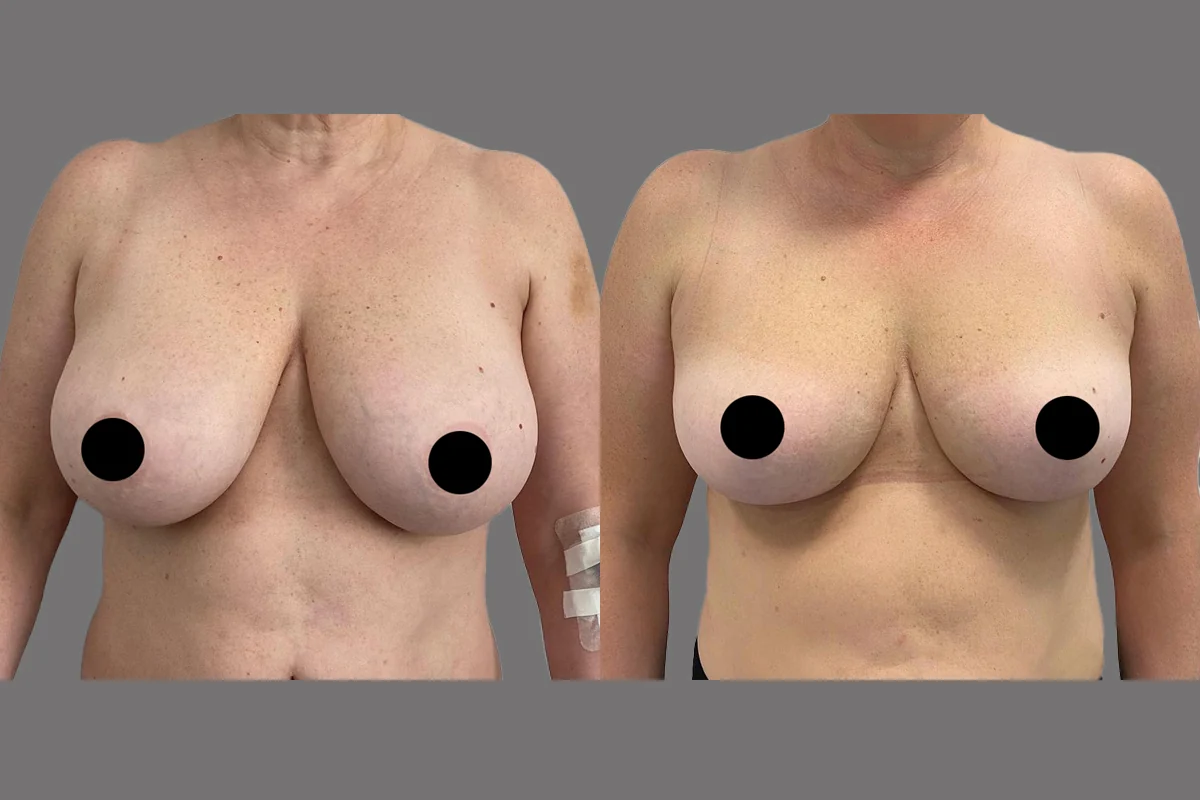
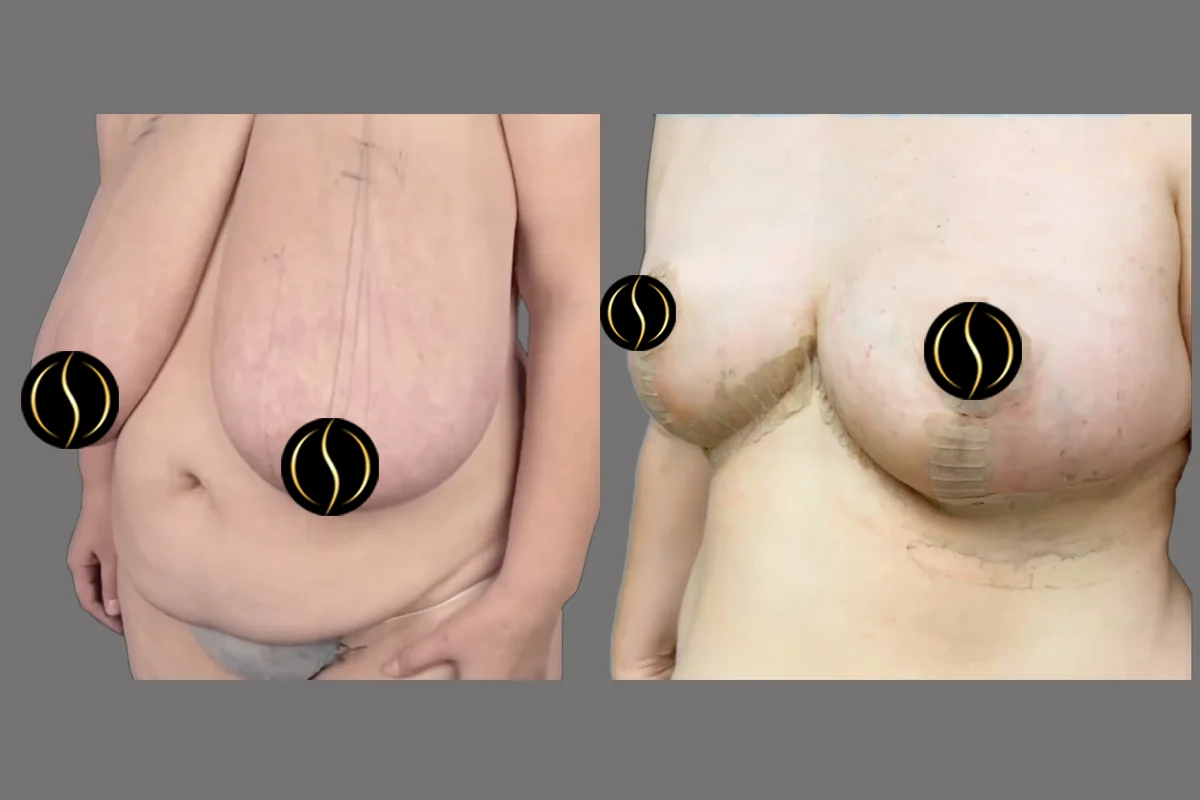
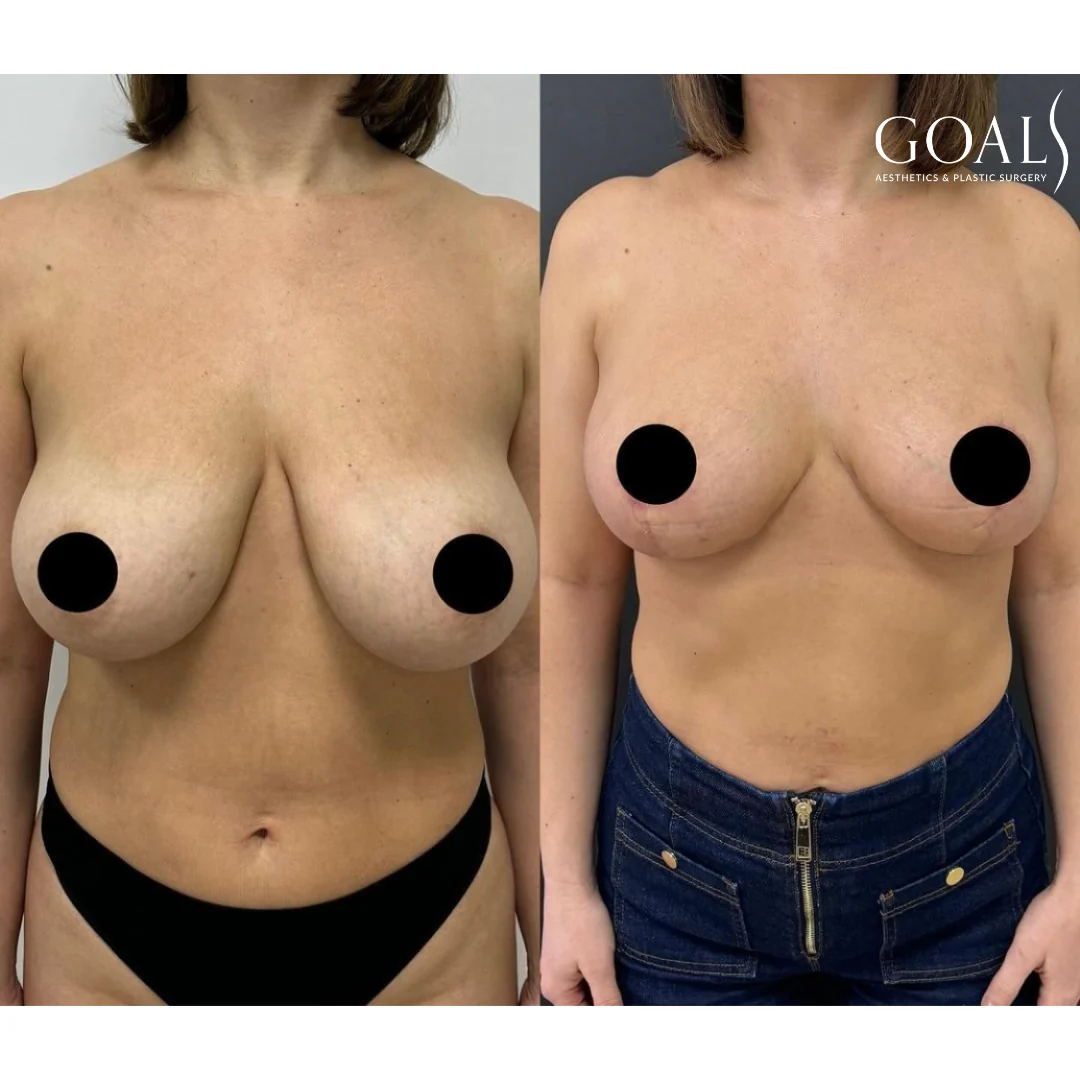
Real patients, published with written consent. Photographs are not retouched or AI-generated. Individual results vary — these images show outcomes for these patients and are not a guarantee of your own.
Clinics
Choose the clinic closest to you. Our patients enjoy the flexibility of scheduling consultations, pre-operative clearances, and post-operative follow-ups at the New York facility most convenient for their daily commute or parking needs.
Overview
Breast reduction, or reduction mammoplasty, takes out excess breast tissue, fat, and skin to make large breasts smaller and lighter. The surgeon reshapes what remains and lifts it higher, easing the back, neck, and shoulder strain heavy breasts bring.
Benefits
Removing excess breast tissue can ease chronic back, neck, and shoulder strain, bring the chest into better proportion with the rest of the body, and make everyday movement and exercise more comfortable. Many patients also find it easier to feel at ease in clothing and daily life around New York once the physical weight is gone.
Breasts brought down to a lighter, easier size.
Relief from back, neck, and shoulder pain.
Breasts brought into balance with your frame.
Clothes and bras that finally fit, instead of being chosen around the size.
More comfort exercising and moving day to day.
Candidacy
A reduction suits people whose large, heavy breasts cause back, neck, or shoulder pain, strap grooves, or rashes, and who want a lighter, smaller size.
Ongoing back, neck, or shoulder pain from heavy breasts.
Painful grooves where bra straps dig into the shoulders under the weight.
Rashes or irritation in the fold under the breasts.
You are ready to follow the aftercare steps and go through each prep stage.
Try it
Type your height and weight. Your numbers stay on your device. We do not see or save them.
BMI is just one number. Your surgeon also looks at your health and your goals. BMI alone does not decide if you can have surgery.
How it works
Excess tissue, fat, and stretched skin come out to bring the breasts down to a lighter, smaller size.
What remains is reshaped into a firmer, rounder breast, and the nipple moves up to a higher spot.
The areola is resized if needed, then the incisions close carefully for a lighter contour and a discreet scar at our New York facility.
Knowing how they differ in goal, what gets removed, size change, and who each fits helps you decide which breast surgery is right for you.
| Breast Reduction | Breast Lift: The Difference | |
|---|---|---|
| Goal | Breast ReductionShrink large, heavy breasts. | Breast Lift: The DifferenceRaise and firm sagging breasts. |
| Removes | Breast ReductionSkin and breast tissue. | Breast Lift: The DifferenceMainly excess skin. |
| Size | Breast ReductionMakes the breasts smaller. | Breast Lift: The DifferenceSame size. |
| Suits | Breast ReductionHeavy breasts causing pain. | Breast Lift: The DifferenceSagging but happy with size. |
| Relief | Breast ReductionEases back and neck pain. | Breast Lift: The DifferenceMostly a cosmetic change. |
A general comparison. Which approach suits you is decided at a consultation with a licensed surgeon.
Our surgeons
New York surgeons who do reductions and lifts most weeks.
Licensed in NY · NJ
Licensed in NY · TX · CA
Safety
Our New York clinics put safety first, pairing careful patient screening with thorough pre-op prep. The same protocols run across every location, so care stays consistent and outcomes stay predictable.
Surgery happens in accredited facilities, with careful monitoring at every stage of your procedure.
Standardized surgical protocols and checks for consistent outcomes.
A direct line to the New York team before your date and all through healing.
Pricing
Final cost depends on how much tissue is removed, the technique, and case complexity, confirmed at consultation and fixed at booking.
Flexible financing plans
Your quote is set at consultation and held from booking through surgery day.
Transparent pricing: no hidden fees, everything clearly detailed in the contract.
Prices shown are starting prices and depend on the number of areas treated. Final pricing is confirmed at your consultation. Cosmetic procedures are not covered by insurance.
Try it
Pick a procedure to see an estimate. Your numbers stay on your device. We do not see or save them.
This is an estimate, not a quote. It splits the starting price over the months you pick, with no interest. Lenders set your real rate and terms. Your price is confirmed at your consultation.
Why Goals
Several clinics across the New York area, with easy parking and good public transport nearby.
A lighter chest that eases the daily strain of heavy breasts.
Full aftercare, with in-person follow-ups made easy at the clinic closest to your home.
A skilled team working in breast reduction and body contouring every day.
Flexible scheduling, with possible weekend or evening slots at select hub clinics.
A network-wide track record built on thousands of contouring cases.
Your journey
6 Steps to a Lighter You.
Talk through your goals with our team and leave with a clear, realistic plan built around your case.
Pick your date and get clear pre-op instructions, so you know exactly what to do before surgery day.
Thorough pre-operative health assessments and surgical prep in the U.S.
Excess tissue, fat, and skin come out, and the breast is reshaped smaller and raised on the chest.
The areola is resized if needed and the incisions close carefully for a lighter contour and discreet scars.
Scheduled check-ins through the healing window, so the new shape settles as it should.
Timelines are typical. Your surgeon sets yours at your consultation, and recovery differs from person to person.
FAQ
That is decided with you, not off a chart. The surgeon looks at your frame, your symptoms, and how much weight needs to come off to relieve the strain, then aims for a size that stays in proportion. If insurance is involved, there may be a minimum removal. Many patients end up glad they went a little smaller than they first pictured.
Plan on one to two weeks off desk work, longer if your job is physical, and a support bra for several weeks while things settle. No heavy lifting or hard workouts for a while. Swelling fades over the weeks after, and the final shape keeps settling for months. The upside most people mention is that the back relief often shows up early.
Yes, that is built in. A reduction removes tissue, fat, and skin to make the breasts smaller, and reshaping and raising what remains is part of the same operation, so you come out lighter and higher rather than smaller but still drooping. That is the main difference from a standalone lift, which repositions the breast without taking weight out.
Yes, and many New York patients do. Consult at whichever Brooklyn or Bronx clinic is easiest to reach, then have the operation at the accredited facility that fits your case. Your records, images, and plan move with you across the network, so whoever operates already knows your history and what you agreed on.
They fade, though they do not vanish. A reduction leaves a scar around the areola, usually down to the crease and often along it, with the amount depending on how much comes out. Early on they look pink and raised, then flatten and lighten over the months after. Most patients find them easier to accept than feared, set against the relief.
Give it time, since this is a bigger operation than it looks. Light walking early keeps circulation up, but anything that strains the chest, heavy lifting, and real workouts wait a few weeks until your surgeon clears you. Pushing too soon risks your healing and your result. Your follow-up visits are where you get the green light to build back up.
About Breast Reduction
Patient Guides
Written by the team that performs the procedure, to read before your consultation.
 Recovery Week by WeekWhat recovery looks like after awake liposuction, a Brazilian butt lift and a FlexTuck at Goals: the day of surgery, the first week, the first month and the final result, plus the signs that mean you call us.Read the guide
 Questions to Ask Before Any SurgeryTen questions to ask any plastic surgeon before you book, what a good answer sounds like, the warning signs, and a version you can print and bring to your consultation.Read the guide
General information, not medical advice. What applies to you is decided at a consultation with a licensed surgeon.
Get started
Whether you are weighing a breast reduction, a lift as well, or another breast procedure, our team will build a safe, realistic plan for you.
Prefer to talk now? (833) 462-5769
Learn more
Most cosmetic surgery starts with how something looks. A breast reduction in New York usually starts somewhere else entirely, with a physical problem you feel every day. The bra straps carve grooves into your shoulders. Your upper back and neck ache by mid-afternoon. A run or even a brisk walk means holding everything in place.
There is a rash in the fold underneath by summer. People do this operation to get their day back, and the better shape is a bonus that rides along with the weight coming off. That framing matters, because it changes what a good result looks like and how you decide whether the surgery is worth it. If you are here, you probably already know which of those complaints is yours.
A Breast Reduction, or reduction mammoplasty, takes out excess breast tissue, fat, and stretched skin, then rebuilds what is left into a smaller, firmer, lighter breast and moves the nipple up to sit naturally on the new shape. A stretched areola can be trimmed to match. The important thing people miss is that a reduction is not only a shrink; it is a reshape and a lift rolled into the same operation.
You do not remove weight and leave everything sagging where it was. You come out smaller, higher, and rounder, in better proportion to your frame. That combination is why patients so often describe the change as their body finally matching how they wanted to move through the world. The reduction is done under general anesthesia, so you are asleep throughout, and most patients go home the same day with someone to drive them.
It is almost always the weight, not the look. Heavy breasts pull the shoulders forward and load the neck and upper back, and that steady drag is what produces the aching, the strap marks, the tension headaches some people get, and the fatigue of carrying it all day. Add the skin problems, the rashes and irritation that live in the fold, and the frustration of clothes and bras that never fit right, and you have the real reason most reductions happen.
Cup size on its own is not the point; two people at the same size can feel completely differently depending on their frame and their pain. What we listen for at a consultation is how much your breasts are actually costing you day to day, because that is what the surgery is built to fix.
Sometimes, and this is where a reduction stands apart from a lift or an augmentation. Because it is so often done for documented physical symptoms rather than appearance, some insurers treat it as a medical procedure and cover part or all of it when their criteria are met.
Those criteria usually involve a record of the pain and conservative attempts to manage it, and often a minimum amount of tissue to be removed based on your body size. It varies a lot from plan to plan, and plenty of patients still choose to pay out of pocket to avoid the paperwork and the size restrictions insurers sometimes impose. The honest move is to raise it early at your consultation so we can tell you where you are likely to land rather than leaving you to guess.
This is the most personal decision in the whole process, and it deserves real thought. Go too conservative and the symptoms may not fully lift; go smaller than you pictured and you might miss the fullness. Most surgeons aim for the size that relieves the physical strain while keeping you in proportion, and insurance-covered cases can carry a minimum removal requirement that nudges the number.
The best consultations spend time here, looking at your frame, your goals, and what will actually take the load off, rather than picking a cup size off a chart. Many patients tell us afterward they are glad they went a little smaller than they first imagined, because the comfort was the whole point and the proportion looked right once they saw it.
The people who benefit most have large, heavy breasts that genuinely interfere with daily life, and realistic expectations about scars and recovery in exchange for that relief. Being at a reasonably stable weight helps, since major weight swings afterward can change the breasts again, and non-smokers heal better because nicotine narrows the small vessels the skin relies on to close, which matters on incisions like these.
Whether future breastfeeding is on your mind is worth flagging up front, because it can influence the technique. None of this is settled from an online form; the degree of heaviness, your skin, your symptoms, and your goals all get assessed in person, which is the only way to know whether a reduction is the right call for you.
You can begin with an online consultation or walk into whichever clinic is closest. New York patients have three neighborhood options, and you are not tied to operating where you first consulted. Records and imaging travel with you across the network, so nothing gets repeated on surgery day.
During the consult the surgeon gauges how much tissue is involved, checks your skin and symptoms, talks through how small to go, and reviews your health history and any insurance angle. You leave knowing the plan and, if you are moving ahead, a price that gets confirmed and locked at booking. If spreading the cost suits you better, the Financing page lays out those options in detail.
Here is the direct version, since this is one of the most searched things. The breast reduction cost depends on how much tissue is being removed, the technique your case needs, and how complex the operation is, and it shifts again if any insurance coverage applies. A larger reduction is a bigger operation than a modest one, so a single flat price would not fit everyone.
What we hold to is that once your quote is set at the consultation, it is locked at booking with no fees added afterward, and the number you approve is the number you pay. When you compare quotes around the city, look past the headline figure at what is actually included, and ask specifically how insurance would change your out-of-pocket share if you plan to use it.
A reduction asks a lot of a surgeon. Removing the right amount of tissue, keeping the blood supply to the nipple safe, placing that nipple so it looks natural on the new breast, balancing the two sides, and keeping the scars as tidy as possible is a real test of both technique and taste.
Get the amount wrong and you are either still heavy or smaller than you wanted; get the shaping wrong and it looks operated-on rather than natural. Our surgeons work in breast surgery and body contouring regularly rather than occasionally, and that repetition is exactly what a procedure this demanding needs. You can review the full team and their backgrounds on the All Surgeons page before you ever book.
A reduction is a bigger recovery than a lift, because more tissue comes out, so plan for it honestly. Most people take one to two weeks off before returning to desk work, longer for a physical job, and wear a surgical support bra for several weeks while everything settles. Heavy lifting and strenuous activity, especially anything that strains the chest, are off the table for a few weeks.
Swelling and bruising are expected and fade over the weeks that follow, and the breasts keep settling into their final shape over the months after, so two weeks out is not the finished picture. The trade patients talk about most is that even through the soreness, the shoulder and back relief often shows up early, which makes the recovery feel worth it while it is still underway.
A reduction leaves scars, and it would be dishonest to soften that. The usual pattern circles the areola, runs down to the crease, and often along the crease as well, the amount depending on how much has to be removed. They start pink and raised and then flatten and lighten over the following months.
Most patients tell us the scars turned out easier to accept than they feared, particularly weighed against the relief, and that the trade was clearly worth it. If breastfeeding matters to you, raise it, because some techniques preserve more of the ducts and nerves than others, though no surgeon can promise breastfeeding either way. Your surgeon will show you exactly where the scars will fall before anything is scheduled.
People mix these up, so it is worth separating cleanly. A Breast Lift in New York raises and firms breasts that have dropped but keeps roughly the same size; it is about position, not weight. A reduction removes actual tissue to make the breasts smaller and lighter, and it includes a lift as part of the work.
Every clinic in the New York network runs the same screening and preparation, so your care does not depend on which neighborhood you choose. Pre-operative clearance, standardized surgical protocols, and accredited facilities are the baseline rather than an upsell.
Careful review of your health history and how you heal is part of keeping any breast operation safe, and because a reduction is a larger procedure, that clearance matters even more, especially around smoking and any conditions that affect healing. Surfacing something during clearance is far better than discovering it later, and running the same process at every site is how the network keeps nothing from slipping between one location and the next.
The trip matters more with a reduction than people expect, because the recovery takes more. With clinics in Brooklyn and the Bronx, most patients can reach a consult or a follow-up without crossing the whole city, which counts when you are healing, sore, and moving carefully. Parking and transit access were part of choosing these sites.
For someone living a busy New York life, handling pre-op clearances and post-op checks close to home rather than at one distant office is a genuine reason patients pick the network, and it becomes obvious in the weeks after surgery when a short trip beats a long one every time.
If you have read this far, you are serious about it, and the most useful next step is a consultation. A real look at how heavy your breasts are, your skin, your symptoms, and your goals tells you far more than any amount of reading, especially on the two questions that matter most: how small to go and whether insurance can help.
Come with the blunt questions about scars, recovery, breastfeeding, cost, and coverage, and expect straight answers rather than a sales pitch. A reduction is a real operation with a real recovery, but it is also one of the most satisfying procedures in this field precisely because it fixes something physical. When you are ready, the New York team will look at your case honestly and tell you whether this is the relief you have been after.
The simplest test is your own complaint: if your breasts sag but the size feels fine, a lift is the answer, and if they feel too heavy and cause physical strain, a reduction is what you want. A fair consultation will tell you honestly which camp you fall into rather than steering you toward the bigger operation, and sometimes the answer is the smaller one.
Free · No obligation
Tell us how to reach you. A patient coordinator calls you back — usually the same day.
Free · No obligation
Ask me anything. I usually reply straight away.
If you share your number, a Goals coordinator may call or text you about your consultation. Message and data rates may apply.
Nora is an automated chat. She cannot give medical advice or say whether a procedure suits you.