Loose or Sagging Skin
Mild to moderate laxity over the face, neck, arms, or body.
J-Plasma (Renuvion) skin tightening at our Philadelphia clinic uses cold helium plasma and RF energy below the skin to firm loose, sagging areas, with quick recovery.
From $7,250
Free Consultation
Your consultation is free and carries no obligation.
Goals Aesthetics & Plastic Surgery – Philadelphia
1420 Locust St #421Mon–Sat, 10:00–19:00 local time
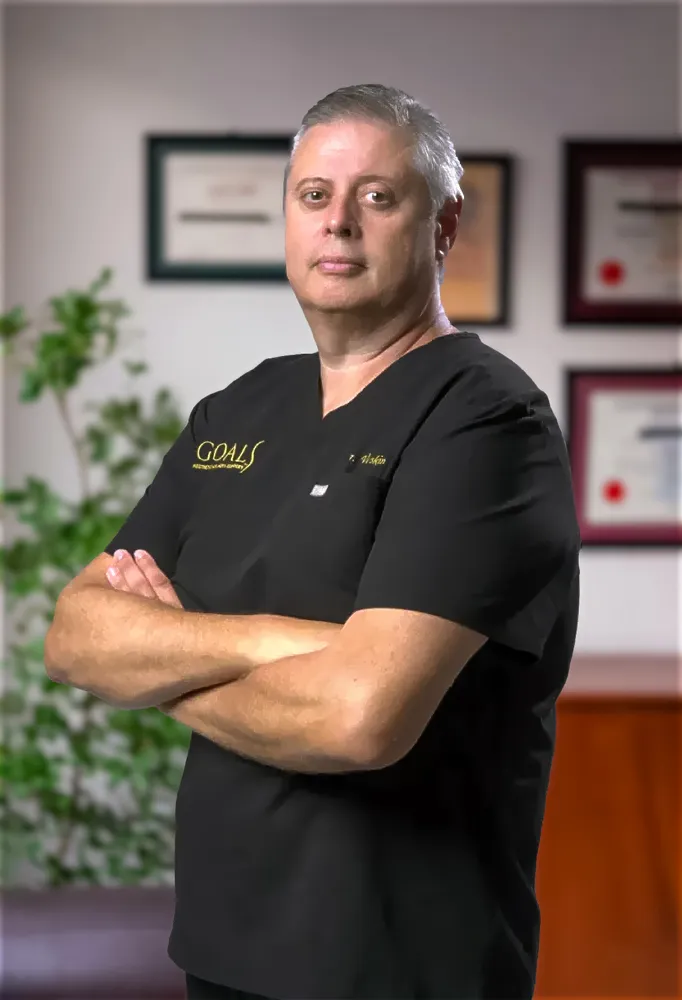
Surgeon: Dr. Sergey Voskin
Minimally Invasive Cold-Plasma Tightening for Loose Skin
J-Plasma, also marketed as Renuvion, is a minimally invasive treatment that firms skin from underneath the surface. It combines helium gas with radiofrequency energy to make a controlled stream of cold plasma through a tiny incision. The energy warms tissue so it draws in and tightens, and prompts collagen for continued firming.
Your provider maps out the loose-skin areas to treat and numbs them. A small entry point lets the slim J-Plasma device reach just under the skin.
Cold helium plasma and RF energy travel under the skin, warming the tissue precisely so it contracts and tightens on the spot.
You go home the same day. Most are back to normal activity within a few days, and as collagen builds over the following months the skin keeps firming for a smoother, tighter result.
Candidacy
J-Plasma suits people with mild to moderate loose or sagging skin wanting firmer skin without major surgery, whether after weight loss or alongside liposuction.
Mild to moderate laxity over the face, neck, arms, or body.
Lax skin left behind after weight loss that diet and exercise can no longer firm on their own.
You want to firm skin in an area being treated with FlexSculpt lipo.
You would sooner have a minimally invasive option than a traditional lift with big cuts.
Not sure if you’re a candidate?
Our surgeons
Experienced surgeons skilled in skin firming.
Each surgeon’s training and licenses are listed on their own page.
Results
See firmer, smoother skin from real patients.
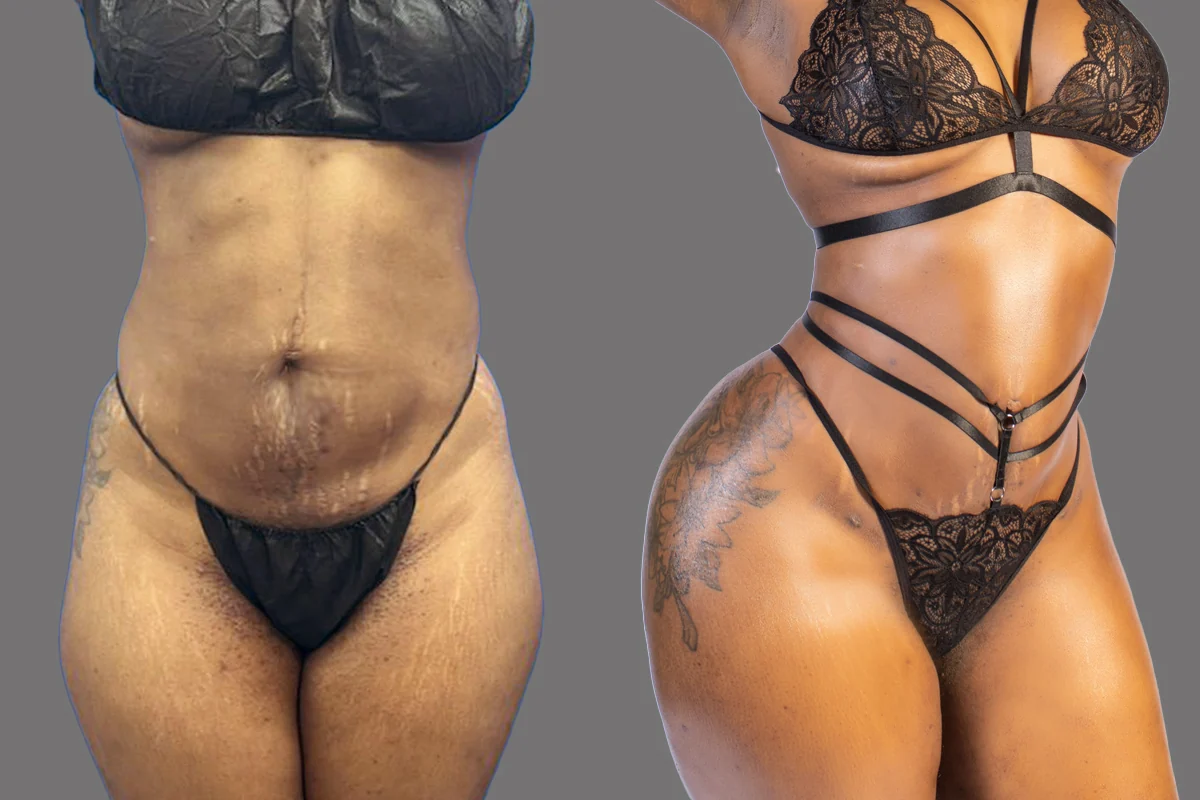
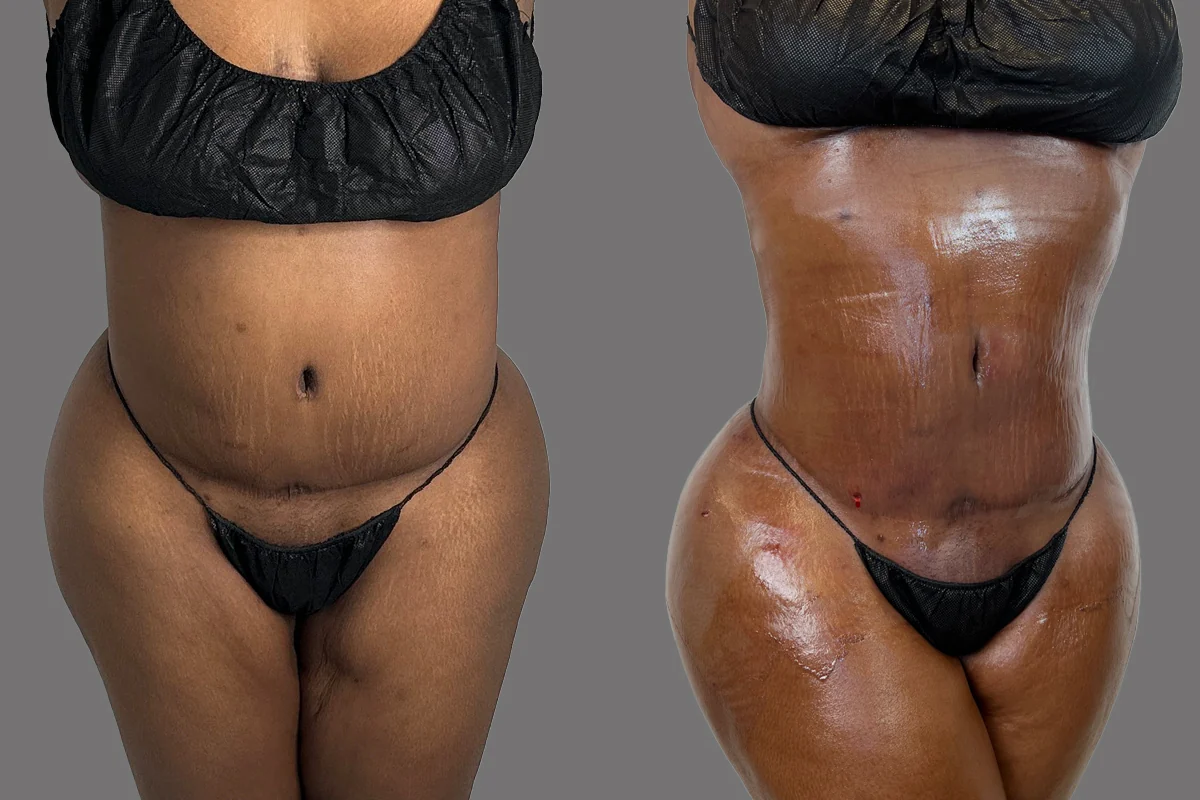
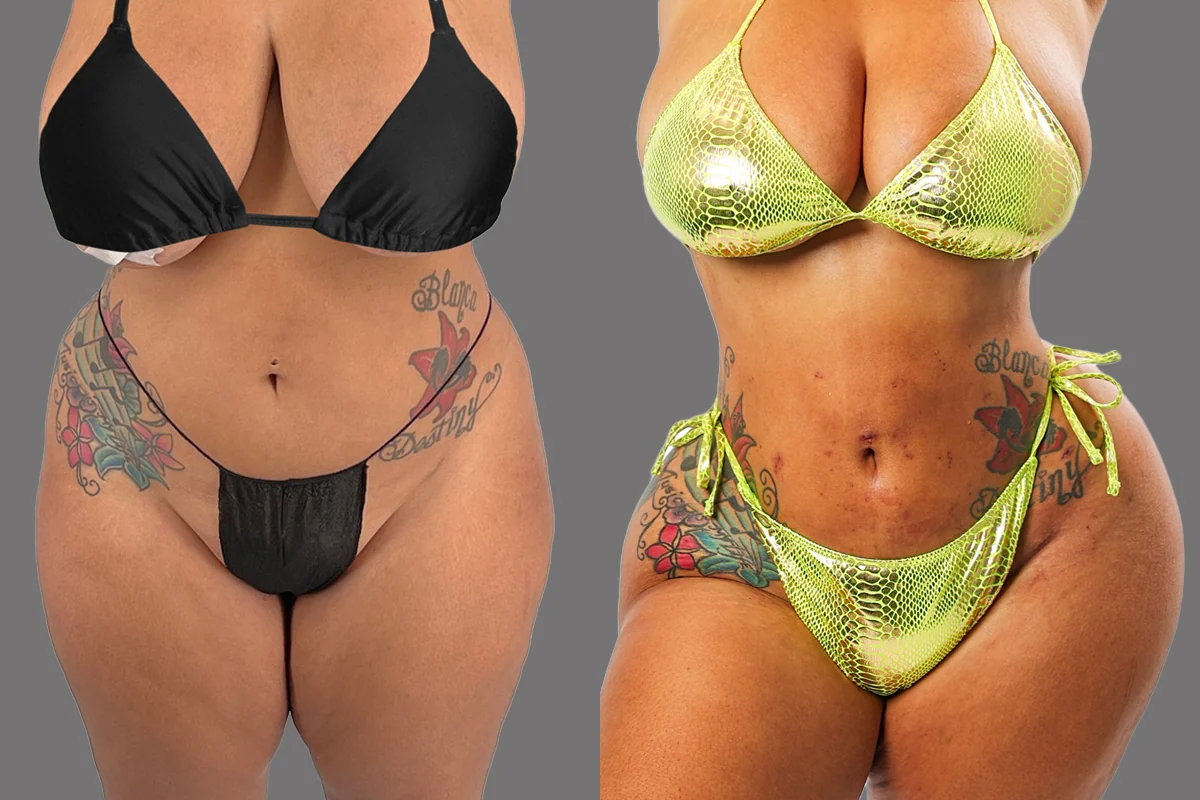
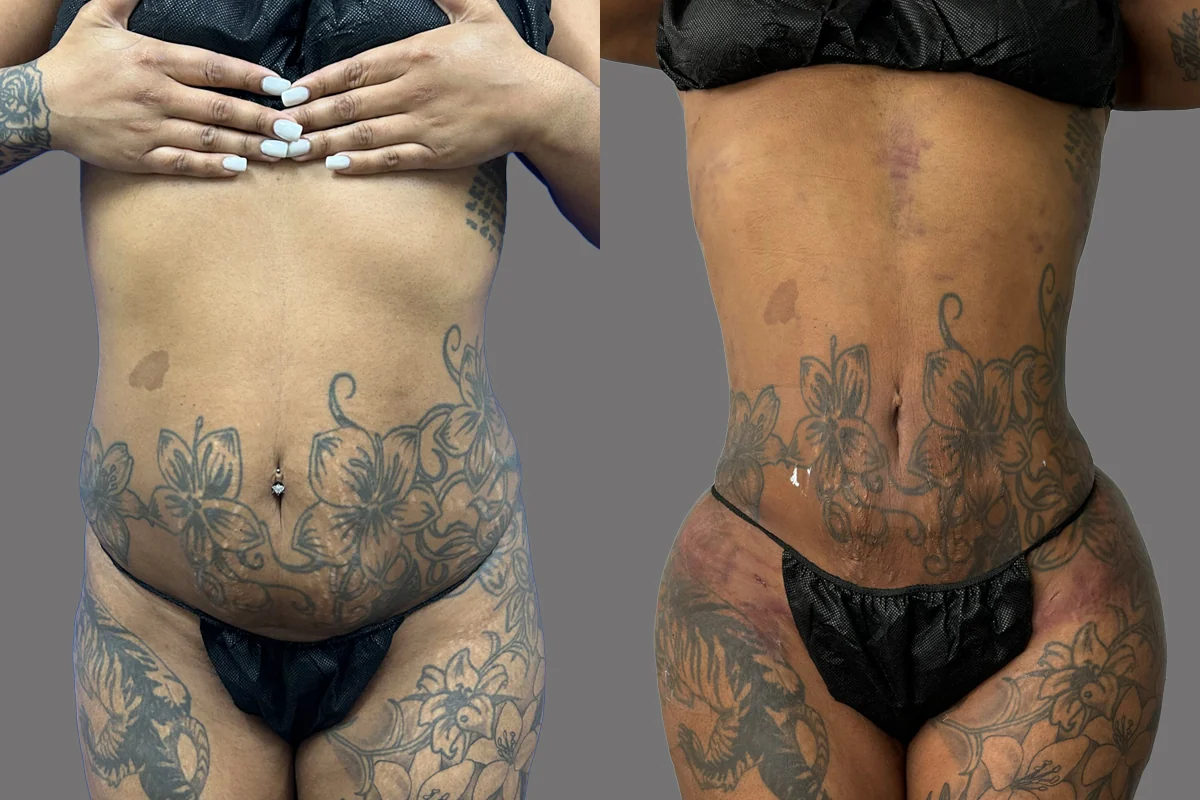
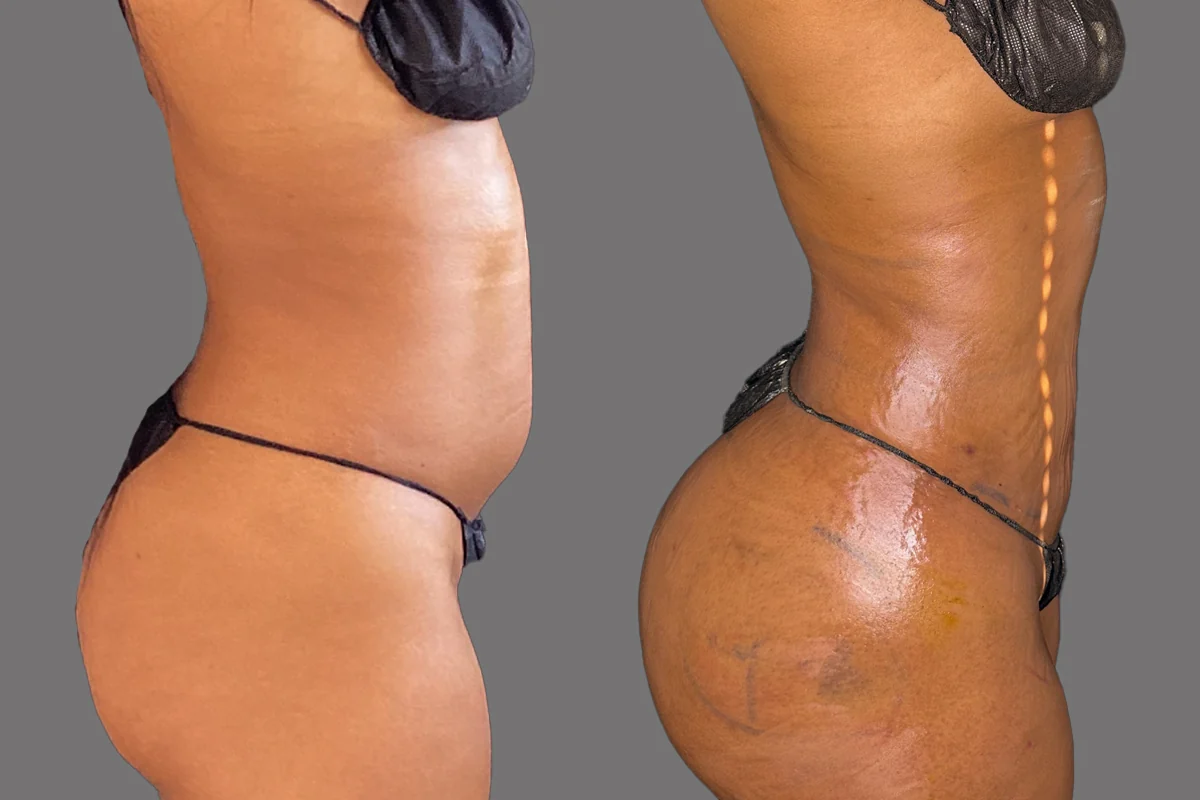
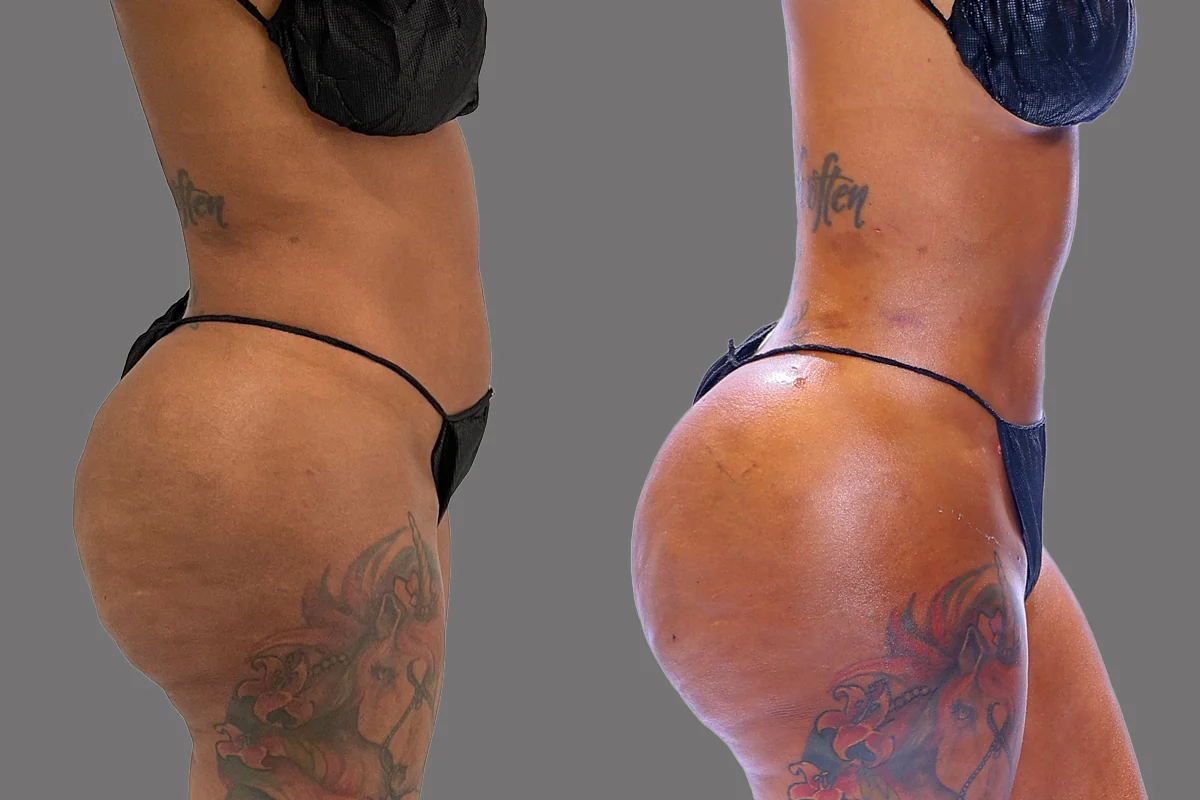
Real patients, published with written consent. Photographs are not retouched or AI-generated. Individual results vary — these images show outcomes for these patients and are not a guarantee of your own.
Try it
Type your height and weight. Your numbers stay on your device. We do not see or save them.
BMI is just one number. Your surgeon also looks at your health and your goals. BMI alone does not decide if you can have surgery.
See how minimally invasive J-Plasma differs from a traditional surgical lift, on incisions, anesthesia, downtime, and results, and the right choice gets clearer.
| Criterion | J-Plasma (Goals) | Traditional lift |
|---|---|---|
| Incisions | Tiny; device works under the skin. | Larger incisions to remove skin. |
| How it works | Heats tissue to contract and firm. | Cuts and lifts excess skin. |
| Downtime | Minimal; normal activity in days. | Longer recovery. |
| Scarring | Minimal, from tiny entry points only. | More noticeable scars. |
| Results | Immediate, building over months. | Big change for heavy excess skin. |
Your journey
6 Steps to Firmer Skin.
Meet the team to discuss your goals and find out whether J-Plasma can firm your areas of concern.
Your provider charts the areas to treat and sets a clear plan and price before you book, with no surprises later on.
Schedule your visit and receive simple prep notes, like pausing certain medications where safe, so you arrive ready.
The area is numbed, a small incision is made, and cold plasma energy passes under the skin so it contracts and tightens.
You go home that same day with simple aftercare to support comfortable healing and the best firming result.
Normal activity comes back within days; skin looks firmer at once and keeps tightening as collagen builds.
Benefits
Skin looks firmer and smoother soon after treatment, then keeps tightening over the months as collagen builds. With healthy habits, the result can last for years.
Loose skin pulls in for a smoother, firmer look.
Collagen production keeps refining the skin in the months that follow.
From daily life to special occasions around Philadelphia, firmer skin can help you feel more confident in fitted clothing and in your own skin.
Just tiny entry points in place of the long scars of a lift.
Most people are back to normal inside a few days.
Safety
A minimally invasive technique, careful energy control, and experienced providers help keep your treatment safer and more comfortable, with clear guidance throughout.
Cold plasma applies precise, controlled heat under the skin, with settings tuned to the area treated.
Tiny entry points lead to fewer complications and an easier recovery.
Clear aftercare and ready access to our local team whenever you ask.
Pricing
Final cost comes down to how many areas you treat and how much correction you need, set at consultation and fixed before treatment.
Flexible financing / payment plans
Your price is locked in at booking, after consultation.
Clear pricing: no hidden fees, everything spelled out in the contract up front.
Prices shown are starting prices and depend on the number of areas treated. Final pricing is confirmed at your consultation. Cosmetic procedures are not covered by insurance.
Try it
Pick a procedure to see an estimate. Your numbers stay on your device. We do not see or save them.
This is an estimate, not a quote. It splits the starting price over the months you pick, with no interest. Lenders set your real rate and terms. Your price is confirmed at your consultation.
Why Goals
An easy-to-reach Philadelphia clinic with parking and a private setting.
Straightforward aftercare and easy in-person follow-ups at the clinic.
Providers who handle cold-plasma work often.
Firm the skin in the very area treated with FlexSculpt lipo.
Thousands of successful body contouring procedures across the network.
FAQ
The key difference is that J-Plasma works beneath the skin, not only on the surface. Many laser and external RF treatments heat from above and need several sessions for a gradual effect. J-Plasma instead delivers cold helium plasma and RF energy through a tiny incision under the skin, tightening more loose tissue in one treatment with a clearer result. Surface devices still suit mild laxity, but for skin that truly sags, J-Plasma reaches deeper.
Yes, natural aging continues, and it helps to be realistic. J-Plasma tightens the skin you have now and stimulates fresh collagen, giving a firmer result that can last for years, but it does not freeze your skin in place. Gradual loss of elasticity carries on as it would for anyone. Many find the firmer baseline holds well with a stable weight and good skincare. The aim is a lasting improvement, not a halt to aging.
Generally yes, and this is one practical advantage of J-Plasma. Because the energy is delivered beneath the skin rather than through the surface the way some lasers are, the risk of surface pigment changes that can concern deeper skin tones is reduced. Even so, every treatment depends on an assessment, so your provider reviews your skin, history, and goals first. The consultation is the place to raise any concerns about pigmentation.
The consultation is where the plan takes shape. Your provider examines the areas that bother you, checks how much laxity is present, and talks through what J-Plasma can realistically achieve, including whether pairing it with liposuction makes sense. You go over your health and any medications, since some are paused beforehand where safe. This is also when the areas, approach, and exact price are locked in. A good moment to ask anything.
A few things can make J-Plasma less suitable. Very heavy, hanging excess skin usually responds better to a surgical lift, since a tightening treatment cannot remove large folds. Certain health conditions, active skin infections in the area, or being pregnant may mean waiting or another option. None of this is a long list of barriers; most people with mild to moderate laxity are good candidates. The only sure way to know is an in-person assessment.
Learn more
Losing a significant amount of weight is a real achievement, and it's a particular kind of frustrating when the skin doesn't follow. You've done the hard part, the body underneath is smaller, but the skin that used to cover it hangs on, loose and softened, refusing to shrink to the new shape. That specific problem, loose skin after weight loss, is what this page is about.
J-Plasma, carried out with the Renuvion device, is a minimally invasive treatment performed by a surgeon that firms that loosened skin from underneath rather than cutting it away. And for the right degree of looseness it's a way to bring the skin closer to the body you worked for.
It isn't the answer for every case, and being honest about where it helps and where it stops is most of what follows. But for mild to moderate post-weight-loss laxity, it's often the step that finishes what the weight loss started. For many people it's the last piece standing between them and feeling that all the work actually paid off.
It helps to understand why the skin stays loose in the first place, because it isn't a failure of effort. Skin has a limited ability to retract, and that ability depends on its elasticity, which several things wear down. Age is one: older skin has less of the collagen and elastin that let it snap back. The amount of weight lost is another, since skin that was stretched a long way over a long time loses more of its recoil. So does the speed of the loss, and how long the skin was stretched before it came off.
Put those together and you get the common picture after major weight loss: the fat is gone, but the skin that expanded to hold it no longer has the spring to shrink down on its own. That's not something diet or exercise can fix, because the issue is the skin's structure, not what's underneath it. It also explains why two people who lost the same amount of weight can end up with very different amounts of loose skin.
This is where energy tightening earns its place. Because J-Plasma works by warming the skin from beneath so it contracts and then builds new collagen, it directly targets the thing weight loss leaves behind: skin that has lost its firmness. For mild to moderate looseness, it can meaningfully tighten the area and improve the way the skin sits against the new, smaller shape, so the result reads closer to the body you uncovered by losing the weight.
It's especially useful on the abdomen, arms, and thighs, the areas where post-weight-loss laxity tends to settle. What it's doing is restoring some of the firmness the skin lost rather than removing the skin, which is exactly the right tool when the looseness is moderate and the skin just needs help retracting. Plenty of people find it's enough on its own once the looseness is moderate rather than severe.
Honesty about the ceiling matters more here than almost anywhere, because major weight loss can leave more skin than energy tightening can handle. J-Plasma firms existing skin; it does not remove it. So when weight loss has left a large apron of hanging skin across the abdomen, heavy folds, or skin that drapes and hangs rather than simply sagging, there's too much to tighten from underneath, and the right answer is a procedure that excises it, such as a tummy tuck or a body lift.
This is a common and important fork for people after big weight loss, and a good surgeon will tell you plainly which side of it you're on rather than stretching the treatment past what it can do. Knowing the limit upfront saves you from a treatment that was never going to reach your goal. There's no shame in needing excision either; it simply reflects how far the skin was stretched, not anything you did wrong.
Weight loss doesn't always take every pocket of fat with it, and sometimes stubborn fat sits alongside the loose skin. In that case J-Plasma is often paired with FlexSculpt liposuction in the same session, so the surgeon removes the remaining fat to refine the contour and then tightens the skin over the slimmer shape, rather than leaving it to sag onto the new line.
Handling both together tends to give a smoother, more finished result than addressing either alone. It's a single coordinated plan rather than two separate steps, and your surgeon works out at the consultation whether your case calls for tightening alone or tightening combined with fat removal.
There's one piece of timing that genuinely matters for post-weight-loss skin, and it's worth taking seriously. It's best to have your weight stable for a while before treatment, rather than tightening the skin while you're still actively losing. The reason is straightforward: if more weight comes off after the procedure, you can end up with fresh looseness over the newly smaller shape, undoing some of what the treatment achieved.
Reaching and holding a steady weight first gives the skin a stable foundation to be firmed against, so the result lasts the way it should. Your surgeon will talk through where you are in your weight-loss journey at the consultation, and may suggest waiting until things have settled if you're not quite there yet, which is the honest call rather than the quick one. Rushing it to coincide with the tail end of a diet is one of the surer ways to shortchange the result.
The treatment itself is quick and minimally invasive. The Renuvion device energizes helium gas with radiofrequency to create a controlled stream of cold plasma, which the surgeon delivers just beneath the skin through a tiny incision. The energy warms the tissue so it contracts and firms almost at once, and that same warming prompts your body to build fresh collagen over the months that follow, while the cooling action of the helium helps protect the surrounding tissue.
Anesthesia is matched to the area and the extent of the work, ranging from local anesthesia with sedation for a smaller area up to general anesthesia for larger or combined treatments, which your surgeon settles with you beforehand. Because there are no long incisions, there's no large wound to close, and most treatments are done in a single visit with same-day discharge.
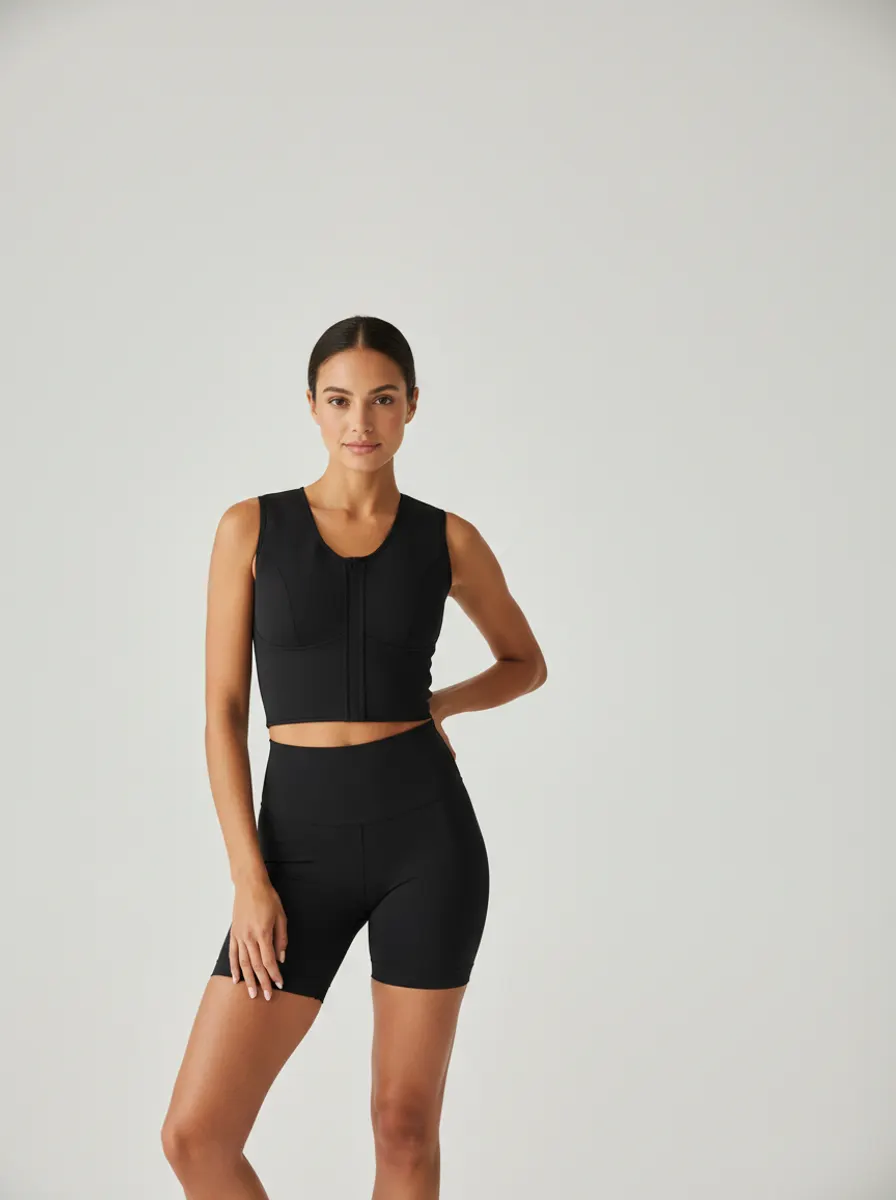
Recovery is usually quick compared with a surgical skin-removal procedure, since the skin is reached through a tiny entry point rather than a long incision. Expect some swelling, bruising, soreness, and a feeling of tightness in the treated area for the first several days, all of which settle steadily. For the body areas most common after weight loss, you'll usually wear a compression garment to support the skin as it tightens onto the firmer shape.
Most people are back to light activity within a few days, well short of what a traditional lift requires, then ease into their full routine as the surgeon advises. Scheduled check-ins help track how the skin is firming and protect the result along the way.
The change unfolds in two stages. You see firmer skin soon after treatment as the tissue contracts, and then it keeps improving over roughly the next three to six months as new collagen develops, so the result continues refining well beyond the day itself. Because part of the firming is built from your own collagen rather than anything placed or removed, it reads as natural rather than sudden.
With a stable weight and good skincare the result can be long-lasting, although natural aging does carry on. That stable-weight point is doubly important after weight loss, since holding your new weight is what protects both the result and the skin around it over time. Pairing the treatment with the habits that kept the weight off is the surest way to keep the firmer result you've earned.
There's no flat figure, because the skin tightening cost in Philadelphia hinges on how many areas you treat and how much correction each calls for, along with whether liposuction is paired with it. We confirm your exact price at the consultation and fix it before treatment, with no hidden fees, and when J-Plasma is combined with liposuction we quote the full plan together so everything is clear from the outset. If you'd prefer to spread the cost, financing and payment plans are available. Because the areas and the degree of post-weight-loss laxity vary so much from person to person, your quote really does depend on your own plan rather than a fixed rate.
Our Philadelphia clinic is at 1420 Locust Street, Suite 420, in Center City, easy to reach and convenient for people across the city. Cold-plasma tightening rewards careful technique and good judgment, so the treatment is performed by surgeons who use these devices regularly, in an accredited facility with safety-first screening and clear recovery plans. When stubborn fat sits alongside the loose skin, it pairs naturally with FlexSculpt in the same session.
You can view real outcomes in the before and after gallery, read about the team, or find more detail on the blog. When you're ready, book a consultation and a surgeon will give you an honest read on whether J-Plasma fits your skin after weight loss, or whether a different route would serve you better.
About J-Plasma Skin Tightening
J-Plasma Skin Tightening at other Goals clinics
Get started
Whether you are considering J-Plasma skin tightening, tumescent liposuction, or another body procedure, our team is ready to build a safe, realistic plan that fits your goals.
Prefer to talk now? (833) 462-5769
Free · No obligation
Tell us how to reach you. A patient coordinator calls you back — usually the same day.
Free · No obligation
Ask me anything. I usually reply straight away.
If you share your number, a Goals coordinator may call or text you about your consultation. Message and data rates may apply.
Nora is an automated chat. She cannot give medical advice or say whether a procedure suits you.