Wanting More Fullness
Smaller or deflated breasts, or you want more volume up top.
Silicone, saline, and fat transfer breast augmentation at our Philadelphia clinic on Locust St. Implant and incision picked for you, with clear pricing and close aftercare.
From $7,000
Free Consultation
Your consultation is free and carries no obligation.
Goals Aesthetics & Plastic Surgery – Philadelphia
1420 Locust St #421Mon–Sat, 10:00–19:00 local time
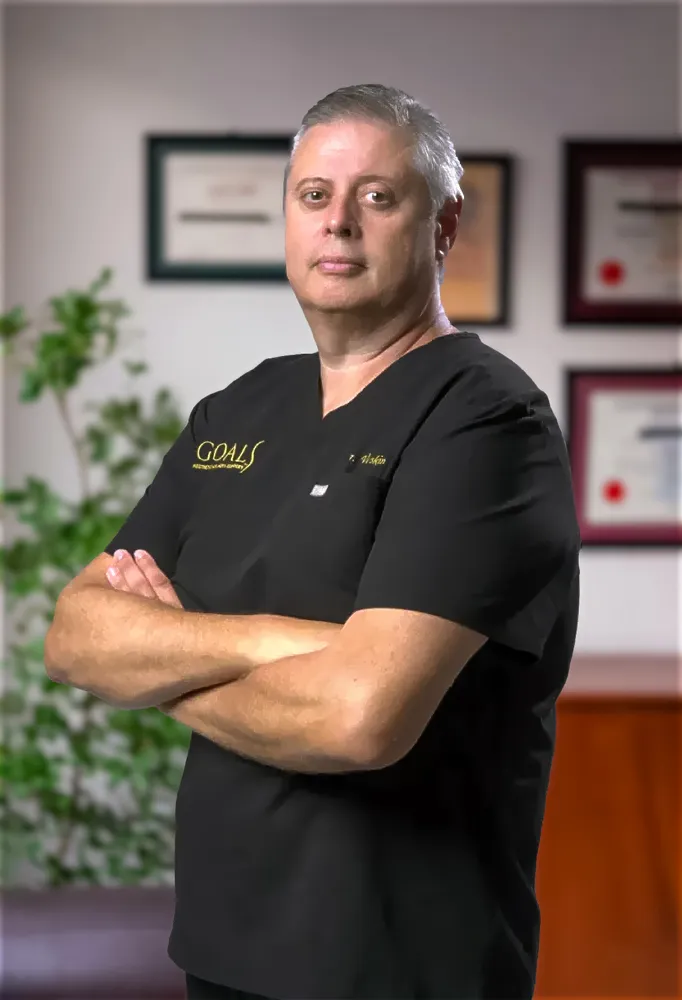
Surgeon: Dr. Sergey Voskin
Cosmetic Surgery Built on Safety, Proportion, Honesty
Breast augmentation reshapes and adds fullness with silicone implants, saline implants, or a transfer of your own fat. The right pick comes down to your build, your existing tissue, and the result you want. For people looking for a bigger change, XL sizes are available too.
You go over your goals and try sizers. Measurements of your chest and skin point to the implant size and incision that fit you.
Silicone, saline, or fat transfer, plus a profile and volume. Your surgeon spells out what each one will and won't do for your shape.
The implant is placed over or under the chest muscle through a planned incision. Your surgeon shapes a balanced, even result and closes in layers so the scar stays low and easy to hide.
Candidacy
Augmentation is for people who want more fullness, a closer match between the sides, or shape back after pregnancy or weight loss. Implants or fat, chosen to fit you.
Smaller or deflated breasts, or you want more volume up top.
A clear size or shape gap between the sides you'd like evened out with implants or fat transfer.
Firmness or volume lost after nursing, pregnancy, or a big drop in weight.
Able to take time off, follow aftercare, and keep follow-up visits while you heal.
Not sure you're a candidate?
Our surgeons
Experienced surgeons focused on the breast.
Each surgeon’s training and licenses are listed on their own page.
Results
See real changes from patients at our clinic.
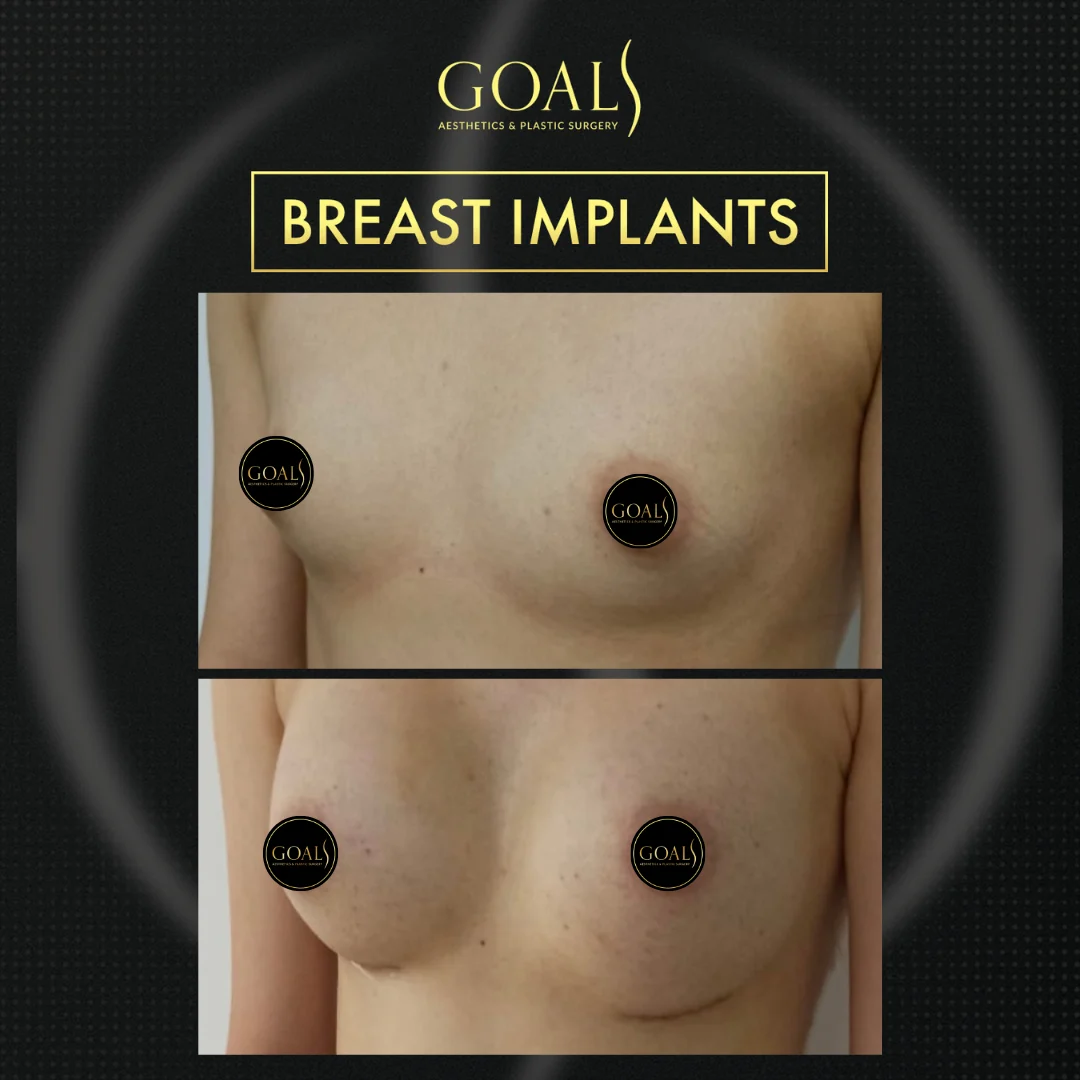
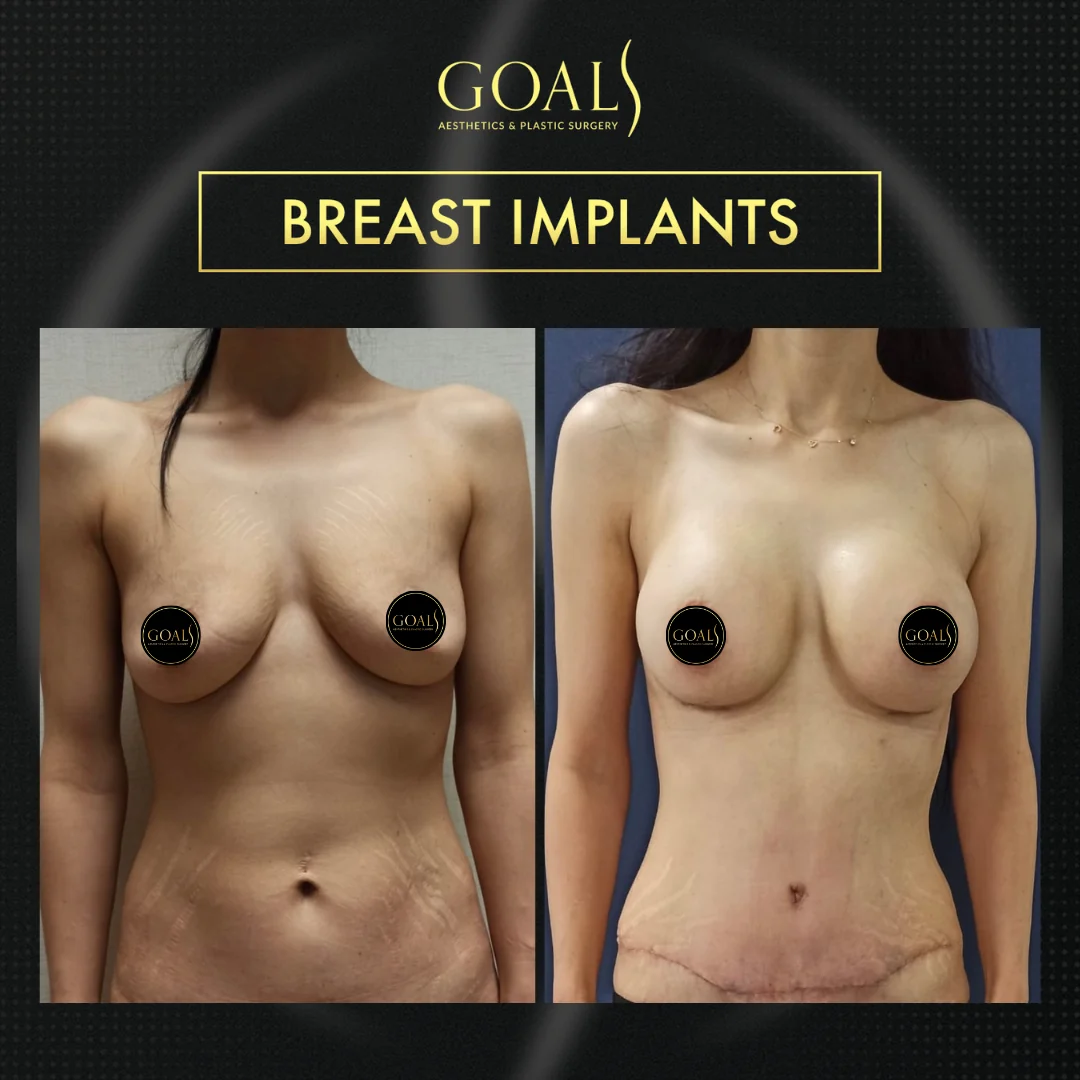
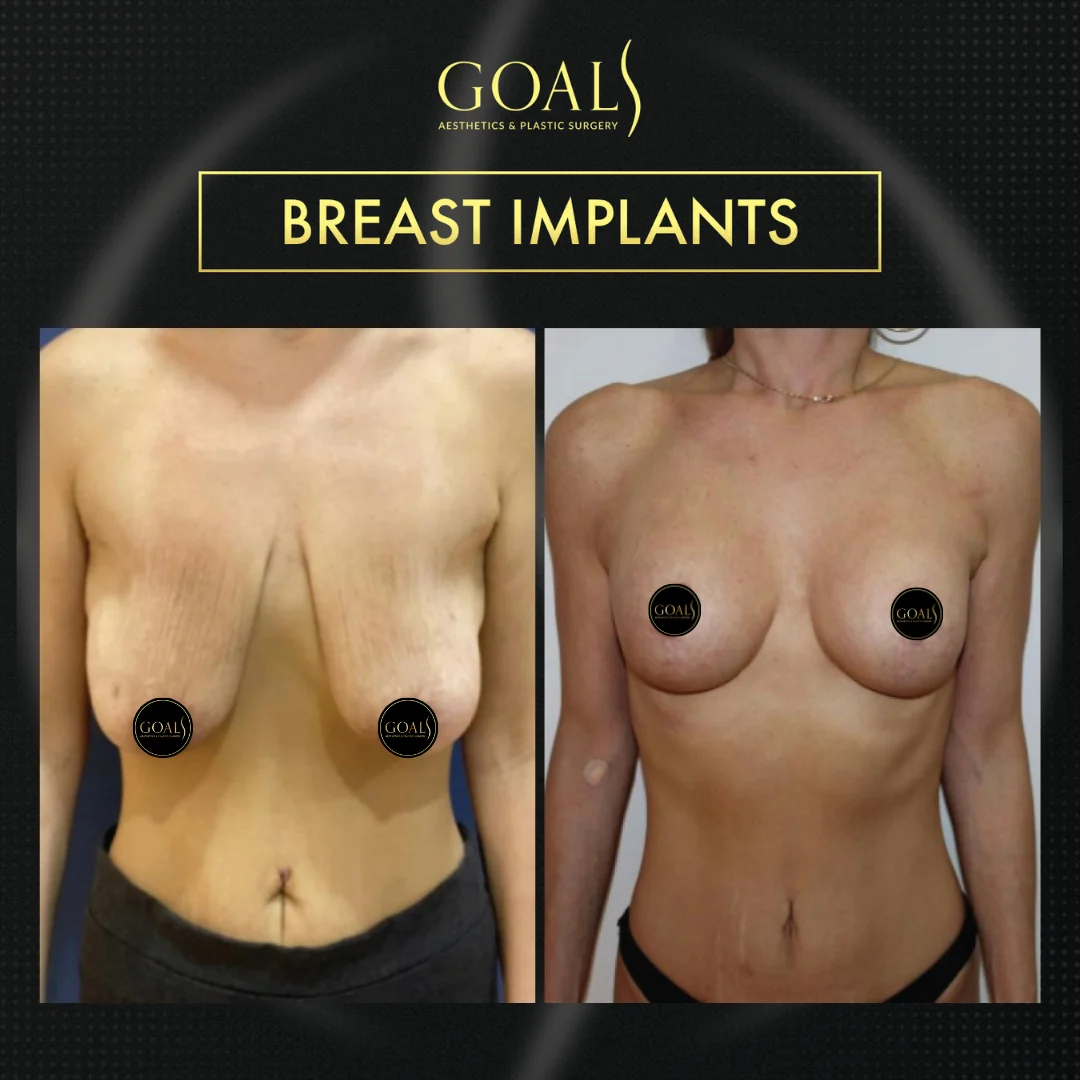
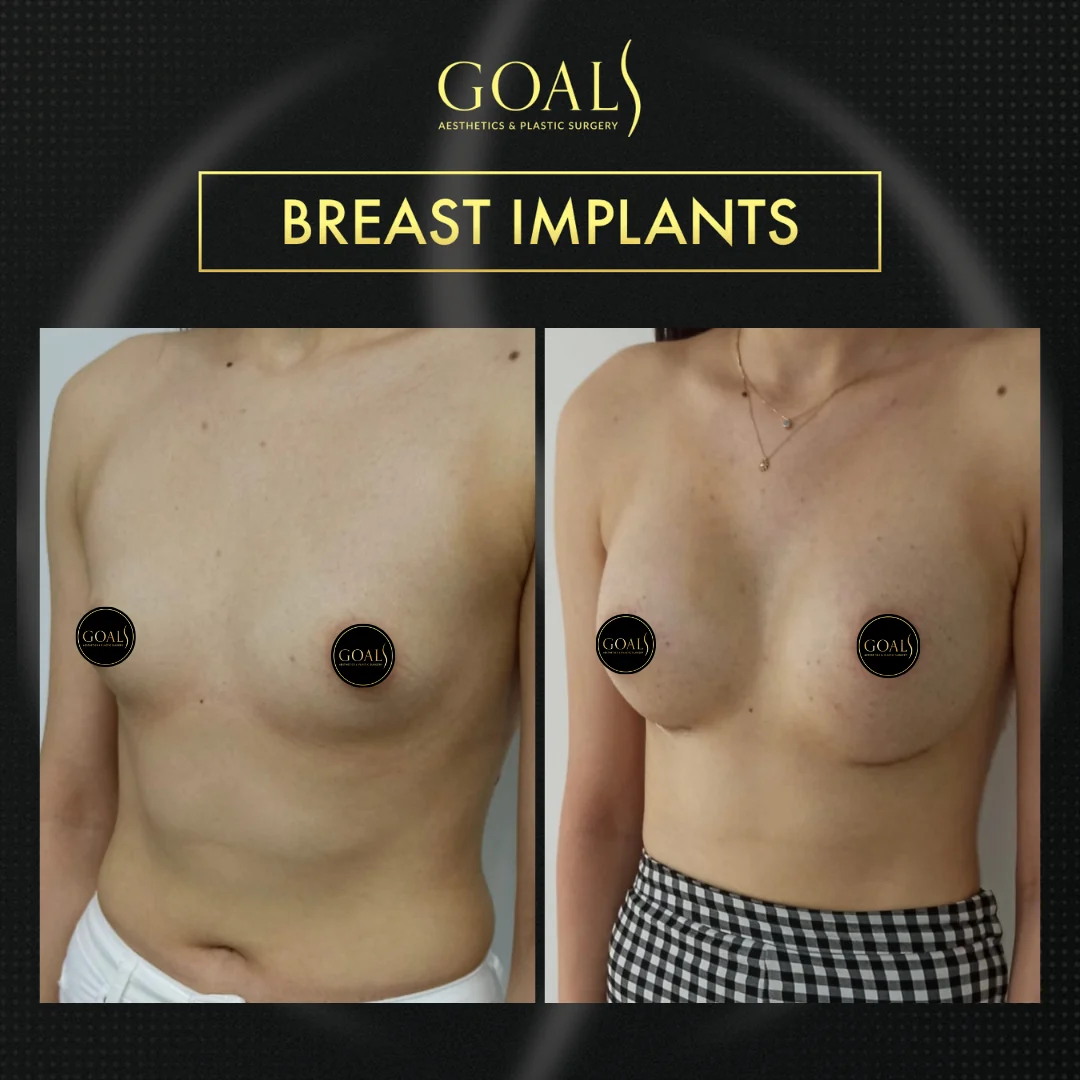
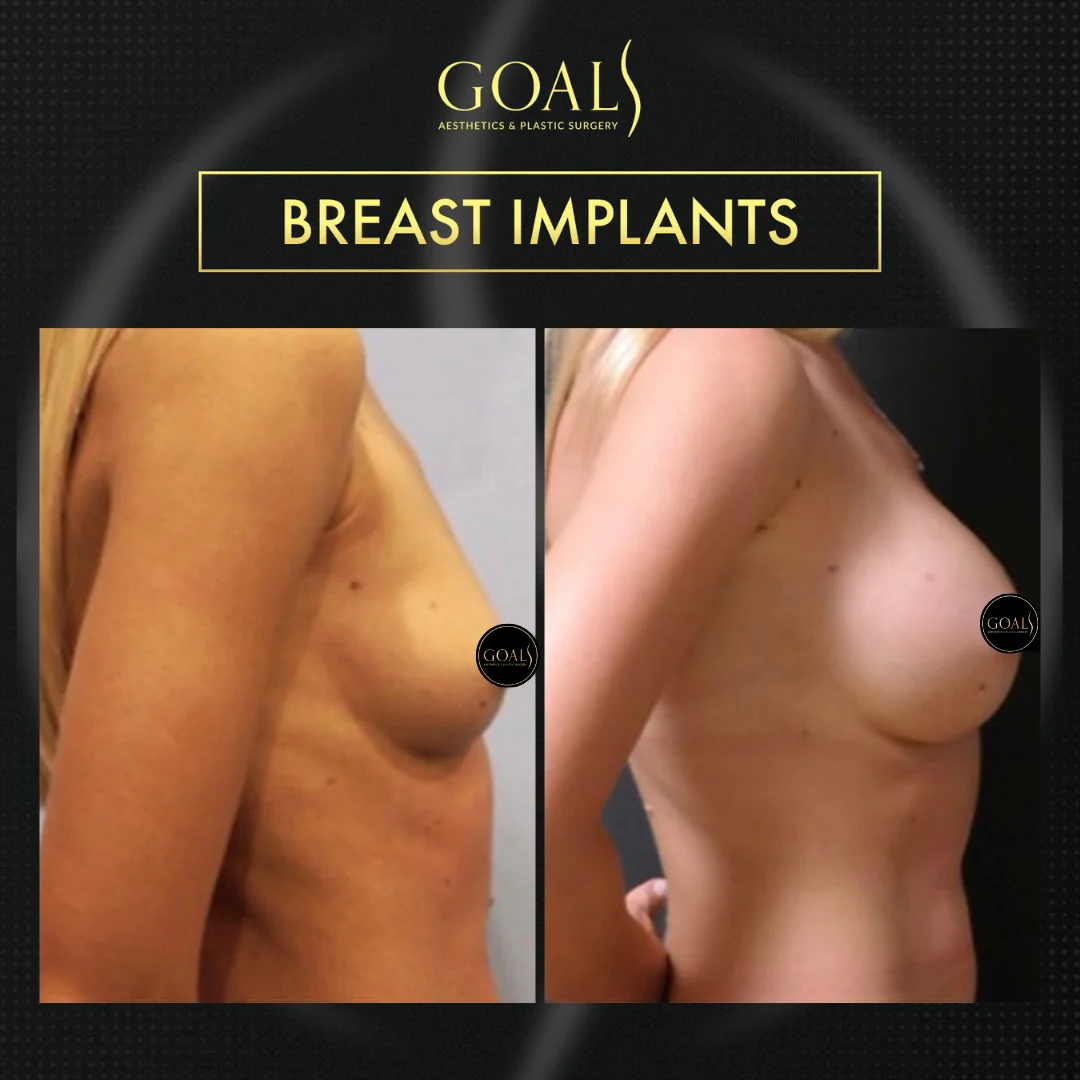
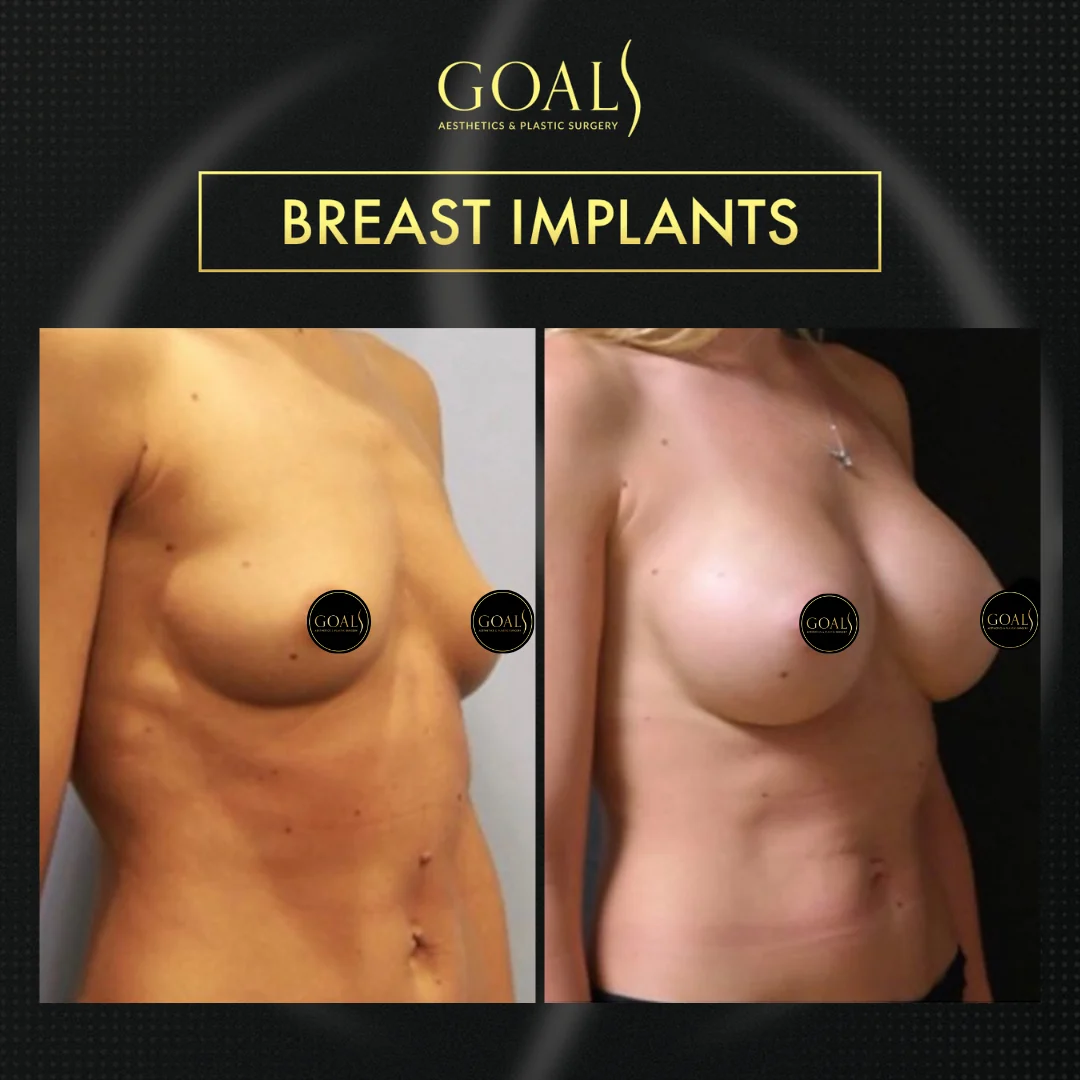
Real patients, published with written consent. Photographs are not retouched or AI-generated. Individual results vary — these images show outcomes for these patients and are not a guarantee of your own.
Try it
Type your height and weight. Your numbers stay on your device. We do not see or save them.
BMI is just one number. Your surgeon also looks at your health and your goals. BMI alone does not decide if you can have surgery.
Most of the choice comes down to feel, the incision, and what happens in the rare event of a leak. Here's how silicone and saline implants line up side by side.
| Criterion | Silicone | Saline |
|---|---|---|
| Feel | Soft gel, close to natural tissue. | Firmer, can feel less natural. |
| Fill | Pre-filled with cohesive gel. | Filled with saline in place. |
| If It Leaks | Gel holds, caught on imaging. | Reabsorbed. |
| Scar | A bit longer, since the implant comes pre-filled. | Can be smaller, filled after. |
| FDA Age | Cleared for patients 22 and up. | Cleared for ages 18 and up. |
Your journey
6 Steps to Your Result.
Sit with the team, talk through your goals, try sizers, and map out the implant type and incision.
Set your date and get plain pre-op steps: what to stop, what to pick up, how to arrange your first days home.
Finish the lab work and health checks that make surgery safe. The team walks you through everything to handle beforehand.
Your surgeon places the implants through planned incisions and shapes an even result. Most augmentations run one to two hours.
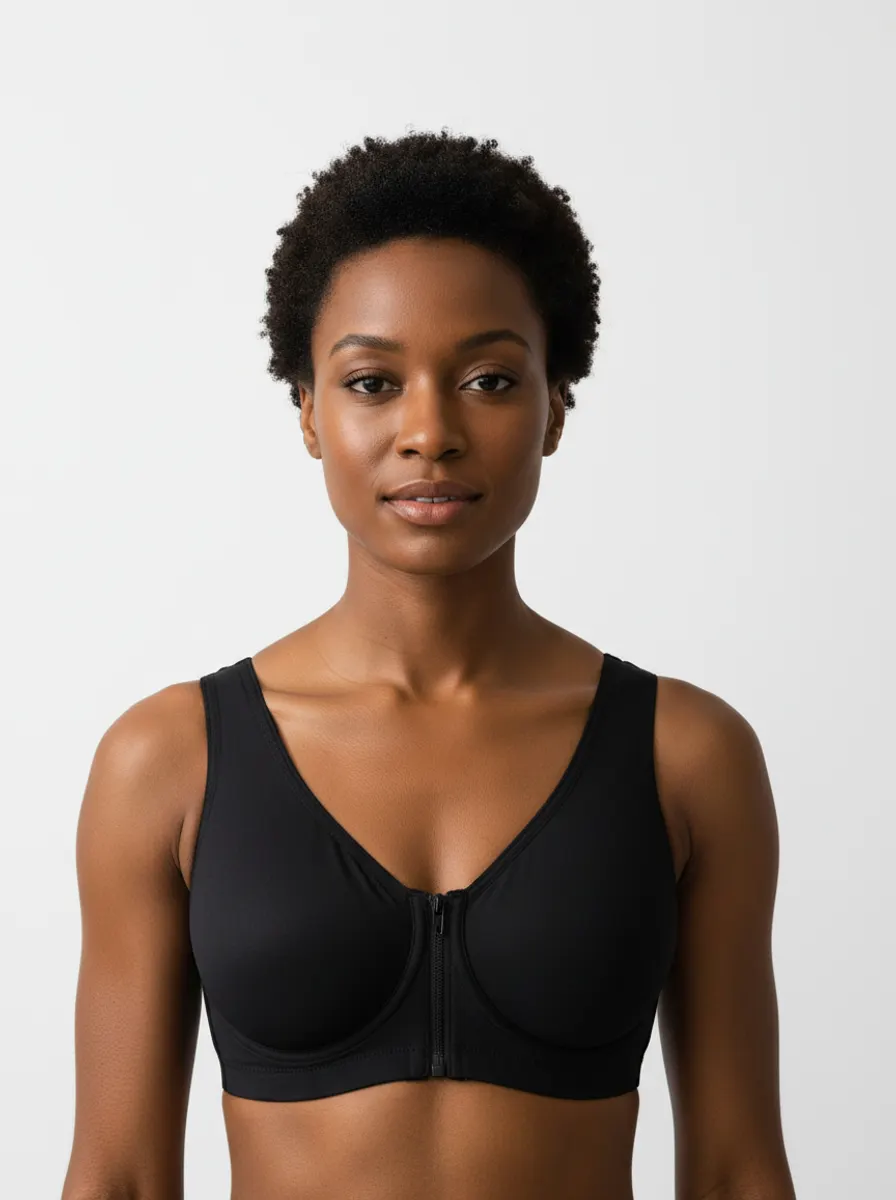
Home the same day in a surgical bra with care notes. Early soreness and tightness ease over a week or so.
We see you for check-ins to track your healing, answer questions, and make sure the shape is settling.
Benefits
Most patients want more fullness and a shape that still looks like them. Implant or fat, volume, and placement set the result, and your surgeon talks you through it.
More volume up top, a closer match side to side.
A size that fits your frame and sits in proportion with your waist and hips.
From Shore summers to winter layers, clothes fit how you want. A lot of patients feel more at ease in their body across the Philadelphia seasons.
A tighter match between the two breasts in both size and shape.
Implants for a clear size jump, or fat for subtlety.
Safety
Safety is set before the first cut. We check your health, plan the implant and incision in detail, and run the same OR steps each time so the day goes to plan.
Lab work and a health review catch any risk early, so your surgeon can plan around it or move the date.
Your surgery happens in an accredited OR with full monitoring.
Plain pre- and post-op guidance, with the Philadelphia team close by.
Pricing
Your total rides on implant or fat transfer, the surgical detail, and facility fees. We confirm at consult and lock at booking.
Monthly financing / payment plans
Your price is set at booking, once you've consulted.
No hidden fees. Every line of your quote is in the contract before you book.
Prices shown are starting prices and depend on the number of areas treated. Final pricing is confirmed at your consultation. Cosmetic procedures are not covered by insurance.
Try it
Pick a procedure to see an estimate. Your numbers stay on your device. We do not see or save them.
This is an estimate, not a quote. It splits the starting price over the months you pick, with no interest. Lenders set your real rate and terms. Your price is confirmed at your consultation.
Why Goals
A Center City address on Locust Street, easy to reach by car or SEPTA.
Full aftercare and in-person follow-ups, Philadelphia clinic.
Surgeons who focus on breast surgery.
Silicone, saline, or fat transfer, planned to suit your build.
Thousands of cosmetic procedures done across our clinics.
FAQ
No, that's a common myth. Implants don't come with a ten-year expiration date, and plenty last well past that without any trouble. You only replace them if something changes, like a leak, hardening, or a result you want adjusted. The ten-year figure is a rough average, not a rule, so plan around how yours actually do.
That's mostly about sizing and planning, not the implant itself. A size that suits your frame, the right profile, and placement under the muscle tend to read as natural. Going bigger than your tissue can cover is what looks done. A good surgeon steers you toward a result that fits you, not the biggest option.
Yes. You can still get mammograms with implants, just tell the imaging center when you book. They use extra shots, called Eklund displacement views, to see around the implant. Routine screening carries on as normal. If you ever feel a change in the breast, get it checked the same way you would without implants.
Line up a ride home and someone to stay the first night, since you can't drive after anesthesia. Stock easy meals, water, and prescriptions ahead of time. Set up a spot to sleep propped on your back. Loose, front-button tops help, since raising your arms is sore early. A little prep makes week one way smoother.
Yes, and it matters more than people expect. Nicotine narrows blood vessels and slows healing, so surgeons ask you to quit for several weeks on each side of surgery. You'll also pause blood thinners and some supplements that raise bleeding risk. Your surgeon gives you the exact list at the consult, so bring everything you take.
Learn more
Deciding on breast augmentation in Philadelphia is less about picking a cup size and more about getting clear on what you actually want, then matching the surgery to it. People come in with very different goals, and the same operation done two ways gives very different results. This guide lays out the parts that matter, in order, so the consultation feels like a conversation between equals rather than a pitch you have to decode. None of it is complicated once it is spelled out plainly, and walking in informed changes the whole tone of that first appointment.
The most useful thing you can do before surgery is figure out what "better" means to you. Fuller on top? Even on both sides? Back to where you were before kids? Those are different targets, and they steer the plan. Cup size is a poor language for any of it, because cups are not standardized and they shift with every bra brand.
A good surgeon translates your goal into shape and proportion, then works backward to the implant. It helps to think about how you want to look in the clothes you actually wear, rather than a number you saw online. Bring photos of results you like if you have them, and be honest about whether you want a subtle change or an obvious one. Going in with an open, specific goal beats going in fixated on a letter, and it gives your surgeon something real to work with.
It is also worth being clear with yourself about your motivation. Wanting to feel more like yourself after pregnancy is a different starting point from wanting a noticeably different shape, and both are completely valid. What matters is that the goal is yours, not someone else's idea of what you should want. The patients who are happiest a year out tend to be the ones who knew what they were after and picked a surgeon who listened.
Implants have come a long way. Today's silicone devices use a cohesive gel that holds together even if the shell is cut, which is where the nickname gummy bear comes from. They keep their shape and feel close to natural tissue, a real step up from the older fluid-filled designs people sometimes still picture.
Saline implants are still around and have their place. They are filled after placement, so the incision can be smaller, and if one ever leaks your body just absorbs the saline. The trade-off is a firmer feel and more visible rippling in thinner patients. Most people choosing breast implants in Philadelphia go with cohesive silicone for the feel. Shells come smooth or textured, and implants come in a range of profiles, describing how far they push forward relative to their width, which gives your surgeon room to dial in shape as well as size, not just volume.
Behind the scenes, sizing is a measurement problem, not a guess. Your surgeon measures across your chest and gauges how much skin and natural tissue there is to work with. That sets a range of implant volumes and profiles that will sit well on your frame. An implant too wide for your chest looks wrong however good the gel feels, and too much projection reads as obvious.
Trying sizers in a bra helps you see how a volume reads on you, and it grounds the conversation in something you can actually picture. Sizers cannot perfectly predict the result, since they rest outside the body instead of where the implant will go, but they beat trading abstract numbers back and forth. Bring a fitted top to the appointment. The goal is to leave with a specific plan you understand, not a vague promise to make you bigger.
Where the implant sits is a real decision. Under the chest muscle, the more common route, gives a smoother upper slope and tends to make mammograms easier to read, though the early recovery runs a little longer while the muscle settles around it. Over the muscle, beneath the gland, may work for patients who already carry enough tissue over the implant, and it often shortens the early recovery.
A partial, dual-plane pocket splits the difference between the two. You do not need the vocabulary memorized. You just need to know placement is a real fork in the road, and your surgeon should be able to say plainly why a given pocket suits your body and your goal. A vague answer there is itself a useful signal.
Placement also interacts with the kind of activity you do. If you lift heavily or do a lot of chest-focused training, that is worth mentioning, since it can factor into the recommendation. Same goes for whether you have finished having children, since pregnancy and nursing can change the breast again afterward. These are not dealbreakers, just details that help your surgeon plan something that holds up over time.
The early days are the part nobody describes honestly enough. Expect to feel tight, swollen, and like the implants sit too high. That is normal and temporary. You will be in a surgical bra, sleeping propped on your back, and taking it very easy. Pain is usually manageable with what your surgeon prescribes, and the worst of it eases within a few days.
You will not be lifting, reaching overhead, or doing much beyond resting. Plan for that. Having meals ready, prescriptions filled, and a comfortable spot set up ahead of time makes this stretch far less of a slog. Most patients are pleasantly surprised the sharp discomfort fades faster than they feared, replaced by a duller tightness that loosens over the following couple of weeks as everything settles.
Scars come with any augmentation, and knowing how they evolve takes the worry out of the early weeks. Whichever incision you and your surgeon choose, the crease, the areola edge, or occasionally the armpit, the scar starts firm and pink, then gradually flattens and fades over roughly a year.
It rarely disappears completely, but a well-placed, well-cared-for incision becomes hard to spot. Following the scar-care steps your surgeon gives you, silicone sheets or gels, gentle massage once cleared, and keeping the area out of the sun, genuinely affects how it ends up looking. Everyone heals a little differently, and things like skin tone and genetics play a role, which is worth raising at your consultation if scarring is a particular concern for you.
Every surgery carries risk, and a trustworthy surgeon names them plainly rather than glossing over them. The ones to understand for augmentation include capsular contracture, where scar tissue tightens around the implant and firms the breast, infection, changes in nipple or skin sensation, and the small possibility of needing a future procedure to revise or replace an implant.
There is also a rare condition linked mainly to certain textured implants that your surgeon can walk you through in plain terms. None of this should scare you off a procedure that millions have had safely. It should inform the questions you ask and the surgeon you pick. A surgeon who discusses risk openly, and tells you how they would handle a complication if one came up, is exactly the kind you want.
Implants add volume but do not lift much. If your breasts have descended after pregnancy or weight change, an implant alone can sit low and look bottom-heavy, and the better answer is pairing augmentation with a breast lift to raise and reshape at the same time, in one recovery rather than two.
Some patients fold both into a wider breast enhancement in Philadelphia plan alongside other procedures, the kind of combination a mommy makeover covers. If they are heavier than you want and leaving you with neck or shoulder strain, the discussion shifts the other way, toward a breast reduction. A surgeon doing breast augmentation surgery in Philadelphia should be candid about which path actually fits you, even when it is not the one you walked in expecting. Working out which of these your body actually calls for is much of what that first appointment is for.
Choosing the surgeon matters more than choosing the implant. Look past star ratings to patterns in the reviews: do people mention feeling heard, getting realistic expectations, and being supported through recovery? Spend time in a surgeon's before-and-after gallery and focus on patients whose starting photos look something like your own, not just the standout cases. The surgeons page lays out who is on the team and what they have trained in.
At the consult itself, watch whether they measure, lay out the trade-offs honestly, and tell you no when a request would not actually suit you, instead of nodding along to everything. When a consult leaves you rethinking the plan you came in with, take that as encouraging rather than alarming. Ask how revisions are handled and what a complication would mean.
If paying upfront is hard, financing can spread it out. The right Philadelphia breast augmentation practice earns your trust in that first meeting, not with a slogan. For more background, the Goals blog and the main breast augmentation page go deeper, and you can compare implants with a fat transfer approach if you would rather skip an implant altogether.
Our clinic for breast augmentation in Philadelphia, PA sits at 1420 Locust Street, in the heart of Center City between Broad Street and Rittenhouse Square. It is a short walk from Washington Square West and the Avenue of the Arts, and easy to reach from Walnut Street, Spruce Street, Pine Street, and South Broad. The Kimmel Center and the theaters along the Avenue of the Arts are right around the corner, so plenty of patients pair a visit with the rest of their day downtown.
If you are driving in from University City, Fishtown, Northern Liberties, or South Philadelphia, there is parking nearby, and the Walnut-Locust subway stop on the Broad Street Line plus several SEPTA bus routes put the office within reach without a car. Patients come to us from across the region too, from Manayunk, Chestnut Hill, and the Main Line towns like Ardmore and Bryn Mawr, to Cherry Hill and the South Jersey suburbs across the river. Wherever you are traveling from, you can map the Philadelphia location before your visit and plan the easiest route into Center City.
About Breast Augmentation
Breast Augmentation at other Goals clinics
Get started
Weighing breast augmentation, fat transfer, or a lift? Our team puts together a safe, realistic plan around what you want. Bring your questions to the consult.
Prefer to talk now? (833) 462-5769
Free · No obligation
Tell us how to reach you. A patient coordinator calls you back — usually the same day.
Free · No obligation
Ask me anything. I usually reply straight away.
If you share your number, a Goals coordinator may call or text you about your consultation. Message and data rates may apply.
Nora is an automated chat. She cannot give medical advice or say whether a procedure suits you.