Thinning Crown
Scalp starting to show at the vertex, where the growth spiral opens up.
Thinning follicles are short on what they need. We put it back where it counts — micro-injections given in-office by qualified hair restoration providers at our Atlanta clinic.
From $1,200

Hair restoration is done at our Atlanta clinic at 3576 Chamblee Tucker Rd. Call us and we will help you find the nearest Goals clinic that offers it.
Conditions we treat
Mesotherapy fits most early and moderate thinning, in men and in women alike.
Scalp starting to show at the vertex, where the growth spiral opens up.
A part that reads wider every year. Often the first sign in women.
Heavy shedding a few months after birth, as hormones drop back down.
Diffuse loss that shows up weeks after illness, surgery, or a hard stretch.
Thinning that follows fast weight loss, when follicles ran short.
Strands that snap and grow slowly. The scalp needs feeding directly.
Candidacy
Early or moderate thinning is the sweet spot. A part that keeps widening, a crown you can see through, more hair in the drain. It works while follicles are weak but alive.
Fine hair still growing where it was thick.
Non-surgical. No operating room, nothing to recover from.
Under an hour in the chair, so a lunch break covers it and you head back.
You want the hair around a graft to stay strong.
Ready to see a course through over a few months.
Those low-cost hair packages abroad look good on paper. What gets cut is the part that matters: an honest assessment, someone to follow up with, and care near home.
| Left Step | Right Step |
|---|---|
| Left StepWeeks spent comparing clinics online, a deposit wired overseas, then flights booked. | Right StepYou come in, or connect online, for a real scalp assessment with a qualified hair restoration provider who reads your hair and your history. |
| Left StepYou land where you don't really speak the language, and the consult is rushed through that same day. | Right StepYour plan and the nutrient blend are set out beforehand, in your language, under U.S. clinical standards. |
| Left StepThe session runs somewhere you've never set foot, often high volume, with little time spent on your scalp. | Right StepOn the day you arrive at an accredited Atlanta clinic and the injections happen in a clean, sterile room. |
| Left StepYou fly home tired. A week on, your scalp is red and tender and you've no idea whether that's normal. | Right StepNo downtime. You drive yourself home, head back to work, and the day carries on as planned. |
| Left StepYour only option is urgent care nearby, where nobody treated you and nobody knows what went into your scalp. | Right StepIf something feels off between sessions, you reach the same local team that treated you. We see you in person, look, and adjust the plan as needed. |
| Left StepThat visit costs more time and money, while the clinic abroad can only help over WhatsApp, a time zone away. | Right StepFollow-ups and progress photos happen at the same clinic, with the same team, right across the course. |
A general comparison. Which approach suits you is decided at a consultation with a licensed surgeon.
Compare
| Overseas Package | Goals U.S. Clinic | |
|---|---|---|
| Total cost (real) | The session price, plus flights, a hotel, and days off work on top. | The treatment and a short local drive. Costs spelled out, no extras. |
| Travel & time off work | Long flights, jet lag, days away from work and home. | A local visit under an hour, then back to your routine. |
| Safety & sterility | Variable. You're trusting foreign rules and a short stay. | Accredited U.S. clinic, strict infection control you know. |
| Provider/team | Hard to verify who treats you, and you won't see them again. | Qualified hair restoration providers you meet before and after. |
| Emergency backup | No local clinic. Urgent-care staff are left guessing. | In-person follow-up and local help if anything crops up. |
| Follow-up care | Messages only. Nobody can see your scalp. | Booked in-person checkups, progress photos, plan changes. |
| Communication | Language gaps, time zones, slow replies. | A local team, written aftercare, and a number to call. |
| Legal protections | Little recourse once something goes wrong back home. | U.S. patient-safety law and standards apply. |
A general comparison. Which approach suits you is decided at a consultation with a licensed surgeon.
Our surgeons
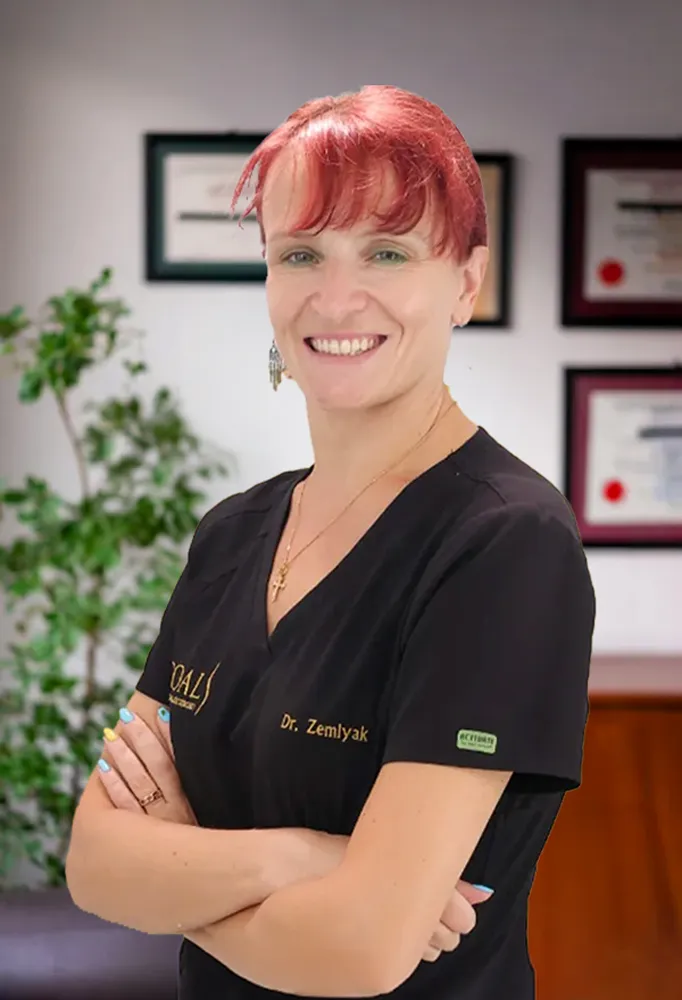
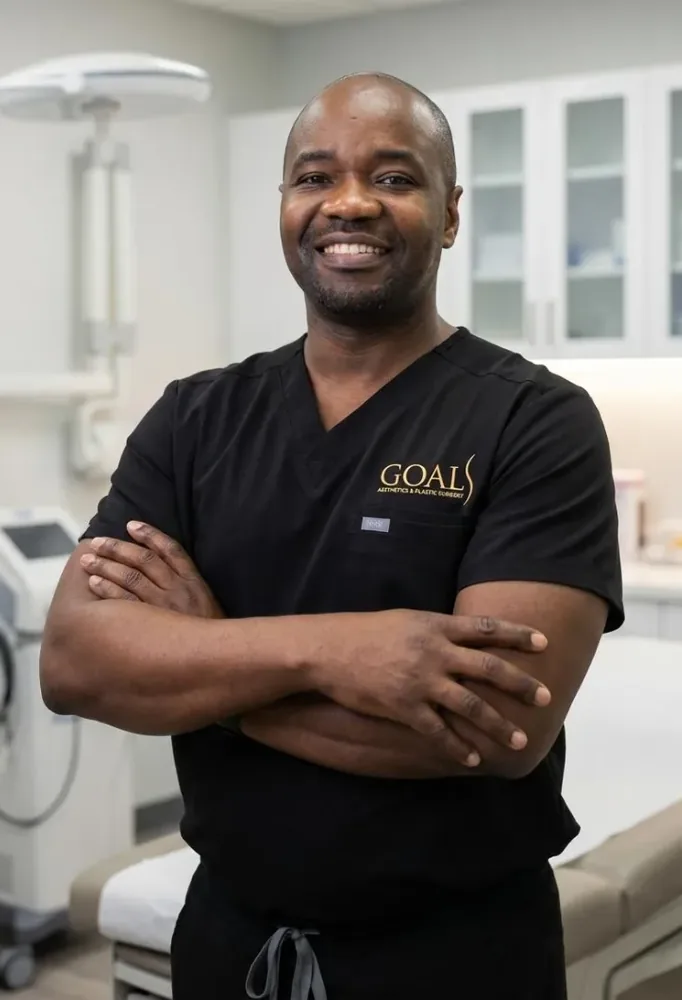
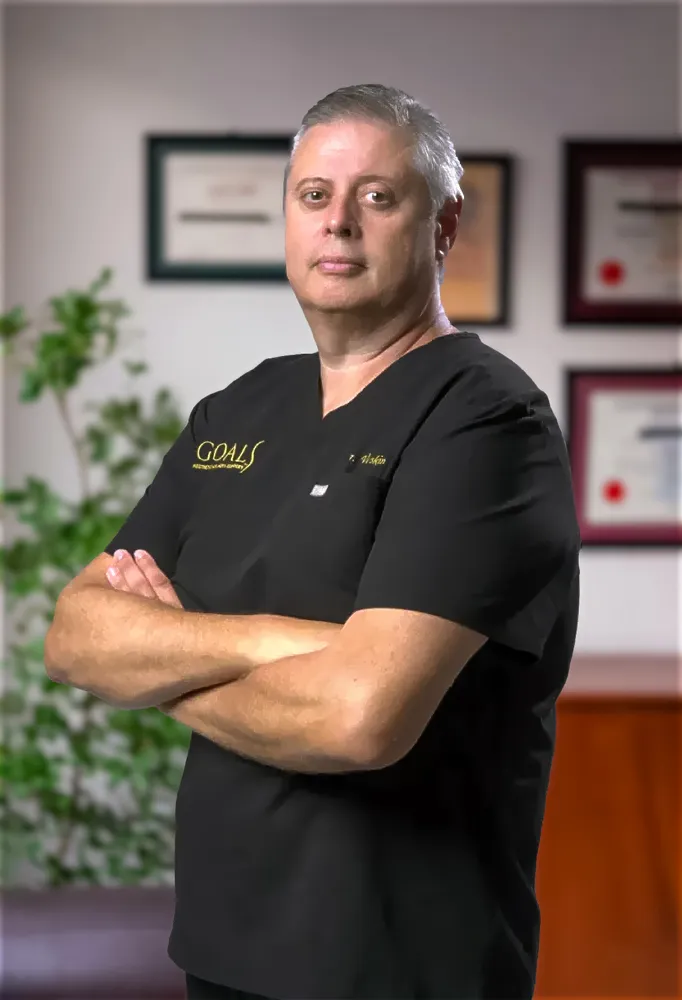
A qualified hair restoration provider oversees every session, never an unsupervised assistant. Meet the team before you book.
Licensed in NY · TX · CA
Safety
A treatment is only as good as the hands and the standards behind it. Every scalp session runs in a real clinical room, with people you can actually meet.
Sessions run in clean rooms held to U.S. accredited care.
Vitamins, minerals, and amino acids dosed to you, not a jar.
Your provider and their team, reachable when questions come.
Shallow micro-injections reach the follicle layer, little sting.
Same-angle photos each visit, so change is measured not guessed.
Why Goals
One local team runs your assessment, sessions, and follow-ups.
Under an hour, little to no downtime. Book one on a lunch break and walk out.
Take whichever location suits your commute. Same scalp protocol at both.
Skilled qualified medical providers run each visit and adjust as your scalp answers.
If mesotherapy alone won't get you there, we say so before you pay.
A quote drawn from examining your scalp, not from a list.
FAQ
B-complex vitamins, minerals such as zinc, amino acids, and ingredients that lift blood flow. Your provider tunes the blend to your scalp.
Hair loss doesn't stop by itself, so most people shift to spaced maintenance visits once the course ends. Your provider sets that pace with you.
No. They work along different lines and sit together well. Bring your medication list to the consult so your provider can plan around it.
We examine the scalp, go through your history, and map a plan. Some start that day. Others book their first session for later.
Yes, just leave a day or two either side. Colour on a freshly injected scalp stings, so plan the timing around it.
Women are a large share of who we treat. Widening parts, diffuse thinning, and shedding after birth all answer well.
Mesotherapy is one of several ways we handle thinning. Here's what else the Atlanta team works with.
About Mesotherapy Hair Restoration
Mesotherapy Hair Restoration near you
Non-surgical options
A transplant isn't the only route, and for many it isn't the first one. These in-office treatments feed the scalp and back natural growth without a scalpel. A sensible first move on early thinning.
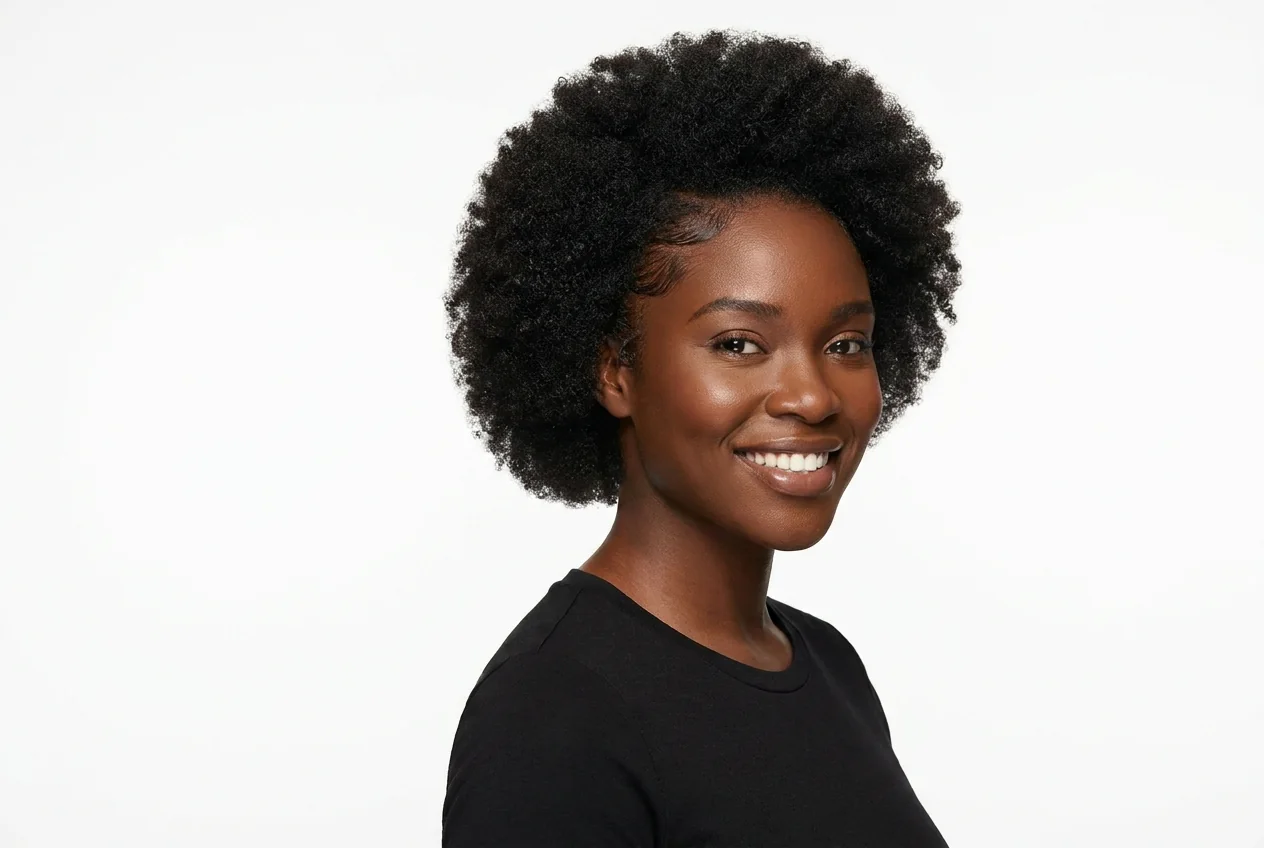
Results vary with your skin, your starting point and how many sessions you have. Your consultation covers what is realistic for you, before you commit to anything.
Prefer to talk now?(833) 462-5769
Patient Guides
Written by the team that performs the procedure, to read before your consultation.
 How to Verify a Plastic SurgeonFour free checks that take ten minutes: the NPI registry, the state medical board, ABMS board certification and the facility’s accreditation. Step by step, with every link.Read the guide
 Questions to Ask Before Any SurgeryTen questions to ask any plastic surgeon before you book, what a good answer sounds like, the warning signs, and a version you can print and bring to your consultation.Read the guide
General information, not medical advice. What applies to you is decided at a consultation with a licensed surgeon.
Get started
Mesotherapy might be the whole plan or one part of it. Either way, the Atlanta team gives you a straight read and a route that fits.
Prefer to talk now? (833) 462-5769
Learn more
Hair gives up slowly. Long before a follicle stops, it spends months or years pushing out strands that are thinner, shorter, and slower to come back after a shed. That stretch is where mesotherapy has something to offer. It is a course of very fine, very shallow injections that place nutrients into the skin of the scalp itself, right beside the follicles, rather than asking a tablet or a shampoo to find its own way there. No scalpel, no donor area, no operating room at any stage.
Worth being straight about the ceiling, because not every clinic is. Mesotherapy makes a struggling follicle work better. It does nothing for scalp that has been smooth for ten years. If you are still shedding into the sink and can pick out wispy hairs where the density used to sit, this treatment was built for you. If the crown has been bare since your twenties, the honest conversation is about a transplant. What follows walks through the mechanism, the schedule, who it suits, what a visit involves, and how the money works, so you arrive at our Atlanta clinic already knowing the shape of it. Sessions run under the care of qualified hair restoration providers. No sedation, little to no downtime, nothing to stay overnight for. You sit for well under an hour, then drive yourself home and get on with the day.
The name traces back to the mesoderm, the middle skin layer the needle stops in. French physicians worked the technique out in the 1950s for pain and circulation, and hair came later. A follicle is a small, hungry organ running one of the fastest cell division cycles in the body, and it needs raw material to keep that up. B-complex vitamins cover the energy side. Zinc and other minerals sit in the machinery that decides when a follicle grows and when it rests. Amino acids are what keratin is built from. Other ingredients open local blood vessels so more of everything arrives. Landing all of that a millimetre or two from the follicle, instead of routing it through the bloodstream or hoping a surface product soaks down, is the whole reason for the delivery method. It is not a transplant and it makes no new follicles. It works with the ones you still have, and it feeds them where they sit.
Four treatments doing four different jobs. One draws your blood, spins the platelets down in a centrifuge, and returns them to the scalp, so the active ingredient is your own biology. Mesotherapy uses a prepared blend instead: no blood draw, and the same formula visit to visit. Plenty of people run both. LLLT is the passive one. A cap worn at home on a schedule, no needles, often used to hold ground between clinic visits. Then there is FUE, which is surgery. Follicles get lifted from the back of the head and set into bare areas, and they stay. That is the only option here that adds hair where none grows. The overlap worth knowing: a graft does nothing to protect the hair around it, so people often pair a transplant with a nutrient course to stop native hair retreating behind the new line.
Cause matters more than age. Loss driven by a nutritional gap, a hormonal swing, or a physical shock tends to answer well, because you are refilling something that ran empty. Shedding after a big weight drop, after childbirth, or in the months following surgery or serious illness all sit in that group. Genetic pattern loss responds too, though more modestly, and mostly by protecting what is still there. Women make up a large share of our mesotherapy patients, which still surprises people. Female thinning usually spreads across the top rather than receding at the front, so the first sign is a part that keeps reading wider in photographs rather than a hairline creeping backwards, and our women's restoration options are shaped around exactly that. The strongest predictor of a poor result is not the diagnosis. It is walking away halfway through.
Treat it as a sequence, not an appointment. A typical start is four to six sessions two to four weeks apart, then wider maintenance spacing once the scalp settles. How many and how far apart comes out of your first assessment rather than a package, because diffuse thinning across the whole top is a different job from one small crown patch. Progress arrives in an order, and knowing that order stops you misreading it. Shedding eases first, which is quiet and easy to miss. Existing strands then look and feel thicker. Sparse areas fill last, over months, gradually enough that you will genuinely fail to spot it in your own mirror. Most people notice something after two or three sessions. That is why we photograph. On density, keep expectations sane: a nutrient course thickens and protects what is growing and can nudge dormant follicles back into service, but it will not hand you transplant density across bare scalp. Nobody honest will tell you otherwise.
You stay upright and awake throughout. The provider cleans the area, then works across the thinning zones with a quick run of shallow injections, each leaving a small amount of the blend. People describe pinpricks or a brief sting. Because the needle stops in the top layer of skin, most do not want numbing, though a topical cream is there if you would rather. Nothing about the visit stops you driving. No sedation, no bandage, no shaved patch, nothing that tells anyone you had something done. Short enough that many of our Atlanta patients fit it inside a lunch hour. A few hours of redness or tenderness afterwards is normal and passes on its own, much like a mild sunburn that fades by evening. There is no dressing to change and nothing to keep dry beyond that first day.
Aftercare is light. Leave the hair unwashed for the rest of that day, skip the gym and the pool for about twenty-four hours, and keep the treated scalp out of hard sun for a few days. Mild tenderness or a little bruising at the injection sites settles within a couple of days. The demanding part is not the aftercare, it is turning up. Follicles answer to repeated input over time, not to any single injection, which is why the people who skip two sessions and then judge the outcome are the people who decide it did not work. At every visit we photograph from fixed angles under the same light, so progress gets checked against a record instead of memory. If the scalp responds unevenly, the blend or the spacing changes. Real timelines sit in our before & after gallery.
There is no single mesotherapy formula, and anyone who tells you otherwise is describing their own product rather than the treatment. Clinics work from prepared blends that vary in what they contain and in what proportion, which is the main reason results reported from different places are hard to compare directly. Ask what is going into your scalp and expect a straight list rather than a brand name. A provider who cannot tell you, or who treats the composition as proprietary mystery, is asking for more trust than the situation warrants. The core components are not exotic and there is nothing to hide: B-complex vitamins, minerals, amino acids, and something to improve local circulation. What varies is concentration and the presence of extras, some better supported than others.
Something worth understanding about mesotherapy is that it rarely stands alone in a sensible plan. It does not compete with the other things we offer so much as sit underneath them. A scalp that is well supplied responds better to almost any other intervention, which is why patients frequently run a nutrient course alongside laser therapy or before starting a graft. The exception is that stacking treatments without a reason is just spending money. If someone recommends four things at once at a first consultation, ask what each one is for and what happens if you skip it. A good answer exists for every item on a real plan, and a provider who cannot give you one is filling a schedule rather than treating a scalp.
Being clear about who should not book this matters as much as describing who should. If your shedding started suddenly and has not been investigated, the sensible first step is finding out why rather than feeding follicles that may be responding to something treatable. Thyroid disorders, iron deficiency, and certain medications all produce shedding that resolves when the underlying cause is addressed. Scarring conditions destroy follicles outright, and nothing injected into the skin brings back a follicle that no longer exists. Active scalp infection or inflammation needs settling before anyone puts a needle in. And if the area has been genuinely bare for years, the honest conversation is about grafting rather than about nutrients.
One practical thing decides whether you can judge this treatment fairly, and it costs nothing. Take photographs, or let us take them, from fixed angles under consistent light at every visit. The reason is simple: change on this timescale is invisible day to day. You look at your scalp every morning and your brain updates its baseline continuously, so a gradual improvement registers as nothing at all. Patients who rely on memory routinely conclude that nothing happened while their month-one and month-five photographs show an obvious difference. The reverse also happens, and that matters too. Sometimes the pictures show no change, and that is information worth having early rather than after another six months of sessions. Either way the record settles the question and an impression never will.
Patients who get the most out of a first appointment tend to arrive with specifics rather than a general worry. Useful things to bring: roughly when the shedding started, whether anyone in your family has the same pattern, any recent illness, surgery, pregnancy, or significant weight change, a list of medications and supplements including doses, and any bloodwork done in the past year. If you have photographs of your hair from a few years ago, bring those too, since progression is far easier to read across time than from a single look. Useful things to ask: whether the cause has been established or assumed, what the plan is if three months produce nothing, and what happens to the result if you stop. None of that is confrontational. It is the conversation a good provider wants to have.
The figure depends on how many sessions your scalp calls for and how much ground needs covering, so it is confirmed after an examination rather than guessed from an emailed photo. Nothing gets added afterwards, and what you will spend is set out before you commit rather than discovered along the way. A lot of **mesotherapy atlanta** patients say paying across a course is easier to absorb than one large sum, and unlike an overseas package there is no airfare or hotel buried in the total. financing options through outside partners are there if spreading it helps, and the team walks you through the terms rather than pointing at a page. Follow-up visits with the same providers are part of the plan, not a line item. You can read about who they are on our surgeon profiles page, from your first session through to the point the change has grown in.
Free · No obligation
Tell us how to reach you. A patient coordinator calls you back — usually the same day.
Free · No obligation
Ask me anything. I usually reply straight away.
If you share your number, a Goals coordinator may call or text you about your consultation. Message and data rates may apply.
Nora is an automated chat. She cannot give medical advice or say whether a procedure suits you.