Receding Hairline
A hairline creeping back at the temples, rebuilt to suit your face.
Permanent coverage with no line at the back. Follicles lifted one at a time, in a single day, in-office under local anesthesia by credentialed surgeons in Atlanta.
From $5,000

Natural hairlines and fuller coverage, grown in and settled.
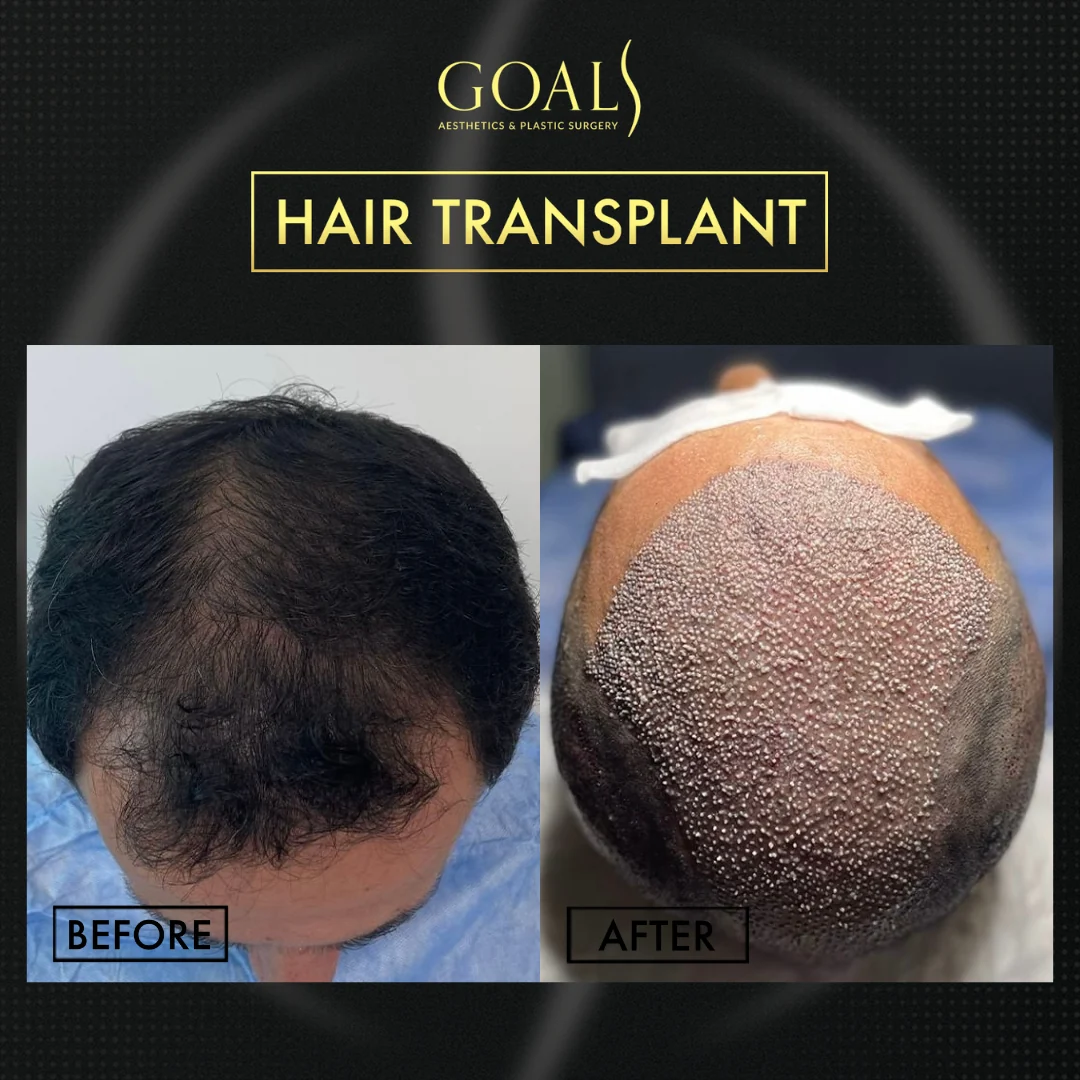
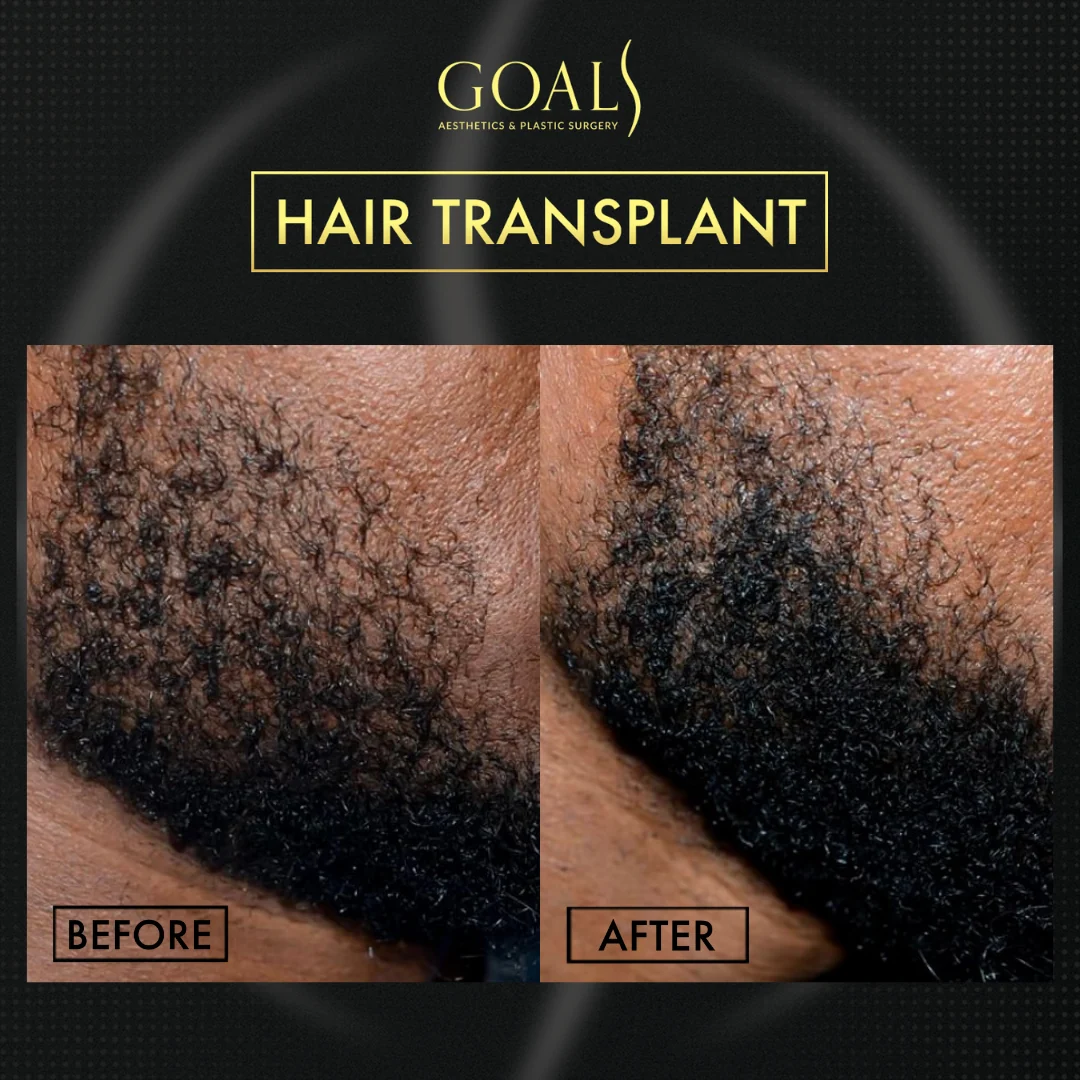
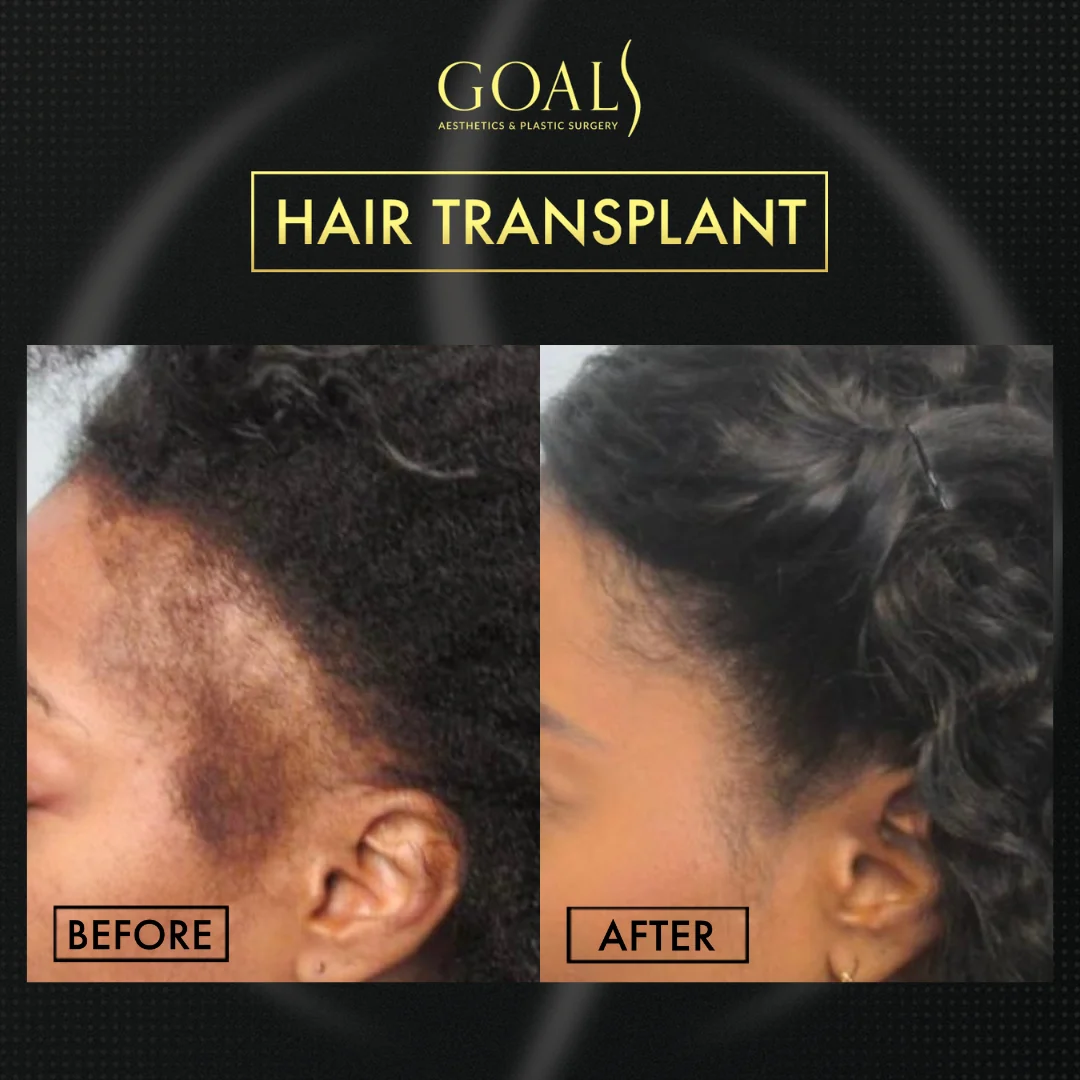
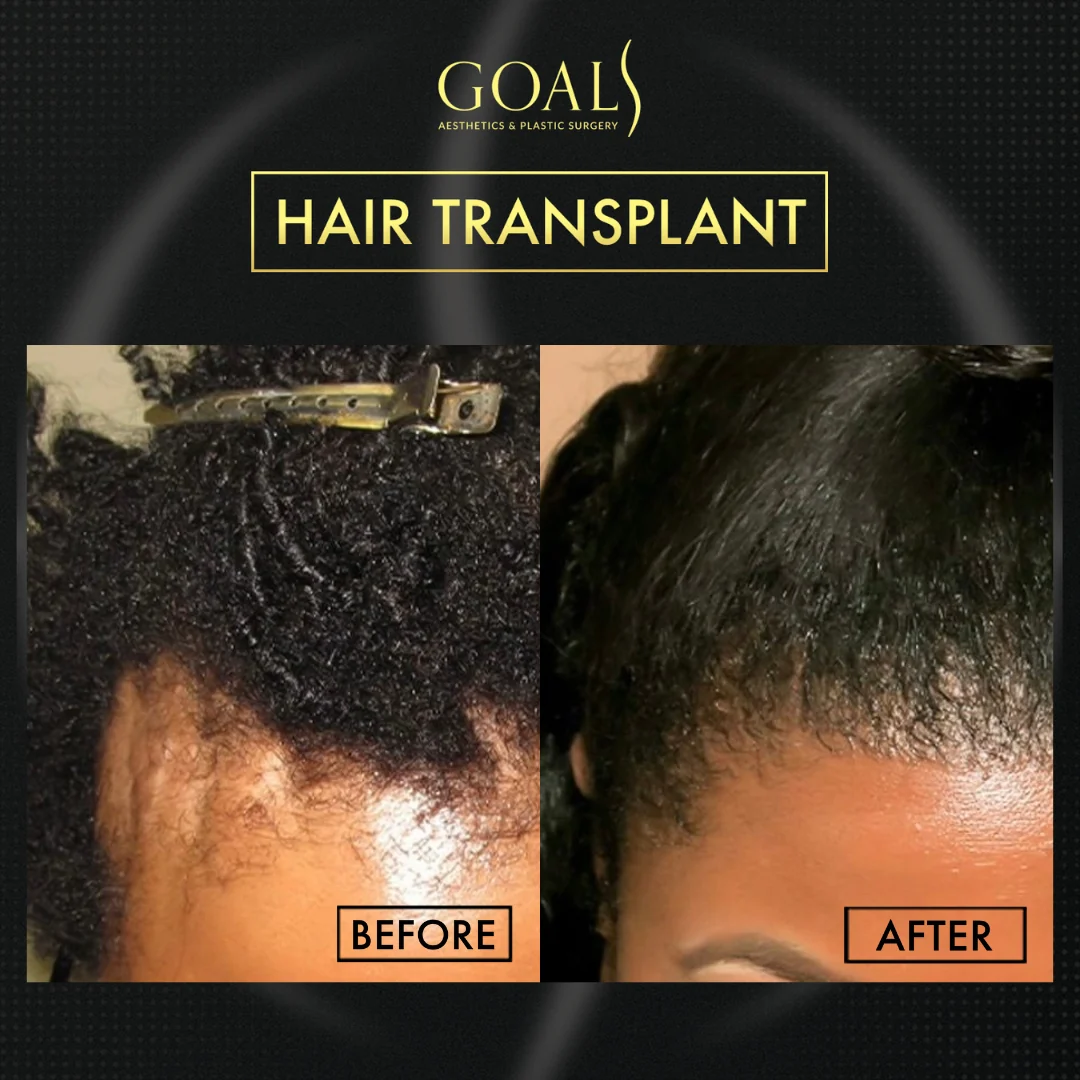
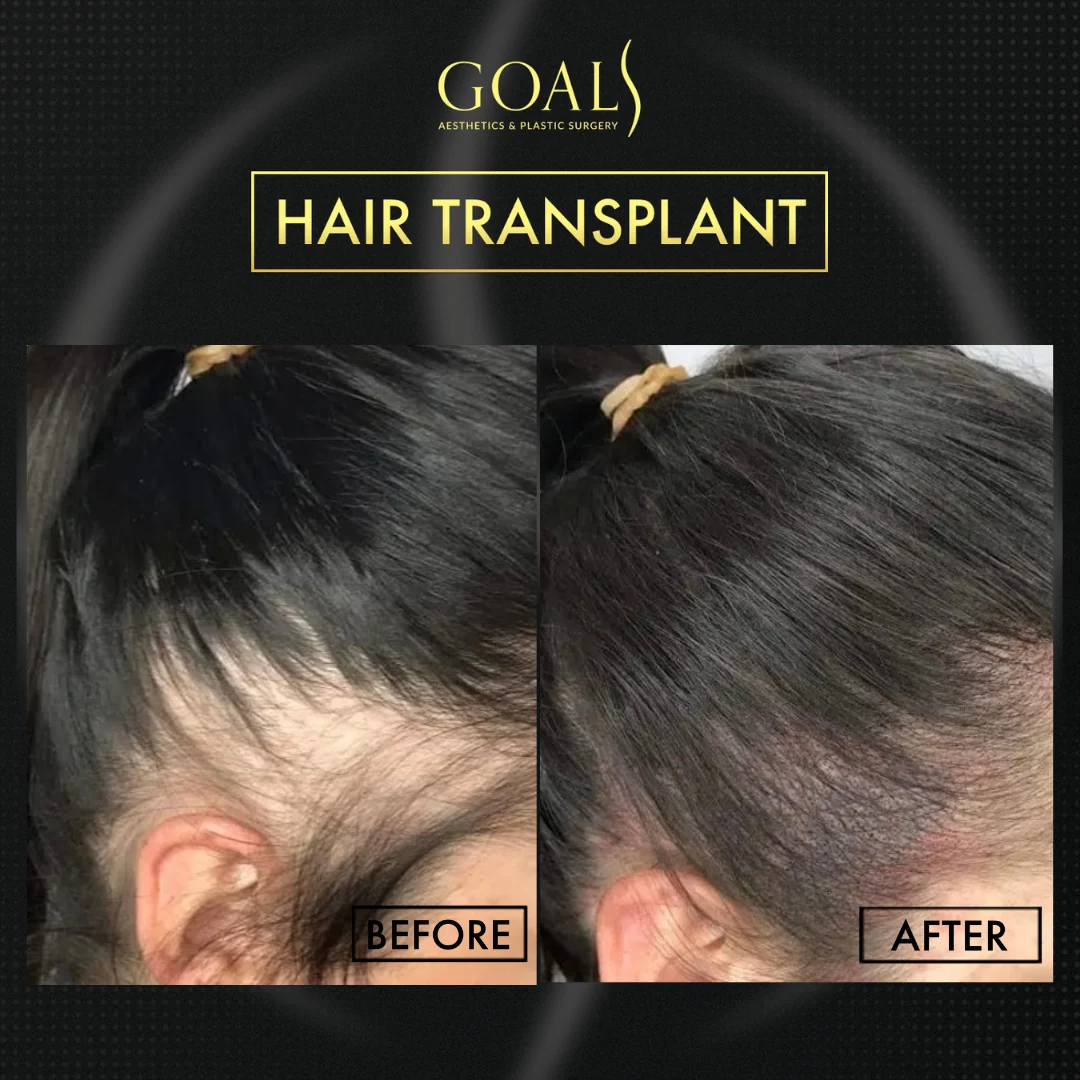
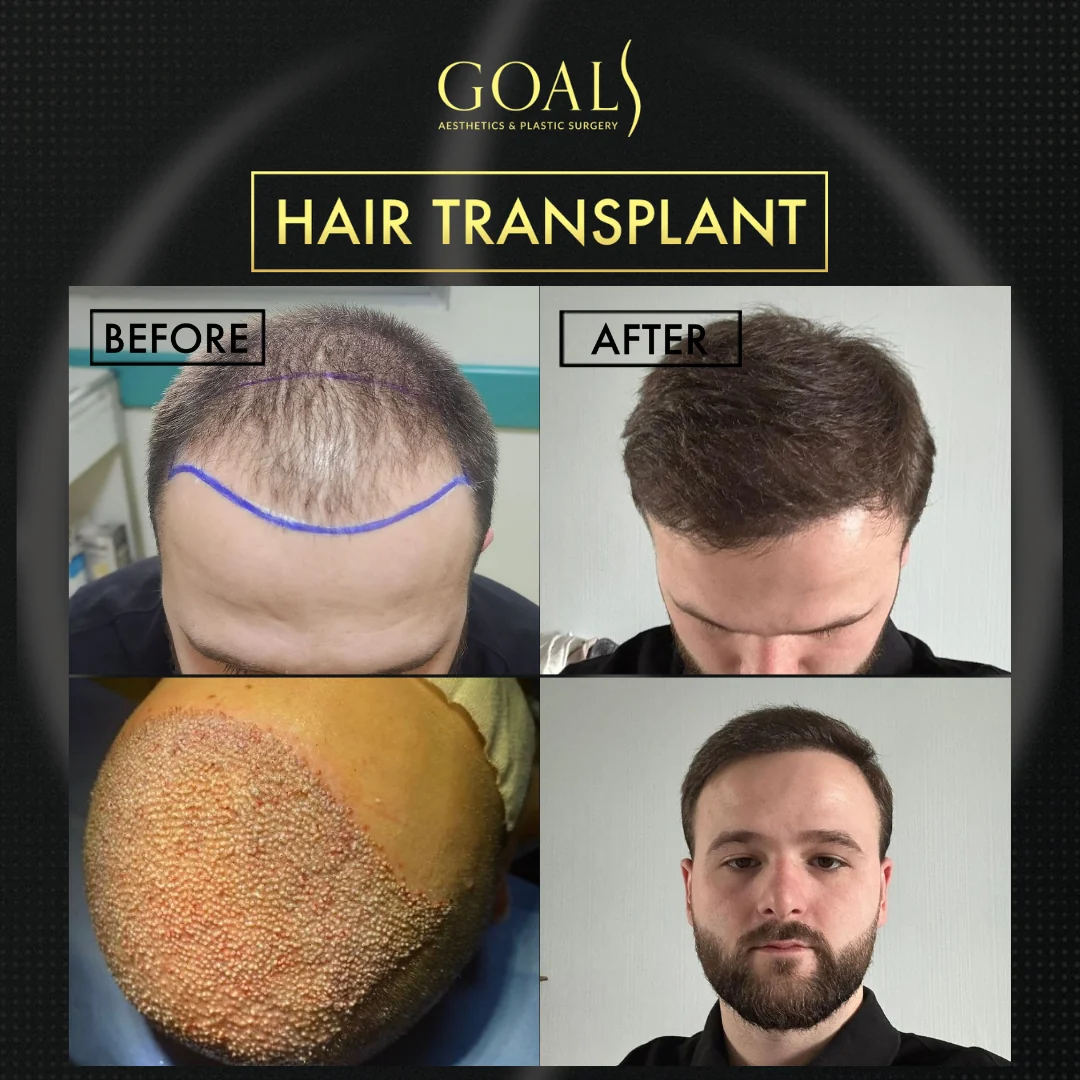
Real patients, published with written consent. Photographs are not retouched or AI-generated. Individual results vary — these images show outcomes for these patients and are not a guarantee of your own.
Hair transplants are done at our Atlanta clinic at 3576 Chamblee Tucker Rd. Call us and we will help you find the nearest Goals clinic that offers them.
Conditions we treat
FUE handles the loss patterns we see most, in men and in women.
A hairline creeping back at the temples, rebuilt to suit your face.
A thin or bare patch at the vertex, filled graft by graft.
Genetic loss along the front and crown. The commonest FUE case.
Worn temple points and edges, restored so the front frames you again.
Thinning you want treated without shaving your head down first.
Cover over scars or dated plug grafts, softened with single units.
Candidacy
A receding hairline, a thinning crown, or patchy areas, plus a donor region with something to spare. FUE suits anyone wanting permanent cover without a line at the back.
Thinning or bare areas you want covered.
Loss that has held steady for a year or two.
Only pinpoint marks, so short cuts stay an option.
Enough strong donor hair at the back and sides.
Ready to follow the pre- and post-op rules.
Low-cost transplant packages abroad sound tempting. But hairline design and how many grafts actually survive both come down to the surgeon, and a depleted donor area cannot be put back.
| Left Step | Right Step |
|---|---|
| Left StepWeeks comparing clinics online, money wired overseas, then flights and a hotel booked. | Right StepYou come in, or connect online, for a full consult where a credentialed surgeon checks the donor supply and plans your hairline in person. |
| Left StepYou land where you don't speak the language, and the consult happens the same day as surgery. | Right StepPre-op testing, consent, and the graft plan are sorted beforehand, in your language, under U.S. standards. |
| Left StepThe work runs in a building you've never seen, often with techs doing much of the extraction at speed. | Right StepOn the day you arrive at an accredited clinic and a credentialed surgeon does the extraction in a sterile room under local anesthesia. |
| Left StepYou fly home swollen. A week on the scalp is red and crusting and nobody can say what is normal. | Right StepIt takes most of the day, but you rest, take breaks, and go home the same evening. |
| Left StepYour only option is a local ER, where nobody performed your surgery and no notes exist on it. | Right StepIf something feels wrong in recovery, you reach the same local team. We see you in person, adjust medication, and sort it. |
| Left StepEmergency visits cost more time and money, while the clinic abroad can only reply on WhatsApp. | Right StepFollow-ups and progress checks happen at the same clinic, with the same team, until the result grows in. |
A general comparison. Which approach suits you is decided at a consultation with a licensed surgeon.
Compare
| Overseas Package | Goals U.S. Clinic | |
|---|---|---|
| Total cost (real) | The base price, plus flights, a hotel, days off, maybe ER bills at home. | No surprises. All care in one place, spelled out before you book. |
| Who does the work | Techs often doing much of the extraction and placing. | A credentialed surgeon leading from plan through placement. |
| Safety & sterility | Variable. You're trusting foreign rules and a short stay. | Accredited U.S. clinic, strict infection control you know. |
| Hairline plan | One-size templates that read wrong as you age. | A hairline designed to your face, agreed before surgery. |
| Emergency backup | No local clinic. ER staff are left guessing what was done. | In-person follow-up and local help if a problem shows up. |
| Follow-up care | Messages only. Nobody can look at your scalp. | Booked in-person checkups, progress photos, medication tweaks. |
| Communication | Language gaps, time zones, slow replies. | A local team, written aftercare, and a number to call. |
| Legal protections | Little recourse once something goes wrong back home. | U.S. patient-safety law and standards apply. |
A general comparison. Which approach suits you is decided at a consultation with a licensed surgeon.
Our surgeons
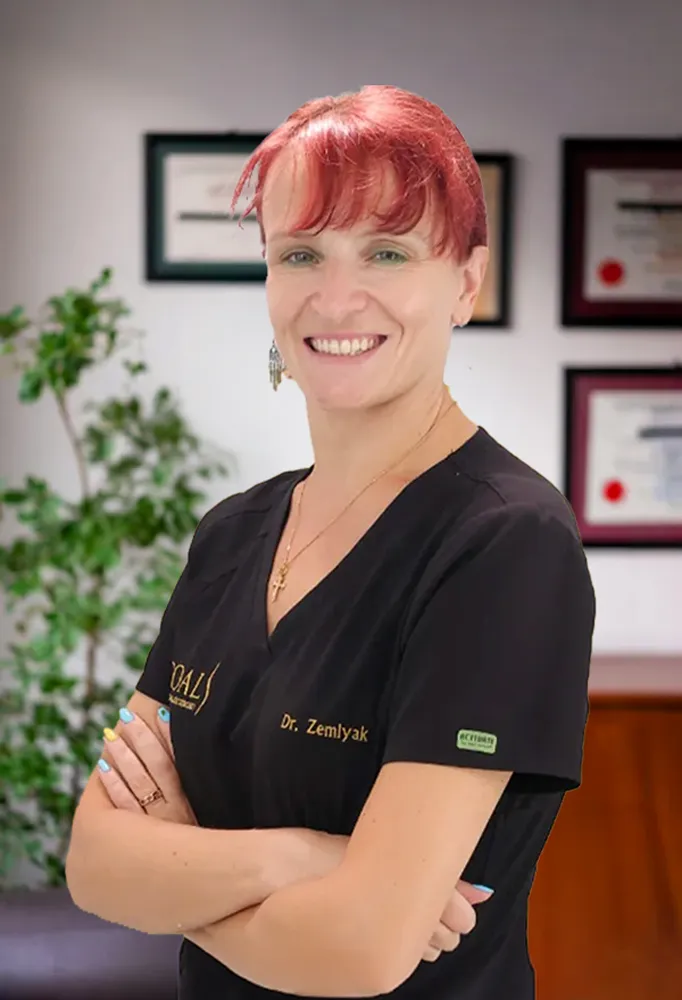
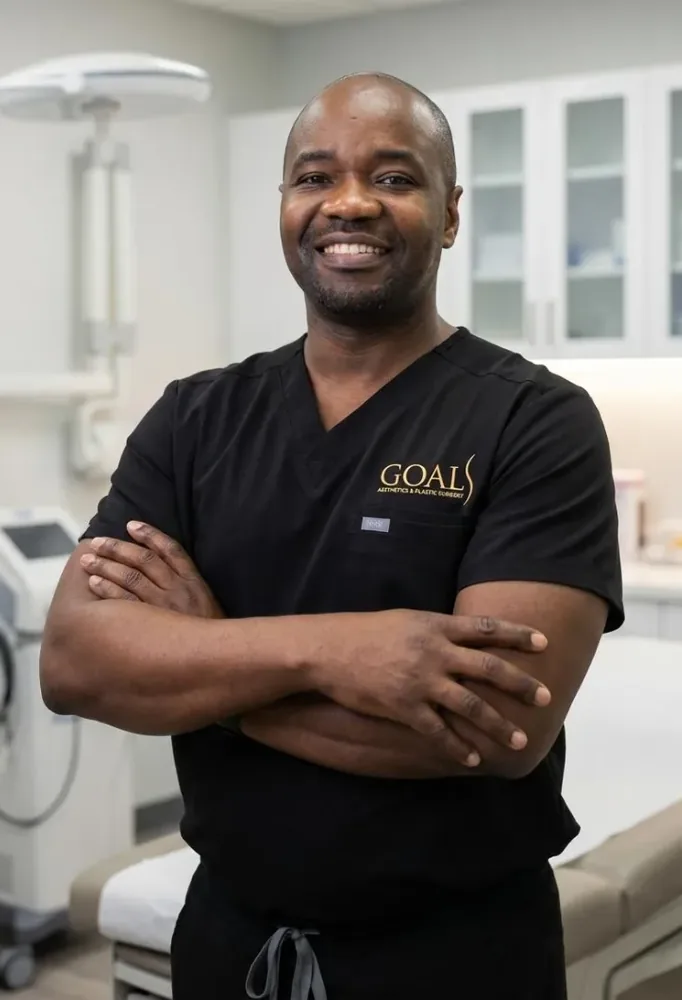
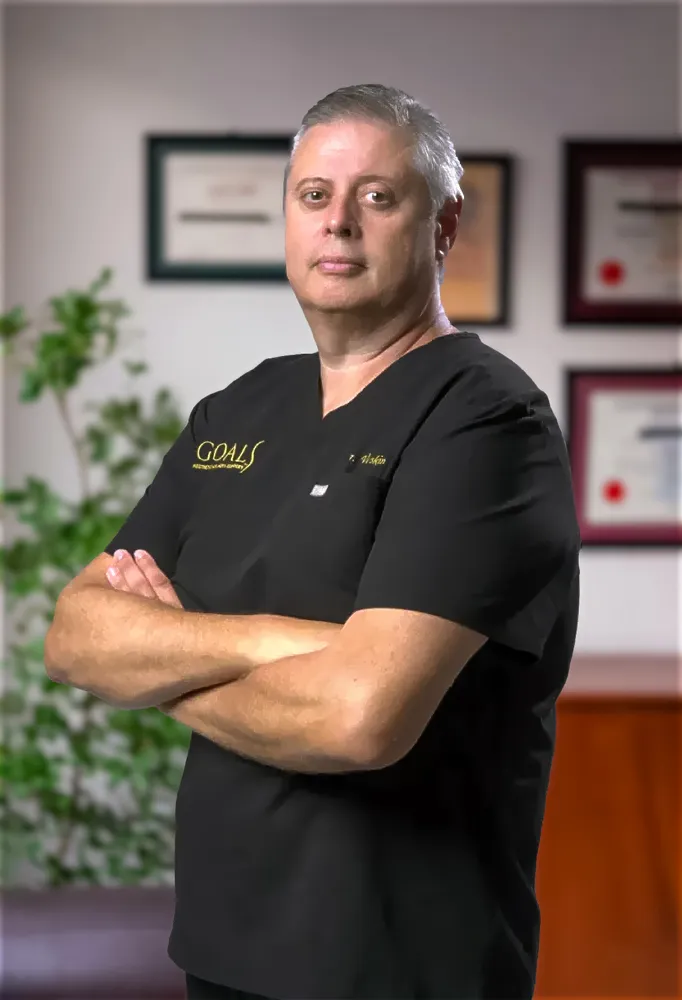
Your transplant is performed by a credentialed hair restoration surgeon, not by a technician. Get to know the team before your consultation.
Licensed in NY · TX · CA
Safety
Safety first, then handling. Strict clinical protocol, and every follicle treated so it survives the trip from the back of your head to the front.
Sterile, fully equipped rooms in a U.S. accredited clinic.
Local anesthesia, which can help lower some of the risks that come with general.
Sub-millimetre punches sized to your follicles, not to a slogan.
Follicles kept in nutrient solution so they stay viable out of the scalp.
Each graft set to your own growth angle for a clean blend.
Why Goals
One local team covers consult, surgery, and every follow-up.
One day in the chair. Home that evening, back at work within days.
An accredited clinic. No flights, no language gap, no missing follow-up.
A credentialed surgeon leads the case, so placement holds up over years.
Keep your length. No-shave and minimal-trim options.
One all-in quote from your assessment. No facility or anesthesia extras.
FAQ
No. Too small and it cuts the follicle it's meant to protect. Size is matched to your hair calibre rather than picked to sound impressive.
A follicle damaged during extraction, so it never grows. A cut graft looks identical to a healthy one, and you find out at month twelve.
It can if too much is taken from one place. Extractions are spread across the zone, and a moth-eaten donor is the one thing here you cannot undo.
Slightly harder, so it carries a little more risk of damaging follicles. For smaller cases and for women it's usually a fair trade.
Because accuracy drops as hours pass, and rushed extraction damages grafts. Volume clinics push through; we take the time.
They carry less surrounding tissue, so they need gentler handling and less time out of the body. Handled well, growth matches.
FUE is one of several ways we restore hair. Here's what else the Atlanta surgeons offer.
About FUE Hair Transplant
FUE Hair Transplant near you
Non-surgical options
A transplant isn't the only route, and it isn't always the first step. These in-office treatments look after the scalp and the hair you still have. Useful on their own early on, and useful for protecting a graft once it's in.
Patient Guides
Written by the team that performs the procedure, to read before your consultation.
 How to Verify a Plastic SurgeonFour free checks that take ten minutes: the NPI registry, the state medical board, ABMS board certification and the facility’s accreditation. Step by step, with every link.Read the guide
 Questions to Ask Before Any SurgeryTen questions to ask any plastic surgeon before you book, what a good answer sounds like, the warning signs, and a version you can print and bring to your consultation.Read the guide
General information, not medical advice. What applies to you is decided at a consultation with a licensed surgeon.
Get started
Set on FUE or still weighing your options, the Atlanta surgeons will build a safe, realistic plan around your hair and your goals.
Prefer to talk now? (833) 462-5769
Learn more
FUE is the technique most people picture when they think about a hair transplant now, and it has earned that position for a straightforward reason: no line at the back. Follicles come out one at a time through a punch under a millimetre wide, leaving pinpoint marks instead of a scar you have to grow hair over. What gets discussed far less is that this method asks more of the surgeon than the alternative does, because every extraction is a small judgement made without being able to see where the follicle is heading beneath the skin. Get those judgements right and nothing about your donor area ever gives you away. Get them wrong at volume and the damage is not reversible.
At Goals it runs as a one-day, in-office procedure under local anesthesia with credentialed surgeons in an accredited Atlanta clinic. You stay awake, take breaks, and go home the same evening. What follows covers the two numbers that actually determine your outcome, how punch choice works, why donor management matters more than graft count, the no-shave question, the day itself, recovery, and cost. Everything here refers to work done at our Atlanta hair transplant clinic. A transplant is a real surgical decision, and understanding the parts nobody advertises is what separates a good outcome from an expensive lesson.
Hair grows in natural clusters of one to four called follicular units, and FUE lifts those units individually. A punch is centred on the unit at the surface and pushed to depth, then the graft is lifted free. The complication is that the follicle does not run straight down. It angles, and it widens toward the base, and none of that is visible from above. The surgeon reads the direction from the shaft above the skin and infers the rest. That inference is the whole technique. It is why FUE has a long learning curve, why it takes longer than a strip, and why the same procedure in two different pairs of hands produces genuinely different results.
Transection is a follicle cut during extraction, and it is the most important measurement in this field that patients never hear about. A transected graft usually will not grow. It also looks completely normal in the moment, goes into the recipient site like any other, and simply never produces hair. You cannot detect it on the day, in the mirror, or in a photograph at week six. You find out at month twelve, when the density either arrives or does not. Experienced surgeons hold transection under about five percent. Undertrained operators regularly run fifteen to twenty. That gap is the difference between a full result and a disappointing one, and both patients paid.
Clinics advertise ever-smaller punches as though the figure alone proves quality. It does not. Punches generally run between roughly seven-tenths and one and a quarter millimetres, and the right one depends on the thickness of your hair and the size of your follicular units. Go too small and the punch cuts through the unit it was meant to encircle, which pushes transection up and produces skeletonised grafts stripped of protective tissue. Go too large and you take more skin than necessary, which is its own problem for the donor. Most surgeons work in the middle of that range, and the good ones vary it across a single case rather than committing to one number.
FUT, the strip method, is the real alternative. It removes a narrow band of scalp and dissects it into grafts under a microscope, where every follicle is fully visible. That visibility is why strip grafts tend to come out intact and cushioned in surrounding tissue, and why FUE grafts are comparatively bare and need gentler handling and less time outside the body. The strip also yields more in one sitting. What it leaves is a fine line, and that single fact sends most patients toward FUE regardless of the trade. Both are defensible choices; the deciding question is usually just how short you wear your hair.
There is a third option worth knowing about. DHI, direct hair implantation, is a variation on FUE where an implanter pen creates the site and places the graft in one motion rather than pre-making the incisions, which offers tighter control over depth and angle in the areas that need it most.
The strongest candidates have loss that has settled or slowed, a defined area worth treating, and a donor region with real capacity. If you clipper down to the skin, FUE is the obvious choice, since pinpoint marks disappear where a line would not. Women are frequently good candidates too where the loss follows a pattern, and our women's hair transplant options are built around female patterns like a widening part. The honest limit is donor supply. If loss is far advanced and the back and sides are thin, no technique manufactures hair, and being told that plainly is more useful than being booked in.
Here is what separates a case that ages well from one that does not. Every extraction leaves a small wound and a zone of disrupted blood supply around it. Take too many from one area, or too many overall before the scalp has remodelled, and the donor thins visibly. Patients call it moth-eaten and they are describing something permanent, because you cannot replace what has been harvested. Extractions therefore need spreading evenly across the zone, spacing wide enough that healing marks stay separate rather than merging, and a total that leaves reserve for the loss still coming. Volume clinics fail on exactly this point.
A hairline is design work more than surgery. A real one is never a clean line: it is irregular at the leading edge, built from single hairs so it looks soft where it meets the forehead, with denser multi-hair units set behind where nobody inspects individual strands. Position follows your facial proportions rather than the hairline you had at twenty, because loss continues and a line placed too low ages into an island. Angle matters as much as position. Hair leaves the scalp on a specific pitch that varies across the front, and grafts placed even slightly upright read as wrong without anyone being able to say why.
The question we field before almost any other is whether the head has to be shaved. For many patients it does not. With no-shave and minimal-trim approaches the surgeon works within your existing hair, harvesting selectively so nothing obvious is missing and you leave looking much as you arrived. Worth knowing the trade: extracting around a full-length shaft is harder than working on a clipped field where angles are visible, so it carries slightly more risk to the grafts and takes longer. For smaller cases and for women who cannot show a shaved donor, it is usually worth it. For very large sessions the calculation changes.
Faster than most expect. The extraction and recipient sites scab and heal over roughly a week to ten days, and the scalp stays pink a little longer. Sleep with your head raised at first, keep hats loose, avoid the gym for a couple of weeks, and leave the scabs alone. Most people are back at work within a few days and unremarkable to a stranger inside two weeks. The donor area is generally the last thing to settle if you shave very short.
The transplanted follicles are permanent. They come from the band at the back that is genetically indifferent to the hormone driving pattern loss, and they carry that indifference wherever they go. Your untransplanted hair carries no such protection. It can continue thinning around and behind the grafted area on its own schedule, which is how a good result at year two becomes an odd-looking one at year eight. That outcome is predictable, which also makes it preventable.
Which is why most patients pair surgery with something ongoing. Laser strengthens what you have with red light, and mesotherapy feeds the scalp directly. Run before or after surgery, these keep the hair bordering your grafts healthy so the result stays integrated instead of becoming an island. If a clinic discusses your grafts and never once mentions the hair around them, that tells you what kind of plan you are being sold.
FUE is low-risk in skilled hands and it is still surgery, and the operator matters more than any other variable here. The failures are all technique failures: poor graft survival from high transection, a donor thinned by overharvesting, hairlines placed too low or angled wrong. Ask who performs the extraction, not who runs the clinic, and ask how many cases they do in a day. A practice booking one patient at a time is telling you something structural about how it protects results. Ask to see donor areas photographed at a year rather than recipient shots taken on the day.
Extraction accuracy is not constant across a session. It degrades, and the published work bears that out: transection rates climb as the hours accumulate, which is simply what happens when a person performs the same fine motor task thousands of times in a row. That has a practical consequence for how a clinic should be run. A practice booking several patients into a single day is dividing attention and pushing pace on precisely the step where pace costs you grafts. A practice taking one case at a time is making a structural choice that protects your result rather than its own throughput. It is a reasonable thing to ask about directly, and the answer tells you more than most of what appears on a website.
A first appointment is more useful when you arrive with specifics. Worth bringing: roughly when the loss started, whether it has moved in the last year, family history on both sides, any medication you take, and photographs of your hairline from a few years ago. Worth asking: who physically performs the extraction, how many patients the clinic books per day, what transection rate the surgeon works to and how they know, how much of your donor a proposed plan would use, and what the plan is for the hair that was not transplanted. None of those questions are hostile. They are the ones a surgeon who takes the work seriously will be glad you asked.
The figure follows your graft count and how complex the case is, so it is confirmed at consultation after your scalp and donor area have been examined rather than quoted blind. If you have been searching **no shave fue atlanta** options, staying local is worth something concrete: no airfare, no hotel, and follow-up with the surgeon who operated rather than a message thread eight hours behind. Financing options through outside partners are there so the procedure can be spread over time, and the team will go through what you need. You can read about the surgeons who will treat you on our surgeon profiles page.
Whether FUE suits you comes down to things that have to be seen in person: donor density measured rather than estimated, how you actually wear your hair, and an honest read on where the loss is heading over the next decade. That last point shapes the plan more than anything, since a hairline designed for today ages badly if the pattern keeps moving. Bring photographs from a few years back if you have them, because progression shows across time in a way no single appointment can. You will get a straight answer, including if that answer is to treat it medically for a year first.
The part nobody prepares you for: within the first few weeks the transplanted hairs fall out. Nearly all of them, often. This is expected and it is not failure. The shaft sheds while the follicle stays exactly where it was placed and resets into a resting phase. New growth appears around three to four months, thickens through six to nine, and the result reads finished at roughly twelve. Judging anything before month six is a reliable way to make yourself miserable over a case that was always going to be fine. Photographs beat the mirror, and real timelines sit in our before & after gallery.
Free · No obligation
Tell us how to reach you. A patient coordinator calls you back — usually the same day.
Free · No obligation
Ask me anything. I usually reply straight away.
If you share your number, a Goals coordinator may call or text you about your consultation. Message and data rates may apply.
Nora is an automated chat. She cannot give medical advice or say whether a procedure suits you.