Patchy Cheeks
Bare or thin patches on the cheeks filled so the beard connects up.
An even beard that grows for life. Scalp follicles set to the shallow angle facial hair actually grows on, in-office under local anesthesia by credentialed surgeons in Atlanta.
From $5,000

Fuller, even beards, grown in and settled.
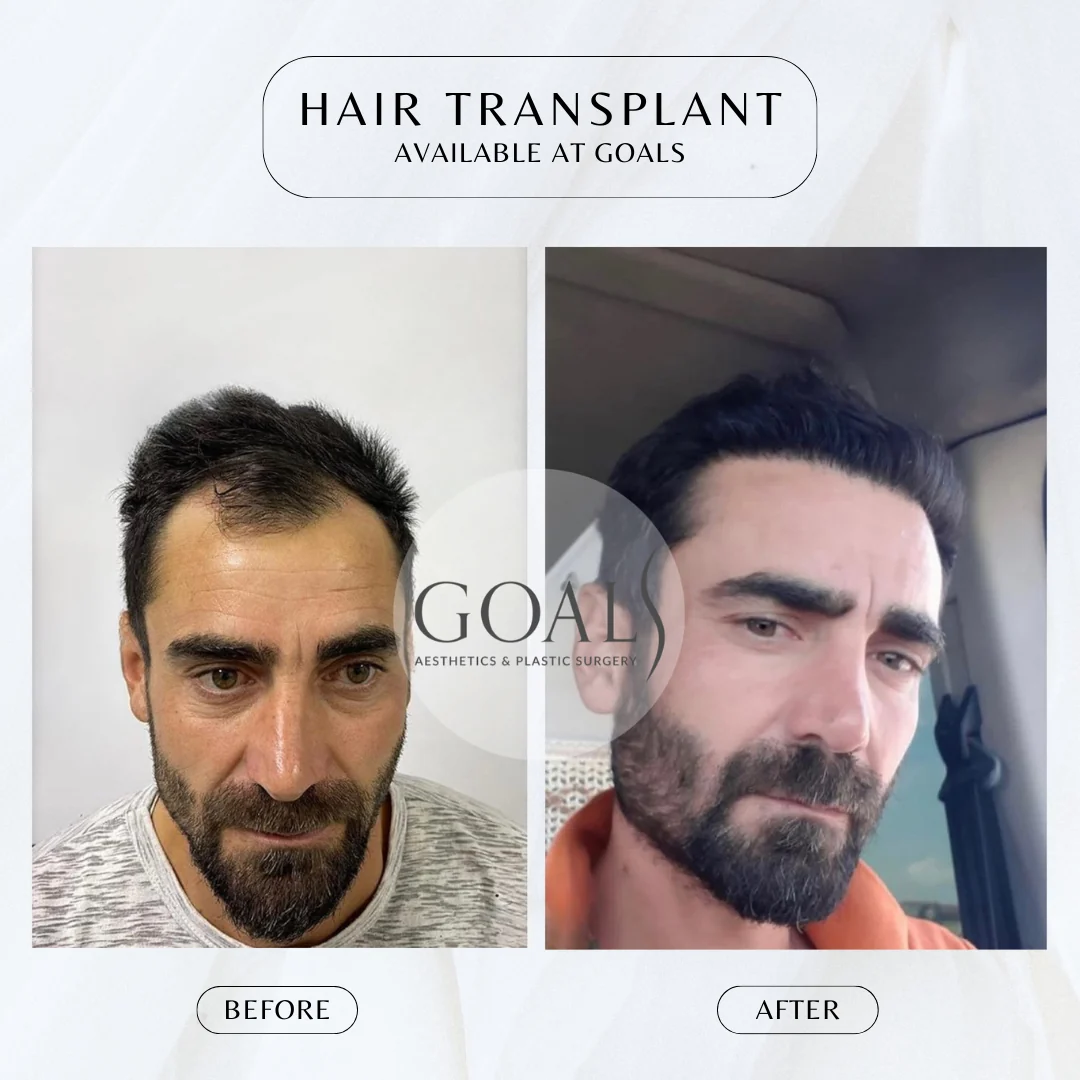
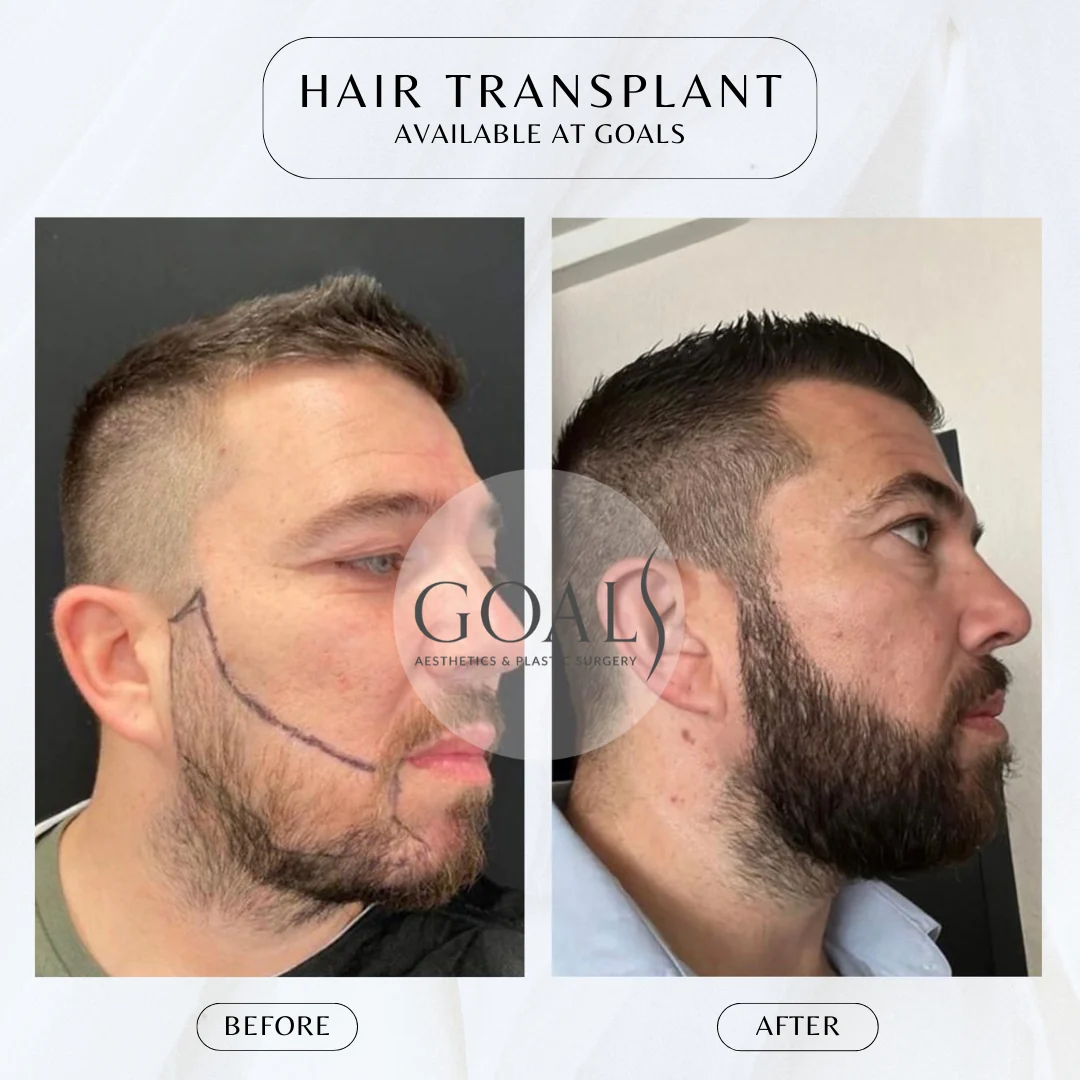
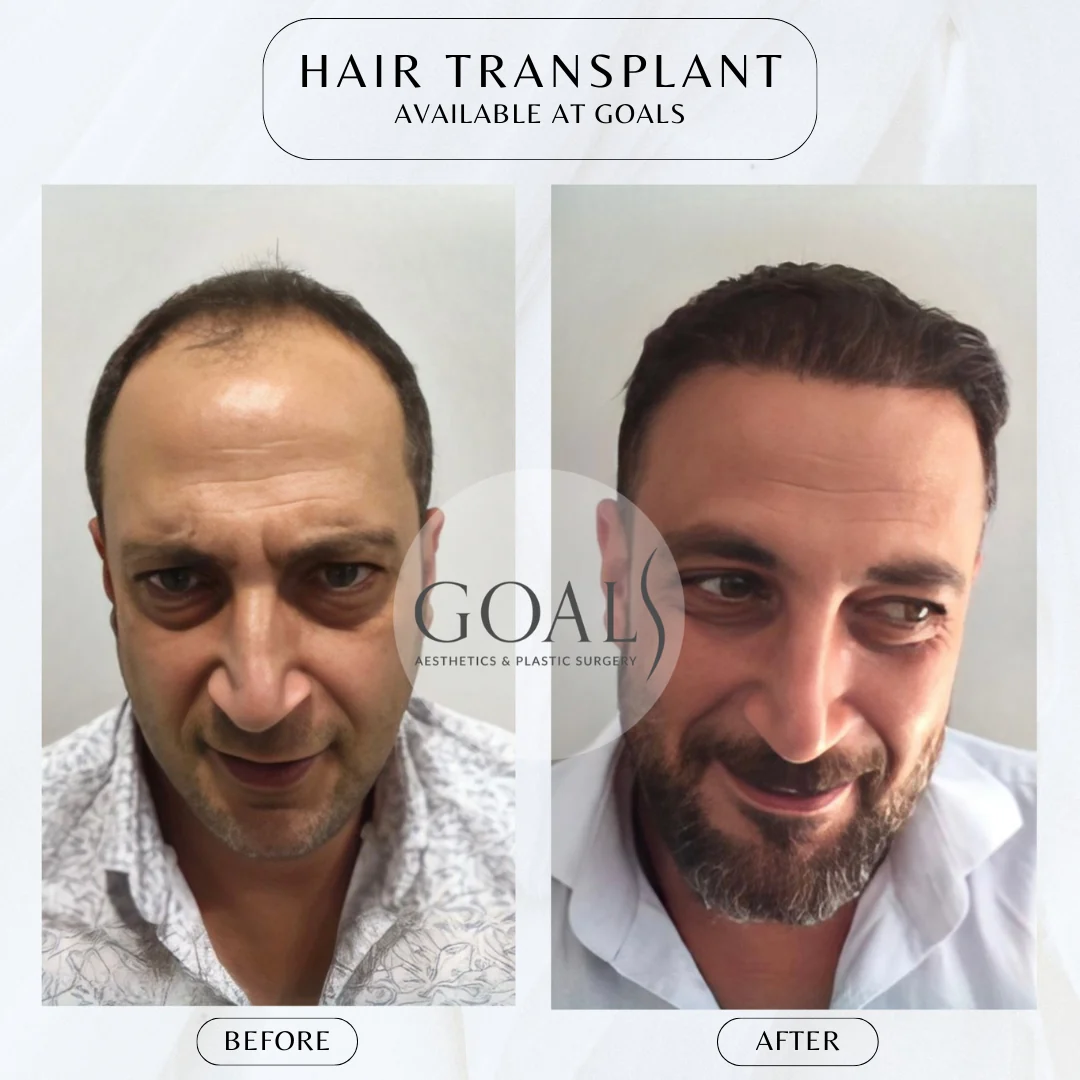
Real patients, published with written consent. Photographs are not retouched or AI-generated. Individual results vary — these images show outcomes for these patients and are not a guarantee of your own.
Hair transplants are done at our Atlanta clinic at 3576 Chamblee Tucker Rd. Call us and we will help you find the nearest Goals clinic that offers them.
Procedures
From patchy cheeks to a thin mustache, we restore facial hair zone by zone.
Bare or thin patches on the cheeks filled so the beard connects up.
A gappy mustache built up with grafts angled to grow downward.
The gap between mustache and chin closed so the goatee reads whole.
A faint jaw and chin line filled to give the beard a defined edge.
Bare spots from scars, acne, or surgery covered with your own hair.
Short sideburns extended and thickened to connect and frame the face.
Candidacy
A beard that grows patchy, thin, or refuses to connect, plus healthy donor hair on the scalp. That makes you a strong candidate for something permanent rather than another oil or pencil.
Gaps or sparse patches you want filled.
A beard that never links cheeks, chin, and mustache.
You want a beard that grows, not fibers or a daily routine.
Enough strong donor hair on the scalp.
You know the shape and fullness you want.
Low-cost transplant packages abroad sound tempting. But a beard reads as real or fake based on the angle of every single graft, and grafts set wrong are not something you can undo.
| Left Step | Right Step |
|---|---|
| Left StepWeeks comparing clinics online, money wired overseas, then flights and a hotel booked. | Right StepYou come in, or connect online, for a full consult where a credentialed surgeon plans the beard shape and checks your donor hair. |
| Left StepYou land where you don't speak the language, and the consult happens the same day as surgery. | Right StepPre-op testing, consent, and the graft plan are sorted beforehand, in your language, under U.S. standards. |
| Left StepDelicate facial work runs at volume, sometimes by techs who miss the growth direction. | Right StepOn the day a credentialed surgeon sets each graft to its facial angle, in a sterile accredited room under local anesthesia. |
| Left StepYou fly home with a swollen face. Months later it grows in bristly and pointing wrong. | Right StepIt takes most of the day, but you rest, take breaks, and go home the same evening. |
| Left StepYour only option is a clinic nearby, where nobody treated you and no notes exist on graft placement. | Right StepIf something feels wrong in recovery, you reach the same local team. We see you in person, adjust medication, and sort it. |
| Left StepYou lose donor hair you can never get back, while the clinic abroad replies on WhatsApp. | Right StepFollow-ups and progress checks happen at the same clinic, with the same team, until the beard grows in. |
A general comparison. Which approach suits you is decided at a consultation with a licensed surgeon.
Compare
| Overseas Package | Goals U.S. Clinic | |
|---|---|---|
| Total cost (real) | The base price, plus flights, a hotel, days off, maybe a redo later. | No surprises. All care in one place, spelled out before you book. |
| Facial-angle skill | Volume work that misses the natural beard angle. | A surgeon setting each graft to grow the way yours does. |
| Safety & sterility | Variable. You're trusting foreign rules and a short stay. | Accredited U.S. clinic, strict infection control you know. |
| Beard design | Rushed shaping that leaves it uneven or oddly dense. | A shape mapped to your face, agreed before surgery. |
| Emergency backup | No local clinic. Staff here are left guessing what was done. | In-person follow-up and local help if a problem shows up. |
| Follow-up care | Messages only. Nobody can look at your face. | Booked in-person checkups, progress photos, medication tweaks. |
| Communication | Language gaps, time zones, slow replies. | A local team, written aftercare, and a number to call. |
| Legal protections | Little recourse once something goes wrong back home. | U.S. patient-safety law and standards apply. |
A general comparison. Which approach suits you is decided at a consultation with a licensed surgeon.
Our surgeons
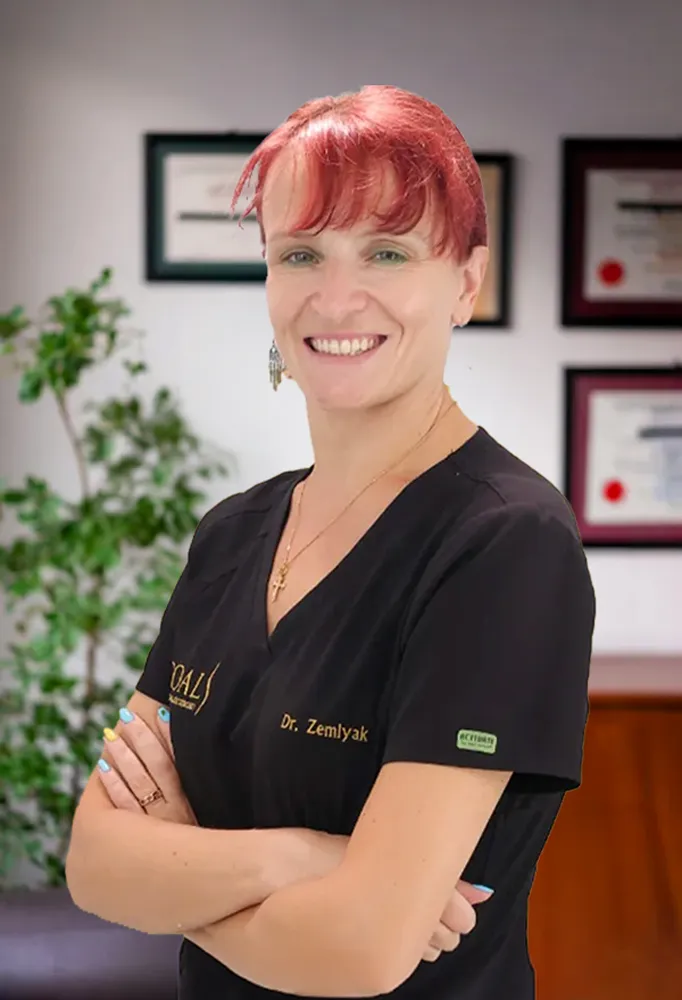
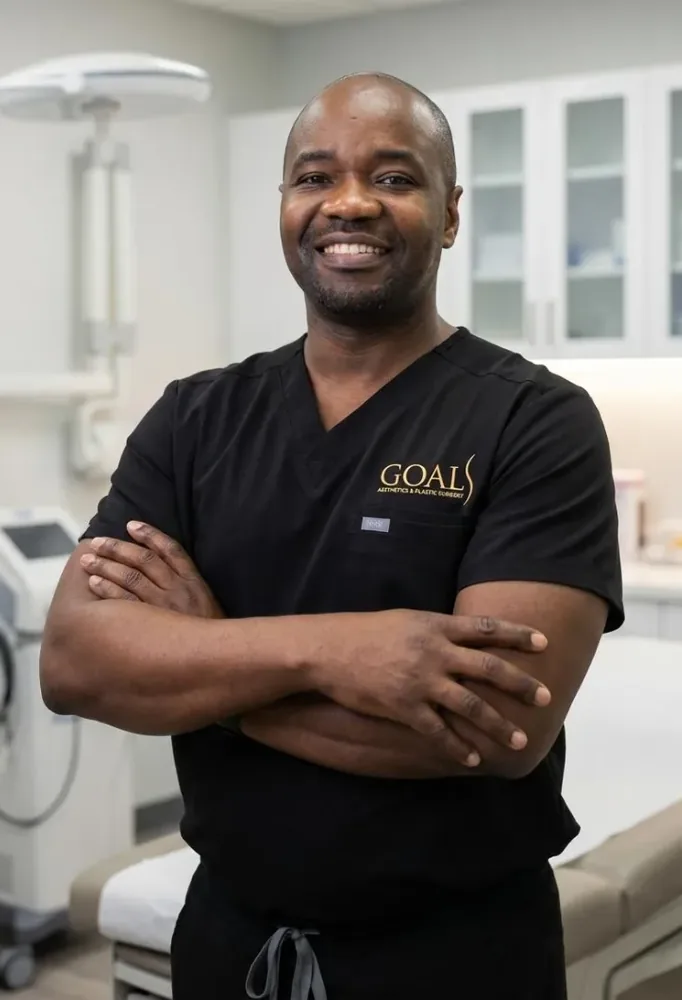
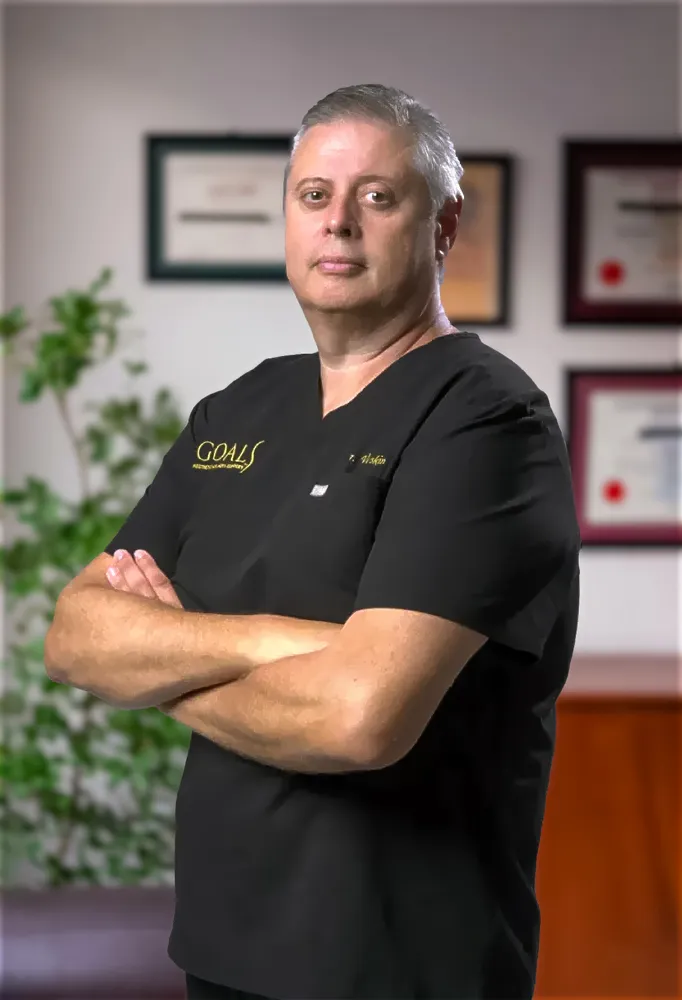
Your beard transplant is performed by a credentialed hair restoration surgeon who knows facial angles, not by a technician. Meet the team first.
Licensed in NY · TX · CA
Safety
A beard reads as real or planted based on angle, so that comes first. Every graft set to how your facial hair grows, under strict protocol.
Sterile, fully equipped rooms in a U.S. accredited clinic.
Local anesthesia keeps you awake and comfortable, no general.
Each graft set to the direction that zone of your face grows.
Follicles kept in nutrient solution so they stay viable out of the scalp.
A credentialed surgeon sets every graft for an even, natural beard.
Why Goals
One local team covers consult, surgery, and every follow-up.
One day in the chair. Home that evening, presentable within days.
An accredited clinic. No flights, no language gap, no missing follow-up.
Surgeons who set each hair to the facial angle so it grows in natural.
U.S. patient-safety law behind you, with real recourse.
One all-in quote from your assessment. No facility or anesthesia extras.
FAQ
Mostly. Texture is matched as closely as your donor allows, and over a year or two transplanted hair adapts and behaves more like beard hair.
Often not quite. Cheek hair is naturally finer and wakes up slower, so give the cheeks a full year before judging them against the chin.
Cobblestoning, where grafts sit slightly proud of the skin. It's uncommon, tied to placement depth, and usually settles as things heal.
Yes, but they draw on the same donor supply. Your surgeon budgets grafts across both rather than spending everything on one.
Not quite, and it doesn't need to be. Roughly half of native density reads as full to the eye. Packing it tighter looks wrong.
No dressings on the face. Expect redness and small crusts for about a week, which is the part most people plan time off around.
A beard transplant is one of several ways we restore hair. Here's what else the Atlanta surgeons offer.
About Beard & Facial Hair Transplant
Beard & Facial Hair Transplant near you
Non-surgical options
A transplant isn't the only route, and it isn't always the first step. These in-office treatments look after the scalp and the hair you still have. Useful alone, and useful for protecting a graft.
Patient Guides
Written by the team that performs the procedure, to read before your consultation.
 How to Verify a Plastic SurgeonFour free checks that take ten minutes: the NPI registry, the state medical board, ABMS board certification and the facility’s accreditation. Step by step, with every link.Read the guide
 Questions to Ask Before Any SurgeryTen questions to ask any plastic surgeon before you book, what a good answer sounds like, the warning signs, and a version you can print and bring to your consultation.Read the guide
General information, not medical advice. What applies to you is decided at a consultation with a licensed surgeon.
Get started
Set on a beard transplant or still weighing it up, either way the Atlanta surgeons will build a safe, realistic plan around your beard.
Prefer to talk now? (833) 462-5769
Learn more
The first thing to understand about a beard transplant is where the hair comes from, because the name misleads people. It does not come from your beard. It comes from the permanent donor zone at the back and sides of your scalp, the same reserve a scalp transplant draws on. Those follicles are harvested one at a time and set into the face individually. The second thing to understand is that the extraction is the easy half. Everything that determines whether the result looks like your beard or like something stuck onto your face happens at placement, and it comes down to angle.
At Goals it runs as a one-day, in-office procedure under local anesthesia with credentialed surgeons in an accredited Atlanta clinic. You stay awake, take breaks, and go home the same evening. What follows covers the angle problem, the five zones a face is planned in, how density actually works, the design conversation, the day itself, the shed that alarms everyone, the growth timeline, and cost, so you know what to expect before you walk into our Atlanta hair transplant clinic. A beard sits on the most looked-at part of you, so understanding the procedure before committing is worth the time.
Scalp hair leaves the skin at a relatively steep pitch. Facial hair does not: it lies low and flat, generally somewhere around thirty to forty-five degrees, and flatter still at the sideburns. That difference is the whole technical problem. A follicle taken from the back of your head is accustomed to growing one way and has to be placed to grow another. Set it too upright and it stands off the face as a bristle that catches the light wrong, and no amount of trimming corrects it. Set it correctly and nobody, including you, can tell which hairs were moved. This is why beard work is generally considered more demanding than a scalp case, despite the smaller graft numbers.
Surgeons plan a beard in zones rather than as one surface, because each part of a face grows differently. Sideburns run almost flat against the skin and connect the scalp to the beard, which is why even small graft numbers there make a visible difference. Cheek hair varies its direction more than anywhere else and demands the most careful mapping. The mustache grows downward. The goatee and chin carry the coarsest hair and the highest density. The sub-jawline grows down and slightly inward, and getting it wrong points hair outward and creates a halo around the jaw. Using one angle across all five is the single most common reason a transplanted beard looks transplanted. A surgeon who treats a face as one surface to be covered has already lost the result before the first graft goes in.
Beard transplants use FUE, follicular unit extraction, is how the donor hair is gathered. Each follicle comes out individually through a punch under a millimetre across, leaving pinpoint marks rather than a line, which heal within days and hide under surrounding hair. We may also use DHI for parts of the work, where an implanter pen creates the site and sets the graft in one motion, giving finer control over direction in the zones that need it most. Which approach suits you depends on your case and gets decided at consultation.
Here is something counterintuitive. A natural beard runs somewhere around thirty to fifty follicular units per square centimetre, but a transplant does not aim to match that. Roughly forty to fifty percent of native density reads as full to the eye, because hair casts shadow and the gaps between hairs stop registering well before the surface is actually covered. Packing grafts tighter does not look fuller; it looks artificial, and it burns donor hair you will want later. Density also varies naturally across a face, heaviest at the mustache and chin and lighter toward the cheeks, and a good result copies that gradient rather than flattening it.
Design happens before anything is placed and you should be fully involved. The surgeon draws the shape on your face and works through it with you: how far up the cheeks the beard should climb, where the lower border sits on the neck, how the mustache meets the chin, how heavy you want the whole thing. This is checked against your bone structure rather than a photograph of somebody else, because a beard that suits one jaw looks odd on another. The lower border in particular gets feathered rather than drawn as a hard line, since a sharp edge is a giveaway. Bring photographs of beards you like, and be honest about how much time you are willing to spend maintaining one.
Everything happens in one visit, usually running several hours depending on graft count. The design is confirmed, then the donor area at the back of the scalp is trimmed and numbed and the follicles are harvested individually. Grafts are sorted and held in nutrient solution while the face is numbed in turn. The surgeon then creates each recipient site and places each graft, changing the angle and direction as the work moves across the zones. You are awake and comfortable throughout, and you go home the same evening rather than to a hotel room somewhere unfamiliar.
Good candidates want a fuller or more even beard and have healthy scalp donor hair to fund it. The most common reasons men come in are genetically patchy growth that never filled in after puberty, gaps that stop the beard connecting, scarring from acne, injury or surgery where follicles were destroyed, and alopecia areata that has since gone quiet. Beard work is also a common part of gender-affirming surgery. Whatever the reason, donor supply is the real limit, and being clear about the look you want matters as much as anything clinical. Age matters less here than on the scalp, since facial hair is not subject to the same pattern loss that drives scalp thinning.
Worth comparing these honestly. Oils and supplements can improve hair that already grows, and do nothing at all where there is no follicle to work with. Fibers and makeup fill gaps convincingly at conversational distance and come off on your collar, your pillow, and in the rain. Minoxidil helps some men thicken existing facial hair and needs to be continued indefinitely. A transplant costs more up front and is surgery. In exchange it is the only option that puts a growing follicle where none was, and it is still there in ten years. It also removes the daily decision, which most patients say afterwards was worth more than they expected.
Recovery is faster than most expect, though the face complicates it because it moves constantly. Small crusts form around each graft and flake away over roughly a week, and the area stays pink for a similar stretch. No dressings go on the face. Sleep on your back if you can, avoid anything that presses or rubs against the grafts, and leave shaving alone entirely until your surgeon clears it. The donor area at the back settles in about the same time. This week is the part most people book time off around. Most men are presentable in public inside a week and fully unremarkable within two.
Somewhere between two and eight weeks the transplanted hairs fall out, and men who were not warned about this are convinced the whole thing failed. It has not. The shaft is shed; the follicle stays exactly where it was placed and enters a resting phase before starting to produce again. Every transplant does this, on the scalp and on the face alike. Knowing it is coming is the difference between a mildly odd month and a genuinely distressing one, which is why we bring it up before surgery rather than after, and real timelines sit in our before & after gallery.
After the shed, first regrowth typically appears around three to four months. Visible density arrives near six, and the result matures somewhere between nine and twelve months, sometimes running to eighteen for full maturation. Cheeks lag behind the chin, which is normal and worth knowing so you do not panic at month seven when the goatee has filled in and the cheeks have not. Transplanted hair also adapts over the first couple of years, gradually behaving more like native beard hair than the scalp hair it started as.
A beard transplant can be planned with other procedures. Many patients combine it with scalp hair transplant work if thinning is being handled anyway. If the whole face is being refreshed, some also consider eyebrow work in the same plan. The important caveat is that beard and scalp draw on one donor supply, so the surgeon budgets grafts across both and decides the order rather than spending everything on whichever you asked about first.
The surgeon makes this result more than any equipment does. The failures men worry about are all placement failures: hair angled to stand up rather than lie flat, uniform angling across zones that should differ, density packed so evenly it reads as artificial, or grafts set too deep so the skin cobblestones with small bumps. Ask to see healed beards photographed at a year rather than on the day. Ask whether the surgeon plans in zones. And ask who is actually holding the instrument, because in many high-volume clinics abroad the honest answer is not the person you consulted with.
The figure follows how many grafts your beard needs and the specifics of your case, so it is confirmed at consultation after your beard and donor area have been examined rather than quoted from a photo. Compared with other **beard transplant atlanta** options, staying local is worth something concrete: no airfare, no hotel, and follow-up with the surgeon who operated. Financing options through outside partners are there so the procedure can be spread over time, and the team will go through what you need. You can read about the surgeons who will treat you on our surgeon profiles page.
The only way to know where you stand is to have someone look at your face and your donor area together, because the beard you want and the beard your donor supply can fund are not always the same thing. A consult is also where the shape gets drawn and argued over, which decides the result more than the surgery does. Bring photographs of beards you like, and ones you do not, since it is far easier to agree on a shape when you can point at something. You will get a straight answer about what is realistic for your face and your donor hair, including if that answer is to adjust what you were picturing.
Free · No obligation
Tell us how to reach you. A patient coordinator calls you back — usually the same day.
Free · No obligation
Ask me anything. I usually reply straight away.
If you share your number, a Goals coordinator may call or text you about your consultation. Message and data rates may apply.
Nora is an automated chat. She cannot give medical advice or say whether a procedure suits you.