Over-Plucking
Years of tweezing and waxing that stopped the hair coming back.
Brows that grow for life. Fine scalp follicles set at the shallow angle brow hair actually grows on, in-office under local anesthesia by credentialed surgeons in Atlanta.
From $5,000

Fuller brows, grown in and settled, judged side by side.
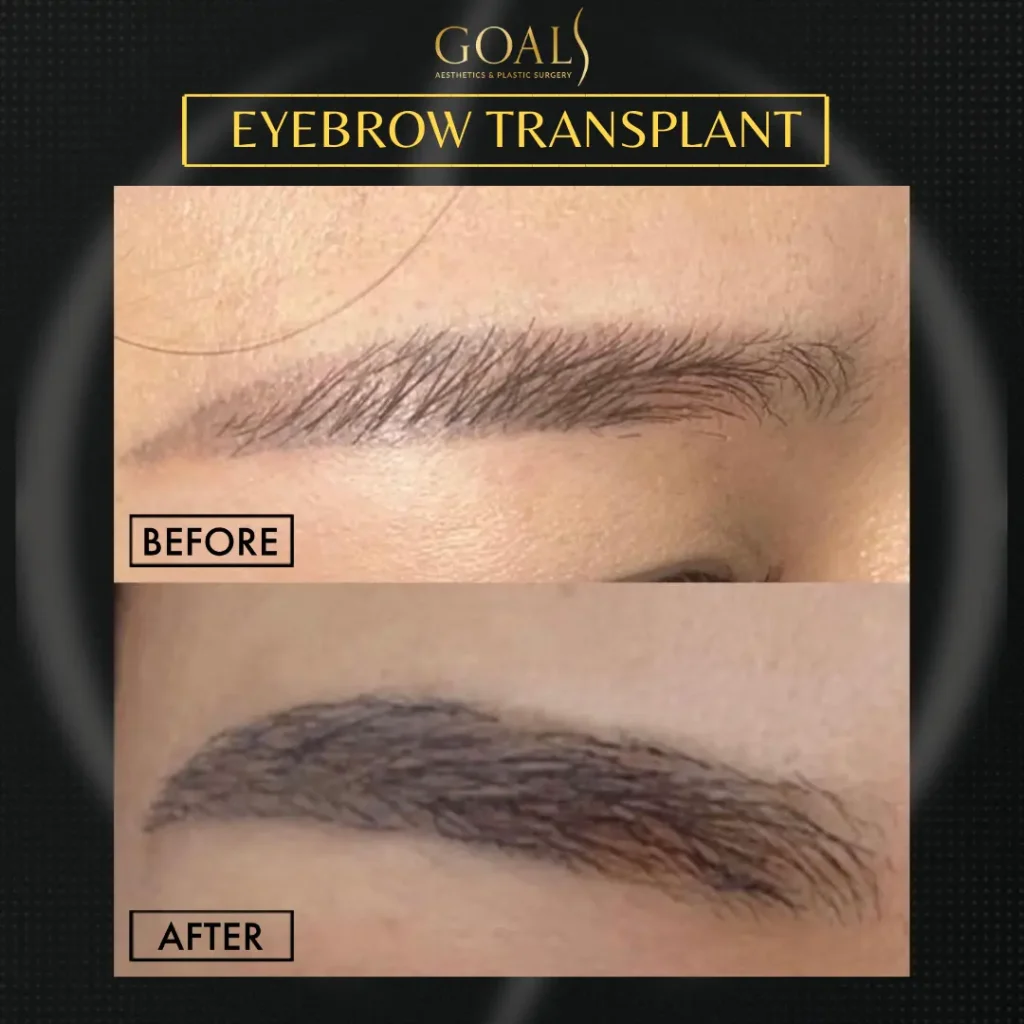
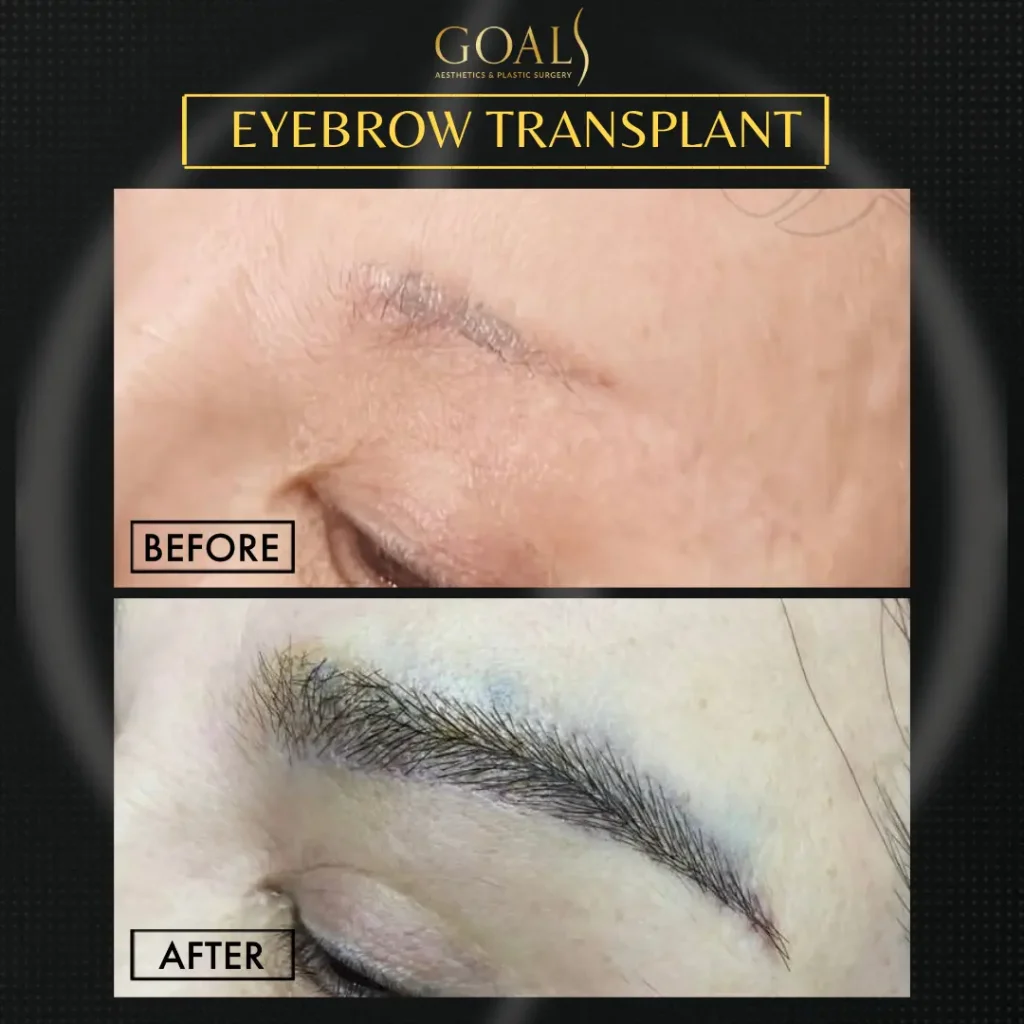
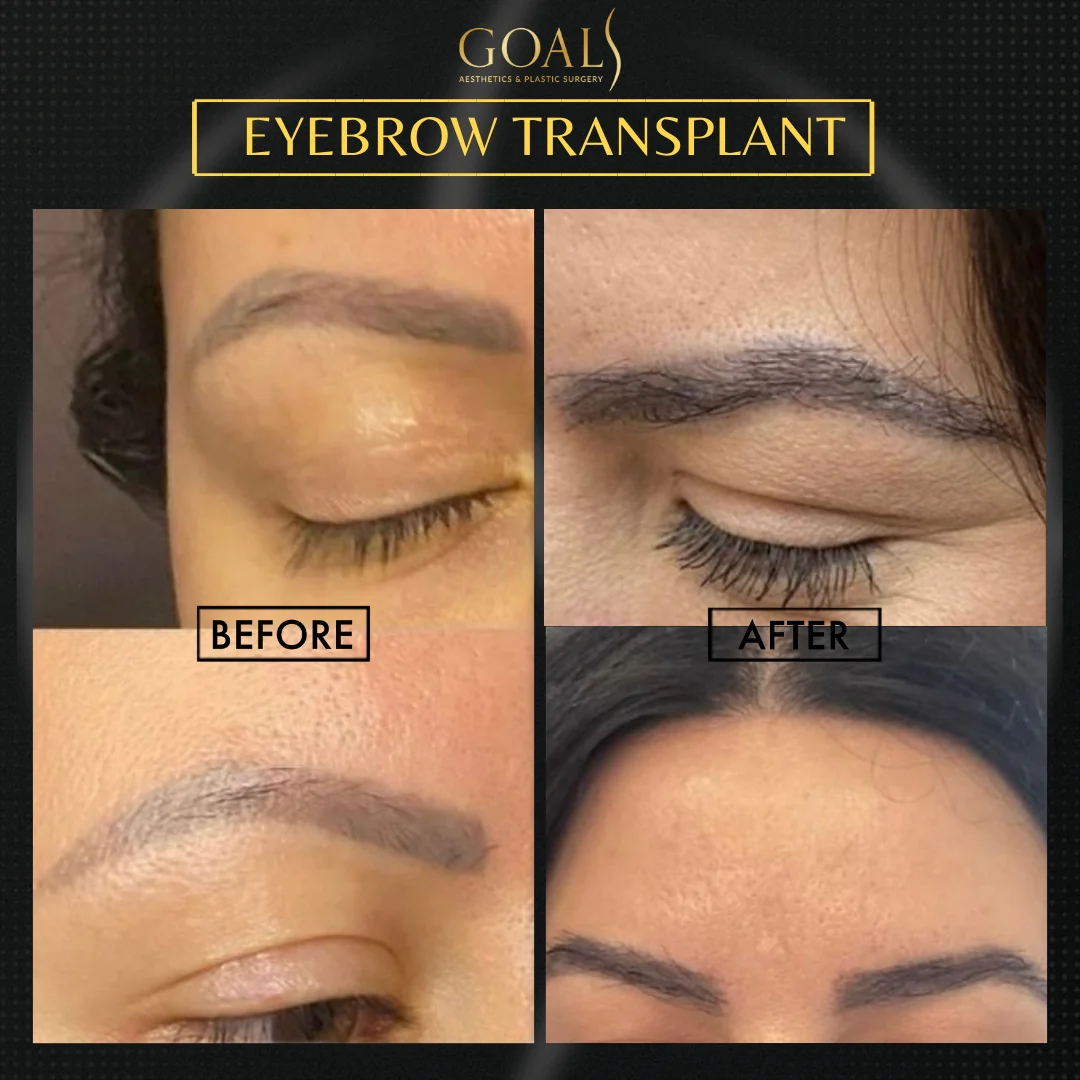
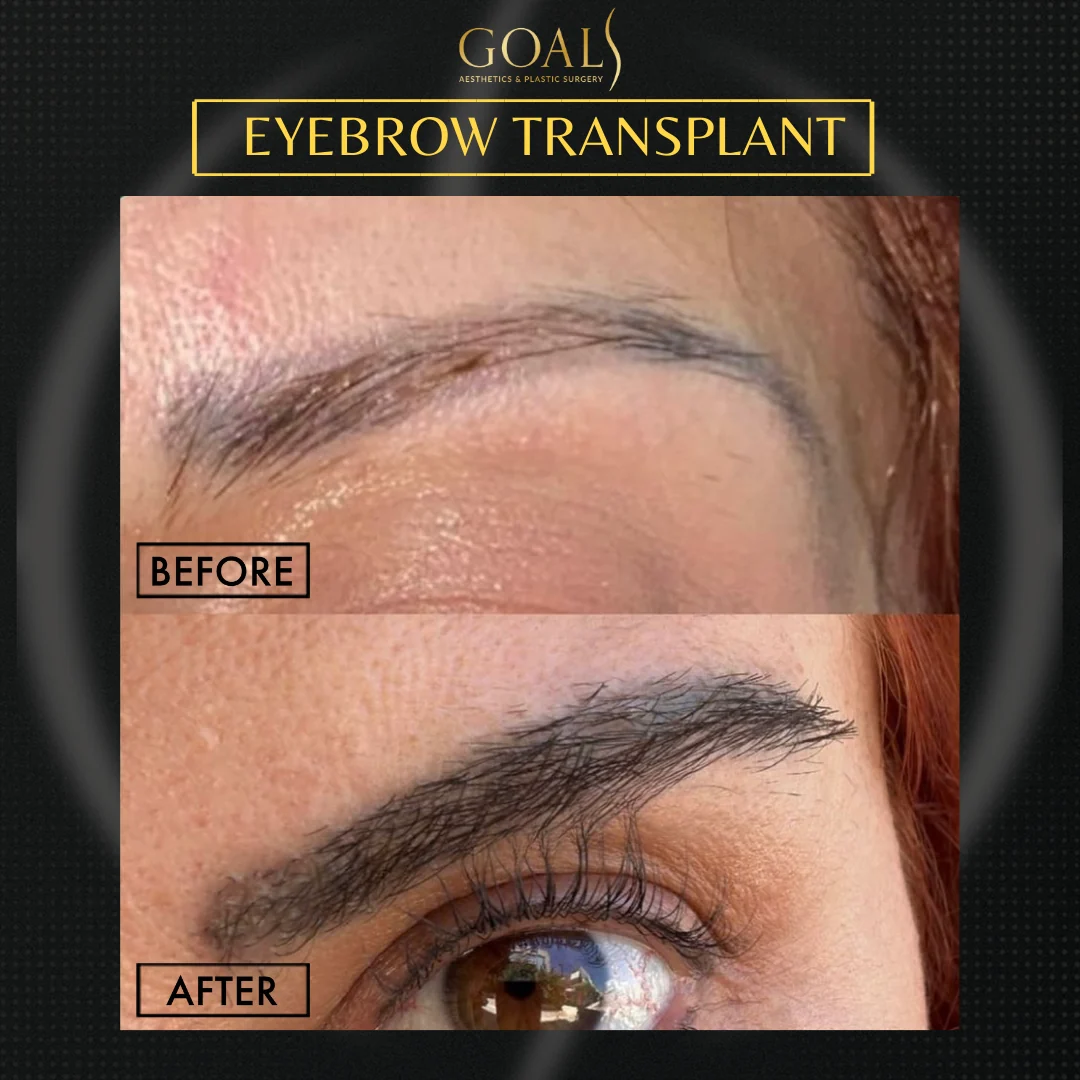
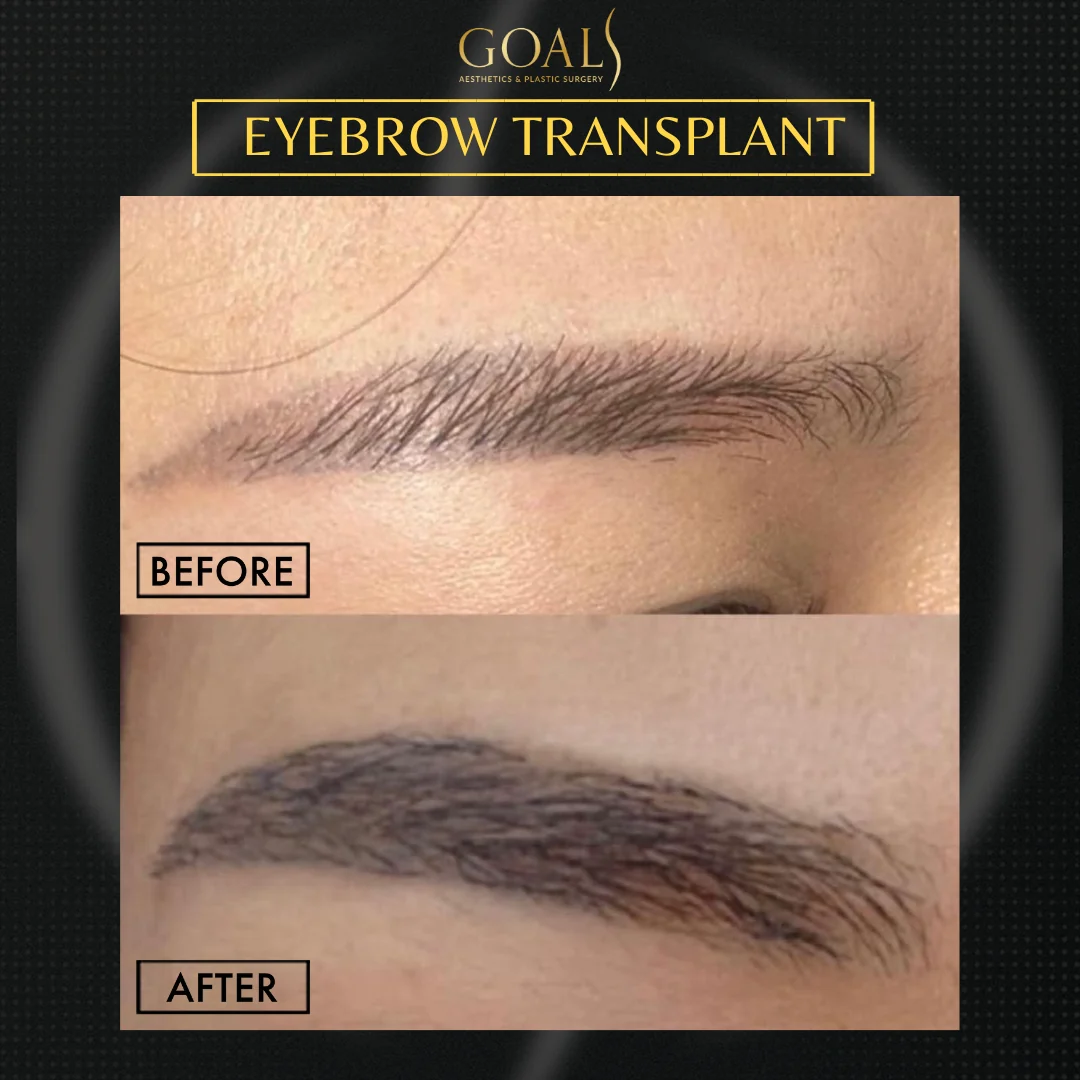
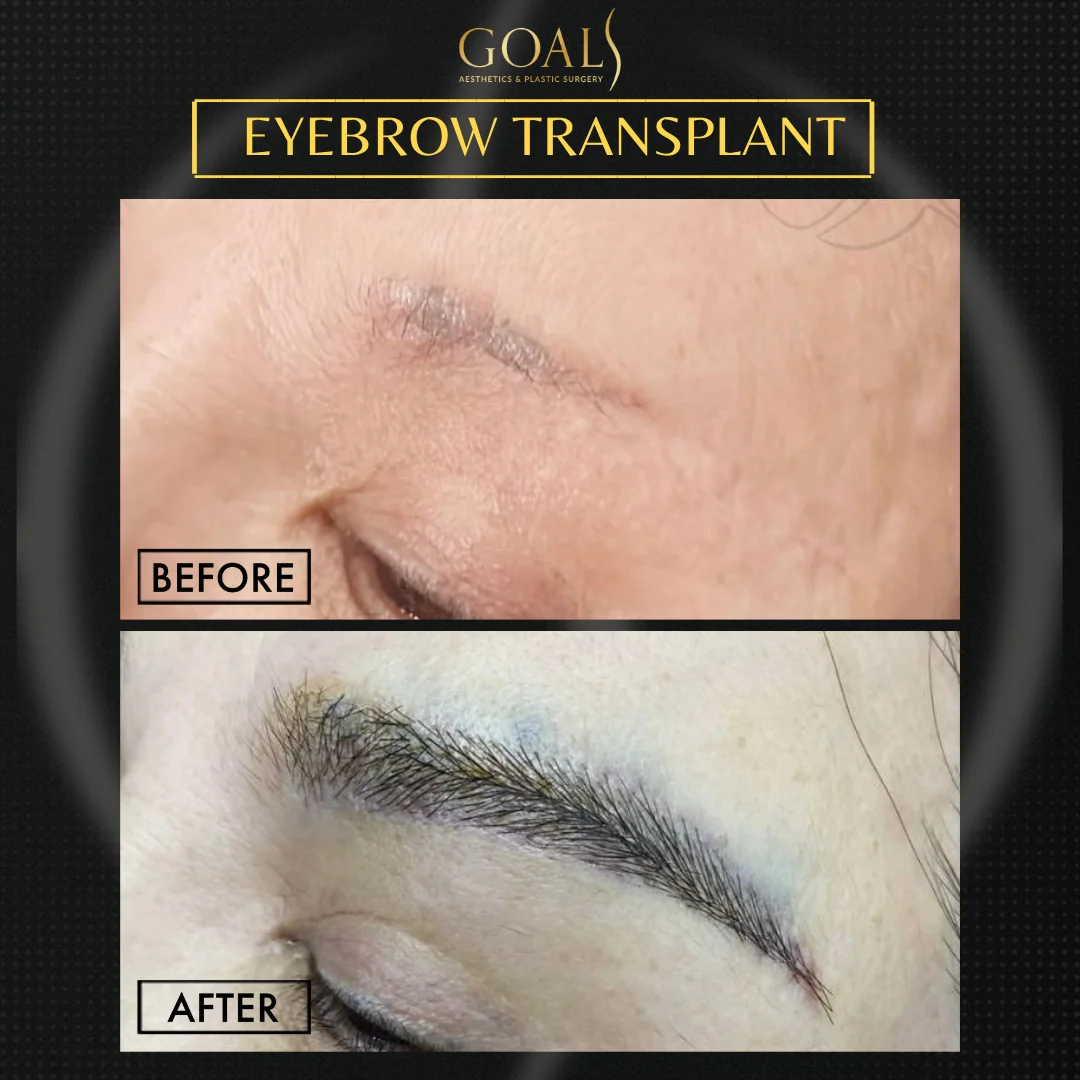
Real patients, published with written consent. Photographs are not retouched or AI-generated. Individual results vary — these images show outcomes for these patients and are not a guarantee of your own.
Hair transplants are done at our Atlanta clinic at 3576 Chamblee Tucker Rd. Call us and we will help you find the nearest Goals clinic that offers them.
Procedures
A transplant rebuilds brows thinned by many causes, in women and men.
Years of tweezing and waxing that stopped the hair coming back.
Patchiness or scarring left behind by repeated microblading.
A brow lost to burns, trauma, or scarring, rebuilt with your own.
Loss from alopecia areata, once the condition has settled and held.
Brows that never grew back properly after chemo or radiation.
Thin or faint brows you were born with, filled out and shaped.
Candidacy
Thin, patchy, or over-plucked brows, and you'd rather have real hair than a pencil every morning. That makes a strong candidate, provided any medical cause has gone quiet first.
Sparse or uneven brows you'd like fuller.
Brows that stopped growing after years of tweezing.
You want brows that grow, not a pencil or a touch-up appointment.
Fine donor hair at the back of the scalp.
Any medical cause has settled and held.
Low-cost transplant packages abroad sound tempting. But brow shape and angle sit in the middle of your face, and a rushed design far from home is difficult and expensive to undo.
| Left Step | Right Step |
|---|---|
| Left StepWeeks comparing clinics online, money wired overseas, then flights and a hotel booked. | Right StepYou come in, or connect online, for a full consult where a credentialed surgeon maps the shape and checks your donor hair. |
| Left StepYou land where you don't speak the language, and the consult happens the same day as surgery. | Right StepPre-op testing, consent, and the brow design are sorted beforehand, in your language, under U.S. standards. |
| Left StepDelicate shaping work runs in a building you've never seen, sometimes by techs rather than your surgeon. | Right StepOn the day a credentialed surgeon sets every brow graft by hand, in a sterile accredited room under local anesthesia. |
| Left StepYou fly home with tender, swollen brows. Days later the shape looks off and nobody can say if that's normal. | Right StepSame-day and in-office. You rest, then head home that evening with clear aftercare. |
| Left StepYour only option is a clinic nearby, where nobody treated you and no notes exist on how the brows were set. | Right StepIf something feels wrong in recovery, you reach the same local team that treated you. We see you in person and sort whatever comes up. |
| Left StepFixing it costs more time and money, while the clinic abroad can only reply on WhatsApp. | Right StepFollow-ups and progress checks happen at the same clinic, with the same team, until the brows grow in. |
A general comparison. Which approach suits you is decided at a consultation with a licensed surgeon.
Compare
| Overseas Package | Goals U.S. Clinic | |
|---|---|---|
| Total cost (real) | The base price, plus flights, a hotel, days off, maybe a fix-up later. | No surprises. All care in one place, spelled out before you book. |
| Who does the work | Techs often doing delicate shaping on your face. | A credentialed surgeon placing every brow graft by hand. |
| Safety & sterility | Variable. You're trusting foreign rules and a short stay. | Accredited U.S. clinic, strict infection control you know. |
| Brow design | Rushed shaping that leaves brows uneven or angled wrong. | A shape mapped to your face, every graft angled flat. |
| Emergency backup | No local clinic. Staff here are left guessing what was done. | In-person follow-up and local help if a problem shows up. |
| Follow-up care | Messages only. Nobody can look at your face. | Booked in-person checkups, progress photos, shape touch-ups. |
| Communication | Language gaps, time zones, slow replies. | A local team, written aftercare, and a number to call. |
| Legal protections | Little recourse once something goes wrong back home. | U.S. patient-safety law and standards apply. |
A general comparison. Which approach suits you is decided at a consultation with a licensed surgeon.
Our surgeons
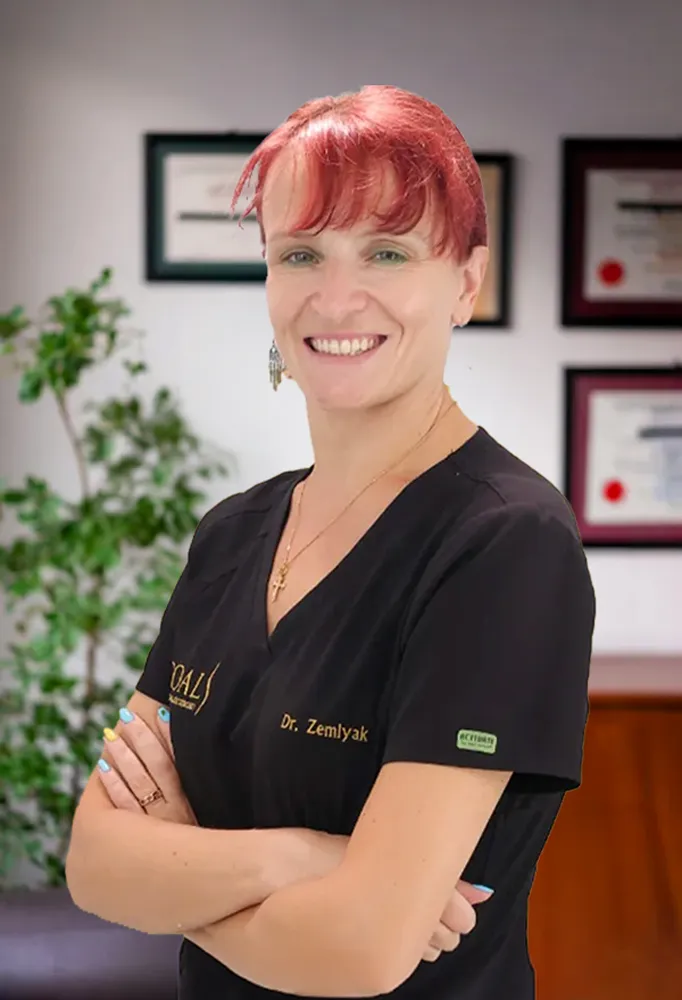
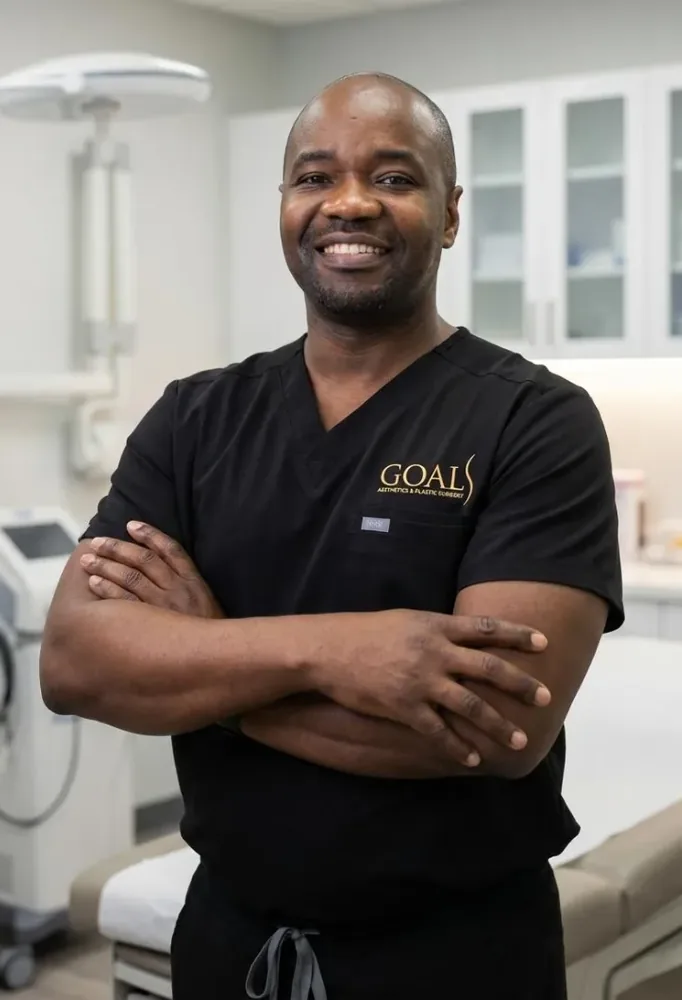
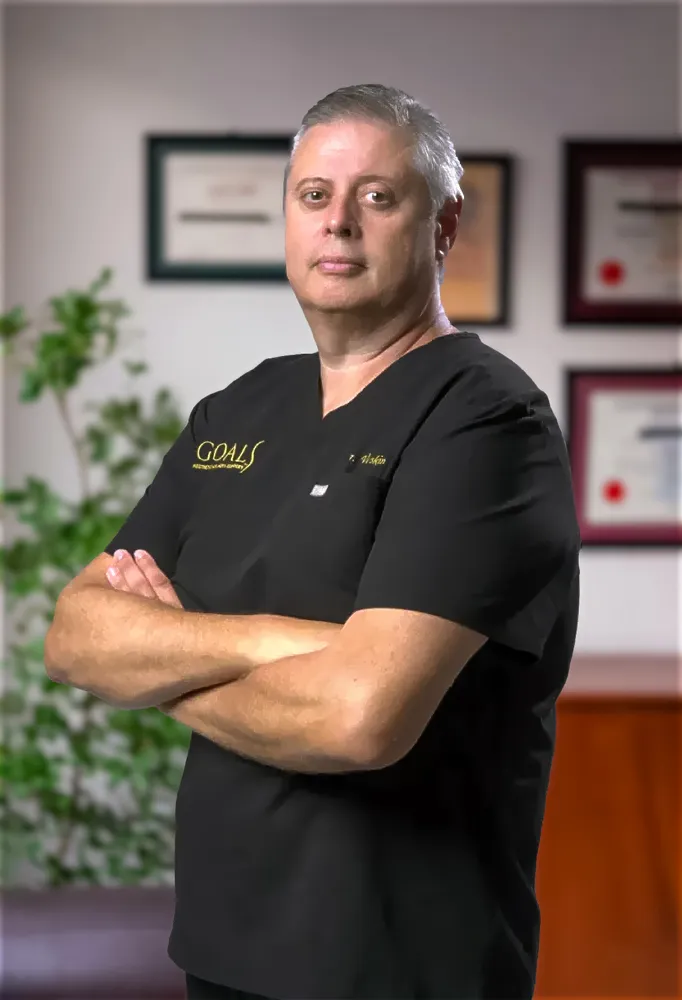
Your brow transplant is performed by a credentialed hair restoration surgeon, not by a technician. Meet the team before your consultation.
Licensed in NY · TX · CA
Safety
Brows sit in the middle of your face, so precision comes first. Strict clinical protocol, and every graft placed by hand at the angle it needs.
Sterile, fully equipped rooms in a U.S. accredited clinic.
Local anesthesia keeps you awake and comfortable, no general.
Soft, fine scalp follicles picked to match your own brow hair.
Each graft set almost flat, following the brow's own direction.
A credentialed surgeon shapes and sets every graft for an even result.
Why Goals
One local team covers consult, surgery, and every follow-up.
One day in the chair. Home that evening, back to normal in a day or two.
An accredited clinic. No flights, no language gap, no missing follow-up.
Surgeons who map the shape to your face and set each hair by hand.
U.S. patient-safety law behind you, with real recourse.
One all-in quote from your assessment. No facility or anesthesia extras.
FAQ
Usually yes, and it's a common reason people come. Grafts go into scarred skin that no longer holds pigment, and real hair covers faded ink.
Different angle entirely. Scalp hair leaves the skin near forty degrees, brow hair nearer ten. Get it wrong and the hairs bristle out.
Commonly a few hundred per side, set as single hairs. The number matters far less than where each one goes and which way it points.
Nobody's brows are identical, and copying that asymmetry is part of the design. We map both with you before anything is placed.
You do. We draw it on and adjust until you're happy, before surgery. Trend shapes date fast, so we steer to what suits you.
Yes. Brow hair stops at a set length, scalp hair doesn't, so expect a trim every few weeks at first, settling down later.
A brow transplant is one of several ways we restore hair. Here's what else the Atlanta surgeons offer.
About Eyebrow Hair Transplant
Eyebrow Hair Transplant near you
Non-surgical options
A transplant isn't the only route for thinning hair, and it isn't always the first step. These in-office treatments look after the scalp and the hair you still have. Useful alone, and useful for protecting a graft once it's in.
Patient Guides
Written by the team that performs the procedure, to read before your consultation.
 How to Verify a Plastic SurgeonFour free checks that take ten minutes: the NPI registry, the state medical board, ABMS board certification and the facility’s accreditation. Step by step, with every link.Read the guide
 Questions to Ask Before Any SurgeryTen questions to ask any plastic surgeon before you book, what a good answer sounds like, the warning signs, and a version you can print and bring to your consultation.Read the guide
General information, not medical advice. What applies to you is decided at a consultation with a licensed surgeon.
Get started
Set on a brow transplant or still weighing it up, either way the Atlanta surgeons will build a safe, realistic plan around your brows.
Prefer to talk now? (833) 462-5769
Learn more
A brow transplant rebuilds a brow out of living follicles rather than pigment. Fine hairs are taken from the back of your scalp and set into the brow one at a time, and the entire result hinges on something most people never think about: the angle they go in at. Scalp hair leaves the skin at roughly thirty to forty-five degrees, which is why it stands up. Brow hair leaves at closer to ten or fifteen, lying almost flat against the face. Set a brow graft at scalp angle and it sticks out like a bristle. That single difference is why a surgeon who is excellent at scalp work is not automatically good at brows.
At Goals it runs as a one-day, in-office procedure under local anesthesia with credentialed surgeons in an accredited Atlanta clinic. You stay awake, comfortable, and go home the same evening. Graft counts are modest compared with a scalp case, commonly a few hundred per brow, and yet the work takes longer per graft than almost anything else we do, because every one is judged individually. What follows covers the design, the angle problem, how it compares with microblading, who it suits, recovery, the trimming nobody mentions, and cost, so you know what to expect before you walk into our Atlanta hair transplant clinic. Brows frame your whole face, so understanding the procedure properly before committing is worth the time.
Brows grow from follicles like any other hair. When those follicles are damaged by years of plucking, by scarring, or by a medical cause, nothing applied to the surface restores them. Pencil covers the gap each morning. Microblading places pigment into the skin to imitate hairs, which works from a distance and gives itself away up close, because ink has no thickness and casts no shadow. A transplant is the only option that puts a physical, growing hair back where one used to be, and that physical presence is what creates real depth rather than the flat look of a drawn brow. Once those follicles take, they are yours, and they behave exactly like the hair they came from.
Not all scalp hair is suitable. A brow needs the finest hair you have, so surgeons take from the nape of the neck or the area behind and above the ears, where it grows thinner and softer than at the crown. Colour and calibre are matched to your existing brow as closely as the donor supply allows. There is one more complication specific to brows: scalp hair often grows in groups of two, three, or four, while a brow is made entirely of single hairs. Every graft therefore has to be separated under magnification before placement, since a clumped graft reads instantly as a dark plug. That separation step is slow, unglamorous, and one of the clearest signs of whether a clinic takes brow work seriously.
Brow transplants use FUE, follicular unit extraction, is how the hair is gathered. Follicles come out individually through a punch under a millimetre across, leaving pinpoint marks that heal within days and disappear under the surrounding hair. No strip is removed and no line is left. Because brow cases need relatively few grafts, the donor area is barely disturbed, and nobody looking at the back of your head afterwards would know anything had been taken. Each graft is then trimmed and inspected under magnification before it goes anywhere near your face, because a damaged follicle is simply a graft that will never grow.
Design comes first and it is the part you should be most involved in. The surgeon draws the shape onto your face and adjusts it with you: where the head of the brow starts, where the arch peaks, how far the tail runs, how thick it sits. This gets checked against your bone structure and how you actually look when you move, not against whatever brow shape is fashionable this decade, because trends age badly and a transplant does not wash off. Perfect symmetry is deliberately avoided too. Real brows are siblings rather than twins, and copying that slight mismatch is what keeps the result from looking manufactured. Bring reference photographs if you have them. It is far easier to agree on a shape when you can point at one.
Everything is done in one visit. The design is finalised and agreed, then the donor area at the back is trimmed and numbed and the fine follicles are harvested one by one. Those grafts are separated into single hairs under magnification while the brow area is numbed in turn. Then the slow part begins. The surgeon makes each recipient site individually, and the site itself determines the angle, the depth, and the direction the hair will grow. Several hundred of those decisions get made per brow. You are awake and comfortable throughout, and you go home the same evening. Nothing about the day requires sedation, and nothing stops you driving yourself afterwards.
Good candidates have thin, patchy, or absent brows and enough fine donor hair to draw on. The most common cause by far is over-plucking, particularly among people who shaped their brows to a thread in the nineties and early 2000s and found the follicles never recovered. Others come after burns or trauma, after alopecia areata that has since gone quiet, following chemotherapy, or with brows that were always sparse. Whatever the cause, it must be stable before surgery. Many people pair it with an eyelash transplant at the same time.
Worth being fair to both. Microblading looks good immediately, costs less up front, and involves no surgery. It also fades over roughly one to three years, needs repeat appointments indefinitely, and the pigment can shift colour as it breaks down, which is why so many of the people sitting in our consult room have had it. Repeated blade work can scar the skin as well. A transplant costs more at the start and is surgery. In return it is real hair that keeps growing, it casts actual shadow, and grafts can be placed into scarred skin that no longer holds pigment at all. The two are not mutually exclusive either; some people keep a light tint between the transplanted hairs.
Recovery is short for work this fine. Most people are back to normal within a day or two. Expect redness and tenderness across the brow at first, with tiny scabs forming around each graft that flake away over roughly a week. Some swelling around the eyes in the first days is ordinary. Sleep with your head raised at first, keep brow makeup off for around two weeks, and resist touching or scratching the area, since rubbing is the easiest way to dislodge a new graft. The donor area at the back settles in the same timeframe. Nothing about the first fortnight is painful for most people, but it does look worse before it looks better, which is worth planning around socially.
Then the transplanted hairs shed, usually within the first few weeks, which alarms people who were not warned. The follicle stays put and resets before producing again. New growth appears around three to four months and the brows fill in toward their finished shape by roughly a year. Photographs across that period are far more useful than checking daily in the mirror, and you can see how real timelines look in our before & after gallery.
This is the detail that determines whether someone is happy two years later. Brow hair naturally stops at a set length. Scalp hair does not, and the follicle keeps that habit after it moves, so your new brows will keep growing past where a brow should end. Expect to trim them every few weeks through the first year, easing off as things settle. Some people also brush them into place each morning. It takes seconds, but it is permanent, and any clinic that skips over this in the consult is selling rather than explaining. Set against a lifetime of drawing them on each morning, most people consider it a fair trade.
They do. The donor follicles come from an area genetically resistant to thinning and they carry that resistance with them, so they keep producing rather than fading the way the original brow hair may have. Not every graft survives relocation; a small proportion is normally lost and that is built into the plan from the outset. What will not stay static is the length, for the reason described above, so permanence here means the hair is there for good rather than that it looks after itself.
A brow transplant sits comfortably alongside other procedures. Many patients add an eyelash transplant for a full refresh of the eye area, or a scalp hair transplant if thinning is being dealt with anyway. Combining related work usually means one recovery instead of several, and your surgeon will advise what sensibly goes together and what is better staged.
Brows are the most visible thing on your face after your eyes, so the choice of surgeon matters more than any other decision here. The failures that show up are almost always about placement rather than technique on paper: hairs angled too steeply so they bristle outward, or worse, every graft set in the same direction, which produces a flat painted-on stripe instead of the crosshatched, layered texture a real brow has. Ask to see healed results at a year rather than photographs taken on the day, and ask who will actually hold the instrument. A clinic that cannot answer that plainly has told you something useful.
The figure comes from how many grafts your brows need and the specifics of your case, so it is confirmed at consultation after your brows and donor hair have been examined rather than quoted from a photo. Compared with other **eyebrow transplant atlanta** options, staying local is worth something concrete: no airfare, no hotel, and follow-up with the surgeon who operated. Financing options through outside partners are there so the procedure can be spread over time, and the team will go through what you need. You can read about the surgeons who will treat you on our surgeon profiles page.
The only way to know whether this suits you is to have someone look properly, at your brows, at your donor hair, and at what caused the loss to begin with. A consult is also where the shape gets drawn and argued over, which is genuinely the most important half hour of the whole process, since the design decides the result far more than the surgery does. Bring photographs of brows you like and, just as usefully, ones you do not. You will get a straight answer about what is realistic for your face, including if the honest answer is that you should wait or do something else instead.
Free · No obligation
Tell us how to reach you. A patient coordinator calls you back — usually the same day.
Free · No obligation
Ask me anything. I usually reply straight away.
If you share your number, a Goals coordinator may call or text you about your consultation. Message and data rates may apply.
Nora is an automated chat. She cannot give medical advice or say whether a procedure suits you.