Tags That Catch & Snag
Growths that rub on collars, jewelry, or razors and turn sore.
Quick, in-office skin tag removal at our Ridgefield clinic. Most tags come off in one short visit, with little downtime and clean healing. Bring a list of spots to check.
From $30 each

Free Consultation
Your consultation is free and carries no obligation.
Goals Aesthetics & Plastic Surgery – Ridgefield
605 Broad AveMon–Sat, 10:00–19:00 local time
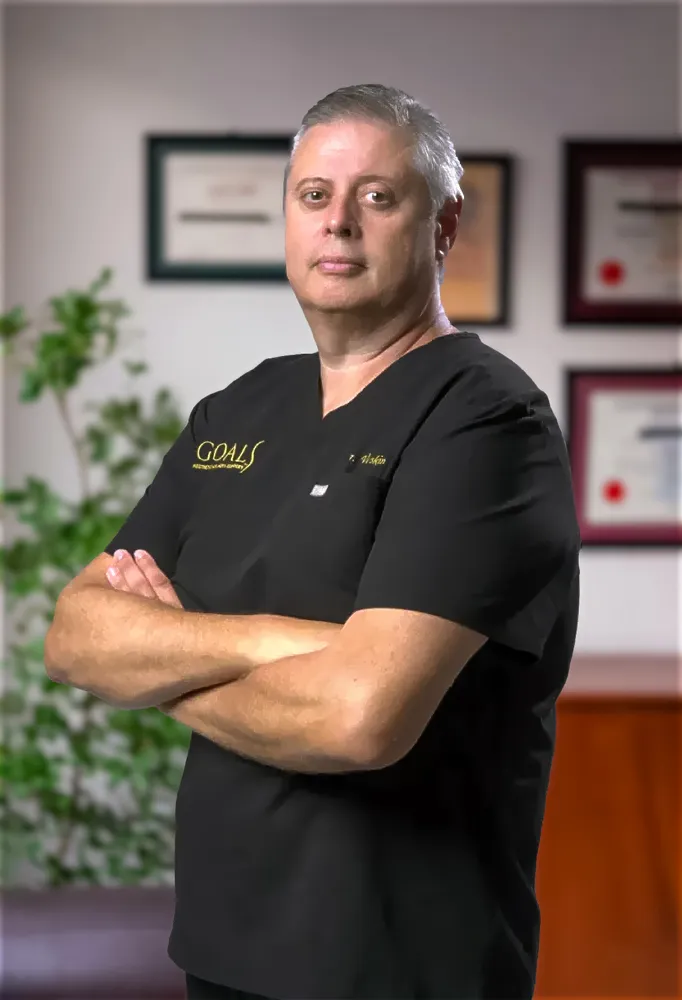
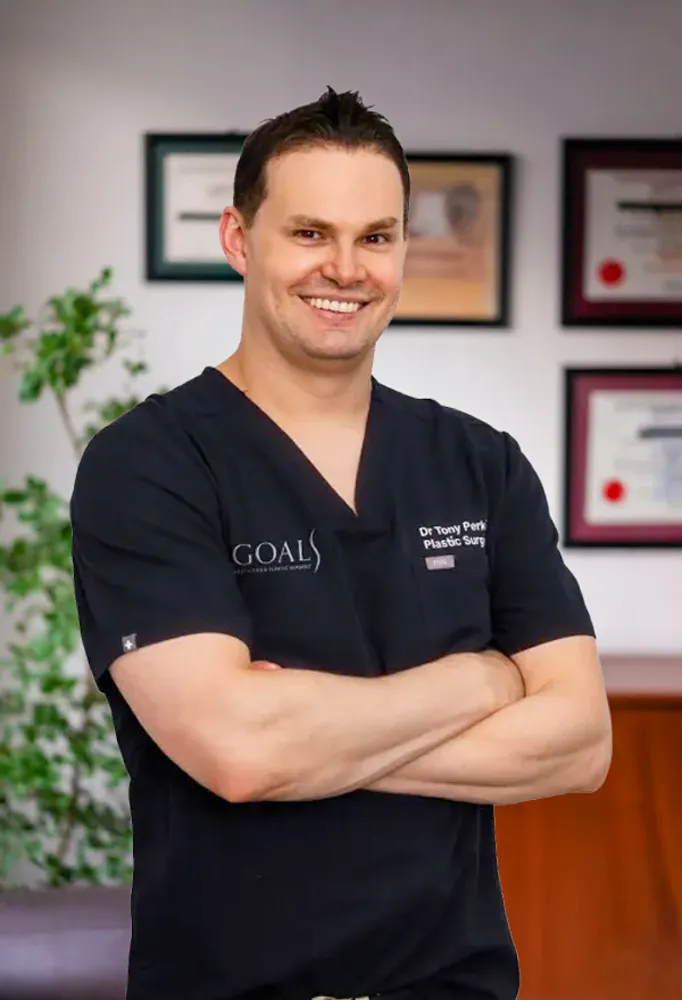
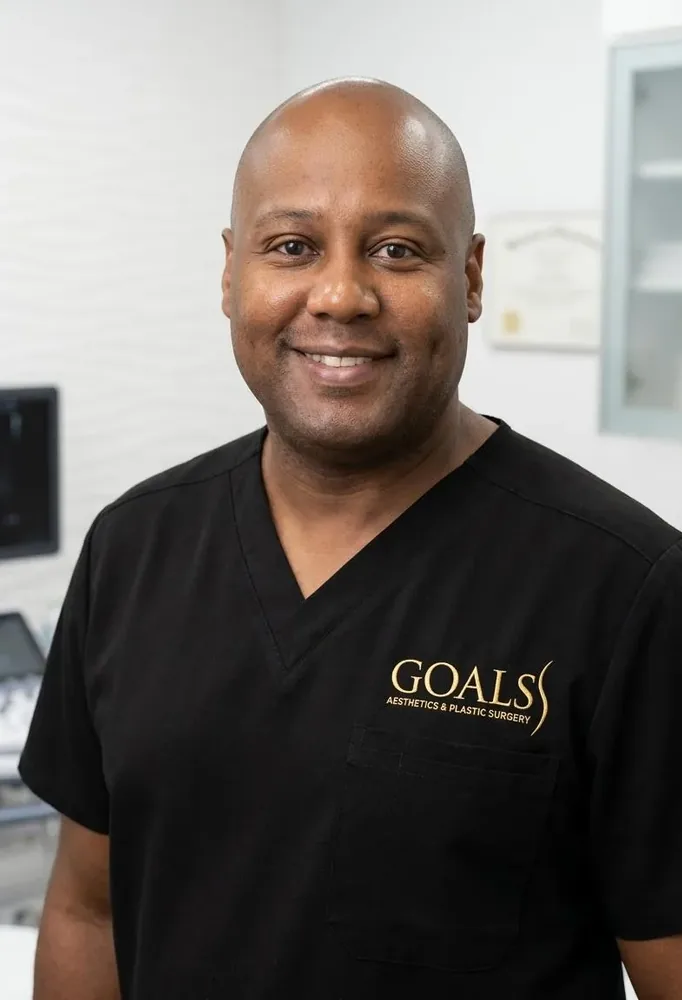
Surgeons: Dr. Sergey Voskin, Dr. Anthony Perkins, Dr. Erwin Douyon
Simple In-Office Skin Care, Handled by an Experienced Team
Skin tags are small, soft growths that show up where skin rubs against skin or clothing, often on the neck, eyelids, underarms, and along the bra line. They are harmless, but they can catch, snag, or bother you. At our Ridgefield clinic we remove skin tags in-office using quick methods matched to each tag’s size and spot.
A clinician looks over each spot you point out, confirms the growths are skin tags, and flags anything that should get a closer look first.
For larger or sensitive spots, a little local numbing goes in so the area is comfortable. Many tiny tags need nothing at all.
The tag is snipped, frozen, or treated with light cautery, then the spot is cleaned and dressed if needed. You leave with simple aftercare notes and head back to your day in Ridgefield.
Candidacy
Skin tag removal is for people with one or more harmless growths they want gone for comfort or looks. It is a fast fix, but a quick check first confirms what they are.
Growths that rub on collars, jewelry, or razors and turn sore.
Tags on the neck, eyelids, or face that you would rather not see, even though they are not harmful.
Clusters under the arms or along the bra line that you want cleared in one visit.
Anything that has shifted in color, size, or shape and should be checked before removal.
Not sure what your spots are?
Our surgeons
Experienced clinicians
Each surgeon’s training and licenses are listed on their own page.

Results vary with your skin, your starting point and how many sessions you have. Your consultation covers what is realistic for you, before you commit to anything.
Prefer to talk now?(833) 462-5769
Seeing how each option handles comfort, safety, scarring, and follow-up helps you decide whether to have a tag removed at the clinic or try a home remedy first.
| Criterion | In-Office at Goals | Home Removal / DIY Kits |
|---|---|---|
| Technique | Snip or cautery by a clinician. | Bands, creams, or scissors, no guidance. |
| Comfort | Numbing used where it helps. | Often painful and messy. |
| Spot Check | Each growth confirmed before removal. | No check done. |
| Safety | Clean technique lowers risk of infection and bleeding. | Higher infection risk. |
| Scarring | Aftercare advice helps spots heal clean. | More likely to scar or mark. |
How it works
6 Steps, One Short Visit.
Tell us which spots bother you and why. The team confirms they are skin tags and lays out your options.
Pick a time and get short pre-visit notes. There is little to prep, just come with clean skin and any questions you have.
A clinician looks over each growth again, confirms what is coming off, and sets aside anything to watch instead.
For bigger or tender spots, a little local numbing goes in first. Most tiny tags are quick enough to skip this step altogether.
Each tag is snipped, frozen, or treated with light cautery. The area is then cleaned and dressed if needed.
You head home the same day with simple care notes. Spots usually heal within a week or two with no fuss.
Benefits
Skin tag removal clears small growths that catch, rub, or bother you, leaving smoother skin. Results are immediate, and most spots heal cleanly with basic aftercare alone.
The growth is gone the same day, with a clean spot.
Tags that rubbed on collars, jewelry, or razors quit bothering you for good.
Whether it is your neck, eyelids, or underarms, clearing a tag you kept noticing in the mirror can make getting dressed and going out feel easier.
Small spots that close up fast once you follow the aftercare.
Peace of mind that each growth was looked at first.
Safety
Every growth is confirmed before removal, clean technique is used the whole way, and you get clear aftercare advice so spots heal cleanly and stay infection-free.
Growths are confirmed as skin tags first, and anything that looks off is flagged before removal.
Sterile tools and clean technique to keep the area safe during removal.
Clear aftercare notes and easy access to the Ridgefield team if you ask.
Pricing
Final cost depends on how many tags you have and where they are, and is confirmed at your consultation and fixed before you book.
Financing / payment plans
Price locked in at the booking stage after consultation.
Transparent pricing: no hidden fees, everything clearly detailed in the contract.
Prices shown are starting prices and depend on the number of areas treated. Final pricing is confirmed at your consultation. Cosmetic procedures are not covered by insurance.
Try it
Pick a procedure to see an estimate. Your numbers stay on your device. We do not see or save them.
This is an estimate, not a quote. It splits the starting price over the months you pick, with no interest. Lenders set your real rate and terms. Your price is confirmed at your consultation.
Why Goals
Ridgefield location on Broad Ave with parking and easy access by car.
Simple aftercare notes and easy follow-ups at the Ridgefield clinic.
A team that handles minor skin work daily.
Most tags removed in one short visit, with little to no downtime.
Thousands of minor skin and cosmetic treatments across the network.
FAQ
Very. Once the area is numbed, each tag takes only a minute or two, so even several together is a short visit, often finished faster than you spent in the waiting room. Many people fit it into a lunch break.
In many cases, yes. Once a provider confirms the growths are harmless tags, the removal often happens right then, so you can come in to have a tag looked at and leave with it already gone.
Essentially none. You can go straight back to work or your day afterward. The treated spot may look slightly pink or form a small scab that fades over about five to ten days, but nothing stops you carrying on as normal.
Often several, sometimes many. Because each takes only a few minutes once numbed, multiple tags can usually be handled in one appointment, with the exact number depending on their size and location. Your provider will let you know what is comfortable to do at once.
Yes, and that quick check is always part of the visit. A provider confirms each spot is a harmless tag before removing it, and flags anything unusual for proper evaluation rather than simply removing it, which is something a home kit cannot do.
Learn more
If you have a skin tag you would like gone, the good news is that almost anyone is a suitable candidate, because this is about as low-stakes as aesthetic treatments come. Still, it is worth understanding what makes someone a straightforward candidate, what to mention to your provider beforehand, and the few situations where a growth should be evaluated before any cosmetic removal.
Rather than a general overview, this page is about exactly that: whether removal is right for you, what to flag in advance, and why the check at the start is part of deciding. Skin tags are harmless growths that people remove for comfort or appearance, and for the large majority in Ridgefield, the answer to "am I a candidate?" is a simple yes, with just a few sensible things to confirm.
For most people, being a candidate comes down to two things: having one or more harmless skin tags, and wanting them gone for comfort or appearance. Both are perfectly valid reasons, and because the procedure is quick, in-office, and low-risk, there is rarely much standing in the way.
You do not need a medical reason to have a tag removed; not wanting it is reason enough. This is one of the lowest-barrier treatments available, which is why so many people who have lived with a bothersome tag for ages find it an easy decision once they realize how few hurdles there actually are.
The most straightforward candidates are people in generally good health with growths that are clearly harmless skin tags. If that describes you, removal is usually a simple matter of choosing which tags to clear and booking a visit.
Age is not a barrier, the number of tags is not a barrier, and their typical locations, on the neck, underarms, eyelids, and folds, are all routinely treatable. In practice, the assessment is less about ruling people out and more about confirming the growths are harmless and noting a few details that shape how the removal is done, which is what the consultation covers.
A few things are worth raising with your provider beforehand, since they can affect how the removal is approached. If you take blood-thinning medications or supplements, mention it, as they can influence bleeding during a minor procedure.
Let your provider know about any skin conditions, and about any tendency toward keloid scarring or changes in pigmentation, since that informs the technique and the choice of method. None of these necessarily rules out removal; they simply help the provider tailor the approach to you safely. Being upfront about your health history is the simplest way to make sure the treatment is both safe and suited to your skin.
Skin tag removal is suitable across the full range of skin types and tones. The methods used are precise and localized, and an experienced provider takes your skin type into account, including any history of keloid scarring or pigmentation changes, and adjusts the technique accordingly to minimize any mark.
For deeper skin tones in particular, that thoughtful, individualized approach is what keeps results clean. So your skin tone is not a barrier to being a candidate; it is simply one of the things a good provider factors into how the removal is carried out.
Part of confirming you are a candidate is the provider examining each growth first to make sure it is genuinely a harmless skin tag and not something that needs a different approach. This is a normal, reassuring step rather than a hurdle: for a typical tag it takes only a moment.
If a growth fits the ordinary, harmless pattern of a tag, it can be removed; if it looks unusual, the provider flags it rather than simply removing it. This quick confirmation is exactly why having it done professionally is worthwhile, and it is built into deciding whether cosmetic removal is the right step for a given growth.
In a few cases, the right course is medical evaluation before any cosmetic removal. A growth that is changing color, size, or shape, that bleeds without an obvious reason, that is growing quickly, or that simply looks irregular falls outside the harmless profile of a tag and should be properly assessed rather than removed on the assumption that it is one.
This is not a cause for alarm, since most growths are exactly what they appear to be, but it is the reason the provider looks first. For anything that does not fit the pattern, evaluation comes before cosmetic treatment, which is part of responsible care.
Skin tags are especially common during pregnancy, thanks to the hormonal shifts and weight changes involved, so it is a frequent question. While removal itself is a minor procedure, elective cosmetic removal is often simply deferred until after pregnancy, partly because some pregnancy-related tags settle on their own afterward and partly as a sensible, conservative default.
There is no urgency to remove a harmless tag, so waiting is usually the easy choice. As always, it is a conversation to have with your provider, who can advise based on your particular situation rather than a blanket rule.
For candidates, the removal itself is quick and done in the office. After confirming the growth is a harmless tag and numbing the area with a local anesthetic, the provider removes it with whichever method suits it: excision, a clean snip at the base with sterile scissors or a blade, or electrocautery, which uses controlled heat to take it off and seal the spot at once. Each takes only a minute or two, several can be treated in one visit, and there are no stitches involved. It is a small, comfortable procedure, which is part of why the candidacy bar is so low.
Recovery asks very little, with little to no downtime, so you can return to your day straight afterward. A small scab tends to form at each treated spot and falls away on its own, usually within about five to ten days, leaving little or no visible mark.
As for cost, there is no single flat price, since it depends on how many tags you have and the method used, and it is confirmed clearly at the consultation with no hidden fees. Because removal is almost always cosmetic, it is generally paid out of pocket rather than covered by insurance, and financing and payment plans are available.
Most people turn out to be straightforward candidates, and a quick check at the first visit confirms it. Our Ridgefield clinic is at 605 Broad Avenue, with parking and easy access, convenient across Bergen County and nearby towns including Fort Lee, Palisades Park, and Bergenfield. Every growth is examined first to confirm it is a harmless tag, anything unusual is referred for evaluation, and the work is done in a sterile setting with the area numbed where it helps.
If you would like to freshen the surrounding skin at the same time, microdermabrasion in Ridgefield pairs naturally with a removal visit, though it is entirely optional. You can read more about the treatment in general on the main skin tag removal page, browse the full services in Ridgefield, meet the team, see real outcomes in the before and after gallery, read more on the blog, or book a consultation.
About Skin Tags Removal
Skin Tags Removal at other Goals clinics
Get started
Whether it is a single skin tag removal, a cluster you want cleared, or another minor skin concern, our team can check it and walk you through your options.
Prefer to talk now? (833) 462-5769
Free · No obligation
Tell us how to reach you. A patient coordinator calls you back — usually the same day.
Free · No obligation
Ask me anything. I usually reply straight away.
If you share your number, a Goals coordinator may call or text you about your consultation. Message and data rates may apply.
Nora is an automated chat. She cannot give medical advice or say whether a procedure suits you.