Discomfort, Activity
Irritation or discomfort during exercise, cycling, or movement.
Labiaplasty in Philadelphia - with privacy and care. A procedure to reduce and reshape the labia for physical comfort and confidence, from experienced providers in Philadelphia.
From $4,000

Free Consultation
Your consultation is free and carries no obligation.
Goals Aesthetics & Plastic Surgery – Philadelphia
1420 Locust St #421Mon–Sat, 10:00–19:00 local time
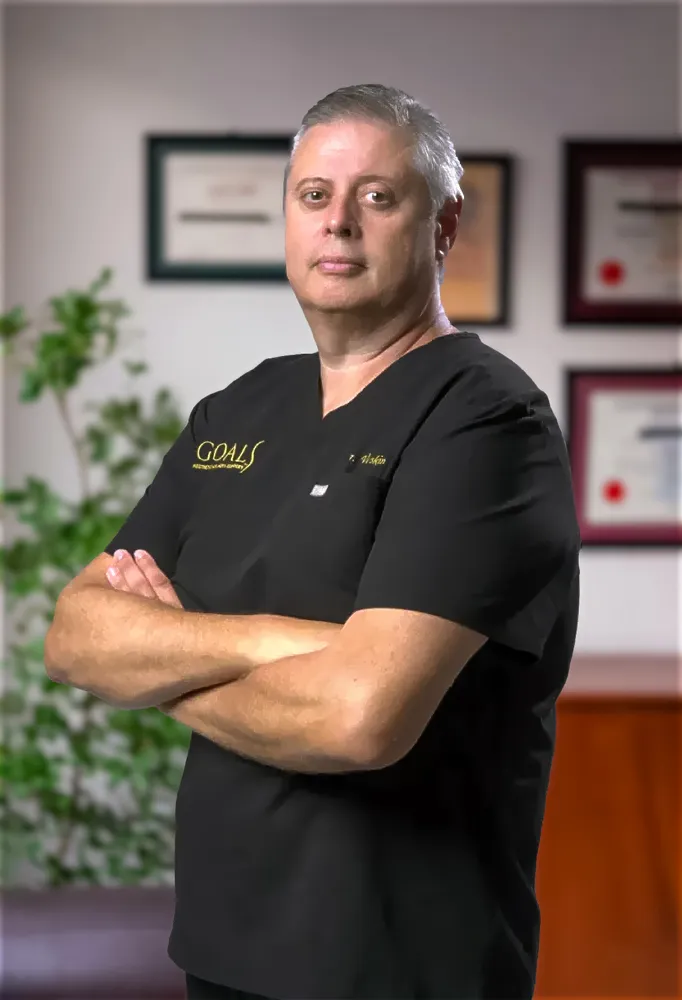
Surgeon: Dr. Sergey Voskin
Redefining Body Contouring with Safety, Artistry, and Care
Labiaplasty reduces and reshapes the labia, most often the inner folds, when their size or shape causes physical discomfort or self-consciousness. Many want relief from irritation during exercise, cycling, or in fitted clothing, or to address asymmetry. The surgeon removes excess tissue and refines the edge for comfort.
In a private, respectful consultation, your provider hears your concerns, examines the area, and explains the technique that fits your anatomy.
The surgeon removes excess tissue and refines the edge with careful technique, shaping a comfortable, natural, symmetrical result.
The area heals over a few weeks. You follow simple aftercare, skip strenuous activity at first, and most people return to daily routines quickly in Philadelphia.
Candidacy
Labiaplasty is for people bothered by the size or shape of the labia, whether for physical comfort during activity and in clothing or for confidence, in good health.
Irritation or discomfort during exercise, cycling, or movement.
Discomfort or visible fullness in fitted clothing, swimwear, or activewear you would like sorted out.
Uneven or enlarged labia that you would like reduced and made more symmetrical.
In good general health, a non-smoker or willing to pause, with realistic goals in mind.
Have questions? Ask discreetly.
Our surgeons
Experienced surgeons
Each surgeon’s training and licenses are listed on their own page.
We do not publish patient photographs for this procedure. Your consultation is private, your records are yours, and nothing is shared without your written consent.
Prefer to talk now?(833) 462-5769
Labiaplasty can use a trim or a wedge technique. Weighing how each removes tissue, the edge, the scar, and what it suits helps your surgeon choose the right one.
| Criterion | Trim at Goals | Wedge |
|---|---|---|
| Method | Removes tissue along the edge. | Removes a V-shaped section. |
| Edge | A new, refined edge. | Keeps the natural edge. |
| Scar Line | Along the length of the edge. | Shorter line. |
| Suits | Dark or uneven edges you would like refined and even. | Keeping the natural border. |
| Chosen | Your surgeon, based on your anatomy. | Your surgeon, based on goals. |
Your journey
6 Private, Supported Steps
Meet our team in a discreet, respectful setting to talk through your concerns, goals, and technique options.
Schedule your procedure and get clear pre-operative instructions so you arrive fully prepared for the day of the procedure.
Complete the required medical checks so the team can confirm you are ready, then walk you through each preparation step.
The surgeon reduces and reshapes the tissue with careful technique, shaping a comfortable, natural, symmetrical result.
You rest, follow simple aftercare to stay comfortable, and avoid strenuous activity while the area heals.
Follow our aftercare program with scheduled check-ins to track healing and support your best result.
Benefits
Labiaplasty reduces and reshapes the labia for a comfortable, natural, symmetrical result. Many feel relief from irritation and more at ease in clothing and in activity.
Less irritation during activity and in clothing.
A more even, balanced shape when the labia were uneven or enlarged before.
From activewear to swimwear, a comfortable, natural result can help you feel more at ease in fitted clothing and through everyday Philadelphia life.
Exercise, cycling, and fitted clothing feel more comfortable.
A natural, refined result that suits your anatomy.
Safety
We review each patient first, use careful surgical technique, and give clear pre- and post-op support, so the procedure stays safe, private, and heals comfortably.
Your health and goals are checked before surgery, so the plan fits you and you are cleared to proceed.
Experienced surgeons using precise, gentle technique for an even result.
A discreet, respectful experience with easy access to the Philadelphia team.
Pricing
Final cost depends on the technique and complexity, confirmed at your private consultation and fixed at booking.
Financing / payment plans
Price locked in at the booking stage after consultation.
Transparent pricing: no hidden fees, everything clearly detailed in the contract.
Prices shown are starting prices and depend on the number of areas treated. Final pricing is confirmed at your consultation. Cosmetic procedures are not covered by insurance.
Try it
Pick a procedure to see an estimate. Your numbers stay on your device. We do not see or save them.
This is an estimate, not a quote. It splits the starting price over the months you pick, with no interest. Lenders set your real rate and terms. Your price is confirmed at your consultation.
Why Goals
A discreet, judgment-free experience from consultation through recovery.
Full aftercare and easy in-person follow-ups in Philadelphia.
Surgeons experienced with intimate care.
Locust St #420 location, easy to reach by transit or car.
Thousands of body-contouring procedures done across our network.
FAQ
Most reasons come down to comfort more than appearance. People often pursue labiaplasty because the size or shape of the labia brings on irritation or chafing during exercise, cycling, or day-to-day activity, or feels uncomfortable in fitted clothing, swimwear, or activewear. Others want to correct asymmetry or excess tissue that has bothered them, sometimes since puberty or after having children. It is a personal call, and a good provider listens without judgment and helps you weigh whether the procedure suits your goals, with your comfort and wellbeing front and center.
Yes, entirely. This is a private subject, and the consultation is handled with discretion and respect throughout. Your provider hears your concerns in a calm, judgment-free space, examines the area professionally, and explains the options clearly. Every question is welcome, however minor it feels, and you can take all the time you want to decide. Many patients say they were anxious to even bring it up and were reassured by how routine and respectful it all felt. Your comfort and dignity come first at every stage.
Recovery is generally straightforward. The first days bring some swelling, tenderness, and bruising that eases steadily, and your provider gives you clear aftercare to keep you comfortable. Most people rest for several days and get back to desk work and gentle routines within roughly a week, while exercise, cycling, and intimacy wait several weeks until the area has healed, as your surgeon directs. The final result comes through as the swelling fully resolves over the following weeks. Following the aftercare closely is what gives you the smoothest recovery and the best outcome.
Because labiaplasty usually reshapes the inner folds and is planned to preserve normal sensation, the goal is comfort, not a change to function. Most people report no loss of feeling, and your surgeon will talk this through honestly at the consultation. The procedure does not involve the vaginal opening itself, so it is not expected to affect future childbirth. If you plan to have children, it is worth bringing up so timing and expectations can be part of the conversation, since each person's situation differs a little.
The result is durable, since the tissue removed does not grow back, and it is built to look and feel natural rather than obviously altered. The aim is a comfortable, refined, symmetrical outcome that suits your own anatomy, not a dramatic change. Hormonal shifts, pregnancy, and aging can affect the area over many years just as they do the rest of the body, but for the great majority of people the gain in comfort and confidence lasts well. Your surgeon sets realistic expectations so you know what to expect over the long term.
Learn more
Most people thinking about labiaplasty arrive with the same real questions, and they're rarely the ones a glossy overview answers. They want to know whether it's a comfort thing or a vanity thing, whether it'll look natural, whether it changes sensation, what recovery is like, and whether they're even a candidate. So instead of working through the topic block by block, this page is built as straight answers to those questions, in roughly the order they come up. Labiaplasty is a surgical procedure, performed by a surgeon, that reshapes and reduces the labia, and the honest answers below should tell you fairly quickly whether it's worth a closer look for you here in Philadelphia.
If a question of yours isn't covered, it's exactly the kind of thing a private consultation answers in a few minutes. Knowing the honest answers up front tends to take most of the anxiety out of even booking that first appointment.
For most people, it's far more about comfort than appearance. The usual driver is physical: enlarged or uneven labia that chafe, tug, or irritate during exercise, cycling, and an ordinary day, and feel uncomfortable in fitted clothing. That's a functional problem, not a vanity one, and relieving it is the most common reason people have the procedure. Confidence can be part of it too, and there's nothing wrong with wanting to feel at ease in your own body, but the idea that labiaplasty is purely cosmetic is mostly a misconception.
The people who put it off the longest are often the ones whose reason was practical all along. A good surgeon treats a comfort-based reason and a confidence-based one with the same seriousness, and never frames the procedure as correcting something wrong. If you found this page because of the chafing rather than the look, you're in good company.
Done conservatively, the goal and the usual result is a natural-looking, balanced appearance rather than something obviously altered. The surgeon removes a modest amount of excess tissue and refines the edge, planning the incisions to fall within the natural folds where they heal discreetly, and closing with sutures that dissolve on their own. The aim is a smaller, more comfortable version of your own anatomy, not a uniform or artificial look.
This is one of the places an experienced surgeon's judgment matters most, since a natural result comes from removing the right amount rather than the most. Realistic before-and-after photos, shared with consent, are often the quickest way to see what natural actually looks like here. The obvious results people worry about almost always come from overdoing the reduction, which a conservative approach is designed to avoid.
This is one of the most common worries, and the short answer to both is no. Labiaplasty reshapes the external labial folds and is planned to preserve normal sensation, so most people report no loss of feeling; comfort, not any change to how things function, is the whole point. And because the surgery doesn't involve the vaginal opening or the internal structures, it isn't expected to interfere with future childbirth.
You don't feel the procedure itself, since it's carried out under local anesthesia with optional sedation. Afterward, most people describe soreness, swelling, and tenderness rather than sharp pain, well managed with simple aftercare. On downtime, most are back to desk work within about three to five days, then ease into light activity over the following two to three weeks, depending on how physical your job and routine are.
Strenuous exercise, cycling, and intimacy are usually paused for around four to six weeks, until the surgeon confirms full healing. The surgery itself is an outpatient procedure, usually taking about one to two hours, and you go home the same day. Swelling settles over the first weeks, so the final result appears gradually rather than immediately, which is completely normal.
Two questions in one, and the second matters most: normal anatomy spans an enormous range, and a difference between the two sides, or labia larger than you'd assumed is typical, is extremely common and not a problem in itself. If nothing is bothering you, there's nothing to fix. You're likely a good candidate if the size or shape is genuinely causing you discomfort or self-consciousness, you're in good general health, and your expectations are realistic, meaning a comfortable, natural result rather than a dramatic change.
If your real question is just whether you're normal, a consultation can be reassuring on its own, with no obligation to proceed, and a good surgeon is as willing to tell you that as to plan anything. Many people leave reassured rather than booked, which is a perfectly good outcome.
It depends entirely on the concern. If the issue is excess tissue, size, or shape, surgery is the relevant tool, since it physically reshapes the area for a lasting change. If instead the concern is tone or mild laxity rather than excess tissue, a non-surgical option like Votiva, which uses energy to firm without removing tissue, may suit you better.
The two address different things, so part of what a consultation does is work out which, if either, fits, rather than defaulting to surgery for a concern that doesn't call for it. The honest job of the conversation is to match the route to the concern, even when that means recommending less.
Yes, and for a procedure this personal that matters as much as anything clinical. The consultation, the exam, and your follow-up care are all handled discreetly and confidentially in a private setting. Any before-and-after photographs are only ever taken and used with your explicit consent, never as a condition of treatment.
You should expect that level of discretion as standard rather than something you have to request, and a good clinic treats the whole process, from the first conversation onward, as the private matter it is. Many people carry this concern quietly for years, so being met with that discretion is often a relief in itself.
There's no single flat price, because the cost depends on the technique used and the complexity of your case, so it's confirmed at your private consultation rather than quoted blind. Your figure is fixed at booking with no hidden fees later, and financing and payment plans are available if you'd like to spread it.
For an intimate procedure, the surgeon's experience and the practice's discretion carry real weight. It's entirely fair to choose a surgeon who performs labiaplasty regularly, to ask which techniques they use and why, and to ask to see discreet examples of their own results. A good surgeon puts your comfort and dignity first, listens carefully, and is honest about what the procedure can realistically achieve and whether it's right for you at all.
Treat any pressure to proceed, or any reluctance to answer your questions plainly, as a reason to keep looking; the right surgeon is comfortable taking the time to make you sure. How a surgeon talks about working conservatively is often a better signal than anything else you'll hear.
If your questions aren't fully answered here, the next step is simply a private, no-pressure conversation where you can ask the rest. Our Philadelphia clinic is at 1420 Locust Street, Suite 420, in Center City, easy to reach by transit or car, with a private, respectful environment for an intimate procedure. Being local helps, since labiaplasty involves a couple of brief follow-up checks during recovery.
If your concern turns out to be tone or mild laxity rather than excess tissue, a surgeon can talk you through Votiva, and where it suits a wider plan, labiaplasty can fit within a mommy makeover. You can meet the team, view discreet outcomes shared with consent in the before and after gallery, or read more on the blog. When you're ready, book a consultation in confidence.
The one practical note is timing: since pregnancy can change the area again, some people prefer to wait until they've finished having children, which is worth raising at the consultation so it can be part of the plan. Raising it openly is genuinely the best move, since your surgeon can tailor both the plan and the timing to your answer.
One honest note worth making: labiaplasty is almost always considered cosmetic and paid out of pocket, with insurance coverage rare, so it's best not to count on it. You're always free to ask for an estimate first and decide privately, at your own pace. Thinking of it as a one-time figure confirmed privately, rather than a number off a price list, tends to make the cost side clearer.
About Labiaplasty
Labiaplasty at other Goals clinics
Get started
Whether you have questions about labiaplasty or are ready to plan, our Philadelphia team can talk it through in a private, respectful consultation and build a safe, realistic plan with you.
Prefer to talk now? (833) 462-5769
Free · No obligation
Tell us how to reach you. A patient coordinator calls you back — usually the same day.
Free · No obligation
Ask me anything. I usually reply straight away.
If you share your number, a Goals coordinator may call or text you about your consultation. Message and data rates may apply.
Nora is an automated chat. She cannot give medical advice or say whether a procedure suits you.