A Fuller, Defined Chest
Projection and width that training alone was not producing.
Solid silicone implants that build chest projection training cannot produce.
From $12,000

Overview
Solid silicone implants that build chest projection training cannot produce.
The implant is placed under the pectoralis muscle through an incision in the armpit, so there is no scar on the chest itself. Sized and shaped to your frame.
Benefits
Pectoral implants add defined volume to the chest that training has not produced. The chest feels tight for the first weeks and the implants settle into their final position over two to three months.
Projection and width that training alone was not producing.
Different sizes on each side are used where the chest started uneven.
The implant does not reabsorb, and the result does not depend on staying lean.
In the armpit, where it is out of view.
Candidacy
Men with a flat or narrow chest, congenital asymmetry, or a chest that will not develop with training.
Training has not produced the size or shape you want, and it has been years rather than months.
Including Poland syndrome and other conditions where one side developed differently.
Fat transfer needs donor fat. Implants do not.
An implant sits under muscle and feels firm. That is the trade for reliable projection.
How it works
Implant size and shape are chosen against your frame and your existing muscle, not from a catalogue.
Through an incision in the armpit, the implant is positioned under the pectoralis major muscle.
The muscle holds the implant in position while everything heals into place.
Compare
How pectoral implants compares with pectoral fat transfer.
| Pectoral Implants | Pectoral Fat Transfer | |
|---|---|---|
| Where the volume comes from | A solid silicone implant | Your own fat, harvested by liposuction |
| How much projection | Substantial and predictable | Modest, and some is reabsorbed |
| If you are very lean | Works regardless | Needs donor fat you may not have |
| Feel | Firm, like muscle | Soft, like tissue |
| Longevity | Permanent, with a device in place | Permanent once the graft survives |
A general comparison. Which approach suits you is decided at a consultation with a licensed surgeon.
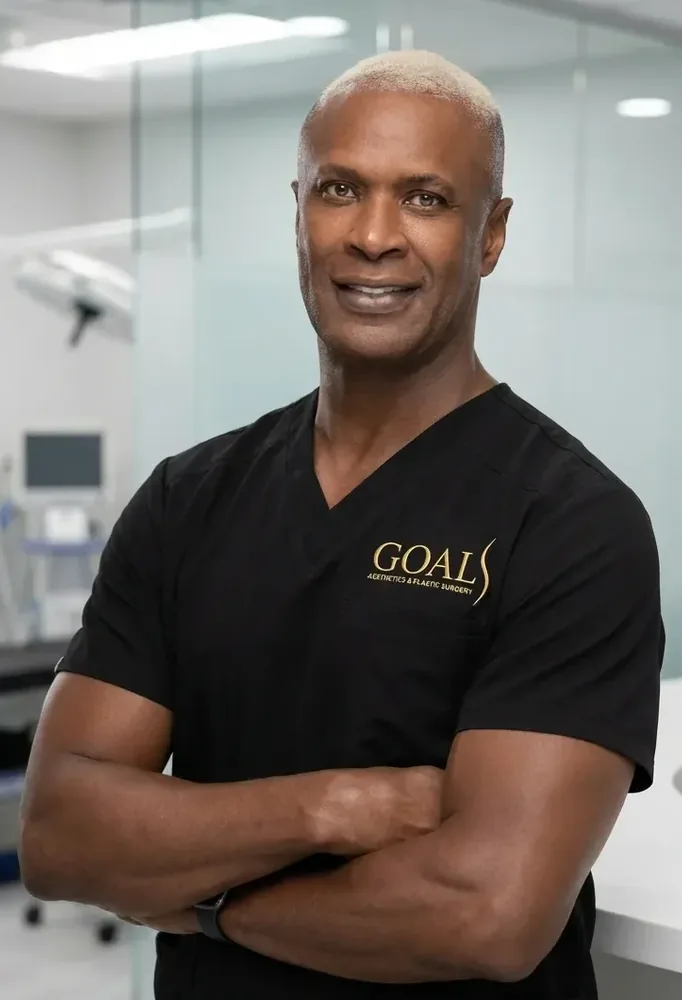
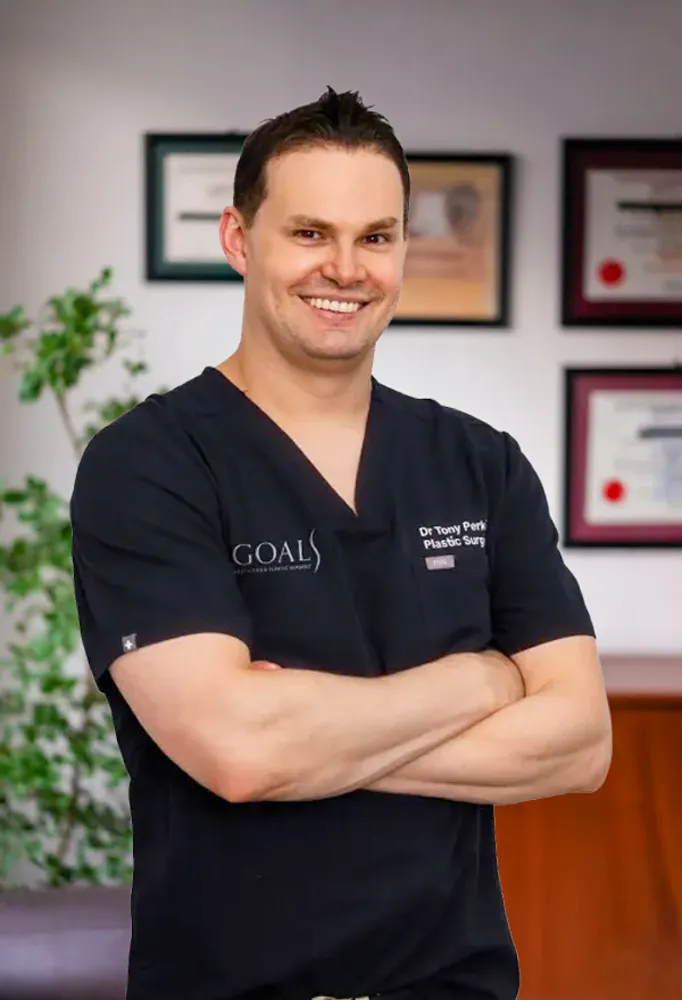
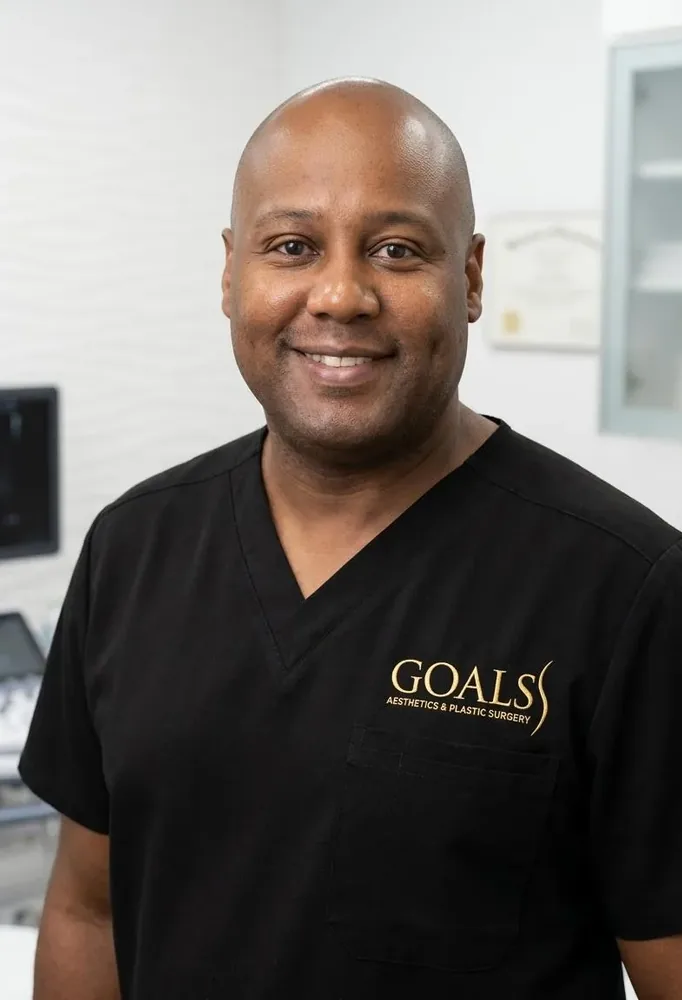
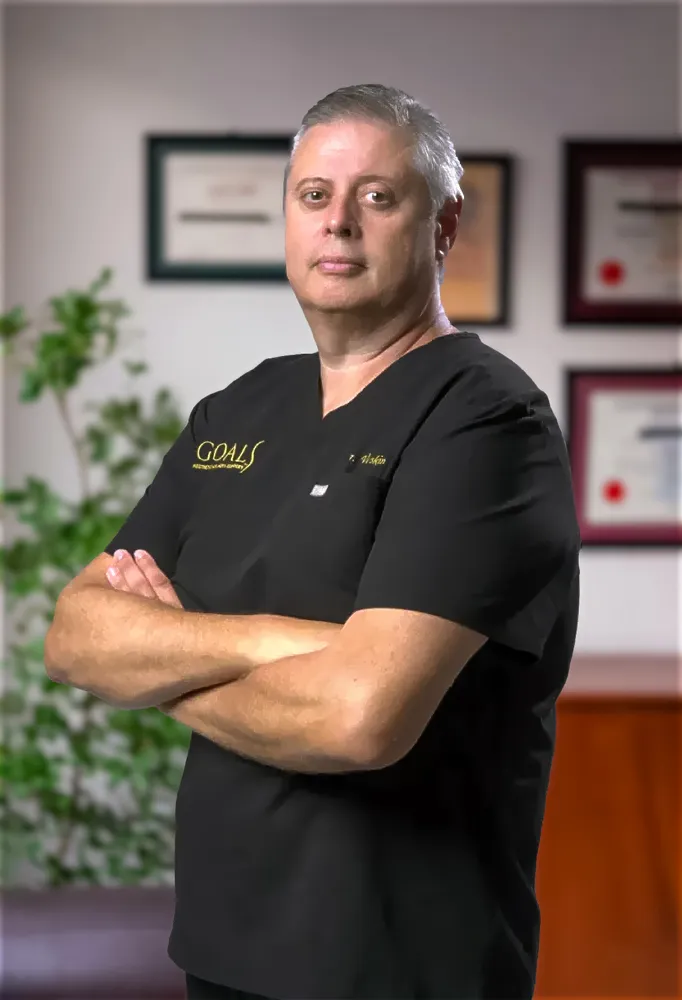
Our surgeons
Licensed in NY · NJ
Licensed in NY · TX · CA
Safety
Every procedure is performed by a licensed U.S. surgeon in an accredited facility. Goals is a management company; the medical practice and the surgeon responsible in your state are named in our terms.
Pricing
Pectoral Implants starts at $12,000. Your price is confirmed at consultation and depends on what your case actually needs. A $500 deposit reserves your surgery date.
Financing available, with monthly plans.
Reserves your date and comes off your balance.
No hidden fees. Everything is detailed up front.
Prices shown are starting prices and depend on the number of areas treated. Final pricing is confirmed at your consultation. Cosmetic procedures are not covered by insurance.
Try it
Pick a procedure to see an estimate. Your numbers stay on your device. We do not see or save them.
This is an estimate, not a quote. It splits the starting price over the months you pick, with no interest. Lenders set your real rate and terms. Your price is confirmed at your consultation.
Your journey
Here is how it goes, step by step.
Go over your goals and your medical history with our New York team, online or at the clinic. Your surgeon confirms pectoral implants is the right operation before your date.
What is being done, where the incisions go, what it will cost, and what result is realistic for your anatomy.
Bloodwork and medical clearance, what to stop taking, and how to set your home up for the first week.
You arrive, you are marked and prepped, and the operation is performed by a licensed U.S. surgeon in an accredited facility.
Follow-ups, drains or sutures out where relevant, and clear instructions you can actually follow.
Swelling resolves over months, not days. The final result is judged at the end of that, not the week after surgery.
Timelines are typical. Your surgeon sets yours at your consultation, and recovery differs from person to person.
Recovery
Recovery is a sequence, not a date. This is the shape of it.
Compression vest, arms kept low.
Desk work. No pushing or lifting.
Gradual return to daily activity, no chest training.
Return to the gym in stages.
Timelines are typical. Your surgeon sets yours at your consultation, and recovery differs from person to person.
FAQ
Implants add projection reliably and permanently. Fat transfer is softer and more natural but needs donor fat and some of it reabsorbs. Which suits you is a build question.
Placed under the muscle and healed in, they stay put. Heavy chest training in the first weeks is what risks displacement.
Yes, from around eight to twelve weeks, building back gradually. Pressing movements come back last because they work directly over the implant.
Under a well-sized implant placed beneath the muscle, most people cannot see it. It can be felt at the edge, particularly in very lean patients.
Different implant sizes on each side are routine, and correcting asymmetry is one of the commonest reasons men have this done.
Clinics
About Pectoral Implants
Patient Guides
Written by the team that performs the procedure, to read before your consultation.
 Recovery Week by WeekWhat recovery looks like after awake liposuction, a Brazilian butt lift and a FlexTuck at Goals: the day of surgery, the first week, the first month and the final result, plus the signs that mean you call us.Read the guide
 Questions to Ask Before Any SurgeryTen questions to ask any plastic surgeon before you book, what a good answer sounds like, the warning signs, and a version you can print and bring to your consultation.Read the guide
General information, not medical advice. What applies to you is decided at a consultation with a licensed surgeon.
Get started
A consultation for pectoral implants is free and carries no obligation. A surgeon will tell you what is realistic for you.
Prefer to talk now? (833) 462-5769
Learn more
Goals has more than one clinic in New York, and pectoral implants is done at two of them: Brooklyn and the Bronx. Which one you pick is mostly about travel, not about how it is done: the procedure, the standards and the prices are the same at both, and follow-ups are easiest at whichever address you can reach without planning your whole day around it. What follows applies to both.
In New York, Goals does pectoral implants in Brooklyn and the Bronx, by licensed U.S. surgeons in accredited facilities. The price is the same at both, so the smart way to choose is by the trip: pick the clinic that is easy to reach for your consultation, because you will go back for follow-ups, and a shorter trip on a sore day matters more than you might think. Consultations across New York are free and offered in English or Spanish, and each one ends with a written quote for your case, not a price range for someone else's.
Pectoral implants are solid silicone implants placed underneath the pectoralis major muscle to add size, projection and width to the chest. Unlike breast implants they are not filled with gel or saline; they are soft solid silicone that cannot rupture or leak. They come in different shapes and sizes, and the choice is made against your frame, your existing muscle bulk and what you actually want the chest to look like. Placed under the muscle, the implant is covered by muscle in exactly the same way your own tissue is, which is what makes the result read as a chest rather than as an object under the skin.
The honest comparison comes down to how lean you are and what you want the chest to feel like. Fat transfer takes fat from elsewhere by liposuction and grafts it to the chest; it feels entirely natural, it improves the donor area at the same time, and it is limited by how much fat you have and by the proportion that survives — typically a good deal less than what was put in. Very lean patients often do not have enough to harvest. Implants provide substantial, predictable projection regardless of body fat, but they feel firm and they are a device. Many patients ultimately combine the two, using an implant for structure and fat to smooth the edges.
Good candidates are in good health, at a stable weight, and have trained consistently without getting the chest development they want — the key word being consistently, because an implant is not a substitute for training that has not happened. Patients with congenital differences such as Poland syndrome, where the pectoral muscle is partly or entirely absent on one side, are among the most transformed by this operation. Patients who compete in sports where a chest implant would be a problem should discuss that specifically. Realistic expectations about how the chest feels are essential.
Under general anesthesia in an accredited facility, usually taking one and a half to two hours. The incision is made in the armpit, along a natural crease, so there is no scar on the chest itself. A pocket is created beneath the pectoralis major muscle, sized precisely to the implant so it cannot rotate or displace, and the implant is inserted and positioned. Both sides are compared throughout, and where the chest started asymmetric, different implants may be used. Drains are sometimes placed. You wake in a compression garment worn across the chest.
The first week is the demanding part: the muscle has been lifted off the chest wall and it protests, particularly when you move your arms. Reaching, pushing and lifting overhead are all restricted, and you will want help for a few days. Most people return to desk work at one to two weeks. Compression is worn for around six weeks. Upper body training is off the table for six to eight weeks, and pressing movements come back last — usually eight to twelve weeks — because they act directly on the muscle covering the implant. Swelling settles over six weeks; the implants settle into their final position over two to three months.
It adds size, projection and width to the chest. It does not build muscle, it does not improve definition on its own, and it will not show at all under a layer of fat — patients carrying weight over the chest are usually better served by liposuction first, or by both. It also does not remove the need to train: an implant sitting under a muscle that is not being maintained looks less convincing over the years. For men whose chest fullness is glandular rather than muscular, the diagnosis is gynecomastia and the answer is a different operation entirely.
Pectoral implants at Goals start at $12,000, confirmed at consultation, with a $500 deposit to reserve your date. Risks include haematoma, infection, implant displacement or rotation — which is why pocket dimensions matter — capsular contracture, asymmetry, and temporary weakness while the muscle recovers. Ask your surgeon how many pectoral implants they place, how they size the pocket, and what their plan is if an implant shifts. Ask to see results in men with your build, since an implant that suits a broad frame looks different on a narrow one.
Free · No obligation
Tell us how to reach you. A patient coordinator calls you back — usually the same day.
Free · No obligation
Ask me anything. I usually reply straight away.
If you share your number, a Goals coordinator may call or text you about your consultation. Message and data rates may apply.
Nora is an automated chat. She cannot give medical advice or say whether a procedure suits you.