A Nipple That Projects
Corrected on the day, and stable once healed.
Releases the tethered ducts and fibres that pull a nipple inward, so it sits out permanently.
From $8,000

Overview
Inverted nipple correction is a minor procedure that frees the tissue pulling the nipple inward, allowing it to project outward instead.
A small incision at the base of the nipple releases the tight bands holding it in, and internal sutures support the new position. Done under local anesthesia in most cases.
Benefits
Correction releases what has been holding the nipple in and supports it while it heals. Swelling settles within weeks and the final appearance is clear within a few months.
Corrected on the day, and stable once healed.
One or both sides treated to match.
The irritation and trapped moisture that comes with a deep inversion usually resolves.
At the base of the nipple, where the change in colour hides them.
Candidacy
One or both nipples that sit inverted, either lifelong or newly so.
Present since puberty in most cases, which is entirely normal and very common.
Appearance, hygiene, recurring irritation, or discomfort — any of these is reason enough.
Or you would rather not spend months on something that reverts.
A nipple that turns in for the first time in adulthood is investigated before anything is planned.
How it works
Your surgeon grades the inversion by whether the nipple comes out with stimulation and whether it stays out.
A small incision at the base releases the fibrous bands and shortened ducts that are tethering it inward.
Internal sutures hold the projection while it heals, so it does not simply retract again.
Compare
How inverted nipple correction compares with suction devices.
| Inverted Nipple Correction | Suction Devices | |
|---|---|---|
| What it addresses | The shortened ducts and fibrous bands pulling the nipple in | Temporary shape while worn |
| Result | Permanent in most cases | Reverts when you stop |
| Time | A day procedure under local anesthesia | Weeks or months of daily use |
| Grade 3 inversion | Treatable | Rarely effective |
| Breastfeeding | Discuss beforehand — technique can preserve ducts | Unaffected |
A general comparison. Which approach suits you is decided at a consultation with a licensed surgeon.
Our surgeons
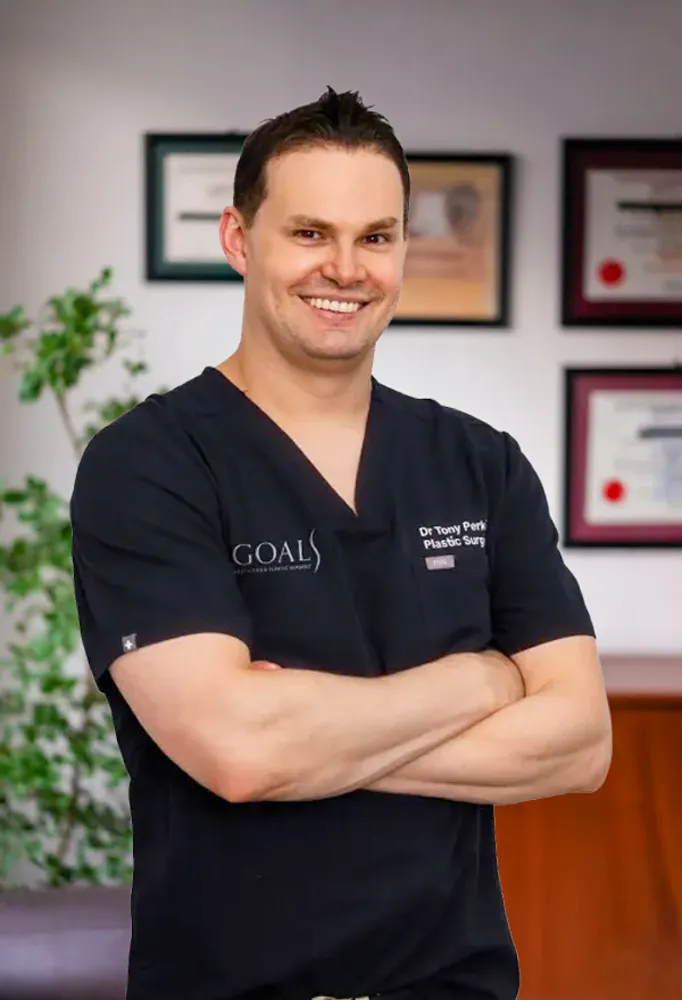
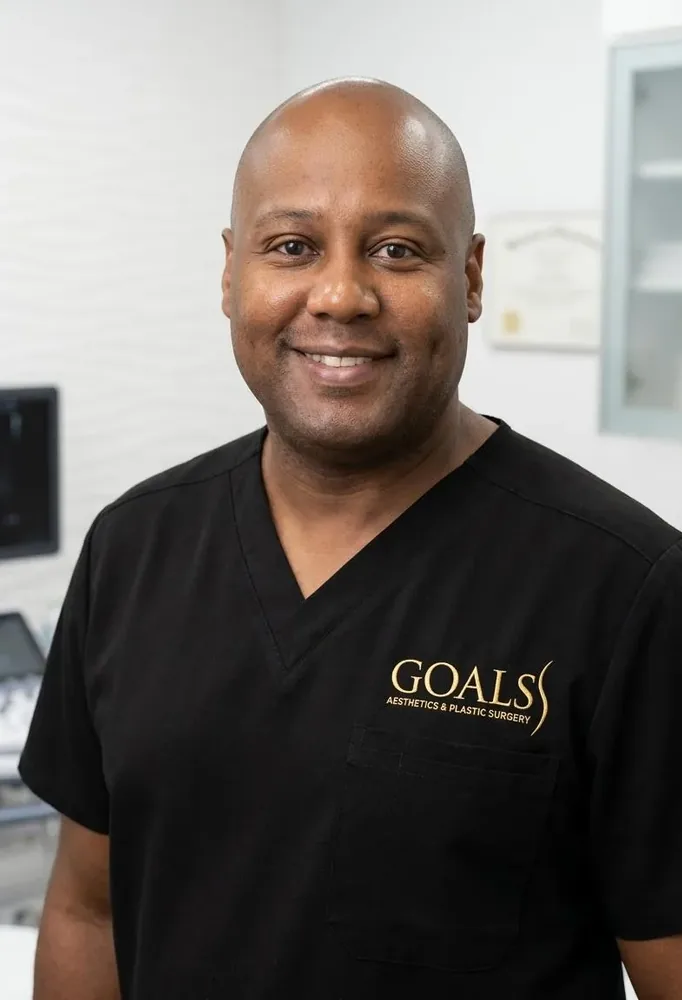
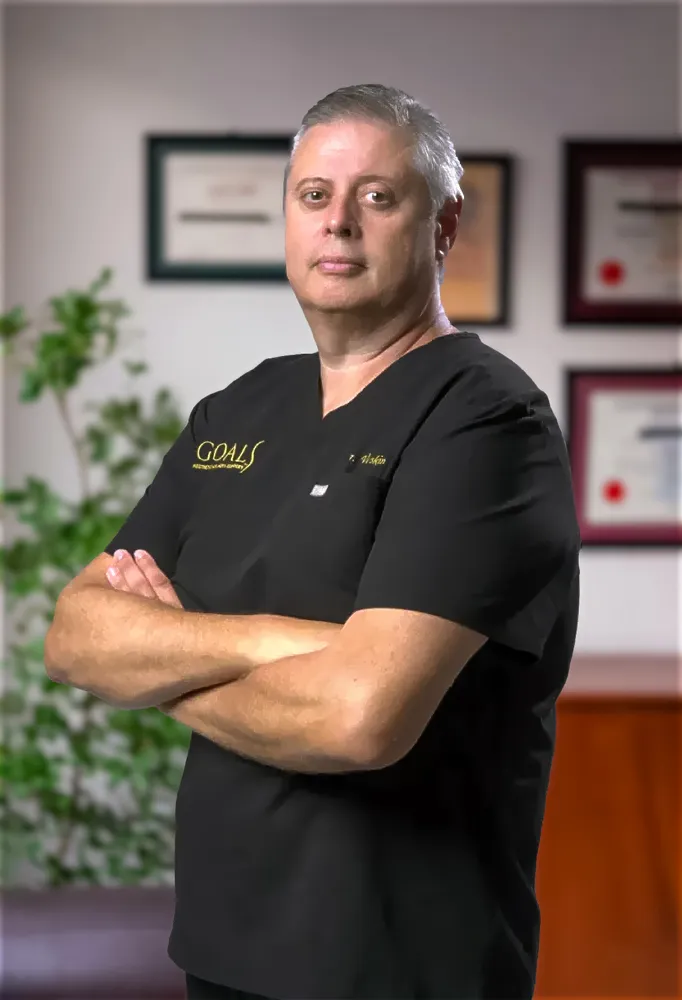
Licensed in NY · NJ
Licensed in NY · TX · CA
Safety
Every procedure is performed by a licensed U.S. surgeon in an accredited facility. Goals is a management company; the medical practice and the surgeon responsible in your state are named in our terms.
Pricing
Inverted Nipple Correction starts at $8,000. Your price is confirmed at consultation and depends on what your case actually needs. A $500 deposit reserves your surgery date.
Financing available, with monthly plans.
Reserves your date and comes off your balance.
No hidden fees. Everything is detailed up front.
Prices shown are starting prices and depend on the number of areas treated. Final pricing is confirmed at your consultation. Cosmetic procedures are not covered by insurance.
Try it
Pick a procedure to see an estimate. Your numbers stay on your device. We do not see or save them.
This is an estimate, not a quote. It splits the starting price over the months you pick, with no interest. Lenders set your real rate and terms. Your price is confirmed at your consultation.
Your journey
Here is how it goes, step by step.
Go over your goals and your medical history with our New Jersey team, online or at the clinic. Your surgeon confirms inverted nipple correction is the right operation before your date.
What is being done, where the incisions go, what it will cost, and what result is realistic for your anatomy.
Bloodwork and medical clearance, what to stop taking, and how to set your home up for the first week.
You arrive, you are marked and prepped, and the operation is performed by a licensed U.S. surgeon in an accredited facility.
Follow-ups, drains or sutures out where relevant, and clear instructions you can actually follow.
Swelling resolves over months, not days. The final result is judged at the end of that, not the week after surgery.
Timelines are typical. Your surgeon sets yours at your consultation, and recovery differs from person to person.
Recovery
Recovery is a sequence, not a date. This is the shape of it.
Dressing in place, minimal discomfort.
Back to normal routine.
Sutures dissolve, swelling settles.
Final position.
Timelines are typical. Your surgeon sets yours at your consultation, and recovery differs from person to person.
FAQ
Correction is designed to be permanent. Grade of inversion affects how much release is needed and the surgeon will grade it at consultation.
It can, because the release involves the ducts. If you plan to breastfeed, say so — it changes the technique.
Usually not. Local anesthesia is sufficient for most cases, and you go home shortly afterwards.
Techniques that divide the ducts are the most durable. Duct-preserving techniques protect breastfeeding but recur more often. Your grade and your priorities decide which is right.
Yes, and it frequently is. Your surgeon will match the corrected side to the other.
Clinics
About Inverted Nipple Correction
Inverted Nipple Correction near you
Patient Guides
Written by the team that performs the procedure, to read before your consultation.
 Recovery Week by WeekWhat recovery looks like after awake liposuction, a Brazilian butt lift and a FlexTuck at Goals: the day of surgery, the first week, the first month and the final result, plus the signs that mean you call us.Read the guide
 Questions to Ask Before Any SurgeryTen questions to ask any plastic surgeon before you book, what a good answer sounds like, the warning signs, and a version you can print and bring to your consultation.Read the guide
General information, not medical advice. What applies to you is decided at a consultation with a licensed surgeon.
Get started
A consultation for inverted nipple correction is free and carries no obligation. A surgeon will tell you what is realistic for you.
Prefer to talk now? (833) 462-5769
Learn more
Goals has one clinic in New Jersey, in Ridgefield, and inverted nipple correction is performed there. The clinic sits at 605 Broad Ave in Bergen County, minutes from the George Washington Bridge and near Route 46. Your follow-ups happen at the same address, so plan your trips with that in mind. What follows applies to the Ridgefield clinic.
Goals operates in Ridgefield, New Jersey, and inverted nipple correction is performed there by licensed U.S. surgeons in an accredited facility. Make sure the trip to the clinic works for you before the consultation, because you will be going back for follow-ups, and an easy trip on a sore day matters more than it sounds like it will. Consultations in New Jersey are free and available in English or Spanish, and each one ends with a written quote for your case rather than a price range for someone else's.
The nipple is tethered inward by shortened milk ducts and bands of fibrous tissue beneath it. It is present from puberty in the overwhelming majority of cases and runs in families. Surgeons grade it in three levels. Grade one comes out easily with stimulation or cold and stays out for a while. Grade two comes out with effort but retracts promptly. Grade three does not come out at all, and is associated with the shortest ducts and the most fibrosis. The grade determines the technique and, importantly, the conversation about breastfeeding. One thing that always needs assessment first: a nipple that becomes newly inverted in adulthood, particularly on one side, is investigated before any cosmetic plan is made.
The operation releases the tether. Through a small incision at the base of the nipple, the fibrous bands are divided and, depending on grade and on your priorities, the shortened ducts are either preserved and stretched or divided. Once released, the nipple projects — but left alone it would retract as it heals, so internal sutures are placed to support the projection while the tissue settles into its new position. Some techniques use a small flap of tissue to act as a strut beneath the nipple. The whole thing takes under an hour and is performed under local anesthesia in most cases.
This deserves a straight answer rather than a reassuring one. Techniques that preserve the ducts protect the possibility of breastfeeding but have a slightly higher rate of the inversion recurring. Techniques that divide the ducts are more reliably permanent but may compromise breastfeeding. For grade three inversion, the ducts are often so short that duct-preserving correction is not realistic. If future breastfeeding matters to you, say so at the consultation and it will shape the technique chosen — and understand that inverted nipples can make breastfeeding difficult regardless of surgery. If it does not matter to you, the more durable option is available.
Anyone bothered by an inverted nipple, on one side or both, who is in good general health. There is no lower age limit beyond being fully developed. It is commonly performed alone, and equally often at the same time as a breast augmentation, lift or reduction, since the incisions and recovery overlap. Patients with a newly inverted nipple in adulthood need imaging first. Patients who have tried suction devices without lasting success are typical, and they represent most of the people who come in for this.
This is one of the gentler procedures on this site. Expect soreness, swelling and bruising around the nipple for the first week, and a dressing that protects the projection. Most people are back at work the next day or the day after. Fine sutures dissolve or are removed at seven to ten days. Sleeping on your front is uncomfortable for a couple of weeks. Full exercise at three to four weeks. Sensation is often altered for a few weeks and typically returns; occasionally it changes permanently, which is discussed beforehand. The final appearance settles at around three months.
Recurrence is the main thing to understand, and it varies by technique and by grade. Duct-preserving methods carry a higher recurrence rate than methods that divide the ducts, and higher-grade inversion recurs more often than lower-grade. Wearing the protective dressing as instructed and avoiding pressure on the nipple during healing genuinely matters, because the internal sutures are holding a position against tissue that wants to pull back. If recurrence does happen, revision is possible, usually with the more definitive technique.
Inverted nipple correction at Goals starts at $8,000, confirmed at consultation, with a $500 deposit to reserve your date. It is often combined with other breast surgery in one procedure. Risks include recurrence, altered or lost sensation, infection, asymmetry between the two sides, and scarring at the base of the nipple. Ask your surgeon which grade yours is, which technique they propose and why, and specifically what that technique means for breastfeeding — a surgeon who answers that question precisely is one who has thought about it.
Free · No obligation
Tell us how to reach you. A patient coordinator calls you back — usually the same day.
Free · No obligation
Ask me anything. I usually reply straight away.
If you share your number, a Goals coordinator may call or text you about your consultation. Message and data rates may apply.
Nora is an automated chat. She cannot give medical advice or say whether a procedure suits you.