
FUE Hair Restoration
Minimally invasive technique with individual follicle extraction for natural results.
at Goals® Hair Restoration

They are done at our Atlanta clinic on Chamblee Tucker Road.
Clinics
Hair transplants are done at our Atlanta clinic at 3576 Chamblee Tucker Rd. Call us and we will help you find the nearest Goals clinic that offers them.
Procedures
Minimally invasive technique with individual follicle extraction for natural results.
Strip harvesting method ideal for patients needing maximum graft counts.
Permanent facial hair restoration for patchy or thin beard areas.
Natural, permanent eyelash density for a fuller, youthful appearance.
Specialized techniques for curly and textured hair restoration
Procedures
Rebuild natural hair growth with transplant techniques made for lasting, realistic results. A good fit for anyone in Atlanta facing thinning or hair loss, or looking to rebuild density with a plan of their own.
Surgical follicle relocation that rebuilds hairlines and restores lasting density across thinning zones.
Individual follicles extracted and placed one by one for minimal scarring and natural-looking density.
Strip harvesting that yields a high graft count in one session, a strong option when broader coverage is the goal.
Tailored approach for Afro-textured hair, preserving natural curl patterns and ensuring balanced, natural results.
Precise beard, mustache and sideburn restoration that fills patchy areas with even, natural-looking growth.
Eyebrow and eyelash restoration that rebuilds sparse areas with careful placement for a natural, even look.
Results
See results from real patients.
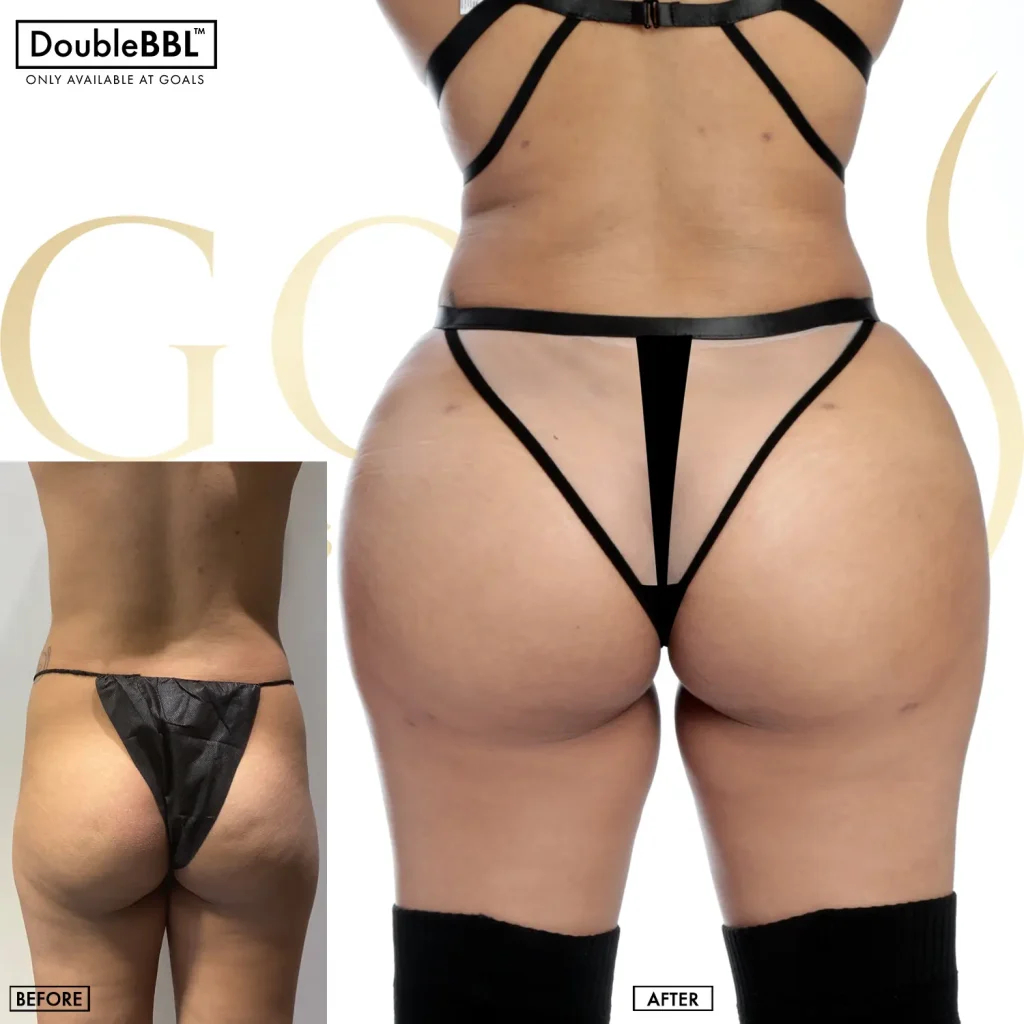
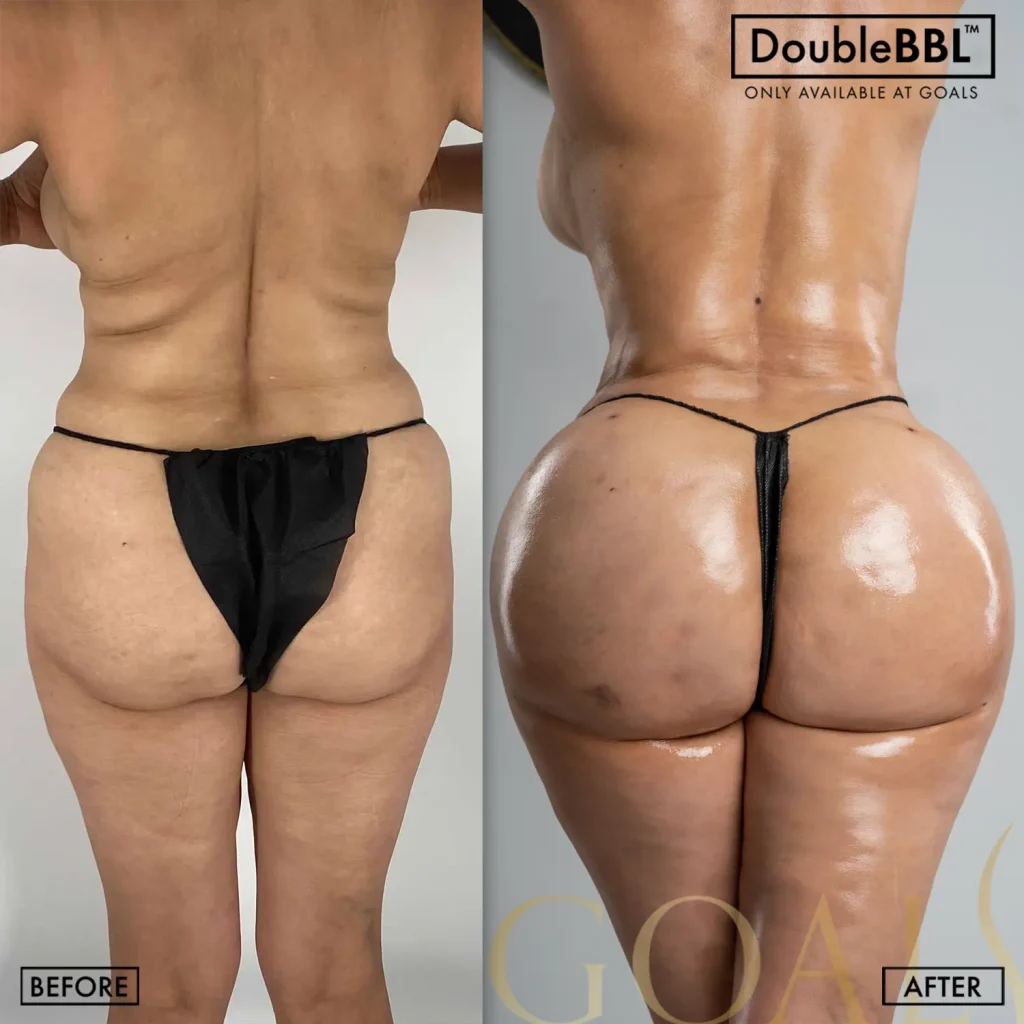

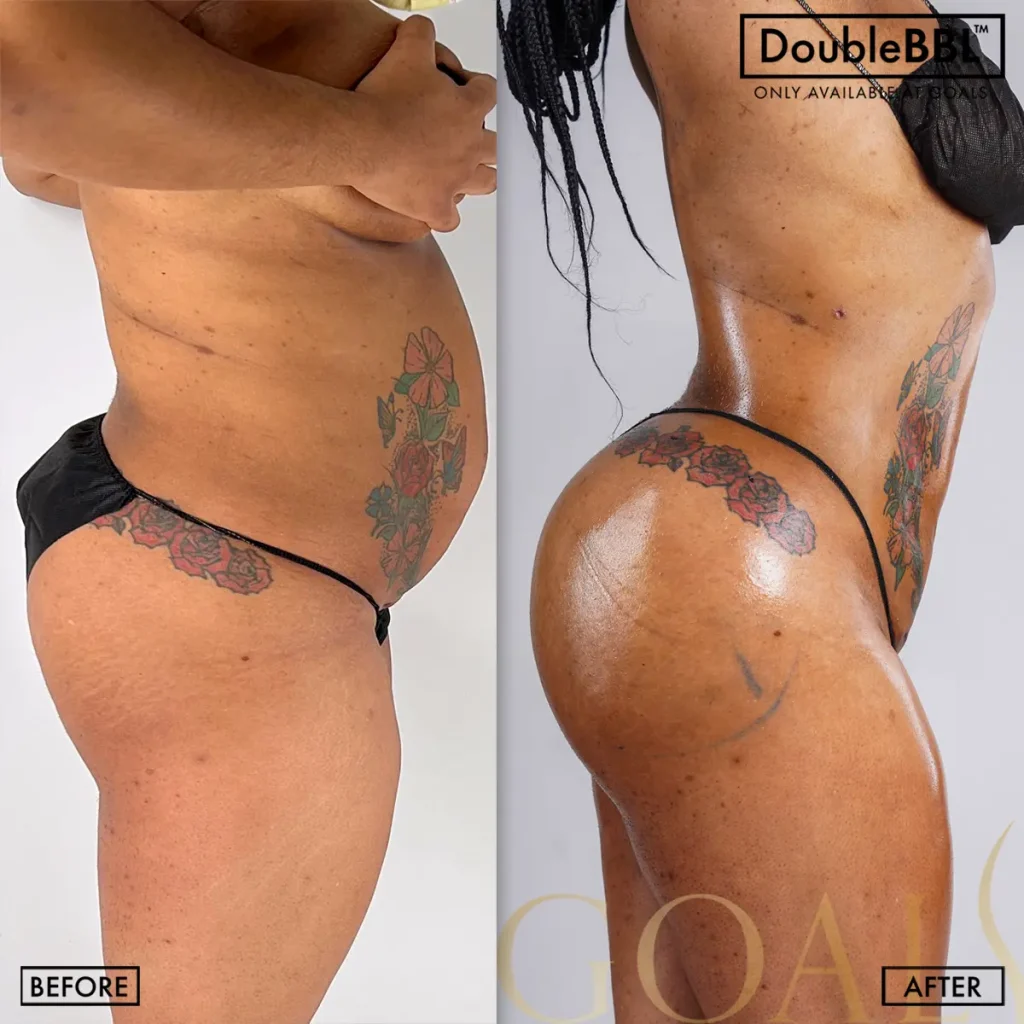

Real patients, published with written consent. Photographs are not retouched or AI-generated. Individual results vary — these images show outcomes for these patients and are not a guarantee of your own.
Try it
Type your height and weight. Your numbers stay on your device. We do not see or save them.
BMI is just one number. Your surgeon also looks at your health and your goals. BMI alone does not decide if you can have surgery.
Why Goals
Hair Advanced Rejuvenation & Restoration Technology that boosts graft survival and supports fuller, natural growth.
Experienced surgeons who know hair restoration inside out and focus on results that look natural.
Every procedure is built around your diagnostics, hair type, and what you actually want.
Virtual consultations from anywhere, plus hands-on care at our Atlanta clinic.
| Question | Answer |
|---|---|
| QuestionWhat is the actual difference between FUE and FUT? | AnswerFUE takes follicles out one at a time, so it leaves tiny dot scars and no line. FUT removes a thin strip from the back, which yields more grafts in one session but leaves a fine scar that longer hair covers. Neither wins across the board. At your Atlanta consultation we match the method to your donor area and how you wear your hair. |
| QuestionIs the transplanted hair really mine, and will it grow normally? | AnswerYes on both counts. The grafts come from your own scalp, usually the back and sides, so once they settle they grow, gray, and can be cut and styled like everything else. There is no ongoing upkeep for the moved hair itself. You wash it, trim it, and treat it exactly the way you always have. That is what makes a good transplant so hard to spot. |
| QuestionHow much does a hair transplant in Atlanta cost? | AnswerIt depends mostly on graft count, which ties back to how much area you are covering. A small hairline touch-up costs far less than full crown coverage. Rather than quote a number blind, we look at your scalp first, then give you a clear breakdown at the consultation with financing options if you want to spread it out. No hidden add-ons later. |
| QuestionCan I drive myself home and go back to work quickly? | AnswerBecause it is done under local anesthesia, most people drive themselves home the same day and feel fine. Plan on a few quiet days for the redness and minor swelling to settle. A lot of patients take about a week off, mostly so the healing is not obvious at work. Desk jobs are usually fine sooner than physical ones. |
| QuestionWill a transplant work if I am already mostly bald on top? | AnswerIt can, but the donor area is the deciding factor, not the bald zone. As long as the back and sides still have healthy, dense hair to move, we have something to work with. Very advanced loss sometimes means prioritizing the hairline and crown for the biggest visual payoff. An honest consultation will tell you what your donor supply can realistically cover. |
| QuestionHow do I choose a good surgeon and avoid a bad result? | AnswerLook at real before-and-after photos, not stock images, and ask who actually does the grafting, since some clinics hand it to technicians. Natural results come down to hairline design and graft angle, which take real skill. Read reviews, ask hard questions, and walk if anyone pressures you. A careful surgeon plans rather than rushes. |
A general comparison. Which approach suits you is decided at a consultation with a licensed surgeon.
Patient Guides
Written by the team that performs the procedure, to read before your consultation.
 How to Verify a Plastic SurgeonFour free checks that take ten minutes: the NPI registry, the state medical board, ABMS board certification and the facility’s accreditation. Step by step, with every link.Read the guide
 Questions to Ask Before Any SurgeryTen questions to ask any plastic surgeon before you book, what a good answer sounds like, the warning signs, and a version you can print and bring to your consultation.Read the guide
General information, not medical advice. What applies to you is decided at a consultation with a licensed surgeon.
Get started
Weighing FUE, FUT, or another hair transplant option? Our Atlanta surgical team maps out a safe, realistic plan around your hairline and your goals.
Prefer to talk now? (833) 462-5769
Learn more
A hair transplant is one of the few cosmetic procedures where the limiting factor is not skill or budget but supply. You have a finite number of follicles at the back and sides of your head, and an operation redistributes them. Nothing creates new hair. Almost every honest conversation about a hair transplant atlanta patients might book comes back to that arithmetic, and this page is built around it: what the donor area can support, how surgeons decide where it goes, and why the same operation suits one person and not the next.
Grafts come from a band around the back and sides of the scalp, where follicles are genetically resistant to the hormone that drives pattern loss. Move them to the top and they keep that resistance, which is why transplanted hair stays put while the hair around it may not.
That band is not infinite. A surgeon assessing you is counting available grafts and comparing that number against the area you want covered, and the answer is sometimes that the two do not match. Wanting a dense, low hairline and a filled crown when your donor supply supports one or the other is a genuine conflict, not a negotiation.
Which is why quoting a graft count before examining someone is meaningless. Density varies enormously between individuals, and so does the size of the usable band. Anyone naming a figure over the phone is guessing at the one number the entire operation depends on.
Donor supply also has to last. Pattern loss carries on behind whatever gets transplanted, and a patient who spends everything available in one session may need more coverage in a decade with nothing left to take. Surgeons who hold grafts in reserve are planning for the person you will be, not only the one in the chair.
The two techniques differ in how grafts leave the donor area, not in what happens afterwards. FUE Hair Transplant extracts follicles individually, leaving small dot scars scattered through the donor zone that disappear under short hair. FUT Hair Transplant removes a strip and closes it, leaving a single fine line that longer hair covers.
Neither is universally better, and a surgeon who only ever performs one of them is describing their preference rather than your case. FUT typically yields more grafts in a single session, which matters when the area is large. FUE avoids a linear scar, which matters if you wear your hair very short.
How you plan to wear your hair, how much coverage you need and what your donor area actually looks like decide it between them. That decision belongs at the consultation, after an examination, not before.
The commonest regret in this field is not a poor graft survival rate. It is a hairline placed too low, too straight, or too far forward for a face that will keep ageing.
A hairline that suits a twenty-eight-year-old can look wrong at fifty-five, and because pattern loss continues behind the transplanted zone, a low aggressive line can leave a patient stranded: dense at the front, thinning behind it, and no donor supply left to fix the gap. Surgeons who plan conservatively are not being unambitious. They are reserving grafts for a problem that has not happened yet.
Natural placement follows a slightly irregular line rather than a ruler, with finer single-hair grafts at the leading edge. Done properly it should be impossible to identify as work, which is the entire point.
Asking to see a surgeon's hairline work specifically, rather than density results generally, is a reasonable request at a consultation. The front row is where technique shows, and any practice confident in it will have photographs.
Not every transplant goes to a scalp. A beard transplant fills patchy growth using the same donor principle, and beard results tend to be reliable because facial hair is forgiving of density variation. Eyelash Hair Transplant is a more delicate proposition and suits a narrow group of patients.
Afro Hair Transplant deserves separate mention because curly follicles curve beneath the skin, which makes extraction technically harder and raises the risk of transecting grafts during harvest. Surgeons who do this work regularly get better yields than those who occasionally attempt it, and it is a reasonable thing to ask about directly.
Women's Hair Transplant follows different logic again, since female loss is usually diffuse rather than patterned. That can mean the donor area is thinning too, which changes candidacy considerably.
The name HARRT covers a hair restoration protocol this practice developed, and HARRT sits alongside FUE and FUT rather than competing with them. What it governs is the handling of grafts in the window between coming out and going in, plus how the scalp is prepared beforehand and supported afterwards.
Under HARRT, graft handling gets the attention it deserves, because that is where a great deal of avoidable loss occurs. Follicles left out of the body too long, or handled roughly, simply do not take, and the difference between a good yield and a mediocre one often comes down to that rather than to the harvesting method.
It runs alongside awake anesthesia, which matters on a procedure measured in hours: you stay comfortable throughout and the complications that come with being put fully under never enter the picture.
Nothing about the timeline is fast, and the middle of it is actively discouraging. Expect the new hairs to fall out during the opening weeks. That is expected, since the follicle stays and the shaft regrows, but patients who were not warned find it alarming.
New growth generally starts appearing around three to four months, thickens meaningfully by six to nine, and reaches its final character somewhere around twelve to eighteen months. Judging the result at month four is judging it at its worst point.
The operation itself is undemanding by comparison: local anesthesia, a long day, and most people back to desk work within a few days with a hat. Following the aftercare exactly during the first fortnight, when grafts are still securing their blood supply, matters far more than anything you do later.
Sleeping position, how you wash, and staying away from anything that raises pressure in the scalp all belong to that first stretch. Written instructions come with you, and they are worth treating as binding rather than advisory. Grafts dislodged in week one do not come back.
Pricing follows graft count and complexity, so a quote before an examination is not really a quote. Where paying at once is impractical, financing spreads it monthly, and the full figure is set out at the consultation rather than assembled afterwards.
The reason to be wary of heavily discounted overseas packages is not snobbery about the surgeons. It is that a transplant is one operation you cannot easily redo. Grafts are a finite resource, and a poor result consumes donor supply that is then unavailable for correction. Revision work is harder, more expensive, and sometimes impossible.
Add the practical problem that follow-up happens at a distance, and the saving evaporates the moment anything needs attention. Choosing a hair transplant provider you can return to is not a luxury on a procedure with this particular economics.
Ask how many grafts your donor area realistically supports, and what that covers. Ask which technique they recommend for you and why the other one is wrong for your case. Ask who places the grafts, since in some clinics the surgeon harvests and technicians do the rest. Ask what happens if growth is disappointing at month twelve.
Straight answers to those four tell you most of what you need. Evasion toward a package price tells you the rest.
Hair restoration and hair transplants are done at our Atlanta clinic on Chamblee Tucker Road. Previous results sit in the before-and-after gallery. If your donor supply cannot deliver what you are picturing, expect to hear that at the consultation, since finding out afterwards is considerably worse.
One practical note that gets overlooked: the two techniques feel different on the day. FUE extraction across a large area takes considerably longer, which turns a session into a long day. FUT is quicker to harvest but involves sutures and a closure that needs looking after. Neither is difficult, but knowing which you are signing up for makes the day easier.
Free · No obligation
Tell us how to reach you. A patient coordinator calls you back — usually the same day.
Free · No obligation
Ask me anything. I usually reply straight away.
If you share your number, a Goals coordinator may call or text you about your consultation. Message and data rates may apply.
Nora is an automated chat. She cannot give medical advice or say whether a procedure suits you.