Receding Hairline
The M shape has crept back at your temples and needs rebuilding.
Rebuild the hairline and crown with FUE or FUT. In-office, local anesthesia, home the same day. Done by U.S.-trained hair restoration surgeons in New York.
From $5,000

12,000+
Hair Procedures Performed
150+
Years of Combined Surgical Experience
4.9
Based on 8,500 Patient Reviews
Come to our New York office for your consult, your pre-op clearance, and every follow-up after. Easy to reach whether you drive or commute.
We treat male pattern loss at every stage, from a shifting hairline to a bare crown.
The M shape has crept back at your temples and needs rebuilding.
The bald or thinning patch at the vertex, where hair grows in a spiral.
Density drops across the whole top rather than in one obvious spot.
Grafts placed into scarred patches where nothing grows anymore.
Filling receded temples and sideburns so the hairline reads right.
Male pattern baldness from genetics, showing first at the front or crown.
Got a receding hairline, a thinning crown, or thinning across the top? You are likely a candidate. A transplant uses your own permanent hair and has taken years off thousands of men.
You can see it in photos, or in the mirror.
Your loss has held steady, or slowed, for a year or two.
You want this handled for good. No more daily foam or pills.
Enough healthy hair at the back and sides to work with.
You will follow the before and after instructions.
Pairing your transplant with something else, or still weighing options? We do the full range of hair restoration.
About Men's Hair Transplant
Men's Hair Transplant near you
Not everyone needs surgery. These treatments work on follicles that are still alive but weakening, and they sit well alongside a transplant. Good for early thinning, heavier shedding, or holding onto the density you have.
Same men, same lighting, months apart. Judge for yourself.
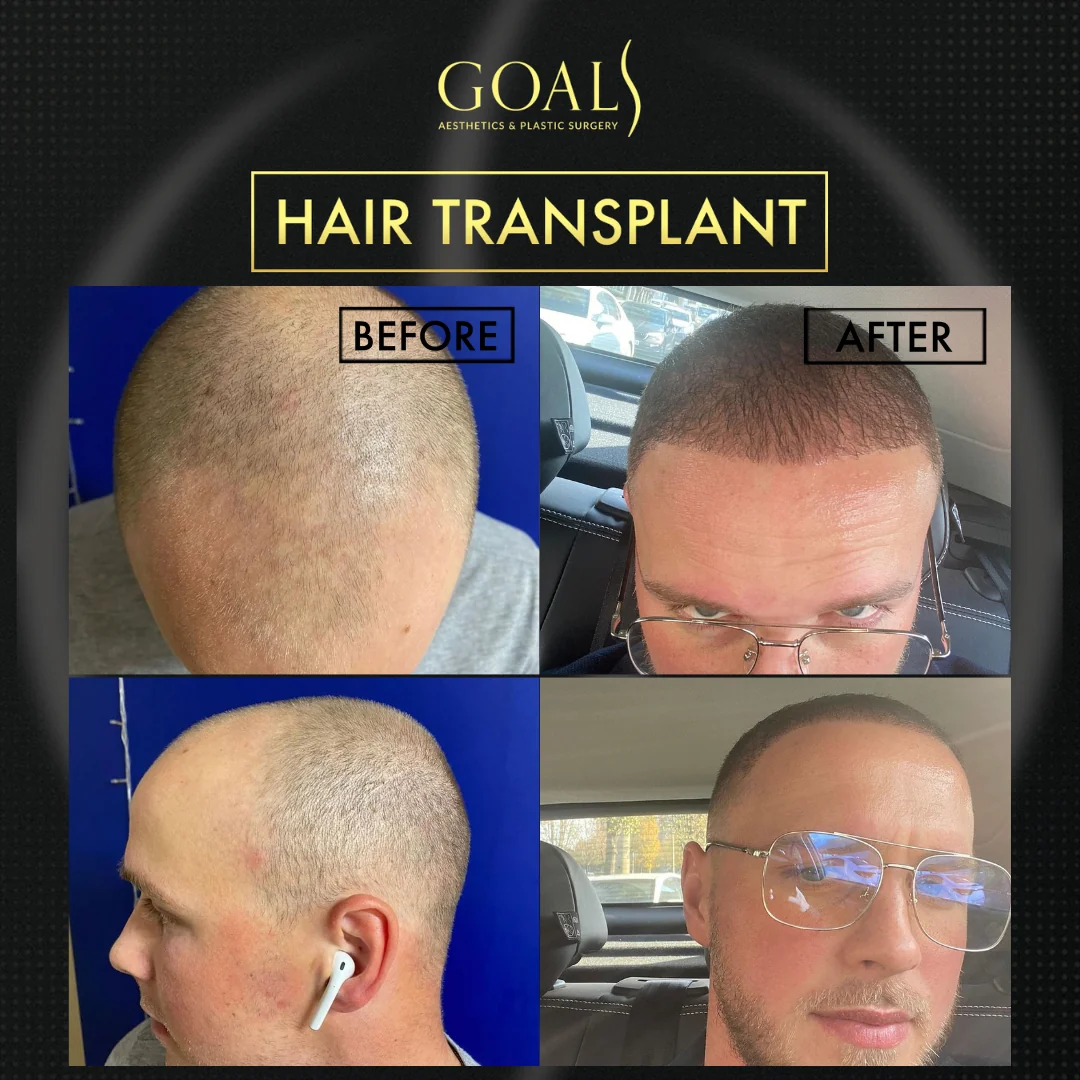
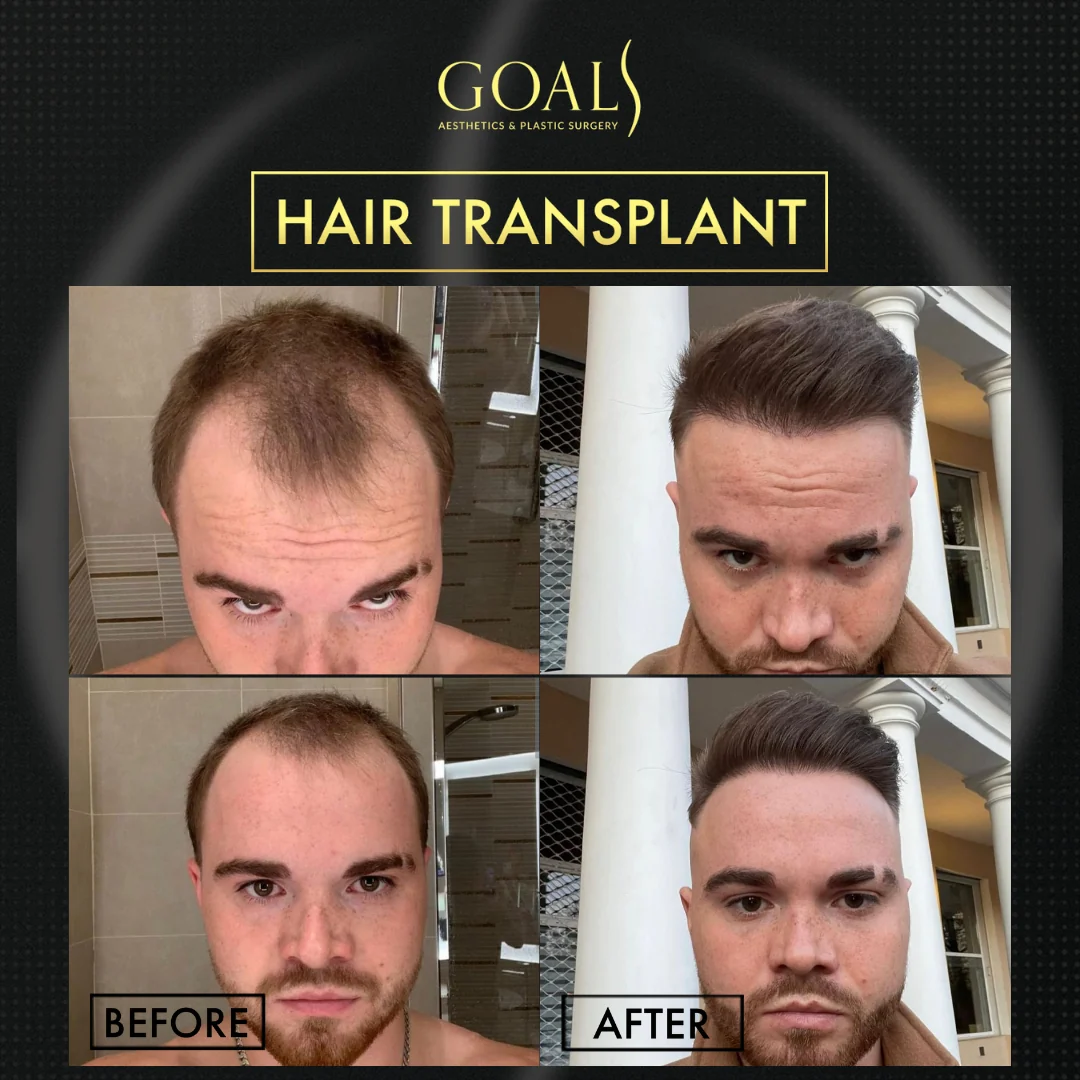
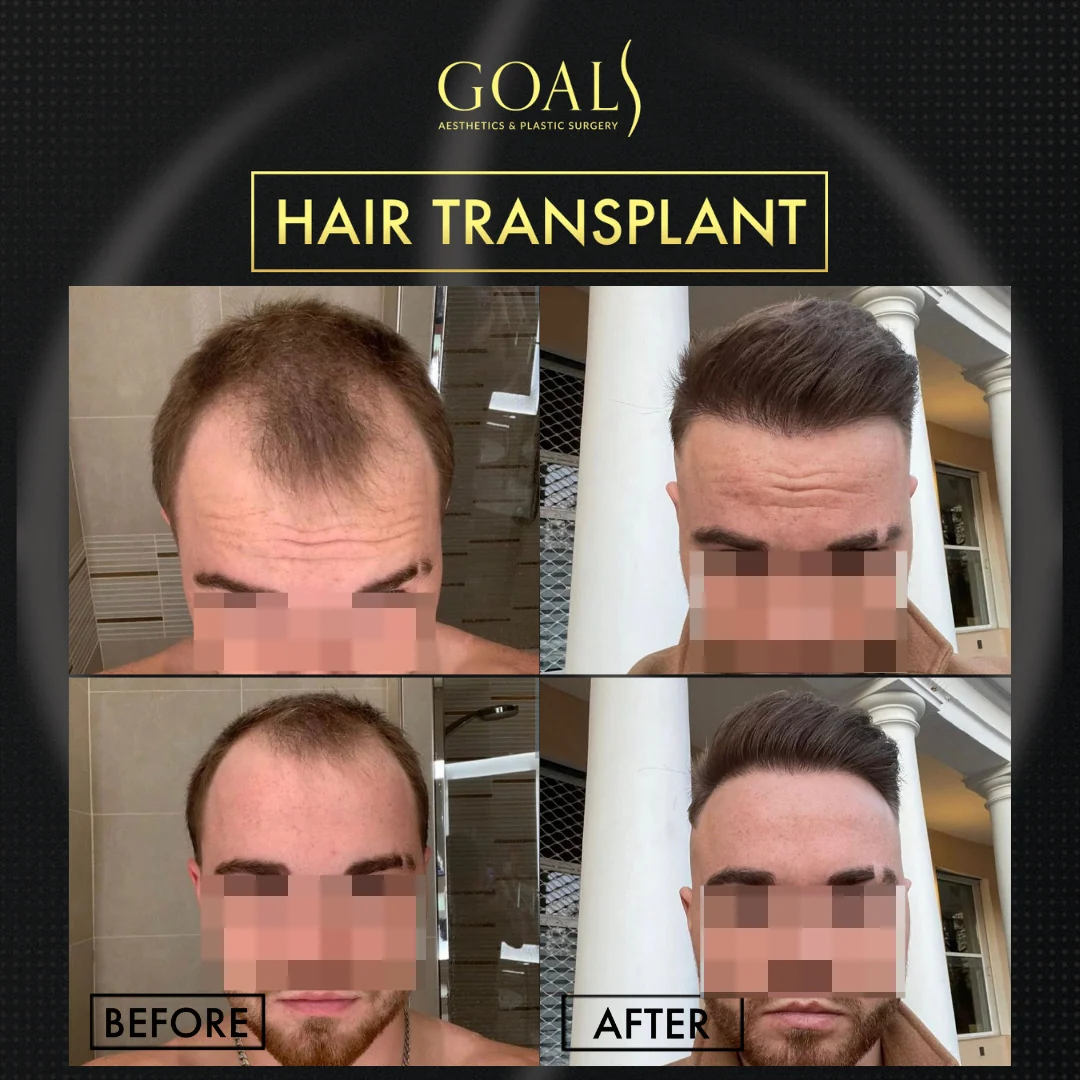
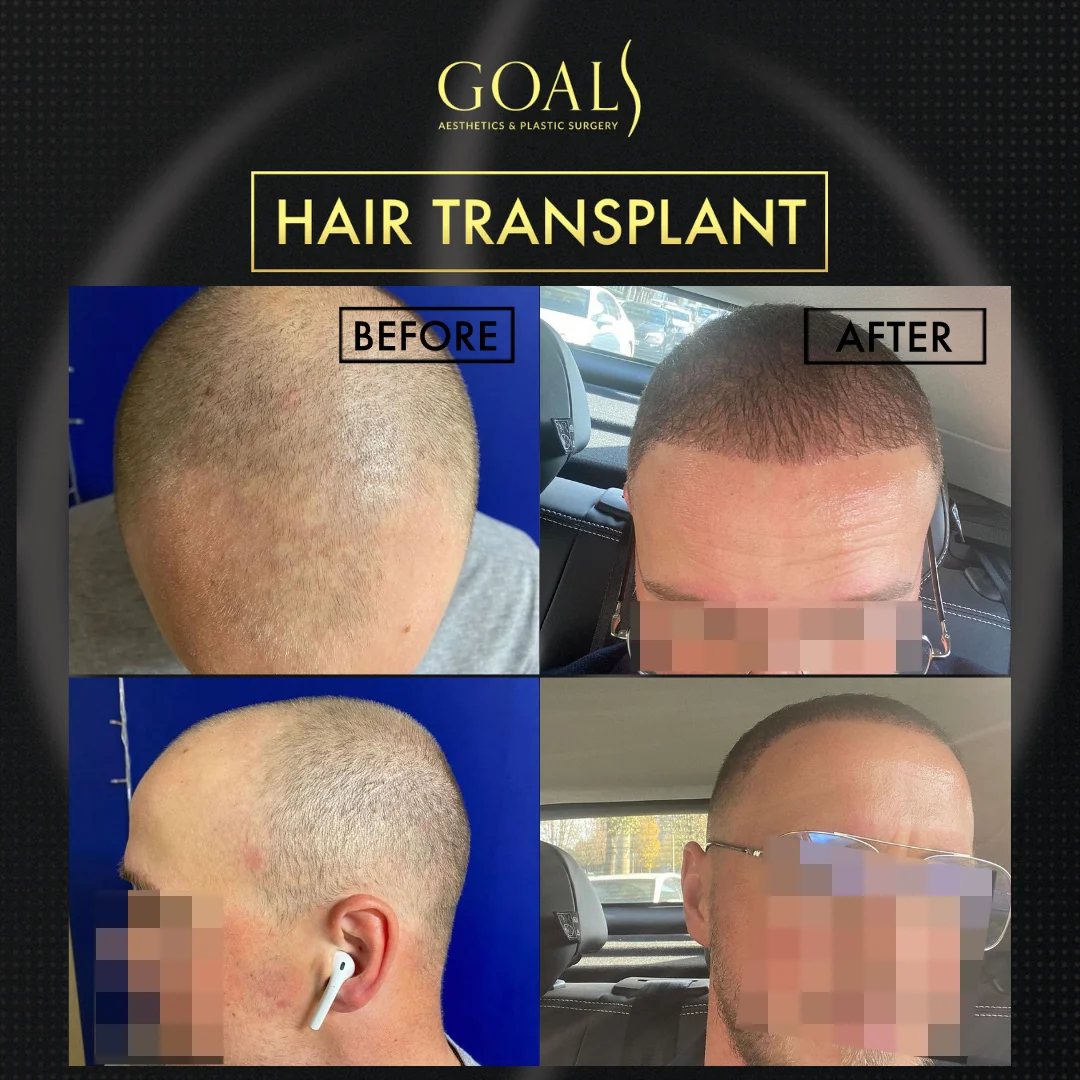
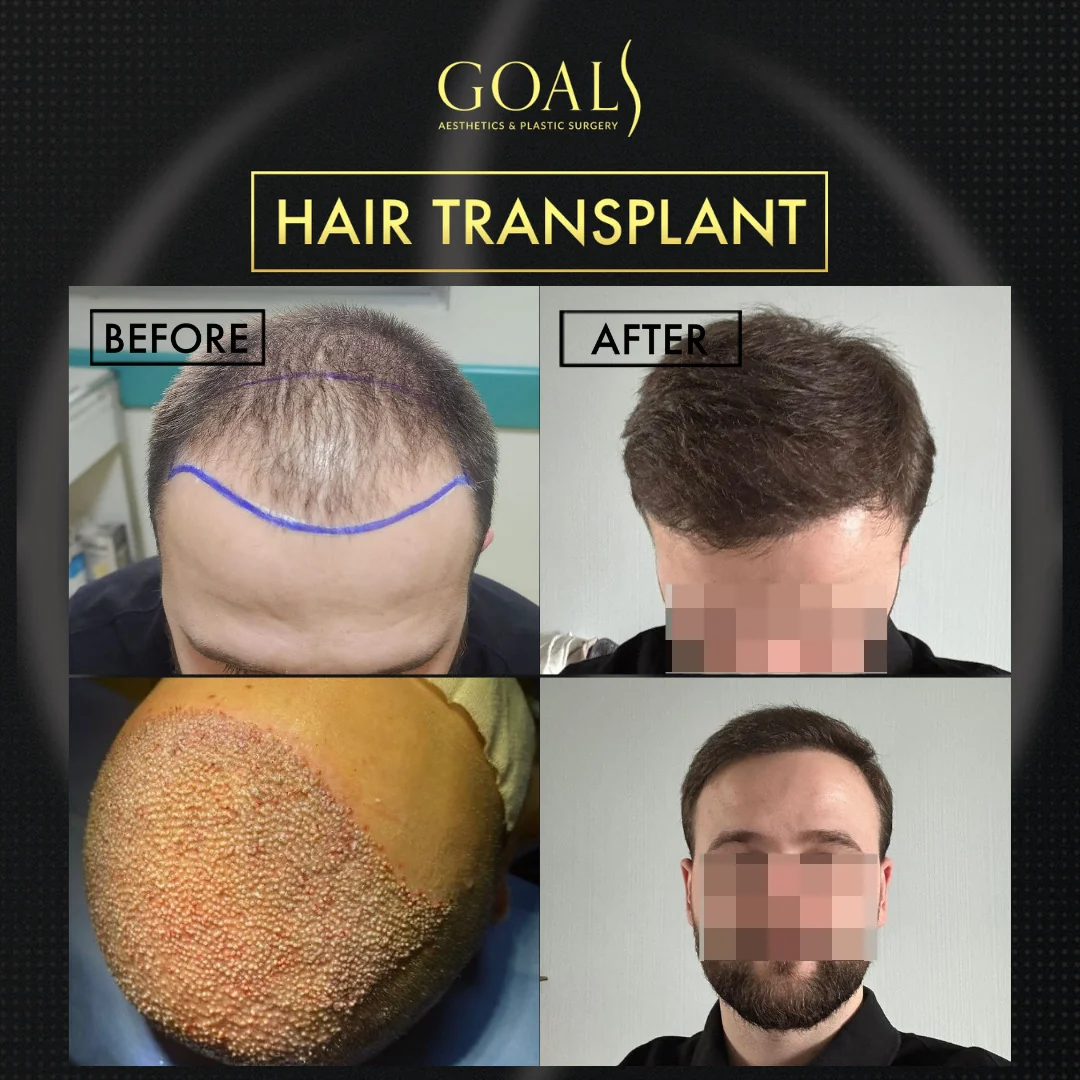
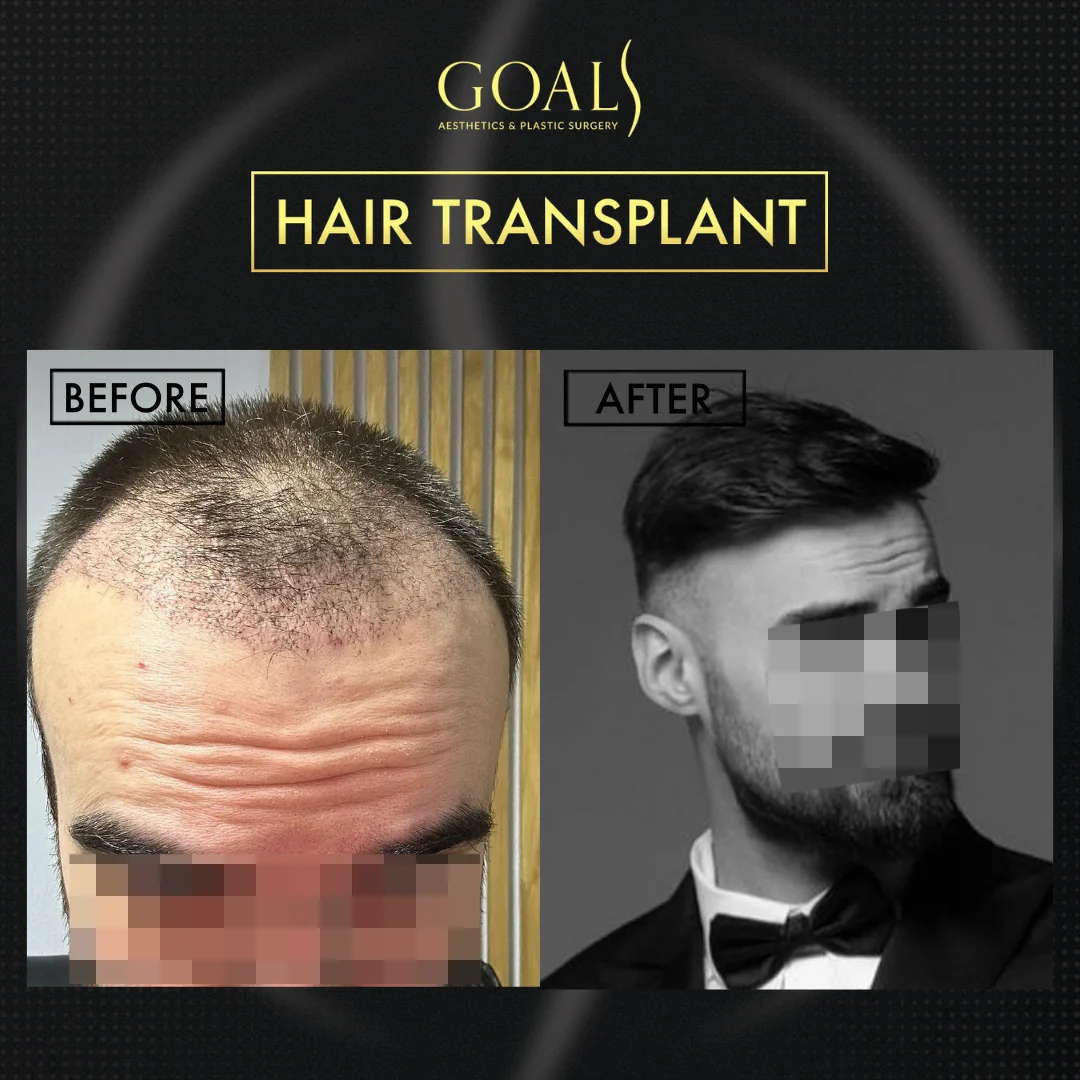
Real patients of Goals, published with written consent. Photographs are not retouched or AI-generated. Individual results vary — these images show outcomes for these patients and are not a guarantee of your own.
Work it out
Runs in your browser. Nothing is sent to us and nothing is saved — a height and a weight are your business.
BMI is one measure among several and it says nothing about how you are built. Surgeons weigh it alongside your health and your goals; it does not decide anything on its own.
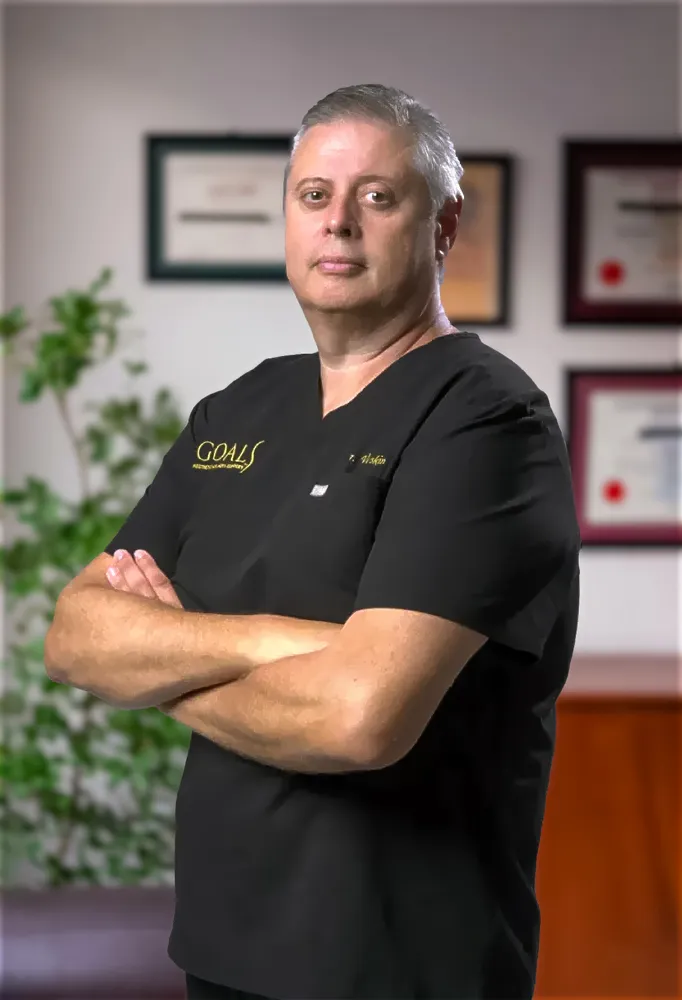
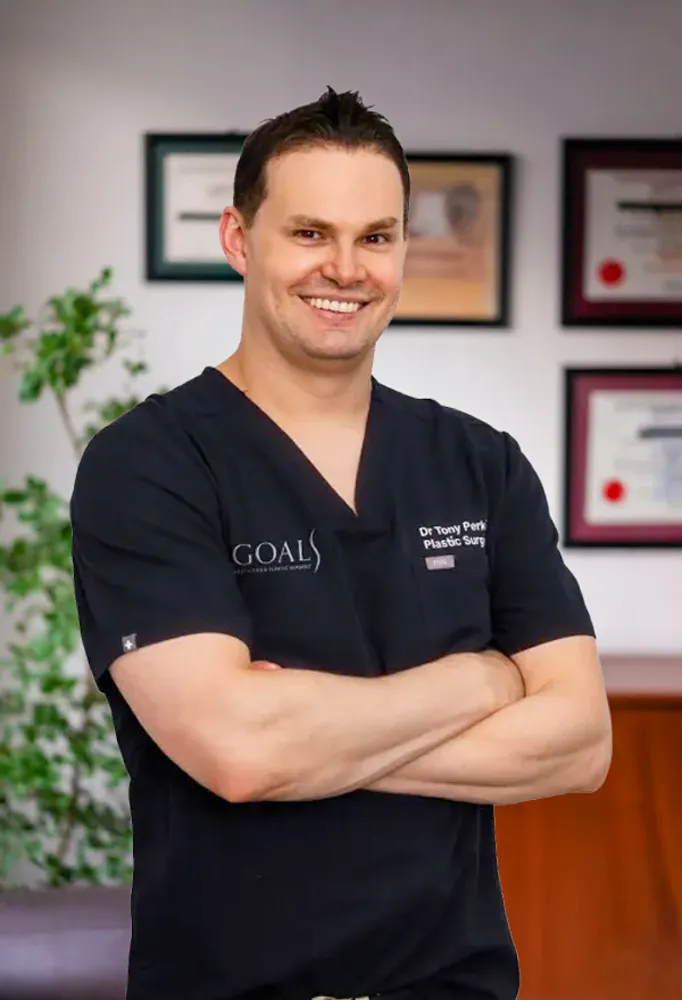
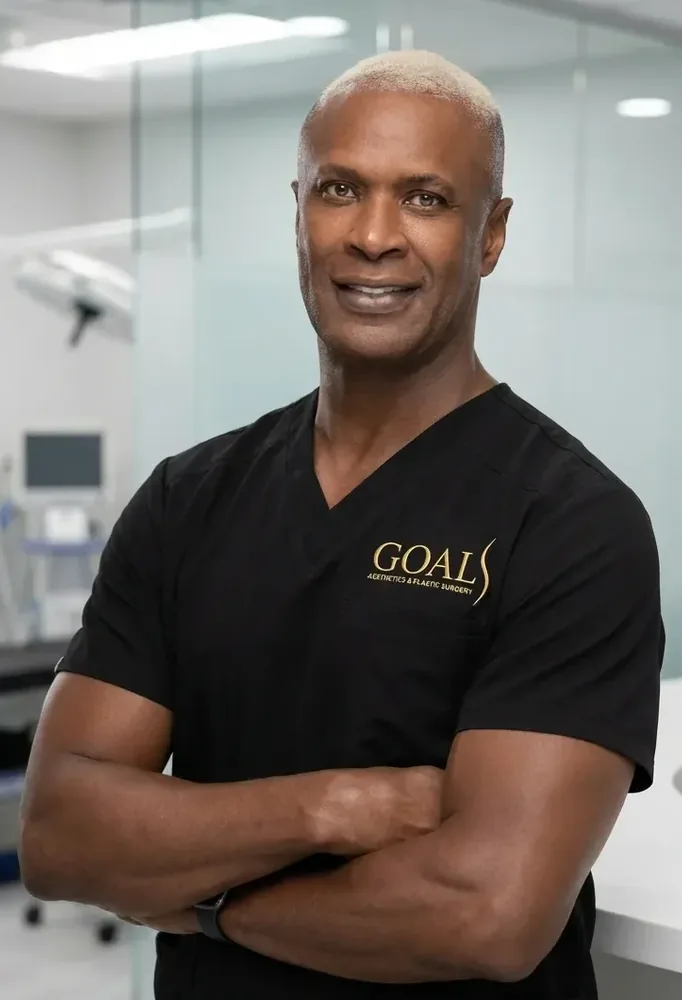
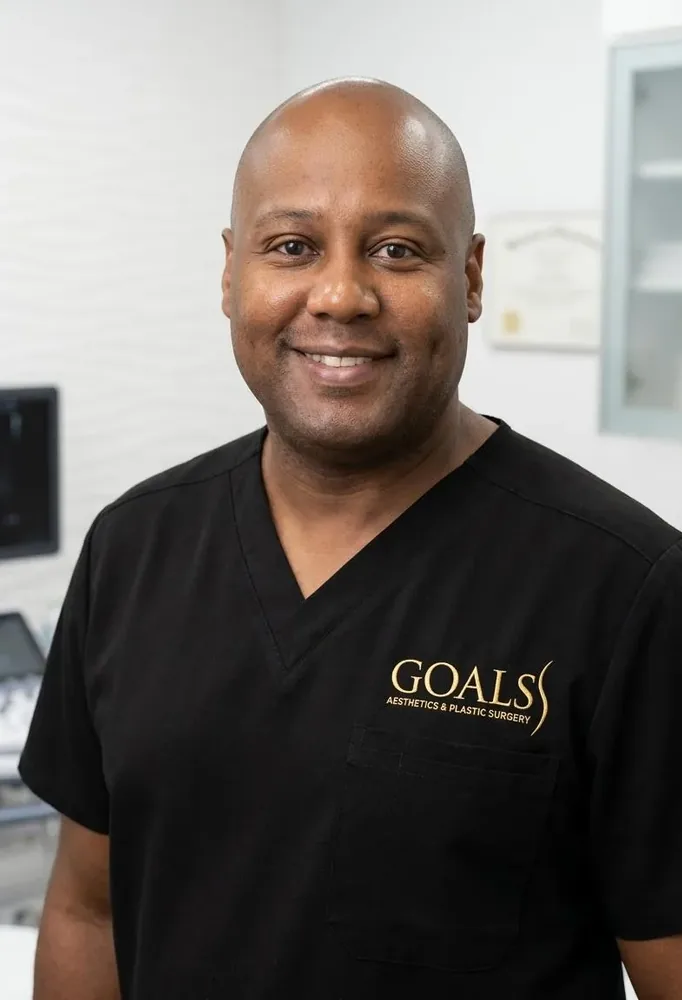
A U.S.-credentialed hair restoration surgeon does your procedure. Not a technician. Meet the team before you book anything.
Credentials differ by surgeon and are listed in full on each surgeon's page.
"Those cheap overseas hair transplant packages are tempting, we get it. But rushed surgery, a language barrier, and nobody to see you when something goes wrong at home can cost far more than you saved."
| Left Step | Right Step |
|---|---|
| Left StepWeeks of comparing clinics online, wiring money abroad, booking flights and a hotel. | Right StepYou sit down with a U.S.-trained surgeon, in person or online, who checks what stage your loss is at and maps out a plan. |
| Left StepYou arrive somewhere you do not speak the language. The consult is rushed, and it happens the morning of surgery. | Right StepPre-op labs, consent forms, and the surgical plan are all handled beforehand, in your language, under U.S. standards. |
| Left StepSurgery happens in a building you have never set foot in, often on a high-volume schedule with little time for post-op monitoring. | Right StepOn the day, your donor area is numbed with local anesthesia. Light sedation is there if you want it, so extraction stays painless. |
| Left StepYou fly home tired and swollen. A week later the scalp turns red and starts to ooze, and you have no idea if that is normal. | Right StepOur surgeons lift DHT-resistant follicles and set each by direction, angle, and density. |
| Left StepThat leaves urgent care or the ER, staffed by doctors who did not operate on you and have no record of what was done. | Right StepSomething feels wrong at week two? You call the same team that operated. We see you in person, adjust your medication, and sort it out. |
| Left StepMore money on emergency visits and prescriptions. The overseas clinic answers on WhatsApp, when it answers. | Right StepNo stitches, so the donor area closes in days. Follow-ups track growth until the final result. |
| Factor | Overseas Package | Goals U.S. Clinic |
|---|---|---|
| Total cost (real) | Base price, plus flights, hotel, days off, and any ER bill back home. | Comparable once all care is counted. Priced up front, no surprise bills. |
| Travel & time off work | Long flights, jet lag, days away from work and family. | Local, same-day, barely any travel. You are back to normal life sooner. |
| Safety & sterility | Rests on foreign rules you cannot check, and little time on site. | Accredited U.S. clinic, strict infection control, known standards. |
| Surgeon & team | Credentials are hard to verify, and you may not see that surgeon again. | Professional hair restoration surgeons you meet before and after. |
| Emergency backup | No local clinic. ER doctors must guess what was done abroad. | In-person follow-up, plus local urgent support if a problem shows up. |
| Follow-up care | Messages only. Getting hands-on help is difficult. | Scheduled in-person checkups, progress photos, medication adjustments. |
| Communication | Language gaps, time zones, replies whenever. | Your language, written instructions, a 24/7 phone line. |
| Legal protections | Little recourse once you are back on U.S. soil. | Covered by U.S. patient safety law and standards. |
Safety drives every decision here. We run FUE and FUT under strict protocols so each graft is protected and lands at the right angle and density.
Sterile, fully equipped procedure rooms in accredited U.S. facilities.
Local anesthesia keeps you pain-free. Light sedation if you like.
Your surgeon and medical team stay reachable when questions hit.
Written instructions, the right medications, and a follow-up schedule.
Every graft set by growth direction, angle, and density so it blends.
The team that consults with you operates and runs every follow-up.
We do both methods, and we recommend the one your hair loss and donor supply call for.
An accredited U.S. clinic. No flights, no language barrier, no gaps in care.
Credentialed hair restoration surgeons you meet before and after.
U.S. patient safety law covers you, with real recourse if you need it.
The moved hair is DHT-resistant, so it keeps growing for life.
"Hairline was gone by 30. They rebuilt it and you would never know. A year on, the density is unreal."
"Went back and forth on FUE versus FUT and they were straight with me about both. Healed fast, looks like mine."
"Thinning crown and the front going, both handled in one plan. Nobody upsold me. Best money I have spent."
Testimonials reflect individual experiences. Results vary by patient.
Every transplant we do happens on-site, in our own sterile operating room here in New York. Nothing gets farmed out to a partner facility.
Monday through Saturday. Book online in about two minutes, or call and talk to someone. Either way we confirm your date and time with you.
Yes. A qualified medical team and trained nurses stay with you the whole session, managing the local anesthesia and checking you are comfortable.
Both. We use FUE or FUT depending on your stage of loss, donor supply, and how you wear your hair.
Yes. There is a comfortable waiting area, so whoever comes with you can stay put until you are done.
Most sessions run 4-8 hours, depending on graft count. Growth shows around 3-4 months and finishes by 9-12.
A men's hair transplant is the one fix for male pattern loss that actually lasts, because it moves hair that was never going to fall out in the first place. No shampoo does that. No serum does that, and neither does anything you can buy off a pharmacy shelf. As male pattern baldness progresses, follicles along the hairline and crown shrink and quit producing. The ones around the back and sides carry on regardless, because they do not respond to DHT, the hormone driving the whole process. A transplant relocates those follicles into the areas that gave up. They keep behaving exactly as they did before they moved, which is the entire reason the result holds for life.
At Goals Plastic Surgery, this is an in-office procedure under local anesthesia, carried out by U.S.-trained hair restoration surgeons . We use Follicular Unit Extraction or Follicular Unit Transplantation to take healthy, DHT-resistant follicles out of the donor area and set each one to match how your hair already grows. If you have been comparing hair transplant options for men around New York, what follows covers the mechanics, who it actually suits, and what recovery looks like once the clinic day is over.
The question every consultation opens with is some version of: what are you actually doing up there? With FUE, your surgeon takes healthy DHT-resistant follicles out of the donor area, usually the back of the scalp, one at a time, and places each into the thin or bare zone. With FUT, a strip of donor scalp comes off instead and gets dissected into individual grafts under magnification. Either route, the hair is yours. Every graft goes in at a set angle, depth, and direction so the new growth follows the pattern your hair already had. All of it happens under local anesthesia.
Rebuilding a man's hairline is a design problem as much as a surgical one, and this is where experience shows most. The surgeon draws a shape that fits your face and your age rather than the hairline you had at twenty, then angles each graft so the front feathers rather than sitting in a hard line. Because the relocated follicles ignore DHT, they carry on growing once they settle. Cut it, style it, grow it out. It behaves like the rest of your head because it is the rest of your head.
Here is the reassuring part. This is your own hair, growing for life. We restore the areas men lose first, meaning the hairline and forehead, the crown and vertex, and the temples and sideburns, and we can also fill patchy or scarred spots where nothing has grown for years.
We offer both, and the honest answer is that the right one depends on you rather than on which sounds more modern. FUE lifts follicles individually and leaves nothing but pinprick marks, which is what men who buzz their hair short care about. FUT takes a strip of donor scalp and can harvest a very large number of grafts in a single sitting, so it earns its place when loss is advanced and coverage is the priority. The cost is a fine linear scar that longer hair covers without trouble. Neither method wins in the abstract. At consultation we look at your stage of loss, your donor supply, and how you actually wear your hair, then recommend accordingly rather than defaulting to whichever is faster to perform.
Men arrive with a preference more often than not, usually FUE, usually because it is what the internet talks about. That is fine, and frequently it turns out to be the right call anyway. But the preference is worth holding loosely. Someone with advanced loss and a modest donor region can sometimes get better coverage from a single FUT session than from two rounds of FUE, and the scar genuinely stops mattering if you have never worn your hair short and never intend to. Combining both across separate sessions is also on the table where the donor supply justifies it.
The clearest candidates are men with a receding hairline, a thinning crown or vertex, thinning across the top, or patchy and scarred areas where hair stopped growing. Genetic male pattern baldness responds well, and so does thinning tied to aging or hormonal shifts. The real requirement is donor supply, meaning enough healthy hair at the back and sides to move somewhere else. Since that supply is finite and loss keeps advancing, a good surgeon plans conservatively and holds some in reserve. At consultation we assess what stage you are at and map out a plan for coverage that will still look natural in a decade.
There are men we turn away, or ask to wait, and it is better to hear why now than after a deposit. Loss that is still moving fast, particularly in your early twenties, makes planning guesswork, because nobody can place grafts sensibly around a pattern that has not settled. Thin donor density is the other limiter. If there is not enough hair at the back to spare, moving it forward just relocates the problem. And loss that arrived suddenly or in patches deserves a medical look before a surgical one, since it often points at something other than genetics.
Graft count drives your result and your bill, and it comes out of your anatomy rather than a menu. Your surgeon weighs how much area needs covering, the density you still have, the supply and quality of your donor region, and how thick you want the finished result to read. Because donor hair does not regenerate, a careful surgeon spends it where it shows most and keeps a reserve for later, since what you need at 35 will not be what you want at 50. The range of outcomes is visible in our before & after gallery.
Density is where the surgeon earns the fee. Pack grafts too close and they compete for blood supply, so fewer survive. Space them too far apart and you have paid for something that still looks thin. The target is density that reads as full at conversational distance while the scalp can still feed everything you put in it. Where the follicles land, and at what angle, matters as much as how many of them you moved. Two men can get identical numbers and walk out looking nothing alike.
This is also why a suspiciously cheap quote should worry you rather than tempt you. Placing a few thousand grafts properly is hours of sustained concentration from someone who has done it a thousand times before. Clinics turning patients around in half the usual time are economising somewhere, and it is almost always the placement, which is the part you cannot inspect until nine months later when the hairline sits in a flat, obvious row.
You come in once and everything happens in that visit. Your donor area gets prepped, then local anesthesia goes in and the scalp goes numb while you stay fully awake. Your surgeon harvests the grafts and places each one into the thin zone at the angle and density the plan calls for. Most sessions run 4 to 8 hours depending on how many grafts are involved, and the larger ones take most of a day. Since nobody is putting you under, there is no fog to shake off and no overnight bed. You leave the same evening with written aftercare and the number of the team that just operated on you.
Recovery is more boring than men expect, which is the good news. Healing starts immediately, and most are back to normal activity within days. The first few days the recipient area looks pink with small scabs around each graft, and those clear on their own. Then the transplanted hair sheds, which alarms people who were not warned about it. It is supposed to happen. The follicle stays exactly where it was put and drops into a resting phase before restarting. Visible growth turns up around three to four months and the final result lands somewhere between nine and twelve. We track it in person the whole way. If you want to weigh non-surgical options alongside this, our New York hair restoration team can talk you through them.
A few practical things make the first fortnight easier. Follow the washing routine you are given rather than improvising, keep exertion light early on so nothing gets dislodged, and keep sun off the scalp until you are cleared. Discomfort afterward is usually mild and manageable with what you are sent home with. The genuinely hard part is patience, because the real change arrives months later, long after the soreness has gone and you have started quietly wondering whether anything worked. A monthly photo from the same spot answers that question better than the mirror does.
Pricing tracks the number of grafts and how complex your case is, so the figure gets confirmed at consultation once someone has actually examined your scalp. Never off a photograph. If you have collected quotes that vary wildly, that is the reason. What we commit to is a price fixed before you book, with no facility or anesthesia charge materialising afterward. Financing options are available if spreading the cost suits you better, and someone will walk you through the terms rather than pointing at a form. Every plan covers follow-up care with the same medical team, from procedure day through to your final result.
One last thing on value, since it comes up constantly. The cheapest quote and the lowest total cost are rarely the same number. A revision, when it is needed, spends donor hair you cannot get back and costs more than doing it correctly the first time. Getting it right once is the economical route, even when the invoice up front says otherwise.
Worth being blunt about one thing: a transplant redistributes hair, it does not create more of it. The donor region holds a finite supply and nothing increases that number. This is why a surgeon worth seeing will sometimes tell you to wait, or to take fewer grafts than you came in asking for. Loss keeps progressing after surgery, and a hairline built too low or too dense at 28 can look strange at 45 once the area behind it thins out. Planning around where you are heading, not just where you are, is most of the job.
About Men's Hair Transplant
Men's Hair Transplant near you
FUE, FUT, or another hair restoration route entirely, our team will look at what you have and build a plan that works.
Prefer to talk now? (833) 462-5769
Free · No obligation
Tell us how to reach you. A patient coordinator calls you back — usually the same day.