Receding Hairline
That "M" at the temples and a retreating front edge, the usual Norwood II to IV.
Your hairline back in a single day, in-office, under local anesthesia. FUE or FUT, matched to your loss and hair, done by licensed surgeons here in Central Park.
From $5,000
Goals Aesthetics & Plastic Surgery – Central Park
116 Central Park SMon–Sat, 10:00–19:00 local time
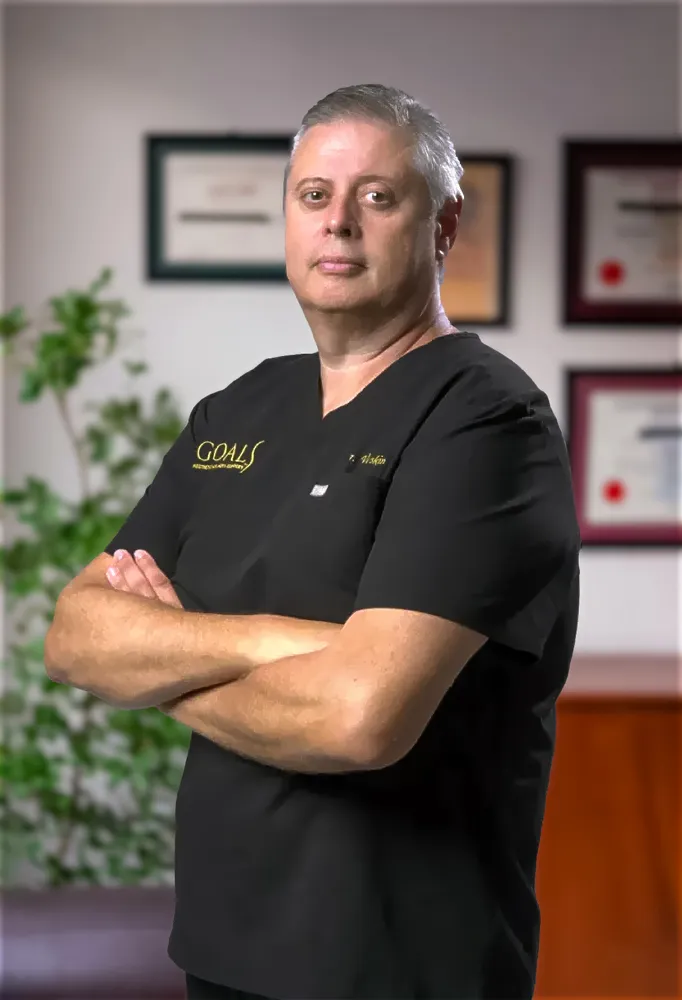
Surgeon: Dr. Sergey Voskin
Conditions we treat
Every stage of male pattern loss, from a first recession to a bare crown.
That "M" at the temples and a retreating front edge, the usual Norwood II to IV.
Loss spreading out from the swirl, where scalp starts catching the light.
Density fading across the mid-scalp, hair up top going finer and weaker all over.
Bare patches from scars, past surgery, or burns that grafts can fill back in.
Thin or patchy beard and jaw built up with grafts taken from the donor zone.
Sparse or over-plucked brows rebuilt with fine grafts set to your angle.
Candidacy
Hairline backing up, crown thinning, or scalp showing in photos? You are probably a fit. We have handed thousands of men their old look back with FUE and FUT.
Loss that shows in photos or the mirror.
Your shedding has been steady a year or more.
You want a permanent fix, not fibers, powders, or a daily pill.
Healthy hair left at the back and sides to harvest.
Fine with following the prep and aftercare steps.
Pairing your transplant with something else, or comparing routes? Here is the rest of what we do for hair.
About Men's Hair Transplant
More at the Central Park clinic
Non-surgical options
Grow hair back without surgery. These suit early thinning or ongoing shedding, and anyone who wants to build density and guard the hair they still have before thinking about a graft procedure.
Clinics
Choose whichever office fits your day. Consult, pre-op clearance, and post-op checks can all run at the Goals location closest to you, or wherever the parking is easiest.
Look at the before and after on real Central Park patients.
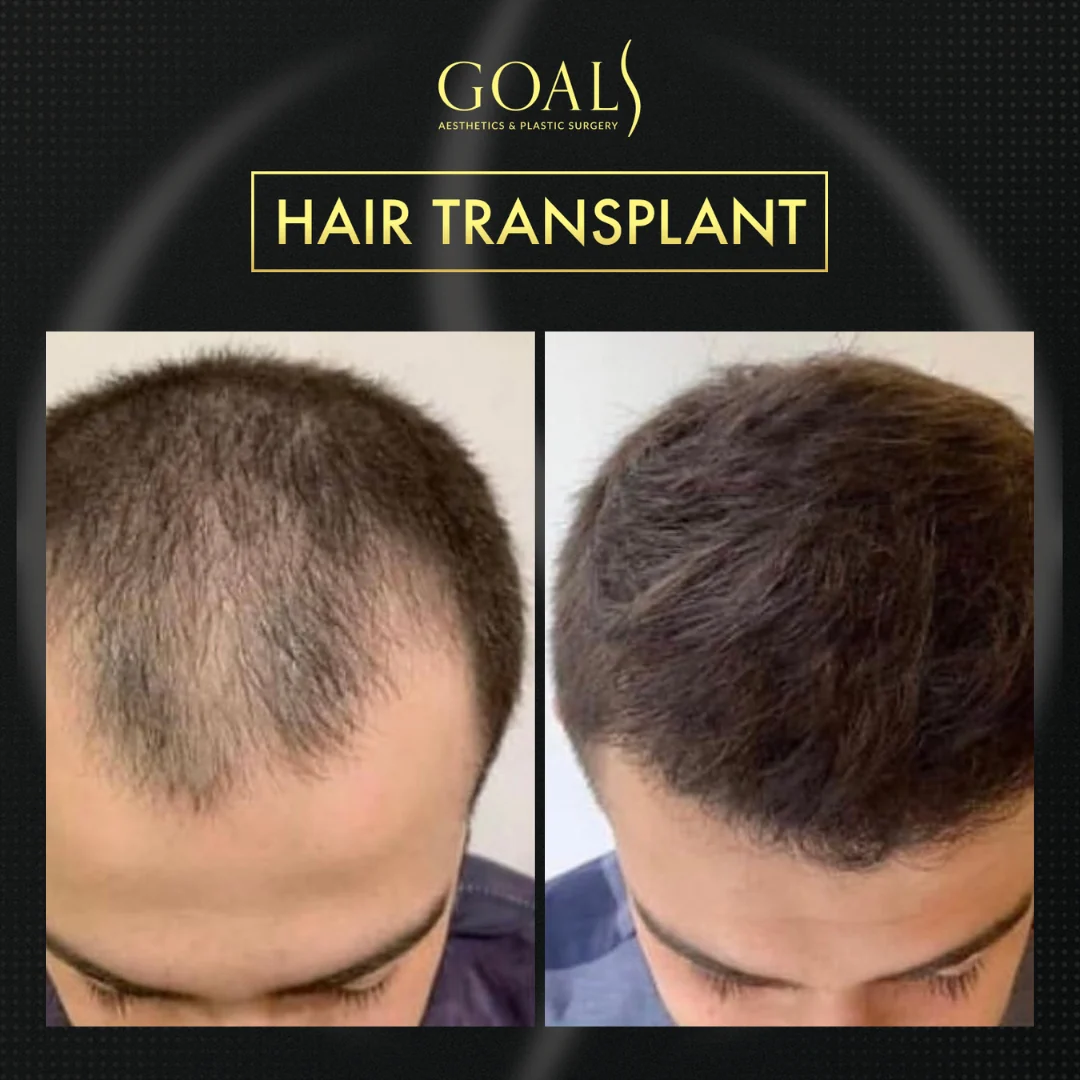
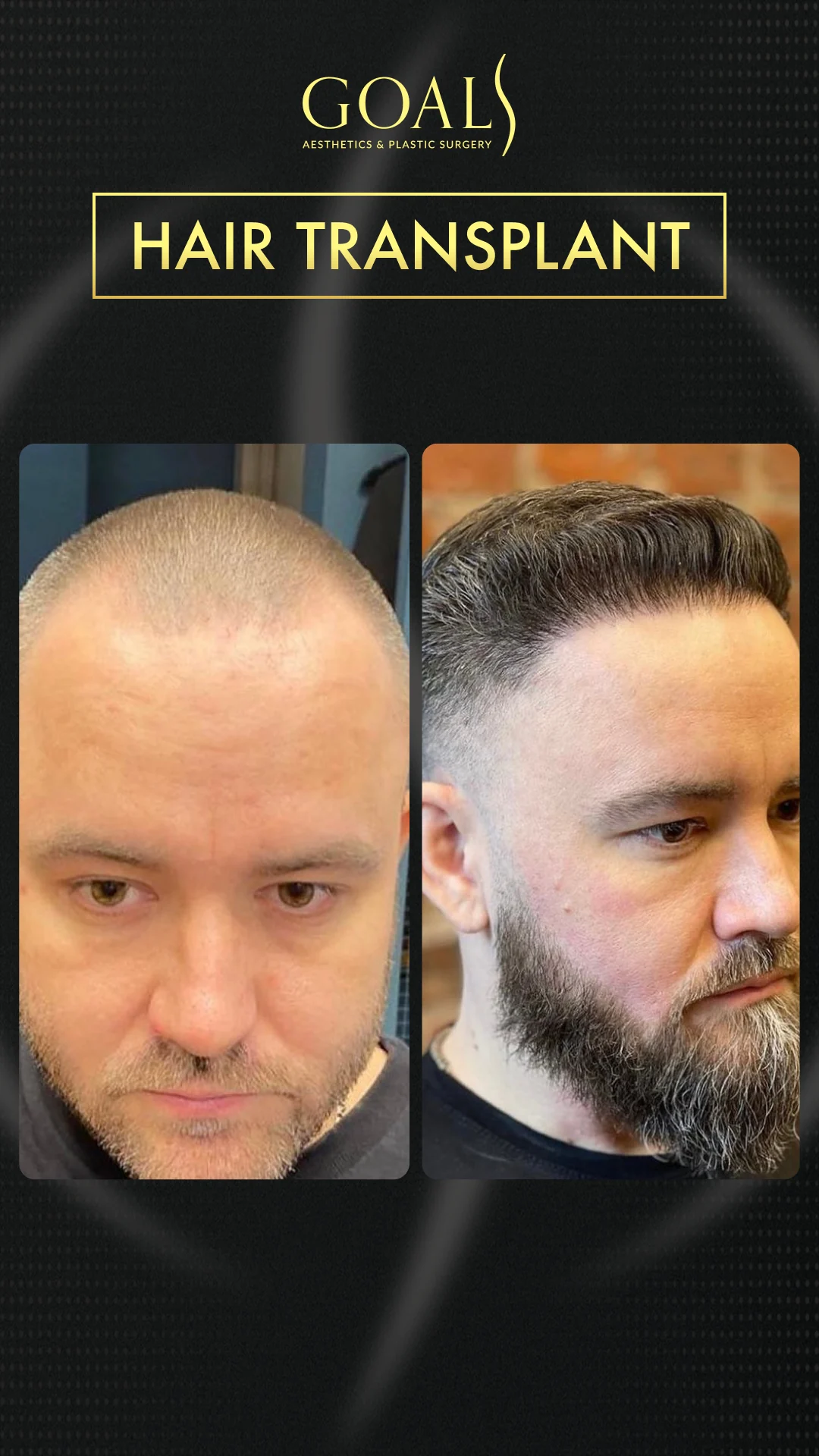
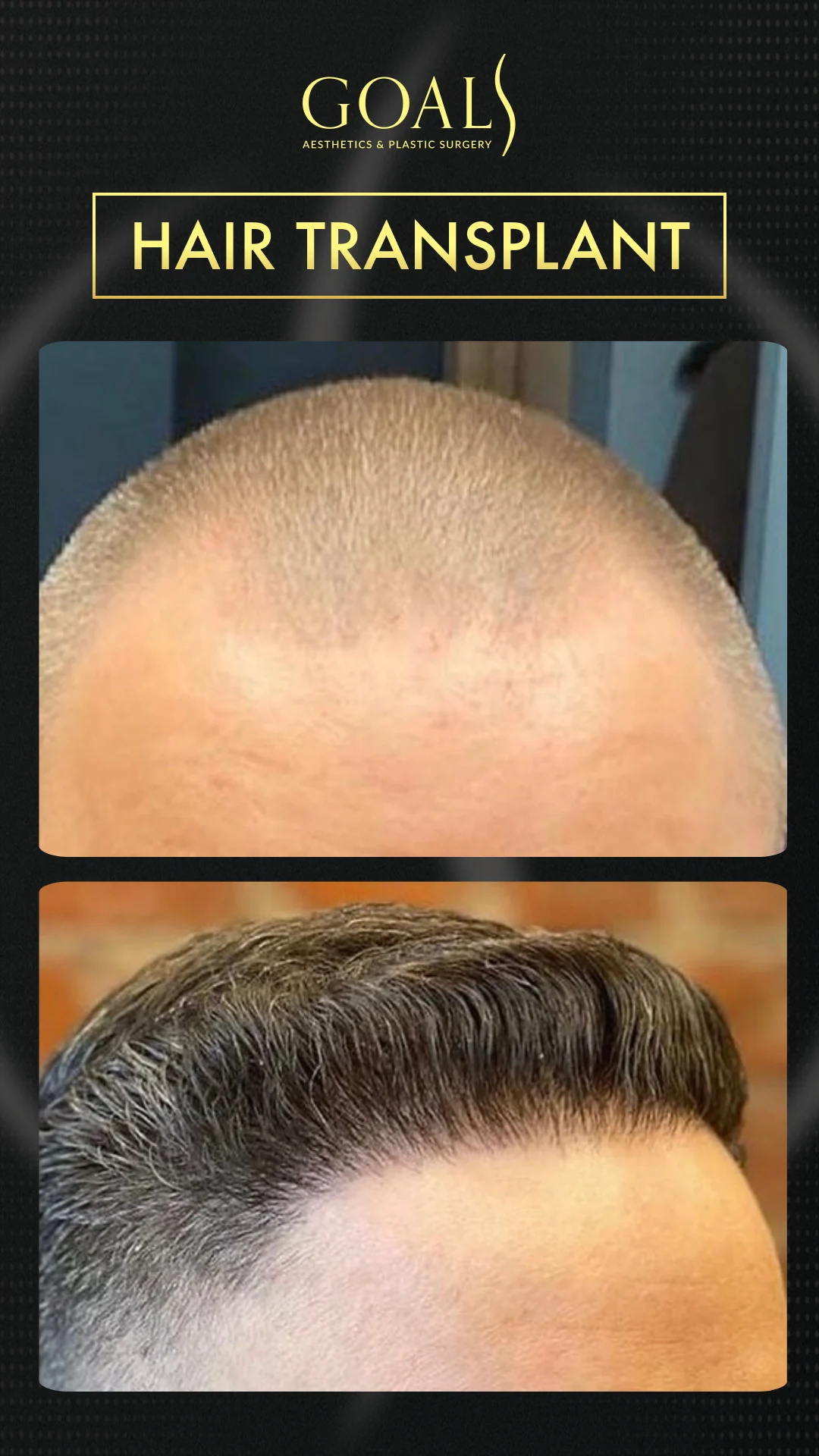
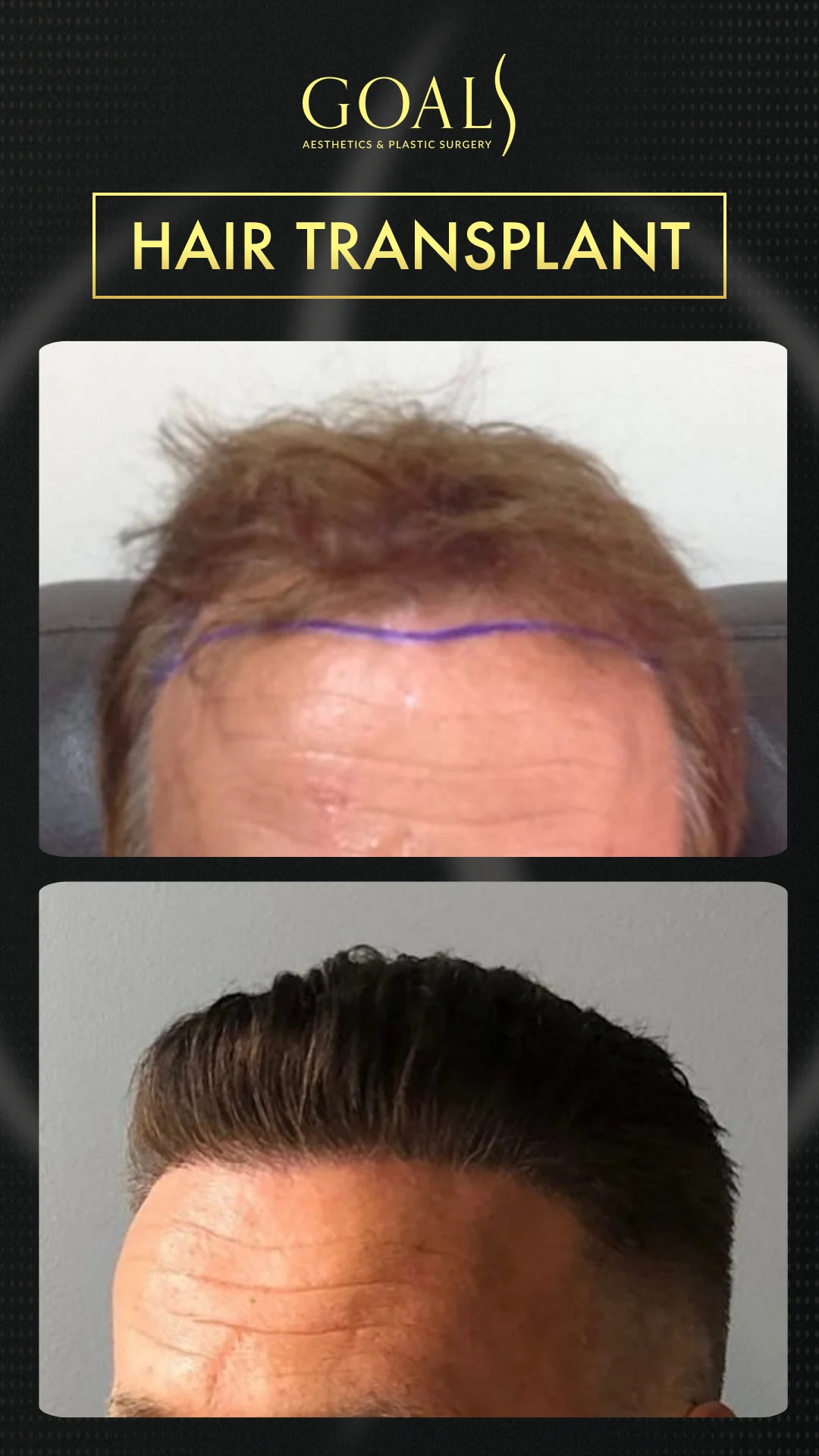
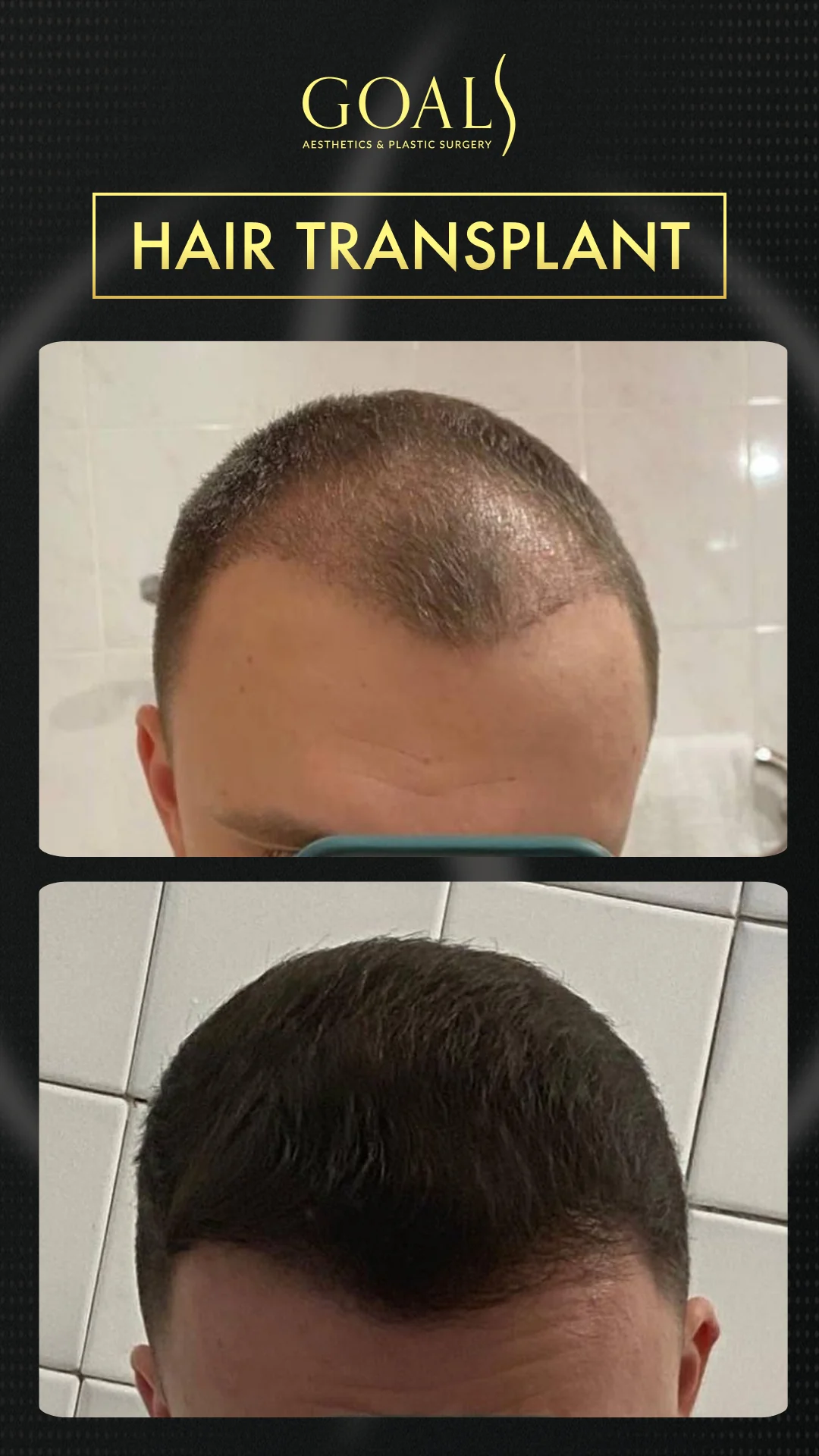
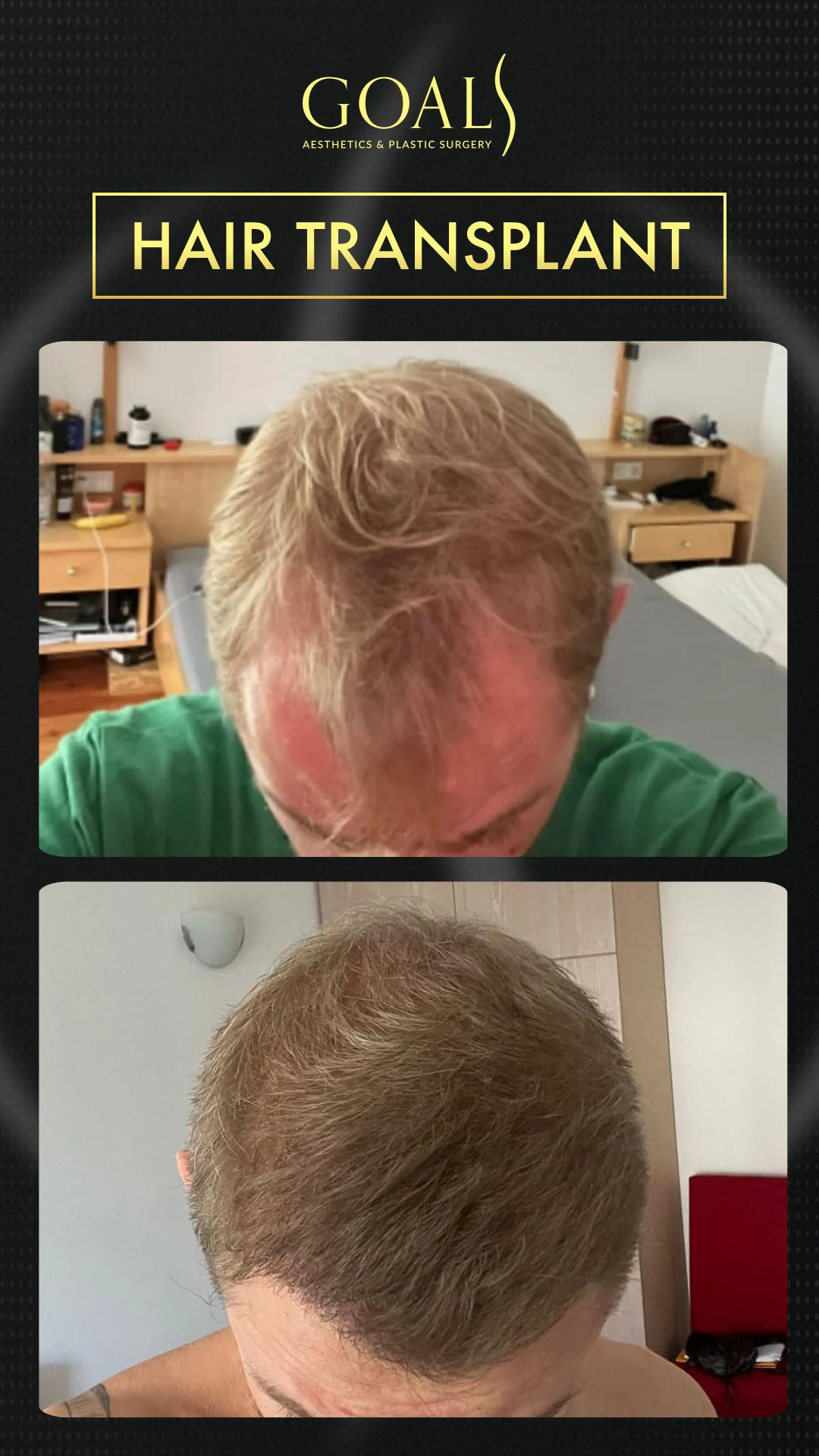
Real patients, published with written consent. Photographs are not retouched or AI-generated. Individual results vary — these images show outcomes for these patients and are not a guarantee of your own.
Try it
Type your height and weight. Your numbers stay on your device. We do not see or save them.
BMI is just one number. Your surgeon also looks at your health and your goals. BMI alone does not decide if you can have surgery.
Our surgeons
Safety runs every case. We keep to tight protocols and modern tools so results hold up. Get to know our team of licensed surgeons.
Each surgeon’s training and licenses are listed on their own page.
Those overseas "budget hair transplant" deals look great on paper. The catch is what they hide: rushed surgery, a language wall, nobody to see afterward, and problems that trail you home and cost more.
| Flying Abroad | U.S. with Goals |
|---|---|
| Flying AbroadWeeks vetting clinics, wiring deposits overseas, then covering flights and a hotel. | U.S. with GoalsYou meet a licensed restoration surgeon first, in person or on video, who checks your scalp and goes over your history. |
| Flying AbroadYou land where you hardly speak the language, and surgery day doubles as your only consult. | U.S. with GoalsBloodwork, forms, and the plan get handled up front, in your language, to U.S. clinical standards. |
| Flying AbroadThe work happens somewhere you have never seen, often on high volume, with barely any time to watch you after. | U.S. with GoalsOn the day, you walk into an accredited clinic and it all happens in a sterile room, only local anesthesia. |
| Flying AbroadHome again, sore and puffy. Days on, the scalp turns red and weepy and you have no clue whether that is normal. | U.S. with GoalsIt runs most of the day, but you stay comfortable, break when you need to, and sleep in your own bed that night. |
| Flying AbroadYour only option is urgent care or an ER, run by people with no record of your case and no idea what was done. | U.S. with GoalsAnything feels off as you heal, you reach the same local team that treated you, and we see you in person and adjust. |
| Flying AbroadMore money and days lost to visits and prescriptions, while the clinic abroad just texts you back. | U.S. with GoalsEvery check-up and progress review stays at one clinic with the same people, right through the hair fully growing in. |
| Factor | Overseas Package | Goals U.S. Clinic |
|---|---|---|
| Total cost (real) | The upfront price, plus airfare, hotel, time off, maybe an ER bill. | Similar all in, but the quote is spelled out first with no add-ons later. |
| Travel & time off work | Long flights, jet lag, days pulled from work and home. | Done locally in a day, barely any travel, a faster return to life. |
| Safety & sterility | Whatever the local rules allow, on a tight clock. | A U.S. room held to accredited-facility standards. |
| Who does surgery | Hard to verify who operates, and you likely never meet them again. | A licensed restoration surgeon who sees you start to finish. |
| Method choice | Usually one method, whatever the clinic runs fastest. | FUE or FUT chosen to fit your loss, hair, and donor supply. |
| Follow-up care | Messages only, and real hands-on help is scarce. | Scheduled visits, progress photos, med changes when needed. |
| Communication | Translation snags, bad time zones, slow answers. | Your own language, written steps, a line open 24/7. |
| Legal protections | Little recourse once you are home and it goes wrong. | Covered by U.S. patient-safety law and rules. |
Safety
Everything runs on safety here. Strict protocols and modern equipment keep your risk down and the outcome strong.
Accredited U.S. sites with sterile, fully stocked procedure rooms.
Fixed graft-handling steps to protect survival and growth.
Numbed locally, skipping the risk of general anesthesia.
Your surgeon and care team stay reachable for questions.
A set plan for aftercare, meds, and check-ins to stop infection.
Why Goals
The same local team runs consult, surgery, and follow-ups.
FUE and FUT in one place, so the plan fits you, not the clinic's habit.
Accredited and stateside, so no travel, no translation, no dropped follow-up.
A licensed restoration surgeon who sees you start to finish.
U.S. patient-safety law protects you, with real recourse if needed.
A single all-in quote, with no facility fees sprung on you later.
FAQ
Yes. We do both at our Central Park clinic and help you choose. FUE leaves tiny dot marks and suits short hair; FUT is the strip method that moves the most grafts in one go. The right call comes down to your loss, hair, and donor supply.
Yes. The procedure runs under local anesthesia with trained clinical staff watching you all day, and sedatives are on hand if you want extra comfort. You stay awake, take breaks, eat, and use your phone while the grafts go in.
Yes. Plenty of patients start with a video consult where we look over photos of your loss and donor area, then lock the plan in person on the day. Pre-op testing and consent are done ahead of time, so nothing gets rushed.
No, not when it is planned well. We design the hairline with you and set single and small grafts at natural angles up front, denser units behind. Done right, the finished result blends in and reads as your own hair.
You reach the same Central Park team that treated you. Since we are a U.S. clinic, you can come in if something feels off, and we adjust your meds or check the grafts in person instead of texting it out from overseas.
Most men are back to desk work in about 2 to 3 days. Small scabs flake off over roughly 7 to 10 days. The transplanted hairs shed early, then new growth starts around 3 to 4 months, gets fuller by 6 to 9, and hits the final look by 12 to 18 months.
Learn more
This page is about men's hair transplant at Goals in Central Park. The clinic is at 116 Central Park S, New York, NY 10019, and consultations there are free and carry no obligation. A licensed U.S. surgeon operates here. What follows explains the procedure itself, which does not change with the address.
Men rarely decide to address their hair on a whim. It creeps up. You notice the temples first, then the crown, then you get good at picking hats and camera angles. At some point the workarounds stop working.
A men's hair transplant moves your own DHT-resistant hair from the back and sides into the areas that have thinned. It is an awake, one-day, in-office procedure under local anesthesia with mild sedation available, and you go home the same evening. What follows starts with the thing that most determines whether you are happy with the result in twenty years, and it is not which method you choose.
The hardest part of this procedure is not surgical. It is deciding how much of a finite resource to spend now, when you cannot know exactly how much you will need later.
Male pattern loss is progressive. It is driven by DHT shrinking follicles at the front and crown over years, and the process does not stop because you had surgery. Your donor area at the back and sides is DHT-resistant, which is why relocated hair keeps growing, but that donor supply is fixed. Nothing increases it.
So a plan that looks generous at thirty can look strange at forty-five. A hairline placed low and dense uses a large share of your reserve, and if loss continues behind it you can end up with a strong front line and thinning behind it, with too little donor hair left to fix the gap. That result is harder to live with than the original recession.This is why a surgeon worth seeing will sometimes recommend fewer grafts than you came in asking for, or a hairline higher than the one you had at seventeen. It is not caution for its own sake. It is planning around where you are heading rather than only where you are now, and it is the single clearest marker of a clinic thinking about your outcome rather than today’s invoice.
The Norwood scale is the shorthand surgeons use for staging that pattern, from slight recession through to a bare crown and front. Knowing your stage matters, and knowing whether it is still moving matters more. If it is, the honest options are pairing surgery with medication to stabilise the native hair, holding grafts back, or waiting. Younger men in early stages are frequently better served by waiting, and we will say so.
This is what separates a result nobody notices from one everybody does, and almost none of it is about graft numbers. A natural male hairline is not a line. It carries slight irregularity along its edge, a soft transition zone at the very front where density builds gradually rather than starting abruptly, and temporal recession that suits an adult face. Reproducing that is the design work.
Single-hair grafts go at the very front to feather the edge, with denser multi-hair units placed behind them for body. Reverse that and the hairline reads as a wall, which is the tell of poor planning and the reason old work looked obvious.
Height is the decision men most often want to get wrong. A hairline brought too far forward looks correct in the mirror the week it grows in and increasingly odd as the face ages around it. The shape is designed on your head, with you, before anything begins, and a surgeon who talks you down from an aggressive line is doing you a favour rather than short-changing you.
Two methods, differing only in how donor hair is taken. FUE lifts follicular units one at a time with a small punch, leaving scattered dot marks and no linear scar. FUT, the strip method, removes a single thin strip that is then divided into grafts under magnification, leaving a fine line that longer hair covers, and it generally yields the most grafts in one session.
Placement is identical either way. The harvest is the only real difference, and the choice comes down to three things.
How you wear your hair, now and probably later. Very short at the back and sides points toward individual extraction. Any real length makes the strip line irrelevant.
How much coverage you need in one sitting. Advanced loss across a large area is where the strip method earns its place, since a single session can supply numbers that would otherwise take two procedures.
And what your donor area supports, assessed under magnification rather than estimated. Strip harvesting concentrates the loss into one band and leaves surrounding density intact, while individual extraction spreads it thinly across a wider area. For a man likely to want a second procedure later, that difference matters.
Plenty of men use both across the years, with the strip method for the heavy lifting and individual extraction later for refinement. The point of offering both is that the method fits you rather than you fitting whatever the clinic happens to run.
Men fixate on graft numbers. Distribution matters more, and the same total can produce very different results.
A hairline needs fine grafts along the front and density behind. A crown consumes grafts quickly, both because of the spiral growth pattern and because the scalp there faces upward and catches light, so exposed skin shows more readily than it does at the front.
That last point drives one of the most common planning conversations: if donor supply will not cover both the hairline and the crown properly, the hairline usually wins. It frames your face and appears in every interaction. The crown is behind you and you rarely see it. Spreading a limited number of grafts thinly across both regions tends to produce two areas that still look thin rather than one that looks restored.
Density has physical limits too. Packed too tightly, grafts compete for blood supply and fewer survive. Spaced too widely, the result reads thin. The target is density that reads as full at conversational distance while the scalp can still feed everything placed in it. Our before & after gallery shows what different plans produce.
It takes hours, and that is a good sign rather than an inconvenience. Rushed placement is precisely how results end up looking planted. You rest throughout, take breaks, eat, use your phone, and go home the same evening with aftercare instructions and medication.
The first two or three days bring mild swelling, tightness, and small scabs around each graft. Most desk workers are back within a few days, and the scabs flake away over roughly seven to ten days, as do any donor-line sutures.
Then between weeks two and six the transplanted hairs fall out. This is shock loss and it rattles everyone. What sheds is the hair shaft, not the follicle: the follicle stays exactly where it was placed and enters a resting phase before restarting.
New growth pushes through around three to four months, fine and patchy at first, thickens across months six to nine, and the final result fills in between twelve and eighteen months. Judge it at a year, not at week six. Monthly photographs from the same angle are more reliable than the mirror, because change at this pace is invisible to daily observation.
The grafts are fragile early, and what you do in the first seven days determines how many survive.
No scratching, no hats crammed down tight, and no hard workouts that flood the scalp with blood. Wash exactly as demonstrated rather than improvising, sleep propped up for the first few nights to keep swelling down, and keep sun off the scalp until cleared.
You get a written schedule covering washing, medication, and what to avoid. Call with a small question rather than guessing, since a graft dislodged in week one cannot be recovered and you will not know which ones you lost until months later.
A transplant handles the areas treated. It does nothing to stop the native hair around the grafts thinning on its own schedule, and that is not a small footnote.
Without a maintenance plan, you can be back in a few years watching a gap open behind a good hairline, which is exactly the island effect the first section warned about. The transplanted hair holds while everything around it recedes.
Skip the marketing and look at the work. Do the hairlines read natural or planted? Are the donor areas left tidy? Ask specifically who performs the harvest and the placement, because at a significant number of clinics technicians handle most of both, and those two stages are the surgery rather than steps within it.
Ask also how many cases run in a day. A practice moving several patients simultaneously is dividing attention, and the time saved comes out of placement. You can read our surgeon profiles before you book.
Having it done at an accredited U.S. clinic means a sterile operating room, qualified clinical staff on-site, and genuine recourse. It also means the people who performed your surgery are the ones examining you afterward, which matters across a recovery measured in months. The comparison with travelling abroad is not about surgical quality in the abstract, since good surgeons practise everywhere. It is about week three: a problem at home with your clinic ten time zones away means an emergency room with no operative notes and nobody who knows what was done.
Cost depends on method, graft count, and whether the plan is one session or staged. We do not publish a flat figure, because your plan is not the next man’s, and a low number advertised online usually means the real bill arrives later. If you have been searching hair replacement for men near me central park, the honest answer only exists after someone has examined your scalp and donor supply.
You get a clear quote after the consult, all in, with no facility or anesthesia fees appearing afterward, and monthly financing is available if spreading the cost suits you better.
We study your loss pattern, examine the donor area, walk through the methods, and give you a straight read on grafts and cost. Nobody is pushed to commit that day, and if the honest answer is to wait a few years, that is what you will hear.
It is not instant and it is not cheap, and anyone claiming otherwise is selling something. But a year after a well-planned procedure, most men simply stop thinking about it, which was the point.
The day opens with planning: the hairline is mapped with you, shape and height agreed, and the graft count estimated. The donor area is numbed and harvested by whichever method your plan calls for. Grafts are sorted, recipient sites cut, and each graft placed by hand.
About Men's Hair Transplant
More at the Central Park clinic
Get started
Booking your first consult, or deciding between FUE, FUT, and non-surgical routes? Either way, our team builds a safe, realistic hair restoration plan around your goals.
Prefer to talk now? (833) 462-5769
Free · No obligation
Tell us how to reach you. A patient coordinator calls you back — usually the same day.
Free · No obligation
Ask me anything. I usually reply straight away.
If you share your number, a Goals coordinator may call or text you about your consultation. Message and data rates may apply.
Nora is an automated chat. She cannot give medical advice or say whether a procedure suits you.