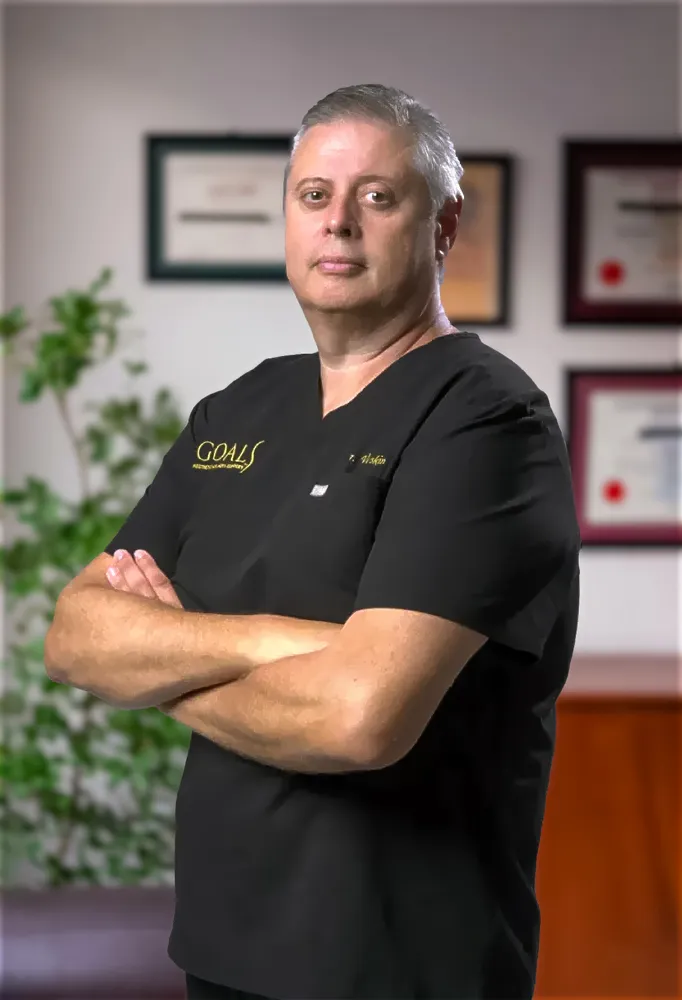
Over-Plucked
Years of plucking or waxing that left the brow patchy and slow to recover.
Thin or over-plucked brows? We rebuild them in a day with single-hair grafts set to your angle, under local anesthesia at our Central Park clinic.
From $5,000
Goals Aesthetics & Plastic Surgery – Central Park
116 Central Park SMon–Sat, 10:00–19:00 local time
Surgeon: Dr. Sergey Voskin
Conditions we treat
Brows thinned by plucking, medical loss, scars, or genetics, rebuilt with real hair.
Years of plucking or waxing that left the brow patchy and slow to recover.
Fine, scanty brows that never carried much density in the first place.
The outer third fading out, often down to thyroid issues or age.
Bare patches from scars, burns, or injury filled in so hair hides them.
Mismatched brows balanced and reshaped to frame the face better.
Living hair for faded microblading or tattoo that stopped looking right.
Candidacy
A transplant is worth a look if your brows are thin, patchy, or plucked away, and penciling them in is a daily chore. We rebuild them with fine single grafts taken from your own scalp.
Gaps or wispy spots that never fill in alone.
No autoimmune loss active in the brow area.
You want brows that last, not daily pencils, gels, or tinting.
Fine hair at the scalp back matching brow texture.
You want fuller, natural brows, nothing overdone.
Losing hair elsewhere, or comparing options? These are the other hair procedures we offer.
About Eyebrow Hair Transplant
More at the Central Park clinic
Non-surgical options
Thinning on the scalp too? For early loss or shedding, these build density and protect the hair you still have, no surgery, and they work well alongside a transplant down the line.
Clinics
Choose whichever office fits your day. Consult, pre-op clearance, and post-op checks can all run at the Goals location closest to you, or wherever the parking is easiest.
Look at the before and after on real Central Park patients.
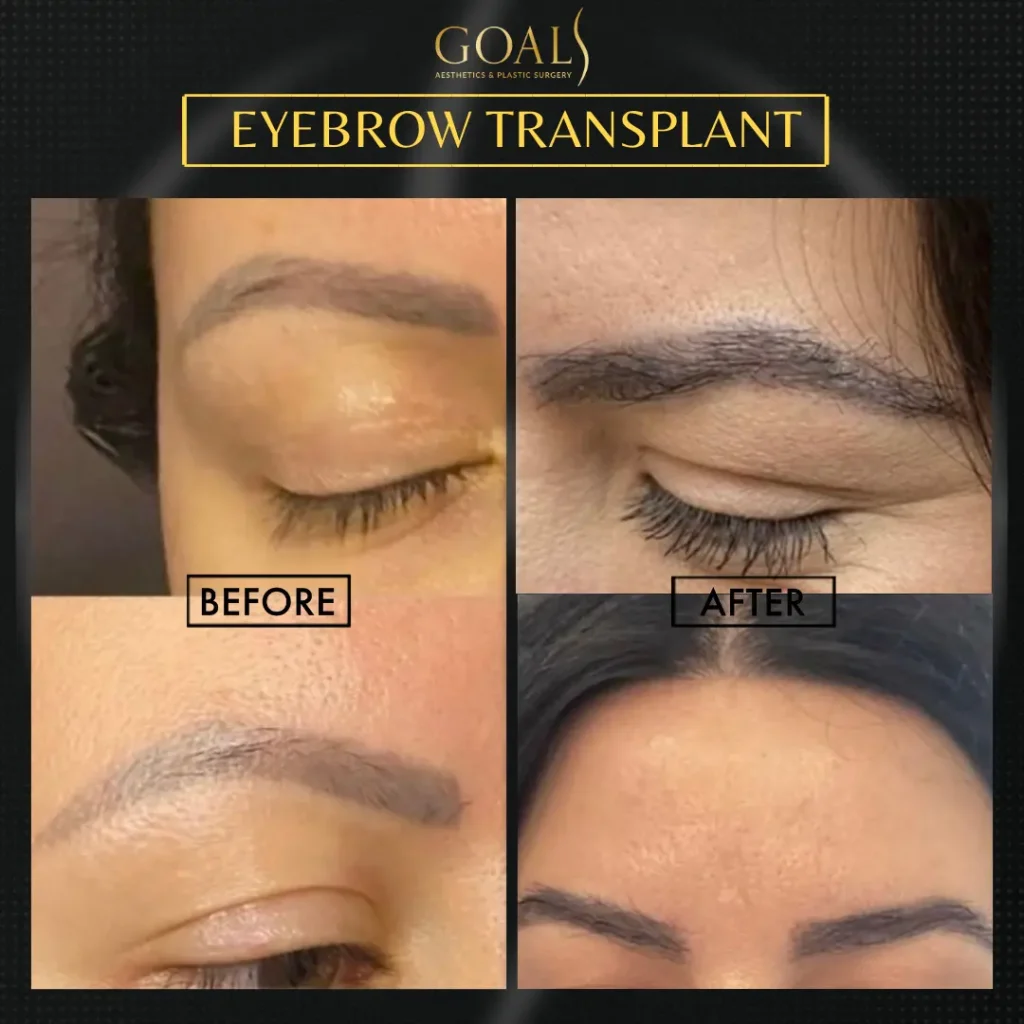
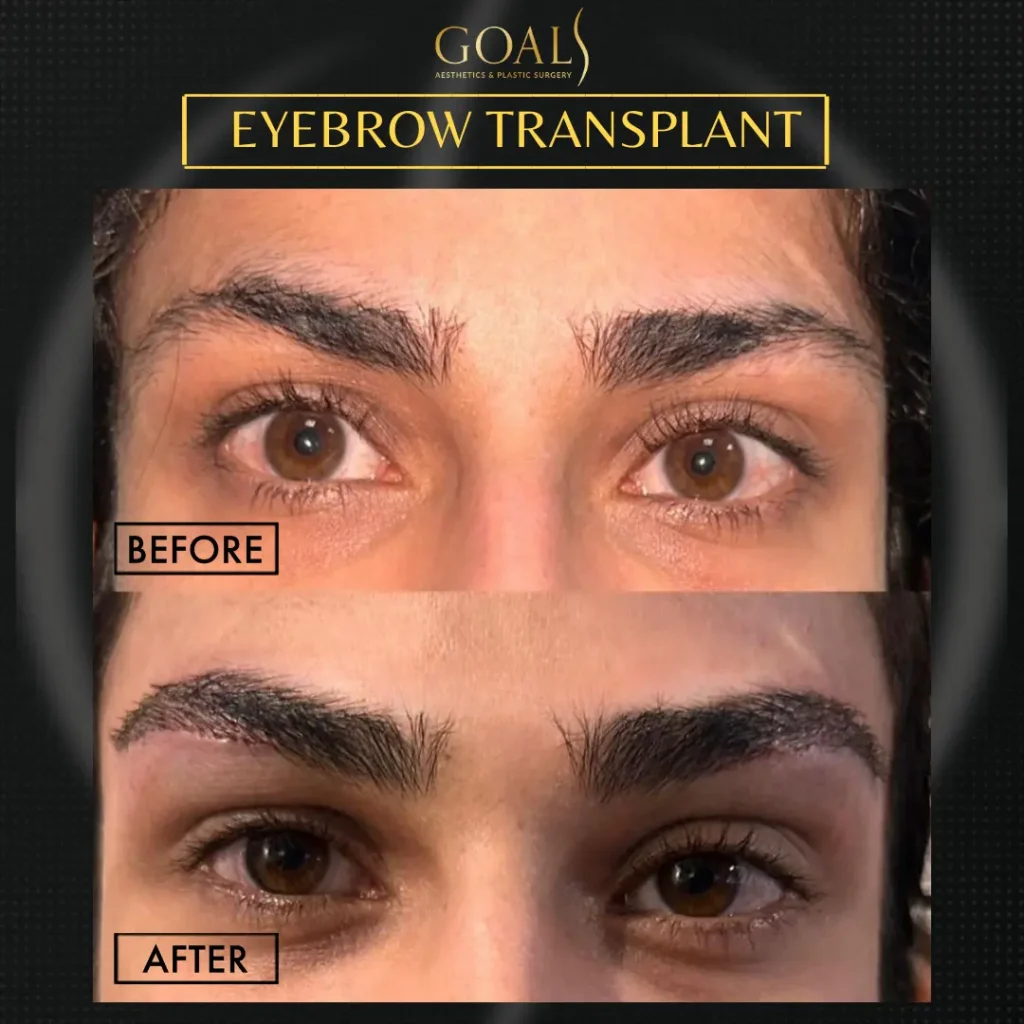
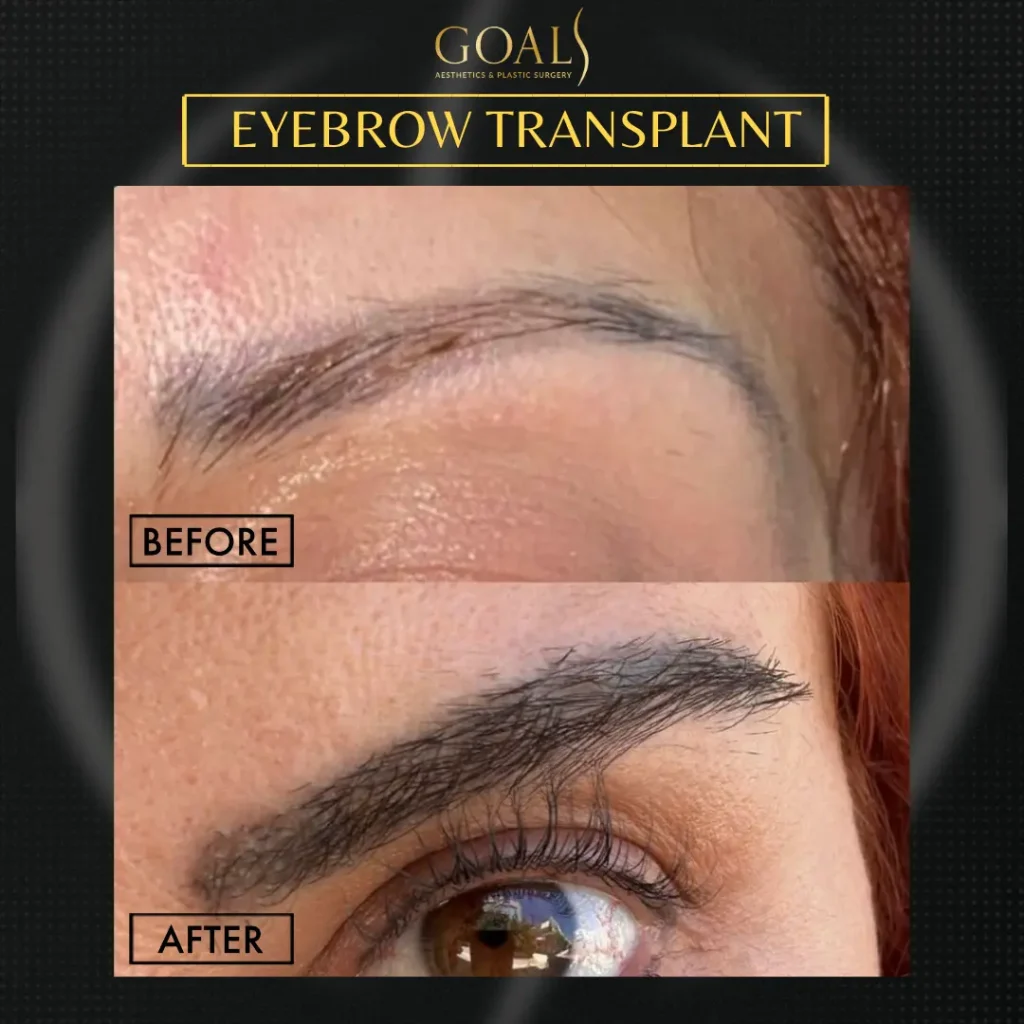
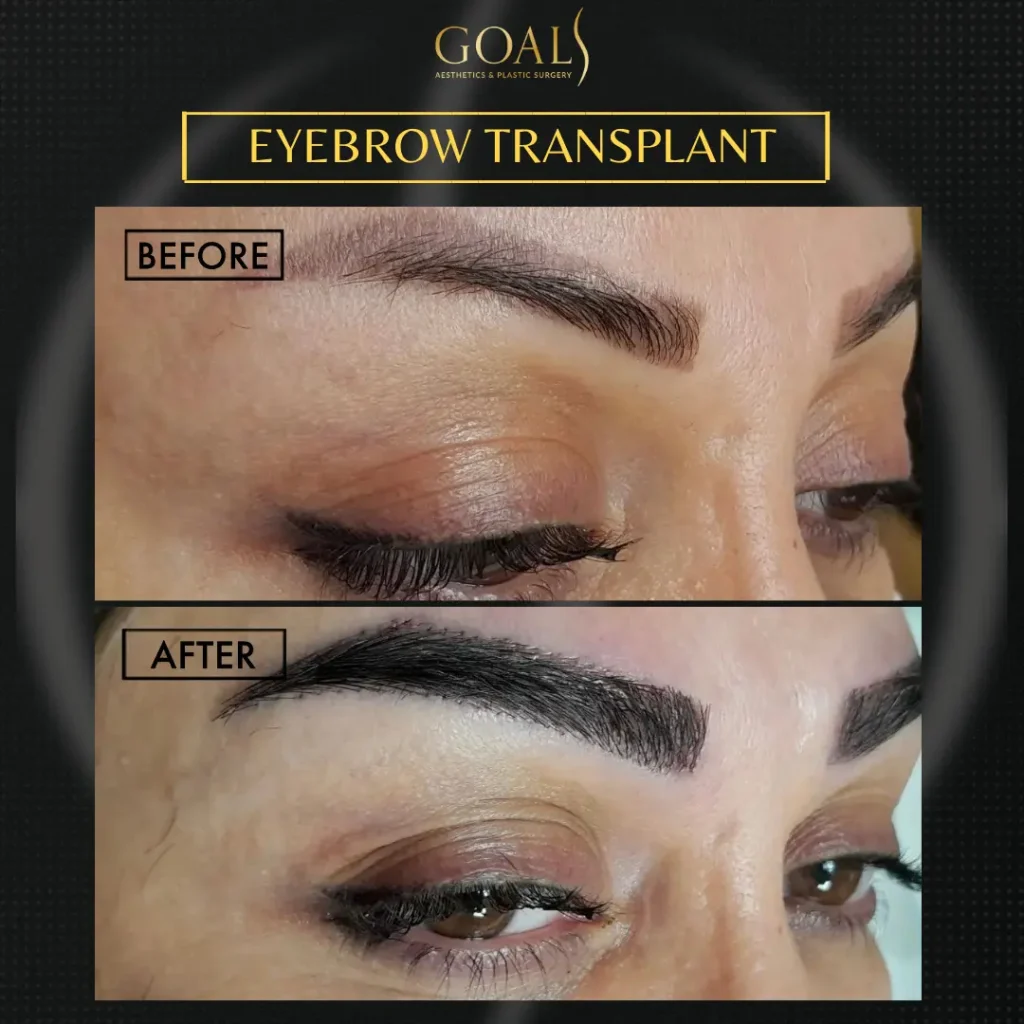
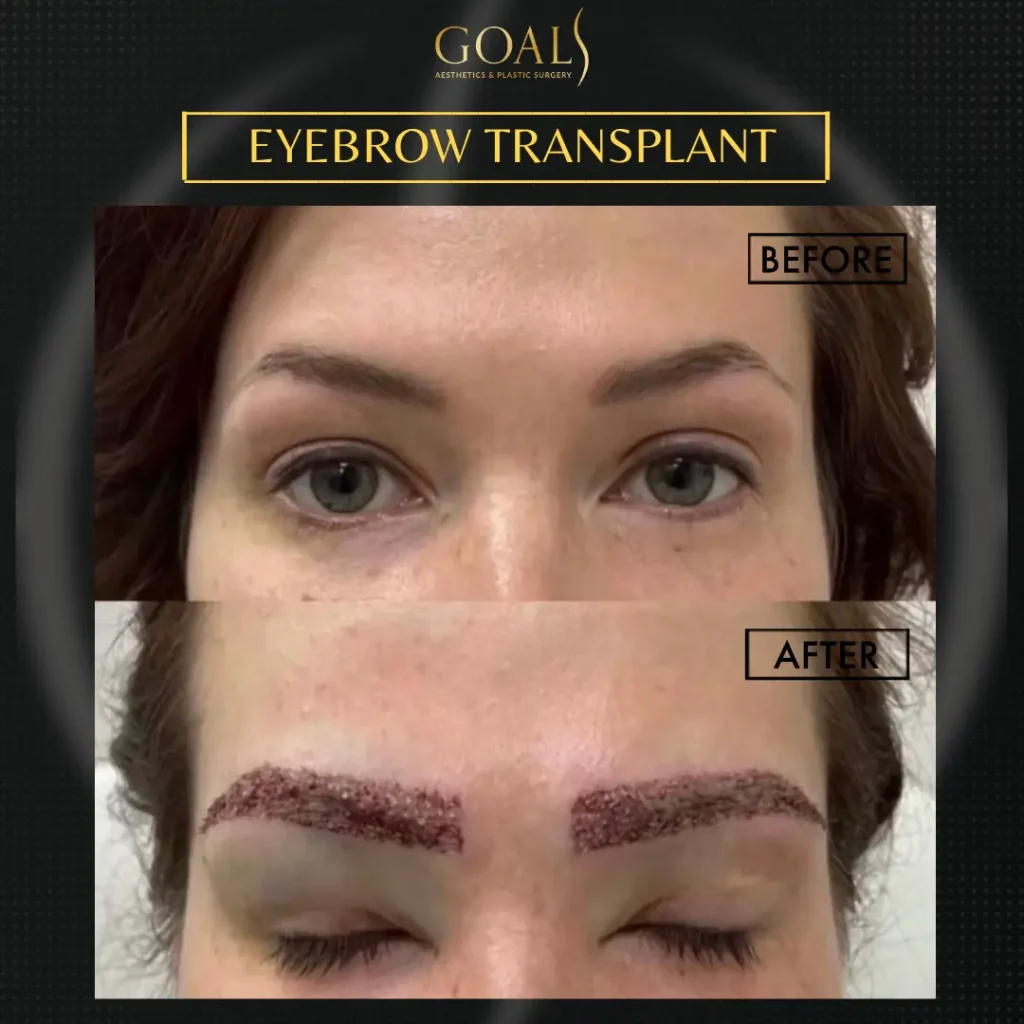
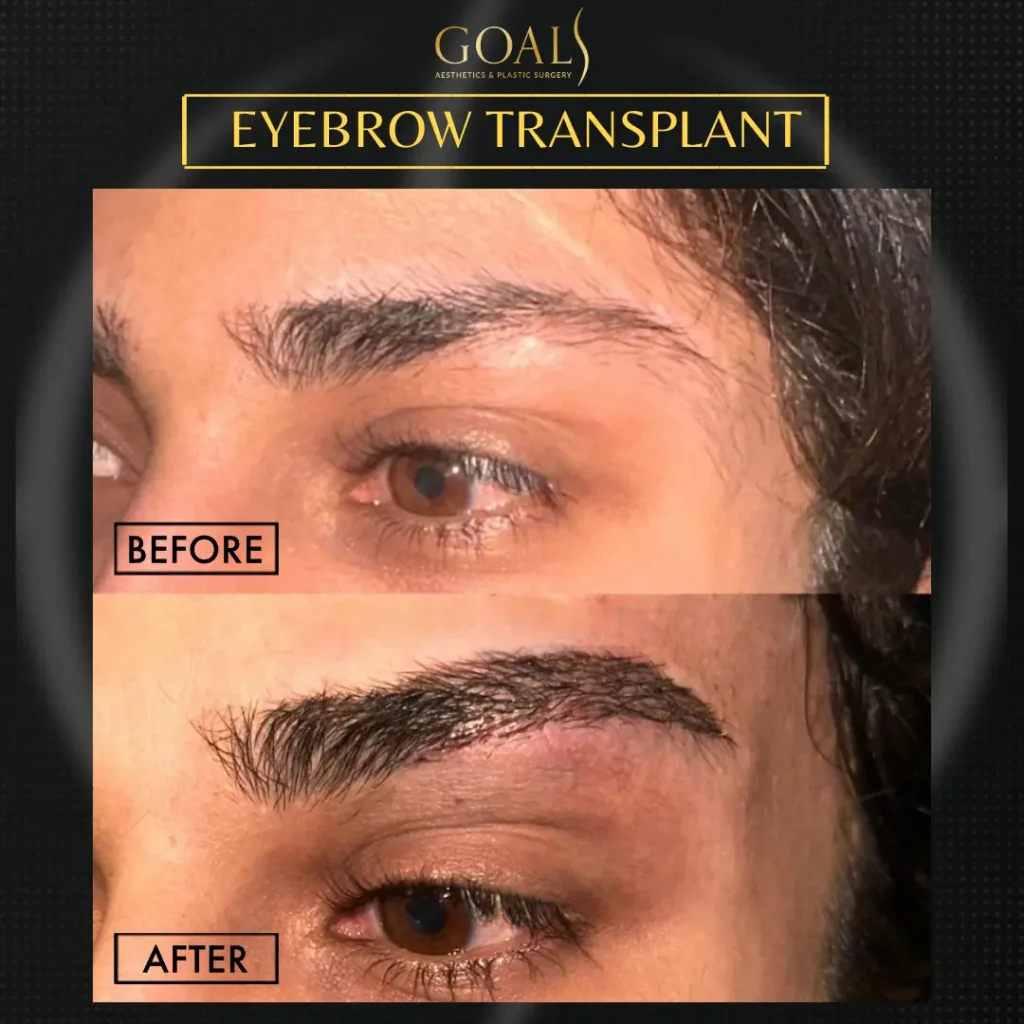
Real patients, published with written consent. Photographs are not retouched or AI-generated. Individual results vary — these images show outcomes for these patients and are not a guarantee of your own.
Try it
Type your height and weight. Your numbers stay on your device. We do not see or save them.
BMI is just one number. Your surgeon also looks at your health and your goals. BMI alone does not decide if you can have surgery.
Our surgeons
Safety runs every case. Tight protocols, modern tools, results that hold up. Get to know our team of licensed surgeons.
Each surgeon’s training and licenses are listed on their own page.
Those overseas "budget brow transplant" deals look great on paper. The catch is what they bury: rushed angle work, a language wall, nobody to see afterward, and a botched brow that trails you home.
| Flying Abroad | U.S. with Goals |
|---|---|
| Flying AbroadWeeks vetting clinics, wiring deposits overseas, then covering flights and a hotel. | U.S. with GoalsYou meet a licensed surgeon first, in person or on video, who maps your brow shape and checks your donor. |
| Flying AbroadYou land where you hardly speak the language, and surgery day doubles as your only consult. | U.S. with GoalsBloodwork, forms, and the plan get handled up front, in your language, to U.S. clinical standards. |
| Flying AbroadBrow angle is unforgiving, and a rushed, high-volume clinic sets the direction wrong. | U.S. with GoalsOn the day, you walk into an accredited clinic, sterile room, local anesthesia, and the grafts go in. |
| Flying AbroadHome again, brows crusted and puffy. Days on, something looks off and nobody can say if it is normal. | U.S. with GoalsIt runs a few hours, but you stay comfortable, break when you need to, and go home that afternoon. |
| Flying AbroadYour only option is urgent care or an ER, run by people with no record of your case and no idea what was done. | U.S. with GoalsAnything feels off as you heal, you reach the same local team that treated you, and we adjust in person. |
| Flying AbroadMore money and days lost to visits and prescriptions, while the clinic abroad just texts you back. | U.S. with GoalsEvery check-up and progress review stays at one clinic with the same people, right through the brows filling in. |
| Factor | Overseas Package | Goals U.S. Clinic |
|---|---|---|
| Total cost (real) | The upfront price, plus airfare, hotel, time off, maybe an ER bill. | Similar all in, but the quote is spelled out first with no add-ons later. |
| Brow angle work | Brow hair lies flat, and rushed clinics botch the angle. | Single grafts laid flat to follow your own brow pattern. |
| Safety & sterility | Whatever the local rules allow, on a tight clock. | A U.S. room held to accredited-facility standards. |
| Who does surgery | Hard to verify who operates, and you likely never meet them again. | A licensed restoration surgeon who sees you start to finish. |
| Donor match | Takes whatever hair is handy, too coarse for a real brow. | Fine donor follicles picked to match your brow texture. |
| Follow-up care | Messages only, and real hands-on help is scarce. | Scheduled visits, progress photos, med changes when needed. |
| Communication | Translation snags, bad time zones, slow answers. | Your own language, written steps, a line open 24/7. |
| Legal protections | Little recourse once you are home and it goes wrong. | Covered by U.S. patient-safety law and rules. |
Safety
Everything runs on safety here. Strict protocols and modern equipment keep your risk down and the outcome strong.
Accredited U.S. sites with sterile, fully stocked procedure rooms.
Fine single-hair grafts laid flat along your natural brow line.
Numbed locally, skipping the risk of general anesthesia.
Your surgeon and care team stay reachable for questions.
A set plan for aftercare, meds, and check-ins to stop infection.
Why Goals
The same local team runs consult, surgery, and follow-ups.
Brow shape and angle done by surgeons used to delicate facial work.
Accredited and stateside, so no travel, no translation, no dropped follow-up.
A licensed restoration surgeon who sees you start to finish.
U.S. patient-safety law protects you, with real recourse if needed.
A single all-in quote, with no facility fees sprung on you later.
FAQ
It gets mapped with you before anything is harvested. Where the head begins, how high the arch sits, where the tail ends, and how thick the whole reads are drawn on and checked in a mirror from several angles. Bone structure and eye shape drive it more than trend does, since the result is permanent and brow fashions are not. You will see and approve the outline before a single graft goes in.
Usually yes, and asymmetry is one of the more common reasons people come in. Nobody has perfectly matched brows naturally, so the aim is balance rather than mirror-image identical, which tends to look artificial. Each side is planned separately and often needs a different graft count, since the sparser brow requires more work than the fuller one.
No. Existing pigment does not prevent a transplant, and many patients come to us precisely because microblading stopped looking right. It is worth raising at consultation because heavily scarred skin from repeated tattooing can affect how grafts take, and because the design conversation changes if you are working around a shape somebody else drew.
You reach the same Central Park team that treated you. Because we are a U.S. clinic, you can come in if something feels wrong, and we check the grafts or adjust your medication in person rather than trading messages with a clinic overseas.
Often yes. Brows use a small number of grafts, so combining them with scalp or beard work is realistic if your donor supply covers both. The limit is your donor area rather than the schedule. We assess the whole supply at consultation and tell you what can sensibly be done at once versus staged.
Around a week for eye makeup, using gentle products, though your specialist will give you exact timing. Nothing goes on the brows themselves until you are cleared. Plucking, waxing, and threading wait considerably longer, and you will be told when it is safe rather than left to guess.
Learn more
This page is about eyebrow hair transplant at Goals in Central Park. The clinic is at 116 Central Park S, New York, NY 10019, and consultations there are free and carry no obligation. A licensed U.S. surgeon operates here. What follows explains the procedure itself, which does not change with the address.
Thin brows are the kind of thing you notice every morning. Over-plucking in your twenties that never reversed, outer ends that faded with age or a thyroid problem, or brows that were always sparse. Pencils, powders, gels, and microblading all buy time, then fade or wash off.
A surgeon lifts fine single-hair follicles from the back of your scalp and places them into the brow one graft at a time, at the flat angle brow hair actually grows. You stay awake, it happens in-office under local anesthesia, and you go home the same day. What follows starts with the part that decides your result and gets the least attention: the design.
A brow is not a stock shape stamped onto a face, and the surgery is largely an execution of a drawing agreed beforehand. Everything that determines whether you like the result in five years happens before a single follicle is harvested. Four decisions get made together. Where the head of the brow begins, which frames the space between your eyes. How high the arch rides and how pronounced it is. How far the tail extends and at what angle it falls. And how thick the whole reads from the head through to the tail.
Those are settled against your bone structure and your eyes rather than against whatever shape is currently fashionable. Brow trends move quickly and a transplant is permanent, so a design built around the current look dates in a way one built around your face does not. This is the single most useful thing to understand before booking.
The outline is drawn on and checked in a mirror from several angles before anything proceeds. Symmetry is aimed at as balance rather than as mirror-image matching, since no one has identical brows naturally and forcing it reads as artificial. In practice the two sides often need different graft counts, because the sparser brow requires more work than the fuller one.
Scalp hair projects outward from the skin. Brow hair lies almost flat against it, and the direction changes continuously as it crosses the brow: the head points upward, the middle sweeps outward, and the tail runs flat toward the temple, forming a subtle crisscross where the two directions meet.
Each graft therefore has to be set at the correct flat angle and direction for its exact position, with recipient sites cut using fine blades sized to a single hair. A graft placed at a scalp-appropriate angle stands away from the face instead of lying against it, and that error is visible immediately. Density does not compensate for it.
Donor selection follows the same logic. The finest follicles available are chosen, because a brow requires delicate single-hair grafts rather than the chunkier multi-hair units used across a scalp. Coarse donor hair produces a brow that looks heavy no matter how well it is placed, and the placement is permanent.
The cause matters, because some causes need addressing before surgery is appropriate.
Over-plucking and over-waxing lead the list, a legacy of the thin-brow trends of past decades, where follicles simply stopped regrowing after years of repeated removal. Age thins the outer third for many people, and thyroid dysfunction famously does the same, which is why the outer brow is worth mentioning to your physician if it has thinned alongside other symptoms.
Scars, burns, and injuries leave defined bare gaps that transplant well. Chemotherapy and certain autoimmune conditions thin brows, as does compulsive hair-pulling. Microblading or cosmetic tattooing that faded badly or was poorly executed brings people in too.
The screening that matters most is for active loss. An autoimmune process removing brow hair does not distinguish between your original follicles and transplanted ones, so grafts placed into an active condition are attacked by the same mechanism that cleared the area. Progressive scarring conditions behave similarly. Where either is present, that gets treated first and surgery waits, because transplanting into an active process spends donor hair on follicles that will not survive.
Brows need a surprisingly small number of grafts, and every one has to be exact. A typical brow runs somewhere in the region of 150 to 400 single-hair grafts per side, depending on how much is being rebuilt.
Filling a few sparse patches sits at the lower end. Reconstructing a brow that is barely there sits at the upper end. Unlike scalp work, this is not a volume exercise.
The result turns on setting a few hundred hairs at precisely the right angle and spacing rather than on moving a large number of follicles efficiently.
You get a realistic range at consultation, after the shape has been mapped with you, since the number follows from the design rather than preceding it. Our before & after gallery shows what different counts actually produce across different starting points.
This is the comparison most people are weighing, and it deserves both sides rather than one.
The practical difference is what happens over a decade. Microblading is an ongoing commitment of touch-up appointments and cost. A transplant is a single procedure with a slow result and no upkeep beyond grooming. Many of our brow patients arrive after microblading stopped looking right, wanting something real. Existing pigment does not rule you out, though heavily scarred skin from repeated tattooing is worth raising at consultation, since it can affect how grafts take.
Recovery is faster than a scalp transplant. The first few days bring tiny crusts around each graft and some redness, settling across roughly a week. Most people are back to normal life within a few days.
While healing, no rubbing, scratching, or picking at crusts, and no plucking, waxing, or threading until you are cleared. Keep harsh cleansers and heat off the brows for the first couple of weeks, sleep so your face is not pressed into the pillow, and wash exactly as instructed. Eye makeup generally returns at around a week using gentle products. Those first days determine how many grafts survive, and a dislodged graft is not recoverable.
Around two to three weeks in, the transplanted hairs fall out. This is expected and it startles people every time. The follicles remain under the skin exactly where they were placed. New growth appears around four months, thickens noticeably by six, and the brows settle into their final look by roughly twelve. One ongoing point worth knowing: because the hair originated on the scalp, it grows longer than native brow hair and needs trimming every week or two to hold the shape. Most people consider that a fair exchange for brows that are permanently theirs, and it also means you can groom and shape them however you like.
Artistry counts as much as surgical skill here, and the two are separable. A technically clean transplant with a poorly judged design produces brows that are permanent and wrong.
Look at brow cases specifically rather than scalp results, since the skills do not automatically transfer. Ask what you are actually seeing: do the shapes read as natural and balanced, do the hairs lie flat and grow in the right directions, or do they stand away and look placed? Poor angle work is the clearest sign of an inexperienced hand, and it is difficult to correct afterward.
Ask how many brow cases the surgeon does, whether the design is drawn with you or presented to you, and what happens if you dislike the shape at the mapping stage. An experienced brow surgeon expects those questions. You can read our surgeon profiles before you book.
Cost depends on how much is being rebuilt and how intricate the design is, so a full reconstruction runs higher than filling a few gaps. We do not publish a flat figure, because every brow differs, and a low number advertised online usually means the real bill arrives later. If you have been searching eyebrow transplant Central Park, the honest answer only exists once someone has mapped your brow and assessed your donor hair.
You get a clear quote after the consult, all in, with no facility or anesthesia fees appearing afterward. Monthly financing is available if spreading the cost suits you better.
We examine your brows, check your scalp donor for a texture match, screen for anything that should be treated first, map the shape with you, and give you a straight read on grafts and cost. Nobody is pushed to sign that day. Brows also combine well with other work, since the graft numbers are small, so if you are considering scalp restoration or beard work too, we assess the whole donor supply and tell you what can sensibly be done at once.
For anyone who has penciled their brows in every morning for years, the appeal is straightforward: it is your own hair, it grows for life, and once it fills in you can wash your face and forget about it. It is not instant and it is not cheap, and anyone claiming otherwise is selling something. But a year on from a well-designed brow transplant, most people simply have brows again.
Microblading is a cosmetic tattoo: pigment deposited into the skin in strokes that imitate hairs. It looks convincing at conversational distance for a while, costs less up front, takes an afternoon, and fades over roughly one to three years, which means it can be changed if your taste does. A transplant is living hair, three-dimensional, and permanent, which also means permanent if you change your mind.
About Eyebrow Hair Transplant
More at the Central Park clinic
Get started
First brow consult, or still weighing a transplant against microblading? Either way, our team maps your brow shape and puts together a safe, realistic plan.
Prefer to talk now? (833) 462-5769
Free · No obligation
Tell us how to reach you. A patient coordinator calls you back — usually the same day.
Free · No obligation
Ask me anything. I usually reply straight away.
If you share your number, a Goals coordinator may call or text you about your consultation. Message and data rates may apply.
Nora is an automated chat. She cannot give medical advice or say whether a procedure suits you.