Receding Hairline
The "M" shape at your temples and front. Usually the first thing men notice.
Your hairline, rebuilt one follicle at a time. One day, in our office, under local anesthesia. Your surgeon is skilled in hair restoration.
From $5,000
12,000+
Hair Procedures Performed
150+
Years of Combined Surgical Experience
4.9
Based on 8,500 Patient Reviews
Come to our New York office for your consult, your pre-op clearance, and every follow-up after. Easy to reach whether you drive or commute.
We treat every stage and pattern of male pattern baldness.
The "M" shape at your temples and front. Usually the first thing men notice.
The bald or thinning patch at the vertex, where hair grows in a spiral.
Density drops across the whole top rather than in one obvious spot.
Grafts placed into old surgical scars or patches thinned by injury.
Fills in patchy, thin, or scarred areas so the beard grows in evenly.
Brows thinned by years of plucking, rebuilt with hair that keeps growing.
Got a receding hairline, a thinning crown, or scalp showing through? You are likely a candidate. An FUE hair transplant in NYC has taken years off thousands of men.
You can see it in photos, or in the mirror.
Your loss has held steady, or slowed, for a year or two.
No linear scar, so a buzz cut stays clean. Grow it out later if you want.
Enough healthy hair left at the back and sides to move.
You will follow the before and after instructions.
Pairing your transplant with something else, or still weighing options? We do the full range of hair restoration.
About FUE Hair Transplant
FUE Hair Transplant near you
Not everyone needs surgery. These treatments work on follicles that are still alive but weakening, and they pair well with a transplant. Best for early thinning, shedding, or holding onto the density you have.
Same men, same lighting, months apart. Judge for yourself.
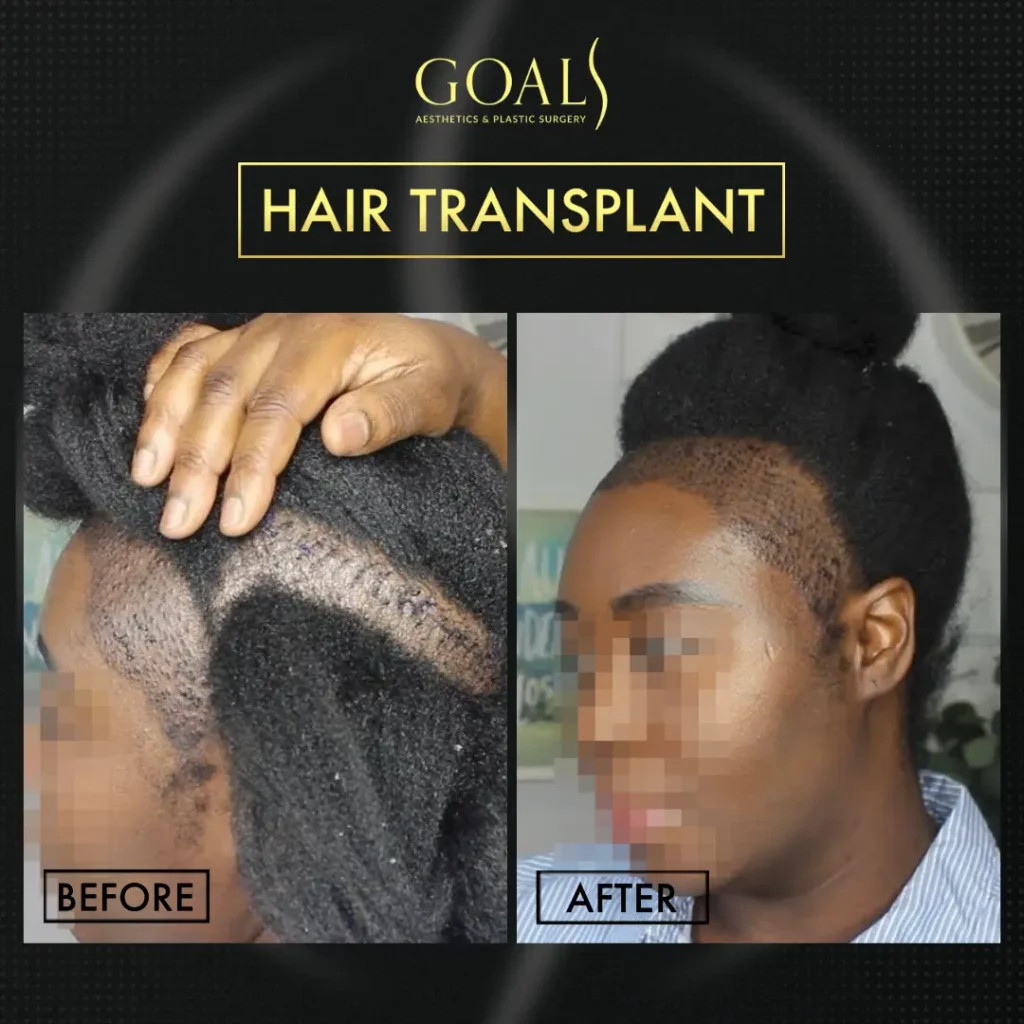
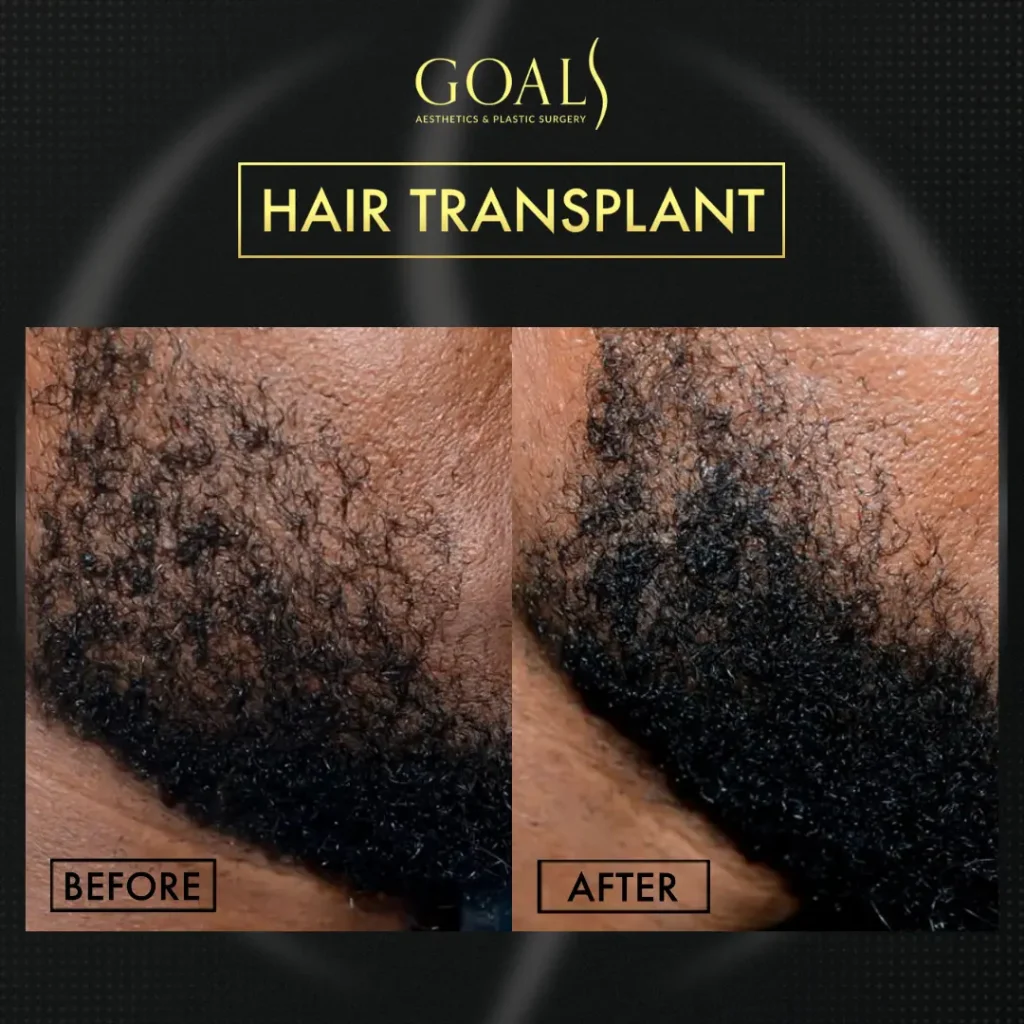
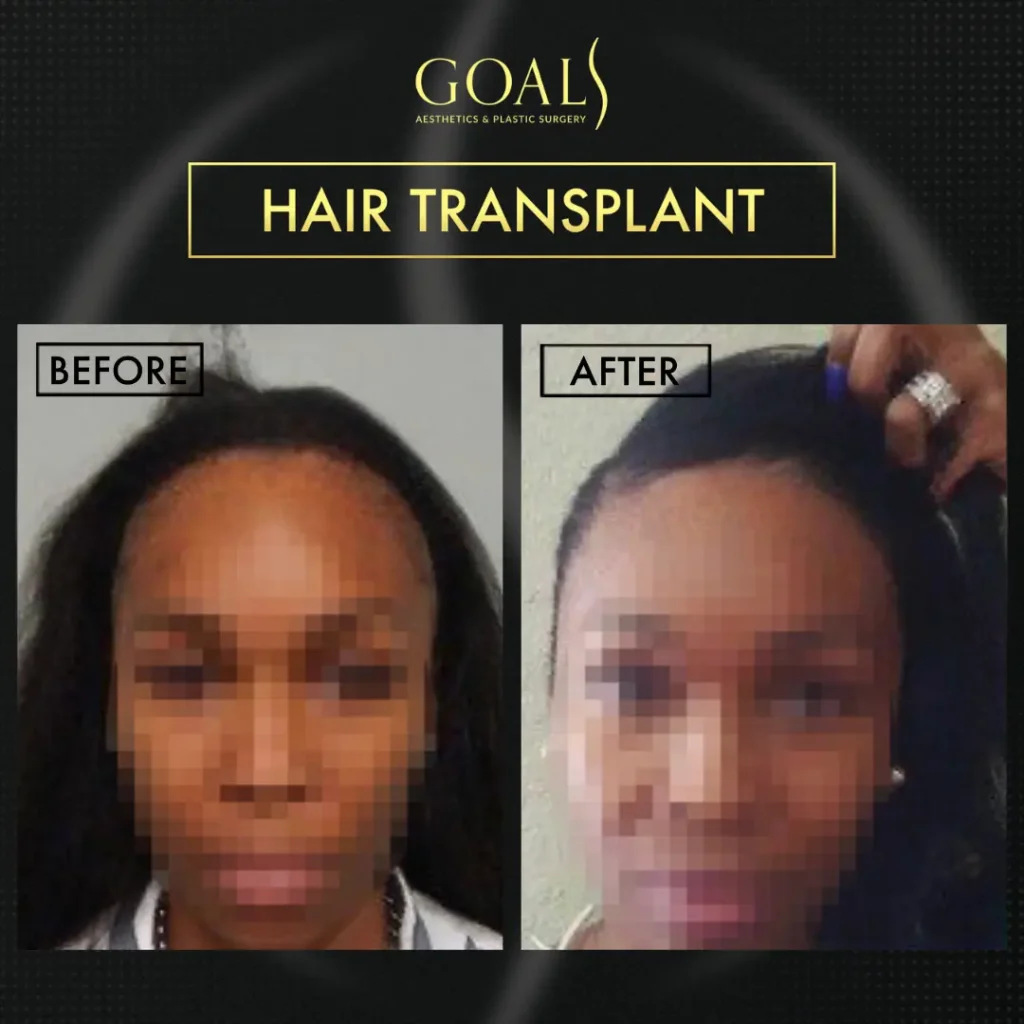
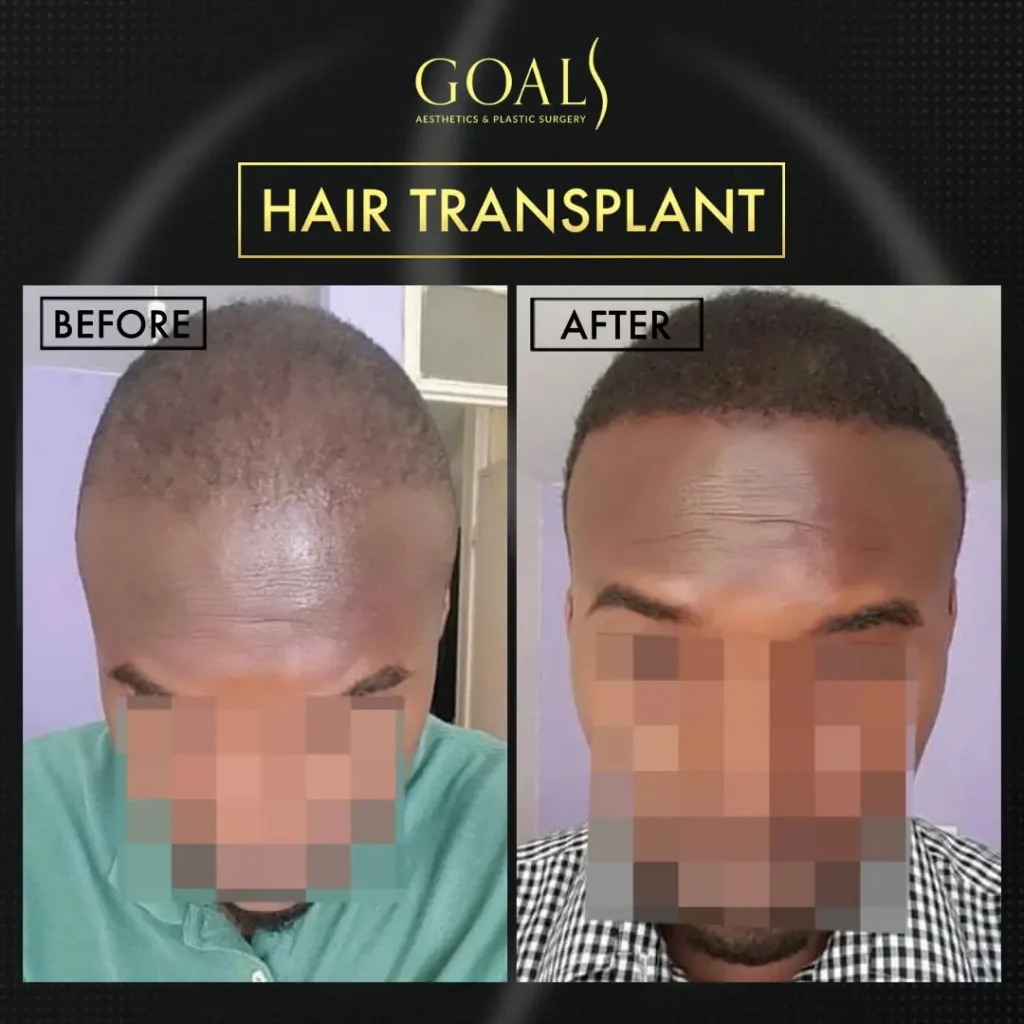
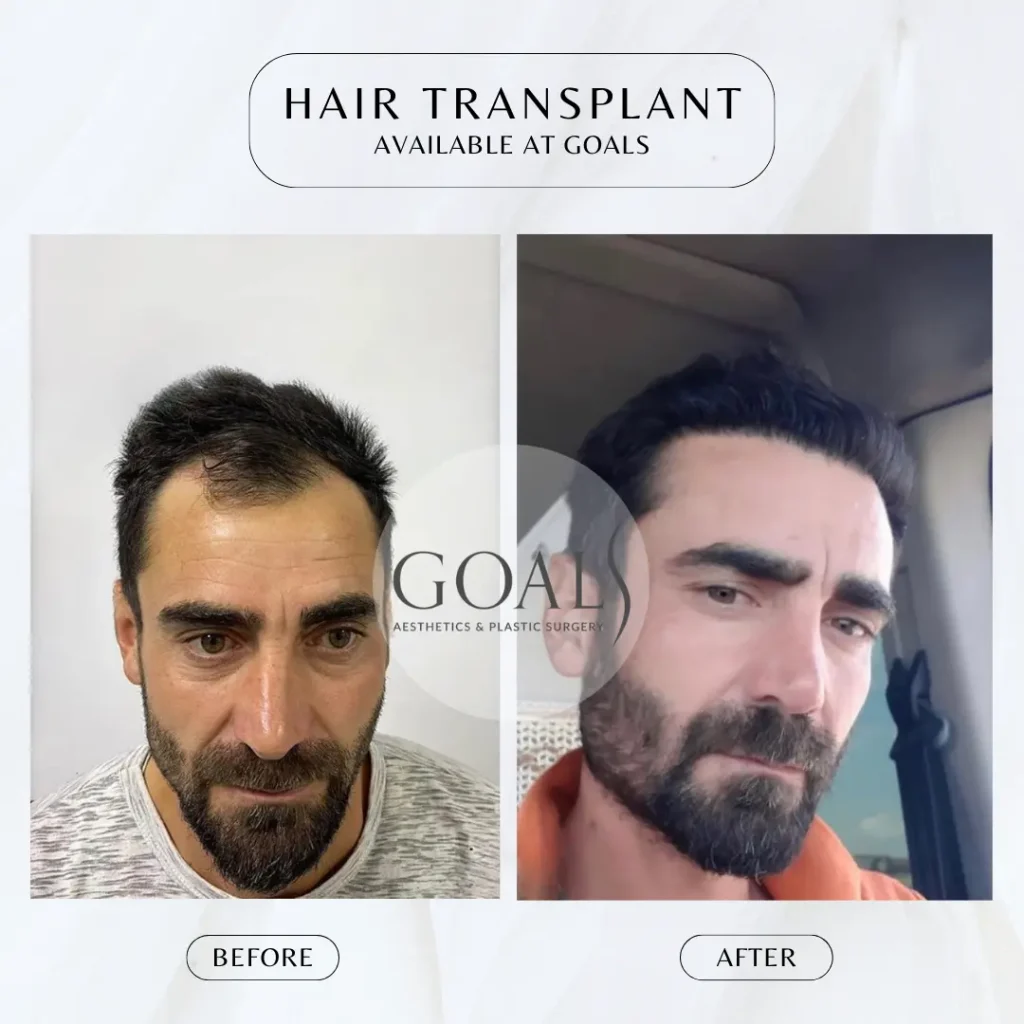
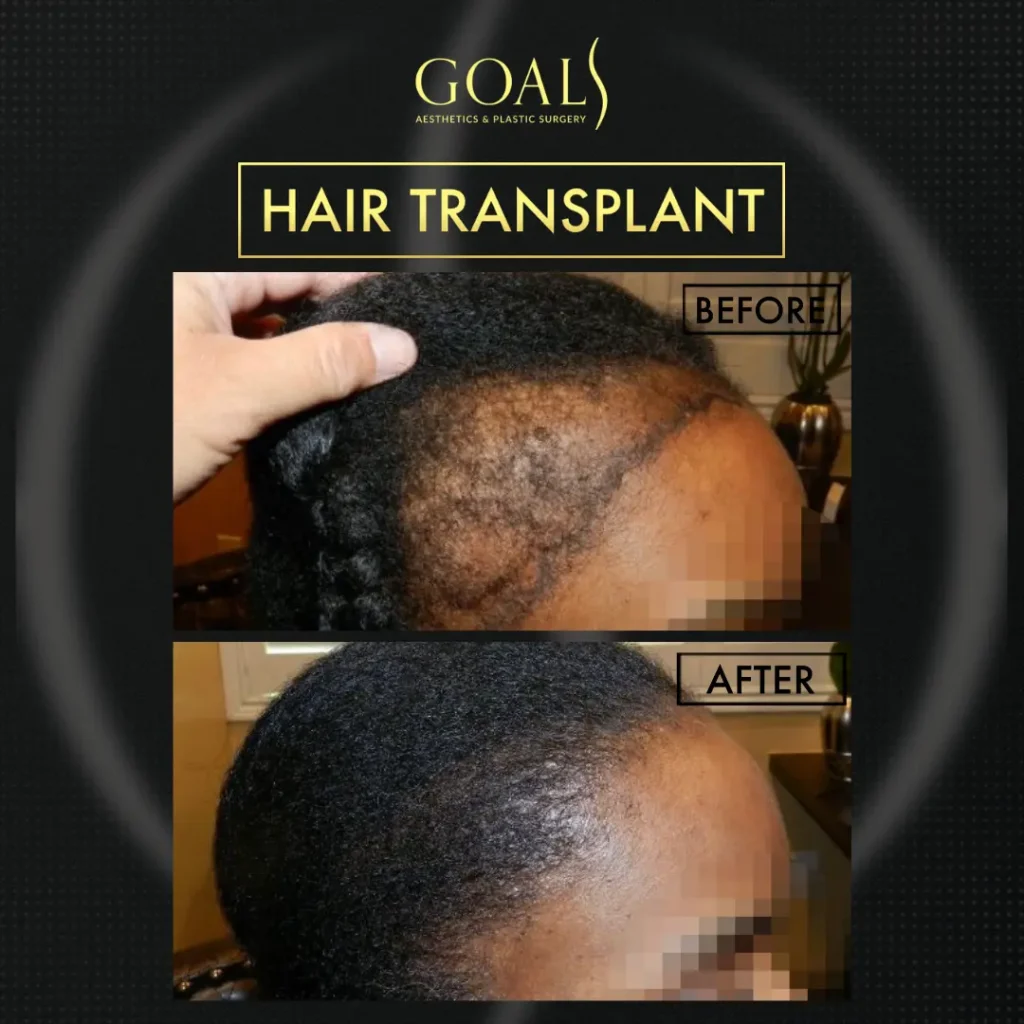
Real patients of Goals, published with written consent. Photographs are not retouched or AI-generated. Individual results vary — these images show outcomes for these patients and are not a guarantee of your own.
Work it out
Runs in your browser. Nothing is sent to us and nothing is saved — a height and a weight are your business.
BMI is one measure among several and it says nothing about how you are built. Surgeons weigh it alongside your health and your goals; it does not decide anything on its own.
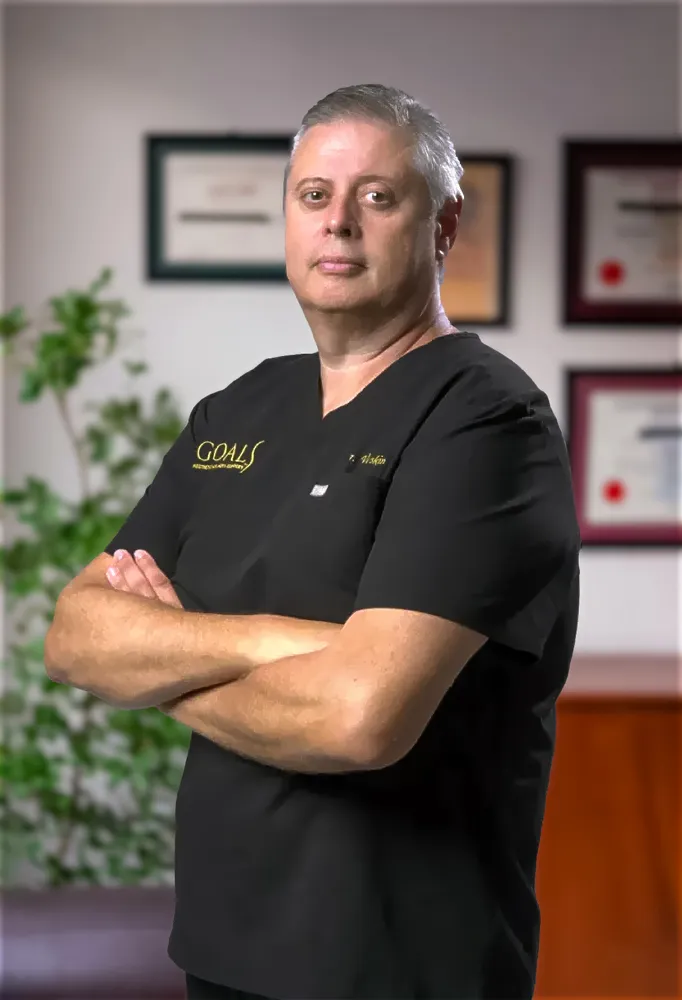
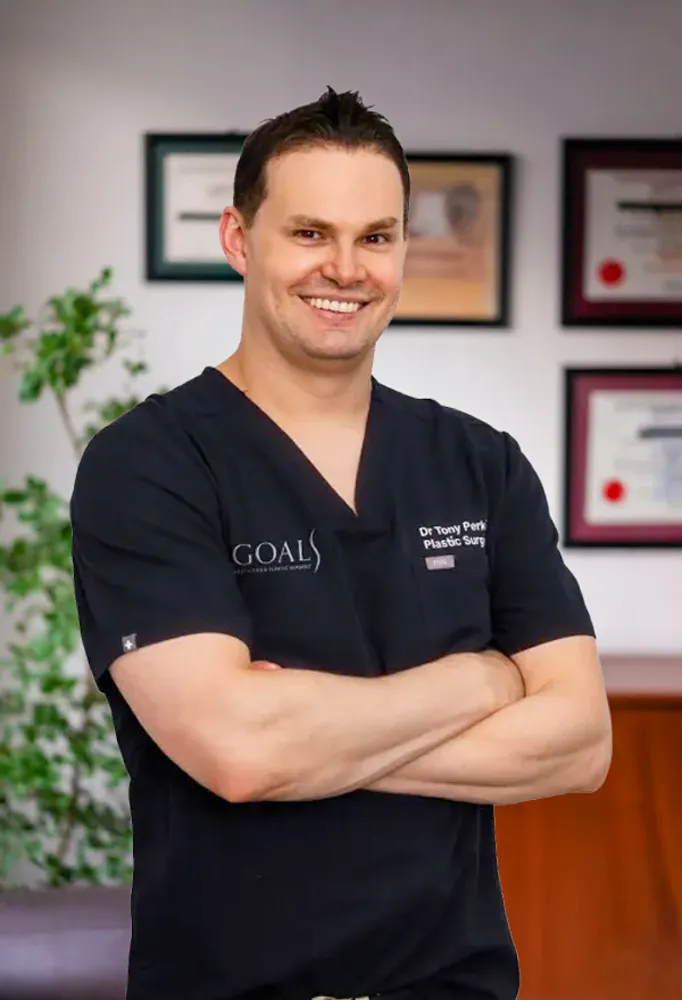
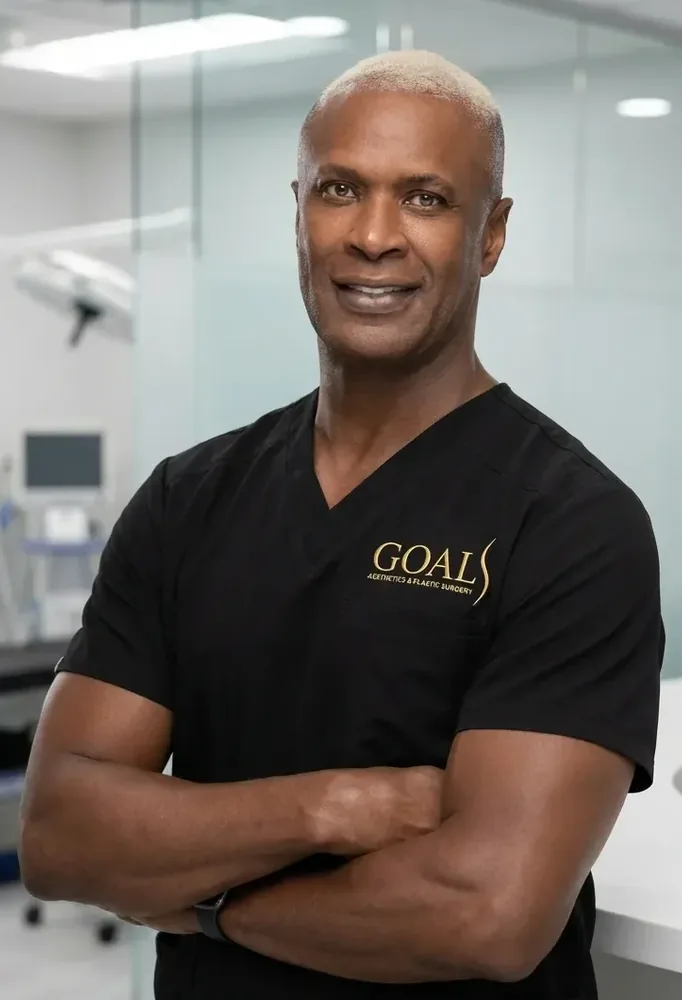
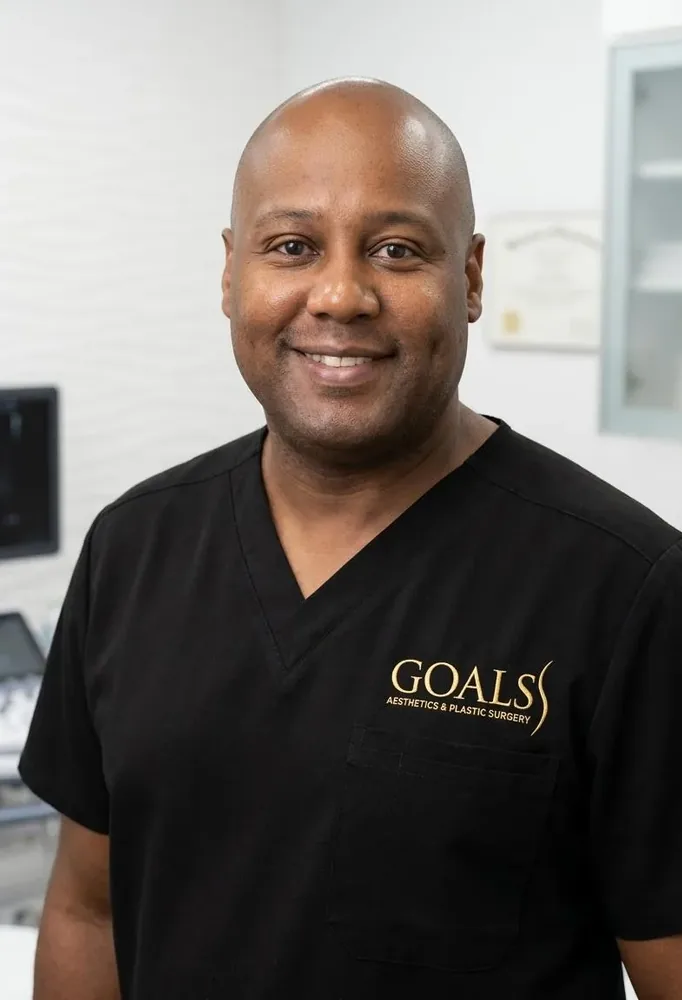
An expert hair restoration surgeon does your procedure. Not a technician. Meet the team before you book anything.
Credentials differ by surgeon and are listed in full on each surgeon's page.
"Those cheap overseas hair transplant packages are tempting, we get it. But rushed surgery, a language barrier, and nobody to see you when something goes wrong at home can cost far more than you saved."
| Left Step | Right Step |
|---|---|
| Left StepWeeks of comparing clinics online, wiring money abroad, booking flights and a hotel. | Right StepYou sit down with a professional surgeon, in person or online, who looks at your scalp and tells you honestly whether FUE is the right call. |
| Left StepYou arrive somewhere you do not speak the language. The consult is rushed, and it happens the morning of surgery. | Right StepPre-op labs, consent forms, and the surgical plan are all handled beforehand, in your language, under U.S. standards. |
| Left StepSurgery happens in a building you have never set foot in, often on a high-volume schedule with little time for post-op monitoring. | Right StepOn the day, your donor area is numbed with local anesthesia. Light sedation is there if you want it, so extraction stays painless. |
| Left StepYou fly home tired and swollen. A week later the scalp turns red and starts to ooze, and you have no idea if that is normal. | Right StepYour surgeon lifts each follicle with a micro-punch, then sets it by direction, angle, and density. |
| Left StepThat leaves urgent care or the ER, staffed by doctors who did not operate on you and have no record of what was done. | Right StepSomething feels wrong at week two? You call the same team that operated. We see you in person, adjust your medication, and sort it out. |
| Left StepMore money on emergency visits and prescriptions. The overseas clinic answers on WhatsApp, when it answers. | Right StepNo stitches, so the donor area closes in days. Follow-ups track growth until the final result. |
| Factor | Overseas Package | Goals U.S. Clinic |
|---|---|---|
| Total cost (real) | Base price, plus flights, hotel, days off, and any ER bill back home. | Comparable once all care is counted. Priced up front, no surprise bills. |
| Travel & time off work | Long flights, jet lag, days away from work and family. | Local, same-day, barely any travel. You are back to normal life sooner. |
| Safety & sterility | Rests on foreign rules you cannot check, and little time on site. | Accredited U.S. clinic, strict infection control, known standards. |
| Surgeon & team | Credentials are hard to verify, and you may not see that surgeon again. | Skilled hair restoration surgeons you meet before and after. |
| Emergency backup | No local clinic. ER doctors must guess what was done abroad. | In-person follow-up, plus local urgent support if a problem shows up. |
| Follow-up care | Messages only. Getting hands-on help is difficult. | Scheduled in-person checkups, progress photos, medication adjustments. |
| Communication | Language gaps, time zones, replies whenever. | Your language, written instructions, a 24/7 phone line. |
| Legal protections | Little recourse once you are back on U.S. soil. | Covered by U.S. patient safety law and standards. |
Safety drives every decision here. Our FUE instruments and sterile protocols keep discomfort and downtime low, and protect each graft we place.
Sterile, fully equipped procedure rooms in accredited U.S. facilities.
Local anesthesia keeps you pain-free. Light sedation if you like.
Your surgeon and medical team stay reachable when questions hit.
Written instructions, the right medications, and a follow-up schedule.
Micro-punch extraction and careful handling so grafts take and grow.
The team that consults with you operates and runs every follow-up.
One day, in our office. Home that evening, back at your desk within days.
An accredited U.S. clinic. No flights, no language barrier, no gaps in care.
Skilled hair restoration surgeons you meet before and after.
U.S. patient safety law covers you, with real recourse if you need it.
No linear scar and no visible donor site. Wear your hair any length.
"Hairline looks like it grew there. Nobody has spotted the donor area, not once."
"Put this off for years because I thought FUE looked fake. Six months in, I barely remember the old me."
"Done fast, barely hurt, back at work that week. Crown filled in thicker than I expected."
Testimonials reflect individual experiences. Results vary by patient.
Every FUE we do happens on-site, in our own sterile operating room here in New York. Nothing gets farmed out to a partner facility.
Monday through Saturday. Book online in about two minutes, or call and talk to someone. Either way we confirm your date and time with you.
Yes. A skilled medical team and trained nurses stay with you the whole session, managing the local anesthesia and checking you are comfortable.
You can. Plenty of men do the consult by video, then come to the New York clinic on procedure day for the FUE itself.
Yes. There is a comfortable waiting area, so whoever drives you in can stay put until you are done.
FUE hair transplant NYC pricing tracks your graft count. Most sessions run 4-8 hours. Growth starts at 3-4 months, finishes at 9-12.
FUE stands for follicular unit extraction, and it is the hair transplant most men in the United States end up choosing. Pattern loss is permanent, and no shampoo or serum reverses it. When male pattern baldness sets in, follicles across the hairline and crown shrink under DHT until they stop producing visible hair. The ones ringing the back and sides ignore that hormone entirely. FUE relocates those follicles into the bare zones one by one, and they carry on behaving as they always did, which is why the hair restoration holds.
At Goals Plastic Surgery, FUE is a single-day, in-office procedure under local anesthesia. That was a deliberate call rather than a shortcut, since general anesthesia brings clot risk, airway complications, and a longer climb back to normal. Your surgery is performed by experienced hair restoration surgeons in an accredited New York facility, and the person who examines your scalp at consultation is the one holding the punch on procedure day. If you have been weighing FUE hair transplant NYC clinics, or typing "fue nyc" into your phone at midnight, this covers the parts that decide your result.
Hair does not grow out of the scalp as isolated strands. It grows in natural clusters of one to four hairs sharing a blood supply, an oil gland, and a small muscle. Those clusters are follicular units, and they are what gets moved.
This matters because it defines the raw material. A surgeon planning your case is not counting hairs, they are counting units, and the number of hairs each contains varies across your scalp. Two men with an identical graft count can end up with noticeably different coverage simply because one had denser units in his donor region.
Extraction uses a punch roughly a millimetre across, sometimes smaller, that scores a circle around the unit so it can be lifted out intact with the tissue immediately surrounding it. No strip of skin comes off and no stitch line runs across the back of your head. What is left behind is a field of pinprick openings that scab, close, and fade.
Punch diameter is a real decision rather than a fixed setting. Too small and it clips the follicle it was meant to free. Too large and it takes more surrounding tissue than necessary, which slows donor area healing and costs density in a region you cannot replenish. Diameter is chosen against your hair calibre and how tightly your units are grouped.
The stage nobody markets is the one between extraction and placement, and it has more influence on your result than most patients realise.
Once a follicular unit leaves your scalp it is no longer receiving blood, and it stays that way until it is placed. During that window it sits in a chilled preservation solution that slows its metabolism and limits the damage. The longer the window, the more graft survival is at risk, which is why a session that runs efficiently produces better outcomes than one that drags regardless of who was holding the instruments.
Between the two stages the grafts are sorted under magnification into singles, doubles, and larger units. This is not administrative tidiness. Single-hair units go along the front edge because a hairline built from multi-hair grafts looks abrupt and artificial, while the denser units go behind them where bulk reads as coverage. Sorting is what makes that possible.
Then comes placement, which patients consistently underestimate. Angle, depth, and direction all have to match how your hair grew before you lost it. Hair does not leave the scalp straight up. It leans, and it leans differently at the temple than it does at the crown. A graft placed at the wrong angle grows in the wrong direction permanently.
This is also why an unusually fast quote should prompt questions rather than relief. Placing several thousand grafts properly is hours of sustained concentration. A clinic moving patients through in half the usual time is saving that time somewhere, and it is almost always the placement, which you discover months later when the hairline sits in a flat row.
This is the question that comes up before anything clinical, often before price, and it deserves a direct answer rather than a reassurance.
Shaving the donor area is standard, because it lets the surgeon see the exit angle and grouping of each unit clearly, which is exactly what accurate extraction depends on. Working blind through longer hair means more transection and fewer surviving grafts.
That said, partial shaving and unshaved FUE are available in some cases, depending on how many grafts your plan calls for and how long your hair is. Smaller sessions are the better candidates. A large case usually needs full access to the donor region, and forcing an unshaved approach onto a case that does not suit it trades your result for a few weeks of appearance.
Neither method wins in the abstract. FUE is minimally invasive, leaves no linear scar, and suits men who wear their hair short or need a moderate number of grafts, with the trade-off being session length and a trimmed donor area. FUT removes a narrow strip of scalp instead, letting the surgeon harvest a very large number of grafts in one sitting, which matters when loss is advanced and coverage is the priority. The fine line it leaves is covered by surrounding hair.
Your donor density is assessed under magnification and the recommendation follows from what your scalp supports. Some men arrive certain they want FUE and leave understanding why FUT would serve them better, and occasionally the reverse. A combination across separate sessions is possible where donor supply justifies it, and some patients need more than one session to reach the density they want, which is better known going in than discovered later.
The hairline and the crown are the two areas treated most, and they are different problems. A receding hairline is partly a design job: the surgeon draws a shape suited to your face and your age rather than the hairline you had at nineteen, then angles every graft along the front so it feathers instead of sitting in a hard row.
A thinning crown works differently, because hair there radiates from a spiral that has to be rebuilt rather than filled. Crowns also consume more grafts than men expect, since scalp catches light at that angle and shows through readily.
Temples and temporal peaks are commonly restored alongside a receding front for balance. In women, FUE is used along the parting line, at the temples, and across the crown, where female pattern thinning tends to present diffusely rather than as a receding edge.
The same technique also handles facial work. Beard and moustache density, patchy areas, and eyebrow restoration all use FUE, with finer donor hair selected to match the destination. If you want to compare surgical and non-surgical routes, our New York hair restoration team can lay them side by side.
The first few days the area feels tender and looks slightly puffy, with small scabs forming around each graft. Those flake away on their own inside a week or so. The donor region itself generally heals in about seven to ten days, though residual redness and swelling can take a few weeks to settle completely.
Two to three days off work is the usual advice, more if your job involves physical exertion or you would rather not field questions. Sleep propped up on an extra pillow for the first several nights to keep swelling down, skip the gym and heavy sweating for about a week, keep sun off the grafts, and leave tight hats alone until you are cleared. You will be given a specific gentle washing routine, and following it rather than improvising is what protects the grafts while they anchor.
Then the transplanted hair falls out, which alarms anyone who was not warned. It is supposed to. The follicle stays exactly where it was placed and drops into a resting phase before restarting.
New growth appears around month three or four. It thickens meaningfully between six and nine months, and by nine to twelve most of the change has arrived. Full maturity, meaning the final calibre and density of every transplanted hair, takes twelve to eighteen months. That last stretch is quiet and gradual, and the reason to state it plainly is that patients who expect completion at nine months spend months five through eight convinced something has gone wrong.
Photograph the same spot in the same light monthly. Change at this pace is invisible in a mirror you look at daily, and the pictures settle the question when your memory will not. Progress is checked in person at follow-ups throughout, and the range of results is in our before & after gallery.
FUE hair transplant NYC pricing depends on how many grafts your case needs and how complex the work is, which is why the number is confirmed at consultation after someone has examined your scalp. If you have searched "fue cost nyc" and found quotes all over the map, that is the explanation. Nobody honest prices a scalp from a photograph.
What we commit to is a figure locked before you book, with no facility fee or anesthesia charge appearing afterward. Financing options exist if you would rather spread it out, and someone will walk you through the terms instead of handing you a form. Every plan covers follow-up care with the same medical team from procedure day through to your final result, which for FUE means across the full growth cycle rather than the healing period alone.
One note on comparison shopping. Cheap overseas packages tend to economise on the parts you cannot inspect: sterile facilities, follow-up that involves an actual appointment, and recourse under U.S. patient safety law. The cheapest quote and the lowest total cost are rarely the same number, and a revision spends donor hair that cannot be replaced.
Worth knowing: the recipient area generally does not need shaving in the same way, and the donor region regrows to normal length within weeks. Because FUE leaves no linear scar, once the pinprick openings close you can take clippers to your head without a line showing, which is precisely why men who wear their hair short choose this method.
About FUE Hair Transplant
FUE Hair Transplant near you
FUE, FUT, or another hair restoration route entirely, our team will look at what you have and build a plan that works.
Prefer to talk now? (833) 462-5769
Free · No obligation
Tell us how to reach you. A patient coordinator calls you back — usually the same day.