Receding Hairline
That "M" at the temples and a retreating front edge, the usual Norwood II to IV.
Get your natural hairline back in a single day, in-office, under local anesthesia. Done by licensed restoration surgeons at our accredited Atlanta clinic.
From $5,000
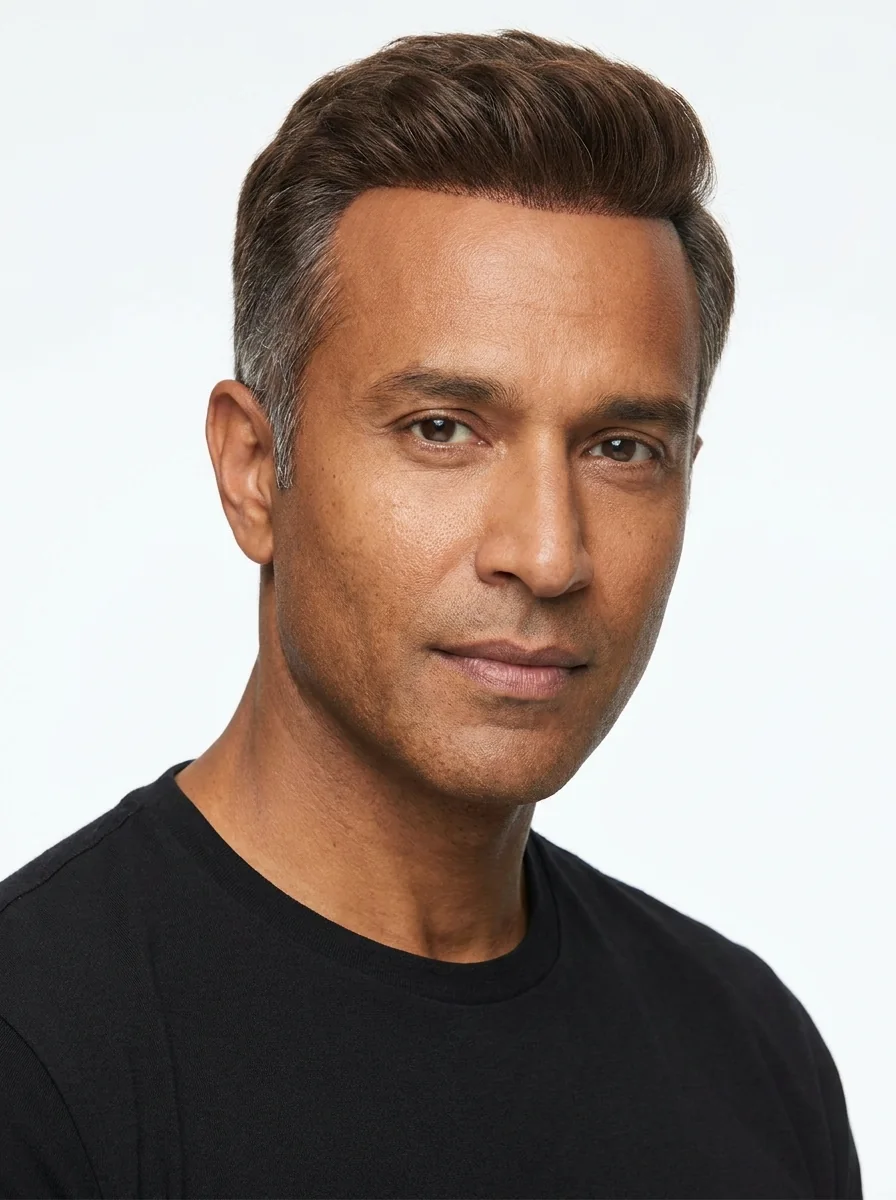
Goals Aesthetics & Plastic Surgery – Atlanta
83 Walton St NWMon–Sat, 10:00–19:00 local time
Surgeons: Dr. Sergey Voskin, Dr. Alla Zemlyak, Dr. Patrick Narh-Martey
12,000+
Hair Procedures Performed
150+
Years of Combined Surgical Experience
4.9
Based on 8,500 Patient Reviews
Every stage of male pattern loss, from a first recession to a bare crown.
That "M" at the temples and a retreating front edge, the usual Norwood II to IV.
Thinning at the vertex, where the swirl opens up and scalp starts peeking through.
Density fading across the mid-scalp, the hairs up top going finer and weaker all over.
Bare patches from old scars, past surgery, or burns, where FUE grafts can fill the gaps.
Patchy beard and jawline built back up with grafts taken from the back of the scalp.
Sparse or over-plucked brows filled with single grafts angled to your natural growth.
Hairline creeping back, crown thinning, or scalp showing up in photos? You are probably a fit. We have rebuilt hairlines for thousands of men who wanted their old look back.
Loss that shows in photos or the mirror.
Your shedding has been steady a year or more.
You want a permanent fix, not fibers, powders, or a daily pill.
Healthy hair left at the back and sides to harvest.
Fine with following the prep and aftercare steps.
Pairing your transplant with something else, or comparing routes? Here is the rest of what we do for hair.
About FUE Hair Transplant
FUE Hair Transplant at other Goals clinics
Grow hair back without surgery. These suit early thinning or ongoing shedding, and anyone who wants to build density and guard the hair they still have before thinking about a graft procedure.
Choose whichever office fits your day. Consult, pre-op clearance, and post-op checks can all run at the Goals location closest to you, or wherever the parking is easiest.
Look at the before and after on real Atlanta patients.
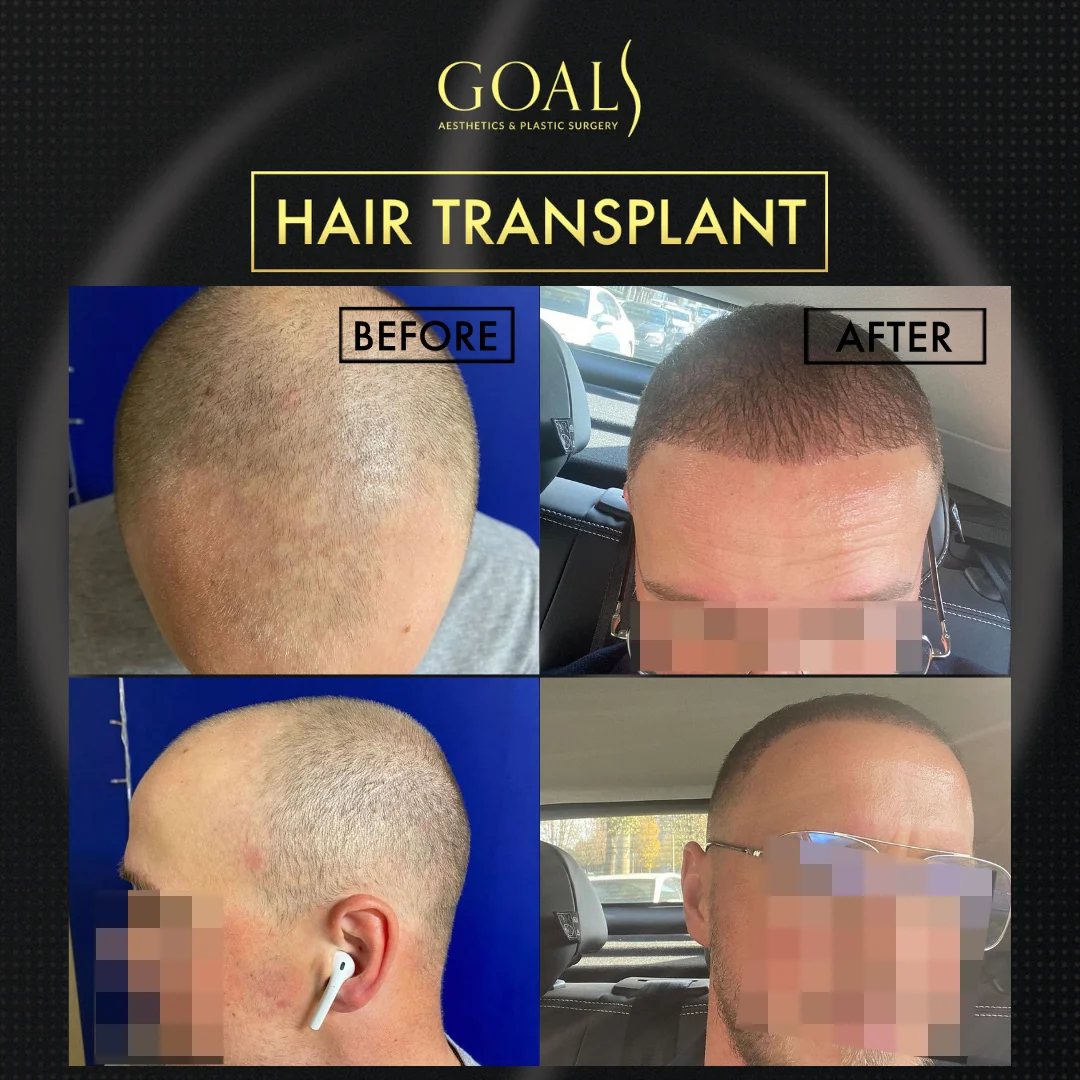
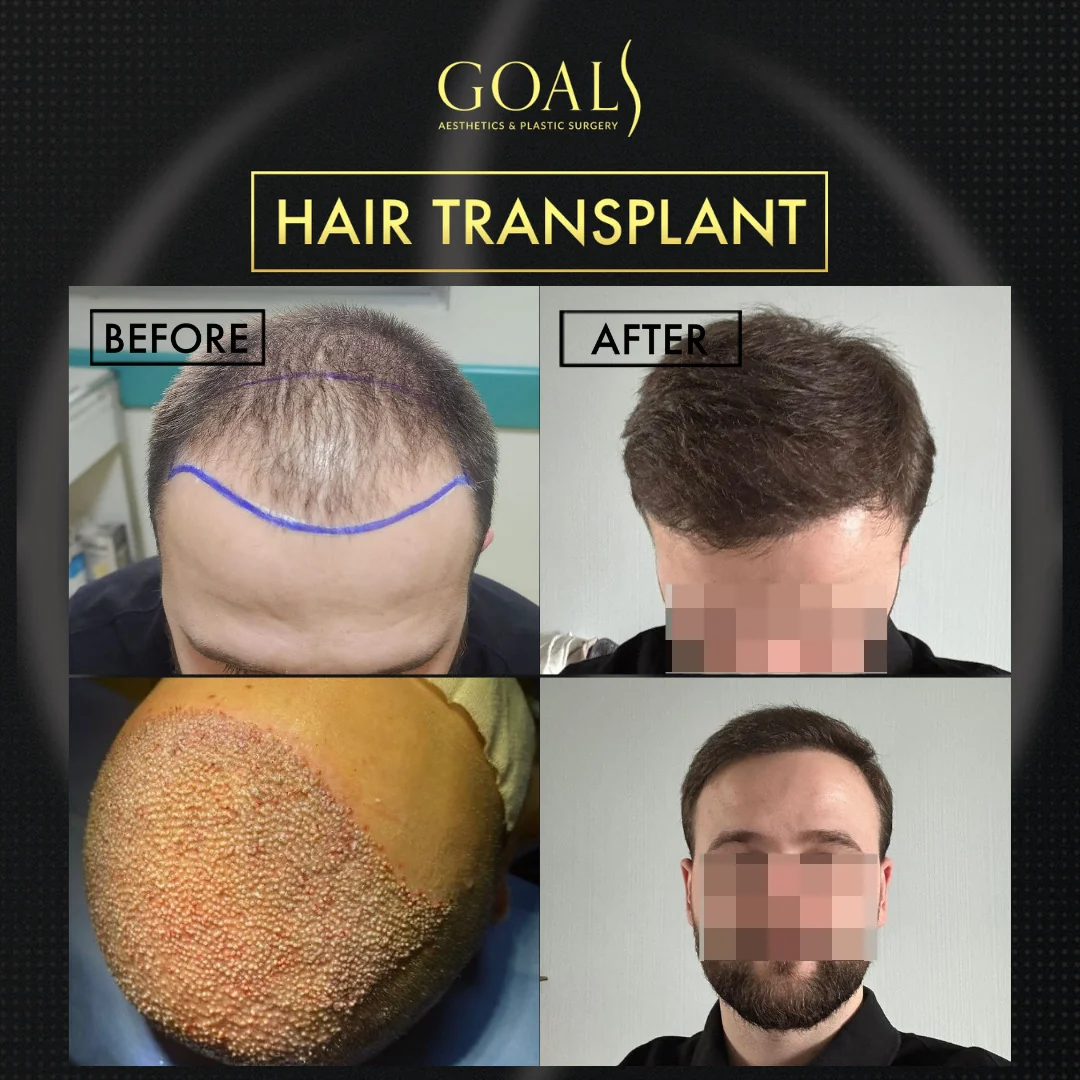
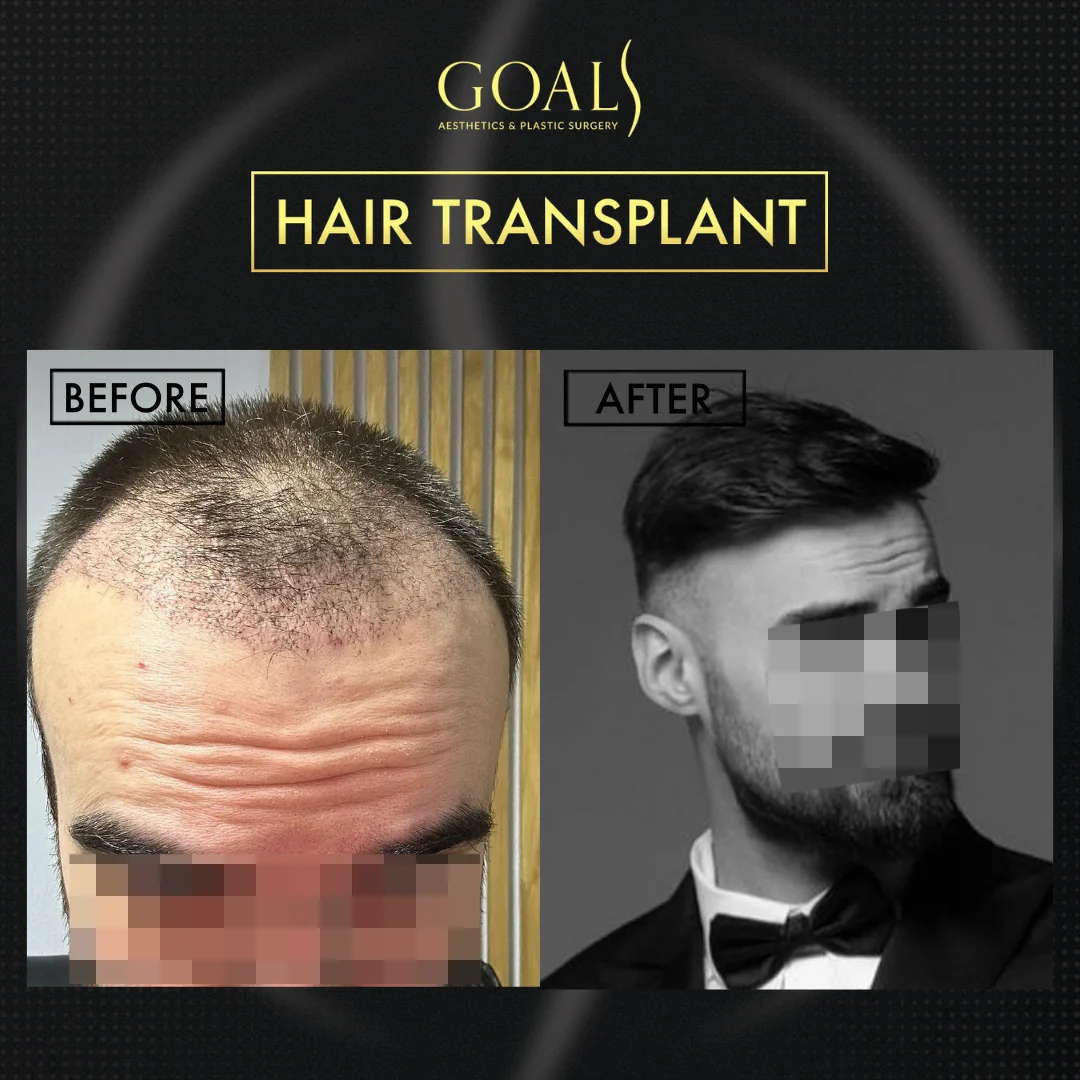
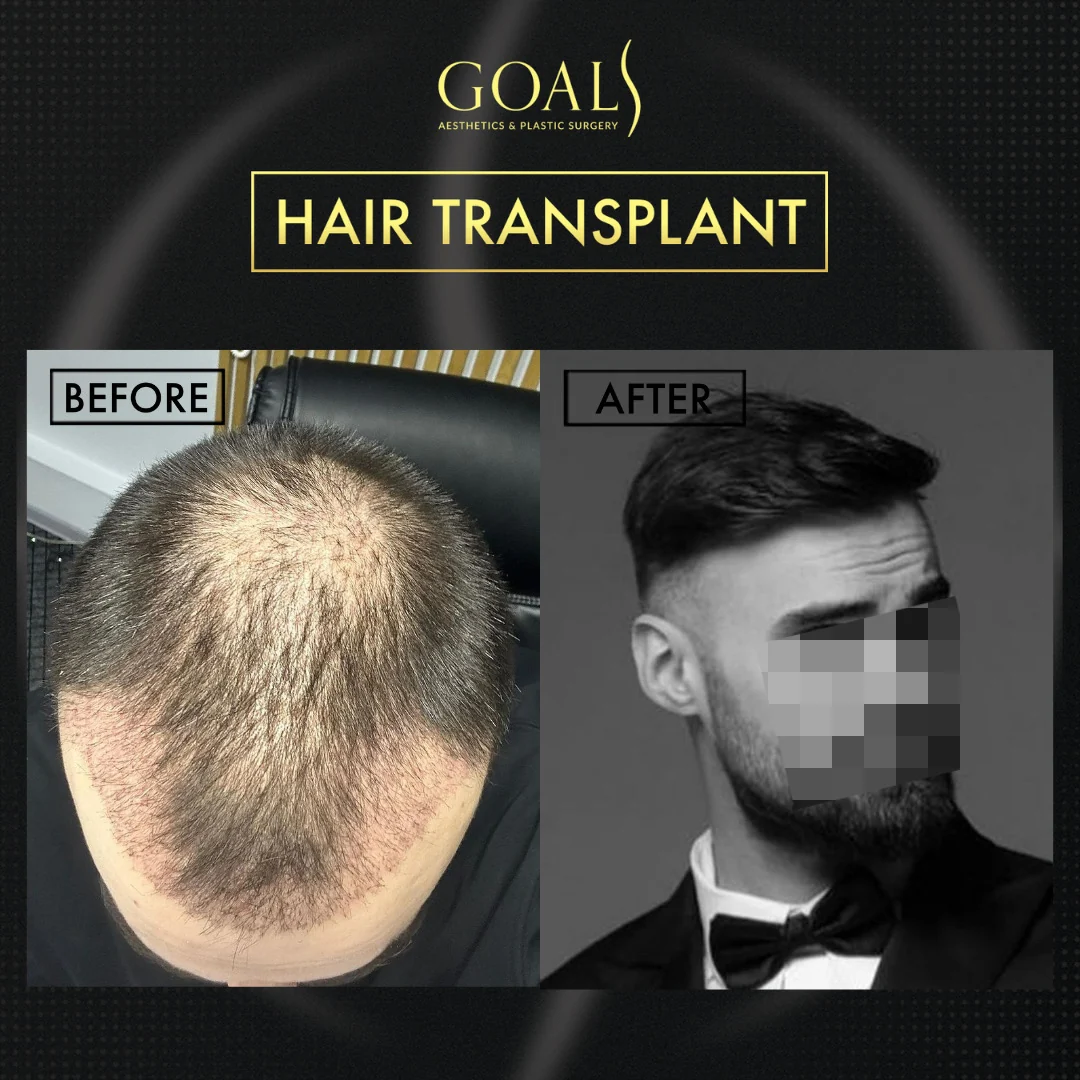
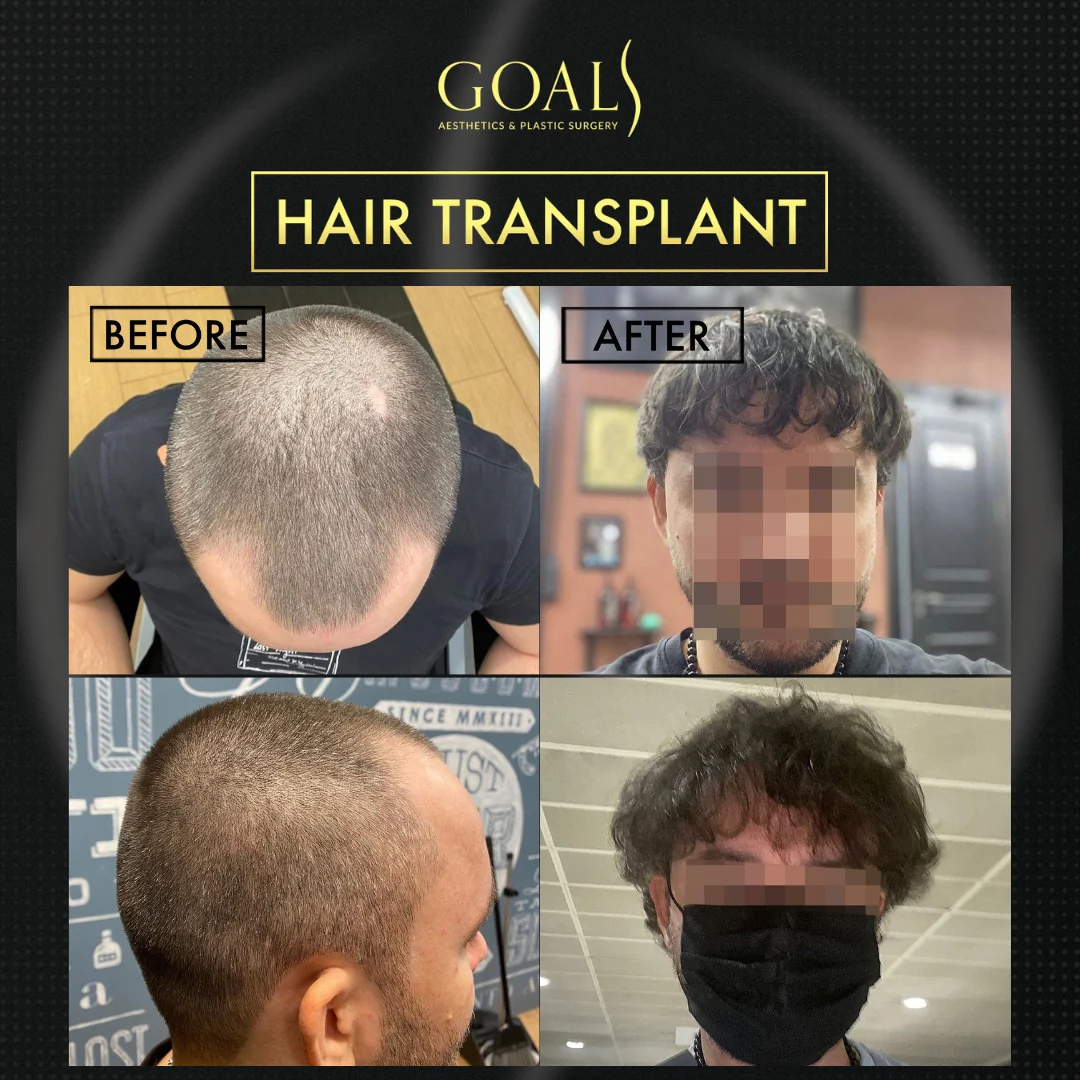
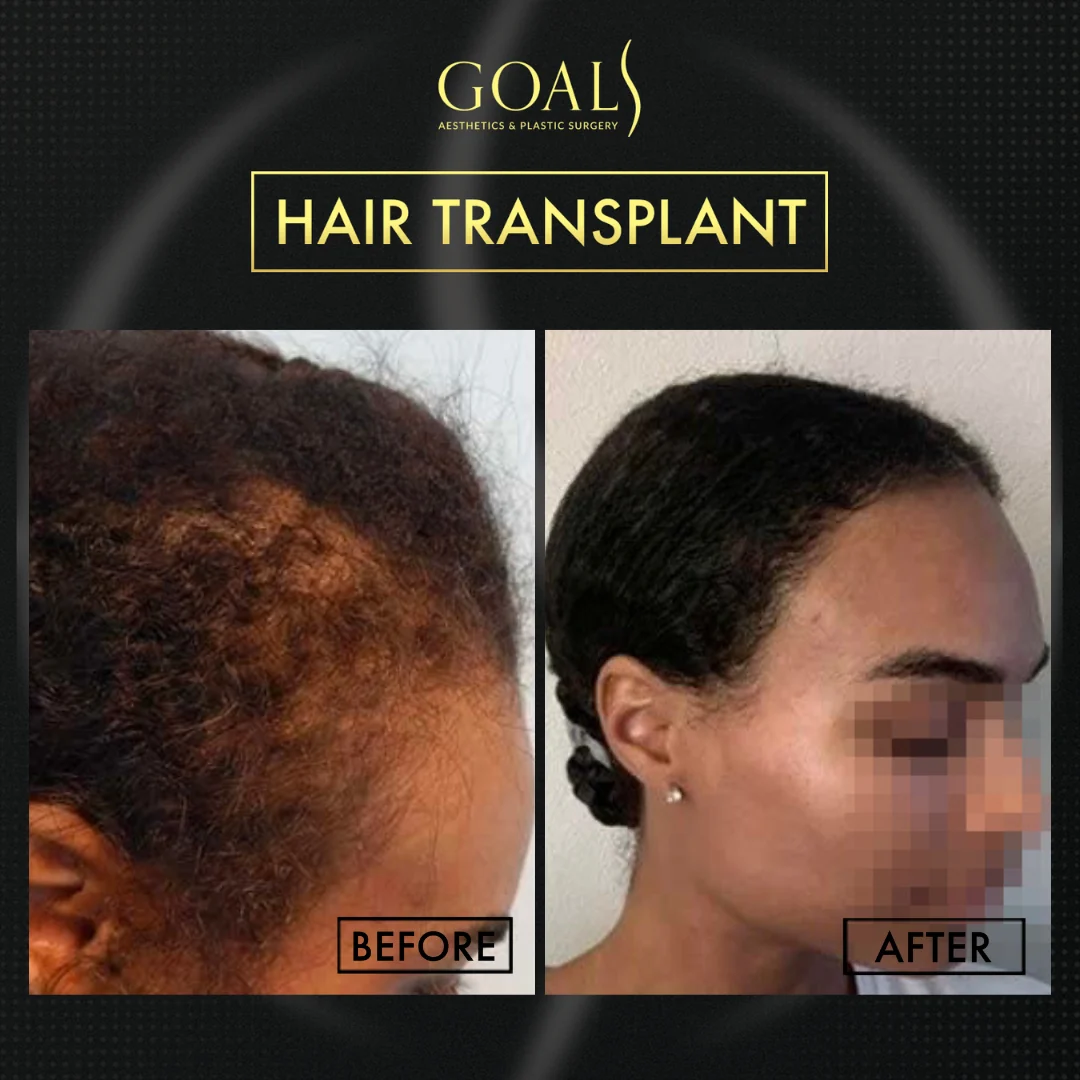
Real patients, published with written consent. Photographs are not retouched or AI-generated. Individual results vary — these images show outcomes for these patients and are not a guarantee of your own.
Work it out
Runs in your browser. Nothing is sent to us and nothing is saved — a height and a weight are your business.
BMI is one measure among several and it says nothing about how you are built. Surgeons weigh it alongside your health and your goals; it does not decide anything on its own.
Safety runs every case. We keep to tight protocols and modern tools so results hold up. Get to know our team of licensed surgeons.
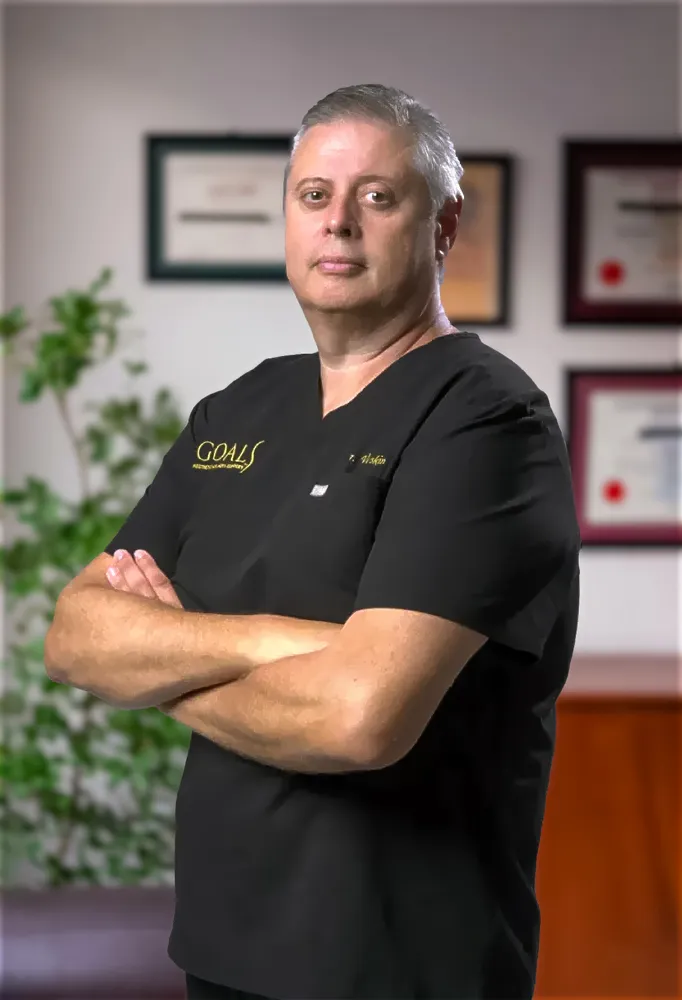
Dr. Sergey Voskin, MD
Operates at Atlanta Walton St.
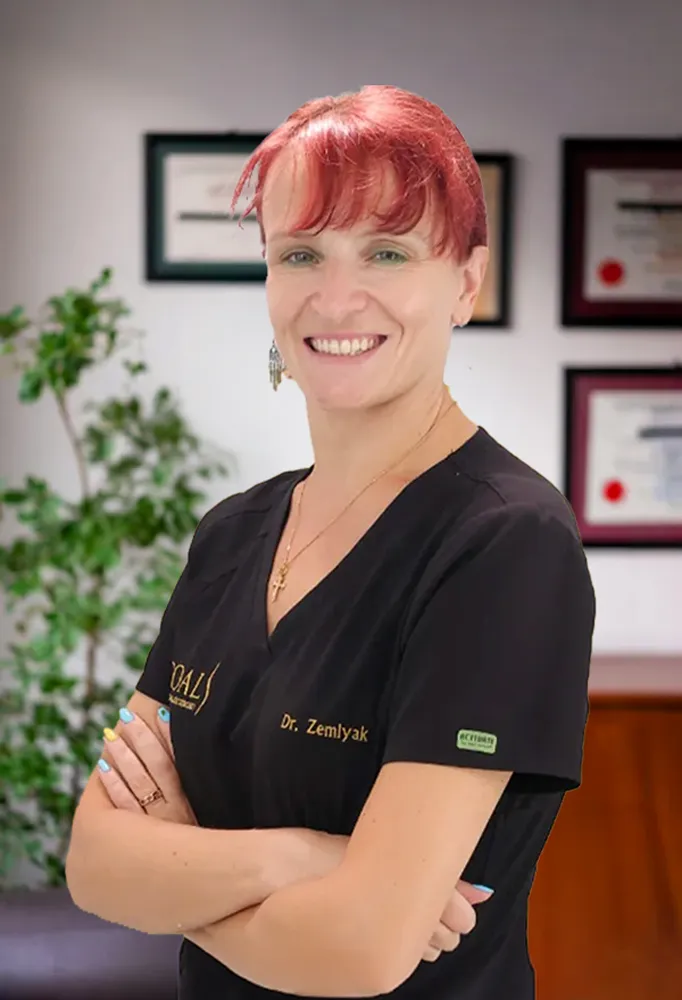
Dr. Alla Zemlyak, MD
Operates at Atlanta Walton St.
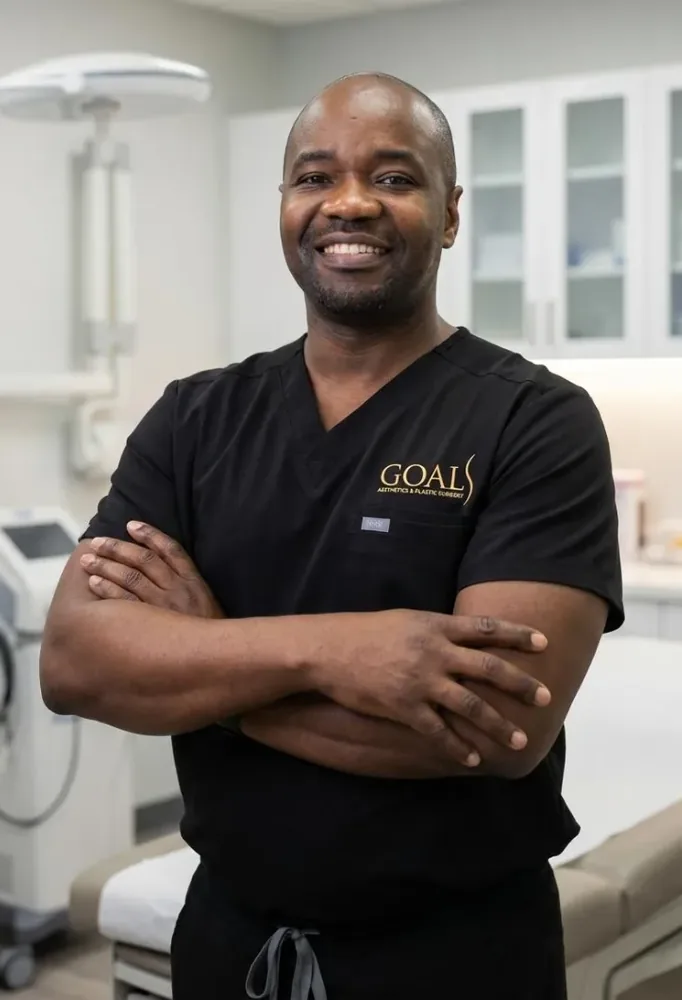
Dr. Patrick Narh-Martey, MD
Operates at Atlanta Walton St.
Credentials differ by surgeon and are listed in full on each surgeon's page.
Those overseas "budget hair transplant" deals look great on paper. The catch is what they hide: rushed surgery, a language wall, nobody to see afterward, and problems that trail you home and cost more.
| Flying Abroad | U.S. with Goals |
|---|---|
| Flying AbroadWeeks vetting clinics, wiring deposits overseas, then covering flights and a hotel. | U.S. with GoalsYou meet a licensed restoration surgeon first, in person or on video, who checks your scalp and goes over your history. |
| Flying AbroadYou land where you hardly speak the language, and surgery day doubles as your only consult. | U.S. with GoalsBloodwork, forms, and the plan get handled up front, in your language, to U.S. clinical standards. |
| Flying AbroadThe surgery runs in a building you have never set foot in, on a packed schedule with little time to watch you after. | U.S. with GoalsOn the day, you walk into an accredited clinic and the work happens in a sterile room, only local numbing. |
| Flying AbroadHome again, sore and puffy. Days on, the scalp turns red and weepy and you have no clue whether that is normal. | U.S. with GoalsIt runs most of the day, but you stay comfortable, break when you need to, and sleep in your own bed that night. |
| Flying AbroadYour only option is urgent care or an ER, run by people with no record of your case and no idea what was done. | U.S. with GoalsAnything feels off as you heal, you reach the same local team that did the work, and we check you in person and adjust. |
| Flying AbroadMore money and days lost to visits and prescriptions, while the clinic abroad just texts you back. | U.S. with GoalsEvery check-up and progress review stays at one clinic with the same people, right through the hair fully growing in. |
| Factor | Overseas Package | Goals U.S. Clinic |
|---|---|---|
| Total cost (real) | The upfront price, plus airfare, hotel, time off, maybe an ER bill. | Similar all in, but the quote is spelled out first with no add-ons later. |
| Travel & time off work | Long flights, jet lag, days pulled from work and home. | Done locally in a day, barely any travel, a faster return to life. |
| Safety & sterility | Whatever the local rules allow, on a tight clock. | A U.S. room held to accredited-facility standards. |
| Who does surgery | Hard to verify who operates, and you likely never meet them again. | A licensed restoration surgeon who sees you start to finish. |
| Emergency backup | No clinic nearby, so an ER guesses at what happened. | In-person local follow-up, urgent help if a problem shows up. |
| Follow-up care | Messages only, and real hands-on help is scarce. | Scheduled visits, progress photos, med changes when needed. |
| Communication | Translation snags, bad time zones, slow answers. | Your own language, written steps, a line open 24/7. |
| Legal protections | Little recourse once you are home and it goes wrong. | Covered by U.S. patient-safety law and rules. |
Everything runs on safety here. Strict protocols and modern equipment keep your risk down and the outcome strong.
Accredited U.S. sites with sterile, fully stocked procedure rooms.
Fixed graft-handling steps to protect survival and growth.
Numbed locally, skipping the risk of general anesthesia.
Your surgeon and care team stay reachable for questions.
A set plan for aftercare, meds, and check-ins to stop infection.
The same local team runs consult, surgery, and follow-ups.
In and out in a day, home that night, back at your desk within days.
Accredited and stateside, so no travel, no translation, no dropped follow-up.
A licensed restoration surgeon who sees you start to finish.
U.S. patient-safety law protects you, with real recourse if needed.
A single all-in quote, with no facility fees sprung on you later.
Got my FUE at the Walton St clinic. Booked a morning slot, home by evening. We mapped out my hairline together before we started, so I knew exactly what I was getting. It grew in over about 8 months, and honestly nobody can tell I had anything done.
I put this off for years because I did not want to fly overseas. Doing it here in Atlanta meant I met my surgeon first and could go back for follow-ups. The crown was my trouble spot and it filled in way better than I expected. No line scar either.
The team walked me through the no-shave option, so I skipped buzzing my whole head. Recovery was easier than I thought, back at work in a few days. A little scabbing the first week, then it settled. Six months in and the density up front is night and day.
Testimonials reflect individual experiences. Results vary by patient.
Every FUE procedure happens on-site at our Atlanta clinic, in a fully equipped, sterile procedure room. Nobody ships you off to a separate surgical center, so the team that plans your case is the same one that does it and follows up with you after.
Yes. FUE runs under local anesthesia with trained clinical staff watching you all day, and sedatives are on hand if you want extra comfort. You stay awake, take breaks, eat, and use your phone while the grafts go in.
Yes. Plenty of patients start with a video consult where we look over photos of your loss and donor area, then lock the plan in person on the day. Pre-op testing and consent are done ahead of time, so nothing gets rushed.
Yes. There is a comfortable waiting area for whoever comes with you. Since FUE takes most of the day, many patients line up a ride home for the evening, and your support person is welcome to check in.
You reach the same Atlanta team that treated you. Since we are a U.S. clinic, you can come in if something feels off, and we adjust your meds or check the grafts in person instead of texting it out from overseas.
In the first two weeks, probably, unless you use a no-shave approach or can work from home. After the scabs clear you look normal, and then nothing much happens visibly for three months, which is its own kind of cover. Most men find the awkward window is shorter than they feared, and the gradual growth afterward means nobody sees a before-and-after moment.
If you have watched your hairline back up year after year, you know the routine. Shampoos, maybe the pills, and getting good at styling around the thin spots. Eventually a lot of men decide they want the real fix.
FUE stands for Follicular Unit Extraction. It is an awake, one-day, in-office procedure under local anesthesia: you are numb rather than asleep, and you go home the same evening. What follows covers how FUE hair transplant Atlanta patients are treated at our Walton St clinic, starting with the question most pages never address and that decides your result more than the technique does.
Ask any clinic this directly, and pay attention to how readily they answer: who does the extraction, and who places the grafts?
The reason it matters is that these are the two stages that determine your outcome, and at a significant number of clinics both are delegated. A surgeon draws the hairline, makes an appearance, and technicians do the hours of extraction and placement. The marketing photographs feature the surgeon. The punch is held by someone else.
Extraction is where grafts are damaged or lost. A follicle removed poorly does not grow, and you find out nine months later. Placement is where angle and direction are set, and a graft pointing the wrong way is permanent. Neither task is administrative. Both are the surgery.
FUE relocates hair from the back and sides of your scalp to where you are thinning. That donor hair is genetically stubborn: it keeps growing after the crown and hairline give up, because it is DHT-resistant, and DHT is the hormone driving male pattern loss.
The surgeon uses a punch under a millimetre wide to lift follicular units one at a time. Each unit is a natural cluster of one to four hairs, which is how hair grows on your head rather than as isolated strands. Those grafts go into tiny recipient sites across the thinning zone, angled and spaced to reproduce how your hair grew before you lost it.
Because the grafts come out individually, there is no strip and no linear scar. What remains is scattered dot marks across the donor area that fade and disappear under short hair, which is why men who wear their hair cropped tend to choose this method.
The relocated follicles keep their original characteristics, which is the entire reason the result holds. They were resistant to DHT at the back of your head and they remain resistant at the front.
FUT removes a thin strip of scalp from the back of the head, which is then divided into grafts under magnification. It leaves a fine linear scar that longer hair covers, and it typically yields the highest graft count achievable in a single session, which is why it still makes sense for larger areas.
FUE skips the strip entirely. The trade is time and usually cost, since lifting units individually is considerably more labour, and the donor area is trimmed for access.
Neither wins in the abstract. It depends on your scalp, how much needs moving, and how you wear your hair. Your donor density is assessed under magnification and you are told which your scalp actually supports, not which is faster to perform.
Worth knowing about the shaving question, since it stops a lot of men from booking: no-shave and shaveless approaches trim only small hidden windows in the donor area, or leave surrounding hair long enough to cover the work. It does not suit every case, particularly larger sessions, but where it works you avoid the obvious reset. Ask about it at consultation rather than assuming either way. If you are weighing the broader picture, our Men's Hair Transplant page covers how the two methods compare across different stages of loss.
The strongest candidates have loss that has settled into a stable pattern, typically men whose shedding has slowed over the past year or two. Your Norwood stage matters and so does donor density: dense, healthy hair at the back and sides means more to work with and a fuller result is realistic.
If loss is still moving quickly, planning becomes guesswork, because grafts placed around a pattern that has not declared itself can end up sitting oddly once the area behind them thins. In that situation the sensible options are holding grafts in reserve, pairing surgery with medication to stabilise the native hair, or waiting.
Expectations count as much as biology. A transplant redistributes hair you already have rather than creating more of it, and the donor supply is finite and does not regenerate. A grounded plan, a solid donor area, and patience through the growth phase are what separate a result you stop thinking about from one you regret.
This is also why an unusually large graft count quoted without a careful examination should concern you. Overharvesting a donor area to hit a number produces visible thinning at the back, and that cannot be undone.
Men fixate on graft count, and it matters, but distribution matters more.
A hairline needs fine single-hair grafts along the front edge for a soft, irregular border, with denser multi-hair units behind them for body. Build a hairline from multi-hair grafts and it reads as a hard line regardless of how many you use. A crown consumes grafts quickly because of the spiral growth pattern and because scalp catches light at that angle.
Density has physical limits too. Packed too tightly, grafts compete for blood supply and fewer survive. Spaced too widely, you have paid for something that still looks thin. The target is density that reads as full at conversational distance while the scalp can still feed everything placed in it. Our before & after gallery shows what different plans actually produce.
One session covers many cases. Larger ones are staged deliberately so the donor area is not overharvested, and a second target zone can be addressed later. We would rather under-promise on a single day than pack grafts in and spend your donor supply for nothing.
Once harvested and sorted, recipient sites are cut and each graft is placed. You rest throughout. Men eat, use their phones, watch something, take breaks. By evening you go home with aftercare instructions and medication. The first two or three days bring mild swelling, tightness, and small scabs around each graft. By the end of week one the scabs flake away during gentle washing and redness begins fading. The donor area heals inside roughly seven to ten days, and most desk workers are back within a few days.
Then somewhere between weeks two and six, the transplanted hairs fall out. This is shock loss, it rattles everyone, and it is normal. What sheds is the hair shaft, not the follicle: the follicle stays exactly where it was placed and enters a resting phase before restarting.
New growth pushes through around three to four months, fine and patchy at first. It thickens across months six to nine, and the final result fills in between twelve and eighteen months. That last stretch is quiet and gradual, and it is worth stating plainly, because men who expect completion at nine months spend months five through eight convinced nothing worked.
The grafts are fragile early and the first seven days decide most of how many survive.
No scratching, no hats crammed down tight, no hard workouts that flood the scalp with blood, and washing done exactly as demonstrated rather than improvised. Sleep propped up for the first few nights to keep swelling down, and keep sun off the scalp until you are cleared.
You get a written schedule covering washing, medication, and what to avoid. Call with a small question rather than guessing, since a graft dislodged in week one is not recoverable and there is no way to tell which ones you lost until months later.
FUE is low-risk in competent hands, but it remains a medical procedure, and where you have it done affects what happens when something is not right.
An accredited U.S. clinic means a sterile operating room, qualified clinical staff on-site, and genuine recourse. It also means the people who performed your surgery are the people you see afterward, which matters more than it sounds during a recovery measured in months rather than days.
The comparison with travelling abroad is not about quality in the abstract, since good surgeons practise everywhere. It is about what happens in week three when something feels wrong. A complication at home with a clinic ten time zones away means an emergency room where nobody knows what was done to your scalp, no operative notes, and no one to examine the grafts.
Local also means the practical things work. Video consultations are available to start, with the plan confirmed in person on the day and pre-op testing and consent handled in advance so nothing is rushed.
The grafted hair is permanent because it is DHT-resistant. The native hair surrounding it is not, and it can keep thinning on its own schedule. Without a plan for that, you can end up with an island of transplanted hair ringed by continuing loss, which looks stranger than the original thinning did.
This is why surgery is sometimes paired with medication, PRP therapy, or low-level laser therapy to support the native hair, so the whole scalp ages together. Some men start with non-surgical options while deciding, others run them alongside surgery afterward. Our Atlanta hair restoration hub covers the full range.
Cost depends on graft count, technique, and whether the plan is one session or staged. We do not publish a flat figure, because your plan is not the next man’s, and a low number advertised online usually means the real bill arrives later. If you have been searching fue hair transplant cost atlanta, the honest answer only exists after someone has examined your scalp.
You get a clear quote after the consult, all in, with no facility or anesthesia fees appearing afterward, and monthly financing is available if spreading the cost suits you better.
It starts with a consultation, in person at our Walton St clinic or online to begin. We study your loss pattern, examine the donor area, walk through FUE against the alternatives, and give you a straight read on grafts and cost. Nobody is pushed to commit that day, and you leave knowing what a realistic result looks like for your scalp rather than what a brochure promises.
It is not instant and it is not cheap, and anyone claiming otherwise is selling something. But a year after a well-planned procedure, most men simply stop thinking about it, which was the point all along.
There is a related question worth asking: how many patients does the clinic run in a day? A practice moving several cases simultaneously is by definition dividing attention, and the time saved comes out of the two stages above. At our Atlanta clinic every procedure happens on-site in a fully equipped sterile procedure room, and the surgeon who plans your case is the one performing it. You meet them before anything begins and see the same team at every follow-up. You can read our surgeon profiles before you book.
The day opens with planning: the hairline is mapped with you, the shape agreed, and the graft count estimated for the coverage you want. The donor area is trimmed, the scalp numbed, and extraction begins. This is the long stretch, and lifting thousands of grafts cleanly takes hours of sustained concentration.
About FUE Hair Transplant
FUE Hair Transplant at other Goals clinics
Booking your first FUE consult, or comparing it with FUT and non-surgical routes? Either way, our team builds a safe, realistic hair restoration plan around your goals.
Prefer to talk now? (833) 462-5769
Free · No obligation
Tell us how to reach you. A patient coordinator calls you back — usually the same day.