Thin/Sparse Brows
Brows that thinned over time and no longer hold a full, defined shape.
A permanent fix for thin, patchy, or missing brows using your own hair, shaped to your face. Pain-free, under local anesthesia, at our accredited New York clinic.
From $5,000
12,000+
Hair Procedures Performed
150+
Years of Combined Surgical Experience
4.9
Based on 8,500 Patient Reviews
Come to our New York clinic for consults, pre-op clearances, and post-op follow-ups. Easy to reach whether you drive in or commute, with parking close by.
We rebuild thin, patchy, or missing brows with your own hair, shaped to your face.
Brows that thinned over time and no longer hold a full, defined shape.
Years of plucking or waxing that left gaps where hair stopped growing back.
Bare spots and uneven patches that break up your brow shape.
Grafts set over scars or bare patches where brow hair no longer grows.
Naturally faint or missing brows you want fuller and more defined.
A fuller, arched, or sharper brow shape built to suit your face.
Thin, patchy, over-plucked, or missing brows? You're likely a good fit. An eyebrow transplant uses your own hair to shape fuller, natural brows that grow for life.
Hair loss you can spot in the mirror or photos.
Loss that's held steady or slowed over the past 1-2 years.
You want brows for life, not microblading, tattoos, or a daily pencil.
Enough healthy hair on the back and sides of your scalp.
Ready to follow the pre- and post-op instructions.
Want to pair your transplant with something else, or weigh other options? We cover the full hair restoration range.
About Eyebrow Hair Transplant
Eyebrow Hair Transplant near you
Bring back natural growth with transplant techniques built for lasting, believable results. A good fit if you're dealing with thinning or hair loss, or just want more density from a plan made around you.
See the real before-and-after changes our patients have had.
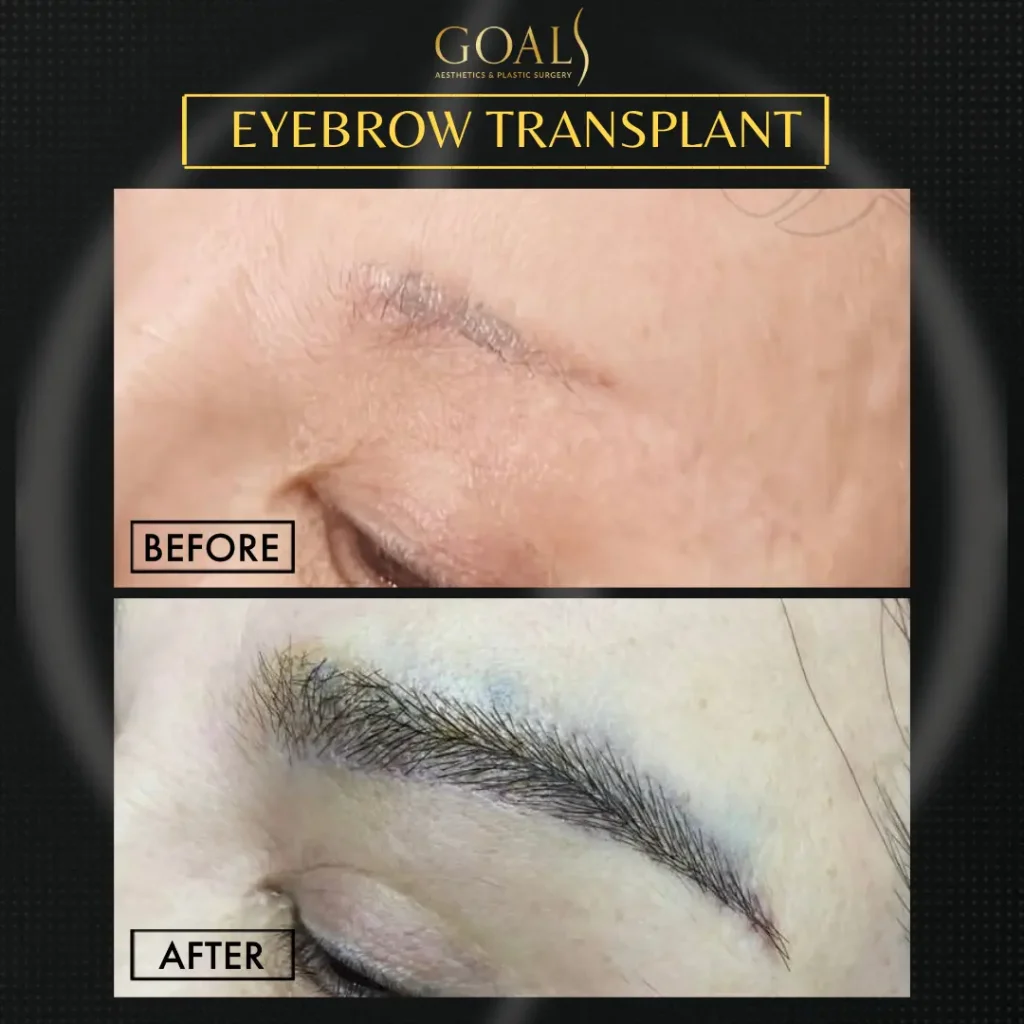
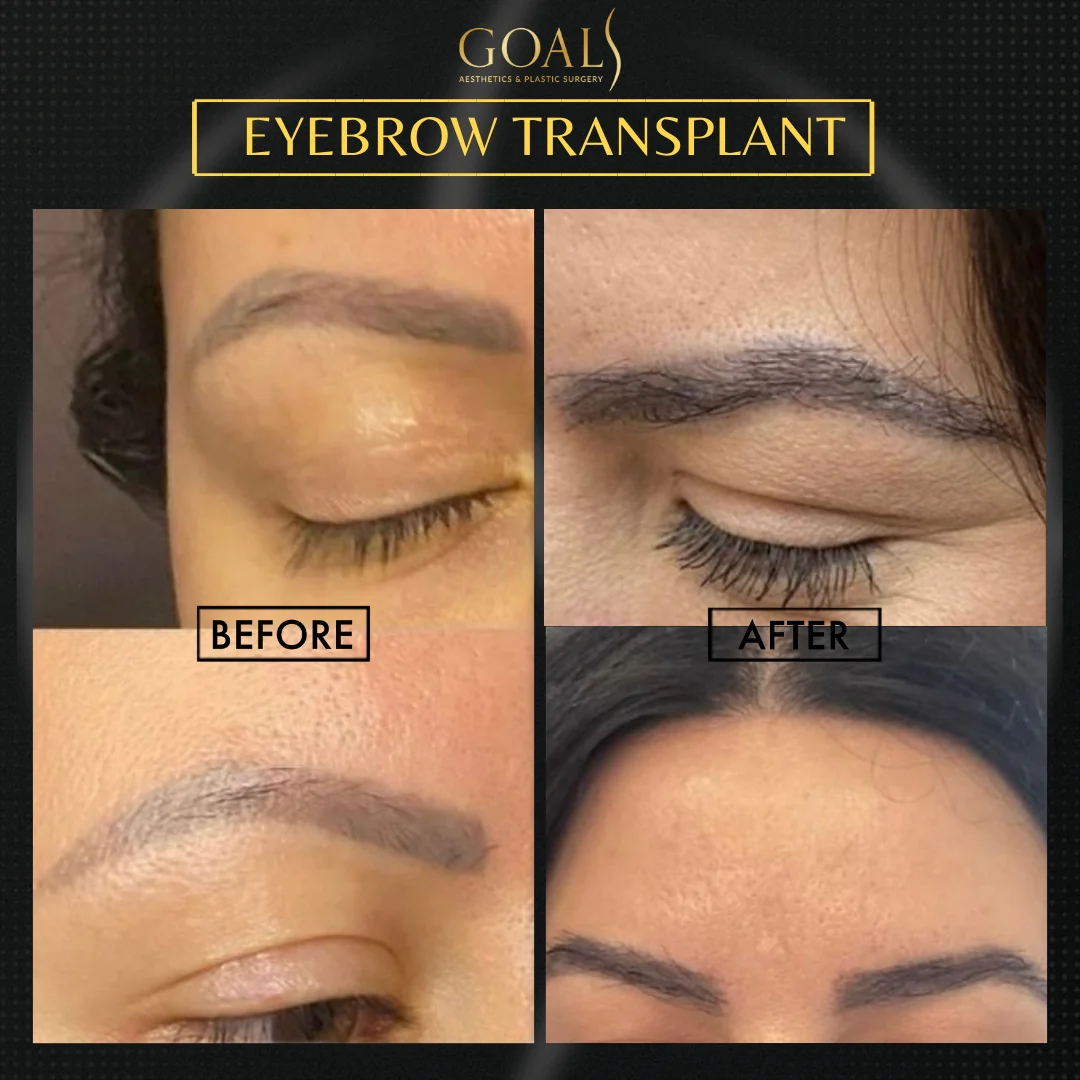
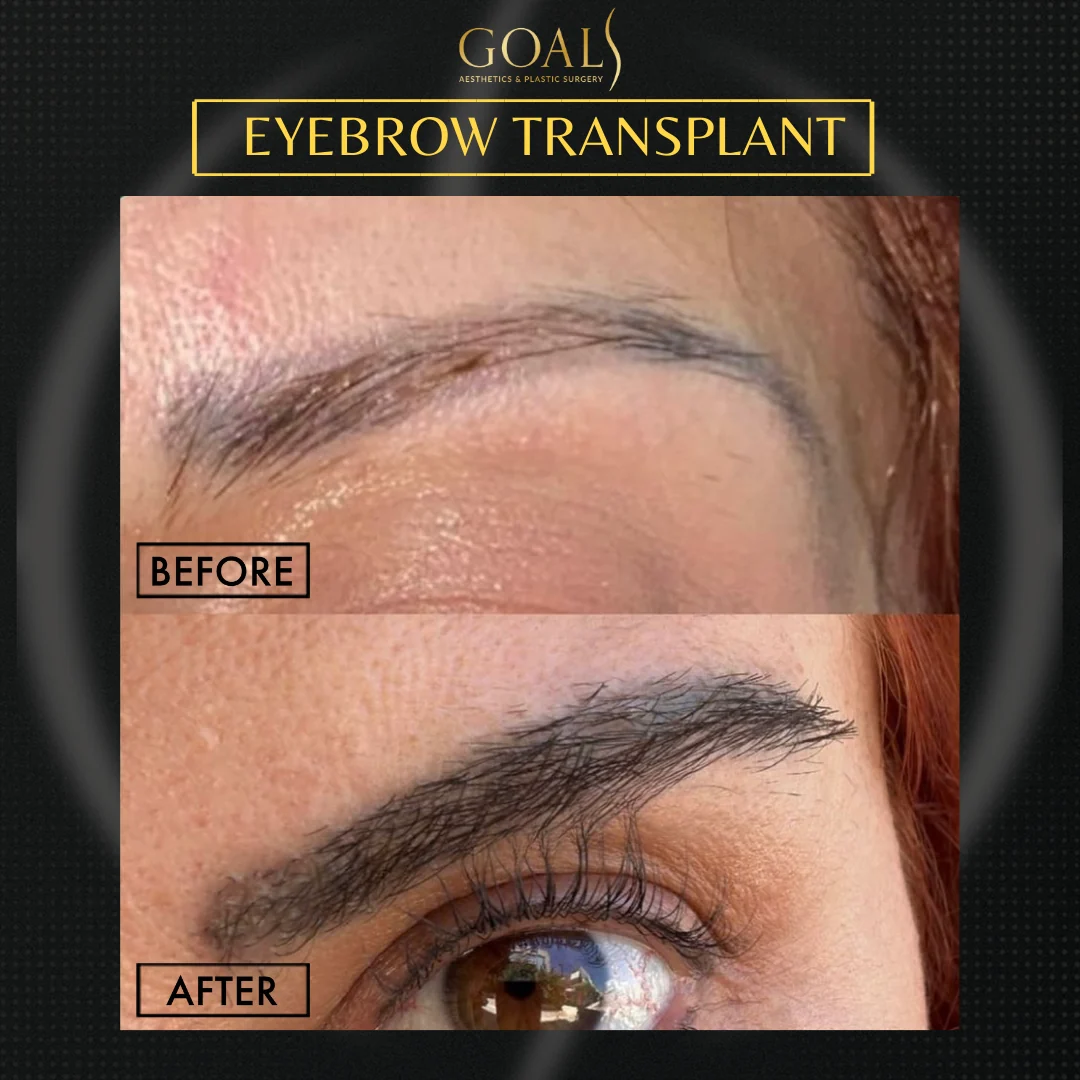
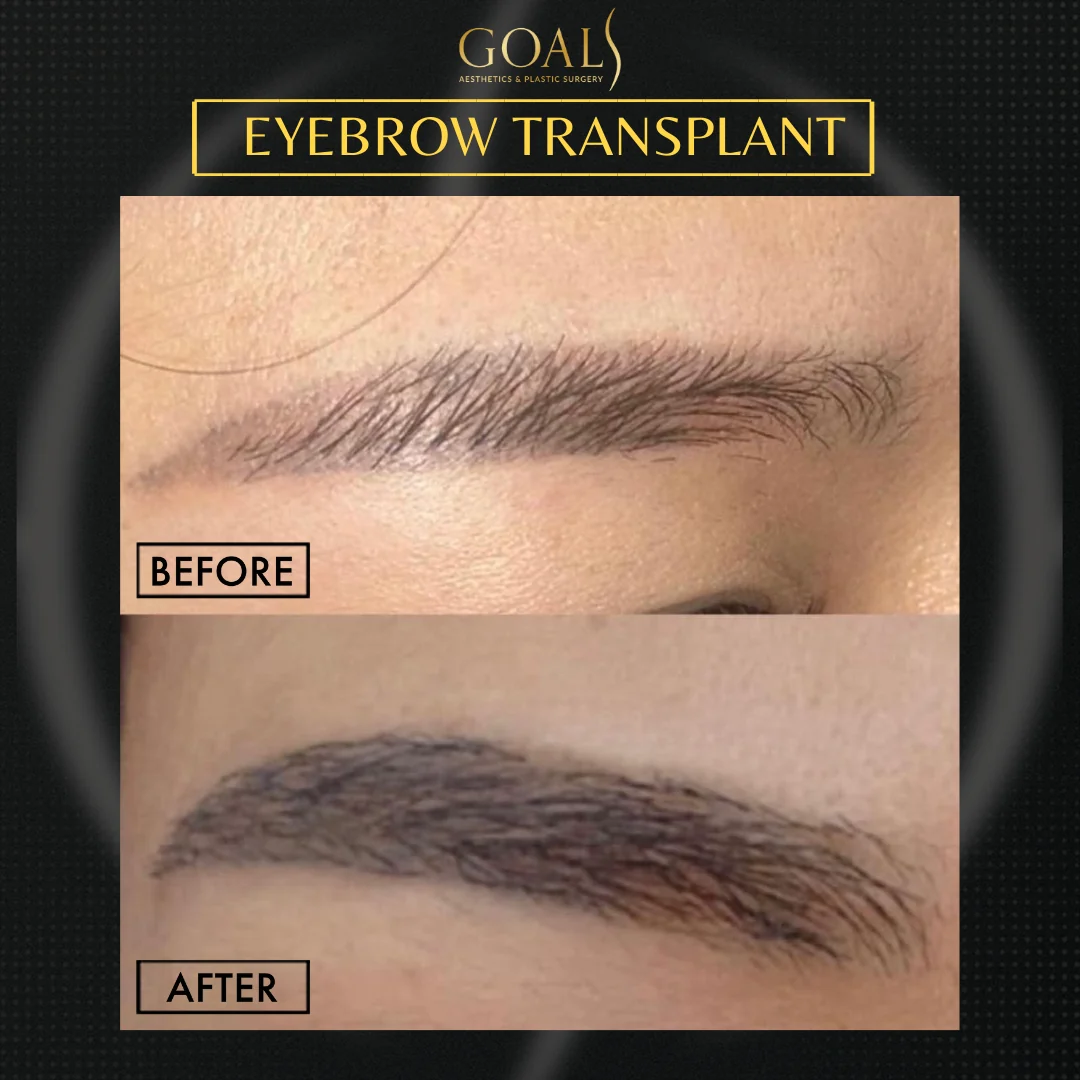
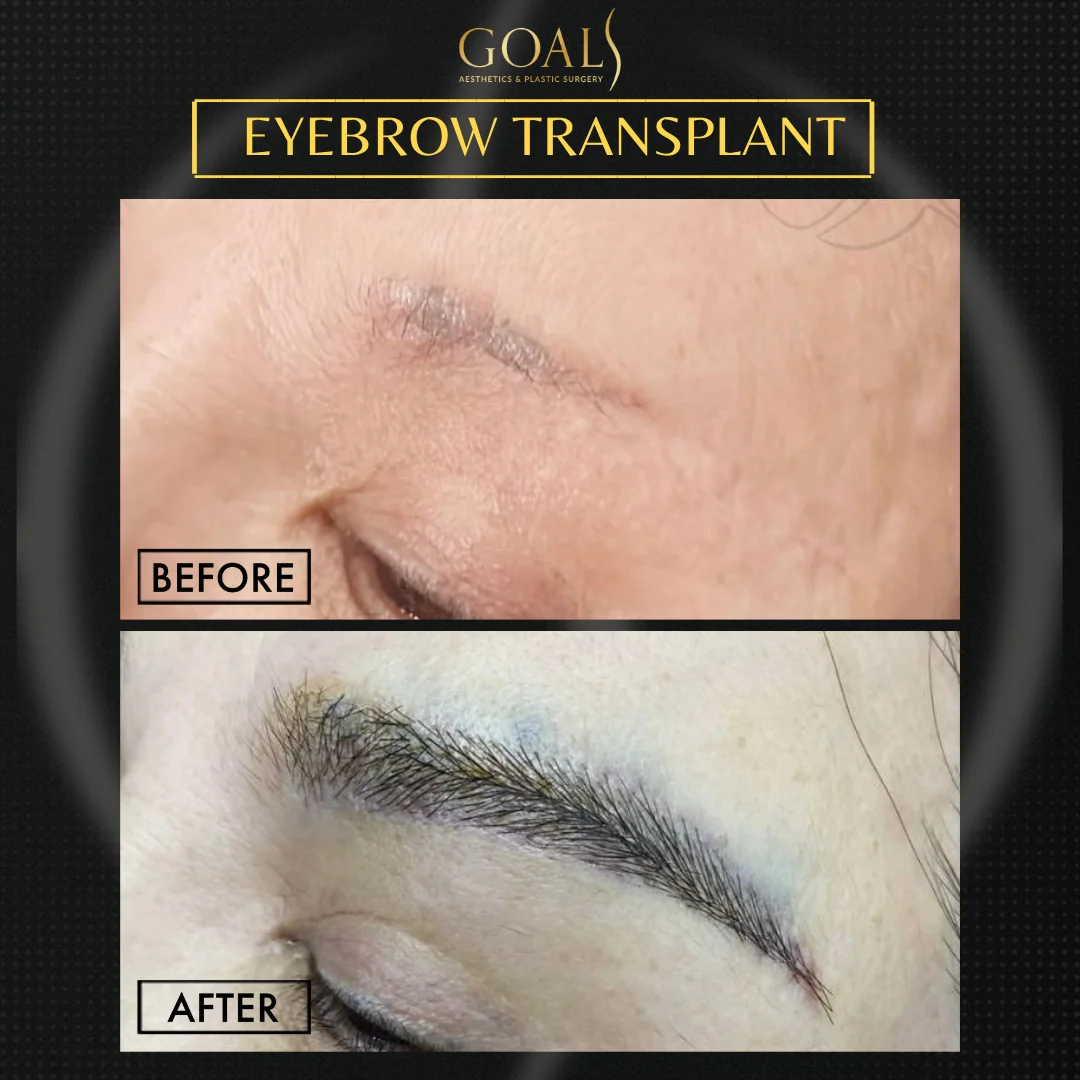
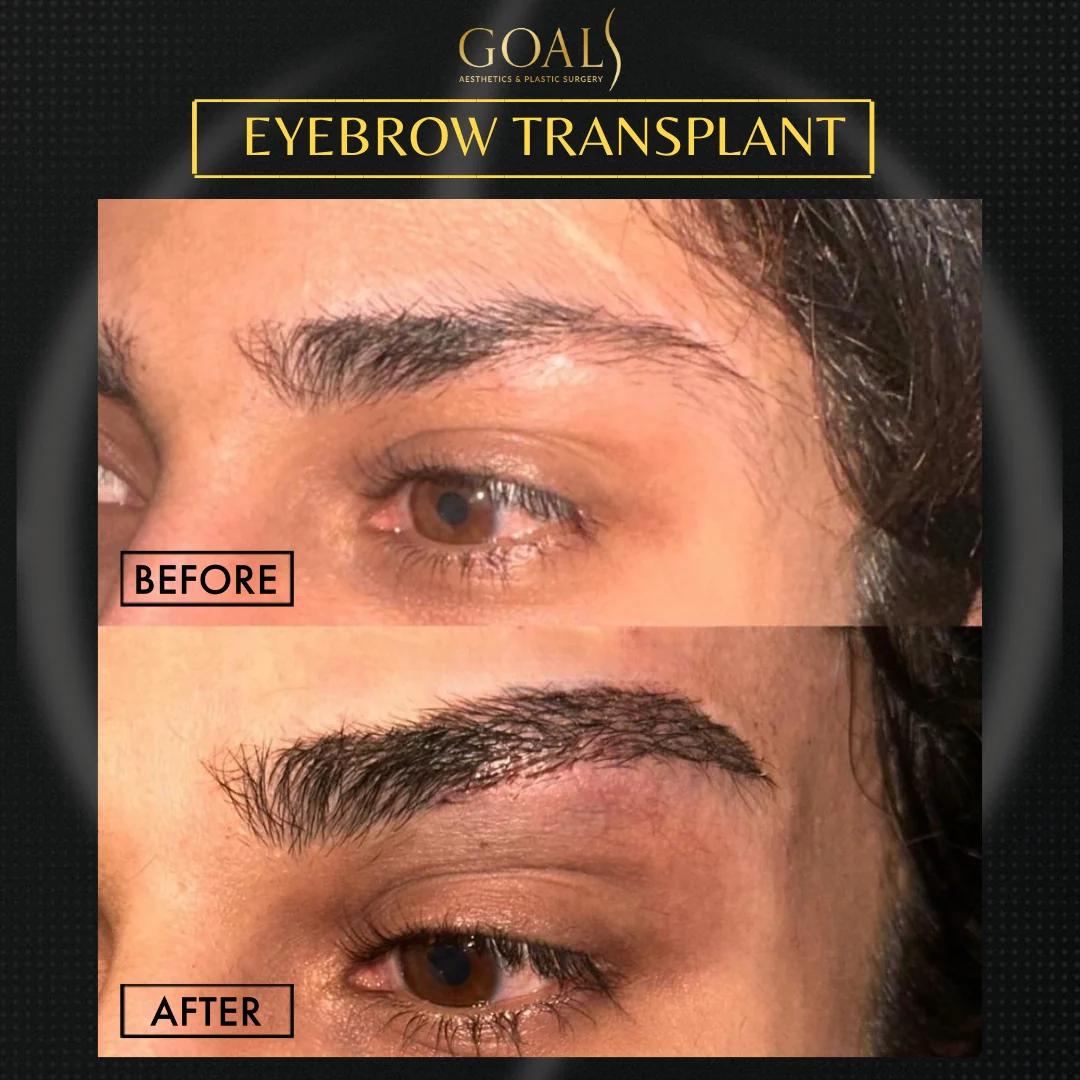
Real patients of Goals, published with written consent. Photographs are not retouched or AI-generated. Individual results vary — these images show outcomes for these patients and are not a guarantee of your own.
Work it out
Runs in your browser. Nothing is sent to us and nothing is saved — a height and a weight are your business.
BMI is one measure among several and it says nothing about how you are built. Surgeons weigh it alongside your health and your goals; it does not decide anything on its own.
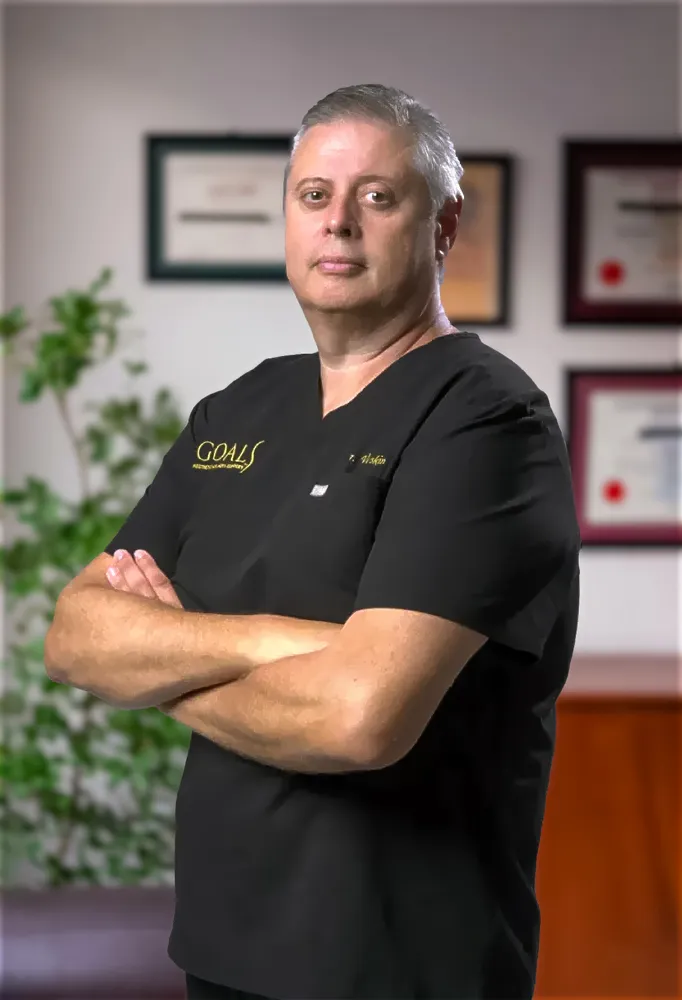
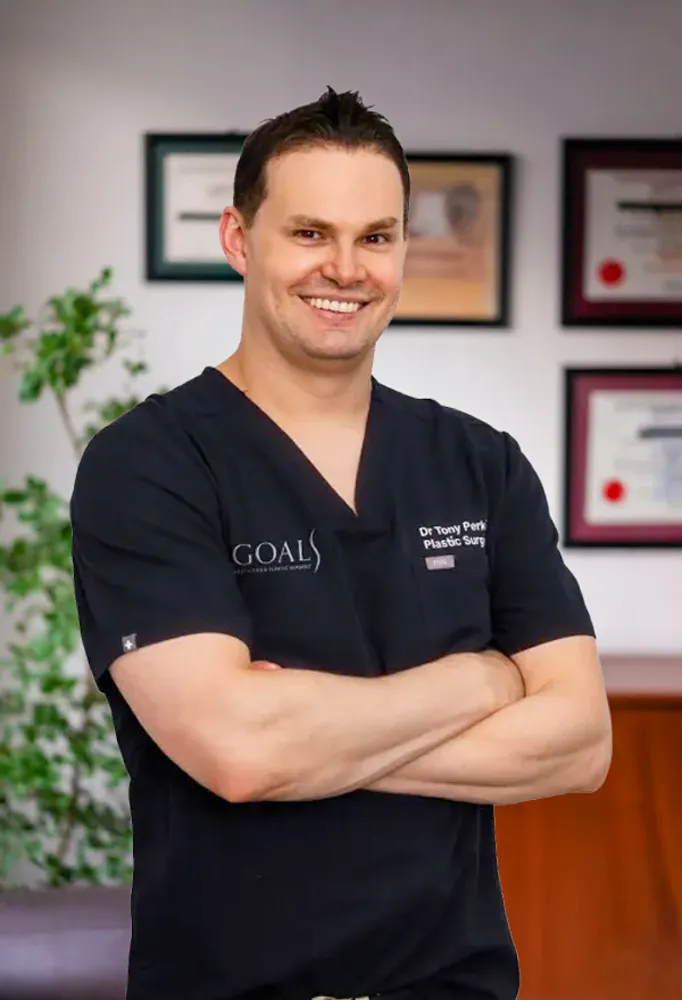
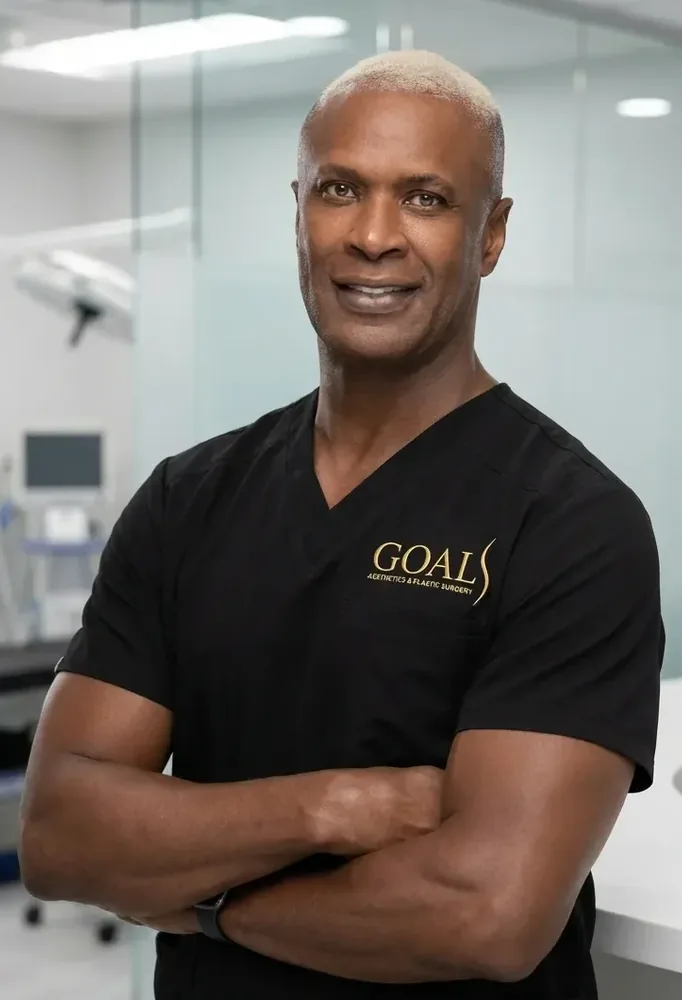
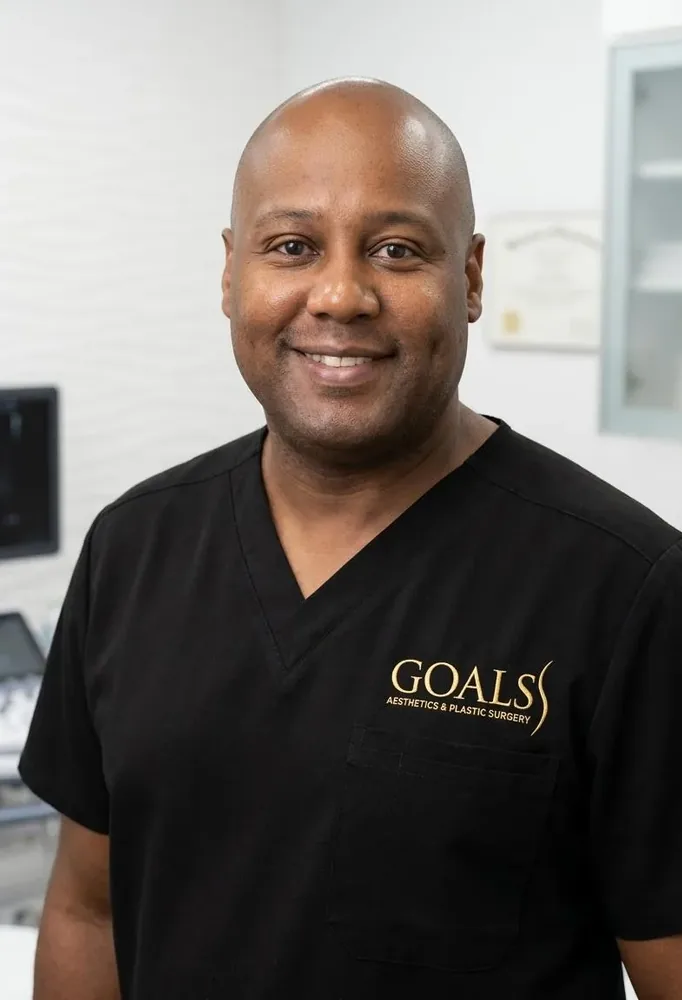
Every transplant is done by a U.S.-credentialed hair restoration surgeon, not a technician. Meet the team before you ever book your consultation.
Credentials differ by surgeon and are listed in full on each surgeon's page.
"We get why overseas "cheap hair transplant packages" look tempting. But the hidden risks (rushed surgery, language gaps, no local follow-up, complications once you're home) can turn a bargain into a real mess."
| Left Step | Right Step |
|---|---|
| Left StepYou spend weeks comparing clinics online, wiring money abroad, then booking flights and a hotel. | Right StepYou come in, or hop on a video call, and we design your brow shape together, talking through thickness, arch, and how full you want them. |
| Left StepYou land somewhere you barely speak the language. The consult is rushed, squeezed into the same day as surgery. | Right StepWe plan the shape around your face, then map how many grafts each brow needs for an even result. |
| Left StepThe surgery happens in a place you've never set foot in, often packed with patients and short on time to watch you afterward. | Right StepUsing the FUE method, we take ultra-fine follicles from the back of your head. No stitches, no visible scar, no pain. |
| Left StepYou fly home tired and sore. A week on, the brow or donor area turns red and irritated, and you don't know if that's normal. | Right StepEach hair goes in at the angle and density that matches how your brow already grows. |
| Left StepYour only fallback is a local ER or urgent care, where nobody did your surgery and nobody has the details of what was done. | Right StepIf something feels off while you heal, you call the same local team that treated you. We see you in person and sort it fast. |
| Left StepMore time and money go to ER visits and prescriptions, while the overseas clinic "helps" you over WhatsApp and nothing more. | Right StepThe brow area heals in a few days, and follow-ups track the new growth until the shape fills in. |
| Factor | Overseas Package | Goals U.S. Clinic |
|---|---|---|
| Total cost (real) | Base price plus flights, hotels, more days off, maybe ER bills once home. | Similar once all care is counted, with clear pricing and no surprises. |
| Travel & time off work | Long flights, jet lag, several days away from work and family. | A same-day local procedure, barely any travel, quicker back to normal. |
| Safety & sterility | Hit or miss; you're trusting foreign rules and little time on site. | An accredited U.S. clinic with tight infection control you check. |
| Surgeon & team | Credentials are hard to check, and you may never see the surgeon again. | Credentialed hair restoration surgeons you meet before and after. |
| Emergency backup | No local clinic; ER doctors just guess what was done abroad. | In-person follow-up, plus local urgent help if a complication shows up. |
| Follow-up care | Messages only, and real hands-on help is hard to get. | Booked in-person checkups, progress photos, and medication tweaks. |
| Communication | Language gaps, odd time zones, patchy replies. | A team in your language, written instructions, a 24/7 phone line. |
| Legal protections | Little recourse if something goes wrong once you're back. | Backed by U.S. patient safety laws and standards. |
Safety comes first here. We use the FUE method with ultra-fine follicles and place each hair at the angle and density that reads natural and hidden.
Fully equipped, sterile procedure rooms inside U.S. accredited sites.
Local anesthesia keeps the whole thing pain-free.
Reach your surgeon and medical team easily when questions come up.
Clear instructions, medications, and a follow-up plan to stop infection.
Each hair set at the angle and density that matches your brows.
One local team runs your consult, your surgery, and all the follow-up.
We design your brow shape to fit your face. Full, arched, or defined, your call.
A U.S.-accredited clinic. No trip abroad, no language barrier, no follow-up gaps.
Experienced hair restoration surgeons you meet before and after surgery.
You're covered by U.S. patient safety laws, with real recourse if needed.
Transplanted brow hair is DHT-resistant, so it grows for life.
"Years of over-plucking left my brows patchy. They shaped them to my face and now they're full and natural. No more pencil."
"Painless, done in an afternoon, and they used my own hair. The shape suits me and it grows like real brows."
"My brows never grew back after a scar. They filled it in so well you can't tell. They look just like mine."
Testimonials reflect individual experiences. Results vary by patient.
Every eyebrow transplant happens on-site at our New York clinic, in a fully equipped, sterile treatment room. We never send it to a partner site.
We're open Monday through Saturday. Book online in a couple of minutes or just call us, and the team will lock in your consultation date and time.
No. Your existing brow hair stays put. A small patch of the donor area at the back of your head may be shaved, hidden by the hair around it.
It's pain-free under local anesthesia and usually runs 2-4 hours, depending on how many grafts you need. You go home the same day.
Yes. We use your own hair, set at the right angle and density. It's DHT-resistant, so it's permanent and grows for life.
Yes. Plenty of patients pair it with a hair transplant, PRP therapy, or other facial work for a full result.
An eyebrow transplant is the permanent answer for brows that are thin, patchy, or gone altogether. Where microblading, tattoos, and makeup sit on the surface of the skin, this moves your own hair into the brow and rebuilds the shape with living follicles. The transplanted hair is DHT-resistant, so it does not thin or drop away the way brow hair can on its own. Once it grows in, it is simply your brow.
Every eyebrow transplant at Goals Plastic Surgery happens at our accredited New York clinic, performed by expert specialists using the FUE method. If you have been looking into an eyebrow transplant in New York, the sections below start with the part that decides whether a result looks real: which hair gets used, and why most hair on your head is the wrong hair for the job.
An eyebrow is a small, densely scrutinised area where every strand is visible individually. That makes matching the donor hair to the destination more demanding here than anywhere else on the body.
Brow hair is finer than most scalp hair, shorter, and it grows in a specific direction that changes as it crosses the brow. Hair taken from the crown or the back of the head is generally too coarse for this. It reads as heavy in the brow, and once it is there, the mismatch is permanent.
For that reason the donor area is typically the region behind the ear, where the hair is finer and closer to brow calibre than hair further up the scalp. It is selected specifically for texture match rather than for convenience, and the FUE method allows individual follicles to be lifted from it without stitches and without a visible scar.
Then there is the angle. Brow hair leaves the skin at extremely shallow angles, flatter than anywhere on the scalp, and the direction shifts along the length of the brow. Hairs at the inner end tend to sweep upward, the middle lies flatter and more horizontal, and the tail angles down and out. Each follicle is placed to follow the pattern of that particular section using fine needles at a precise angle and depth. Get this right and the transplant disappears into whatever brow is already there. Get it wrong and the hairs stand away from the skin, which is the single clearest sign of brow work done badly.
The design comes first, and it is the part of the process that most determines whether you are happy in five years rather than five months.
Your surgeon maps the shape against your face: where the brow should begin, where the arch should sit and how pronounced it should be, where the tail should end, and how the two sides relate to each other. Nobody has perfectly symmetrical brows, and the aim is balance rather than mirror-image matching, which tends to look artificial precisely because real faces are not built that way.
This is also where you decide density. Full and feathery, softly arched, or clean and defined are all achievable, and the choice is yours. What is worth thinking about is longevity. Brow fashions move quickly, and a shape built to match whatever is current can date in a way a shape built around your own bone structure does not. Transplanted brows are permanent, so the design deserves more thought than the trend cycle would suggest.
From the agreed plan the surgeon works out how many grafts each brow needs, which is rarely the same number on both sides, and where each individual follicle sits. Brows are small and people look directly at them, so the difference between a considered design and an approximate one is visible immediately.
Pigment also fades and shifts. Microblading typically needs redoing on a regular cycle, and tattoo pigment can change colour over time as it breaks down. A transplant places living follicles, so the result is permanent and there are no touch-up appointments in the calendar indefinitely.
The trade-offs run the other way too, and they are worth stating. Microblading is reversible in the sense that it fades if you stop; a transplant is not. Microblading takes an afternoon and costs less up front; a transplant is a surgical procedure with a recovery period and a result that takes months to arrive. And a transplant needs upkeep of a different kind, covered further down this page.
The two are not mutually exclusive. Some patients have had microblading for years and want to stop maintaining it. Others use makeup to try out a shape before committing surgically, which is a sensible way to test a design you are unsure about.
The common thread is brows that will not grow back on their own, whatever caused that.
Over-plucking is the most frequent cause we see. Brow follicles that have been repeatedly plucked over years can stop producing permanently, which is why brows heavily shaped in a particular decade often never recovered when fuller shapes came back into fashion.
Naturally sparse or faint brows respond well, as does thinning that has come on with age. Scarring from injury, surgery, or burns can be transplanted into, and so can gaps left by conditions or medical treatments that affected hair growth.
Trichotillomania, the compulsive pulling of hair, is a common reason for brow loss and a valid indication for treatment. Timing matters here more than with other causes: the pulling needs to have stopped and stayed stopped, because transplanted follicles are as vulnerable to being pulled as the originals were. This is worth discussing openly at consultation rather than leaving unmentioned.
Patients transitioning who want brows that match how they see themselves are also well served by this, as are men and women alike, since the procedure is not gendered. The one hard requirement is enough suitable donor hair to harvest. If you are considering scalp work at the same time, our New York hair restoration team can plan both together.
Your surgeon will review your medications and supplements at consultation. Blood thinners, vitamin E, and fish oil may need pausing beforehand on medical advice, and nothing prescribed should be stopped without checking first. In the run-up, keep your skincare gentle, avoid exfoliating products and direct sun on the face, and keep the skin hydrated. Arrange for someone to drive you home afterward.
The procedure runs two to five hours depending on graft numbers, under local anesthesia, in a single visit. You will not need to shave your eyebrows. Your existing brow hair stays exactly where it is, and only a small section of the donor area behind the ear is trimmed, which the surrounding hair covers.
Healing for both the donor and recipient areas generally takes about a week. Expect mild soreness or tightness early on, manageable with over-the-counter pain relief, and some minor swelling or bruising around the eyes in the first days. Tiny scabs form around each transplanted hair and drop off on their own. Do not pick at them. Keep activity light, avoid anything strenuous while the grafts anchor, and wash gently with mild products.
Eye makeup can generally be reintroduced around a week afterward, using gentle, non-irritating products, though your surgeon will give you specific timing. Complications are uncommon, and the ones that do occur are usually minor bruising and swelling, but being complete about your medical history at consultation is what allows the team to plan around anything relevant.
Transplanted brow hairs shed within the first few weeks. This is normal and expected. The follicle stays exactly where it was placed and enters a resting phase before restarting, so the shed is not a sign anything has gone wrong.
Visible growth begins around three to four months. The brows continue filling in from there, and the final result generally settles between nine and twelve months. Early growth can look uneven as different follicles restart at different times, which is worth knowing in advance so month five does not cause alarm.
Then comes the part that surprises almost everyone. The transplanted follicles keep the growth characteristics of the area they came from, which means they grow longer than brow hair naturally does and they do not stop at brow length. Your new brows will need trimming, regularly, for as long as you have them.
This is not a complication or a sign of poor technique. It is simply how transplanted hair behaves, and it is the honest trade for a permanent result. In practice it means a small trim every few weeks and brushing the hairs into direction, which most patients find takes moments and is a fair exchange for not drawing brows on every morning. Some hairs also soften and adapt somewhat over the first year or two, though the trimming does not go away entirely.
You can groom, brush, and shape them as you would natural brows, because that is what they now are. We do not offer brow dyeing directly, but the team can advise on safe products and methods if you want to colour them. Progress is tracked in person at follow-ups, and the range of results is in our before & after gallery.
Pricing tracks how many grafts your brows need, which comes out of the design rather than a price list, so the figure is confirmed at consultation once the shape has been agreed rather than quoted from a photograph. The plan and the price are both clear before you book. Financing options are available if spreading the cost suits you better.
Brow work combines readily with other procedures, and many patients plan it alongside a hair transplant or PRP therapy in a single treatment plan. Every plan includes follow-up care with the same team from procedure day through to your final result, which for brows means through the full growth cycle rather than just the healing period.
The difference comes down to two things: what is being added, and how long it lasts. Microblading, brow tattoos, and makeup all deposit pigment into or onto the skin. They can look convincing, particularly early on, but pigment sits flat while real brows have depth, individual strands, and hairs that catch light from different angles.
About Eyebrow Hair Transplant
Eyebrow Hair Transplant near you
Whether you want fuller, arched, or defined brows, our team will build you a safe, realistic plan that fits your face.
Prefer to talk now? (833) 462-5769
Free · No obligation
Tell us how to reach you. A patient coordinator calls you back — usually the same day.