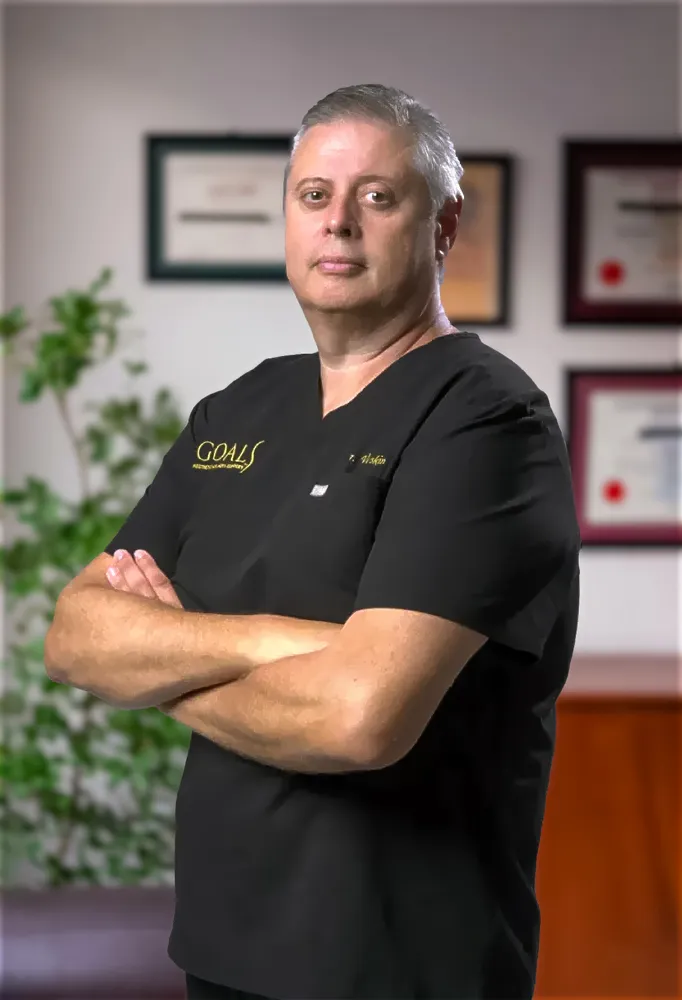
Mild to Moderate Laxity
Loose or sagging skin that you want firmer, but not a full lift.
J-Plasma (Renuvion) skin tightening at our Harlem clinic uses cold plasma energy under the skin to firm loose, sagging areas and build collagen, with no large surgery.
From $7,250
Start with Savings
Book a consult and get a discount on your first procedure.
Goals Aesthetics & Plastic Surgery – Harlem
721 St Nicholas AveMon–Sat, 10:00–19:00 local time
Surgeon: Dr. Sergey Voskin
12
Clinics Across the U.S.
100,000+
Cosmetic procedures performed across our network
10+
Years in Body Contouring & Aesthetics
Skin Tightening Done Safely, With Real Attention to Detail
J-Plasma, also known as Renuvion, is an advanced skin tightening treatment that uses cold plasma energy, helium gas paired with radiofrequency, delivered under the skin through a tiny incision. The energy heats the tissue so it contracts and tightens, while building collagen for firmer skin over time, at our Harlem clinic.
A clinician reviews the areas that bother you and your skin quality, then plans whether J-Plasma alone or with FlexSculpt fits best.
Through a tiny incision, cold plasma energy is applied under the skin, heating the tissue so it contracts and tightens precisely.
The skin firms right away and keeps improving as collagen builds over the following months. You follow simple aftercare, and most people return to routine quickly at our Harlem clinic.
J-Plasma is for people with mild to moderate loose or sagging skin who want firmer skin without a large surgical lift, on the face, neck, abdomen, arms, or thighs.
Loose or sagging skin that you want firmer, but not a full lift.
Skin that may stay a little loose after fat removal, which J-Plasma can tighten for a smoother result.
Looseness on the face, neck, abdomen, arms, or thighs you would like firmed.
You want skin tightening with less downtime than a large surgical skin-removal lift.
Not sure your skin qualifies?
Experienced surgeons
Credentials differ by surgeon and are listed in full on each surgeon's page.
See real skin-tightening results from patients.
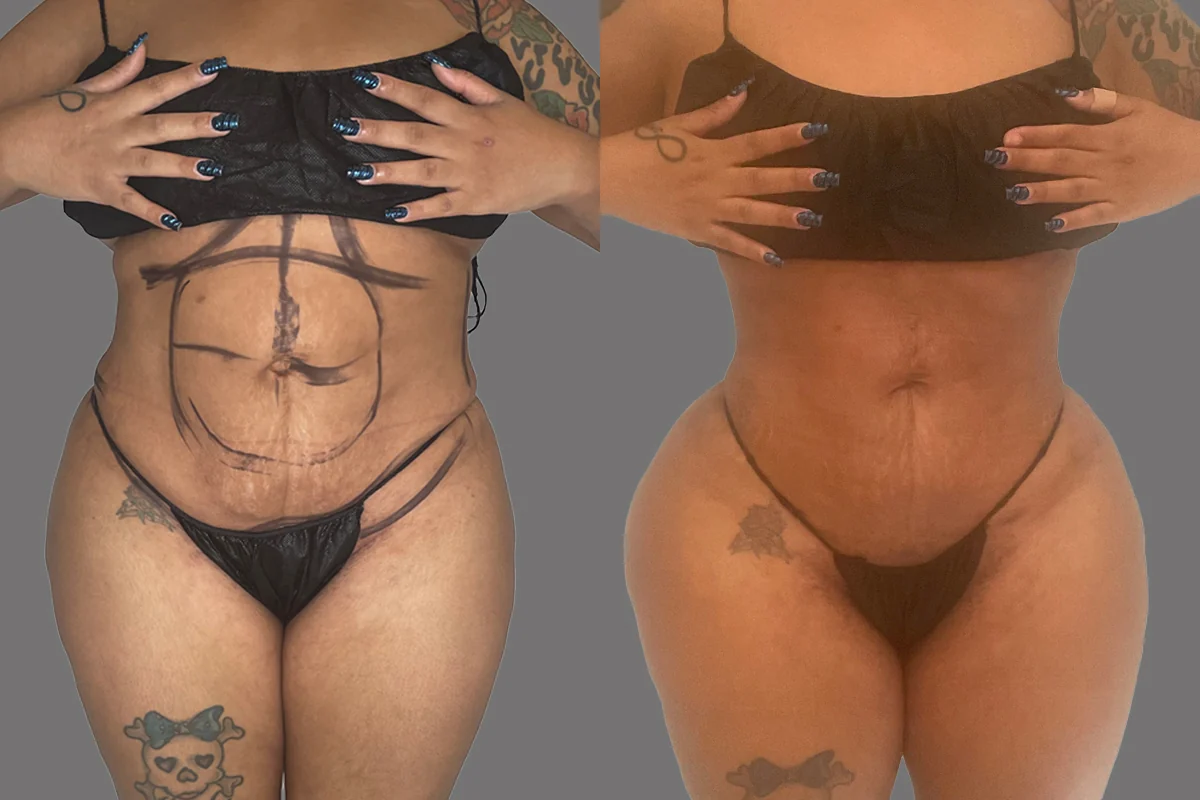
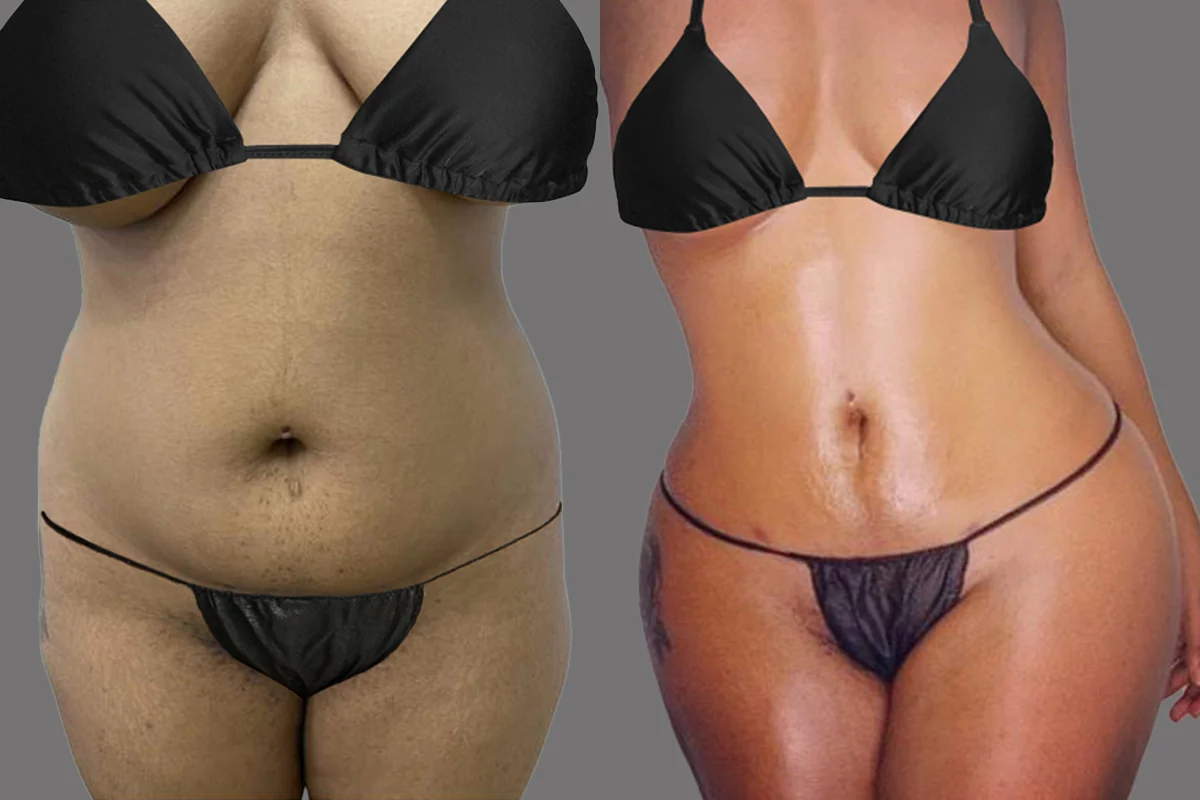
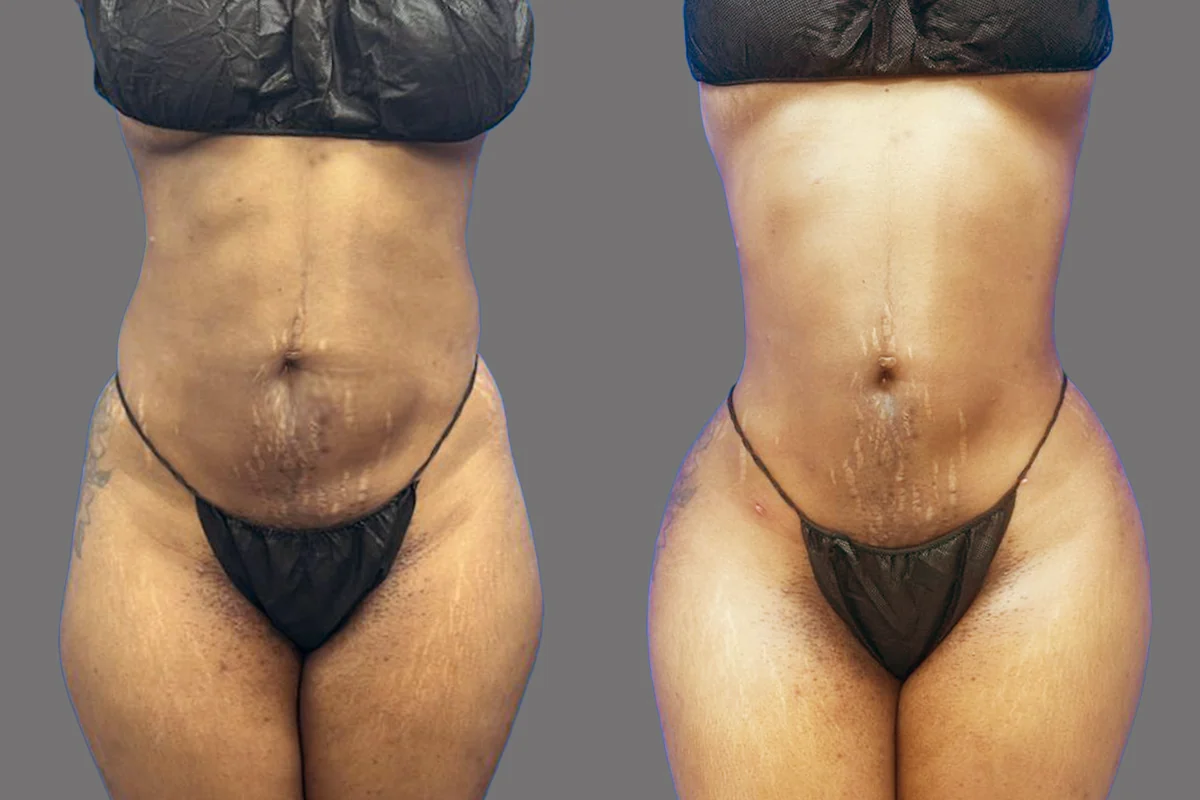
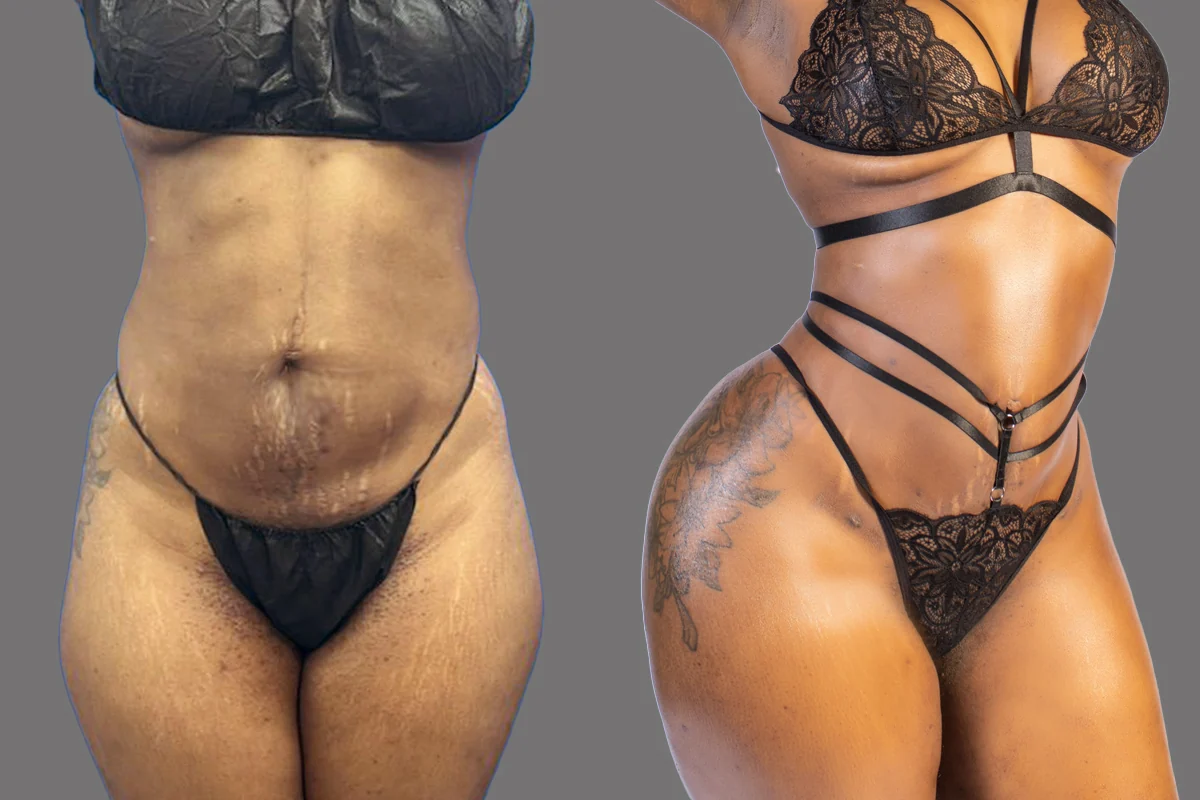
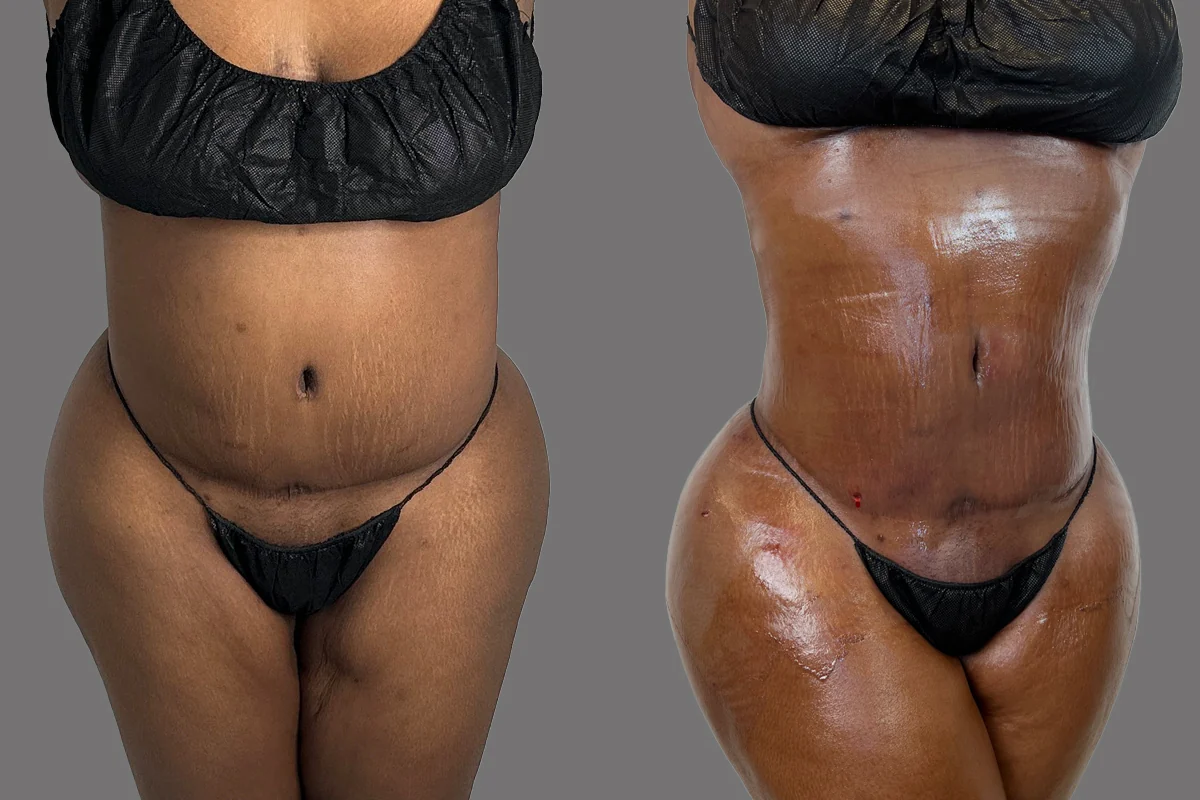
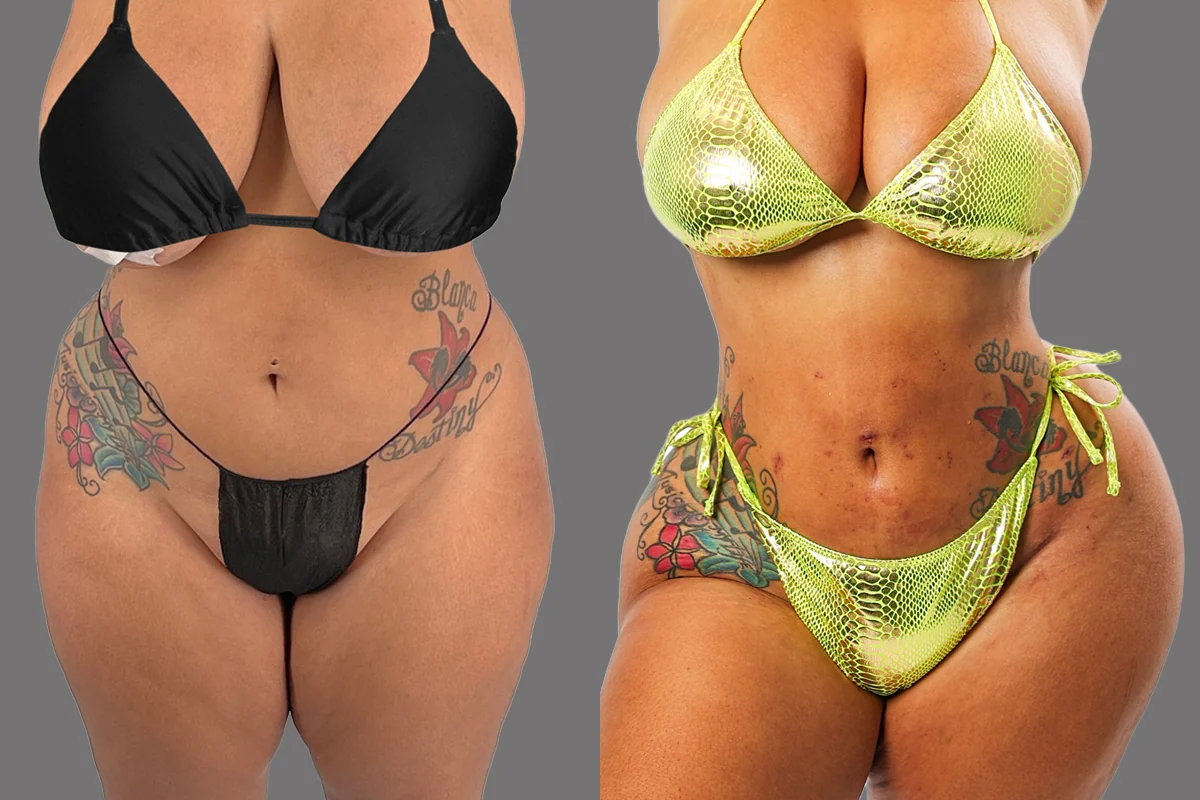
Real patients, published with written consent. Photographs are not retouched or AI-generated. Individual results vary — these images show outcomes for these patients and are not a guarantee of your own.
Work it out
Runs in your browser. Nothing is sent to us and nothing is saved — a height and a weight are your business.
BMI is one measure among several and it says nothing about how you are built. Surgeons weigh it alongside your health and your goals; it does not decide anything on its own.
See how each handles loose skin, the incisions, scarring, and recovery, and the choice between J-Plasma and a surgical skin-removal lift gets clearer.
| Criterion | J-Plasma at Goals | Surgical Skin Lift |
|---|---|---|
| Best For | Mild to moderate skin laxity. | Significant loose, hanging skin. |
| Incisions | Tiny access point under the skin. | Longer surgical incisions. |
| Mechanism | Heats tissue, builds collagen. | Removes skin. |
| Scar | Minimal, from a tiny incision, easy to hide once healed. | Longer, more visible scar. |
| Recovery | Usually shorter, back to routine sooner. | Longer healing period. |
6 Steps to Firmer Skin.
Meet the team to talk through goals, look at your skin and the areas you want firmer, and if J-Plasma fits.
Schedule your procedure and get clear pre-operative instructions so you arrive fully prepared for the day of treatment.
Complete the medical checks so the team can confirm you are ready, then they walk you through every step of the prep.
Through a tiny incision, cold plasma energy is applied under the skin, heating the tissue so it contracts and tightens.
You see firmer skin right away, and it keeps improving as collagen builds over the following months.
Work through our aftercare plan with scheduled check-ins, so we track healing and protect your result.
J-Plasma firms loose skin and improves texture, with results you see right away that keep building as collagen develops over the following months.
Loose, sagging skin tightened for a firmer look.
Improved skin texture and tone in the treated area as collagen builds.
From fitted clothing to feeling at ease on camera, firmer skin can help you feel confident in everyday Harlem life, without a major procedure.
Visible firming right away, with more over the months.
Less downtime than a surgical skin-removal lift.
Because energy has to go in evenly, we screen every patient first and use careful, controlled technique with clear pre- and post-care, so it stays safe and predictable.
We review your skin and goals before treatment, so the plan fits you and you are cleared to go ahead.
Even, controlled energy delivery to tighten safely and limit any risk.
Clear pre- and post-treatment support with easy access to the NY team.
Final cost comes down to areas treated, whether paired with FlexSculpt, and complexity, confirmed at consultation and fixed at booking.
Financing / payment plans
Your price is locked in at booking, after consultation.
Clear pricing: no hidden fees, everything spelled out in the contract up front.
Prices shown are starting prices and depend on the number of areas treated. Final pricing is confirmed at your consultation. Cosmetic procedures are not covered by insurance.
Work it out
Runs in your browser. Nothing is sent to us and nothing is saved.
An estimate, not a quote. It divides the starting price over the months you choose and assumes no interest. Goals works with several lenders and your rate, term and approval are settled with them — the financing page has the detail, and your price is confirmed at consultation.
A St Nicholas Ave location in Harlem with easy access by subway.
Comprehensive aftercare and easy in-person follow-ups at the NY clinic.
J-Plasma can be combined with FlexSculpt.
A minimally invasive approach through a tiny, hidden incision.
Thousands of successful skin and body procedures across the network.
“Loose skin on my lower face bothered me, but I did not want a facelift. J-Plasma firmed it through a tiny incision.”
“I had a little loose skin after my lipo, and adding J-Plasma made it so much smoother. It tightened right away and kept improving for months. A great combination overall.”
“The clinician was straight about what J-Plasma could do for my arms. Natural, firmer result.”
“Tiny incision, quick recovery, and my neck looks years firmer. That it keeps improving over time was a happy surprise.”
Testimonials reflect individual experiences. Results vary by patient.
Yes. Because J-Plasma works with helium plasma and radiofrequency energy beneath the skin rather than light aimed at surface pigment, it does not carry the same pigment-related risks that some light-based devices do for richer skin tones. That makes it suitable for a wide range of skin types. Your clinician still reviews your skin and history to confirm it is a safe fit for you.
In the first days it is best to keep the area clean and follow your clinician’s aftercare, which usually means holding off on makeup or active skincare right over the treated skin until the small entry points have settled. Once it has healed enough, you can return to your normal routine. Your clinician gives you specific timing if a sensitive area was treated.
Surface laser and radiofrequency devices work from outside the skin and usually need several sessions, which suits very mild laxity. J-Plasma is more powerful because it delivers cold plasma energy directly beneath the skin through a tiny incision, so it tightens moderate looseness more meaningfully in one treatment. It sits between non-invasive devices and full surgery.
Most people need only a short time off, since J-Plasma is minimally invasive and uses a tiny incision rather than long cuts. Many return to desk work within a few days, while a larger treatment or one paired with FlexSculpt may call for more. Early swelling, redness, and tightness settle over the following days. Your clinician gives you a realistic timeline so you can plan around it.
Your clinician gives you clear pre-treatment notes, which usually include pausing certain blood-thinning medications and supplements where it is safe, since these can increase bruising. It also helps to avoid alcohol and smoking beforehand, as both affect healing. Share your full medication list and health history so the team can tailor the guidance.
It surprises people to learn that not every skin-tightening technology is equally safe on every skin tone. A number of the light-based devices used for firming and resurfacing carry real risks on deeper skin, which is something anyone with a richer complexion has good reason to ask about before booking. J-Plasma, carried out with the Renuvion device, works on a different principle. It firms skin with energy delivered beneath the surface rather than light aimed at it, which is why it's broadly suitable across the range of skin tones. For a community as diverse as Harlem, that isn't a small detail.
This page is built around what actually makes J-Plasma safe and what a safe result depends on, since it's a minimally invasive treatment performed by a surgeon, and with that kind of treatment the safety lives in the technology and the technique rather than the marketing. Asking whether a treatment is safe for your skin specifically is exactly the right question, and with J-Plasma the answer holds up across a wider range of complexions than most energy treatments.
The distinction comes down to how the energy reaches the skin. Many laser and intense-pulsed-light devices work by sending light that's absorbed by pigment in the skin, and the more melanin the skin carries, the more of that light it takes up. On darker skin tones that raises the risk of burns and of pigment changes, both unwanted lightening and darkening, which is why some lasers have to be used cautiously or not at all on deeper complexions.
J-Plasma doesn't rely on light. It uses radiofrequency energy together with helium plasma, delivered under the skin, so its effect doesn't depend on how much pigment your skin holds. That's the reason it's generally considered safe across skin tones, including the deeper ones that light-based tightening can struggle with, and it's a genuine point of reassurance rather than a marketing line. For anyone who's been turned away from a laser, or warned about pigment changes, that difference is much of the reason J-Plasma is worth a look.
Beyond the skin-tone question, safety also comes from how controllable the energy is. Rather than a fixed, one-size dose, the surgeon sets and adjusts the energy for the specific area being treated and for your skin, dialing it to what that tissue needs. The cooling action of the helium plays a part too, helping protect the surrounding tissue while the deeper layer is warmed enough to contract.
That pairing, energy that can be tuned precisely and a built-in cooling effect, is a large part of what keeps the treatment controlled when it's carried out properly. Safety here isn't an accident of the device; it's the result of energy that can be matched to the person rather than applied the same way to everyone. It also means two people with very different skin can be treated on the same device without the energy being a poor fit for either.
There's a catch built into all of this. Precisely because the energy is delivered beneath the skin rather than across its surface, how safe and how good the result is depends heavily on the person guiding it. A surface gadget is somewhat self-limiting, but energy placed under the skin calls for judgment about depth, amount, and placement, and those are the surgeon's decisions to make. In experienced, careful hands that control is exactly what produces an even, natural result; done carelessly, the same power is where problems come from.
So after the technology itself, the single biggest factor in a safe outcome is the experience of the surgeon performing it. The treatment rewards a steady, practiced hand, and that's not something to compromise on to save money. It's entirely fair to ask a surgeon how often they perform it and to ask to see real results from their own patients before you commit.
Knowing what to look for makes the safety practical rather than abstract. A safe treatment is performed by an actual surgeon experienced with cold-plasma devices, not a non-medical operator, in an accredited facility rather than a pop-up or a discount setting. It starts with a proper consultation and health screening, where your skin, your history, and your goals are reviewed before anything is placed, and it uses genuine Renuvion equipment.
A good surgeon will also be honest about whether you're a suitable candidate at all rather than treating everyone who walks in. Treating those things as requirements rather than nice extras is one of the most reliable ways to keep the treatment safe and the result worth having. A price that looks too good to be true, or a setting that skips the screening, are among the clearest signs to keep looking.
J-Plasma is best matched to mild to moderate skin laxity in people who want firmer skin without a surgical lift, whether that looseness sits on the face, neck, abdomen, arms, or thighs after weight loss, pregnancy, or aging. Reasonable general health helps, since it supports steady healing and a strong collagen response. The honest limit, which a safety-minded approach insists on naming, is that energy tightening firms existing skin rather than removing it.
So when there's a large amount of heavy, hanging skin, a surgical tummy tuck or lift is the more appropriate route, and a good surgeon will tell you so plainly rather than stretch the treatment past what it does well. Knowing that limit upfront is itself a kind of safety, since the riskier path is being talked into a treatment that was never going to suit your skin in the first place.
The mechanism behind it is straightforward. The Renuvion device energizes helium gas with radiofrequency to create a controlled stream of cold plasma, which the surgeon delivers just beneath the skin through a tiny incision. The energy warms the tissue so it contracts and firms almost at once, and that same warming prompts your body to build fresh collagen over the months that follow, while the helium's cooling helps protect the surrounding tissue.
Anesthesia is matched to the area and the extent of the work, ranging from local with light sedation for a smaller treatment up to general anesthesia for larger or combined ones, which your surgeon settles with you beforehand. Most treatments are done in a single visit, and you head home the same day.
Recovery is usually quick compared with a surgical skin-removal lift, since the skin is reached through a tiny entry point rather than a long incision. Expect some swelling, redness, soreness, and a feeling of tightness in the treated area for the first several days, all of which ease steadily. For body areas you'll usually wear a compression garment to support the skin as it tightens.
Most people get back to light activity and desk work fairly quickly, then return to their full routine on the surgeon's timeline. The scheduled check-ins afterward aren't just routine; they're part of doing this safely, letting the surgeon confirm the area is healing cleanly and the result is settling as expected.
Firmer skin shows up soon after the procedure, but the fuller change builds gradually. As new collagen develops over roughly the next three to six months, the skin keeps tightening and refining, so the result continues improving well beyond the day of treatment. Because part of the change is built from your own collagen rather than anything placed or removed, it tends to read as natural rather than sudden. Outcomes generally hold for the long term, especially with a stable weight and good skincare, though natural aging never fully stops. Your surgeon sets realistic expectations for your skin and the treated area, so nothing catches you off guard.
There's no single flat figure, since the cost comes down mostly to how many areas are treated, the degree of correction, and whether liposuction is added to the plan. We keep it transparent: your figure is confirmed at the consultation and locked before booking, with no hidden fees and the full breakdown written into the contract. If spreading payments helps, financing and payment plans are available. Because the result is built on your own collagen and tends to last, many people in Harlem see it as solid long-term value next to repeated surface treatments that need constant topping up.
Our Harlem clinic is at 721 St Nicholas Avenue, easy to reach by subway or car from across Upper Manhattan. Because the safety and the quality of the result both rest on experience, J-Plasma is performed by surgeons who run Renuvion regularly, in an accredited facility with safety-first screening and a careful, detail-minded approach to natural-looking firmness.
When fat and skin both need attention, it pairs naturally with FlexSculpt in the same session. You can learn about the team, view outcomes in the before and after gallery, and read more on the blog. When you're ready, book a consultation and a surgeon will assess your skin honestly and tell you whether J-Plasma is the right and safe choice for your goals.
About J-Plasma Skin Tightening
J-Plasma Skin Tightening at other Goals clinics
Whether it is J-Plasma skin tightening, FlexSculpt, or another body or aesthetic treatment, our Harlem team is ready to build a safe, realistic plan that fits your goals.
Prefer to talk now? (833) 462-5769
Free · No obligation
Tell us how to reach you. A patient coordinator calls you back — usually the same day.