Early Thinning
The first hints of loss, when follicles have shrunk but not quit for good yet.
Slow the thinning and thicken your hair without surgery. A short in-office visit using growth factors from your own blood, here in Atlanta. No cutting, no downtime.

Goals Aesthetics & Plastic Surgery – Atlanta
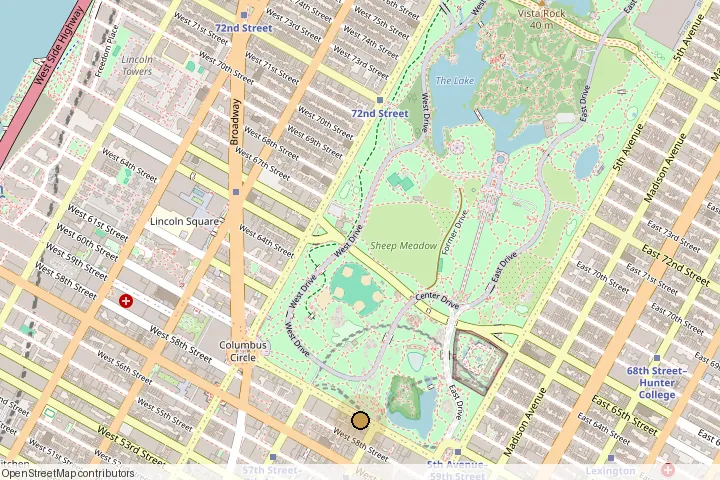
83 Walton St NWMon–Sat, 10:00–19:00 local time
Surgeons: Dr. Sergey Voskin, Dr. Alla Zemlyak, Dr. Patrick Narh-Martey
12,000+
Hair Procedures Performed
150+
Years of Combined Surgical Experience
4.9
Based on 8,500 Patient Reviews
PRP does its best work on early thinning, while the follicles can still wake up.
The first hints of loss, when follicles have shrunk but not quit for good yet.
Thinning down the part in women, caught early while density can recover.
See-through patches at the crown or hairline that still grow fine hair.
Stress, postpartum, or seasonal shedding you want to get under control.
The early stage of a receding hairline or crown, with medical therapy.
Added after a transplant to aid healing and shore up the native hair.
PRP is for catching hair loss early, not covering a bald scalp. If you still have thin or miniaturized hair to work with, the growth factors can wake those follicles back up.
Thinning caught lately, not bald spots.
Fine or shrunken hair the growth factors can revive.
You want to slow loss and build density without surgery.
Any thyroid or hormonal driver is being treated too.
Fine with coming back for upkeep visits to hold gains.
If your loss is past what PRP can handle, a transplant may be the better route. Here is what else we offer.
No strip; grafts lifted one by one, leaving only dot marks.
The strip approach, for the most grafts in one session.
Whole-scalp work built around male pattern loss.
Fills a patchy beard and jaw for good.
Bring sparse or over-plucked brows back for good.
Density without shaving, for female and diffuse loss.
PRP is one of a few non-surgical options we offer. Depending on your hair, we might pair it with one of these to slow loss and build density, or point you to a better fit for your stage.
Choose whichever office fits your day. Book your consult and your PRP upkeep visits at the Goals location closest to you, or wherever the parking is easiest.

Results vary with your skin, your starting point and how many sessions you have. Your consultation covers what is realistic for you, before you commit to anything.
Prefer to talk now?(833) 462-5769
Safety runs every case. We prep your PRP under clean, controlled conditions. Get to know our team of licensed providers.
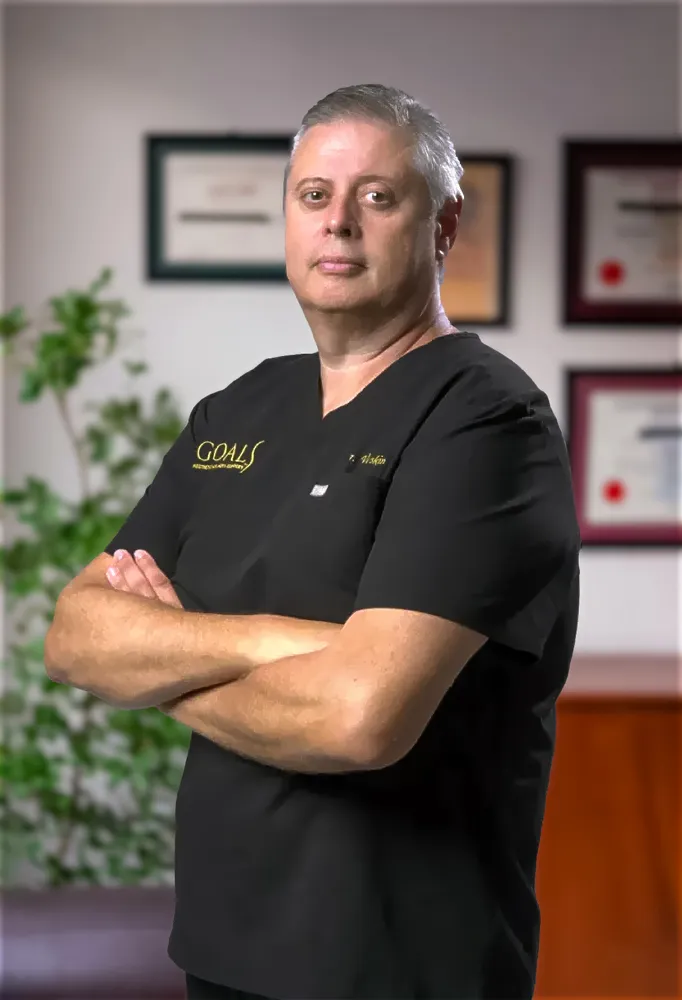
Dr. Sergey Voskin, MD
Operates at Atlanta Walton St.
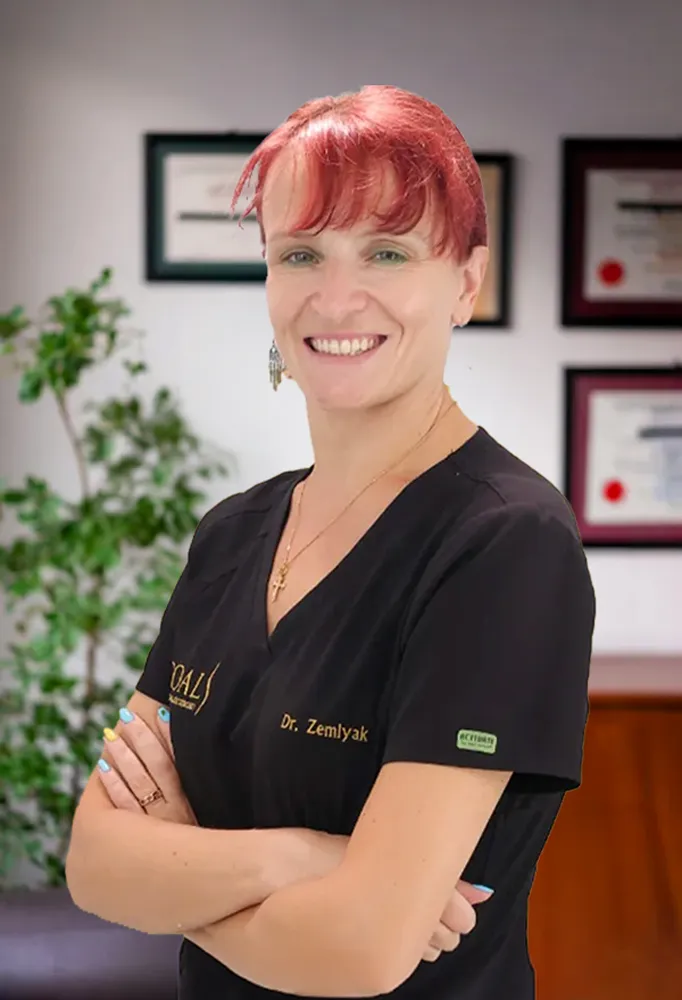
Dr. Alla Zemlyak, MD
Operates at Atlanta Walton St.
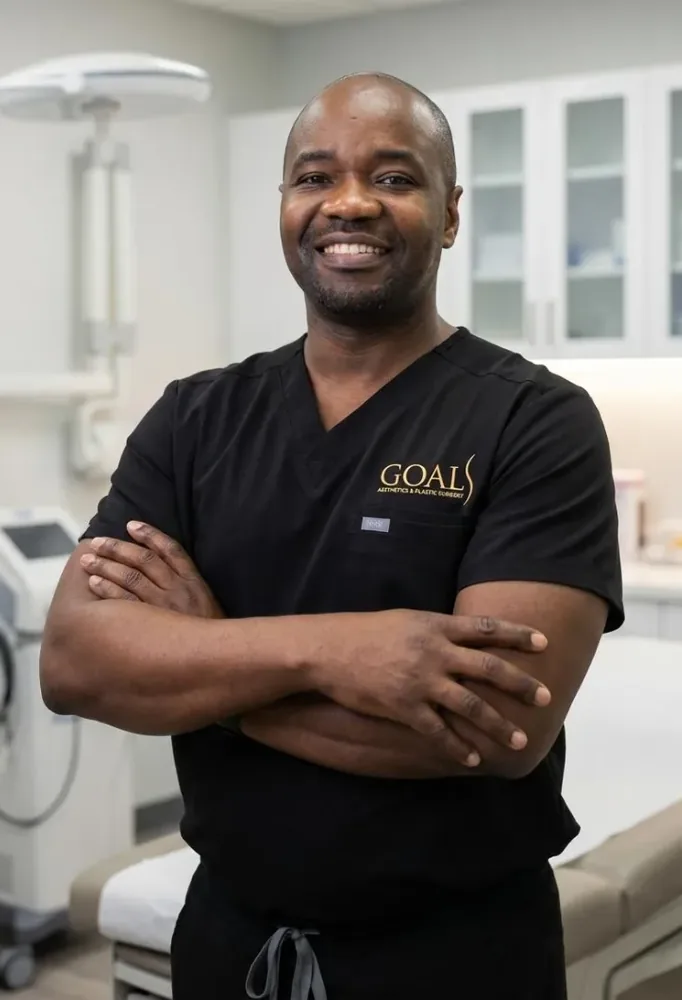
Dr. Patrick Narh-Martey, MD
Operates at Atlanta Walton St.
Credentials differ by surgeon and are listed in full on each surgeon's page.
Those cut-rate "PRP hair specials" look tempting. The catch is what they skip: no real diagnosis, weak plasma off a cheap kit, no medical oversight, and no plan for what comes after the first visit.
| Discount Spa | Goals Clinic |
|---|---|
| Discount SpaYou grab a coupon-site deal with nobody checking whether PRP even fits your kind of loss. | Goals ClinicYou start with a real consult, where a licensed provider checks your scalp and works out what is driving the loss. |
| Discount SpaNobody asks about your thyroid, your meds, or what is actually behind the shedding before they inject. | Goals ClinicWe go over your history, your meds, and any thyroid or hormonal factors before calling PRP the right move. |
| Discount SpaThe plasma comes off a bargain kit, so the platelet count may be too weak to do much of anything. | Goals ClinicYour blood is drawn and spun to a real platelet concentration, then injected along a mapped-out plan. |
| Discount SpaAn injector you just met runs the scalp fast, with no real map of where the thinning needs the most help. | Goals ClinicThe visit runs under an hour, you head back to your day, and we set your series so results actually build. |
| Discount SpaYou walk out with no follow-up plan, no clue how many sessions you need, and no one to call if it feels off. | Goals ClinicAnything feels off, you reach the same local team that treated you, and we see you in person and adjust the plan. |
| Discount SpaWhen little changes, the deal is done and nobody is tracking whether it worked or why it did not. | Goals ClinicWe track your progress with photos across the series and schedule upkeep visits so the gains hold over time. |
| Factor | Discount Med Spa | Goals U.S. Clinic |
|---|---|---|
| Total cost (real) | Cheap per visit, but weak results mean more sessions and wasted cash. | A clear quote for the whole series, so you know what it takes. |
| Diagnosis first | Usually skipped; they inject without finding the cause. | A provider pins down what is driving the loss first. |
| Plasma quality | Cheap kits can spin weak, low-platelet plasma. | Prepared to a real platelet concentration every time. |
| Who treats you | Whoever is on shift, maybe not medically trained. | Licensed providers you meet before and after visits. |
| Treatment plan | A one-off visit, no series, no map of your thinning. | A mapped series around how your hair responds. |
| Follow-up care | No tracking; you are on your own after it ends. | Progress photos and check-ins across the full series. |
| Maintenance | No plan to hold results once the deal ends. | Scheduled upkeep visits so the gains really hold. |
| Safety & rules | Spotty oversight on prep and hygiene. | Prepped and injected to U.S. clinical rules. |
Everything runs on safety here. Strict protocols, and your plasma prepared under clean, controlled conditions for a strong, consistent result.
Your blood drawn and handled under sterile clinical conditions.
Spun to a real platelet level so the growth factors do their job.
Numbing cream or cooling to make the scalp injections easy.
Your provider and care team stay reachable for questions.
Nothing foreign injected, only growth factors from your body.
The same local team runs your consult, sessions, and follow-ups.
PRP, laser, and surgery in one place, so the plan fits you.
A real medical clinic with proper oversight, not a coupon pop-up.
Licensed restoration providers you see before and after.
We only suggest PRP when it can realistically help you.
One clear quote for the series, no visit fees tacked on.
I caught my thinning early and wanted to skip surgery. Did three sessions a month apart. The shedding slowed first, then around four months my part looked less see-through. It is not magic, and you do have to keep up the upkeep, but my hair feels thicker.
Postpartum shedding freaked me out. Goals actually checked my thyroid and iron first. The PRP plus their plan settled the shedding over a few months. The injections sting for a second, but the numbing helped. Glad I went to a real clinic, not a spa.
I did PRP after my transplant to guard the hair I still had up top. Quick visits, back to work right after. No real downtime past a little tenderness. A year in, the native hair around the grafts held up better than I expected. Worth it for me.
Testimonials reflect individual experiences. Results vary by patient.
You can, but it will not tell you much. Follicles move through their growth cycle at different times, so a single exposure reaches whichever ones happen to be receptive that week and misses the rest. The opening series exists to deliver growth factors repeatedly across a window long enough to catch follicles at different stages. Judging the treatment on one visit is judging something other than the treatment.
A few things. Anti-inflammatory drugs interfere with platelet function specifically, so you will be asked about them beforehand rather than as an afterthought. Hydration matters, as does recent illness and how recently you have donated blood. None of this usually rules anyone out, but it is worth mentioning at booking rather than on the day.
It needs discussing rather than assuming either way. Blood thinners affect both the draw and how your platelets behave, and nothing prescribed should be stopped without your own physician's involvement. Bring a full list of medications and supplements to your consultation, including anything over the counter, since several common ones are relevant here.
Possibly, and the useful question is what was different. Preparation quality, injection technique, whether you completed the full series, and whether anyone established what was driving your loss all vary enormously between providers. If the previous course skipped the diagnosis, you may have been treated for something this was never going to help. Bring whatever records you have.
This is a conversation for your obstetrician rather than a website. Worth knowing that postpartum shedding frequently resolves on its own within a year, so understanding whether your loss is temporary matters before committing to an ongoing course of anything.
The same procedure, less often. Once the opening series is complete, most patients return every four to six months to hold what they have gained. Those visits are also where progress gets assessed against your earlier photographs, and where the schedule gets adjusted if your response suggests it should be.
Not everyone with thinning hair wants surgery, and plenty of people do not need it yet. If you have caught your loss early, while the follicles are still present but fading, there is a non-surgical route worth understanding before committing to anything larger.
PRP stands for platelet-rich plasma. A small sample of your blood is drawn, spun in a centrifuge to concentrate the platelets, and injected into the scalp, where the growth factors they carry act on struggling follicles. It is a short in-office visit with no surgery and essentially no downtime. What follows covers how PRP hair restoration Atlanta patients are treated at our Walton St clinic, and it starts with the biology that determines whether this will work for you at all.
Follicles do not die suddenly. They shrink. Under hormonal pressure, a follicle spends less time in its active growing phase with each cycle and more time resting. The strand it produces comes out finer, shorter, and lighter each time. That process is called miniaturisation, and it typically runs over years rather than months.
Somewhere at the end of it the follicle stops producing altogether and the opening closes over. But for the whole stretch before that, the follicle is alive, present, and underperforming rather than absent.
That window is the entire target of this treatment. PRP is an attempt to intervene while the follicle can still respond, which explains almost everything else on this page: why earlier genuinely beats later, why a fully bald area does not respond, why candidacy has to be assessed rather than assumed, and why the honest answer for advanced loss is a different treatment.
It also reframes what success looks like. A follicle nudged back toward a longer growing phase produces a thicker strand than it was producing, not a strand where none existed. The result reads as density and texture returning rather than as new coverage appearing, and patients who understand that in advance are the ones who end up satisfied.
Platelets are best known for clotting, but that is half their function. When tissue is damaged anywhere in the body, platelets arrive first and release signalling proteins that direct repair.
Several of those have a plausible role in the scalp. Platelet-derived growth factor stimulates cell division. Vascular endothelial growth factor promotes the formation of new blood vessels, which matters because a follicle is fed entirely by the vessels around it. Insulin-like growth factor influences the hair cycle directly and is associated with follicles staying in their growing phase longer.
Concentrating those platelets and delivering them at follicle level is the mechanism: improve the blood supply, prompt the follicle out of its resting phase, and extend the active phase while it is there.
The clearest candidates have early to moderate thinning where hair is getting finer and sparser but has not disappeared: a widening part, a see-through crown, diffuse shedding, softening edges.
Men and women both. It is particularly useful for early female-pattern thinning, and for postpartum and stress-related shedding, where the follicles are usually intact and the hair cycle has been disrupted rather than the follicle destroyed.
Where it does not work is skin that is already fully bald, because there is nothing left to act on, and scarring forms of hair loss where the follicle has been replaced by scar tissue.
If your loss has moved past the window, we will say so and talk through FUE or FUT instead. We only recommend this when it can do something.
This is not a single treatment, and any clinic presenting it as one is misleading you.
The standard approach opens with a series, generally three to four sessions spaced roughly four to six weeks apart. The spacing is not arbitrary: it delivers growth factors repeatedly across a period long enough to influence follicles moving through different points in their cycle. A single exposure reaches whichever follicles happen to be receptive that week.
After the opening course, most patients need a session every four to six months to hold what they have gained. That is because the treatment supports your existing hair cycle rather than permanently changing it, and the effect fades gradually if you stop entirely.
We are upfront about that maintenance before you start, because the commitment is part of the decision. Someone unwilling to return twice a year will see the gains recede, and it is better to know that at consultation than to discover it eighteen months later.
Short and undramatic. It opens with a small blood draw, the same as any routine lab test. The sample goes into a centrifuge, which separates and concentrates the platelet-rich fraction while the scalp is numbed with cream or cooling.
The plasma is then injected into the thinning areas through fine needles, following a mapped plan of where your hair needs most support rather than distributed at random. Start to finish the visit generally runs under an hour.
Most people describe it as mildly uncomfortable rather than painful. The injections sting briefly, which the numbing addresses. Afterward you may have mild tenderness, slight swelling, or a small bruise at an injection point, usually settling within a day or two. No bandages, no shaving, no downtime, and most patients go straight back to work.
Reduced shedding is usually the first thing patients notice, often within the first few weeks. That is a change in loss rather than a gain, and it arrives before anything visible.
Across roughly three to six months, as the series builds, hair starts to look and feel fuller as finer strands firm up. Density follows the hair cycle rather than the treatment schedule, which is why it lags behind the sessions.
Change at this pace is invisible to daily observation. Photographs from the same spot in the same light, taken monthly, are more reliable than memory, and they matter more here than with faster treatments. Our before & after gallery shows what realistic outcomes look like.
The patients who get most out of this start early, finish the full opening series rather than stopping after two visits, and keep up maintenance. Those three things account for most of the difference between people who are pleased and people who are not.
Quality swings more widely with this treatment than most patients realise, and the variation is invisible to you.
Preparation is the first variable. How the blood is drawn, how fast and how long it is spun, and whether the correct fraction is separated cleanly all determine how concentrated the plasma actually is. A poorly prepared sample delivers something closer to ordinary blood with extra steps. You cannot look at a syringe and assess it.
Injection technique is the second. Depth, distribution, and following a mapped plan across the treatment area rather than working approximately all affect whether the whole region responds or only parts of it.
And assessment is the third. A discount visit that skips the diagnosis entirely may be treating you for something this was never going to help.
A cut-rate per-visit price frequently means weaker plasma and more sessions to reach anywhere, which is not the saving it appears to be. A proper clinic establishes what is driving your loss first, prepares to a real platelet concentration, injects to a plan, and tracks progress across the series. You can read our provider profiles before you book.
This distinction costs people months, and it is worth stating separately.
A real consultation reads the pattern and timing of your loss alongside your medical history, and sometimes bloodwork, before calling this the right move. Sudden or patchy loss in particular deserves medical investigation before cosmetic treatment.
It also means the treatment works best when whatever is causing the loss is being handled in parallel rather than ignored.
This is rarely at its best alone. It pairs naturally with medical therapy, and it is commonly used around a transplant, both to support healing and to shore up the native hair surrounding new grafts, which remains vulnerable to whatever thinned it originally.
On the non-surgical side it runs alongside low-level laser therapy and mesotherapy as part of a wider plan. Each acts on the follicle differently, so combining them is complementary rather than duplicative.
Against surgery it is a tool for a different stage. A transplant relocates follicles for permanent coverage and answers advanced loss. This adds no hair and strengthens what remains, answering early loss and protecting what you have. Many people use both across a decade. Our Atlanta hair restoration hub covers the full range.
Cost depends mainly on how many sessions your plan calls for, since this is a series rather than a single treatment. We do not publish a flat figure, because the plan depends on your hair and how it responds. If you have been searching PRP hair restoration Atlanta, the honest answer on cost only exists after a provider has examined your scalp and confirmed this is even the right fit.
You get a clear quote for the full course up front, so you know what the result actually takes rather than discovering it session by session, and monthly financing is available to spread the series out.
It starts with a consultation, in person at our Walton St clinic or online to begin. We examine your thinning, work out what is driving it, and give you a straight answer on whether this fits or whether something else suits you better. When it is the right move, the full series and the maintenance schedule are laid out in advance so nothing arrives as a surprise.
For the right person, caught early enough, this is a low-risk way to slow loss and thicken what you have using nothing but your own blood. It will not rebuild a bald scalp and it does ask for upkeep. But for someone wanting to get ahead of thinning without surgery, or to protect a transplant they have already had, it earns its place.
Being straight about the evidence: the mechanism is well grounded and the safety profile is strong, since the material is your own blood and carries no rejection risk. The clinical research is still maturing, and outcomes differ between people. Anyone quoting you a precise success percentage is going beyond what the literature supports.
Hair loss has many drivers: genetics, hormones, thyroid dysfunction, iron deficiency, stress, postpartum change, and various medications. Some respond well to this treatment. Some need a different approach. And some need the underlying issue addressed before any scalp therapy will hold, because treating the surface while the cause continues is a way of spending money without changing anything.
About PRP Hair Restoration
PRP Hair Restoration at other Goals clinics
First PRP consult, or weighing it against laser therapy or a transplant? Either way, our team gives you an honest read on candidacy and maps a plan around your goals.
Prefer to talk now? (833) 462-5769
Free · No obligation
Tell us how to reach you. A patient coordinator calls you back — usually the same day.