Early Thinning
The first signs of loss, where a nutrient boost can strengthen weak roots.
Feed thinning hair at the root with small nutrient injections of vitamins, minerals, and amino acids. Non-surgical, barely any downtime, at our Atlanta clinic.
Goals Aesthetics & Plastic Surgery – Atlanta
83 Walton St NWMon–Sat, 10:00–19:00 local time
Surgeons: Dr. Sergey Voskin, Dr. Alla Zemlyak, Dr. Patrick Narh-Martey
12,000+
Hair Procedures Performed
150+
Years of Combined Surgical Experience
4.9
Based on 8,500 Patient Reviews
Mesotherapy feeds the follicle directly, so it suits early thinning and weak hair.
The first signs of loss, where a nutrient boost can strengthen weak roots.
Hair that has thinned in caliber, fed vitamins and amino acids to grow back.
Shedding tied to diet or deficiency, given the nutrients the roots lack.
Stress or seasonal shedding you want steadied while the scalp recovers.
Lackluster, weak strands fed for better texture and real strength.
Used after a transplant to feed the scalp and the native hair round it.
Mesotherapy is for early thinning and undernourished hair, not for covering a bald scalp. It feeds follicles that are still alive. We check for allergies to the mix first.
Thinning noticed recently, not bald areas.
Fine, dull, or undernourished hair that needs feeding.
You want a non-surgical way to feed and support your hair.
No sensitivity to the vitamins in the blend.
Able to keep up a course of regular sessions.
If your loss is past what a nutrient therapy can handle, a transplant may fit better. Here is what else we do.
No-strip method that lifts each graft on its own, leaving dot marks.
Strip method that yields the most grafts in one sitting.
Whole-scalp work built around male pattern loss.
Density without shaving, for female and diffuse loss.
Rebuild thin or over-plucked brows that stay for life.
Fills a patchy or thin beard and jaw for good.
Mesotherapy is one of several non-surgical options here. Depending on your hair we might pair it with one of these to slow the loss and build density, or point you at a better fit.
Pick whichever office is easiest for you. Book your consult and your mesotherapy sessions at the Goals location that suits your commute or where parking is simple.
Results vary with your skin, your starting point and how many sessions you have. Your consultation covers what is realistic for you, before you commit to anything.
Prefer to talk now?(833) 462-5769
Safety leads every case. We match the blend to your scalp and track your progress. Get to know our team of licensed providers.
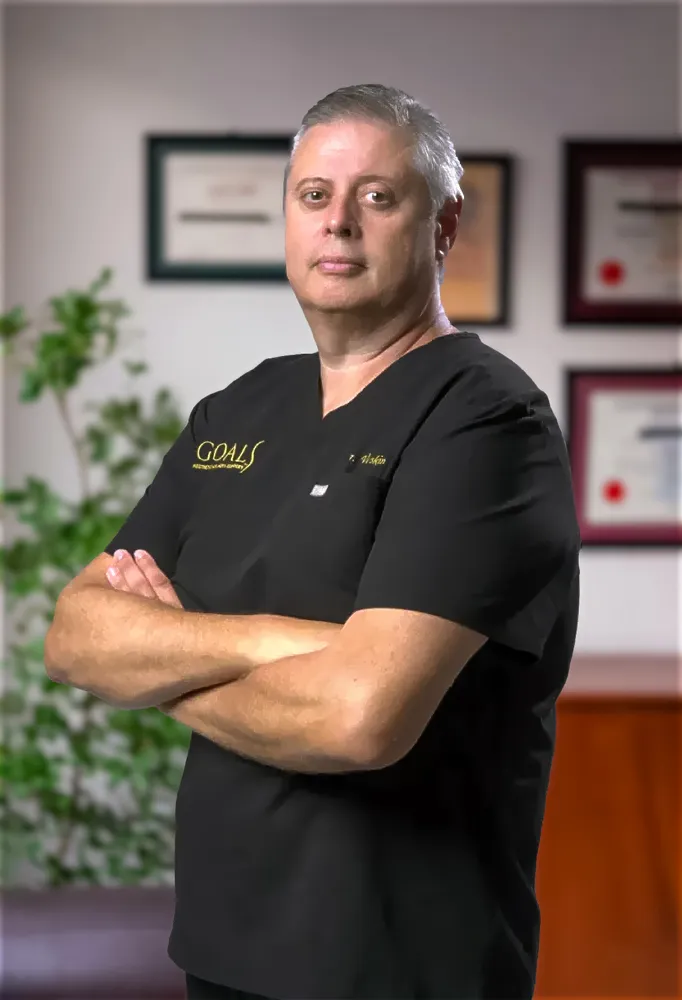
Dr. Sergey Voskin, MD
Operates at Atlanta Walton St.
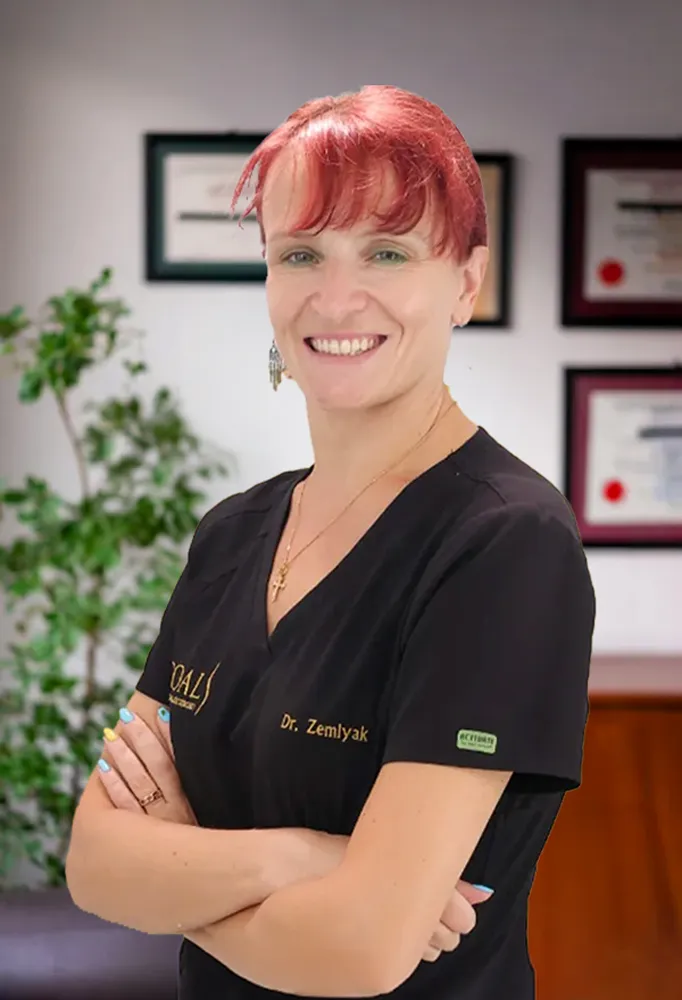
Dr. Alla Zemlyak, MD
Operates at Atlanta Walton St.
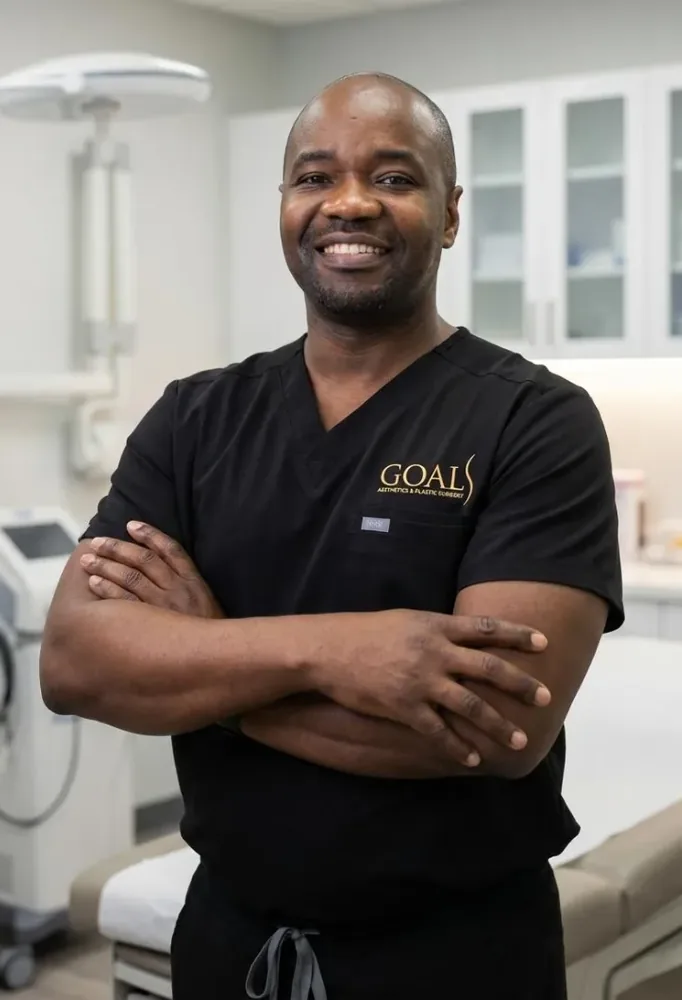
Dr. Patrick Narh-Martey, MD
Operates at Atlanta Walton St.
Credentials differ by surgeon and are listed in full on each surgeon's page.
Those cheap "meso hair specials" look tempting. The catch is what they leave out: no diagnosis, an unknown cocktail, no allergy check, sterility nobody can vouch for.
| Discount Spa | Goals Clinic |
|---|---|
| Discount SpaYou book a coupon deal, with nobody checking whether meso fits your kind of loss. | Goals ClinicYou start with a real consult. A licensed provider examines your scalp and works out what is driving the loss. |
| Discount SpaNobody asks about allergies, medications, or what is driving the shedding first. | Goals ClinicWe go through your history, allergies, and medications before deciding meso is right for you. |
| Discount SpaYou have no idea what is in the cocktail, where it came from, or whether the dose makes sense. | Goals ClinicThe blend is a known, quality formula, injected under sterile conditions at a sensible dose. |
| Discount SpaInjections into the scalp with unclear sterility, a real infection risk when standards are loose. | Goals ClinicThe visit is quick and you head back to your day. We book the course so results actually build. |
| Discount SpaYou leave with no follow-up, no idea how many sessions you need, and nobody to call if you react. | Goals ClinicAnything feels off and you reach the same team that treated you. We see you in person and adjust. |
| Discount SpaWhen little changes, the deal is over and nobody is tracking whether it worked or why it did not. | Goals ClinicWe track your progress with photos across the course and fit the therapy into your wider plan. |
| Factor | Discount Med Spa | Goals U.S. Clinic |
|---|---|---|
| Total cost (real) | Cheap per visit, wasted if the mix or plan does nothing. | A clear quote for a full course, so you know what results take. |
| Diagnosis first | Often skipped. They inject without finding the real cause. | A provider finds what is driving the loss before treating. |
| What is in the mix | An unknown cocktail with no allergy check. | A known, quality blend matched to your scalp. |
| Who treats you | Whoever is on shift; may not be medically trained. | Licensed providers you see before and after each visit. |
| Sterility | Loose standards, a real infection risk when injecting. | Sterile clinical conditions for every injection. |
| Follow-up care | No tracking. You are on your own after the deal. | Progress photos and check-ins across the whole course. |
| In a plan | A one-off special, disconnected from any real care. | Folded into your wider hair-loss plan. |
| Safety & rules | Varies. Little oversight on mix and hygiene. | Prepared and injected to U.S. clinical rules. |
Safety drives how we work. We check your allergies, use a known quality blend, and inject under sterile clinical conditions every session.
We check for sensitivity to the blend before treating.
A known, quality nutrient blend. Not a mystery cocktail.
Tiny needles for quick, low-discomfort microinjections.
A licensed provider sets your blend and schedule.
Every session done under clean, sterile conditions.
One local team runs your consult, sessions, and every check after.
Meso, PRP, laser, and surgery under one roof, fit to you.
A real medical clinic, not a coupon pop-up, with proper oversight.
Licensed hair restoration providers you see before and after.
We recommend mesotherapy only when it can realistically help.
One clear quote for the course, no tacked-on visit fees.
My hair went thin and dull after a rough year and worse eating. Goals worked out what was going on first, then started the injections. By the fourth session I was shedding less and it felt stronger. Quick, barely stings. Nice to feed the actual problem.
Almost booked a cheap meso deal at a spa, went to Goals instead. Glad I did. They checked me for allergies to the blend, which the coupon place never once mentioned. Small painless injections, no real downtime. My part looks less thin after a course.
Did mesotherapy alongside PRP when early thinning started worrying me. They were honest that it is a support and not a cure, and paired the two. Quick sessions, back to work right after. Months in, thicker hair and the shedding calmed right down.
Testimonials reflect individual experiences. Results vary by patient.
You can, and for a diagnosed deficiency you probably should. The difference is what reaches the follicle. Anything swallowed is distributed by your body's own priorities, which rank hair well below the organs that keep you alive, so a supplement can raise your blood levels without meaningfully changing what arrives at the scalp. Injecting removes that loss. If a blood test shows you are genuinely deficient, the sensible answer is usually both.
Every medication and supplement you take, including over-the-counter ones, plus any allergy or sensitivity you have ever had to a drug, a topical product, or a food. Also mention recent illness, pregnancy or breastfeeding, and any skin condition affecting your scalp. The blend gets matched to you and screened against your history, and that only works if the history is complete.
It depends on what is happening at the time. Active inflammation, broken skin, or a flare means waiting until things settle, since injecting into irritated skin is not appropriate. A scalp that is simply prone to sensitivity is usually workable, and it may change what goes into your blend. This is worth raising early rather than on the day.
Only briefly around each session. You will be asked to avoid washing, heavy sweating, and sun for a short window afterward. Come with a clean, dry scalp and no heavy product, since residue and oils sit between the needle and the skin. Beyond that, colour, heat styling, and your normal routine continue as usual between sessions.
Reduced shedding comes first, and it is a change in loss rather than a visible gain, so it is easy to miss unless you are watching for it. Photographs from the same spot in the same light each month are more reliable than memory. Around session four or five is a fair point to review honestly, and if nothing has shifted at all, the more useful question becomes whether something other than undernourishment is driving your loss.
Not forever, but the benefit is maintained rather than permanent. Most people move to occasional maintenance every few months once the opening course is finished, rather than stopping outright. If you stop entirely the gains fade gradually, which is worth factoring into the decision at the start rather than discovering later.
Hair goes thin, dull, or brittle after a stressful stretch, a crash diet, or simply years of wear, and often the reason is straightforward: the follicles are not receiving what they need to build a strong strand.
Hair mesotherapy addresses that directly, placing a nutrient blend into the scalp where the follicles sit. It is non-surgical, injection-based, and it has become a common choice for early thinning and undernourished hair. This page covers mesotherapy hair restoration Atlanta patients receive at our Walton St clinic, and it is more candid than most about two things: what is actually in the syringe, and what the evidence does and does not support.
This is the question that matters most with this treatment, and the one a bargain provider will not answer clearly. The injections deliver a blend into the mesoderm, the middle layer of skin, which on your scalp sits right around the hair roots. A typical hair formula draws on three groups of ingredients, each doing a different job.
Amino acids supply the raw material for the strand itself, since hair is largely protein and a follicle short on building blocks produces something finer than it otherwise would. Vitamins, particularly biotin and the B-complex, support the metabolic activity of a follicle that is cycling frequently and working hard. Minerals and trace elements, zinc and iron among them, cover the quiet deficiencies that limit growth without ever presenting as illness. Some formulas add peptides or other actives aimed at circulation and follicle health.
What varies between patients is emphasis. Thinning has different drivers, and what a nutrient-starved follicle needs is not identical from one person to the next. A considered course matches the blend to your scalp after an assessment rather than reaching for the same mix for everyone. Knowing exactly what is going in, and why, is most of what separates a clinical treatment from a cocktail of unknown contents bought cheaply. You cannot inspect a syringe and tell what is in it.
Here is the point that genuinely distinguishes this from other injectable scalp treatments, and the one a discount pop-up will skate past.Because the blend contains ingredients from outside your body, there is a small chance of sensitivity or an allergic reaction to something in the mix. This is not a risk that PRP carries, since that uses your own blood and there is nothing foreign to react to. The reaction risk is uncommon. It is also real, and it is entirely manageable provided two things happen: your allergy history is reviewed properly beforehand, and the formula being used is known rather than proprietary and unexplained.
That combination is exactly what gets skipped when the treatment is bought as a special offer. A provider who cannot tell you what is in the blend cannot screen you against it, and injecting an unknown mixture into someone whose allergy history nobody asked about is a preventable risk rather than an unlucky one. There is a sterility dimension too. These are injections into skin, and loose standards create infection risk regardless of what is in the syringe. Both are reasons to be specific about where you have this done rather than treating it as a commodity.
The argument for injecting rather than applying or swallowing comes down to where the material ends up. A topical has to penetrate the skin barrier and hope enough arrives at the depth where follicles sit. Anything taken orally goes through digestion and is then distributed according to your body’s own priorities, which do not place hair near the top of the list. Placing the blend into the scalp itself removes both of those losses.
Beyond the nutrients themselves, the injections stimulate local circulation, which means more oxygen and nourishment reaching the roots, and the aim is to encourage underperforming follicles back toward a fuller growth phase. What none of this does is create follicles. It supports the ones still present and struggling, which is why a fully bald area does not respond and why starting earlier gives the treatment more to work with. If your loss has moved past that point, we will say so and talk through a transplant instead.
This deserves stating plainly rather than buried, because it should shape how you use the treatment.
The research base for hair mesotherapy is thinner than for several other options. Minoxidil, finasteride, platelet-rich plasma, and low-level laser therapy all have more published work behind them for hair specifically. The underlying logic of delivering nutrients to the follicle is sound, and the individual ingredients are well understood, but the body of clinical trials measuring hair outcomes from mesotherapy is more modest.
That does not make it useless. It means it belongs in a plan as a supportive nourishing therapy rather than being presented as a guaranteed answer, and anyone selling it as the latter is going beyond what the literature supports. It also means candidacy matters more, not less. Where the thinning has a genuine nutritional or stress-related component, feeding the follicle directly makes sense. Where the driver is purely hormonal and advanced, something else is likely the better first move.
The clearest candidates are in the earlier stages of thinning, where follicles are weak but alive, and it fits particularly well where the loss has a nutritional or stress-related component.
That includes fine or weakening hair, shedding tied to diet, deficiency, or a difficult period, seasonal shedding, and a scalp that simply needs feeding. It is also used after a transplant to support the scalp and the native hair around new grafts.
Shedding that arrived suddenly or in distinct patches deserves medical investigation before cosmetic treatment, since that pattern often points at something other than ordinary thinning.
This is a course rather than a single treatment. Each session is short, generally around twenty to thirty minutes, with injections distributed across the thinning area using very fine needles. Most people feel small pinches and little else. A typical opening course runs somewhere in the region of eight to twelve sessions spaced a few weeks apart, followed by occasional maintenance every few months to hold the benefit.
Early changes, meaning reduced shedding and better texture, often appear after the first several sessions. Genuine thickening and fuller coverage take longer, building across the course as follicles respond to steady feeding. The effect accumulates rather than arriving at any single visit, which makes finishing the course the active ingredient. People who stop at session three almost always conclude it did nothing, and for them that is accurate, because they never ran the treatment. Our before & after gallery shows what a completed course produces.
There is very little downtime, which is much of the appeal. You may have mild redness, tenderness, or small bumps at the injection points for a day or so, then you are back to normal.
Your provider will give specific guidance, generally around avoiding hair washing, heavy sweating, and sun for a short window afterward while the scalp settles. Most people return to their usual routine immediately or within a day. Fine needles and shallow injections make this considerably gentler than anything surgical, and there is no stretch where you look like you have had something done, which is why patients frequently schedule sessions around ordinary working weeks without adjusting anything.
This works best as one component of a plan. It combines naturally with PRP therapy, since nourishing the follicle and stimulating it act along different lines, and with low-level laser therapy. It also pairs with medical treatment, and is used after a transplant to feed the scalp and support the native hair surrounding the grafts.
Against surgery it is a tool for a different stage rather than a competitor. A transplant relocates follicles and delivers permanent coverage, which answers advanced loss. This adds no hair and feeds what is still there, which answers early thinning and maintenance. Many people use both across time: nourishing therapy early, FUE later if the loss progresses, then scalp support again afterward. Our Atlanta hair restoration hub covers the full range.
Where you have this done matters more than patients assume, because the three things that determine whether it works are all invisible to you. What is in the blend. Whether your allergy history was properly reviewed against it. And whether the injections happened under conditions where sterility can be vouched for.
A coupon special or pop-up med spa may skip the diagnosis, use an unnamed cocktail, gloss over allergies, and work to standards nobody can confirm. A proper clinic establishes what is driving your loss, uses a known blend matched to your scalp, screens your allergy history against its contents, injects under sterile conditions, and tracks progress across the course.
A good provider will also tell you plainly when this is a support rather than the answer for your stage of loss. You can read our provider profiles before you book.
Cost depends on your plan and how many sessions it calls for, since this is a course rather than a single treatment. We do not publish a flat figure, because the plan depends on your scalp and your goals, and a cheap deal advertised online usually means an unknown mixture with no guidance behind it. If you have been searching mesotherapy hair restoration Atlanta, the honest answer on cost, and on whether it is even the right fit, comes after a provider has examined your scalp.
You get a clear quote for a real course up front, and monthly financing is available if spreading it out suits you better.
It starts with a consultation, in person at our Walton St clinic or online to begin. We examine your scalp and thinning, go through your history and any allergies, work out what is driving the loss, and give you a straight answer on whether this fits or whether something else suits you better. When it is not the right move, you will hear that too. For the right person, particularly someone with early thinning, weak or undernourished hair, or shedding tied to stress or diet, this is a worthwhile support. It is gentle, quick, and low-downtime. It will not rebuild a bald scalp, the evidence is more modest than for some alternatives, and it works best inside a plan rather than as a standalone answer. On those terms, it earns its place.
One useful thing to understand: if a nutritional deficiency is genuinely driving your loss, that deficiency is worth identifying and correcting systemically as well, not only treating at the scalp. Bloodwork sometimes belongs alongside this treatment rather than instead of it, and a consultation that establishes the cause is what makes that call.
About Mesotherapy Hair Restoration
Mesotherapy Hair Restoration at other Goals clinics
Booking your first mesotherapy session, or weighing it against PRP, laser, or a transplant? Our team will check your candidacy honestly and build a plan around your goals.
Prefer to talk now? (833) 462-5769
Free · No obligation
Tell us how to reach you. A patient coordinator calls you back — usually the same day.