Widening Part
Thinning that spreads out from the part, the classic female pattern (Ludwig).
Density back into a thinning part or crown in one day, no head shave needed. Done under local anesthesia by licensed surgeons here in Atlanta.
From $5,000

Goals Aesthetics & Plastic Surgery – Atlanta
83 Walton St NWMon–Sat, 10:00–19:00 local time
Surgeons: Dr. Sergey Voskin, Dr. Alla Zemlyak, Dr. Patrick Narh-Martey
12,000+
Hair Procedures Performed
150+
Years of Combined Surgical Experience
4.9
Based on 8,500 Patient Reviews
The hair loss women really deal with, from a widening part to traction damage.
Thinning that spreads out from the part, the classic female pattern (Ludwig).
See-through patches at the crown while the front hairline mostly holds.
Loss at the hairline and temples from years of tight braids, weaves, or extensions.
Thin temples and edges that grafts can rebuild for a fuller frame.
Over-plucked or sparse brows filled with fine grafts set to your angle.
Bare patches from scars or past surgery that stable grafts can fill in.
Not every woman with thinning is a surgical candidate, and we will be honest. It comes down to whether the back and sides stay dense enough to move hair from. A scalp check settles it.
Part, crown, or edge loss, not the whole scalp.
The back and sides are still dense enough to harvest.
You want density that lasts, not fibers or a daily routine.
Any hormonal or medical trigger is handled first.
You want a fuller look, not your teenage density back.
Pairing your transplant with something else, or comparing routes? Here is the rest of what we do for hair.
About Women's Hair Transplant
Women's Hair Transplant at other Goals clinics
For a lot of women, treatment starts here. These suit diffuse thinning or shedding, and anyone wanting to slow loss and build density without surgery. They also pair well with a transplant later.
Choose whichever office fits your day. Consult, pre-op clearance, and post-op checks can all run at the Goals location closest to you, or wherever the parking is easiest.
Look at the before and after on real Atlanta patients.
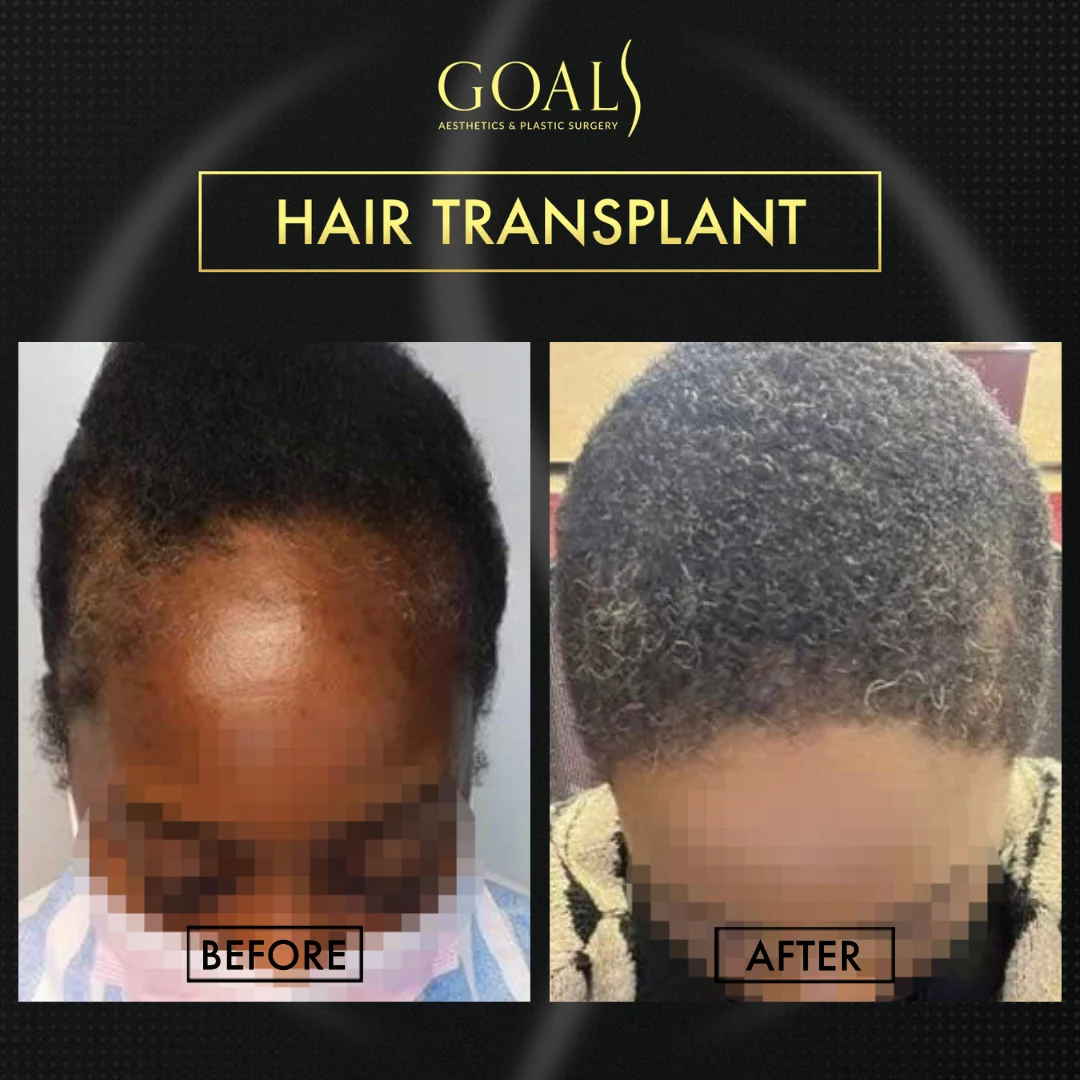
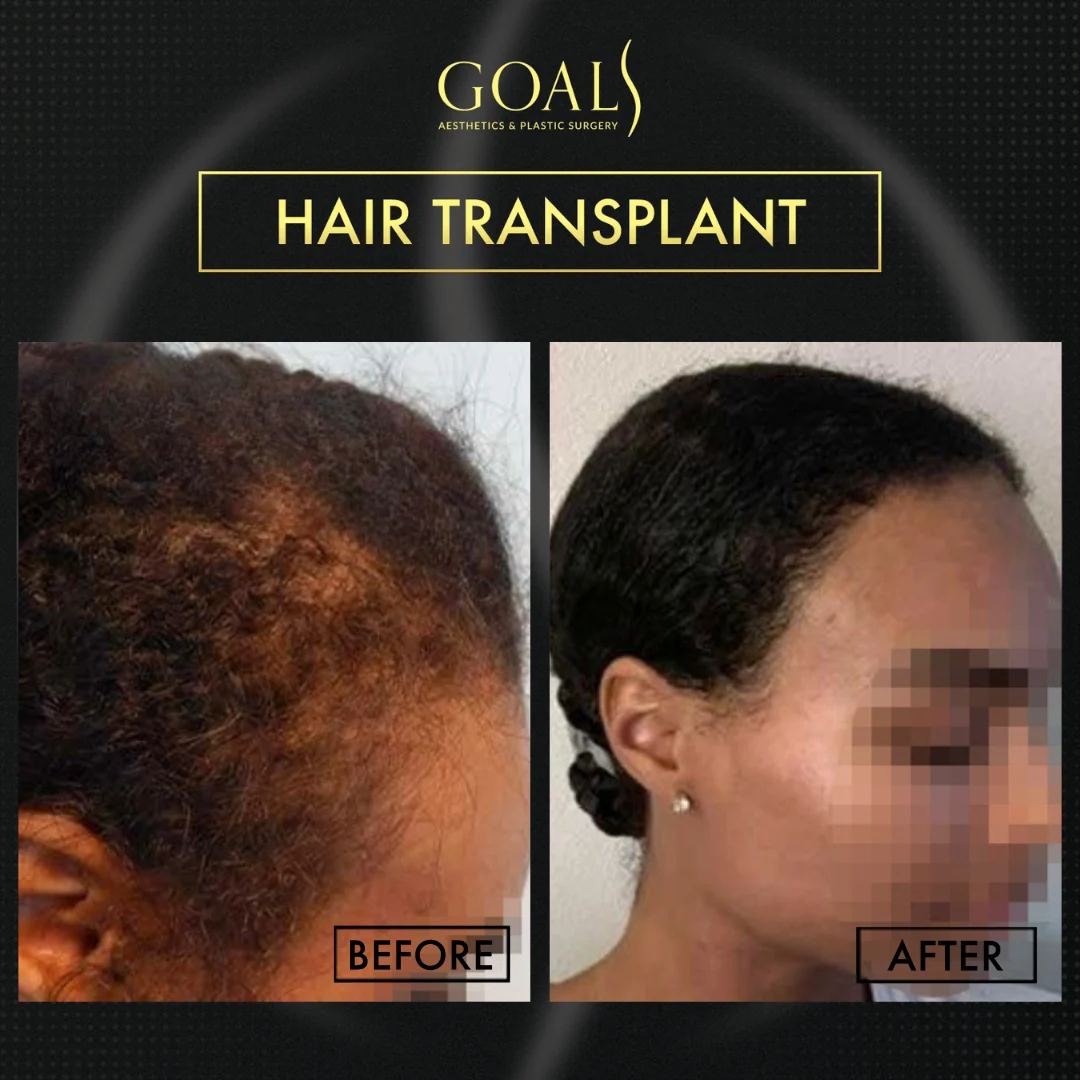
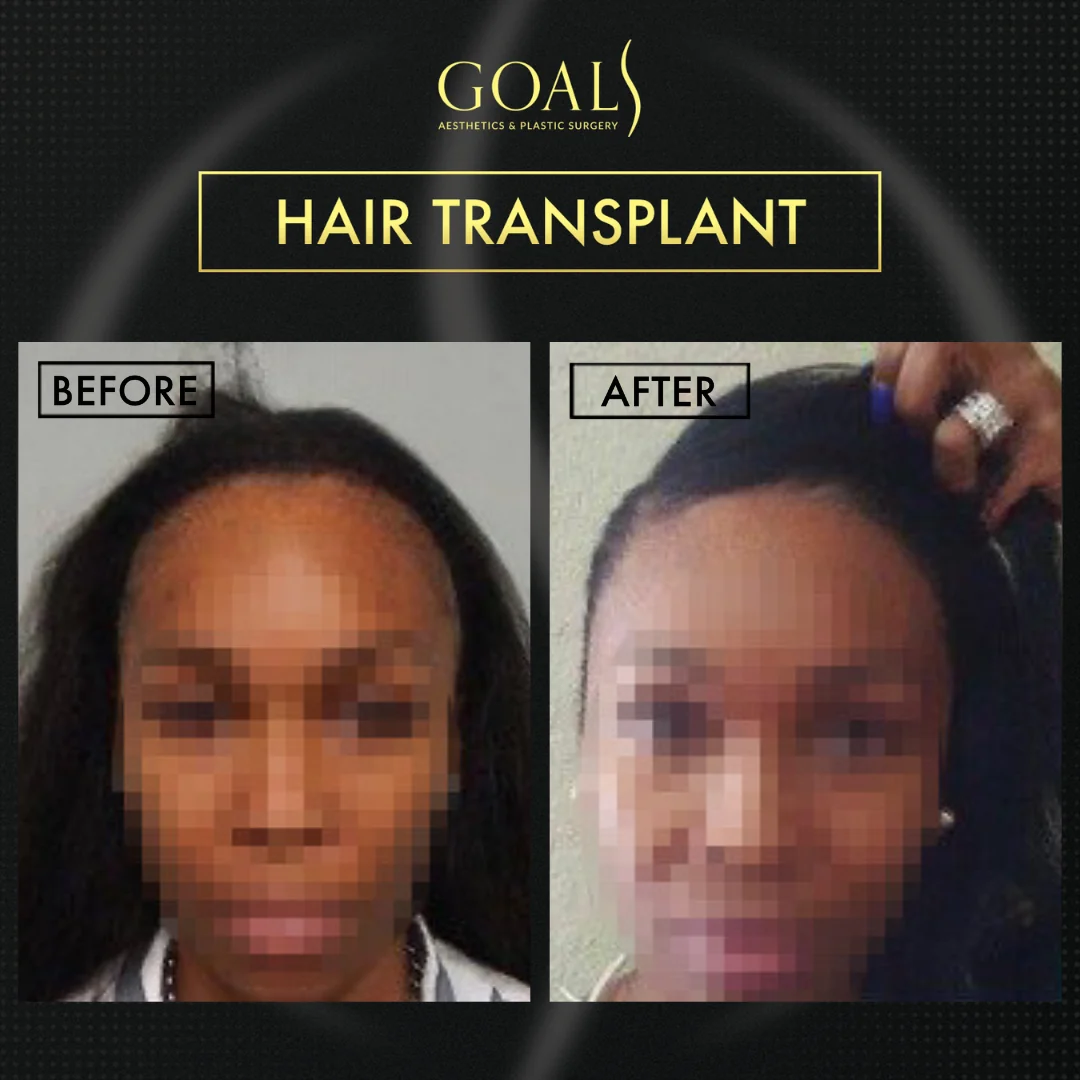
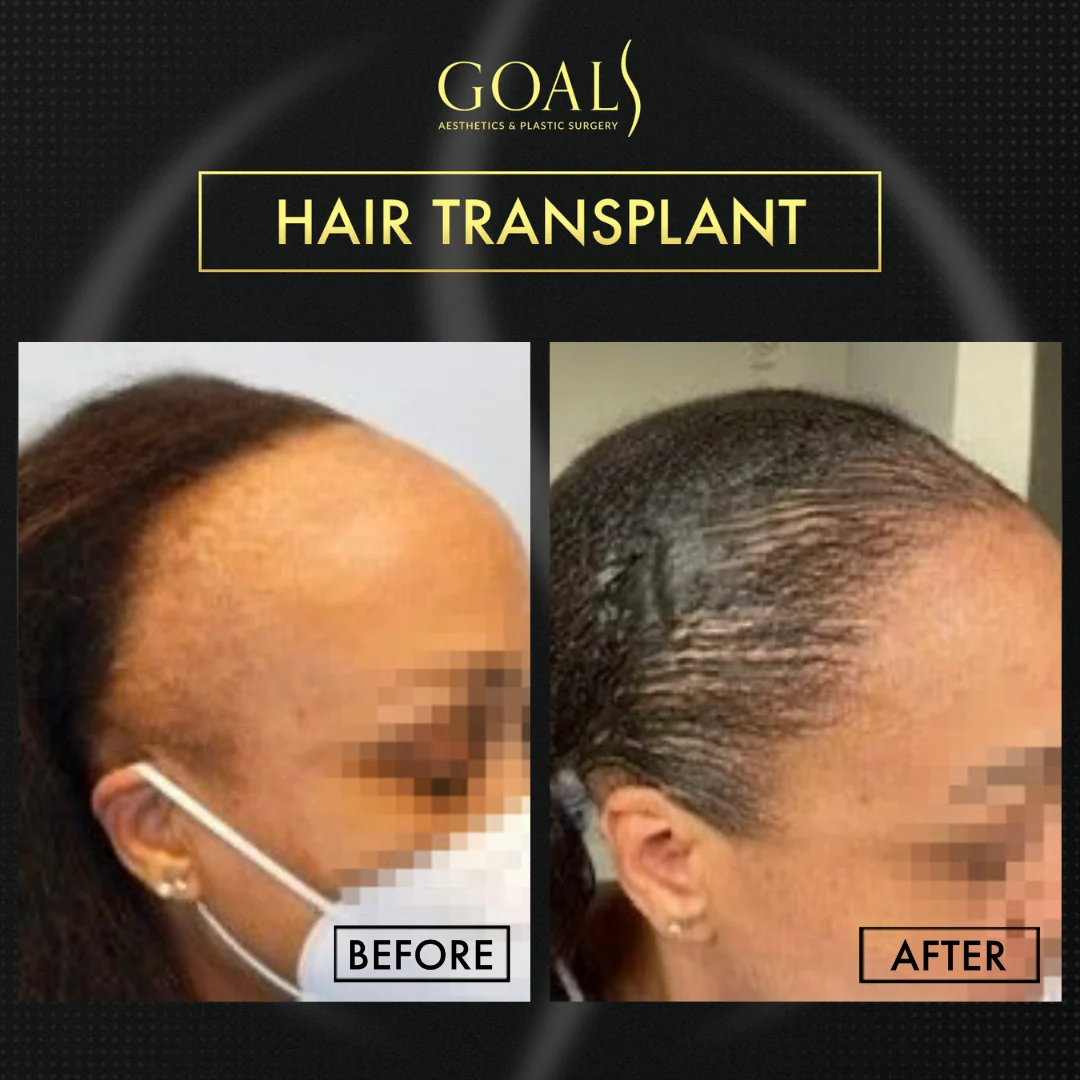
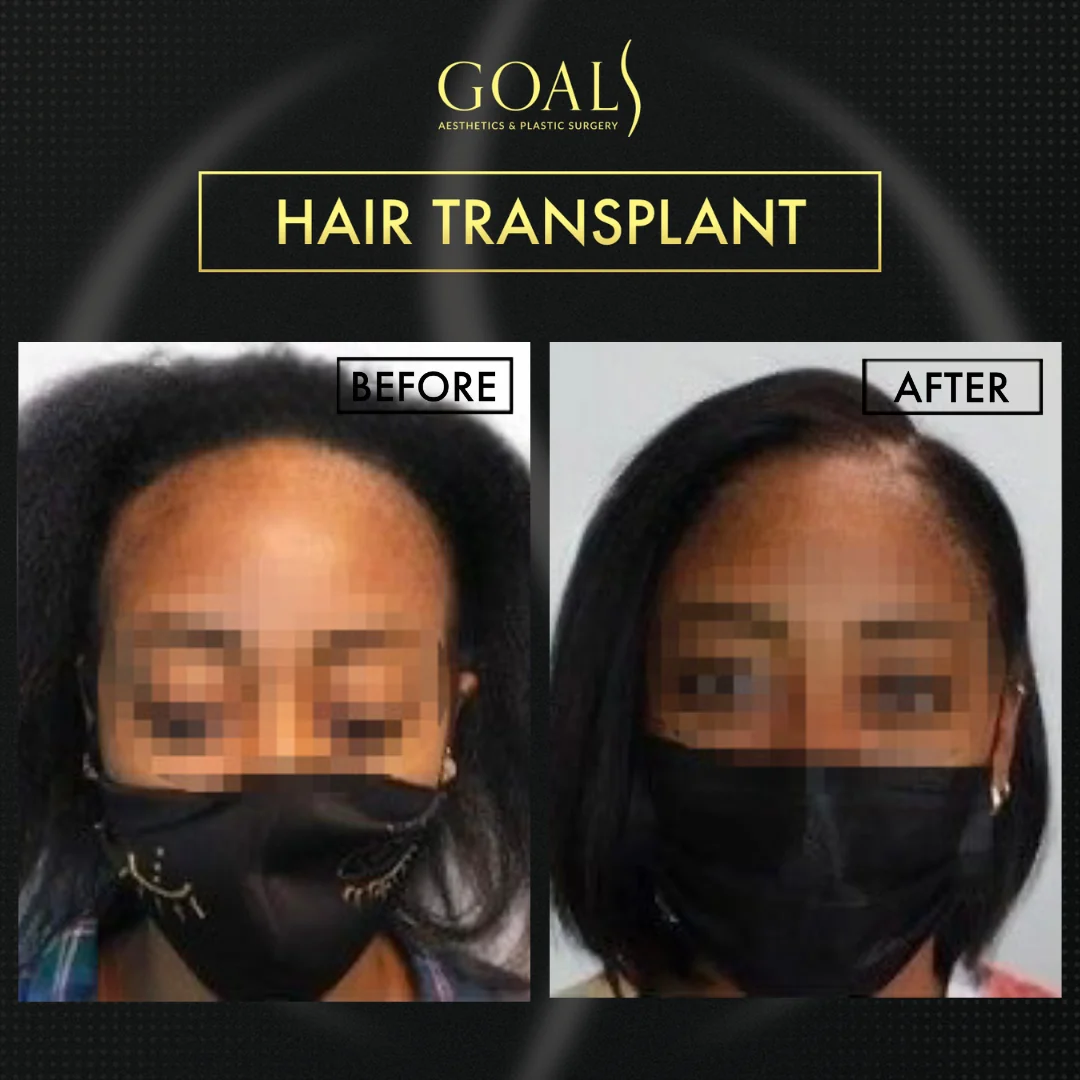
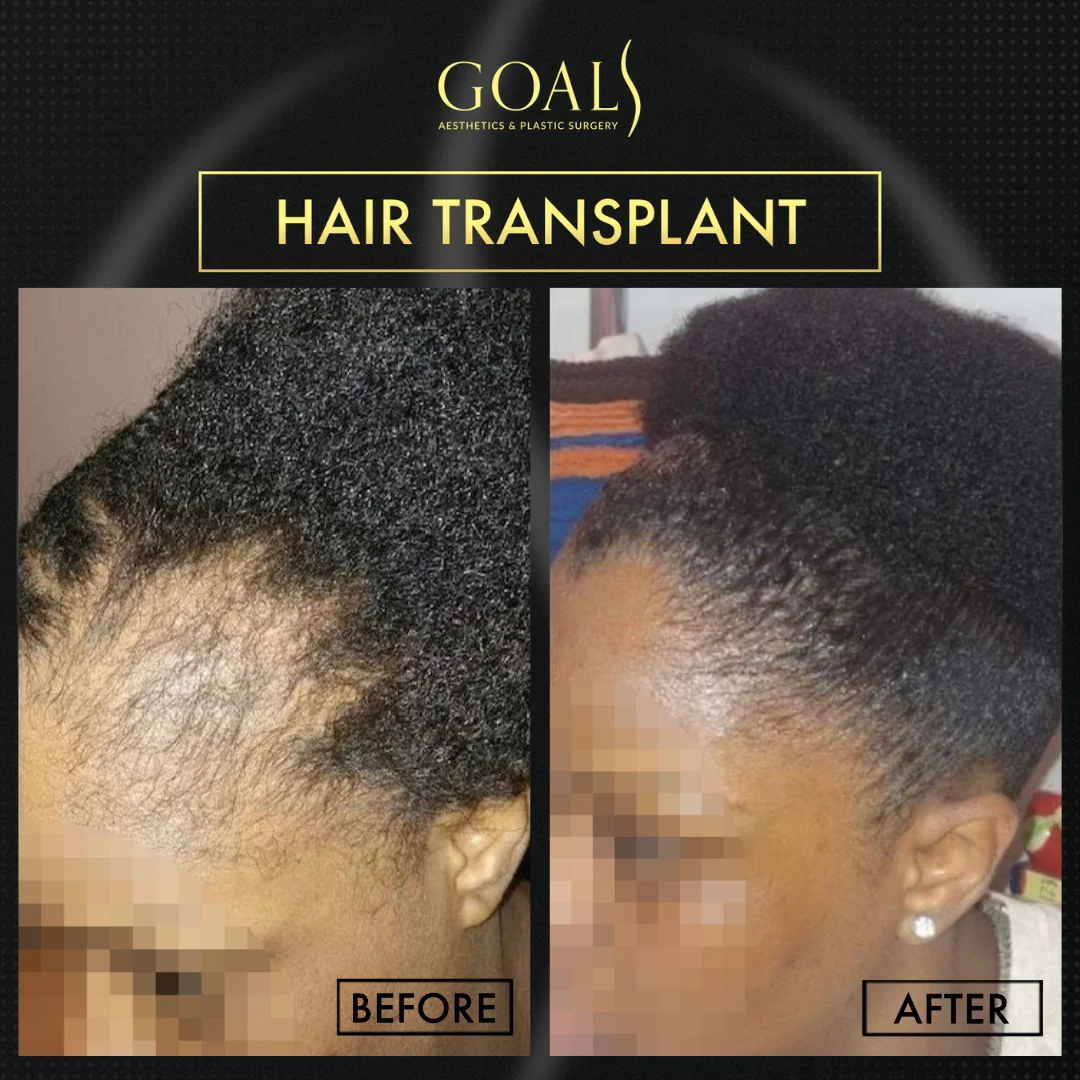
Real patients, published with written consent. Photographs are not retouched or AI-generated. Individual results vary — these images show outcomes for these patients and are not a guarantee of your own.
Work it out
Runs in your browser. Nothing is sent to us and nothing is saved — a height and a weight are your business.
BMI is one measure among several and it says nothing about how you are built. Surgeons weigh it alongside your health and your goals; it does not decide anything on its own.
Safety runs every case. We keep to tight protocols and modern tools so results hold up. Get to know our team of licensed surgeons.
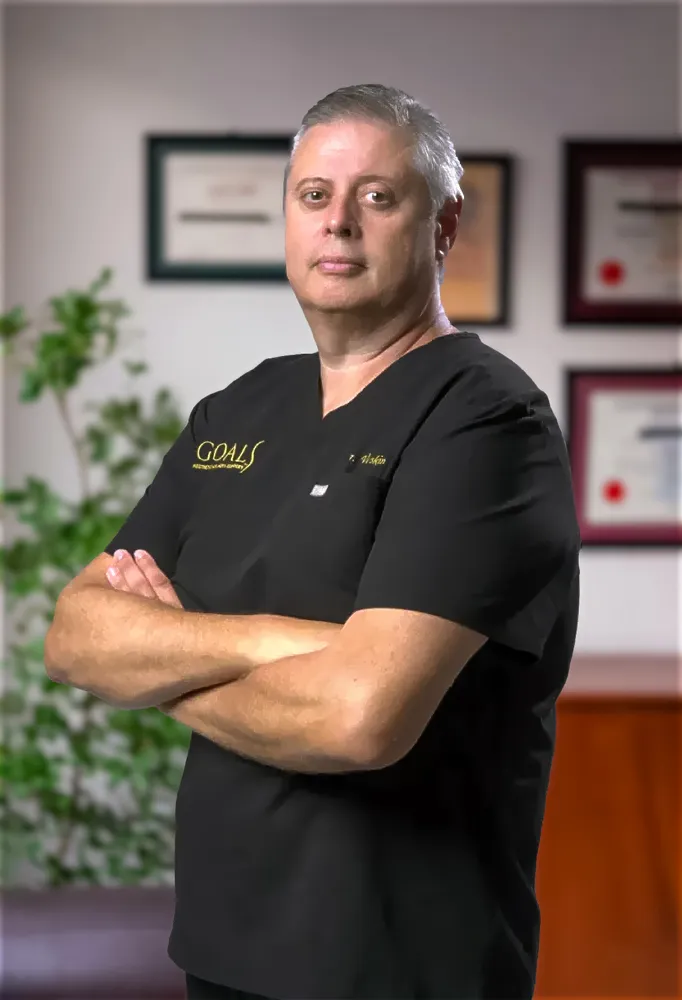
Dr. Sergey Voskin, MD
Operates at Atlanta Walton St.
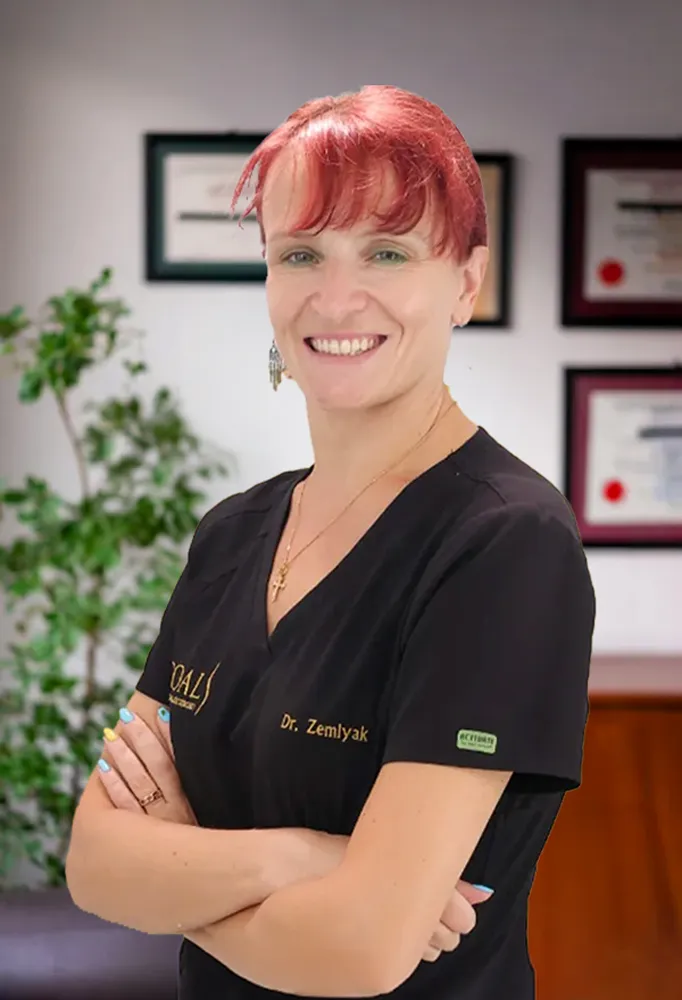
Dr. Alla Zemlyak, MD
Operates at Atlanta Walton St.
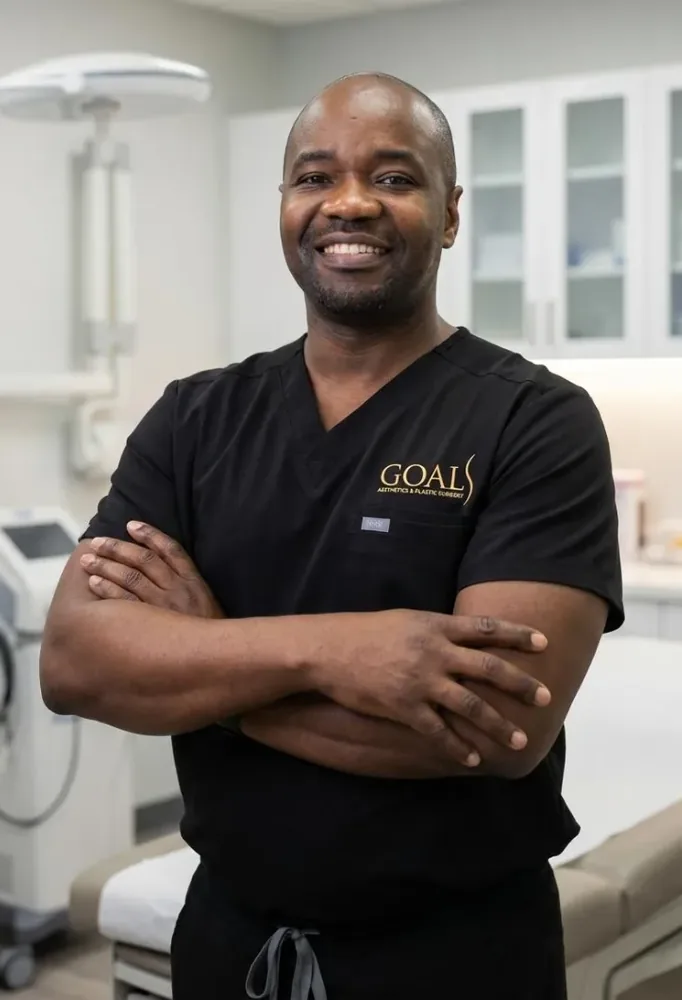
Dr. Patrick Narh-Martey, MD
Operates at Atlanta Walton St.
Credentials differ by surgeon and are listed in full on each surgeon's page.
Those overseas "budget hair transplant" deals look great on paper. The catch is what they hide: rushed candidacy checks, a language wall, nobody to see afterward, and problems that trail you home and cost more.
| Flying Abroad | U.S. with Goals |
|---|---|
| Flying AbroadWeeks vetting clinics, wiring deposits overseas, then covering flights and a hotel. | U.S. with GoalsYou meet a licensed surgeon first, in person or on video, who checks your donor stability and reviews what is driving the loss. |
| Flying AbroadYou land where you hardly speak the language, and surgery day doubles as your only consult. | U.S. with GoalsBloodwork, forms, and the plan get handled up front, in your language, to U.S. clinical standards. |
| Flying AbroadNobody checks whether your donor area is even stable; they just run the same procedure on everyone. | U.S. with GoalsOn the day, you walk into an accredited clinic and it all happens in a sterile room, only local anesthesia. |
| Flying AbroadHome again, sore and puffy. Days on, the scalp turns red and weepy and you have no clue whether that is normal. | U.S. with GoalsNo head shave in most cases, so you stay comfortable, break when you need to, and head home that evening. |
| Flying AbroadYour only option is urgent care or an ER, run by people with no record of your case and no idea what was done. | U.S. with GoalsAnything feels off as you heal, you reach the same local team that treated you, and we see you in person and adjust. |
| Flying AbroadMore money and days lost to visits and prescriptions, while the clinic abroad just texts you back. | U.S. with GoalsEvery check-up and progress review stays at one clinic with the same people, right through the hair fully growing in. |
| Factor | Overseas Package | Goals U.S. Clinic |
|---|---|---|
| Total cost (real) | The upfront price, plus airfare, hotel, time off, maybe an ER bill. | Similar all in, but the quote is spelled out first with no add-ons later. |
| Candidacy check | Usually skipped; they operate even on an unstable donor. | An honest scalp check first, so surgery only if it will hold. |
| Safety & sterility | Whatever the local rules allow, on a tight clock. | A U.S. room held to accredited-facility standards. |
| Who does surgery | Hard to verify who operates, and you likely never meet them again. | A licensed restoration surgeon who sees you start to finish. |
| No-shave option | Many buzz the whole head, tough to hide while you heal. | No-shave in most cases, so no one has to know. |
| Follow-up care | Messages only, and real hands-on help is scarce. | Scheduled visits, progress photos, med changes when needed. |
| Communication | Translation snags, bad time zones, slow answers. | Your own language, written steps, a line open 24/7. |
| Legal protections | Little recourse once you are home and it goes wrong. | Covered by U.S. patient-safety law and rules. |
Everything runs on safety here. Strict protocols and modern equipment keep your risk down and the outcome strong.
Accredited U.S. sites with sterile, fully stocked procedure rooms.
Grafts set among your hair, so the work stays private.
Numbed locally, skipping the risk of general anesthesia.
Your surgeon and care team stay reachable for questions.
A set plan for aftercare, meds, and check-ins to stop infection.
We only operate when your donor area can support it.
No-shave methods in most cases, so recovery stays private and quiet.
Accredited and stateside, so no travel, no translation, no dropped follow-up.
A licensed restoration surgeon who sees you start to finish.
U.S. patient-safety law protects you, with real recourse if needed.
A single all-in quote, with no facility fees sprung on you later.
My part had gotten so wide I quit wearing it down. They did no-shave FUE, so nobody at work even knew. By month four I saw baby hairs filling in, and by a year my part looks normal again. Wish I had come in sooner instead of hiding it.
Years of tight braids wore my edges down. Two other places just took the money. Goals actually checked my donor area first and were honest it would work. They rebuilt my hairline and edges, no shave, and it blends in perfectly now.
After menopause my crown got so thin you could see scalp in photos. They had me sort my thyroid and hormones first, then did the transplant. No head shave, easy recovery, back to work in a week. Full again by a year, and it feels like me.
Testimonials reflect individual experiences. Results vary by patient.
With no-shave work, usually not. There is no buzz cut to explain, and most women are back within about a week. The first few days involve some redness and small scabs among your existing hair, which is the visible stretch. After that, nothing much happens outwardly for three months, which is its own kind of cover.
Almost certainly not yet. Postpartum shedding is extremely common and frequently resolves on its own within a year as your hair cycle resets. Operating during that window spends donor hair on a problem that was going to improve anyway. Come in and get it assessed, but expect the honest recommendation to be waiting and watching rather than booking.
Yes. Plenty of patients start with a video consult where we look over photos of your thinning and donor area, then confirm in person on the day. If a hormonal or medical cause needs sorting first, we flag that early.
Yes, once you are cleared, and the transplanted hair behaves like the rest of yours because it is yours. Timing is set by your surgeon rather than by how healed things look, since chemical processing on a recently treated scalp is the concern rather than the hair itself. Most women are back to their normal routine well before the new growth arrives.
You reach the same Atlanta team that treated you. Since we are a U.S. clinic, you can come in if anything feels off, and we adjust your meds or check the grafts in person instead of texting it out from overseas.
No, and it is worth knowing that before you come in so the answer does not land as a door closing. If your donor area is not stable, medical therapy and non-surgical treatment can still slow the loss and thicken what you have. Some women become candidates later once a hormonal or medical driver has been treated and the pattern has settled.
Women’s hair loss receives a fraction of the attention men’s does, and the surgery around it usually gets explained badly. A widening part, a see-through crown, edges worn thin from years of tight styles: common, and quietly stressful.
Here is what most clinics skip. A women's hair transplant is not a scaled-down version of a man’s. Female loss is usually diffuse rather than a defined receding pattern, and that changes who qualifies more than it changes the surgery. This page is mostly about that question, because for women it is the question, and a female hair loss specialist Atlanta patients can trust is one willing to answer it honestly rather than book everyone who asks.
A transplant relocates hair from a donor area into a thinning one. Everything depends on that donor area being stable, and this is precisely where female loss differs from male.
In male pattern loss the back and sides are reliably unaffected. The hormone driving the thinning does not act on those follicles, which makes them a dependable supply that will keep growing wherever they are moved.
Diffuse female thinning does not come with that guarantee, and surgeons divide it into two groups for exactly this reason. Patterned diffuse loss spreads across the top of the scalp while the back and sides hold their density. Those women are often good candidates. Unpatterned diffuse loss involves the whole scalp thinning, donor region included, and those women are not, because relocating hair from a thinning area to another thinning area simply moves the problem.
You cannot tell which you have from a mirror or a photograph. It requires someone examining donor density directly, usually under magnification, and comparing it against the thinning zones. That single assessment determines whether surgery will hold, and it is the reason we check before recommending rather than after. A clinic that agrees to operate on every woman who asks is not being accommodating. It is skipping the step that decides whether your result lasts, and the donor hair spent on an unsuitable case cannot be recovered.
Several things drive it, and the cause matters before anyone discusses surgery.
Female pattern hair loss, the hereditary form, is the most common. Traction alopecia comes from sustained tension, from tight braids, weaves, extensions, and high ponytails, and typically shows along the hairline and edges. Telogen effluvium is heavy shedding triggered by childbirth, illness, significant stress, or rapid weight change. Hormonal and medical drivers including menopause, thyroid dysfunction, and PCOS account for a further share.
The important part is that several of those improve or resolve on their own once the trigger is addressed. Postpartum shedding commonly recovers within a year. Thyroid-related thinning frequently improves once the thyroid is treated. Operating on hair that was going to return anyway spends donor supply for nothing, which is why the cause gets established before the plan does.
For years the head shave ended the conversation before it began. Few women were willing to buzz an entire scalp to address thinning, and that single practicality kept many out of a clinic entirely.
No-shave techniques changed that. Rather than clearing the whole donor region, the surgeon trims only small hidden sections, or works within your existing length, and places grafts among the hair you already have. You leave looking like yourself.
The practical consequences are the point. Recovery stays private. You are not explaining anything to colleagues, and you are not waiting months for a donor area to grow back before you feel normal in public. For women working, raising children, or simply unable to disappear for several weeks, this is what makes the procedure feasible rather than theoretical.
It does not suit every case. Very large sessions generally need fuller access to the donor area, and forcing an unshaved approach onto a case that does not support it trades your result for a few weeks of appearance. But for the graft numbers most women need, it works, and it is worth asking about specifically at consultation rather than assuming either way.
FUE lifts grafts individually and leaves no linear scar, and it pairs naturally with no-shave work, which is why most women lean toward it. FUT, the strip method, yields more grafts in a single session and confines the donor harvest to one hidden line, which sometimes suits more extensive thinning.
The choice follows how much coverage you need and how stable your donor area is, rather than which sounds more modern. Both are available here, so the recommendation reflects your scalp rather than the one technique a clinic happens to offer.
A woman’s hairline is not a man’s at smaller scale. It sits lower, curves in a softer rounded line, and carries subtle irregularity along its edge, often with fine baby hairs at the very front.
Rebuilding edges thinned by traction, or filling a receded temple, means placing single-hair grafts at the leading edge for a feathered transition, then building density behind them. A line drawn too straight or brought too far forward reads as constructed, and it cannot be undone afterward.
For diffuse thinning across the top, the design problem is different again. The goal is density added between existing hairs so the result reads as thicker rather than as newly planted, which means matching the direction and calibre of what is already growing in each area.
The shape is drawn on your head, with you, before anything begins.
Most women are back at work within about a week, and no-shave work makes that straightforward to keep private. The first few days bring mild swelling and small scabs around each graft, clearing over roughly one to two weeks, as do any donor sutures.
Then between weeks two and six the transplanted hairs shed. This is shock loss and it is expected. One point specific to diffuse thinning: because your existing hair is already sparse in the treated area, the shed can briefly make things look worse before they improve, which is more unsettling than it is in men with a defined bald zone. The follicles stay exactly where they were placed.
New growth appears around three to four months, thickens across months six to nine, and the final result fills in between twelve and eighteen. Judge it at a year rather than at week six, and take monthly photographs from the same angle, since change at this pace is invisible in a mirror you look at daily. Our before & after gallery shows realistic outcomes.
The grafts are fragile for the first week or so, and what you do then determines how many survive.
No scratching, no hats or scarves pulled on tight, and no hard workouts that flood the scalp. Wash exactly as demonstrated rather than improvising, and sleep propped up for the first few nights to keep swelling down.
You get a written schedule covering washing, medication, and what to avoid. Call with a small question rather than guessing, since a graft dislodged in week one cannot be recovered.
For women especially, a transplant is frequently part of a plan rather than the whole of it.
Surgery fills the areas treated. It does nothing to stop native hair thinning on its own schedule, and diffuse loss can keep progressing. Without a maintenance plan you can find yourself with added density in one region while the surrounding hair continues to thin.
This is why surgery is often paired with medical therapy, PRP, or low-level laser therapy. For many women those are the right first step on their own, particularly where the loss is early or the donor area is not stable enough for surgery. Being told that is not a rejection, it is the correct answer, and our Atlanta hair restoration hub covers the full range.
Do the hairlines look soft and natural or planted? And will the clinic tell you that you are not a candidate? For women that second question matters more than for men, because unpatterned diffuse loss is common and a clinic that operates regardless will produce a result that fades as the donor hair thins along with everything else.
Ask who performs the harvest and the placement, since at many clinics technicians handle most of both. You can read our surgeon profiles before you book.
Having it done at an accredited U.S. clinic means a sterile operating room, qualified clinical staff on-site, an honest assessment, and real recourse. It also means the people who performed your surgery are the ones examining you afterward across a recovery measured in months. Clinics abroad that operate without establishing donor stability are a specific risk for women, and a complication at home with your surgeon ten time zones away means an emergency room with no operative notes and nobody who knows what was done.
Cost depends on method, graft count, and whether the plan is one session or staged. We do not publish a flat figure, because your plan is not the next person’s, and a low number advertised online usually means the real bill arrives later. If you have been searching female hair loss specialist Atlanta, the honest answer on cost, and on whether surgery is even right for you, only exists after someone has examined your scalp.
You get a clear quote after the consult, all in, with no facility or anesthesia fees appearing afterward, and monthly financing is available if spreading the cost suits you better.
It starts with a consultation, in person at our Walton St clinic or online to begin. We study your thinning pattern, assess whether the donor area is stable, flag any hormonal or medical cause that should be treated first, and tell you plainly whether surgery or medical treatment is the better route. Nobody is booked to fill a schedule.
It is not instant, it is not cheap, and it is not right for every woman, which is exactly why the assessment matters more here than the sales pitch. But for women who do qualify, a well-planned procedure gives back something that felt lost.
Men typically lose hair predictably: the hairline recedes, the crown opens, the back and sides hold. Women more often see the part widening and the crown becoming see-through while the frontal hairline stays largely intact. Clinicians chart it on the Ludwig scale rather than the Norwood scale used for men.
Worth noting for women specifically: because donor stability is less certain than in men, a surgeon may recommend taking less than your donor area could technically supply, holding some in reserve against future thinning. That is conservative planning rather than under-delivery.
The day opens with planning: the thinning is mapped with you, the areas for added density agreed, and the graft count estimated. The donor area is numbed, grafts are harvested by your chosen method, and each is placed among your existing hair at natural angles. It runs several hours, and that pace is a good sign rather than an inconvenience, since rushed placement is how results end up looking artificial.
One point worth adding for women: styling tension is what caused the loss for a significant share of patients, and returning to tight braids, weaves, or high ponytails puts the same force on new grafts that removed the original hair. Timing for going back to any tension style is set with your surgeon rather than judged by how healed things look.
About Women's Hair Transplant
Women's Hair Transplant at other Goals clinics
First consult, or weighing a transplant against non-surgical options? Our team gives an honest read on candidacy and builds a realistic plan.
Prefer to talk now? (833) 462-5769
Free · No obligation
Tell us how to reach you. A patient coordinator calls you back — usually the same day.