Extension Damage
Years of glued-on extensions that thinned or tore out your natural lashes.
Thin or missing lashes? We rebuild them with fine single-hair grafts angled to sweep naturally. A delicate, lasting fix under local anesthesia in Atlanta.
From $5,000
Goals Aesthetics & Plastic Surgery – Atlanta
83 Walton St NWMon–Sat, 10:00–19:00 local time
Surgeons: Dr. Sergey Voskin, Dr. Alla Zemlyak, Dr. Patrick Narh-Martey
12,000+
Hair Procedures Performed
150+
Years of Combined Surgical Experience
4.9
Based on 8,500 Patient Reviews
Lashes thinned by extensions, plucking, injury, or illness, rebuilt for real.
Years of glued-on extensions that thinned or tore out your natural lashes.
Fine, scanty lashes that mascara and serums never really solve.
Lash loss from injury, burns, or surgery that left the lid patchy.
Lashes lost to constant plucking or pulling that quit growing back.
Lash loss from a medical cause, once the condition has settled down.
Gaps and thin patches along the lid, filled to even the lash line.
A transplant may fit if your lashes are thin, patchy, or gone and you want a permanent fix. It takes honest candidacy and a commitment to upkeep, which we walk through with you.
Sparse or bare spots on the lash line.
No autoimmune loss or ongoing lid condition active.
You want lashes that last, not glue-on extensions or serums.
Fine scalp hair to match your lashes.
Fine with trimming and curling them often.
Restoring brows too, or thinning on your scalp? These are the other hair procedures we offer.
About Eyelash Hair Transplant
Eyelash Hair Transplant at other Goals clinics
Thinning on the scalp too? For early loss or shedding, these build density and protect the hair you still have, no surgery, and they work well alongside a transplant down the line.
Choose whichever office fits your day. Consult, pre-op clearance, and post-op checks can all run at the Goals location closest to you, or wherever the parking is easiest.
Look at the before and after on real Atlanta patients.
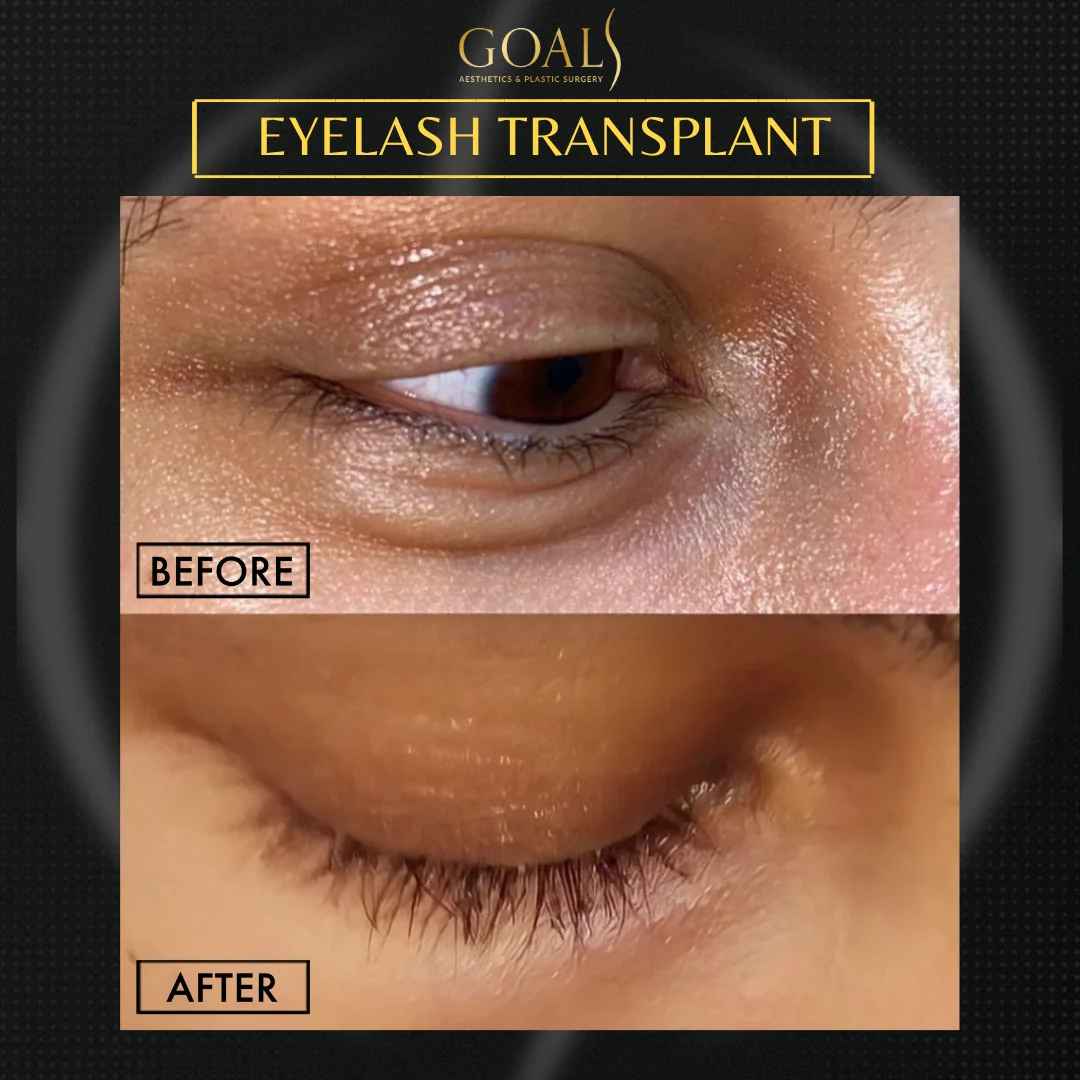
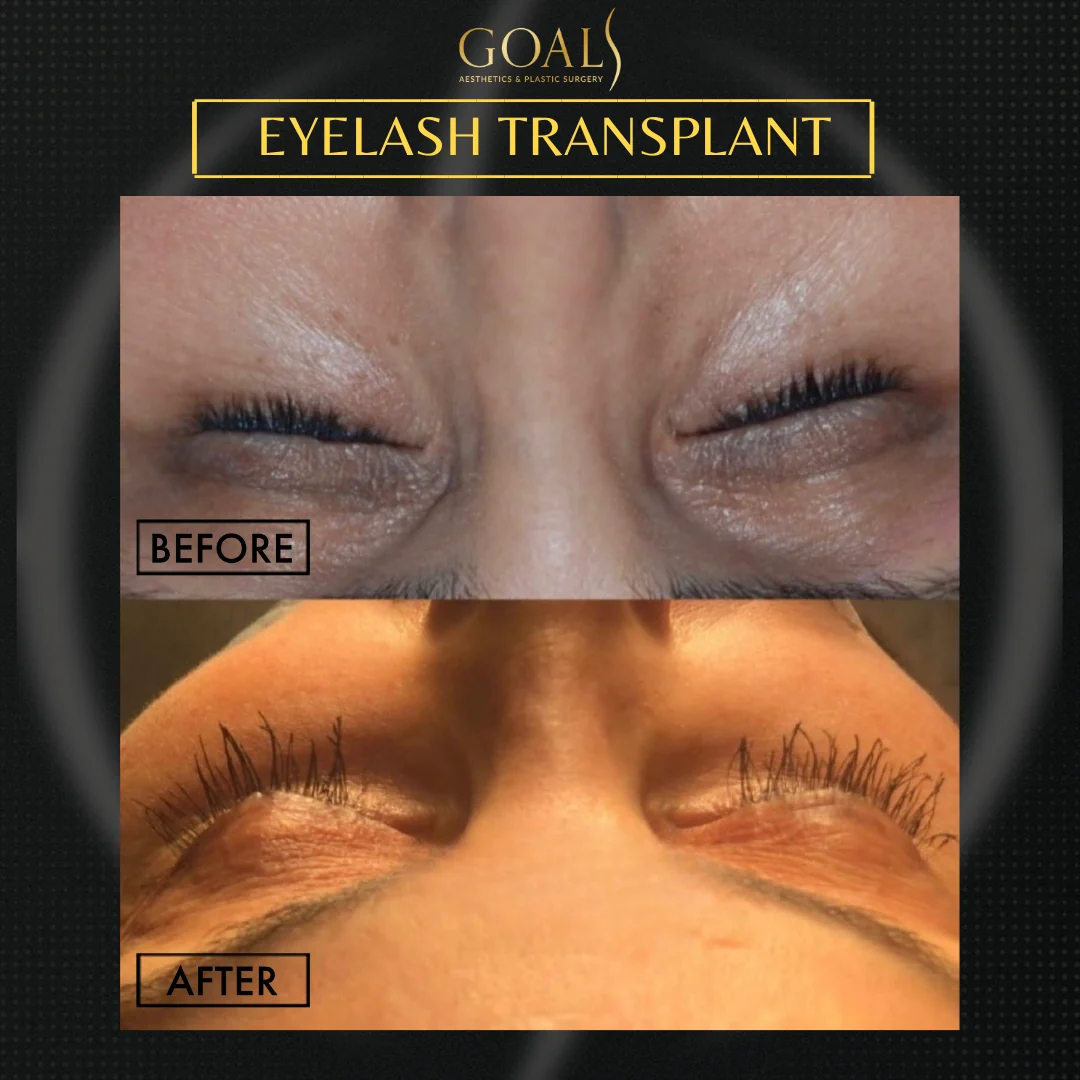
Real patients, published with written consent. Photographs are not retouched or AI-generated. Individual results vary — these images show outcomes for these patients and are not a guarantee of your own.
Work it out
Runs in your browser. Nothing is sent to us and nothing is saved — a height and a weight are your business.
BMI is one measure among several and it says nothing about how you are built. Surgeons weigh it alongside your health and your goals; it does not decide anything on its own.
Safety runs every case, and lash work by the eye needs a delicate, practiced hand. Get to know our team of licensed surgeons.
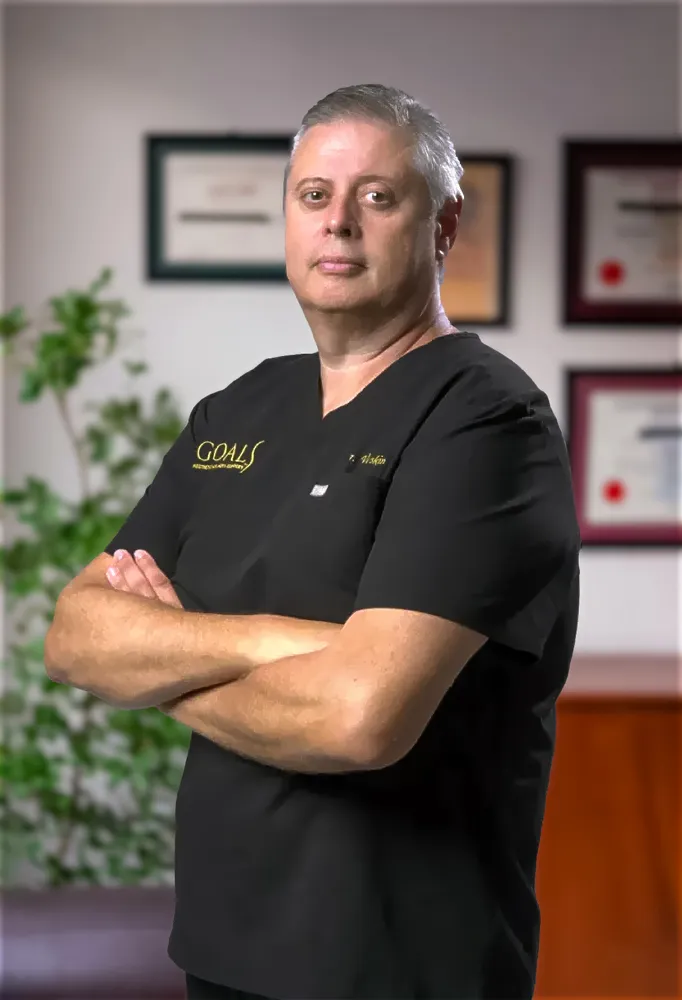
Dr. Sergey Voskin, MD
Operates at Atlanta Walton St.
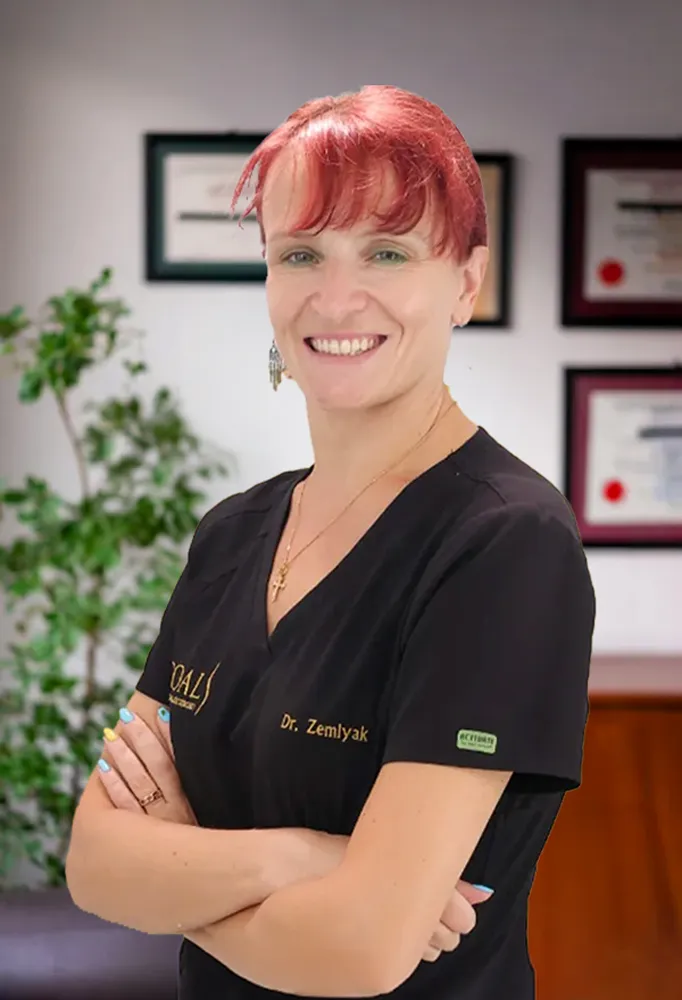
Dr. Alla Zemlyak, MD
Operates at Atlanta Walton St.
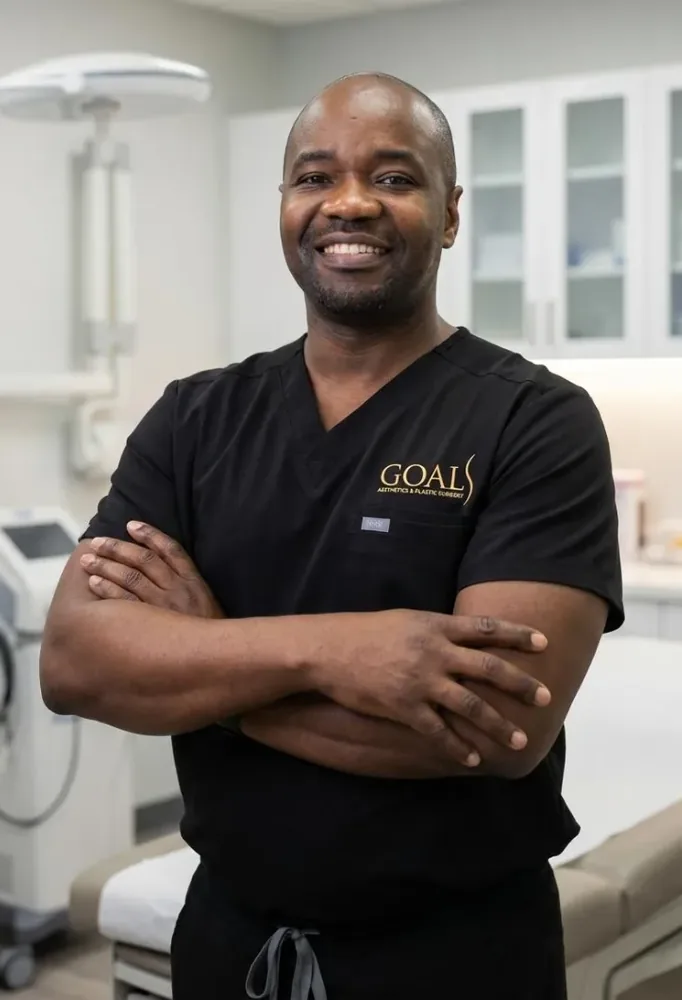
Dr. Patrick Narh-Martey, MD
Operates at Atlanta Walton St.
Credentials differ by surgeon and are listed in full on each surgeon's page.
Those overseas "budget lash packages" look great on paper. But this is delicate work right at the eye, and rushed angles, a language wall, and no local follow-up turn a bargain into a real problem.
| Flying Abroad | U.S. with Goals |
|---|---|
| Flying AbroadWeeks vetting clinics, wiring deposits overseas, then covering flights and a hotel. | U.S. with GoalsYou meet a licensed surgeon first, in person or on video, who studies your lash line and plans the angle. |
| Flying AbroadYou land where you hardly speak the language, and surgery day doubles as your only consult. | U.S. with GoalsBloodwork, forms, and the plan get handled up front, in your language, to U.S. clinical standards. |
| Flying AbroadLash angle is unforgiving, and a wrong direction turns hairs inward against the eye and irritates it. | U.S. with GoalsOn the day, you walk into an accredited clinic, sterile room, local anesthesia, and the grafts go in. |
| Flying AbroadHome again, lids sore and puffy. Days on, something looks off and nobody can say if it is normal. | U.S. with GoalsLash work is delicate but quick; you rest easy, then head home the same day. |
| Flying AbroadYour only option is urgent care or an ER, run by people with no record of your case and no idea what was done. | U.S. with GoalsAnything feels off as you heal, you reach the same local team that treated you, and we adjust in person. |
| Flying AbroadMore money and days lost to visits and prescriptions, while the clinic abroad just texts you back. | U.S. with GoalsEvery check-up and progress review stays at one clinic with the same people, right through the lashes growing in. |
| Factor | Overseas Package | Goals U.S. Clinic |
|---|---|---|
| Total cost (real) | The upfront price, plus airfare, hotel, time off, maybe an ER bill. | Similar all in, but the quote is spelled out first with no add-ons later. |
| Lash angle work | A bad angle risks lashes turning inward and irritating the eye. | Every graft angled to sweep away from the eye, for comfort. |
| Safety & sterility | Whatever the local rules allow, on a tight clock. | A U.S. room held to accredited-facility standards. |
| Who does surgery | Hard to verify who operates, and you likely never meet them again. | A licensed restoration surgeon who sees you start to finish. |
| Donor match | Takes whatever hair is handy, too coarse for a real lash. | Fine donor follicles picked to match your lash texture. |
| Follow-up care | Messages only, and real hands-on help is scarce. | Scheduled visits, progress photos, med changes when needed. |
| Communication | Translation snags, bad time zones, slow answers. | Your own language, written steps, a line open 24/7. |
| Legal protections | Little recourse once you are home and it goes wrong. | Covered by U.S. patient-safety law and rules. |
Everything runs on safety here. Strict protocols, and extra care around the eye, so your new lash line looks natural and sits comfortably.
Accredited U.S. sites with sterile, fully stocked procedure rooms.
Every graft set to sweep away, never inward toward the eye.
Numbed locally, skipping the risk of general anesthesia.
Extra care working right at the tender lid margin.
A set plan for aftercare, meds, and follow-up to keep infection out.
The same local team runs consult, surgery, and follow-ups.
Lash angle and design done by surgeons used to fine facial work.
Accredited and stateside, so no travel, no translation, no dropped follow-up.
A licensed restoration surgeon who sees you start to finish.
U.S. patient-safety law protects you, with real recourse if needed.
A single all-in quote, with no facility fees sprung on you later.
Years of extensions trashed my natural lashes. They used fine scalp hairs and angled them to sweep out, not into my eye. Took about five months to fill in. I trim and curl them the way they showed me, and skip mascara most days now. Worth it.
A burn cost me the lashes on one lid, and I hated how it looked. They matched fine donor hair and rebuilt the line to match the other side. No irritation, because they got the angle right. A bit of curling upkeep, but they look like my own now.
My lashes were always thin and sparse. The consult was upfront about the upkeep, trimming and curling since they grow like scalp hair. I was fine with it. Recovery was quick, mild swelling a couple days. Six months in, they frame my eyes beautifully.
Testimonials reflect individual experiences. Results vary by patient.
Mascara yes, once you are cleared, though most patients find they need it less. Extensions are a different question: gluing weight onto transplanted lashes reintroduces exactly the traction that damaged your originals, and the follicles are equally vulnerable. If extensions were the reason you came in, going back to them undoes the point of the procedure.
An individual hair growing inward can usually be managed simply, by removing it or adjusting with curling. It is worth raising as soon as you notice rather than waiting, since a lash contacting the eye surface is uncomfortable and shouldn't be tolerated. Occasional strays are not unusual; a pattern of them points at placement and should be assessed in person.
Not permanently, but timing matters. The condition attacks transplanted follicles the same way it attacked your originals, so grafts placed during an active phase can be lost. What we look for is a meaningful period of stability before planning surgery. This is worth an honest conversation rather than a hopeful one, because the donor hair spent cannot be recovered.
Yes, and that is standard. Doing one at a time offers no advantage and would mean two recoveries and two periods of asymmetry. Graft counts often differ slightly between eyes, since lash loss is rarely perfectly symmetrical.
You reach the same Atlanta team that treated you. Because we are a U.S. clinic, you can come in if something feels wrong, and we check the grafts or adjust your medication in person rather than trading messages with a clinic overseas.
Sleep with your head elevated for the first few nights and avoid pressing your face into the pillow. Strenuous activity waits about a week, since raised blood pressure and sweat both work against grafts that have not anchored yet. Swimming and saunas wait longer, and your specialist will give you specific timing.
Lashes frame the eye, and once they thin or disappear, mascara and glue-on extensions only carry you so far. If years of extensions, a burn, over-plucking, or a medical issue left yours sparse, there is a permanent route: moving your own hair to the lid margin.
A surgeon lifts fine single hairs from your scalp and places them one at a time into the lash line, angled to sweep outward like natural lashes. It is delicate, awake work under local anesthesia, usually an hour or two, and you go home the same day. Two things run through the whole of this page. The surgery happens millimetres from your eye, so who performs it matters more than almost anywhere. And because the lashes are scalp hairs, they need maintenance for life. An eyelash transplant Atlanta patients are happy with a decade later almost always starts with understanding both.
Most pages leave this until the end. It belongs at the start, because it decides whether you should read the rest.
Transplanted lashes are scalp hair, and scalp hair does not behave like lash hair. Natural lashes grow to a set length and stop. Scalp hair keeps growing, and it grows straighter. So your new lashes will need trimming to lash length and curling to hold an upward bend, roughly once a month, permanently.
It takes a few minutes and it is not difficult. But it does not end, and it is not optional if you want the lashes to look like lashes rather than stray hairs at your lid margin.
That makes it a candidacy question rather than an aftercare footnote. If monthly trimming and curling sounds like more than you want to take on, this is probably not your procedure, and we would rather say so at consultation than have you discover it in month six. Patients who go in understanding the trade tend to be glad they did it. Patients who were not told tend to feel misled, and reasonably so.
This is the technical heart of lash surgery and the reason it is not a procedure to bargain-hunt.
Natural lashes grow outward and curve up and away from the eye surface. That direction is not decorative. It keeps the lash clear of the cornea, which is exactly what lashes are anatomically for.
A graft set at the wrong angle can grow inward toward the eyeball, a condition called trichiasis. An inward-growing lash irritates the eye constantly and, left unaddressed, can abrade the cornea. This is the specific risk that separates lash work from every other transplant site, and it is entirely a function of placement.
So each graft is placed to sweep in the correct direction with the correct curl, in eyelid tissue that is the thinnest skin on the body and moves every time you blink. The margin for error is fractions of a millimetre. Occasional stray hairs can be managed afterward by removal or curling, but a pattern of misdirected lashes reflects the placement rather than bad luck.
A lash is short, fine, tapered, and curved. Almost no hair on your head is all four, which makes donor selection unusually consequential here. The finest, softest follicles available are chosen, typically from the nape or the area just above and behind the ears, where the hair tends to be closest to lash calibre.
Colour matters too, though less than texture, since lashes can be tinted afterward while thickness cannot be changed. A coarse or mismatched hair reads immediately as not-a-lash, and it also tends to sit at an awkward angle because thicker hair resists the curve. Since placement is permanent, getting the donor match right is quiet work that decides a great deal.
The most common cosmetic cause now is extension damage. Years of glued-on lashes and the traction they apply thin or pull out the natural ones underneath, which is why a significant share of patients arrive having originally used extensions to solve exactly this problem. Over-plucking and compulsive pulling do the same. Trauma, burns, and surgery leave a lid bare or patchy. Some people are simply born with sparse lashes. And medical causes including alopecia areata, chemotherapy, and radiation thin lashes as a side effect.
Several of those need to be settled before surgery is appropriate. An autoimmune process removing lash hair does not distinguish transplanted follicles from original ones, so grafts placed during an active phase can be lost to the same mechanism. What we look for is a meaningful period of stability rather than a recent quiet spell. There are also situations where surgery is not the answer at all. Someone born without lashes from a congenital condition is usually not a surgical candidate and does better with other options. An active lid or facial skin condition argues against proceeding for now. Screening for all of this happens before anything is recommended.
Lash work uses a small graft count next to a scalp case, and every single graft has to be exact. A natural lash line typically runs around twenty-five to fifty single-hair grafts per eye, sometimes more for a fuller result or a fully bare lid. It is not a volume exercise. The outcome turns on placing each of those few dozen hairs at precisely the right spot, angle, and curve along the margin.
Distribution matters as much as number, and it is the part patients rarely consider. Natural lashes are not uniform along the lid. They are typically shorter toward the inner corner and longest through the outer third, and that gradient is part of what makes an eye read as natural. A lash line built at even length throughout looks subtly wrong in a way that is hard to identify and easy to notice.
Both eyes are done in the same session, and the counts often differ slightly between them, since lash loss is rarely symmetrical. The line is mapped with you at consultation, and our before & after gallery shows what different counts produce.
Expect mild swelling and some redness around the lids for a few days, settling on its own. Sleep with your head elevated for the first several nights and avoid pressing your face into the pillow. No rubbing, no picking, and no eye makeup or extensions until you are cleared. Clean the area exactly as instructed, and hold off strenuous activity for about a week, since raised blood pressure and sweat both work against grafts that have not anchored.
The transplanted lashes then shed within the first weeks. This is expected and the follicles remain in place. Full results generally land around four to six months, which is also when the trimming and curling routine begins in earnest. Those first days determine how many grafts survive, and a graft dislodged early is not recoverable. That is the entire reason the aftercare instructions are specific rather than general.
Worth laying out both sides rather than one.
Extensions produce a dramatic result immediately, cost less up front, and are removable if you dislike them. They also need refills every few weeks indefinitely, and the adhesive and weight damage the natural lashes underneath over repeated cycles.
Growth serums thicken lashes you still have and stop working when you stop using them, and they do nothing where the follicle is gone.A transplant is your own permanent hair in the lash line. It is also surgery, it is permanent including if you change your mind, the result takes months to arrive, and it carries its own upkeep in the form of trimming and curling.
The honest framing is that you are choosing which maintenance you prefer rather than choosing between maintenance and none. For many people, a monthly trim beats a refill appointment every three weeks and the damage that comes with it.
Experience and a steady hand count for more here than almost anywhere, because the work sits millimetres from the eye and the angle is unforgiving.
Look at lash cases specifically rather than scalp results, since the skills do not transfer automatically. Ask directly how the surgeon handles direction and curl to avoid trichiasis, what their approach is if a lash grows inward afterward, and how they assess donor hair for texture match.
Ask how many lash cases they perform. An experienced surgeon expects those questions and answers them plainly. Be wary of anyone who describes this as quick or routine, or who does not raise the maintenance commitment before you do. This is delicate facial work rather than a high-volume scalp routine. You can read our surgeon profiles before you book.
Lash transplants are often priced as a flat fee rather than per graft, since the counts are small, though the figure still depends on your case. We do not publish a number, because a low one advertised online usually means the real bill arrives later. If you have been searching eyelash transplant cost atlanta, the honest answer only exists once someone has examined your lashes and donor hair.
You get a clear quote after the consult, all in, with no facility or anesthesia fees appearing afterward, and monthly financing is available if spreading the cost suits you better.
It starts with a consultation, in person at our Walton St clinic or online to begin. We examine your lashes, check your scalp donor for a fine texture match, screen for anything that should be treated first, talk plainly about the trim-and-curl commitment, and map the line you want. Nobody is pushed to sign that day.
Lash work also pairs naturally with an eyebrow transplant, since both use fine donor hair and both are design-led, and our Atlanta hair restoration hub covers the wider range of options.
For anyone worn out by extensions and the damage they leave, or living with a bare lid from a burn or a medical cause, this is a real change, provided the maintenance suits you. It is delicate surgery, it asks for monthly upkeep, and it is not for everyone, which is exactly why the consultation is an honest conversation rather than a sales one.
The day opens with design: the look is discussed and the lash line marked. The scalp donor area is numbed and fine grafts are taken one at a time, then the lid is numbed and each single-hair graft is set into the margin with its angle and curve dialled in. It runs an hour or two depending on graft count, and you stay awake and comfortable throughout with no general anesthesia.
About Eyelash Hair Transplant
Eyelash Hair Transplant at other Goals clinics
First lash consult, or weighing a transplant against extensions and serums? Either way, our team maps your lash line and puts together a safe, realistic plan.
Prefer to talk now? (833) 462-5769
Free · No obligation
Tell us how to reach you. A patient coordinator calls you back — usually the same day.