Traction Alopecia
Loss at the edges from years of tight braids, weaves, cornrows, or locs.
Density restored and edges rebuilt on coily, textured hair, by surgeons who work with the curl of your follicles. Under local anesthesia here in Atlanta.
From $5,000
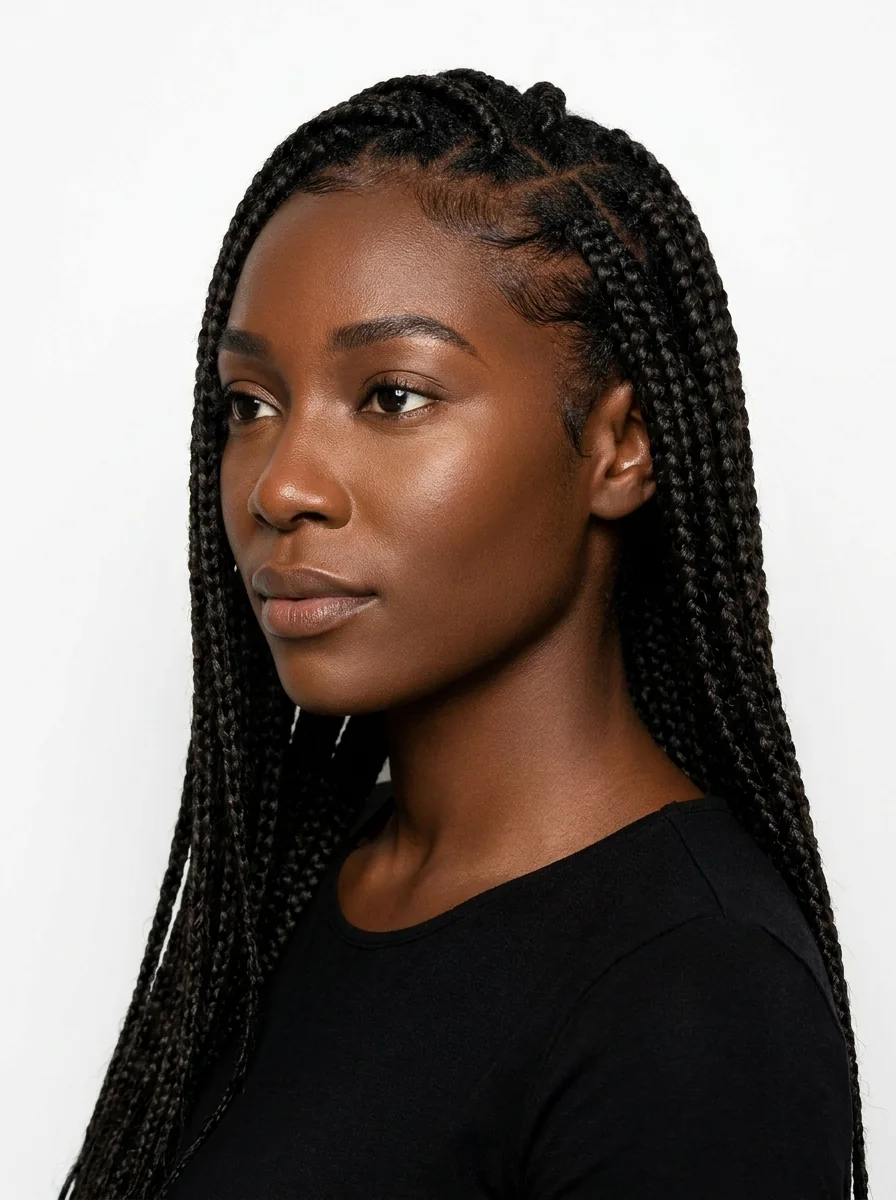
Goals Aesthetics & Plastic Surgery – Atlanta
83 Walton St NWMon–Sat, 10:00–19:00 local time
Surgeons: Dr. Sergey Voskin, Dr. Alla Zemlyak, Dr. Patrick Narh-Martey
12,000+
Hair Procedures Performed
150+
Years of Combined Surgical Experience
4.9
Based on 8,500 Patient Reviews
The loss that hits textured hair most, from traction damage right through to CCCA.
Loss at the edges from years of tight braids, weaves, cornrows, or locs.
Thin temples and hairline worn down by tension and chemical relaxers.
Central scarring loss, transplanted only once the scalp is confirmed quiet.
Hereditary thinning at the hairline or crown, men and women both.
Breakage and loss from relaxers or heat, once the scalp has healed.
See-through patches at the crown rebuilt with curl-matched grafts.
Textured-hair transplants work well when planned around your curl and your scalp. We screen for keloid risk and confirm any scarring condition is stable before recommending surgery.
Thick, healthy donor hair at the back and sides.
Any CCCA or scarring loss is confirmed quiet first.
You want density that lasts, not fibers or a daily fix.
We check your keloid history before we operate.
You want fuller, natural coverage suited to your curl.
Comparing methods, or treating another area? Here is the rest of what we do for hair.
About Afro Hair Transplant
Afro Hair Transplant at other Goals clinics
Caught the thinning early, or want to guard your edges? These suit early loss or shedding, build density without surgery, and pair well with a transplant.
Choose whichever office fits your day. Consult, pre-op clearance, and post-op checks can all run at the Goals location closest to you, or wherever the parking is easiest.
Look at the before and after on real Atlanta patients.
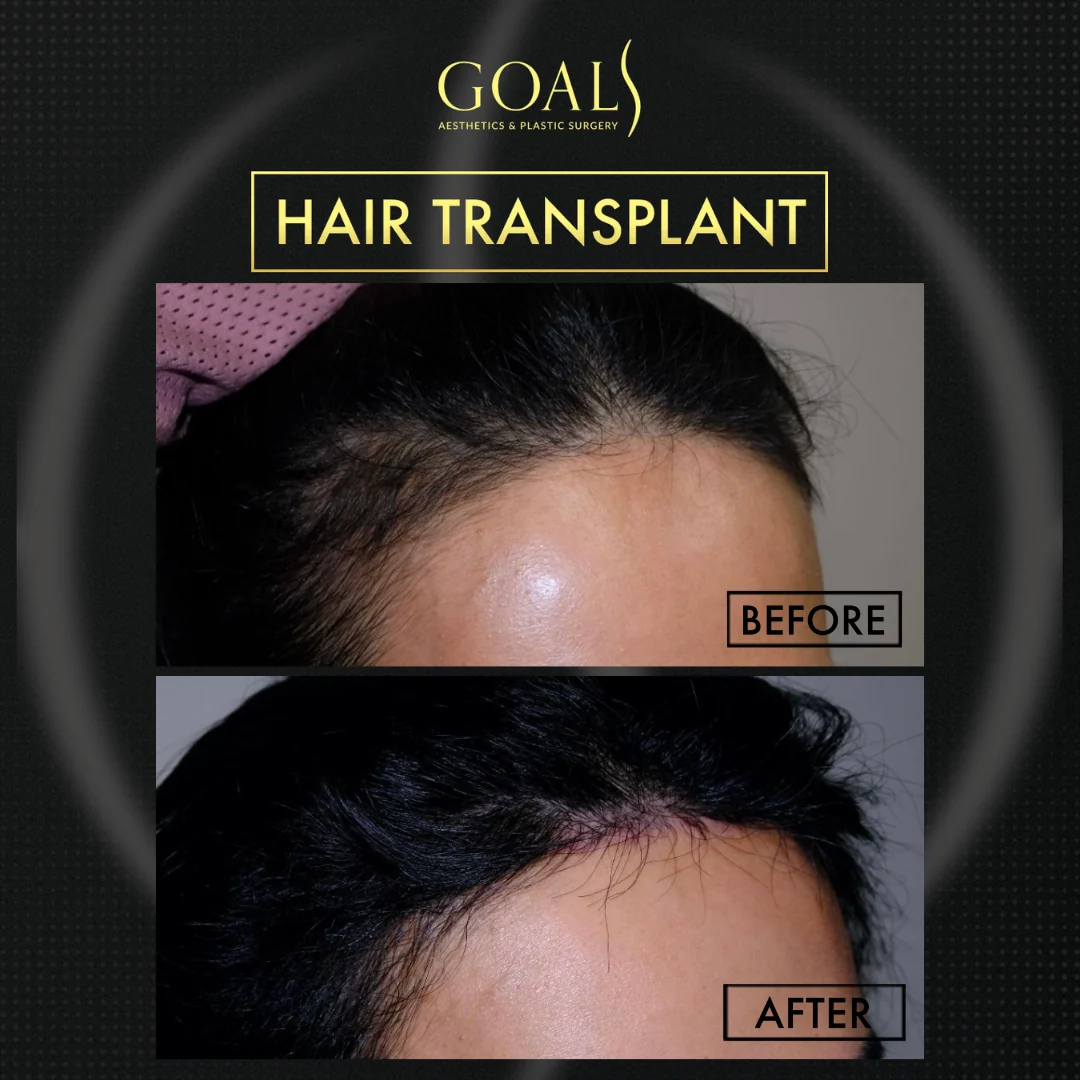
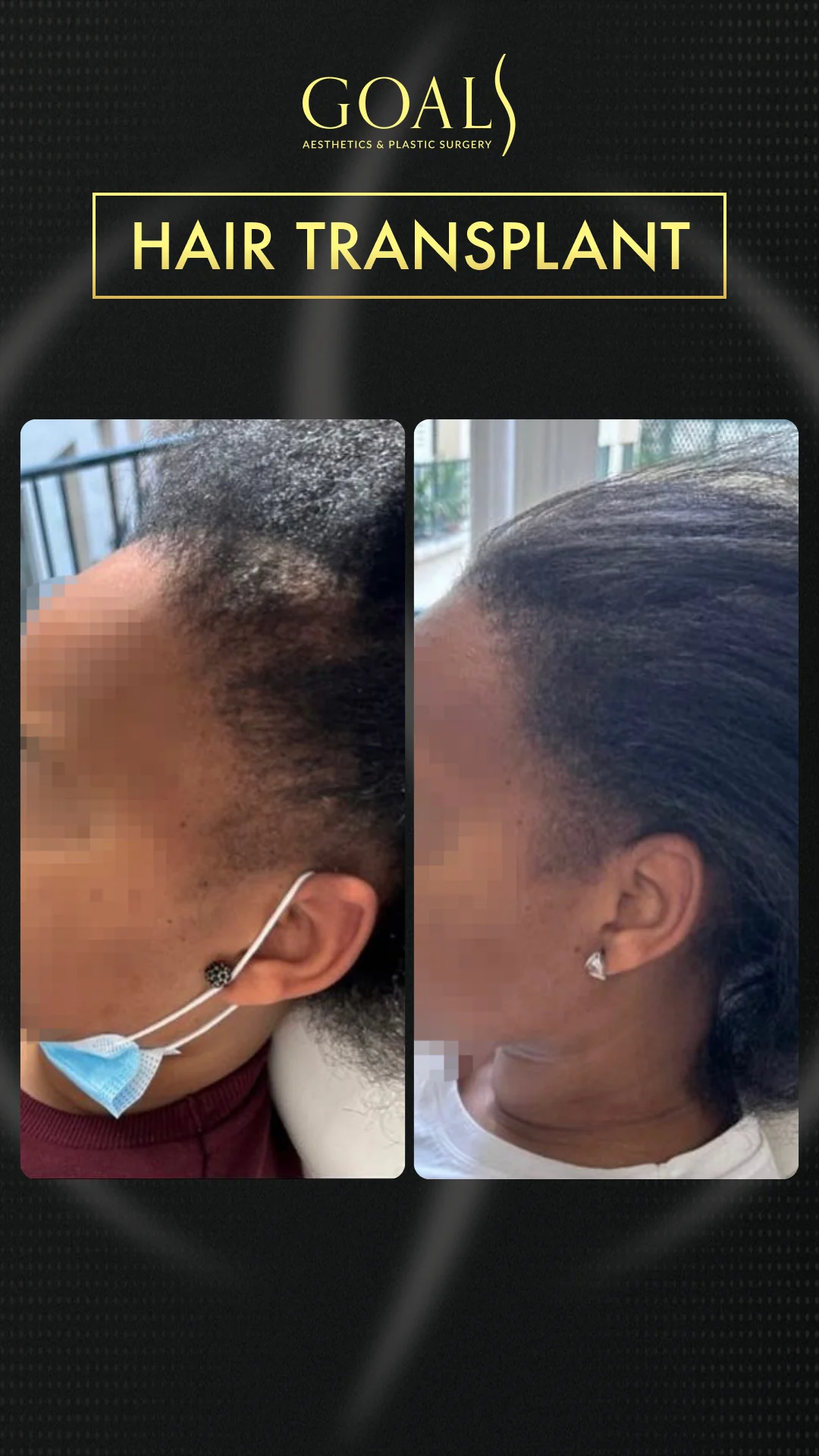
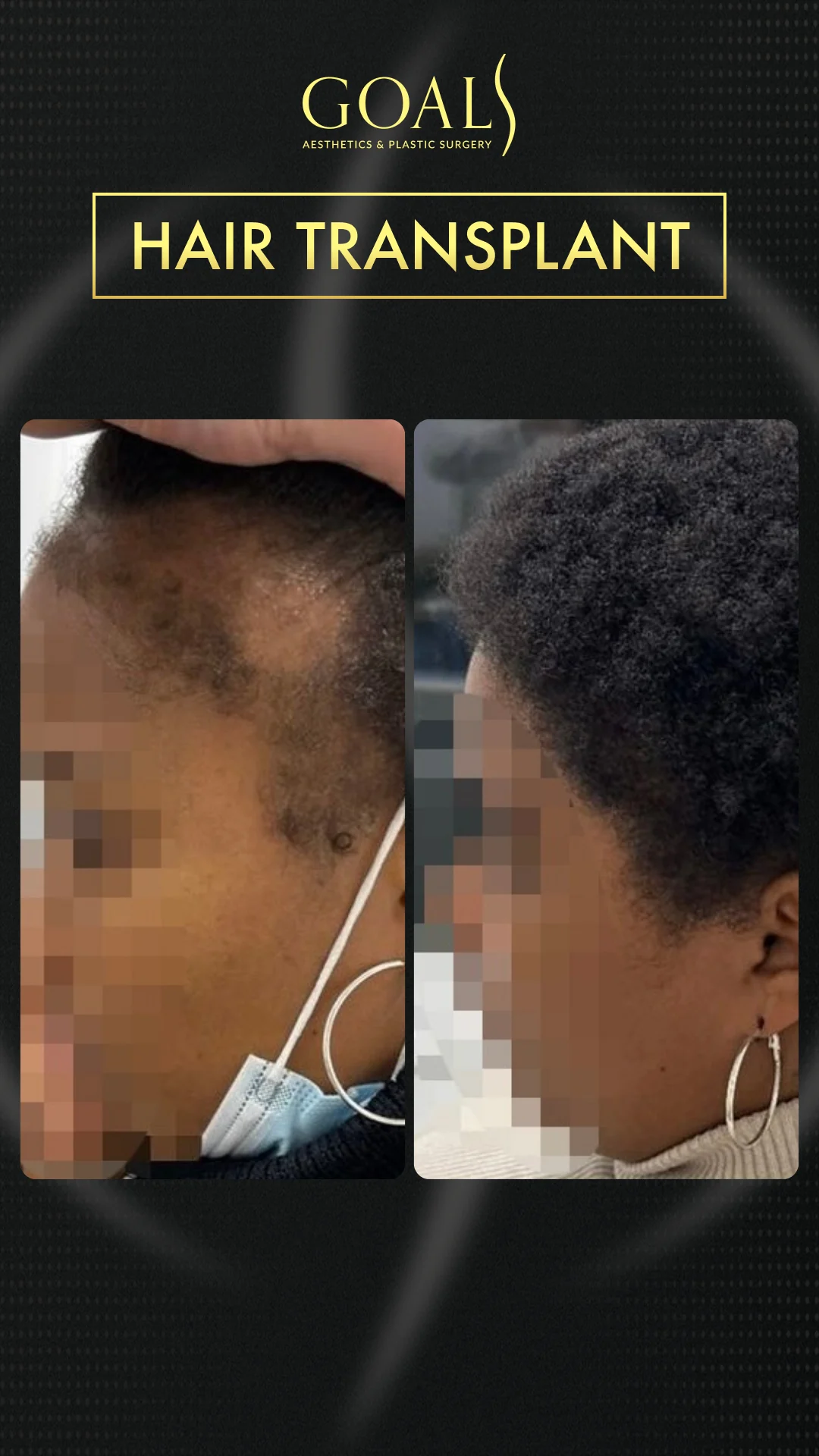
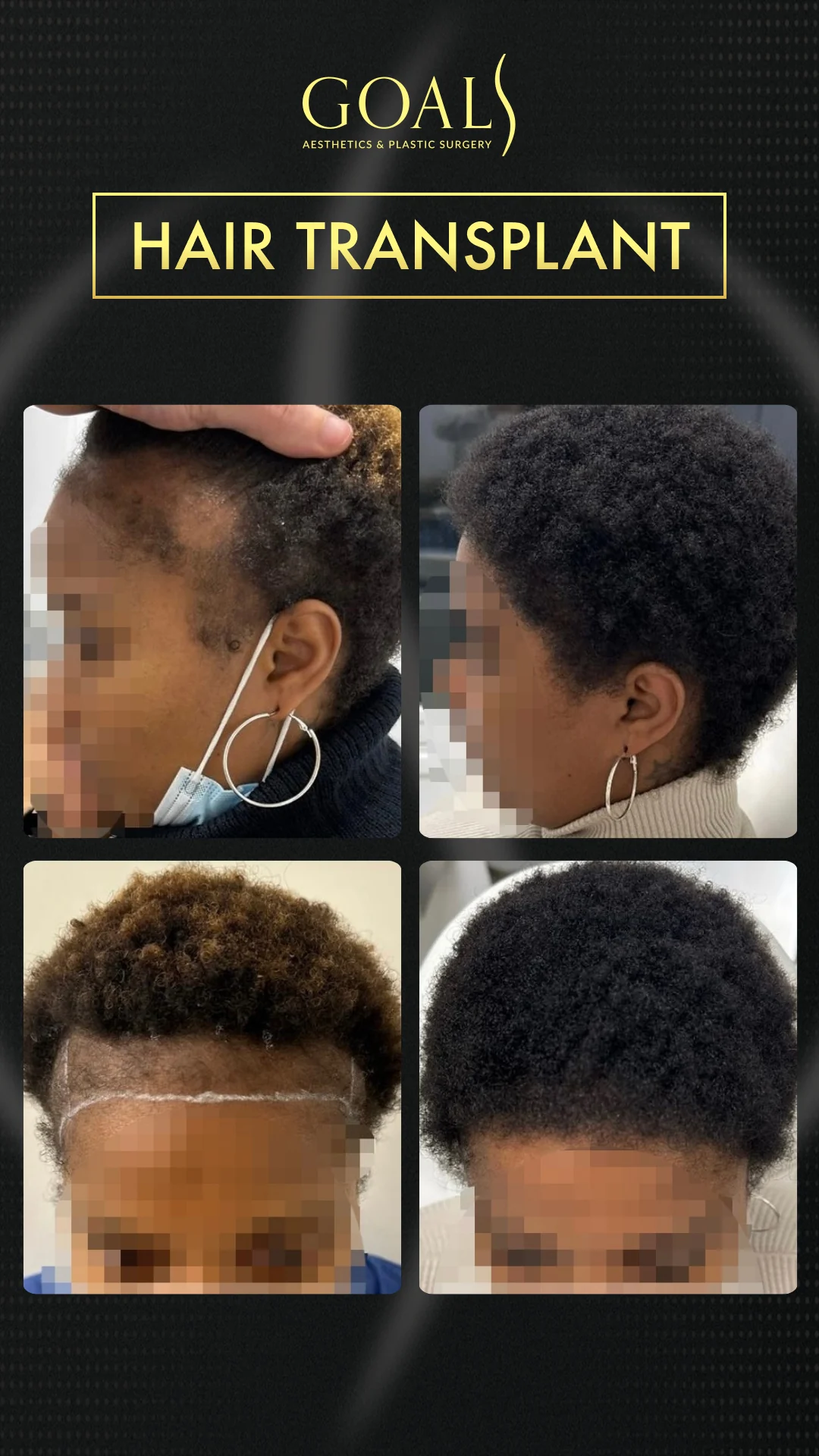
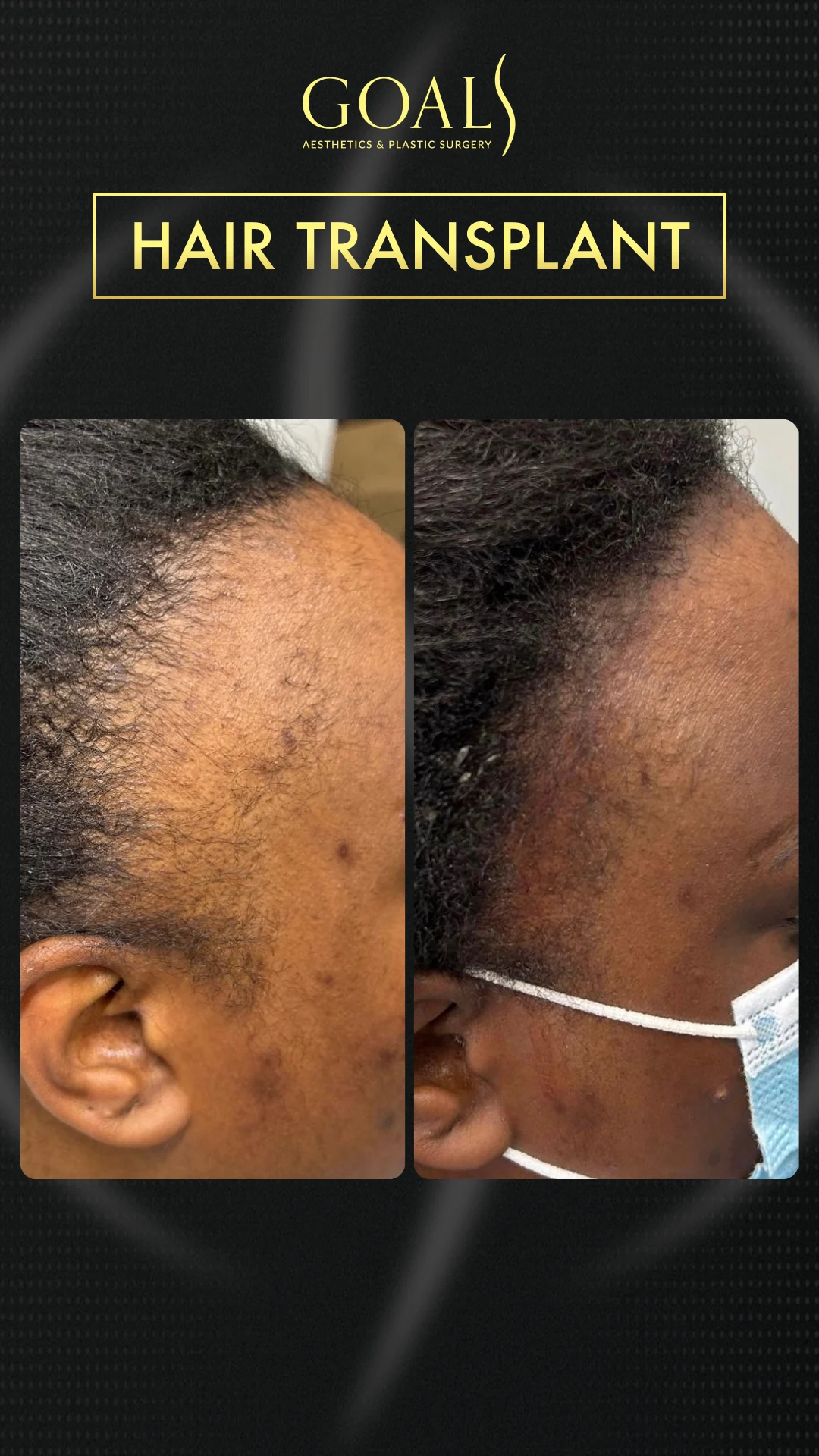
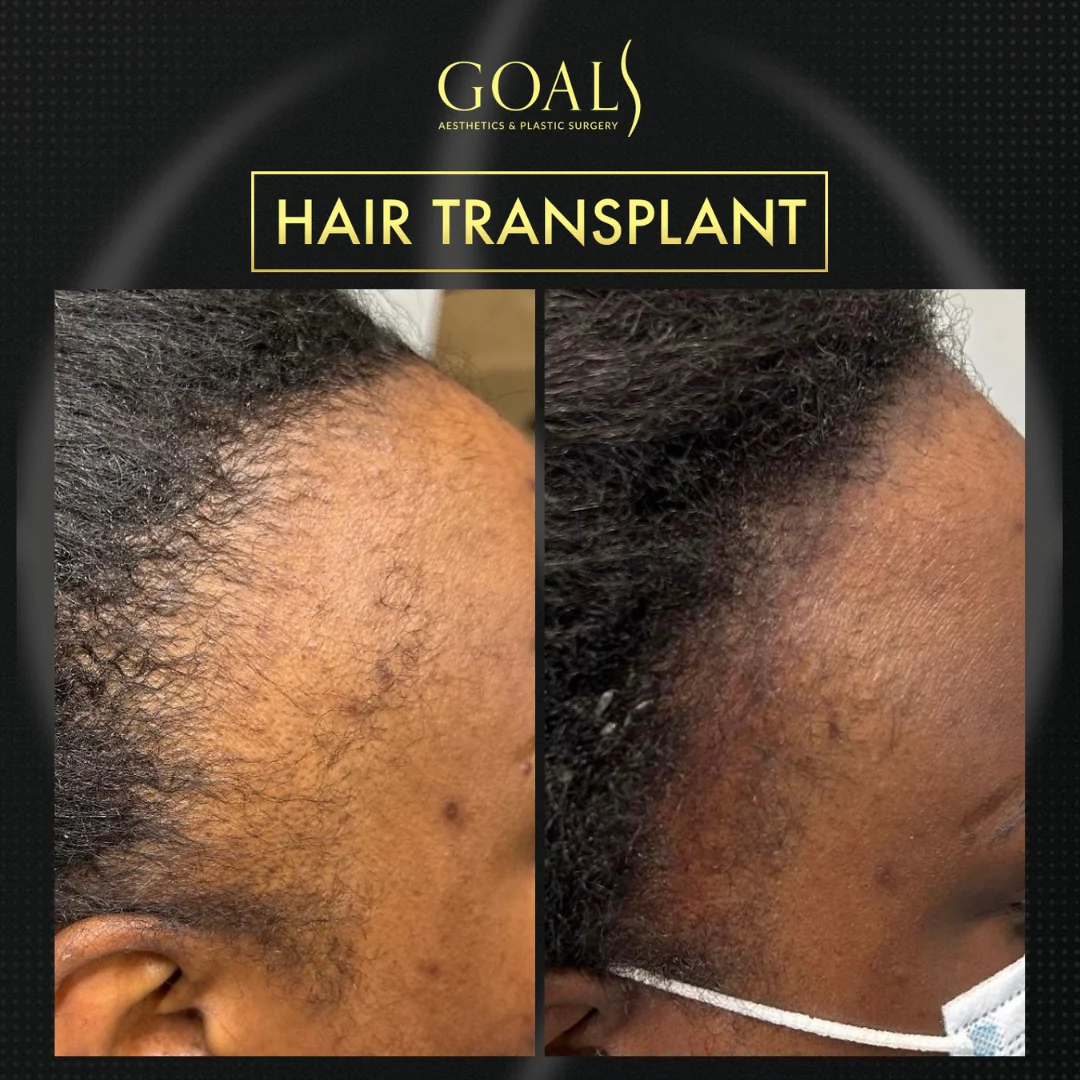
Real patients, published with written consent. Photographs are not retouched or AI-generated. Individual results vary — these images show outcomes for these patients and are not a guarantee of your own.
Work it out
Runs in your browser. Nothing is sent to us and nothing is saved — a height and a weight are your business.
BMI is one measure among several and it says nothing about how you are built. Surgeons weigh it alongside your health and your goals; it does not decide anything on its own.
Safety runs every case, and textured hair needs surgeons who know the follicle curl. Get to know our team of licensed surgeons.
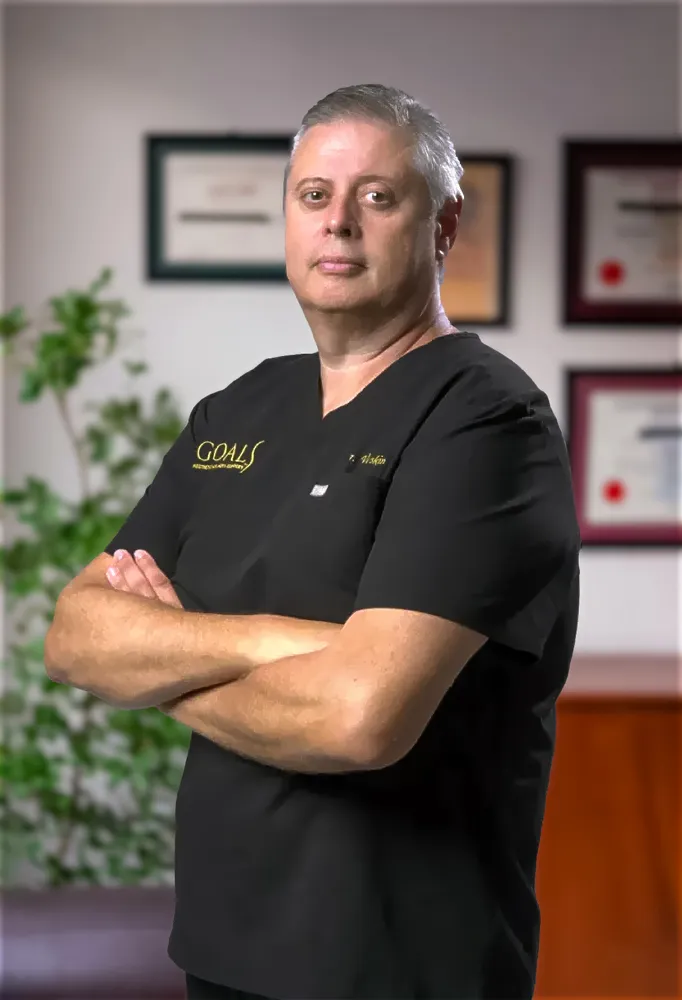
Dr. Sergey Voskin, MD
Operates at Atlanta Walton St.
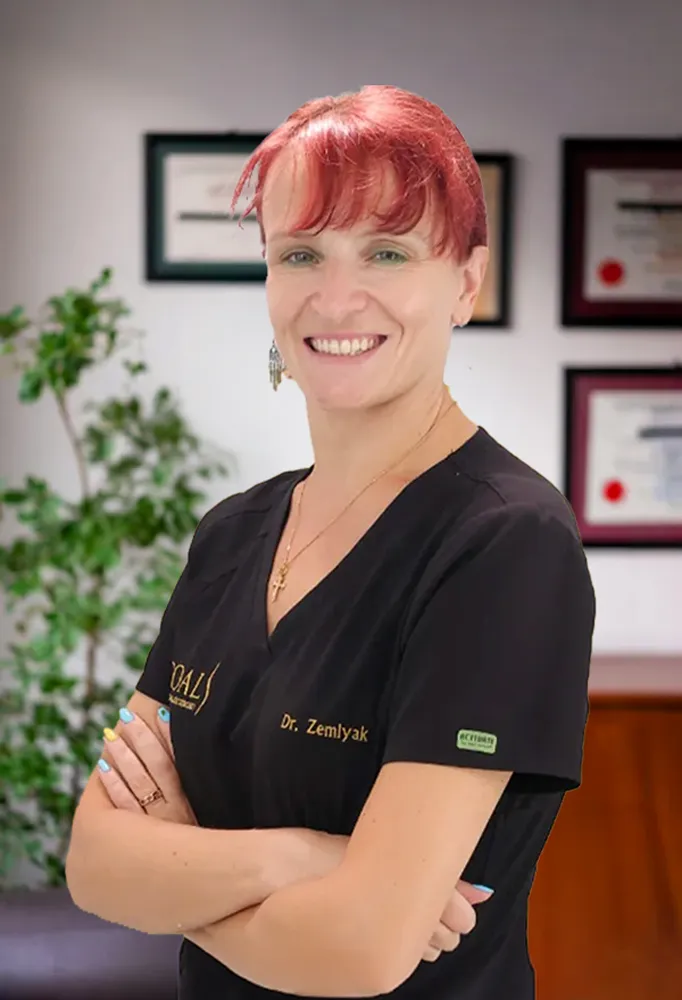
Dr. Alla Zemlyak, MD
Operates at Atlanta Walton St.
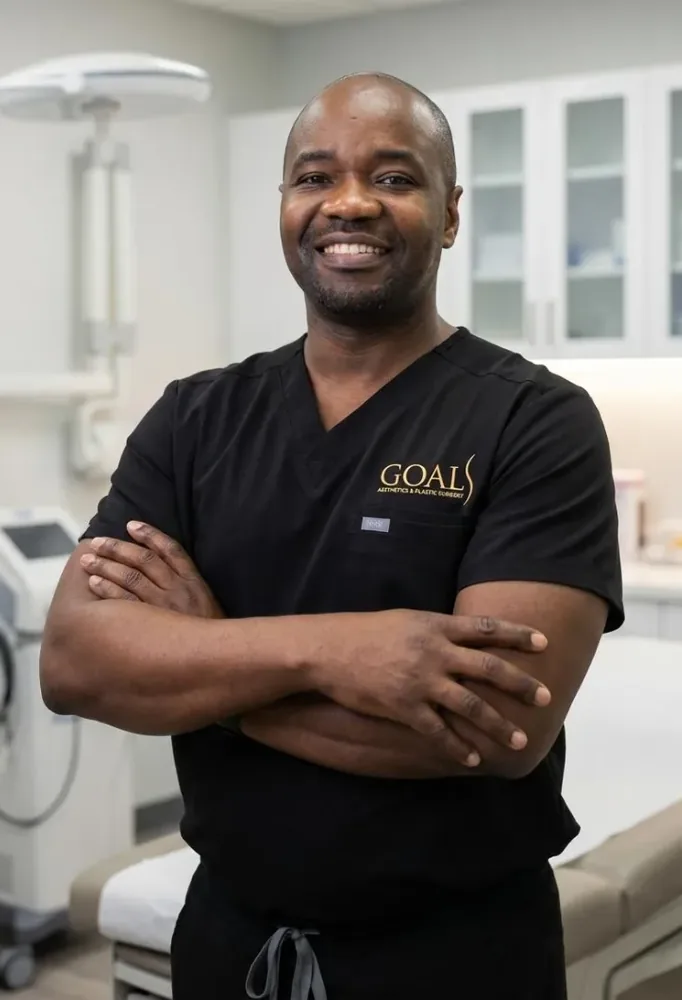
Dr. Patrick Narh-Martey, MD
Operates at Atlanta Walton St.
Credentials differ by surgeon and are listed in full on each surgeon's page.
Those overseas "budget packages" look great on paper. Textured hair needs a surgeon who knows curved follicles and keloid risk, and a rushed clinic abroad with no local follow-up costs you far more.
| Flying Abroad | U.S. with Goals |
|---|---|
| Flying AbroadWeeks vetting clinics, wiring deposits overseas, then covering flights and a hotel. | U.S. with GoalsYou meet a licensed surgeon first, in person or on video, who checks your curl type, donor, and scalp. |
| Flying AbroadYou land where you hardly speak the language, and surgery day doubles as your only consult. | U.S. with GoalsWe screen your keloid history and any scarring loss, in your language, to U.S. clinical standards. |
| Flying AbroadCoily follicles curve under the skin, and a clinic on standard punches can slice and waste your grafts. | U.S. with GoalsOn the day, you walk into an accredited clinic, grafts going in with curl-aware tools in a sterile room. |
| Flying AbroadNobody screened your keloid risk, so a raised scar on the donor can turn up weeks after you fly home. | U.S. with GoalsSince coily hair covers well, we often reach full density with fewer grafts, and you head home that evening. |
| Flying AbroadYour only option is urgent care or an ER, run by people with no record of your case and no idea what was done. | U.S. with GoalsAnything feels off as you heal, you reach the same local team that treated you, and we see you in person. |
| Flying AbroadMore money and days lost to visits and prescriptions, while the clinic abroad just texts you back. | U.S. with GoalsEvery check-up and progress review stays at one clinic with the same people, right through it growing in. |
| Factor | Overseas Package | Goals U.S. Clinic |
|---|---|---|
| Total cost (real) | The upfront price, plus airfare, hotel, time off, maybe an ER bill. | Similar all in, but the quote is spelled out first with no add-ons later. |
| Curl expertise | Standard punches cut curved follicles, waste grafts. | Curl-aware tools and angles protect coily grafts. |
| Keloid screening | Rarely checked, so a raised scar can blindside you. | We screen keloid risk before we operate. |
| Who does surgery | Hard to verify who operates, and you likely never meet them again. | A licensed restoration surgeon who sees you start to finish. |
| Scalp condition | May operate on active CCCA and ruin the grafts. | We confirm any scarring loss is quiet before surgery. |
| Follow-up care | Messages only, and real hands-on help is scarce. | Scheduled visits, progress photos, med changes when needed. |
| Communication | Translation snags, bad time zones, slow answers. | Your own language, written steps, a line open 24/7. |
| Legal protections | Little recourse once you are home and it goes wrong. | Covered by U.S. patient-safety law and rules. |
Everything runs on safety here. Curl-aware extraction and strict protocols protect your grafts and give you a dense, natural result.
Accredited U.S. sites with sterile, fully stocked procedure rooms.
Tools and angles that trace the follicle curve, sparing grafts.
Numbed locally, skipping the risk of general anesthesia.
We screen and plan around your keloid risk from day one.
A set plan for aftercare, meds, and follow-up to prevent infection.
Surgeons who handle coily, curved follicles every week.
Coily hair covers more scalp, so density takes fewer grafts.
Accredited and stateside, so no travel, no translation, no dropped follow-up.
A licensed restoration surgeon who sees you start to finish.
U.S. patient-safety law protects you, with real recourse if needed.
A single all-in quote, with no facility fees sprung on you later.
Years of tight braids wrecked my edges. Two clinics just took the money. Goals checked my scalp, screened my keloid history, and used tools built for coily hair. My hairline is back and it blends with my curls. Fewer grafts than I expected, too.
I have CCCA and was scared nobody would take it seriously. Goals confirmed it was inactive before touching my scalp, which other places skipped. The transplant took, no flare-up, and my crown looks full again. Honest people who knew textured hair.
I was set to fly to Turkey for a cheap deal until I read about curved follicles getting cut. Went to Goals instead. They used curl-aware extraction, no keloid on my donor, and it healed clean. My coils cover so well it looks thick. Glad I stayed home.
Testimonials reflect individual experiences. Results vary by patient.
Coily hair curves under the skin, not just above it. A standard straight punch can cut through the curved root and waste the graft. Textured-hair transplants need curl-aware tools and angles that trace that curve, plus a surgeon who knows the anatomy. That is the whole difference.
It is worth screening for. People of African descent run a higher chance of keloid scarring, one reason we favor FUE over the strip method here, since it avoids a line scar. We check your keloid history before surgery and plan around it rather than ignoring the risk.
Often yes, with the right timing. Traction alopecia along the edges responds well once the tension stops. CCCA can be transplanted only after the condition is confirmed quiet, since operating on an inflamed scalp destroys grafts. We check this carefully before recommending surgery.
Usually fewer. Coily hair covers more scalp than straight hair, so each curl does more of the visual work. You can often hit the same fullness with roughly a third fewer grafts, a real advantage of textured hair in restoration.
You reach the same Atlanta team that treated you. Since we are a U.S. clinic, you can come in if anything feels off, and we adjust your meds or check the grafts in person instead of texting it out from overseas.
Yes. The grafts come from your own donor area, so the transplanted hair has the same curl and texture as the rest. Set at the right angle, it blends in and grows as coily as your natural hair, not straighter.
Textured hair is beautiful, and it is also just harder to transplant well, which is why so many clinics get it wrong. An afro hair transplant is not a regular procedure run on a Black patient. The follicles themselves sit differently under the skin, and that changes the tools, the angles, and the planning. Here is a walk through afro hair transplant surgery at our Walton St clinic in Atlanta: why coily hair needs a specialized approach, who it suits, and how to think about cost without the sticker games.
The key fact is that coily hair curls beneath the scalp, not just above it. A Type 4 follicle takes a curved, almost helical path under the skin, while the tool used to extract it wants to go straight down. When a standard straight punch meets a curved root, it slices through the follicle below the surface, a problem called transection, and that graft is gone. With conventional tools, transection rates in afro-textured hair have been reported anywhere from thirty to eighty percent. With the right technique, they fall below five to ten percent. That one difference, respecting the curve, separates a good textured-hair result from a wasteful, patchy one.
Handling coily hair well comes down to a few specific adjustments. The surgeon uses punches suited to the larger diameter and curved structure of the follicle, and shifts the extraction angle to follow the curve beneath the scalp rather than assuming the root drops straight down. This is careful, manual work by an experienced hand. Automated and robotic systems, which read the hair above the surface, struggle with the subsurface curve of Type 4 hair. When the tool follows the follicle instead of fighting it, grafts survive, and the transplanted hair grows in as healthy and coily as your own.
For textured hair, FUE is almost always the better call than the older strip method, for two reasons. First, people of African descent run a higher risk of keloid scarring, and the strip method leaves a line scar that is more prone to turning into a raised keloid. FUE takes grafts one at a time and leaves only tiny dot marks instead. Second, a line scar clashes with the fades, shaved sides, and short styles many Black men wear, while FUE's scattered micro-marks stay hidden. For afro hair implants, FUE fits both the biology and the styling.
This is one of the most important safety points, and a discount clinic will skip it. People with Fitzpatrick skin types IV to VI carry a meaningfully higher chance of keloid scarring, the raised, thick scars that can form at the donor site. A responsible clinic screens your personal and family keloid history before surgery and plans the technique around it, another reason we favor FUE here. It does not mean you cannot have a transplant. It means the risk gets assessed and managed rather than ignored. We would rather have that conversation up front than surprise you with a scar later.
Hair loss in people of African descent often traces to a distinct set of causes, which is why candidacy has to be condition-specific. Traction alopecia is extremely common, affecting roughly a third of Black women, and it comes from years of tension: tight braids, weaves, cornrows, locs, and chemical relaxers dragging on the hairline. Androgenetic pattern loss affects both men and women. Central centrifugal cicatricial alopecia, or CCCA, is a scarring condition that disproportionately affects Black women. Chemical and heat damage fill out the picture. Each of these needs its own evaluation, because the right timing and approach differ.
Traction alopecia is one of the most treatable causes with a transplant, and one of the most common reasons people come in. Years of tension along the hairline and temples wear the follicles down until they quit producing hair. Once the tension stops and the loss settles, healthy tension-free follicles can be moved in to rebuild a soft, natural hairline and fill the thinned edges. The catch is stopping the styles that caused it first, so the new hairline is not lost the same way. We design the hairline to frame your face and match your curl, then set each graft at the angle that blends with your natural growth.
CCCA deserves special care, because timing is everything. It is an inflammatory scarring condition, and transplanting into an actively inflamed scalp fails. The ongoing inflammation destroys the new grafts along with the native hair. The rule is simple: CCCA must be confirmed inactive and stable before any surgery, ideally verified with a scalp assessment showing the inflammation has burned out. Once the disease reaches that end stage and the scalp is quiet, transplanting into the scarred area can work and be well tolerated. This is the kind of judgment that separates a specialized clinic from one that treats every scalp the same.
Here is the good news about coily hair. Because each curl loops and layers over the scalp, it gives far more visual coverage than a straight hair of the same count. One curl shades and covers more area, so you get the look of fullness with fewer grafts, often around a third fewer than straight hair would need for the same density. That is a real, built-in advantage of textured hair in restoration. It can also mean a shorter session and a lighter draw on your donor supply, which matters when you are planning long-term coverage.
Yes, and this is a common worry worth settling. The grafts come from your own donor area at the back and sides, so the transplanted hair carries the same curl pattern and texture as the rest, whether that is 4A, 4B, or 4C. It does not grow in straighter or different. Set at the correct angle and direction, it blends right in with your existing coils. The goal is not just density but a result that looks and behaves like hair you grew yourself, because it is.
Women of African descent are often excellent candidates, and their needs frequently differ from men's. Many come in for traction alopecia along the hairline and temples from years of protective styles, or for thinning edges, and a custom hairline transplant can reverse that damage beautifully when the donor is healthy. Female pattern thinning and inactive CCCA are treatable too. Nearly half of Black women report some hair loss, yet most never seek help, so if you are facing thinning edges or a widening part, know there are real, lasting options. We plan no-shave approaches where we can, to keep things discreet.
Recovery follows the same arc as other FUE work, with a bit of extra attention on the donor site given keloid awareness. Mild swelling and small crusts settle over one to two weeks, and most desk workers are back within a few days. The transplanted hairs shed around weeks two to six, which is normal shock loss, then grow back. New growth starts around three to four months, thickens across months six to nine, and fills in fully by twelve to eighteen months. The coil returns as the hair matures, so the final coily texture shows as it grows out.
Textured-hair transplants often pair well with backup care. PRP therapy is more and more used alongside surgery to back graft survival and healing, and it can help the native hair around the transplant. For traction alopecia and early thinning, non-surgical options and medical therapy help protect what you have and hold off further loss. At your consult we look at the whole picture and build a plan, rather than treating surgery as the only tool. The full menu lives on our Atlanta hair restoration hub.
Cost rides on your graft count and plan, though the fewer-grafts advantage of coily hair can work in your favor. We do not post a flat number, because your plan is specific to your curl, your donor, and your goals, and a lowball figure online usually means the real bill turns up later. From us you get a clear quote after the consult, all in, with no hidden facility or anesthesia fees. If you have been searching for an african american hair transplant near me, the honest answer on cost, and on whether surgery is even right for you, only comes after someone actually examines your scalp and curl type. We offer monthly
It starts with a consultation, in person at our Walton St clinic or online to begin. We read your curl type and donor, screen your keloid history, check whether any scarring condition is stable, map the areas to restore, and give you a straight estimate of grafts and cost. Nobody pushes you to commit that day. You leave knowing your real options and a realistic result for your texture. When surgery is the right move, we set up pre-op testing and consent ahead of time and lock your date.
For the right candidate, with healthy donor hair and a stable scalp, it is a good option. It is your own coily hair, growing for life, matched to your texture and set by someone who respects the curl. The fewer-grafts advantage of textured hair, plus permanent results, makes it a genuinely good investment when it is done right. It is not for every scalp, and the keloid and CCCA considerations are real, which is exactly why the honest, specialized consult matters. Look through the before and after gallery to see realistic results, then come talk to us.
The short version: an african american hair transplant moves your own permanent hair from the back and sides of the scalp into thinning or damaged areas, using tools and technique built for curved follicles. It is an awake, one-day procedure under local anesthesia, just like any FUE case, but the execution is different. Done by a surgeon who gets the curl, hair transplant for black hair gives dense, natural results that match your texture. Done with standard tools, it wastes grafts and lets you down. The difference is entirely in the expertise.
The day opens with planning: we read your curl type, map the areas to restore, design the hairline, and confirm your donor supply. The donor area gets numbed with local anesthetic, and grafts come out one at a time with curl-aware tools that follow the follicle's curve. The surgeon then sets each graft at the angle and direction that match your natural growth. It is meticulous work, and coily cases reward patience. You rest through it, take breaks, and head home the same evening with aftercare instructions and medication.
About Afro Hair Transplant
Afro Hair Transplant at other Goals clinics
Booking your first consult, or weighing a transplant for your textured hair? Either way, our team gives an honest read on candidacy and builds a curl-aware restoration plan.
Prefer to talk now? (833) 462-5769
Free · No obligation
Tell us how to reach you. A patient coordinator calls you back — usually the same day.